
PAKISTAN Presenter Dr. M. MUNAWAR KHAN PROVINCIAL  BCC   COORDINATOR ENHANCED  SINDH  AIDS  CONTROL  PROGRAM What is HIV/AIDS ?
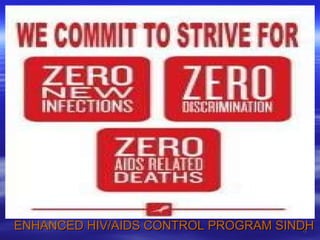
ENHANCED HIV/AIDS CONTROL PROGRAM SINDH
Sindh AIDS Control Program Objectives  To create awareness of the seriousness of the  disease  Ensure that people of Sindh are equipped with knowledge and tools to protect themselves Reduce transmission of HIV and other STI infections through blood and blood products In case of infection, the patient should be  encouraged to seek treatment
Infra Structure and Services  on Ground    Provincial Implementation UNIT (PIU) At I. I Depot, Rafique Shaheed Road near JPMC. Referral Lab   Established for laboratory diagnosis and  confirmation of HIV/AIDS Cases & Sexually Transmitted Infections.   Voluntary Counseling & Testing centers   21  VCT Centers have been Established for screening of HIV/AIDS cases STIs clinics   46 STIs Clinics have been Established at teaching and DHQ hospitals for management of STI,s Establishment of Resource Center With Facilities of Digital Library.  For trainees and projects staff PPTCT Centers  03   ( Prevention of Parents to Chid Transmission )
Tertiary Hospitals: PIMS- Islamabad HMC- Peshawar Lady Wallingdon- Lahore Services- Lahore Civil- Karachi Qatar- Karachi Shaikh Zaid Hospital Larkano Sindamon- Quetta (nonfunctional) District Headquarter Hospitals: DHQ Hospital, Gujrat DHQ Hospital, DG Khan  PPTCT Centers of Pakistan
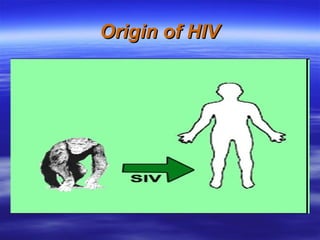
Origin of HIV
African Simean [Green] Chimpanzee
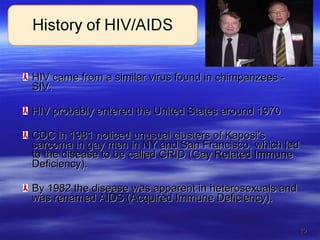
HIV came from a similar virus found in chimpanzees - SIV. HIV probably entered the United States around 1970 CDC in 1981 noticed unusual clusters of Kaposi’s sarcoma in gay men in NY and San Francisco, which led to the disease to be called GRID (Gay Related Immune Deficiency). By 1982 the disease was apparent in heterosexuals and was renamed AIDS (Acquired Immune Deficiency).
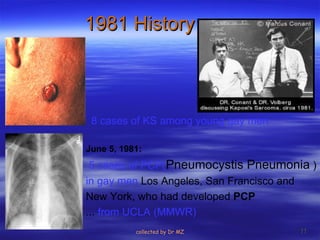
1981 History  collected by Dr MZ 8 cases of KS among young gay men June 5, 1981: 5 cases of PCP( Pneumocystis Pneumonia  ) in gay men  Los Angeles, San Francisco and  New York, who had developed  PCP   ...  from UCLA (MMWR)
I n the period October 1980-May 1981, 5 young men, all active homosexuals, were treated for biopsy-confirmed  Pneumocystis carinii  pneumonia at 3 different hospitals in Los Angeles, California. Two of the patients died. All 5 patients had laboratory-confirmed previous or current cytomegalovirus (CMV) infection and candidal mucosal infection. Morbidity and Mortality Weekly Report (MMWR) MMWR  SEARCH
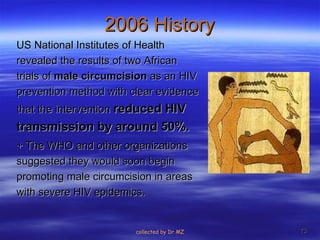
2006 History US National Institutes of Health revealed the results of two African trials of  male circumcision  as an HIV prevention method with clear evidence that the intervention  reduced HIV transmission by around 50%.   + The WHO and other organizations suggested they would soon begin promoting male circumcision in areas with severe HIV epidemics.  collected by Dr MZ
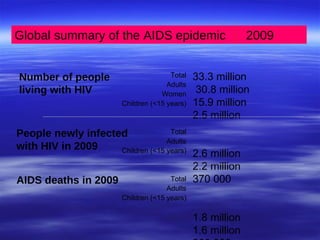
Global summary of the AIDS epidemic    2009  33.3 million  30.8 million 15.9 million 2.5 million 2.6 million 2.2 million 370 000  1.8 million  1.6 million   260 000  Number of people living with HIV People newly infected  with HIV in 2009  AIDS deaths in 2009 Total Adults Women Children (<15 years) Total Adults Children (<15 years) Total Adults Children (<15 years)
Over 7000 new HIV infections a day in 2009 About 97% are in low and middle income countries About 1000 are in children under 15 years of age About 6000 are in adults aged 15 years and older, of whom: ─  almost 51% are among women ─  about 41% are among young people (15-24)
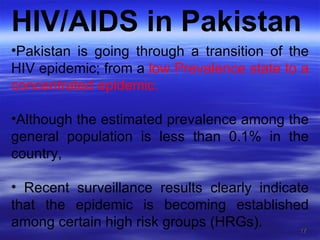
HIV/AIDS in Pakistan Pakistan is going through a transition of the HIV epidemic; from a  low Prevalence state to a concentrated epidemic. Although the estimated prevalence among the general population is less than 0.1% in the country, Recent surveillance results clearly indicate that the epidemic is becoming established among certain high risk groups (HRGs).
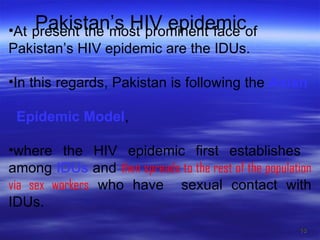
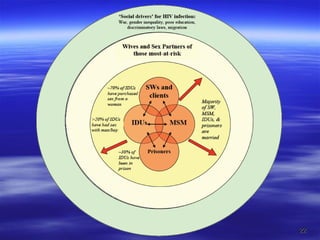
Pakistan’s HIV epidemic At present the most prominent face of  Pakistan’s HIV epidemic are the IDUs.  In this regards, Pakistan is following the  Asian  Epidemic Model ,  where the HIV epidemic first establishes  among  IDUs  and  then spreads to the rest of the population via sex workers  who have  sexual contact with IDUs.
SUGGESTIVE HISTORY & RISK FACTORS RISK FACTORS/RISK BEHAVIOURS People with multiple sexual partners People with recent or prior STDs Commercial sex workers & their partners Homosexuals Travelers to high prevalence areas Sexually active injection drug users Sexual partners of at risk persons Recipients of blood products prior to HIV  screening Children born to HIV positive mothers
A combination of risk factors is currently putting Pakistan at serious risk of further transmission from high to low risk groups through bridging populations. Pakistan’s HIV epidemic
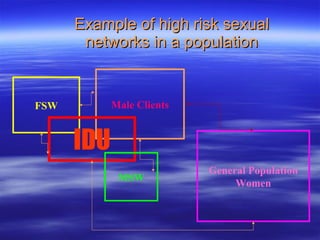
Example of high risk sexual networks in a population FSW Male Clients IDU General Population Women MSW
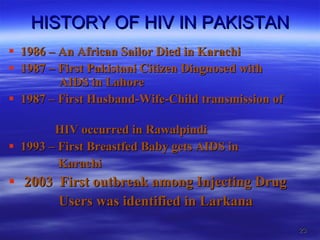
HISTORY OF HIV IN PAKISTAN 1986 – An African Sailor Died in Karachi 1987 – First Pakistani Citizen Diagnosed with    AIDS in Lahore 1987 – First Husband-Wife-Child transmission of  HIV occurred in Rawalpindi 1993 – First Breastfed Baby gets AIDS in  Karachi 2003  First outbreak among Injecting Drug  Users was identified in Larkana
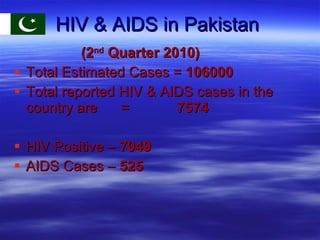
HIV & AIDS in Pakistan   (2 nd  Quarter 2010) Total Estimated Cases =  106000 Total reported HIV & AIDS cases in the country are  =  7574 HIV Positive –  7049   AIDS Cases –  525
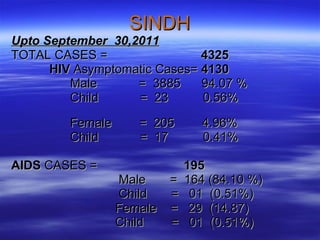
SINDH Upto September  30,2011 TOTAL CASES =  4325 HIV  Asymptomatic Cases=  4130 Male  =  3885  94.07 % Child  =  23  0.56%  Female  =  205  4.96% Child  =  17  0.41% AIDS  CASES =  195  Male  =  164 (84.10 %) Child  =  01  (0.51%) Female  =  29  (14.87) Child  =  01  (0.51%)
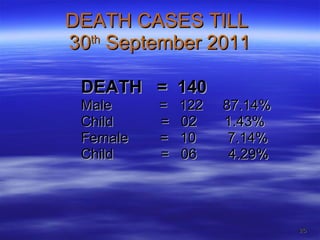
DEATH CASES TILL  30 th  September 2011 DEATH  =  140 Male  =  122  87.14% Child  =  02  1.43% Female  =  10  7.14% Child  =  06  4.29%
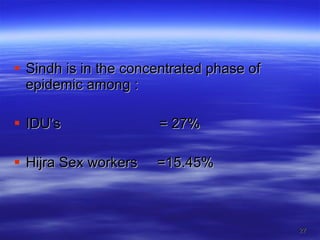
Sindh is in the concentrated phase of epidemic among : IDU’s  = 27%  Hijra Sex workers  =15.45%
HIV epidemic is still considered ‘low’ or ‘concentrated,’ confined mainly to individuals who engage in high risk behaviors, An epidemic is considered ‘ concentrated ’ when less than one per cent of the general population but more than five per cent of any ‘high risk’ group are HIV-positive An epidemic is considered ‘ generalized’  when more than one per cent of the population is HIV-positive.
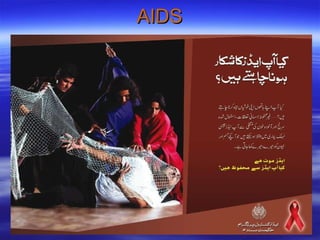
AIDS
H I V Human Immunodeficiency Virus
HIV ? HIV is different from most other viruses because it attacks the immune system  The immune system gives our bodies the ability to fight infections.  HIV finds and destroys a type of white blood cell  WBC   (T cells or CD4 cells) that the immune system must have to fight disease. People can live a long healthy life with HIV without symptoms, even without medications.  Once the immune system begins to break down over time, and the person develops more symptoms,  This often means they have progressed to AIDS.
Caused by immune deficiency virus HIV-1  HIV-2
Genetic Subtypes of HIV Groups :  HIV 1 ,  HIV 2 Genetic subtypes : Groups :  HIV 1 - M(main),O(outlier),N (new) Subtypes(clades) M(11 subtypes A-I,CRF)   HIV 2 —Six subtypes A-F
DIFFERENCE B/W HIV-1 & HIV-2 HIV-1 and HIV-2 are closely related, they are thought to have jumped from primates to humans at different times (and from different species).  HIV-1  is more easily transmitted, it also spreads more readily and therefore accounts for the vast majority of global HIV infections.  HIV-2,  is much less transmittable, is largely confined to West Africa (where it is thought to have originated) and to West African migrant communities in Europe.
DIFFERENCE B/W HIV-1 & HIV-2 HIV-1 also mutates more efficiently that HIV-2 and generally progresses to AIDS at a significantly faster rate than HIV-2 does.  Also, HIV-2 has Vpr and Vpx proteins. HIV-1 has only Vpr.  Differences between these proteins are actually on research.
HIV-1 and HIV-2 Infections HIV-2 has the same genetic organization as  HIV-1 but there are significant differences in the envelope glycoprotein Similar diseases associated with both HIV-1 and  HIV-2 but most west Africans remain asymptomatic Progression from  HIV to AIDS  is faster in HIV-1 as compared to HIV-2, either it is less pathogenic or it has a long period of latency HIV-2 infected children have far better survival rates
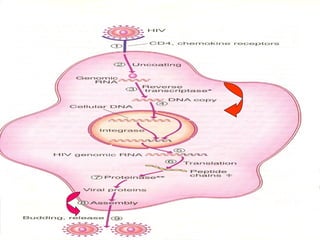
VIROLOGY / LIFE CYCLE HIV is a retrovirus belonging to the family of Lentivirus Able to use the RNA and the host DNA to make viral DNA Long incubation period/Clinical latency
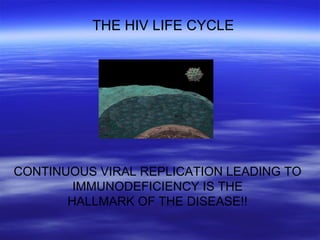
THE HIV LIFE CYCLE CONTINUOUS VIRAL REPLICATION LEADING TO IMMUNODEFICIENCY IS THE  HALLMARK OF THE DISEASE!!
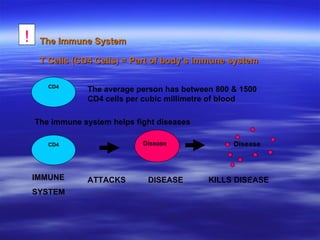
The Immune System T  Cells (CD4 Cells) = Part of body’s immune system   ! CD4 The average person has between 800 & 1500 CD4 cells per cubic millimetre of blood The immune system helps fight diseases Disease CD4 Disease KILLS DISEASE IMMUNE SYSTEM ATTACKS DISEASE
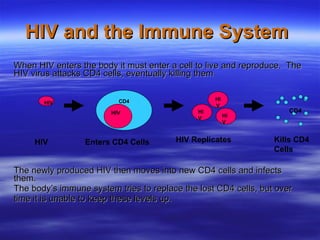
HIV and the Immune System   When HIV enters the body it must enter a cell to live and reproduce.  The HIV virus attacks CD4 cells, eventually killing them   The newly produced HIV then moves into new CD4 cells and infects them.  The body’s immune system tries to replace the lost CD4 cells, but over  time it is unable to keep these levels up. HIV HIV HIV HIV CD4 HIV HIV Enters CD4 Cells HIV Replicates Kills CD4 Cells CD4
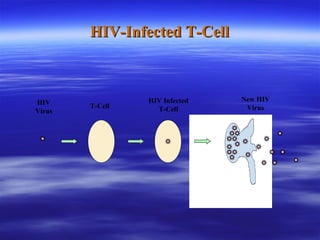
HIV-Infected T-Cell HIV Virus T-Cell HIV Infected T-Cell New HIV Virus
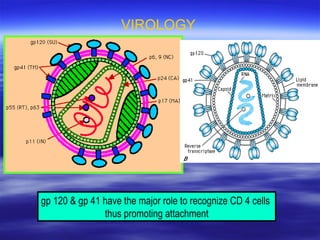
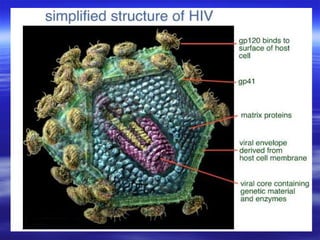
VIROLOGY gp 120 & gp 41 have the major role to recognize CD 4 cells  thus promoting attachment
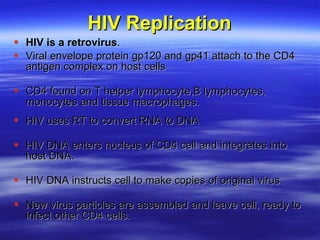
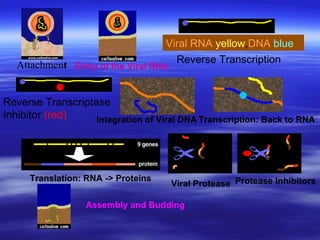
HIV Replication HIV is a retrovirus .  Viral envelope protein gp120 and gp41 attach to the CD4 antigen complex on host cells CD4 found on T helper lymphocyte,B lymphocytes, monocytes and tissue macrophages. HIV uses RT to convert RNA to DNA HIV DNA enters nucleus of CD4 cell and integrates into host DNA.  HIV DNA instructs cell to make copies of original virus. New virus particles are assembled and leave cell, ready to infect other CD4 cells.
 
Reverse Transcriptase  Inhibitor  (red) Protease Inhibitors  Viral RNA   yellow , DNA   blue Attachmen t Entry of the Viral RNA   Reverse Transcription Translation: RNA -> Proteins   Viral Protease   Assembly and Budding   Integration of Viral DNA   Transcription: Back to RNA
 
HIV Transmission HIV enters the bloodstream through: Open Cuts Breaks in the skin Mucous membranes Direct injection
HIV Modes of Transmission Sexual  Infected blood and blood products  Mother to Child
  HIV Modes of Transmission Cont’d… 1. Sexual: Through sex with infected man or woman. Transmit by Hetrosexual & Homosexual and Bisexual Practice Ulcerative STIs  increases the risk of infection several  folds
2.  Infected blood and blood products  Contaminated Blood/Blood Products transfer Organ/Tissue Transplants Use of Contaminated Syringes and Needles Tattooing Ear piercing etc. HIV Modes of Transmission Cont’d…
HIV Modes of Transmission Cont’d… 3. From mother to child (Vertical) Pregnancy Delivery  Lactation
HIV/AIDS Interflow Communications
Press ad Option 1
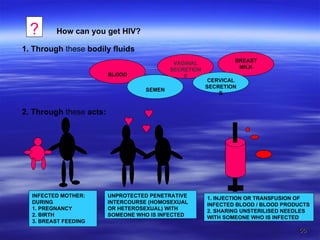
How you catch up HIV? The virus spread from human to human by body fluids : Blood, Semen, female vagina fluids and mother milk.  HIV  do spread in full sexual Intercourse that include penetration to female vagina or the rectum without the use of Condom, and that’s because its lives within the human fluids, as mention above. HIV  also do spread by using common needle, because AIDS lives in the blood, due to that fact, drugs addict are extremely vulnerable for HIV infection. HIV  is spreading by a breast feeding, because it can live within mother milks.
HIV Transmission cont’d… Common fluids that are a means of transmission: Blood Semen Vaginal Secretions Breast Milk Saliva
? How can you get HIV? BREAST MILK VAGINAL SECRETIONS BLOOD SEMEN CERVICAL SECRETIONS 2. Through  these  acts:   H INFECTED MOTHER: DURING 1. PREGNANCY 2. BIRTH 3. BREAST FEEDING UNPROTECTED PENETRATIVE INTERCOURSE (HOMOSEXUAL OR HETEROSEXUAL) WITH SOMEONE WHO IS INFECTED  1. INJECTION OR TRANSFUSION OF INFECTED BLOOD / BLOOD PRODUCTS 2. SHARING UNSTERILISED NEEDLES WITH SOMEONE WHO IS INFECTED 1. Through  these  bodily fluids
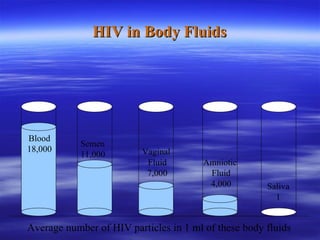
HIV in Body Fluids Semen 11,000 Vaginal  Fluid 7,000 Blood 18,000 Amniotic  Fluid 4,000 Saliva 1 Average number of HIV particles in 1 ml of these body fluids
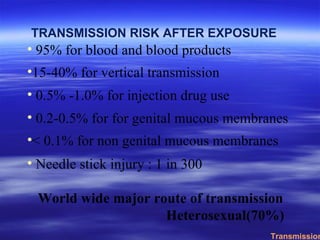
TRANSMISSION RISK AFTER EXPOSURE 95% for blood and blood products 15-40% for vertical transmission 0.5% -1.0% for injection drug use 0.2-0.5% for for genital mucous membranes < 0.1% for non genital mucous membranes Needle stick injury : 1 in 300 World wide major route of transmission   Heterosexual(70%) Transmission
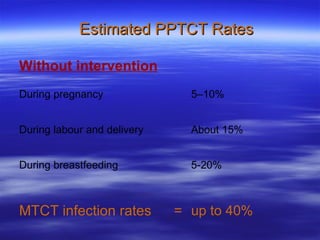
Estimated PPTCT Rates Without intervention During pregnancy 5–10% During labour and delivery About  15% During breastfeeding 5-20% MTCT infection rates = up to 40%
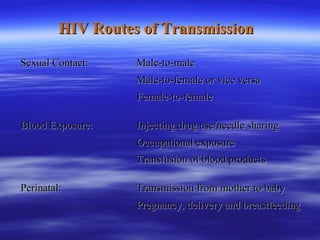
HIV Routes of Transmission Sexual Contact: Male-to-male Male-to-female or vice versa Female-to-female Blood Exposure:   Injecting drug use/needle sharing   Occupational exposure   Transfusion of blood products Perinatal:   Transmission from mother to baby Pregnancy, delivery and breastfeeding
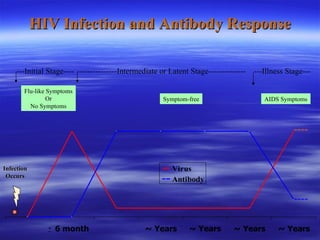
HIV Infection and Antibody Response Infection Occurs AIDS Symptoms ---Initial Stage---- ---------------Intermediate or Latent Stage-------------- ---Illness Stage--- Flu-like Symptoms Or No Symptoms Symptom-free < ---- ----
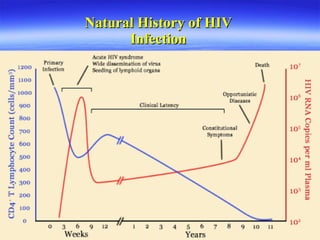
Natural History of HIV Infection
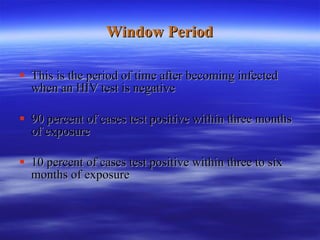
Window Period This is the period of time after becoming infected when an HIV test is negative 90 percent of cases test positive within three months of exposure 10 percent of cases test positive within three to six months of exposure
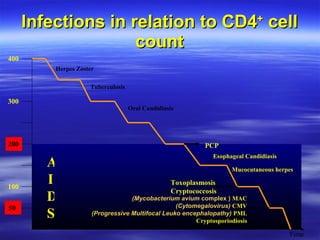
Infections in relation to CD4 +  cell count Herpes Zoster Tuberculosis Oral Candidiasis Esophageal Candidiasis Mucocutaneous herpes Time AIDS 400 300 200 100 50 PCP Toxoplasmosis Cryptococcosis (Mycobacterium avium  complex )  MAC (Cytomegalovirus)  CMV (Progressive Multifocal Leuko encephalopathy)  PML Cryptosporiodiosis
AIDS A I D S Acquired  Immunity Deficiency Syndrome  It destroys the immune system of infected person.
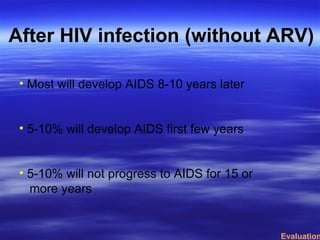
After HIV infection (without ARV) Most will develop AIDS 8-10 years later 5-10% will develop AIDS first few years 5-10% will not progress to AIDS for 15 or more years Evaluation
HIV Risk Reduction Avoid unprotected sexual contact   Use barriers such as condoms  Limit multiple partners by maintaining a long-term relationship with one person
Infectious Aids can’t be spread in a full sexual intercourse with condom because the condom prevents infected body fluids.
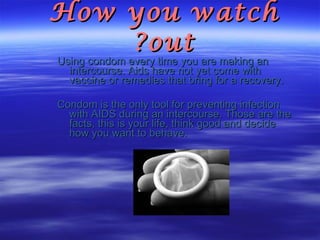
How you watch out? Using condom every time you are making an intercourse. Aids have not yet come with vaccine or remedies that bring for a recovery. Condom is the only tool for preventing infection with AIDS during an intercourse. Those are the facts, this is your life, think good and decide how you want to behave.
HIV Risk Reduction Cont’d… Condoms Using condoms is not 100 percent effective in preventing transmission of sexually transmitted infections including HIV Condoms  =  Safer sex Condoms  ≠  Safe sex
HIV Risk Reduction Cont’d… Condom Use   Should be used consistently and correctly Should be the responsibility of both partners for the protection of both partners  Male and female condoms are available
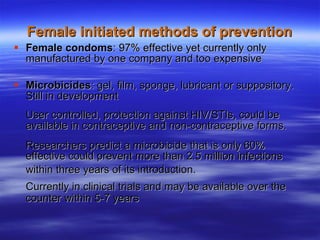
Female initiated methods of prevention Female condoms : 97% effective yet currently only manufactured by one company and too expensive Microbicides : gel, film, sponge, lubricant or suppository. Still in development User controlled, protection against HIV/STIs, could be available in contraceptive and non-contraceptive forms. Researchers predict a microbicide that is only 60% effective could prevent more than 2.5 million infections within three years of its introduction.   Currently in clinical trials and may be available over the counter within 5-7 years
Press ad Option 3
HIV Risk Reduction Cont’d… Avoid drug and alcohol use to maintain good judgment Don’t share needles used by others for: Drugs Tattoos Body piercing Make sure GP is using a new syringe Avoid exposure to blood products
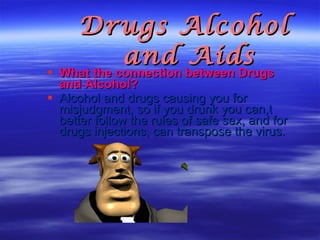
Drugs Alcohol and Aids  What the connection between Drugs and Alcohol? Alcohol and drugs causing you for misjudgment, so if you drunk you can,t better follow the rules of safe sex, and for drugs injections, can transpose the virus.
People Infected with HIV Can look healthy Can be unaware of their infection Can live long productive lives when their HIV infection is managed Can infect people when they engage in high-risk behavior
How you know? You can’t identify a person who carry  HIV  and in most cases,  he/she himself doesn’t know about it . You can found out the virus only in HIV tests. A person can carry the virus for many years, he can be seen, feel and function as usual,.  Don’t hope from your partner to tell you , that he/she carry the HIV virus. Because most people living with the virus are feared from rejection and anger, even though you love each other. The responsibility defending your health is only in your hands!
HIV Exposure and Infection Some people have had multiple exposures without becoming infected Some people have been exposed one time and become infected
  Once a person is infected s/he is always infected Medications are available to prolong life but they do not cure the disease Those who are infected are capable of infecting others without having symptoms or knowing of the infection HIV  AIDS
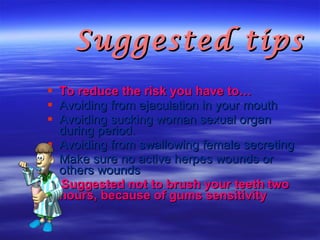
Suggested tips  To reduce the risk you have to… Avoiding from ejaculation in your mouth   Avoiding sucking woman sexual organ during period.   Avoiding from swallowing female secreting   Make sure no active herpes wounds or others wounds  Suggested not to brush your teeth two hours, because of gums sensitivity
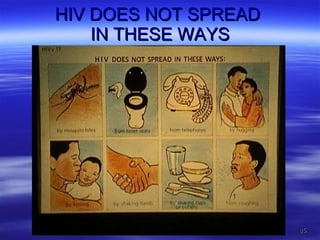
Not Transmitted infections  Aids doesn’t Spread in a hand shaking, because the virus doesn’t live in air or on skin. Aids doesn’t spread in kiss, because in the spittle they are enzymes that neutralized  the virus.
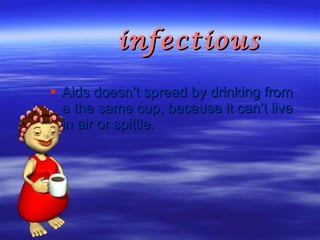
infectious  Aids doesn’t spread by drinking from a the same cup, because it can’t live in air or spittle.
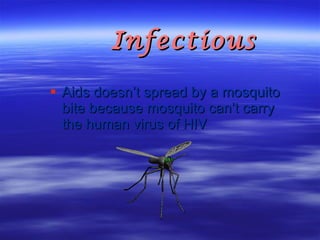
Infectious Aids doesn’t spread by a mosquito bite because mosquito can’t carry the human virus of HIV
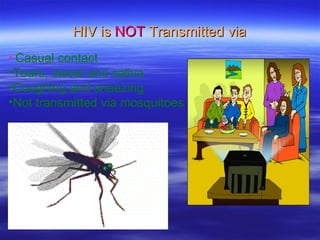
HIV is   NOT   Transmitted via Casual contact  Tears, sweat and saliva Coughing and sneezing Not transmitted via mosquitoes
HIV DOES NOT SPREAD  IN THESE WAYS
Press ad Option 4
Challenges Break the silence on HIV and AIDS End stigmatization and discrimination of PLWHA
Facts about AIDS No Curative Treatment available. No Vaccine. BUT  IT CAN  BE  PREVENTED
Questions are Welcomed if ask
Thank you

HIV/AIDS Dr Munawar Khan

  • 1.
    PAKISTAN Presenter Dr.M. MUNAWAR KHAN PROVINCIAL BCC COORDINATOR ENHANCED SINDH AIDS CONTROL PROGRAM What is HIV/AIDS ?
  • 4.
  • 5.
    Sindh AIDS ControlProgram Objectives To create awareness of the seriousness of the disease Ensure that people of Sindh are equipped with knowledge and tools to protect themselves Reduce transmission of HIV and other STI infections through blood and blood products In case of infection, the patient should be encouraged to seek treatment
  • 6.
    Infra Structure andServices on Ground   Provincial Implementation UNIT (PIU) At I. I Depot, Rafique Shaheed Road near JPMC. Referral Lab Established for laboratory diagnosis and confirmation of HIV/AIDS Cases & Sexually Transmitted Infections.   Voluntary Counseling & Testing centers 21 VCT Centers have been Established for screening of HIV/AIDS cases STIs clinics 46 STIs Clinics have been Established at teaching and DHQ hospitals for management of STI,s Establishment of Resource Center With Facilities of Digital Library. For trainees and projects staff PPTCT Centers 03 ( Prevention of Parents to Chid Transmission )
  • 7.
    Tertiary Hospitals: PIMS-Islamabad HMC- Peshawar Lady Wallingdon- Lahore Services- Lahore Civil- Karachi Qatar- Karachi Shaikh Zaid Hospital Larkano Sindamon- Quetta (nonfunctional) District Headquarter Hospitals: DHQ Hospital, Gujrat DHQ Hospital, DG Khan PPTCT Centers of Pakistan
  • 8.
  • 9.
  • 10.
    HIV came froma similar virus found in chimpanzees - SIV. HIV probably entered the United States around 1970 CDC in 1981 noticed unusual clusters of Kaposi’s sarcoma in gay men in NY and San Francisco, which led to the disease to be called GRID (Gay Related Immune Deficiency). By 1982 the disease was apparent in heterosexuals and was renamed AIDS (Acquired Immune Deficiency).
  • 11.
    1981 History collected by Dr MZ 8 cases of KS among young gay men June 5, 1981: 5 cases of PCP( Pneumocystis Pneumonia ) in gay men Los Angeles, San Francisco and New York, who had developed PCP ... from UCLA (MMWR)
  • 12.
    I n theperiod October 1980-May 1981, 5 young men, all active homosexuals, were treated for biopsy-confirmed Pneumocystis carinii pneumonia at 3 different hospitals in Los Angeles, California. Two of the patients died. All 5 patients had laboratory-confirmed previous or current cytomegalovirus (CMV) infection and candidal mucosal infection. Morbidity and Mortality Weekly Report (MMWR) MMWR SEARCH
  • 13.
    2006 History USNational Institutes of Health revealed the results of two African trials of male circumcision as an HIV prevention method with clear evidence that the intervention reduced HIV transmission by around 50%. + The WHO and other organizations suggested they would soon begin promoting male circumcision in areas with severe HIV epidemics. collected by Dr MZ
  • 14.
    Global summary ofthe AIDS epidemic  2009 33.3 million 30.8 million 15.9 million 2.5 million 2.6 million 2.2 million 370 000 1.8 million 1.6 million 260 000 Number of people living with HIV People newly infected with HIV in 2009 AIDS deaths in 2009 Total Adults Women Children (<15 years) Total Adults Children (<15 years) Total Adults Children (<15 years)
  • 15.
    Over 7000 newHIV infections a day in 2009 About 97% are in low and middle income countries About 1000 are in children under 15 years of age About 6000 are in adults aged 15 years and older, of whom: ─ almost 51% are among women ─ about 41% are among young people (15-24)
  • 17.
    HIV/AIDS in PakistanPakistan is going through a transition of the HIV epidemic; from a low Prevalence state to a concentrated epidemic. Although the estimated prevalence among the general population is less than 0.1% in the country, Recent surveillance results clearly indicate that the epidemic is becoming established among certain high risk groups (HRGs).
  • 18.
    Pakistan’s HIV epidemicAt present the most prominent face of Pakistan’s HIV epidemic are the IDUs. In this regards, Pakistan is following the Asian Epidemic Model , where the HIV epidemic first establishes among IDUs and then spreads to the rest of the population via sex workers who have sexual contact with IDUs.
  • 19.
    SUGGESTIVE HISTORY &RISK FACTORS RISK FACTORS/RISK BEHAVIOURS People with multiple sexual partners People with recent or prior STDs Commercial sex workers & their partners Homosexuals Travelers to high prevalence areas Sexually active injection drug users Sexual partners of at risk persons Recipients of blood products prior to HIV screening Children born to HIV positive mothers
  • 20.
    A combination ofrisk factors is currently putting Pakistan at serious risk of further transmission from high to low risk groups through bridging populations. Pakistan’s HIV epidemic
  • 21.
    Example of highrisk sexual networks in a population FSW Male Clients IDU General Population Women MSW
  • 23.
    HISTORY OF HIVIN PAKISTAN 1986 – An African Sailor Died in Karachi 1987 – First Pakistani Citizen Diagnosed with AIDS in Lahore 1987 – First Husband-Wife-Child transmission of HIV occurred in Rawalpindi 1993 – First Breastfed Baby gets AIDS in Karachi 2003 First outbreak among Injecting Drug Users was identified in Larkana
  • 24.
    HIV & AIDSin Pakistan (2 nd Quarter 2010) Total Estimated Cases = 106000 Total reported HIV & AIDS cases in the country are = 7574 HIV Positive – 7049 AIDS Cases – 525
  • 25.
    SINDH Upto September 30,2011 TOTAL CASES = 4325 HIV Asymptomatic Cases= 4130 Male = 3885 94.07 % Child = 23 0.56% Female = 205 4.96% Child = 17 0.41% AIDS CASES = 195 Male = 164 (84.10 %) Child = 01 (0.51%) Female = 29 (14.87) Child = 01 (0.51%)
  • 26.
    DEATH CASES TILL 30 th September 2011 DEATH = 140 Male = 122 87.14% Child = 02 1.43% Female = 10 7.14% Child = 06 4.29%
  • 27.
    Sindh is inthe concentrated phase of epidemic among : IDU’s = 27% Hijra Sex workers =15.45%
  • 28.
    HIV epidemic isstill considered ‘low’ or ‘concentrated,’ confined mainly to individuals who engage in high risk behaviors, An epidemic is considered ‘ concentrated ’ when less than one per cent of the general population but more than five per cent of any ‘high risk’ group are HIV-positive An epidemic is considered ‘ generalized’ when more than one per cent of the population is HIV-positive.
  • 29.
  • 30.
    H I VHuman Immunodeficiency Virus
  • 31.
    HIV ? HIVis different from most other viruses because it attacks the immune system The immune system gives our bodies the ability to fight infections. HIV finds and destroys a type of white blood cell WBC (T cells or CD4 cells) that the immune system must have to fight disease. People can live a long healthy life with HIV without symptoms, even without medications. Once the immune system begins to break down over time, and the person develops more symptoms, This often means they have progressed to AIDS.
  • 32.
    Caused by immunedeficiency virus HIV-1 HIV-2
  • 33.
    Genetic Subtypes ofHIV Groups : HIV 1 , HIV 2 Genetic subtypes : Groups : HIV 1 - M(main),O(outlier),N (new) Subtypes(clades) M(11 subtypes A-I,CRF) HIV 2 —Six subtypes A-F
  • 34.
    DIFFERENCE B/W HIV-1& HIV-2 HIV-1 and HIV-2 are closely related, they are thought to have jumped from primates to humans at different times (and from different species). HIV-1 is more easily transmitted, it also spreads more readily and therefore accounts for the vast majority of global HIV infections. HIV-2, is much less transmittable, is largely confined to West Africa (where it is thought to have originated) and to West African migrant communities in Europe.
  • 35.
    DIFFERENCE B/W HIV-1& HIV-2 HIV-1 also mutates more efficiently that HIV-2 and generally progresses to AIDS at a significantly faster rate than HIV-2 does. Also, HIV-2 has Vpr and Vpx proteins. HIV-1 has only Vpr. Differences between these proteins are actually on research.
  • 36.
    HIV-1 and HIV-2Infections HIV-2 has the same genetic organization as HIV-1 but there are significant differences in the envelope glycoprotein Similar diseases associated with both HIV-1 and HIV-2 but most west Africans remain asymptomatic Progression from HIV to AIDS is faster in HIV-1 as compared to HIV-2, either it is less pathogenic or it has a long period of latency HIV-2 infected children have far better survival rates
  • 37.
    VIROLOGY / LIFECYCLE HIV is a retrovirus belonging to the family of Lentivirus Able to use the RNA and the host DNA to make viral DNA Long incubation period/Clinical latency
  • 38.
    THE HIV LIFECYCLE CONTINUOUS VIRAL REPLICATION LEADING TO IMMUNODEFICIENCY IS THE HALLMARK OF THE DISEASE!!
  • 39.
    The Immune SystemT Cells (CD4 Cells) = Part of body’s immune system ! CD4 The average person has between 800 & 1500 CD4 cells per cubic millimetre of blood The immune system helps fight diseases Disease CD4 Disease KILLS DISEASE IMMUNE SYSTEM ATTACKS DISEASE
  • 40.
    HIV and theImmune System When HIV enters the body it must enter a cell to live and reproduce. The HIV virus attacks CD4 cells, eventually killing them The newly produced HIV then moves into new CD4 cells and infects them. The body’s immune system tries to replace the lost CD4 cells, but over time it is unable to keep these levels up. HIV HIV HIV HIV CD4 HIV HIV Enters CD4 Cells HIV Replicates Kills CD4 Cells CD4
  • 41.
    HIV-Infected T-Cell HIVVirus T-Cell HIV Infected T-Cell New HIV Virus
  • 42.
    VIROLOGY gp 120& gp 41 have the major role to recognize CD 4 cells thus promoting attachment
  • 43.
    HIV Replication HIVis a retrovirus . Viral envelope protein gp120 and gp41 attach to the CD4 antigen complex on host cells CD4 found on T helper lymphocyte,B lymphocytes, monocytes and tissue macrophages. HIV uses RT to convert RNA to DNA HIV DNA enters nucleus of CD4 cell and integrates into host DNA. HIV DNA instructs cell to make copies of original virus. New virus particles are assembled and leave cell, ready to infect other CD4 cells.
  • 44.
  • 45.
    Reverse Transcriptase Inhibitor (red) Protease Inhibitors Viral RNA yellow , DNA blue Attachmen t Entry of the Viral RNA Reverse Transcription Translation: RNA -> Proteins Viral Protease Assembly and Budding Integration of Viral DNA Transcription: Back to RNA
  • 46.
  • 47.
    HIV Transmission HIVenters the bloodstream through: Open Cuts Breaks in the skin Mucous membranes Direct injection
  • 48.
    HIV Modes ofTransmission Sexual Infected blood and blood products Mother to Child
  • 49.
    HIVModes of Transmission Cont’d… 1. Sexual: Through sex with infected man or woman. Transmit by Hetrosexual & Homosexual and Bisexual Practice Ulcerative STIs increases the risk of infection several folds
  • 50.
    2. Infectedblood and blood products Contaminated Blood/Blood Products transfer Organ/Tissue Transplants Use of Contaminated Syringes and Needles Tattooing Ear piercing etc. HIV Modes of Transmission Cont’d…
  • 51.
    HIV Modes ofTransmission Cont’d… 3. From mother to child (Vertical) Pregnancy Delivery Lactation
  • 52.
  • 53.
  • 54.
    How you catchup HIV? The virus spread from human to human by body fluids : Blood, Semen, female vagina fluids and mother milk. HIV do spread in full sexual Intercourse that include penetration to female vagina or the rectum without the use of Condom, and that’s because its lives within the human fluids, as mention above. HIV also do spread by using common needle, because AIDS lives in the blood, due to that fact, drugs addict are extremely vulnerable for HIV infection. HIV is spreading by a breast feeding, because it can live within mother milks.
  • 55.
    HIV Transmission cont’d…Common fluids that are a means of transmission: Blood Semen Vaginal Secretions Breast Milk Saliva
  • 56.
    ? How canyou get HIV? BREAST MILK VAGINAL SECRETIONS BLOOD SEMEN CERVICAL SECRETIONS 2. Through these acts: H INFECTED MOTHER: DURING 1. PREGNANCY 2. BIRTH 3. BREAST FEEDING UNPROTECTED PENETRATIVE INTERCOURSE (HOMOSEXUAL OR HETEROSEXUAL) WITH SOMEONE WHO IS INFECTED 1. INJECTION OR TRANSFUSION OF INFECTED BLOOD / BLOOD PRODUCTS 2. SHARING UNSTERILISED NEEDLES WITH SOMEONE WHO IS INFECTED 1. Through these bodily fluids
  • 57.
    HIV in BodyFluids Semen 11,000 Vaginal Fluid 7,000 Blood 18,000 Amniotic Fluid 4,000 Saliva 1 Average number of HIV particles in 1 ml of these body fluids
  • 58.
    TRANSMISSION RISK AFTEREXPOSURE 95% for blood and blood products 15-40% for vertical transmission 0.5% -1.0% for injection drug use 0.2-0.5% for for genital mucous membranes < 0.1% for non genital mucous membranes Needle stick injury : 1 in 300 World wide major route of transmission Heterosexual(70%) Transmission
  • 59.
    Estimated PPTCT RatesWithout intervention During pregnancy 5–10% During labour and delivery About 15% During breastfeeding 5-20% MTCT infection rates = up to 40%
  • 60.
    HIV Routes ofTransmission Sexual Contact: Male-to-male Male-to-female or vice versa Female-to-female Blood Exposure: Injecting drug use/needle sharing Occupational exposure Transfusion of blood products Perinatal: Transmission from mother to baby Pregnancy, delivery and breastfeeding
  • 61.
    HIV Infection andAntibody Response Infection Occurs AIDS Symptoms ---Initial Stage---- ---------------Intermediate or Latent Stage-------------- ---Illness Stage--- Flu-like Symptoms Or No Symptoms Symptom-free < ---- ----
  • 62.
    Natural History ofHIV Infection
  • 63.
    Window Period Thisis the period of time after becoming infected when an HIV test is negative 90 percent of cases test positive within three months of exposure 10 percent of cases test positive within three to six months of exposure
  • 64.
    Infections in relationto CD4 + cell count Herpes Zoster Tuberculosis Oral Candidiasis Esophageal Candidiasis Mucocutaneous herpes Time AIDS 400 300 200 100 50 PCP Toxoplasmosis Cryptococcosis (Mycobacterium avium complex ) MAC (Cytomegalovirus) CMV (Progressive Multifocal Leuko encephalopathy) PML Cryptosporiodiosis
  • 65.
    AIDS A ID S Acquired Immunity Deficiency Syndrome It destroys the immune system of infected person.
  • 66.
    After HIV infection(without ARV) Most will develop AIDS 8-10 years later 5-10% will develop AIDS first few years 5-10% will not progress to AIDS for 15 or more years Evaluation
  • 67.
    HIV Risk ReductionAvoid unprotected sexual contact Use barriers such as condoms Limit multiple partners by maintaining a long-term relationship with one person
  • 68.
    Infectious Aids can’tbe spread in a full sexual intercourse with condom because the condom prevents infected body fluids.
  • 69.
    How you watchout? Using condom every time you are making an intercourse. Aids have not yet come with vaccine or remedies that bring for a recovery. Condom is the only tool for preventing infection with AIDS during an intercourse. Those are the facts, this is your life, think good and decide how you want to behave.
  • 70.
    HIV Risk ReductionCont’d… Condoms Using condoms is not 100 percent effective in preventing transmission of sexually transmitted infections including HIV Condoms = Safer sex Condoms ≠ Safe sex
  • 71.
    HIV Risk ReductionCont’d… Condom Use Should be used consistently and correctly Should be the responsibility of both partners for the protection of both partners Male and female condoms are available
  • 72.
    Female initiated methodsof prevention Female condoms : 97% effective yet currently only manufactured by one company and too expensive Microbicides : gel, film, sponge, lubricant or suppository. Still in development User controlled, protection against HIV/STIs, could be available in contraceptive and non-contraceptive forms. Researchers predict a microbicide that is only 60% effective could prevent more than 2.5 million infections within three years of its introduction. Currently in clinical trials and may be available over the counter within 5-7 years
  • 73.
  • 74.
    HIV Risk ReductionCont’d… Avoid drug and alcohol use to maintain good judgment Don’t share needles used by others for: Drugs Tattoos Body piercing Make sure GP is using a new syringe Avoid exposure to blood products
  • 75.
    Drugs Alcohol andAids What the connection between Drugs and Alcohol? Alcohol and drugs causing you for misjudgment, so if you drunk you can,t better follow the rules of safe sex, and for drugs injections, can transpose the virus.
  • 76.
    People Infected withHIV Can look healthy Can be unaware of their infection Can live long productive lives when their HIV infection is managed Can infect people when they engage in high-risk behavior
  • 77.
    How you know?You can’t identify a person who carry HIV and in most cases, he/she himself doesn’t know about it . You can found out the virus only in HIV tests. A person can carry the virus for many years, he can be seen, feel and function as usual,. Don’t hope from your partner to tell you , that he/she carry the HIV virus. Because most people living with the virus are feared from rejection and anger, even though you love each other. The responsibility defending your health is only in your hands!
  • 78.
    HIV Exposure andInfection Some people have had multiple exposures without becoming infected Some people have been exposed one time and become infected
  • 79.
    Oncea person is infected s/he is always infected Medications are available to prolong life but they do not cure the disease Those who are infected are capable of infecting others without having symptoms or knowing of the infection HIV AIDS
  • 80.
    Suggested tips To reduce the risk you have to… Avoiding from ejaculation in your mouth Avoiding sucking woman sexual organ during period. Avoiding from swallowing female secreting Make sure no active herpes wounds or others wounds Suggested not to brush your teeth two hours, because of gums sensitivity
  • 81.
    Not Transmitted infections Aids doesn’t Spread in a hand shaking, because the virus doesn’t live in air or on skin. Aids doesn’t spread in kiss, because in the spittle they are enzymes that neutralized the virus.
  • 82.
    infectious Aidsdoesn’t spread by drinking from a the same cup, because it can’t live in air or spittle.
  • 83.
    Infectious Aids doesn’tspread by a mosquito bite because mosquito can’t carry the human virus of HIV
  • 84.
    HIV is NOT Transmitted via Casual contact Tears, sweat and saliva Coughing and sneezing Not transmitted via mosquitoes
  • 85.
    HIV DOES NOTSPREAD IN THESE WAYS
  • 86.
  • 87.
    Challenges Break thesilence on HIV and AIDS End stigmatization and discrimination of PLWHA
  • 88.
    Facts about AIDSNo Curative Treatment available. No Vaccine. BUT IT CAN BE PREVENTED
  • 89.
  • 90.

Editor's Notes

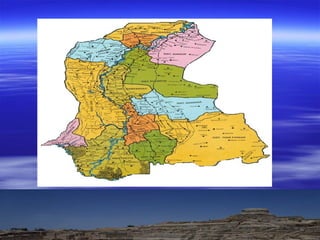
  • #4 -Population: 35 million -23 administrative districts -Multiethnic population -Main Urban Centers: Karachi , Hyderabad, Sukkur &amp; Larkana The port city of Karachi is the largest in Pakistan divided in 18 town and home to more then 10 million people. People from all provinces come here in search of better livelihood -Second largest province in terms of population and third largest in size -Sindh is the home of 5000 year old Indus Valley Civilization.
  • #11 Dr. Robert Gallo of the National Cancer Institute had isolated the virus which caused AIDS. Dr. Luc Montagnier Pasteur Institute in Paris The scientific protagonists finally agreed to share credit for the discovery of HIV, and in 1986, both the French and the US names (LAV and HTLV-III) were dropped in favor of the new term human immunodeficiency virus
  • #12 Kaposi&apos;s Sarcoma (KS) was a rare form of relatively benign cancer that tended to occur in older people. But by March 1981 at least eight cases of a more aggressive form of KS had occurred amongst young gay men in New York.2 At about the same time there was an increase, in both California and New York, in the number of cases of a rare lung infection Pneumocystis carinii pneumonia (PCP)3. In April this increase in PCP was noticed at the Centers for Disease Control (CDC) in Atlanta. A drug technician, Sandra Ford, noticed a high number of requests for the drug pentamine, used in the treatment of PCP. &amp;quot;A doctor was treating a gay man in his 20s who had pneumonia. Two weeks later, he called to ask for a refill of a rare drug that I handled. This was unusual-nobody ever asked for a refill. Patients usually were cured in one 10-day treatment or they died&amp;quot; - Sandra Ford for Newsweek -4 In June, the CDC published a report about the occurrence, without identifiable cause, of PCP in five men in Los Angeles5. This report is sometimes referred to as the &amp;quot;beginning&amp;quot; of AIDS, but it might be more accurate to describe it as the beginning of the general awareness of AIDS in the USA. A few days later, following these reports of PCP and other rare life-threatening opportunistic infections, the CDC formed a Task Force on Kaposi&apos;s Sarcoma and Opportunistic Infections (KSOI). 6Around this time a number of theories were developed about the possible cause of these opportunistic infections and cancers. Early theories included, infection with cytomegalovirus, the use of amyl nitrite or butyl nitrate &amp;quot;poppers&amp;quot; and &amp;quot;immune overload&amp;quot;.7 8 9 Because there was so little known about the transmission of what seemed to be a new disease, there was concern about contagion, and whether the disease could by passed on by people who had no apparent signs or symptoms.10 Knowledge about the disease was changing so quickly that certain assumptions made at this time were shown to be unfounded just a few months later. For example, in July 1981 Dr Curran of the CDC was reported as follows: &amp;quot;Dr. Curran said there was no apparent danger to non homosexuals from contagion. &apos;The best evidence against contagion&apos;, he said, &apos;is that no cases have been reported to date outside the homosexual community or in women&apos;&amp;quot; - The New York Times-11 Just five months later, in December 1981, it was clear that the disease affected other population groups, when the first cases of PCP were reported in injecting drug users.12 At the same time the first case of AIDS was documented in the UK. 13 1982 History The disease still did not have a name, with different groups referring to it in different ways. The CDC generally referred to it by reference to the diseases that were occurring, for example lymphadenopathy (swollen glands), although on some occasions they referred to it as KSOI, the name already given to the CDC task force.14 15 In contrast some still linked the disease to it&apos;s initial occurrence in gay men, with the Lancet calling it the &apos;gay compromise syndrome&apos;, whilst at least one newspaper referred to it as GRID (gay-related immune deficiency).16 17 and another newspaper described it as &apos;gay cancer&apos;.18 The disease was also called &apos;community-acquired immune dysfunction&apos;.19 In June a report of a group of cases amongst gay men in Southern California, suggested that the disease might be caused by an infectious agent that was sexually transmitted.20 By the beginning of July a total of 452 cases, from 23 states, had been reported to the CDC.21 Later in July the first reports appeared that the disease was occurring in Haitians, as well as haemophiliacs.22 23 By August the disease was being referred to by it&apos;s new name of AIDS24. The word AIDS was an abbreviation of Acquired Immune Deficiency Syndrome25. An anagram of AIDS, SIDA was created for use in French and Spanish26. The doctors thought &apos;AIDS&apos; suitable because people acquired the condition rather than inherited it, because it resulted in a deficiency within the immune system, and because it was a syndrome, with a number of manifestations, rather than a single disease.27 Very little was still known about transmission and public anxiety continued to grow. &amp;quot;It is frightening because no one knows what&apos;s causing it, said a 28-year old law student who went to the St. Mark&apos;s Clinic in Greenwich Village last week complaining of swollen glands, thought to be one early symptom of the disease. Every week a new theory comes out about how you&apos; re going to spread it.&amp;quot; - The New York Times - 28 By 1982 a number of AIDS specific voluntary organisations had been set up in the USA. They included the San Francisco AIDS Foundation (SFAF), AIDS Project Los Angeles (APLA), and Gay Men&apos;s health Crisis (GMHC).29 In November 1982 the first AIDS organisation, the &apos;Terry Higgins Trust&apos;, was formally established in the UK, and by this time a number of AIDS organisations were already producing safer sex advice for gay men.30 31 In December a 20-month old child who had received multiple transfusions of blood and blood products died from infections related to AIDS32. This case provided clearer evidence that AIDS was caused by an infectious agent, and it also caused additional concerns about the safety of the blood supply. Also in December, the CDC reported the first cases of possible mother to child transmission of AIDS.33 By the end of 1982 many more people were taking notice of this new disease, as it was clearer that a much wider group of people was going to be affected. &amp;quot;When it began turning up in children and transfusion recipients, that was a turning point in terms of public perception. Up until then it was entirely a gay epidemic, and it was easy for the average person to say &apos;So what?&apos; Now everyone could relate.&amp;quot; - Harold Jaffe of the CDC for newsweek -34 It was also becoming clear that AIDS was not a disease that just occurred in the USA. Throughout 1982 there were separate reports of the disease occurring in a number of different countries.35 A report also appeared that a disease previously known as &amp;quot;slim&amp;quot;, was actually an African form of AIDS. 36