HEPATITIS E
DR. MAHESWARI JAIKUMAR
maheswarijaikumar2103@gmail.com
VIRAL HEPATITIS
HEPATITIS E
• The infection caused by the
Hepatitis e virus (HEV) was
discovered in 1980
• It is a water borne disease
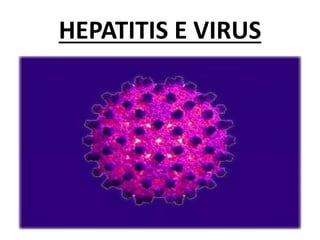
HEPATITIS E VIRUS
GENOME ORGANIZATION –
HEPATITIS E VIRUS
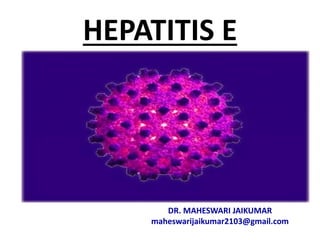
• HEV is a 29-nm to 32-nm RNA virus
• Water or food supplies
contaminated with faeces in which
the virus is excreted have been
implicated with a major outbreaks
of HEV infection all over the world
• The incubation period is 2-9
weeks
• Following the incubation
period a self limiting acute
viral hepatitis appears, lasting
for a period of several weeks
HEPATITIS E - TRANSMISSION
• The acute infection is followed
by recovery
• No case of chronic disease has
been reported
• HEV is reported mainly among
young adults (aged 14-45 yrs)
• HEV has a propensity to induce a
fulminating form of acute
disease particularly in pregnant
women ( causing fulminating
HEV infection)
• HEV infection during pregnancy
can cause intra uterine death,
abortions & a high perinatal
morbidity and mortality
DIAGNOSIS
• Diagnosis is made by the level of
anti-HEV antibodies in the serum
• No confirmatory assay is
available currently
• Anti HEV IgM antibodies have
been determined, however their
usefulness for the diagnosis of
acute hepatitis E infection
remains to be confirmed
HOST IMMUNE STATUS-RESPOSE
TO HEPATITIS E INFECTION
• Hepatitis E appears to be
widespread problem in
developing countries where
there are problems in providing
safe drinking water and
adequated sewage disposal
• General precautions against the
infection are similar to that of
hepatitis A
• For prevention, travellers to higly
endemic areas are
recommended to take the usual
elementary food hygeine
precautions
• There is no specific treatment for
hepatitis E
• Only supportive measures are
required. Recovery from
hepatitis E is always complete
• No vaccine or specific
immunoglobulin prophylaxis is
available
PREVENTION
THANK YOU

HEPATITIS E

  • 1.
    HEPATITIS E DR. MAHESWARIJAIKUMAR maheswarijaikumar2103@gmail.com
  • 2.
  • 3.
    HEPATITIS E • Theinfection caused by the Hepatitis e virus (HEV) was discovered in 1980 • It is a water borne disease
  • 4.
  • 7.
  • 8.
    • HEV isa 29-nm to 32-nm RNA virus • Water or food supplies contaminated with faeces in which the virus is excreted have been implicated with a major outbreaks of HEV infection all over the world
  • 9.
    • The incubationperiod is 2-9 weeks • Following the incubation period a self limiting acute viral hepatitis appears, lasting for a period of several weeks
  • 10.
    HEPATITIS E -TRANSMISSION
  • 11.
    • The acuteinfection is followed by recovery • No case of chronic disease has been reported • HEV is reported mainly among young adults (aged 14-45 yrs)
  • 12.
    • HEV hasa propensity to induce a fulminating form of acute disease particularly in pregnant women ( causing fulminating HEV infection) • HEV infection during pregnancy can cause intra uterine death, abortions & a high perinatal morbidity and mortality
  • 13.
    DIAGNOSIS • Diagnosis ismade by the level of anti-HEV antibodies in the serum • No confirmatory assay is available currently
  • 14.
    • Anti HEVIgM antibodies have been determined, however their usefulness for the diagnosis of acute hepatitis E infection remains to be confirmed
  • 15.
    HOST IMMUNE STATUS-RESPOSE TOHEPATITIS E INFECTION
  • 18.
    • Hepatitis Eappears to be widespread problem in developing countries where there are problems in providing safe drinking water and adequated sewage disposal
  • 19.
    • General precautionsagainst the infection are similar to that of hepatitis A • For prevention, travellers to higly endemic areas are recommended to take the usual elementary food hygeine precautions
  • 20.
    • There isno specific treatment for hepatitis E • Only supportive measures are required. Recovery from hepatitis E is always complete
  • 21.
    • No vaccineor specific immunoglobulin prophylaxis is available
  • 22.
  • 24.