Hematology
Hematology, is the branch of science concerned with the study of
blood, blood-forming tissues, and the disorders associated with them
is hematology (he ¯m-a-TOL-o ¯-je ¯; hema- or hemato- blood; -logy
study of).
Like diagnosis, treatment, and prevention of diseases related to the
production of blood and its components,
such as blood cells, hemoglobin, blood proteins, bone marrow,
platelets, blood vessels, spleen, and the mechanism of coagulation..
Such diseases might include hemophilia, blood clots, other bleeding
disorders and blood cancers such as leukemia, myeloma, and
lymphoma.
Hematology
Blood Composition
Figure 19.2 Scanning electron micrograph of the formed elements of blood.
Function of Blood
• Transporting fluids such as:
– Nutrients from digestive tract
– O2 from lungs
– Waste from cells
– Hormones
• Aids in heat distribution
• Regulates acid-base balance
• Protection
Composition of Blood: Erythrocytes
• Red blood cells are responsible for:
– Transport of oxygen and nutrients
– Removal of waste and CO2 from the cells
– Distribution of heat
• Erythrocytes consist mainly of hemoglobin, a
complex metalloprotein containing heme groups
whose iron atoms temporarily bind to oxygen
molecules (O2) in the lungs or gills and release them
throughout the body. Oxygen can easily diffuse
through the red blood cell's cell membrane.
Composition of Blood: Leukocytes
• WBC are responsible for:
– Phagocytosis – to engulf and absorb waste
material and harmful microorganisms in the
blood stream and tissues
– Synthesis of antibody molecules
– Inflammation process
– Production of heparin – component found in
lung and liver tissue which have the ability
to prevent clotting of blood.
• Heparin used in the treatment of thrombosis
Composition of Blood: Leukocytes
• Types of Leukocytes
– Granulocytes
• Neutrophils
• Eosinophils
• Basophils
– Agranulocytes
• Lymphocytes
• Monocytes
Composition of Blood: Thrombocytes
• Platelets – the smallest of the solid components of
the blood
• Responsible for the clotting process
• Coagulation: term for clotting
• Embolism: obstruction of an artery, typically by a clot
of blood or an air bubble which is moving through
the body.
A complete blood count, or CBC, is an easy and very common test that
screens for certain disorders that can affect your health.
A CBC determines if there are any increases or decreases in your cell
counts. Normal values vary depending on your age and your gender.
Your lab report will tell you the normal value range for your age and
gender.
A CBC can help diagnose a broad range of conditions, from anemia and
infection to cancer.
Total cell count
CBC
• Complete blood count
– With or without differential
• Peripheral venous blood is collected in a lavendar tube (contains the
anticoagulant EDTA) and should be thoroughly mixed
• The sample is then transported to a laboratory. Sometimes the
sample is drawn off a finger prick using a Pasteur pipette for
immediate processing by an automated counter.
• In the past, counting the cells in a patient's blood was performed
manually, by viewing a slide prepared with a sample of the patient's
blood (a blood film, or peripheral smear) under a microscope.
• Presently, this process is generally automated by use of an
automated analyzer, with only approximately 10–20% of samples
now being examined manually.
The blood is well mixed (though not shaken) and placed
on a rack in the analyzer.
This instrument has flow cells, photometers and apertures
that analyze different elements in the blood.
The cell counting component counts the numbers and
types of different cells within the blood.
The results are printed out or sent to a computer for
review. this is flow cytometry.
Flow cytometry is a technology that is
used to analyse the physical and chemical
characteristics of particles in a fluid as it
passes through at least one laser. Cell
components are fluorescently labelled and
then excited by the laser to emit light at
varying wavelengths.
Methodology of testing:
Whole blood analyzer
A counting chamber,(also known as hemocytometer), is a microscope
slide that is especially designed to enable cell counting.
The slide has a sink in its middle; the area of the sink is marked with a
grid. A drop of a cell culture is placed in the sink.
looking at the sample under the microscope, the researcher uses the
grid to manually count the number of cells in a certain area.
So, for example, if you diluted your sample 1:1 with Trypan blue, and you counted
325 cells in 4 corner squares plus the central big square, total cells per ml =
If you want to know how many cells you have in your original sample, just multiply the
cell concentration by total sample volume.
For example, if your original sample volume is 5 ml, then your sample has a total =
The depth of the sink is predefined, thus the volume of the counted culture can be
calculated and with it the concentration of the cells.
Once you have obtained the total cell count, cell concentration can be calculated from
the formula:
What is measured?
• Red blood cell data
– Total red blood cell count (RBC)
– Hemoglobin (Hgb)
– Hematocrit (Hct)
– Mean corpuscular volume (MCV)
– Red blood cell distribution width (RDW)
• White blood cell data
– Total white blood cell (leukocyte) count (WBC)
– A white blood cell count differential may also be ordered
• Platelet Count (PLT)
Total Red Blood Cell Count
• Count of the number of circulating red blood
cells in 1mm3 of peripheral venous blood.
• The hemoglobin concentration is a measure of the
amount of Hgb in the peripheral blood, which
reflects the number of red blood cells in the blood
– Hgb constitutes over 90% of the red blood cells
• Decrease in Hgb concentration = anemia
• Increase in Hgb concentration = polycythemia
Normal Ranges
• RBC: female 3.6-5.0x106mm3
male 4.2-5.4x106mm3
• WBC: 4.5-10.5x103mm3
• HCT: female 36-48% male 42-52%
• Hgb: female 12-16 g/dL male 14-17.4 g/dL
• Platelets: 140-400x103mm3
Test results will vary based on your cell counts. Blood cell
counts that are too high or too low could signal a wide variety
of conditions, including:
•iron or other vitamin and mineral deficiencies
•bleeding disorders
•heart disease
•autoimmune disorders
•bone marrow problems
•cancer
•infection or inflammation
•reaction to medication
The blood differential test can detect abnormal or immature cells. It can
also diagnose an infection, inflammation, leukemia, or an immune
system disorder.
Differential blood count gives relative percentage of each type of white
blood cell and also helps reveal abnormal white blood cell populations
(eg, blasts, immature granulocytes, or circulating lymphoma cells in the
peripheral blood).
Reference ranges for differential white blood cell count in normal adults is
as follows:
Neutrophils - 2.0–7.0×10 9/l (40–80%)
Lymphocytes - 1.0–3.0×10 9/l (20–40%)
Monocytes - 0.2–1.0×10 9/l (2–10%)
Eosinophils - 0.02–0.5×10 9/l (1–6%)
Basophils - 0.02–0.1×10 9/l (< 1–2%)
The reference ranges may vary depending on population studies, the
individual laboratory, instruments, and methods.
Differential count
White Blood Cell Count
• A count of the total WBC, or leukocyte, count
in 1mm3 of peripheral blood
• A decrease in the number of WBCs =
– Leukopenia
• An increase in the number of WBCs =
– Leukocytosis
A laboratory specialist puts a drop of blood from your sample on a clear glass
slide and smears it to spread the blood around.
Then, they stain the blood smear with a Romanowsky-stained peripheral
blood smear that helps to differentiate the types of white blood cells in the
sample. The lab specialist then counts the number of each white blood cell type.
The specialist may do a manual blood count, visually identifying the number and
size of cells on the slide.
specialist might also use an automated blood count. In this case, a machine
analyzes your blood cells based on automated measurement techniques.
Automated count technology uses electrical, laser, or photodetection methods to
provide a highly accurate portrait of the size, shape, and number of blood cells in
a sample.
An abnormal differential result may be followed by other tests such as a blood
smear, bone marrow biopsy, chromosome analysis, or immunophenotyping (e.g.,
flow cytometry). These tests can reveal the presence of abnormal and/or
immature populations of WBCs.
This information is useful in helping to diagnose the specific
cause of an illness, such as:
Infections caused by bacteria, viruses, fungi or parasites
Inflammation
Allergies, asthma
Immune disorders (e.g., autoimmune disorders, immune
deficiency)
Leukemia (e.g., chronic myeloid leukemia, chronic
lymphocytic leukemia)
Platelet Count (PLT)
• A count of the number of platelets
(thrombocytes) per cubic milliliter of blood
– A decreased number of platelets =
• Thrombocytopenia
– An increased number of platelets =
• Thrombocytosis
Hematocrit
• Hematocrit is a measure of the percentage of
the total blood volume that is made up by the
red blood cells
• The hematocrit can be determined directly by
centrifugation (“spun hematocrit”)
– The height of the red blood cell column is
measured and compared to the column of the
whole blood
Centrifuged blood (normal)
Red blood cells
Buffy coat (WBCs and Platelets)
Plasma
Normal Hct in adult males
40-54%
Normal Hct in adult females
34-51%
Centrifuged blood (adult male or female)
What is your diagnosis?
Anemia – there is a low percentage of RBCs
(low hematocrit)
RBCs
Buffy coat
Plasma
A significant drop in hematocrit indicates anemia, a lower-than- normal number of
RBCs.
In polycythemia the percentage of RBCs is abnormally high, and the hematocrit may
be 65% or higher.
This raises the viscosity of blood, which increases the resistance to flow and makes
the blood more difficult for the heart to pump.
Increased viscosity also contributes to high blood pres- sure and increased risk of
stroke.
Causes of polycythemia include abnormal increases in RBC production, tissue
hypoxia, dehydration, and blood doping by athletes.
Hypoxia can result from a failure at any stage in the delivery of oxygen to cells.
This can include decreased partial pressures of oxygen, problems with diffusion of
oxygen in the lungs, insufficient available hemoglobin, problems with blood flow to
the end tissue, and problems with breathing rhythm.
Calculating the Hematocrit
• More commonly the Hct is calculated directly
from the RBC and MCV
– Hematocrit % = RBC (cells/liter) x MCV (liter/cell)
Mean Corpuscular Volume
• The MCV is a measure of the average volume, or size,
of an RBC
• To calculate MCV, the hematocrit (Hct) is divided by
the concentration of RBCs ([RBC])
• For example, if the Hct = 42.5% and [RBC] = 4.58
million per microliter (4,580,000/μL), then
= 92.8 . 1015 or 92.8 fL
Use of MCV Result
• The MCV is important in classifying anemias
– Normal MCV = normocytic anemia (80-100 fL) Femtoliter
– Decreased MCV = microcytic anemia is characterized by
small red blood cells with smaller cells (<80 fL)
– Increased MCV = macrocytic anemia (larger cells (>100
fL).
– The MCV is the average red blood cell size.
Basic Metabolic Panel
• The BMP is a chemistry panel where multiple chemistry tests
are grouped as a single profile for ease of ordering since this
group of tests are often all medically necessary.
• The BMP includes electrolytes and tests of kidney function:
– Sodium (Na)
– Potassium (K)
– Chloride (Cl)
– Carbon Dioxide Content (CO2)
– Blood Urea Nitrogen (BUN)
– Serum Creatinine (Cr)
– Serum glucose (Glu)
– Total Calcium (Calcium)
BMP
• Peripheral venous blood can be collected in several types of
tube
– Light Green PST
• Plasma separating tube (PST) with the anticoagulant lithium heparin
– Gold SST
• Serum separating tube (SST) contains a gel at the bottom to separate
blood cellular components from serum on centrifugation
– Red
• No Additives – blood clots and serum is separated by centrifugation
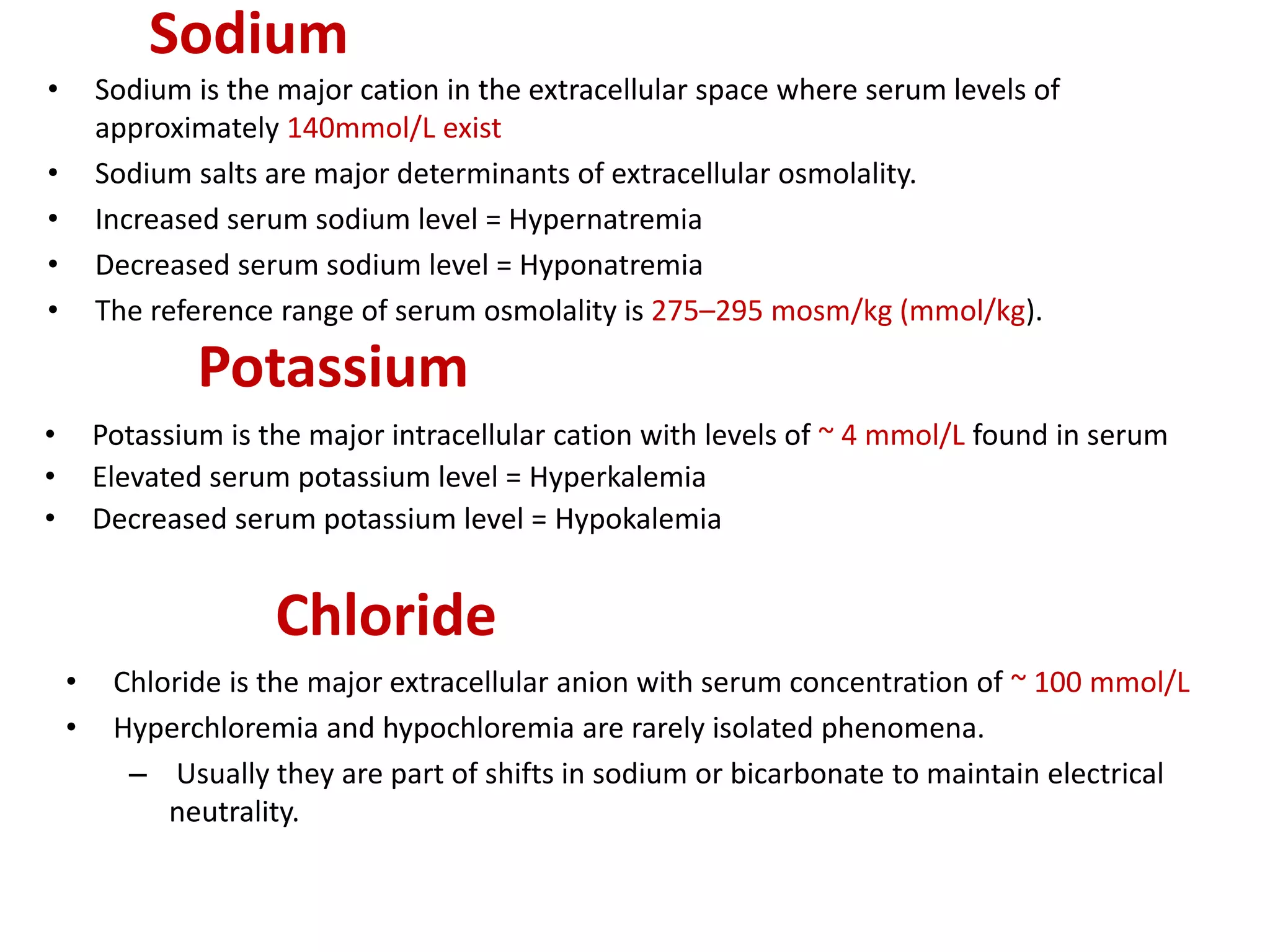
Sodium
• Sodium is the major cation in the extracellular space where serum levels of
approximately 140mmol/L exist
• Sodium salts are major determinants of extracellular osmolality.
• Increased serum sodium level = Hypernatremia
• Decreased serum sodium level = Hyponatremia
• The reference range of serum osmolality is 275–295 mosm/kg (mmol/kg).
Potassium
• Potassium is the major intracellular cation with levels of ~ 4 mmol/L found in serum
• Elevated serum potassium level = Hyperkalemia
• Decreased serum potassium level = Hypokalemia
Chloride
• Chloride is the major extracellular anion with serum concentration of ~ 100 mmol/L
• Hyperchloremia and hypochloremia are rarely isolated phenomena.
– Usually they are part of shifts in sodium or bicarbonate to maintain electrical
neutrality.
Carbon Dioxide Content
• The carbon dioxide content (CO2) measures the H2CO3, dissolved CO2 and
bicarbonate ion (HCO3) that exists in the serum.
• Because the amounts of H2CO3 and dissolved CO2 in the serum are so small, the CO2
content is an indirect measure of the HCO3 anion
– Therefore, clinicians most often refer to the CO2 measurement in the BMP as the
“bicarbonate level” or “bicarb level”
Blood Urea Nitrogen
• The BUN measures the amount of urea nitrogen in the blood.
– Urea is formed in the liver as the end product of protein metabolism and is
transported to the kidneys for excretion.
– Nearly all renal diseases can cause an inadequate excretion of urea, which causes
the blood concentration to rise above normal.
– The BUN is interpreted in conjunction with the creatinine test – these tests are
referred to as “renal function studies”.
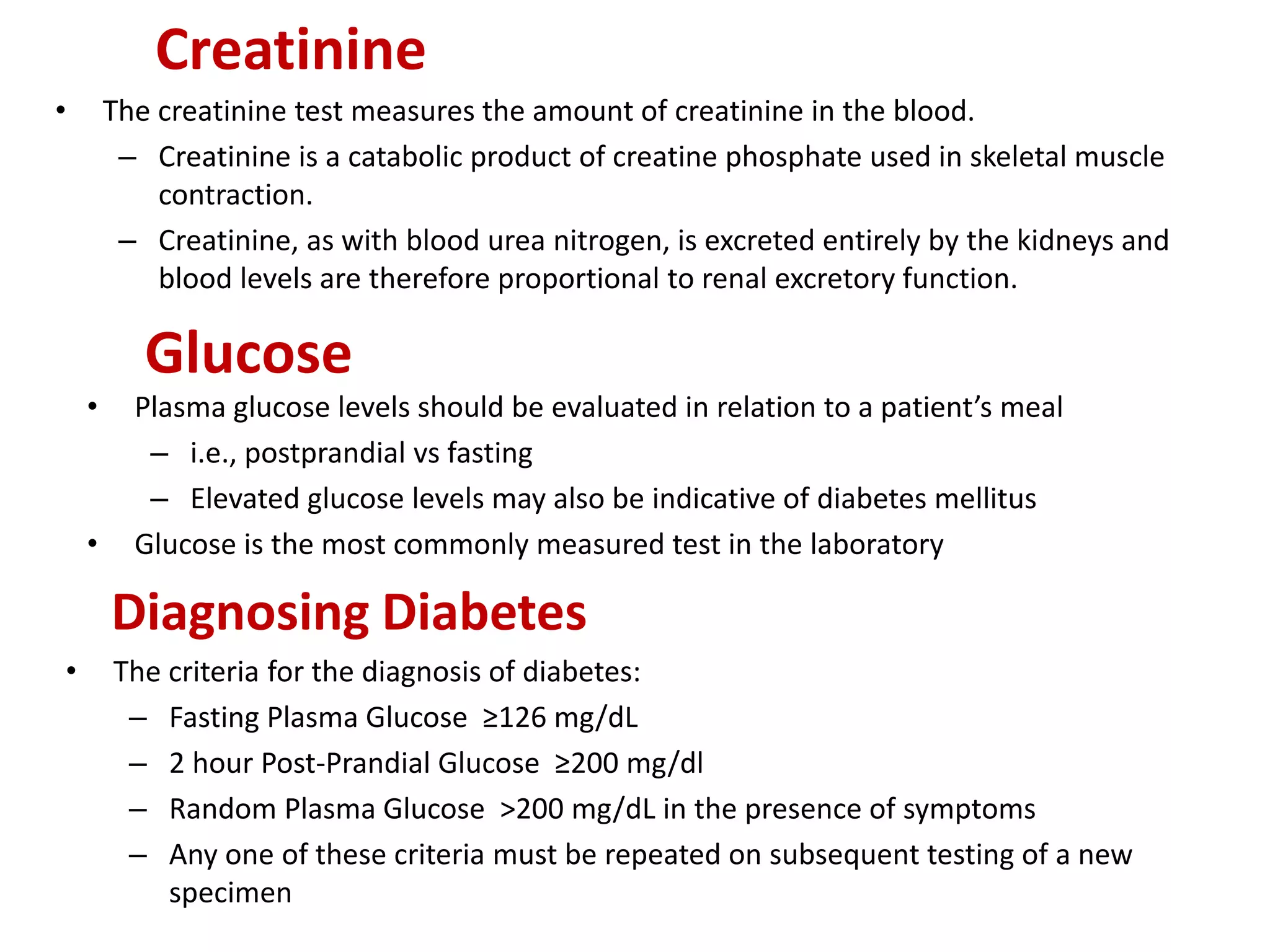
Creatinine
• The creatinine test measures the amount of creatinine in the blood.
– Creatinine is a catabolic product of creatine phosphate used in skeletal muscle
contraction.
– Creatinine, as with blood urea nitrogen, is excreted entirely by the kidneys and
blood levels are therefore proportional to renal excretory function.
Glucose
• Plasma glucose levels should be evaluated in relation to a patient’s meal
– i.e., postprandial vs fasting
– Elevated glucose levels may also be indicative of diabetes mellitus
• Glucose is the most commonly measured test in the laboratory
Diagnosing Diabetes
• The criteria for the diagnosis of diabetes:
– Fasting Plasma Glucose ≥126 mg/dL
– 2 hour Post-Prandial Glucose ≥200 mg/dl
– Random Plasma Glucose >200 mg/dL in the presence of symptoms
– Any one of these criteria must be repeated on subsequent testing of a new
specimen
• The total serum calcium is a measure of both
– Free (ionized) calcium
– Protein bound (usually to albumin) calcium
• Therefore, the total serum calcium level is affected by
changes in serum albumin
– As a rule of thumb, the total serum calcium level decreases
by approximately 0.8mg for every 1gram decrease in the
serum albumin level.
Total Calcium
One final BMP pearl
• Clinicians have a short-hand way to report
BMP values:
If we look at the last BMP…
NA
K
Cl
C02
BUN
Cr
Glu
142
3.9
107
27
10
0.8
100
Complete Metabolic Panel
• The CMP provides a more extensive laboratory evaluation of organ dysfunction
and includes:
– Sodium
– Potassium
– Chloride
– Carbon Dioxide Content
– Albumin
– Total Bilirubin
– Total Calcium
– Glucose
– Alkaline Phosphatase
– Total Protein
– Aspartate Aminotransferase
– Blood Urea Nitrogen
– Creatinine
Total Protein
• Albumin and globulin constitute most of the protein within the
body and are measured in the total protein test
• Albumin comprises ~ 60% of the total protein within the
extracellular portion of the blood (Hgb is the most abundant
protein in whole blood and is intracellular)
• Albumin’s major effect within the blood is to maintain colloid
osmotic pressure
– Transports many important blood constituents
• drugs, hormones, enzymes
• Albumin is synthesized in the liver and therefore is a measure
of hepatic function
Alkaline Phosphatase (Alk Phos or ALP)
• Alkaline phosphatase is an enzyme present in a number of tissues,
including liver, bone, kidney, intestine, and placenta, each of which
contains distinct isoenzyme forms
• Isoenzymes are forms of an enzyme that catalyze the same reaction, but
are slightly different in structure
• The two major circulating alkaline phosphatase isoenzymes are bone
and liver.
– Therefore elevation in serum alkaline phosphatase is most
commonly a reflection of liver or bone disorders.
• Levels of alk phos are increased in both extrahepatic and
intrahepatic obstructive biliary disease
Aspartate Aminotransferase (AST)
• AST is an enzyme that is present in hepatocytes and myocytes (both
skeletal muscle and cardiac)
– Elevations in AST are most commonly a reflection of hepatocellular
injury
• But they may also be elevated in myocardial or skeletal muscle
injury
Bilirubin, Total
• The total serum bilirubin level is the sum of the conjugated
(direct) and unconjugated (indirect) bilirubin.
– Normally the unconjugated bilirubin makes up 70-85% of the
total bilirubin
• Remember that bilirubin metabolism begins with the breakdown
of red blood cells in the reticuloendothelial system and bilirubin
metabolism continues in the liver
– Elevation in total bilirubin may therefore be a
reflection of any aberrations in bilirubin metabolism
or increased levels of bilirubin production (such as
hemolysis)
If you would like to donate us?
Scan below and donate us 0.013$ (US dollar) (5Rs Indian rupee)
Contact: If you want PPT/PDF files, please contact below.
Email: gnccmysore@gmail.com
Telegram:+919738137533(only for Chat)
Hematology

Hematology

  • 1.
  • 2.
    Hematology, is thebranch of science concerned with the study of blood, blood-forming tissues, and the disorders associated with them is hematology (he ¯m-a-TOL-o ¯-je ¯; hema- or hemato- blood; -logy study of). Like diagnosis, treatment, and prevention of diseases related to the production of blood and its components, such as blood cells, hemoglobin, blood proteins, bone marrow, platelets, blood vessels, spleen, and the mechanism of coagulation.. Such diseases might include hemophilia, blood clots, other bleeding disorders and blood cancers such as leukemia, myeloma, and lymphoma. Hematology
  • 3.
  • 4.
    Figure 19.2 Scanningelectron micrograph of the formed elements of blood.
  • 6.
    Function of Blood •Transporting fluids such as: – Nutrients from digestive tract – O2 from lungs – Waste from cells – Hormones • Aids in heat distribution • Regulates acid-base balance • Protection
  • 7.
    Composition of Blood:Erythrocytes • Red blood cells are responsible for: – Transport of oxygen and nutrients – Removal of waste and CO2 from the cells – Distribution of heat • Erythrocytes consist mainly of hemoglobin, a complex metalloprotein containing heme groups whose iron atoms temporarily bind to oxygen molecules (O2) in the lungs or gills and release them throughout the body. Oxygen can easily diffuse through the red blood cell's cell membrane.
  • 8.
    Composition of Blood:Leukocytes • WBC are responsible for: – Phagocytosis – to engulf and absorb waste material and harmful microorganisms in the blood stream and tissues – Synthesis of antibody molecules – Inflammation process – Production of heparin – component found in lung and liver tissue which have the ability to prevent clotting of blood. • Heparin used in the treatment of thrombosis
  • 9.
    Composition of Blood:Leukocytes • Types of Leukocytes – Granulocytes • Neutrophils • Eosinophils • Basophils – Agranulocytes • Lymphocytes • Monocytes
  • 10.
    Composition of Blood:Thrombocytes • Platelets – the smallest of the solid components of the blood • Responsible for the clotting process • Coagulation: term for clotting • Embolism: obstruction of an artery, typically by a clot of blood or an air bubble which is moving through the body.
  • 11.
    A complete bloodcount, or CBC, is an easy and very common test that screens for certain disorders that can affect your health. A CBC determines if there are any increases or decreases in your cell counts. Normal values vary depending on your age and your gender. Your lab report will tell you the normal value range for your age and gender. A CBC can help diagnose a broad range of conditions, from anemia and infection to cancer. Total cell count
  • 12.
    CBC • Complete bloodcount – With or without differential • Peripheral venous blood is collected in a lavendar tube (contains the anticoagulant EDTA) and should be thoroughly mixed • The sample is then transported to a laboratory. Sometimes the sample is drawn off a finger prick using a Pasteur pipette for immediate processing by an automated counter. • In the past, counting the cells in a patient's blood was performed manually, by viewing a slide prepared with a sample of the patient's blood (a blood film, or peripheral smear) under a microscope. • Presently, this process is generally automated by use of an automated analyzer, with only approximately 10–20% of samples now being examined manually.
  • 13.
    The blood iswell mixed (though not shaken) and placed on a rack in the analyzer. This instrument has flow cells, photometers and apertures that analyze different elements in the blood. The cell counting component counts the numbers and types of different cells within the blood. The results are printed out or sent to a computer for review. this is flow cytometry. Flow cytometry is a technology that is used to analyse the physical and chemical characteristics of particles in a fluid as it passes through at least one laser. Cell components are fluorescently labelled and then excited by the laser to emit light at varying wavelengths.
  • 14.
  • 15.
    A counting chamber,(alsoknown as hemocytometer), is a microscope slide that is especially designed to enable cell counting. The slide has a sink in its middle; the area of the sink is marked with a grid. A drop of a cell culture is placed in the sink. looking at the sample under the microscope, the researcher uses the grid to manually count the number of cells in a certain area.
  • 16.
    So, for example,if you diluted your sample 1:1 with Trypan blue, and you counted 325 cells in 4 corner squares plus the central big square, total cells per ml = If you want to know how many cells you have in your original sample, just multiply the cell concentration by total sample volume. For example, if your original sample volume is 5 ml, then your sample has a total = The depth of the sink is predefined, thus the volume of the counted culture can be calculated and with it the concentration of the cells. Once you have obtained the total cell count, cell concentration can be calculated from the formula:
  • 17.
    What is measured? •Red blood cell data – Total red blood cell count (RBC) – Hemoglobin (Hgb) – Hematocrit (Hct) – Mean corpuscular volume (MCV) – Red blood cell distribution width (RDW) • White blood cell data – Total white blood cell (leukocyte) count (WBC) – A white blood cell count differential may also be ordered • Platelet Count (PLT)
  • 18.
    Total Red BloodCell Count • Count of the number of circulating red blood cells in 1mm3 of peripheral venous blood. • The hemoglobin concentration is a measure of the amount of Hgb in the peripheral blood, which reflects the number of red blood cells in the blood – Hgb constitutes over 90% of the red blood cells • Decrease in Hgb concentration = anemia • Increase in Hgb concentration = polycythemia
  • 19.
    Normal Ranges • RBC:female 3.6-5.0x106mm3 male 4.2-5.4x106mm3 • WBC: 4.5-10.5x103mm3 • HCT: female 36-48% male 42-52% • Hgb: female 12-16 g/dL male 14-17.4 g/dL • Platelets: 140-400x103mm3
  • 20.
    Test results willvary based on your cell counts. Blood cell counts that are too high or too low could signal a wide variety of conditions, including: •iron or other vitamin and mineral deficiencies •bleeding disorders •heart disease •autoimmune disorders •bone marrow problems •cancer •infection or inflammation •reaction to medication
  • 21.
    The blood differentialtest can detect abnormal or immature cells. It can also diagnose an infection, inflammation, leukemia, or an immune system disorder. Differential blood count gives relative percentage of each type of white blood cell and also helps reveal abnormal white blood cell populations (eg, blasts, immature granulocytes, or circulating lymphoma cells in the peripheral blood). Reference ranges for differential white blood cell count in normal adults is as follows: Neutrophils - 2.0–7.0×10 9/l (40–80%) Lymphocytes - 1.0–3.0×10 9/l (20–40%) Monocytes - 0.2–1.0×10 9/l (2–10%) Eosinophils - 0.02–0.5×10 9/l (1–6%) Basophils - 0.02–0.1×10 9/l (< 1–2%) The reference ranges may vary depending on population studies, the individual laboratory, instruments, and methods. Differential count
  • 22.
    White Blood CellCount • A count of the total WBC, or leukocyte, count in 1mm3 of peripheral blood • A decrease in the number of WBCs = – Leukopenia • An increase in the number of WBCs = – Leukocytosis
  • 23.
    A laboratory specialistputs a drop of blood from your sample on a clear glass slide and smears it to spread the blood around. Then, they stain the blood smear with a Romanowsky-stained peripheral blood smear that helps to differentiate the types of white blood cells in the sample. The lab specialist then counts the number of each white blood cell type. The specialist may do a manual blood count, visually identifying the number and size of cells on the slide. specialist might also use an automated blood count. In this case, a machine analyzes your blood cells based on automated measurement techniques. Automated count technology uses electrical, laser, or photodetection methods to provide a highly accurate portrait of the size, shape, and number of blood cells in a sample. An abnormal differential result may be followed by other tests such as a blood smear, bone marrow biopsy, chromosome analysis, or immunophenotyping (e.g., flow cytometry). These tests can reveal the presence of abnormal and/or immature populations of WBCs.
  • 24.
    This information isuseful in helping to diagnose the specific cause of an illness, such as: Infections caused by bacteria, viruses, fungi or parasites Inflammation Allergies, asthma Immune disorders (e.g., autoimmune disorders, immune deficiency) Leukemia (e.g., chronic myeloid leukemia, chronic lymphocytic leukemia)
  • 25.
    Platelet Count (PLT) •A count of the number of platelets (thrombocytes) per cubic milliliter of blood – A decreased number of platelets = • Thrombocytopenia – An increased number of platelets = • Thrombocytosis
  • 26.
    Hematocrit • Hematocrit isa measure of the percentage of the total blood volume that is made up by the red blood cells • The hematocrit can be determined directly by centrifugation (“spun hematocrit”) – The height of the red blood cell column is measured and compared to the column of the whole blood
  • 27.
    Centrifuged blood (normal) Redblood cells Buffy coat (WBCs and Platelets) Plasma Normal Hct in adult males 40-54% Normal Hct in adult females 34-51%
  • 28.
    Centrifuged blood (adultmale or female) What is your diagnosis? Anemia – there is a low percentage of RBCs (low hematocrit) RBCs Buffy coat Plasma
  • 29.
    A significant dropin hematocrit indicates anemia, a lower-than- normal number of RBCs. In polycythemia the percentage of RBCs is abnormally high, and the hematocrit may be 65% or higher. This raises the viscosity of blood, which increases the resistance to flow and makes the blood more difficult for the heart to pump. Increased viscosity also contributes to high blood pres- sure and increased risk of stroke. Causes of polycythemia include abnormal increases in RBC production, tissue hypoxia, dehydration, and blood doping by athletes. Hypoxia can result from a failure at any stage in the delivery of oxygen to cells. This can include decreased partial pressures of oxygen, problems with diffusion of oxygen in the lungs, insufficient available hemoglobin, problems with blood flow to the end tissue, and problems with breathing rhythm.
  • 30.
    Calculating the Hematocrit •More commonly the Hct is calculated directly from the RBC and MCV – Hematocrit % = RBC (cells/liter) x MCV (liter/cell) Mean Corpuscular Volume • The MCV is a measure of the average volume, or size, of an RBC • To calculate MCV, the hematocrit (Hct) is divided by the concentration of RBCs ([RBC]) • For example, if the Hct = 42.5% and [RBC] = 4.58 million per microliter (4,580,000/μL), then = 92.8 . 1015 or 92.8 fL
  • 31.
    Use of MCVResult • The MCV is important in classifying anemias – Normal MCV = normocytic anemia (80-100 fL) Femtoliter – Decreased MCV = microcytic anemia is characterized by small red blood cells with smaller cells (<80 fL) – Increased MCV = macrocytic anemia (larger cells (>100 fL). – The MCV is the average red blood cell size.
  • 33.
    Basic Metabolic Panel •The BMP is a chemistry panel where multiple chemistry tests are grouped as a single profile for ease of ordering since this group of tests are often all medically necessary. • The BMP includes electrolytes and tests of kidney function: – Sodium (Na) – Potassium (K) – Chloride (Cl) – Carbon Dioxide Content (CO2) – Blood Urea Nitrogen (BUN) – Serum Creatinine (Cr) – Serum glucose (Glu) – Total Calcium (Calcium)
  • 34.
    BMP • Peripheral venousblood can be collected in several types of tube – Light Green PST • Plasma separating tube (PST) with the anticoagulant lithium heparin – Gold SST • Serum separating tube (SST) contains a gel at the bottom to separate blood cellular components from serum on centrifugation – Red • No Additives – blood clots and serum is separated by centrifugation
  • 35.
    Sodium • Sodium isthe major cation in the extracellular space where serum levels of approximately 140mmol/L exist • Sodium salts are major determinants of extracellular osmolality. • Increased serum sodium level = Hypernatremia • Decreased serum sodium level = Hyponatremia • The reference range of serum osmolality is 275–295 mosm/kg (mmol/kg). Potassium • Potassium is the major intracellular cation with levels of ~ 4 mmol/L found in serum • Elevated serum potassium level = Hyperkalemia • Decreased serum potassium level = Hypokalemia Chloride • Chloride is the major extracellular anion with serum concentration of ~ 100 mmol/L • Hyperchloremia and hypochloremia are rarely isolated phenomena. – Usually they are part of shifts in sodium or bicarbonate to maintain electrical neutrality.
  • 36.
    Carbon Dioxide Content •The carbon dioxide content (CO2) measures the H2CO3, dissolved CO2 and bicarbonate ion (HCO3) that exists in the serum. • Because the amounts of H2CO3 and dissolved CO2 in the serum are so small, the CO2 content is an indirect measure of the HCO3 anion – Therefore, clinicians most often refer to the CO2 measurement in the BMP as the “bicarbonate level” or “bicarb level” Blood Urea Nitrogen • The BUN measures the amount of urea nitrogen in the blood. – Urea is formed in the liver as the end product of protein metabolism and is transported to the kidneys for excretion. – Nearly all renal diseases can cause an inadequate excretion of urea, which causes the blood concentration to rise above normal. – The BUN is interpreted in conjunction with the creatinine test – these tests are referred to as “renal function studies”.
  • 37.
    Creatinine • The creatininetest measures the amount of creatinine in the blood. – Creatinine is a catabolic product of creatine phosphate used in skeletal muscle contraction. – Creatinine, as with blood urea nitrogen, is excreted entirely by the kidneys and blood levels are therefore proportional to renal excretory function. Glucose • Plasma glucose levels should be evaluated in relation to a patient’s meal – i.e., postprandial vs fasting – Elevated glucose levels may also be indicative of diabetes mellitus • Glucose is the most commonly measured test in the laboratory Diagnosing Diabetes • The criteria for the diagnosis of diabetes: – Fasting Plasma Glucose ≥126 mg/dL – 2 hour Post-Prandial Glucose ≥200 mg/dl – Random Plasma Glucose >200 mg/dL in the presence of symptoms – Any one of these criteria must be repeated on subsequent testing of a new specimen
  • 38.
    • The totalserum calcium is a measure of both – Free (ionized) calcium – Protein bound (usually to albumin) calcium • Therefore, the total serum calcium level is affected by changes in serum albumin – As a rule of thumb, the total serum calcium level decreases by approximately 0.8mg for every 1gram decrease in the serum albumin level. Total Calcium
  • 39.
    One final BMPpearl • Clinicians have a short-hand way to report BMP values: If we look at the last BMP… NA K Cl C02 BUN Cr Glu 142 3.9 107 27 10 0.8 100
  • 40.
    Complete Metabolic Panel •The CMP provides a more extensive laboratory evaluation of organ dysfunction and includes: – Sodium – Potassium – Chloride – Carbon Dioxide Content – Albumin – Total Bilirubin – Total Calcium – Glucose – Alkaline Phosphatase – Total Protein – Aspartate Aminotransferase – Blood Urea Nitrogen – Creatinine
  • 41.
    Total Protein • Albuminand globulin constitute most of the protein within the body and are measured in the total protein test • Albumin comprises ~ 60% of the total protein within the extracellular portion of the blood (Hgb is the most abundant protein in whole blood and is intracellular) • Albumin’s major effect within the blood is to maintain colloid osmotic pressure – Transports many important blood constituents • drugs, hormones, enzymes • Albumin is synthesized in the liver and therefore is a measure of hepatic function
  • 42.
    Alkaline Phosphatase (AlkPhos or ALP) • Alkaline phosphatase is an enzyme present in a number of tissues, including liver, bone, kidney, intestine, and placenta, each of which contains distinct isoenzyme forms • Isoenzymes are forms of an enzyme that catalyze the same reaction, but are slightly different in structure • The two major circulating alkaline phosphatase isoenzymes are bone and liver. – Therefore elevation in serum alkaline phosphatase is most commonly a reflection of liver or bone disorders. • Levels of alk phos are increased in both extrahepatic and intrahepatic obstructive biliary disease Aspartate Aminotransferase (AST) • AST is an enzyme that is present in hepatocytes and myocytes (both skeletal muscle and cardiac) – Elevations in AST are most commonly a reflection of hepatocellular injury • But they may also be elevated in myocardial or skeletal muscle injury
  • 43.
    Bilirubin, Total • Thetotal serum bilirubin level is the sum of the conjugated (direct) and unconjugated (indirect) bilirubin. – Normally the unconjugated bilirubin makes up 70-85% of the total bilirubin • Remember that bilirubin metabolism begins with the breakdown of red blood cells in the reticuloendothelial system and bilirubin metabolism continues in the liver – Elevation in total bilirubin may therefore be a reflection of any aberrations in bilirubin metabolism or increased levels of bilirubin production (such as hemolysis)
  • 44.
    If you wouldlike to donate us? Scan below and donate us 0.013$ (US dollar) (5Rs Indian rupee) Contact: If you want PPT/PDF files, please contact below. Email: gnccmysore@gmail.com Telegram:+919738137533(only for Chat)