

P R E S E N T E R - D R . I T R A T H U S S A I N
M O D E R A T O R – D R . A L O K B H A T N A G A R
LABORATORY INVESTIGATIONS
IN OMFS
INTRODUCTION
 Laboratory Tests include any test or
examination of materials derived from the
human body for the purpose of making
patient care decisions and improving
public health.
 laboratory measurements form the scientific basis
upon which medical diagnosis and management of
patients is established.
Laboratory tests required in oral surgical procedures
1. Blood studies
2. Biochemical
3. Histopathological
4. Immunological tests
5. Microbial
HAEMATOLOGY
 Is the branch of internal medicine, physiology,
pathology, clinical laboratory work, and pediatrics
that is concerned with the study of blood, the blood-
forming organs, and blood diseases.
 Hematology includes the study of etiology, diagnosis,
treatment, prognosis, and prevention of blood
diseases.
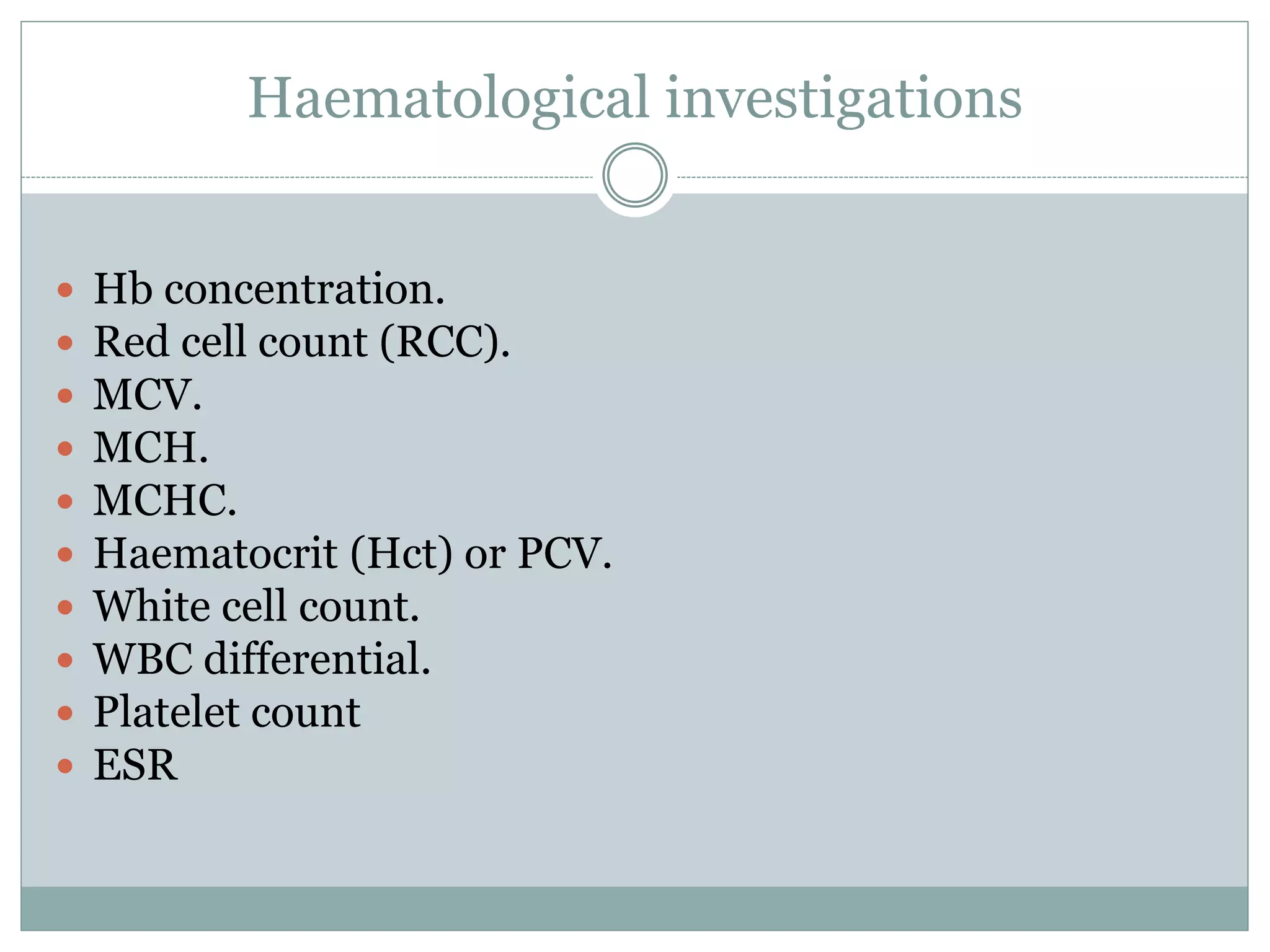
Haematological investigations
 Hb concentration.
 Red cell count (RCC).
 MCV.
 MCH.
 MCHC.
 Haematocrit (Hct) or PCV.
 White cell count.
 WBC differential.
 Platelet count
 ESR
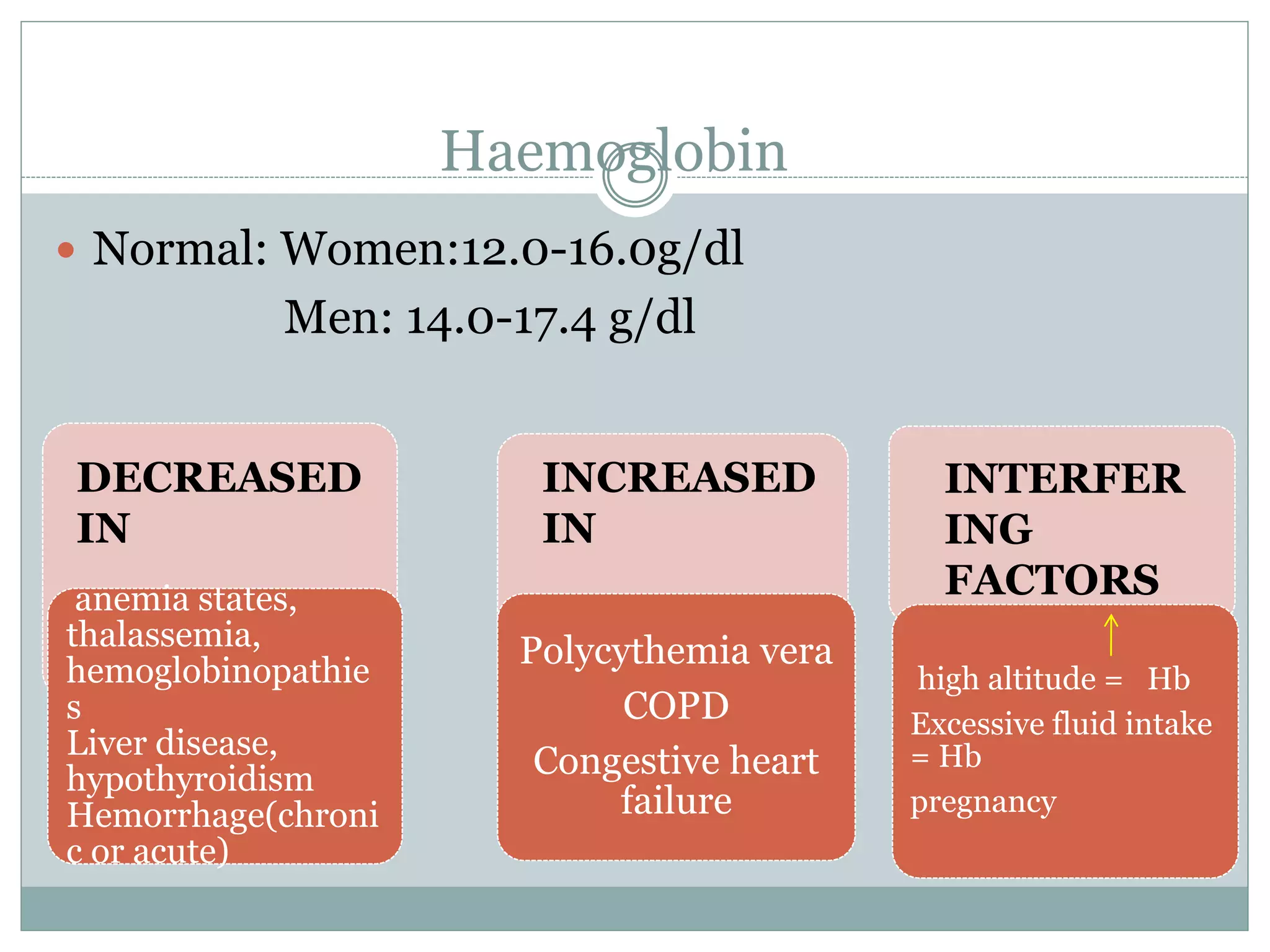
Haemoglobin
 Normal: Women:12.0-16.0g/dl
Men: 14.0-17.4 g/dl
anemia states,
thalassemia,
hemoglobinopathie
s
Liver disease,
hypothyroidism
Hemorrhage(chroni
c or acute)
DECREASED
IN
Polycythemia vera
COPD
Congestive heart
failure
INCREASED
IN
high altitude = Hb
Excessive fluid intake
= Hb
pregnancy
INTERFER
ING
FACTORS
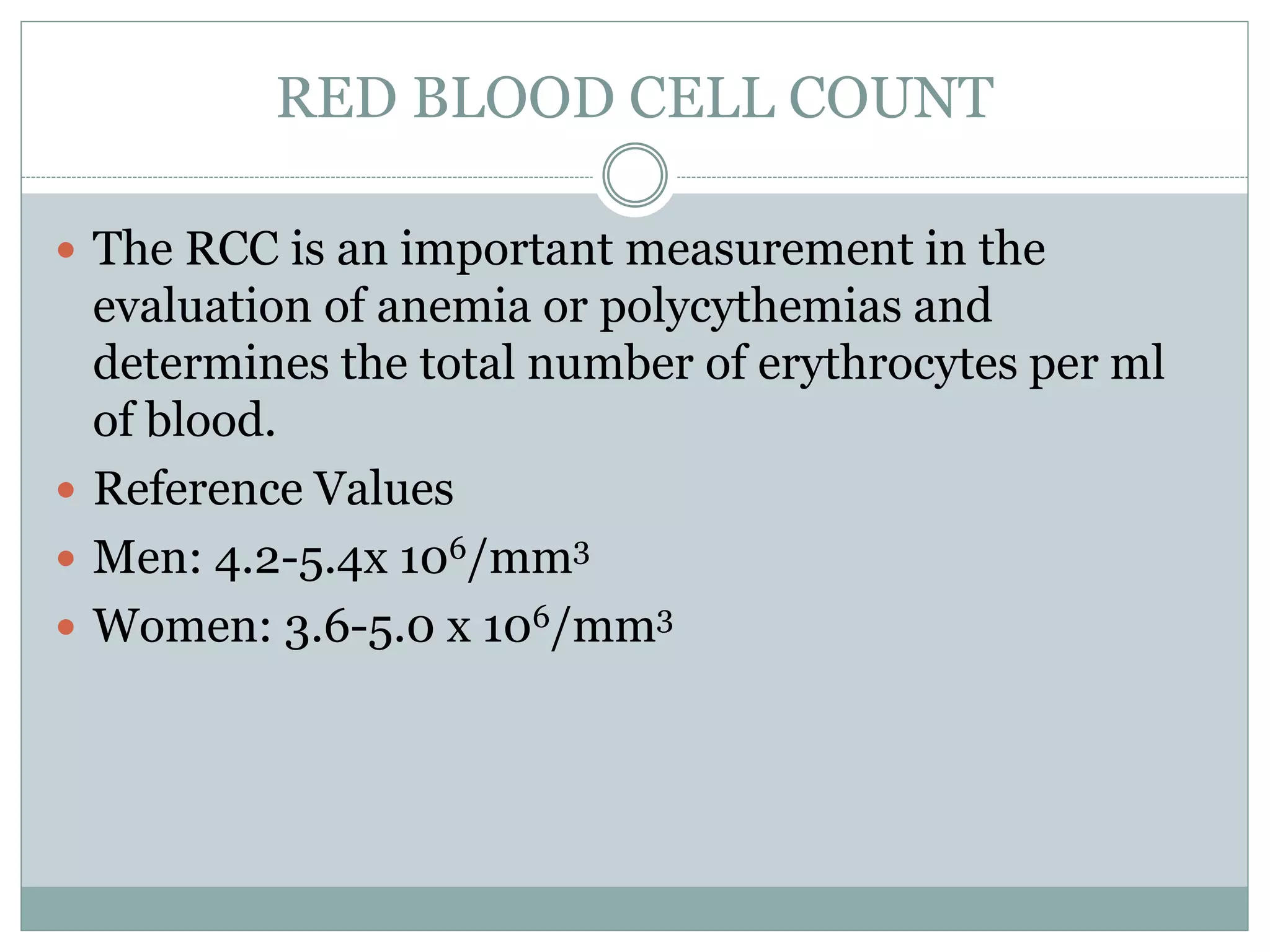
RED BLOOD CELL COUNT
 The RCC is an important measurement in the
evaluation of anemia or polycythemias and
determines the total number of erythrocytes per ml
of blood.
 Reference Values
 Men: 4.2-5.4x 10⁶/mm3
 Women: 3.6-5.0 x 10⁶/mm3
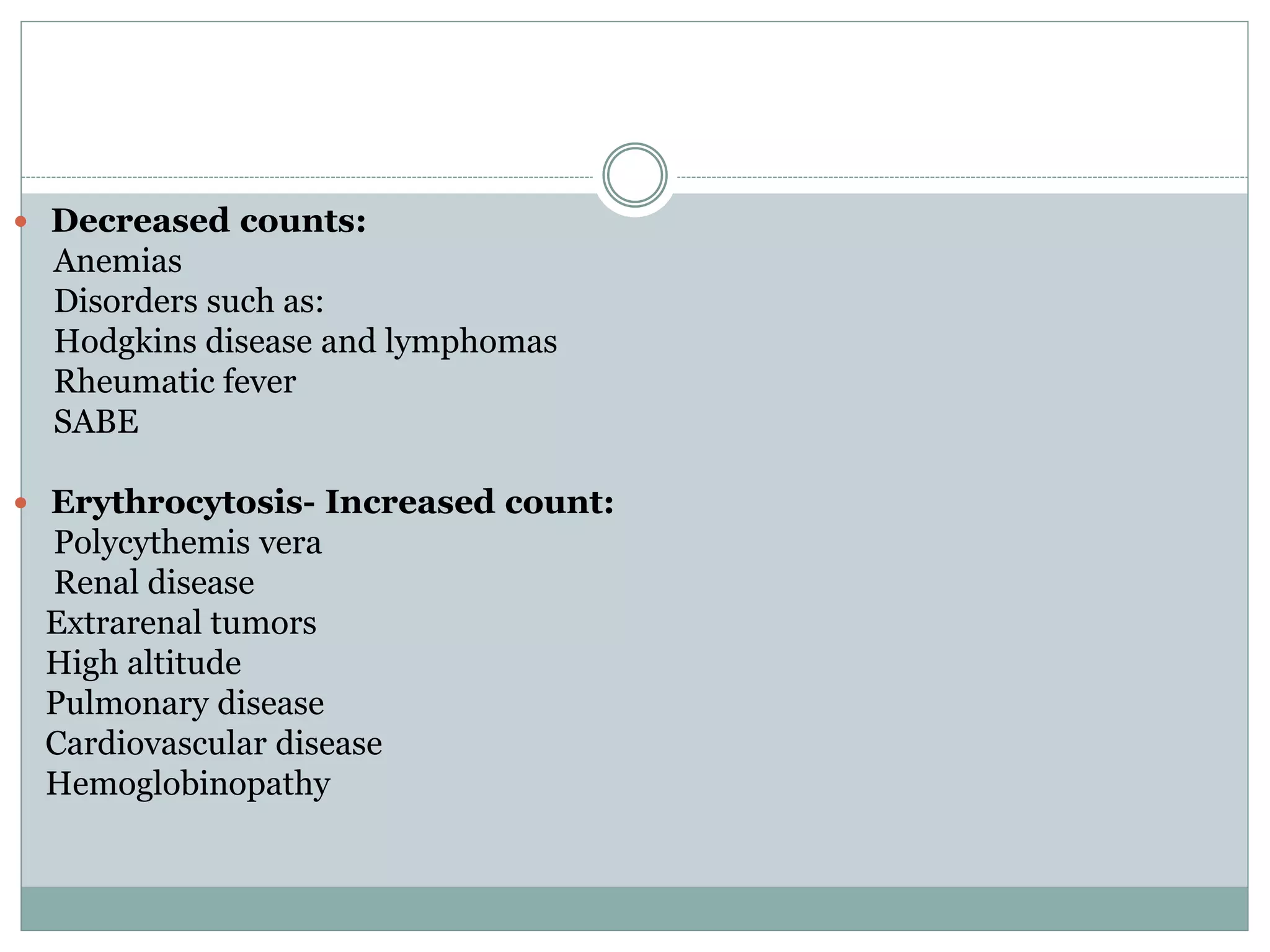
 Decreased counts:
Anemias
Disorders such as:
Hodgkins disease and lymphomas
Rheumatic fever
SABE
 Erythrocytosis- Increased count:
Polycythemis vera
Renal disease
Extrarenal tumors
High altitude
Pulmonary disease
Cardiovascular disease
Hemoglobinopathy
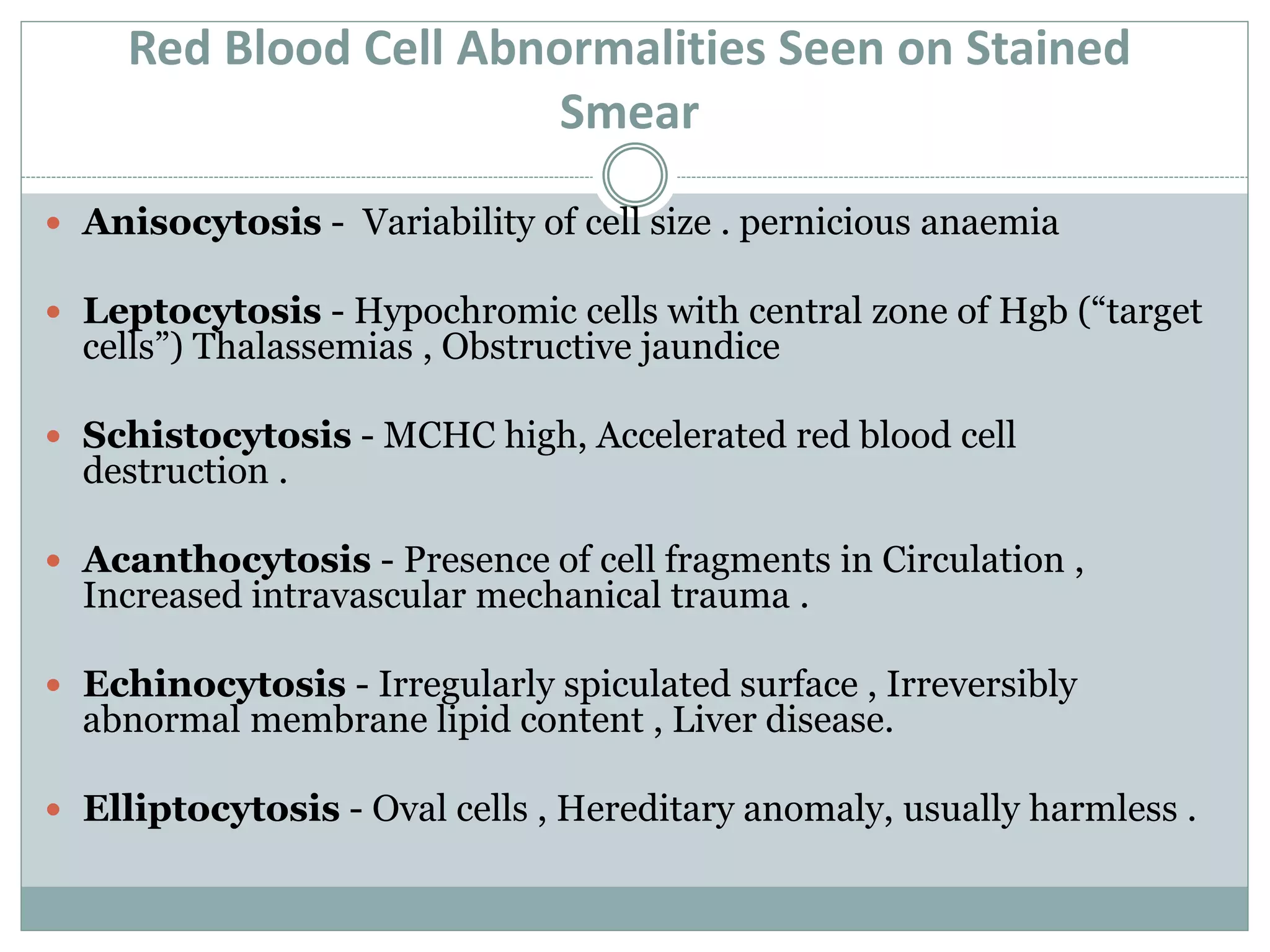
Red Blood Cell Abnormalities Seen on Stained
Smear
 Anisocytosis - Variability of cell size . pernicious anaemia
 Leptocytosis - Hypochromic cells with central zone of Hgb (“target
cells”) Thalassemias , Obstructive jaundice
 Schistocytosis - MCHC high, Accelerated red blood cell
destruction .
 Acanthocytosis - Presence of cell fragments in Circulation ,
Increased intravascular mechanical trauma .
 Echinocytosis - Irregularly spiculated surface , Irreversibly
abnormal membrane lipid content , Liver disease.
 Elliptocytosis - Oval cells , Hereditary anomaly, usually harmless .
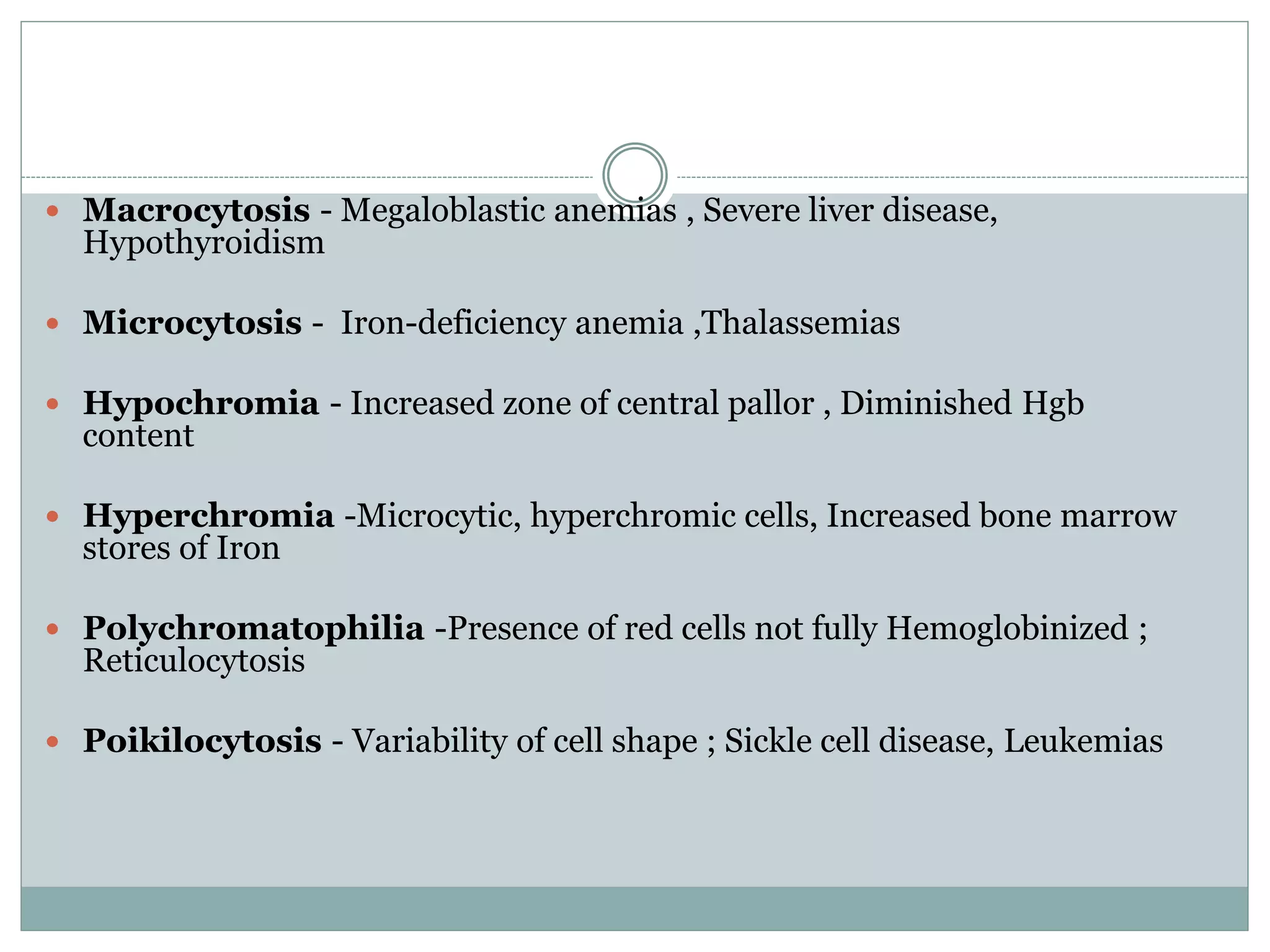
 Macrocytosis - Megaloblastic anemias , Severe liver disease,
Hypothyroidism
 Microcytosis - Iron-deficiency anemia ,Thalassemias
 Hypochromia - Increased zone of central pallor , Diminished Hgb
content
 Hyperchromia -Microcytic, hyperchromic cells, Increased bone marrow
stores of Iron
 Polychromatophilia -Presence of red cells not fully Hemoglobinized ;
Reticulocytosis
 Poikilocytosis - Variability of cell shape ; Sickle cell disease, Leukemias
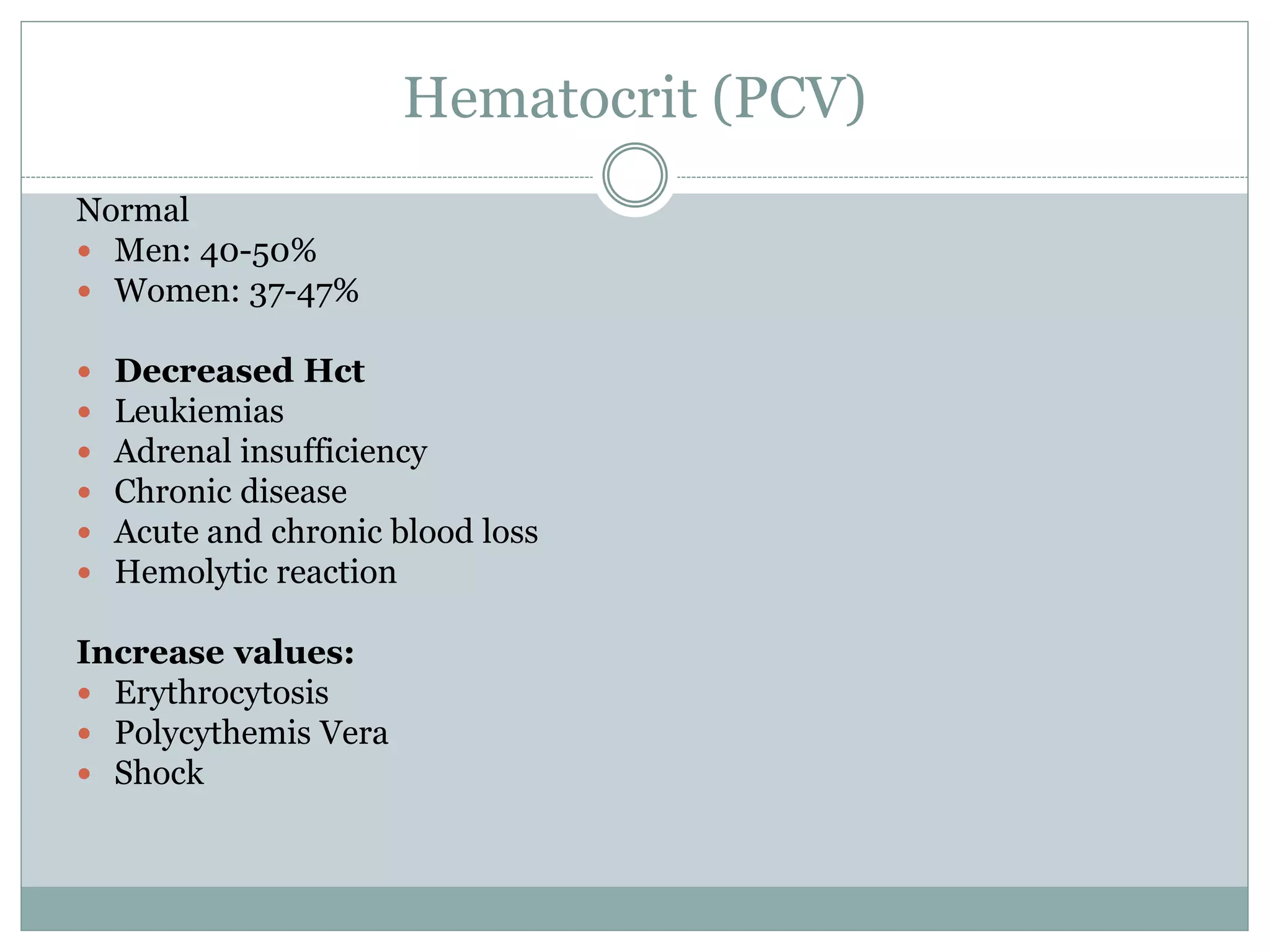
Hematocrit (PCV)
Normal
 Men: 40-50%
 Women: 37-47%
 Decreased Hct
 Leukiemias
 Adrenal insufficiency
 Chronic disease
 Acute and chronic blood loss
 Hemolytic reaction
Increase values:
 Erythrocytosis
 Polycythemis Vera
 Shock
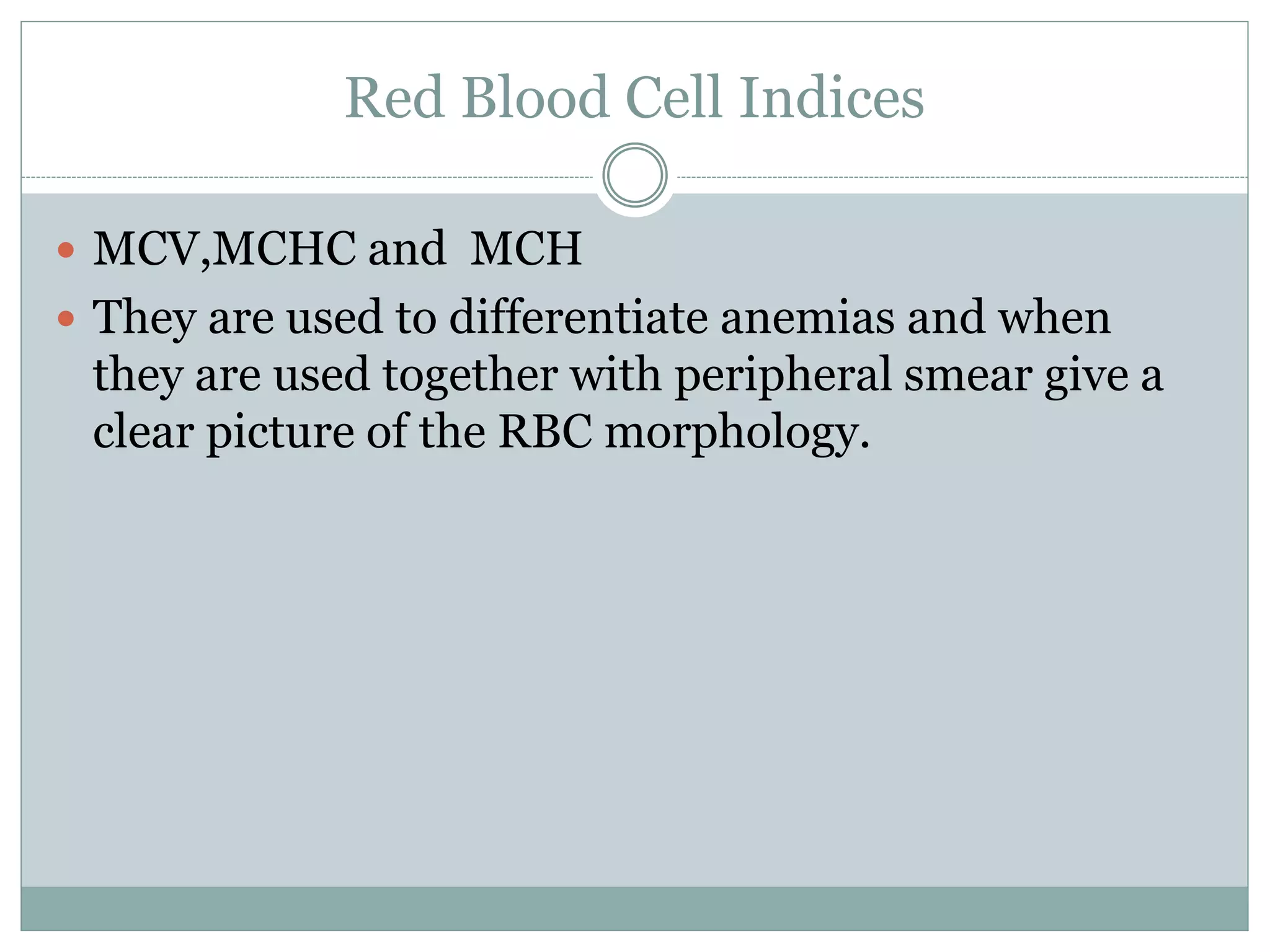
Red Blood Cell Indices
 MCV,MCHC and MCH
 They are used to differentiate anemias and when
they are used together with peripheral smear give a
clear picture of the RBC morphology.
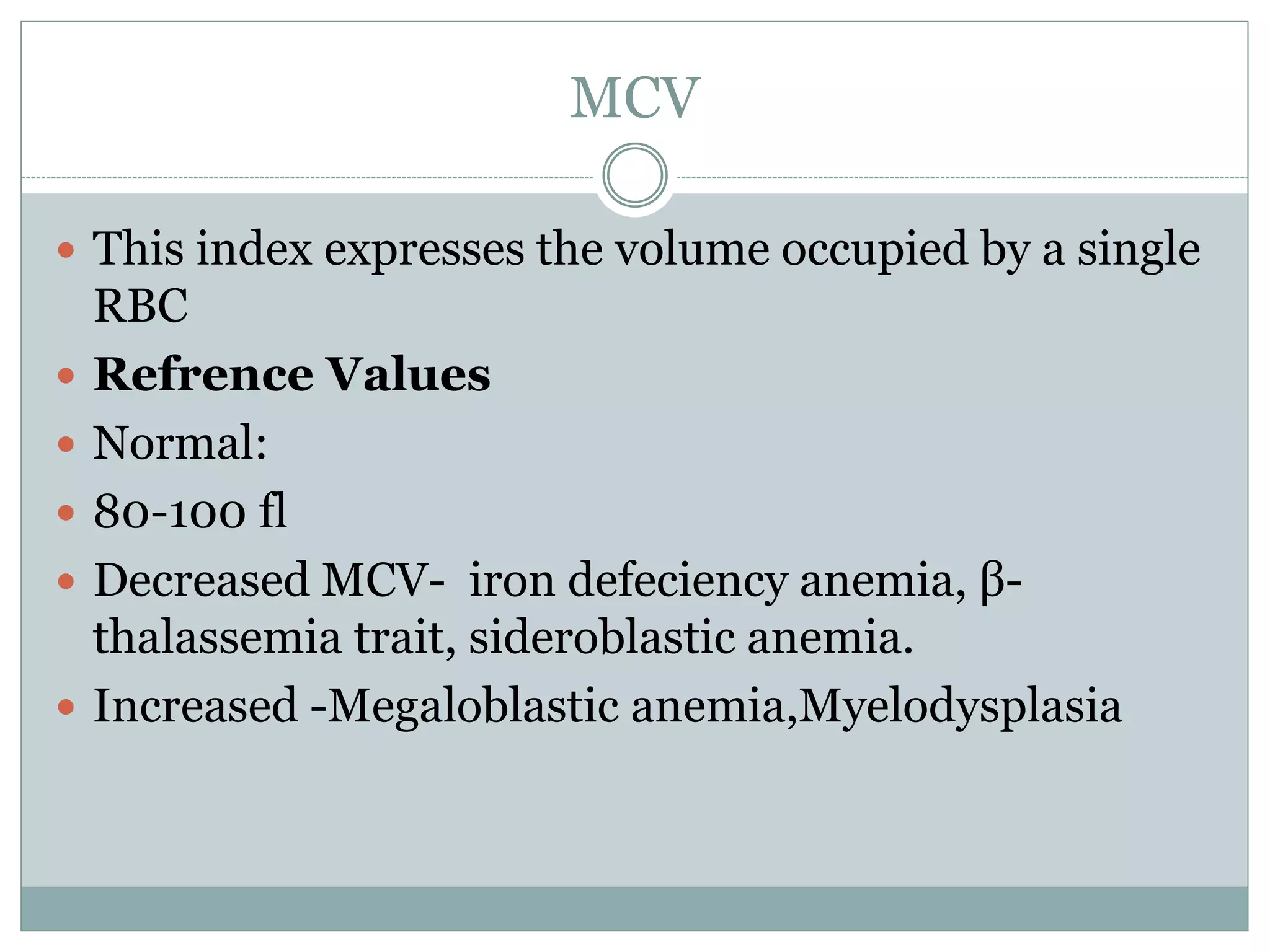
MCV
 This index expresses the volume occupied by a single
RBC
 Refrence Values
 Normal:
 80-100 fl
 Decreased MCV- iron defeciency anemia, β-
thalassemia trait, sideroblastic anemia.
 Increased -Megaloblastic anemia,Myelodysplasia
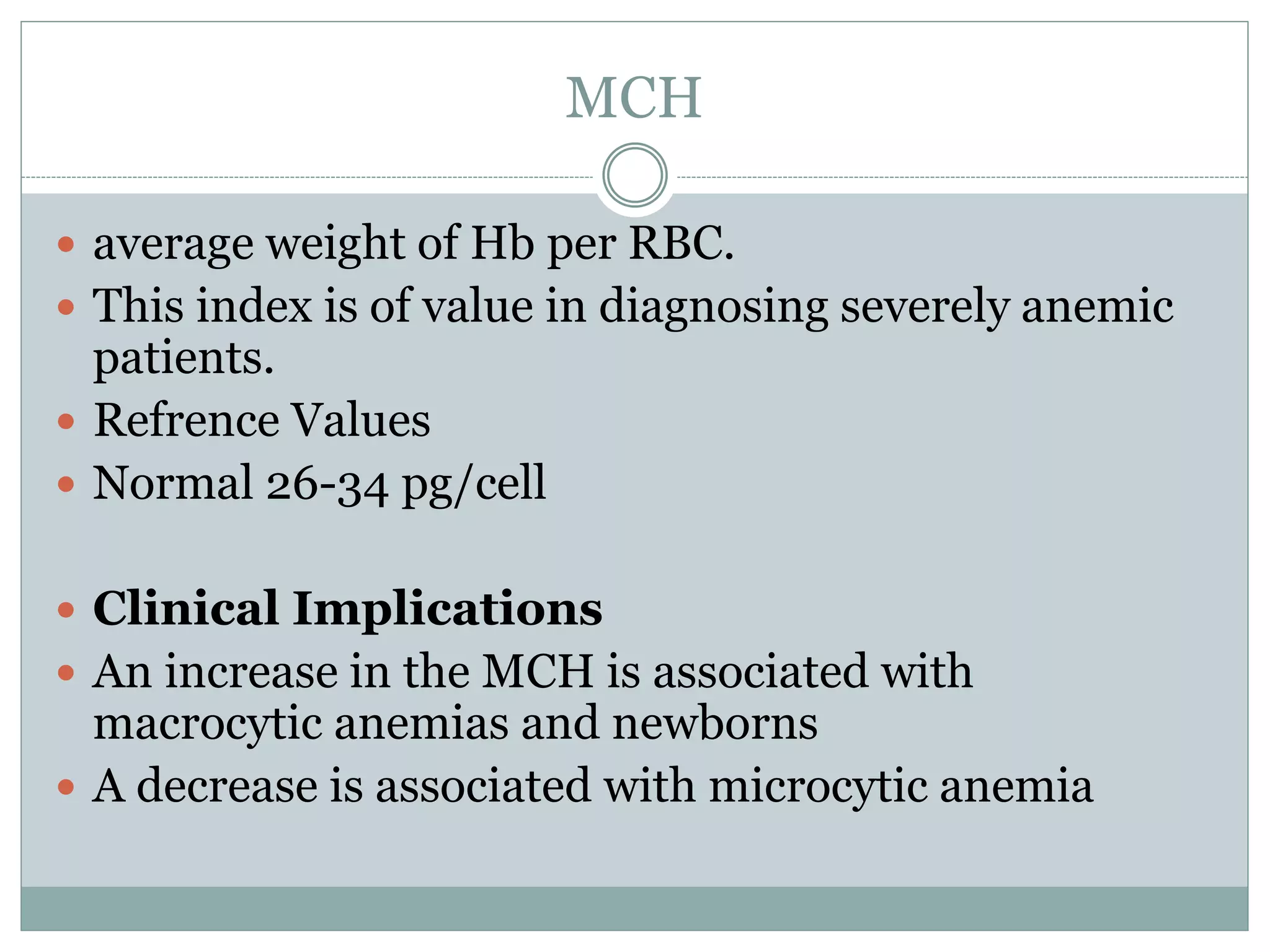
MCH
 average weight of Hb per RBC.
 This index is of value in diagnosing severely anemic
patients.
 Refrence Values
 Normal 26-34 pg/cell
 Clinical Implications
 An increase in the MCH is associated with
macrocytic anemias and newborns
 A decrease is associated with microcytic anemia
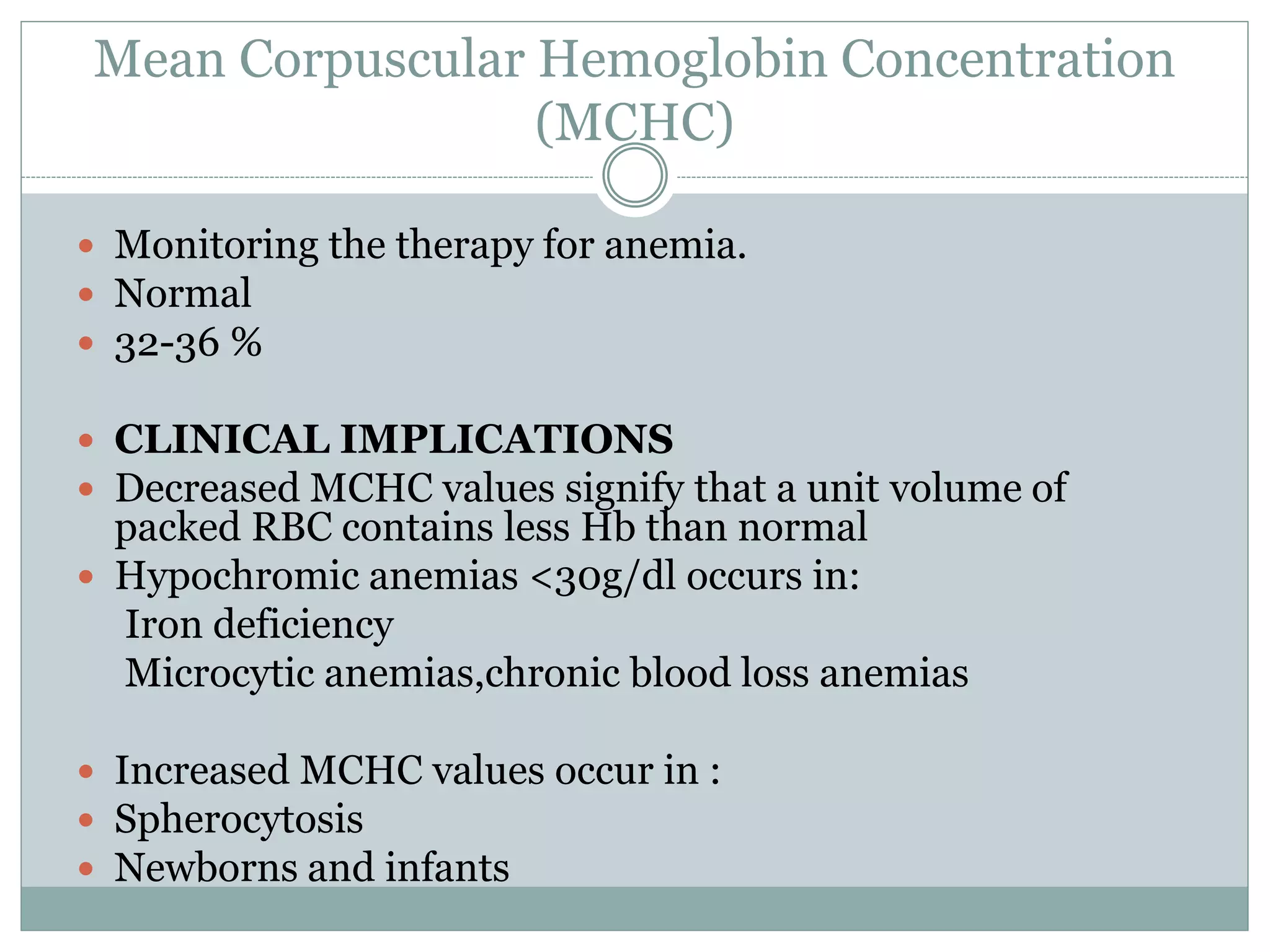
Mean Corpuscular Hemoglobin Concentration
(MCHC)
 Monitoring the therapy for anemia.
 Normal
 32-36 %
 CLINICAL IMPLICATIONS
 Decreased MCHC values signify that a unit volume of
packed RBC contains less Hb than normal
 Hypochromic anemias <30g/dl occurs in:
Iron deficiency
Microcytic anemias,chronic blood loss anemias
 Increased MCHC values occur in :
 Spherocytosis
 Newborns and infants
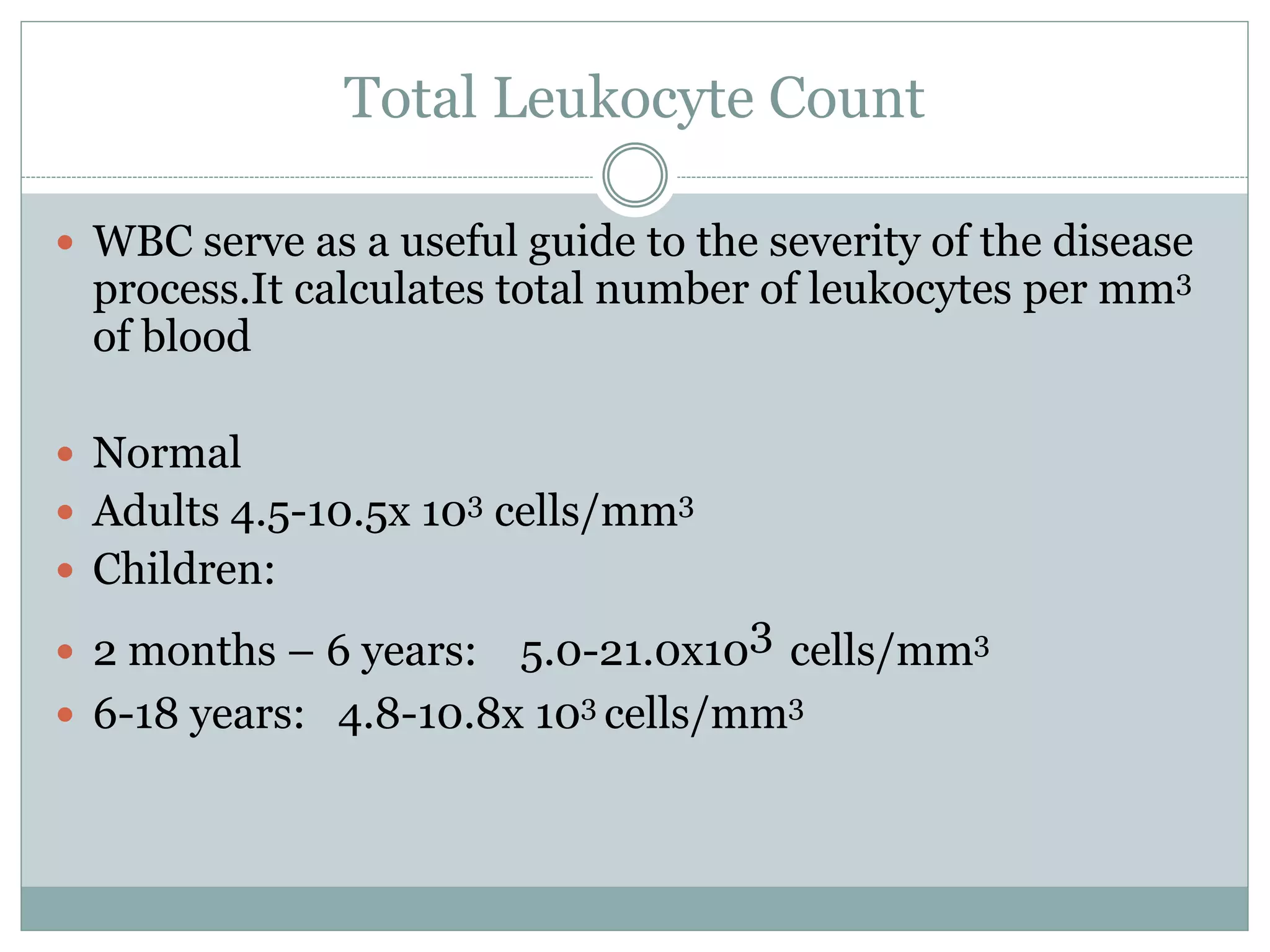
Total Leukocyte Count
 WBC serve as a useful guide to the severity of the disease
process.It calculates total number of leukocytes per mm3
of blood
 Normal
 Adults 4.5-10.5x 10³ cells/mm3
 Children:
 2 months – 6 years: 5.0-21.0x10³ cells/mm3
 6-18 years: 4.8-10.8x 10³ cells/mm3
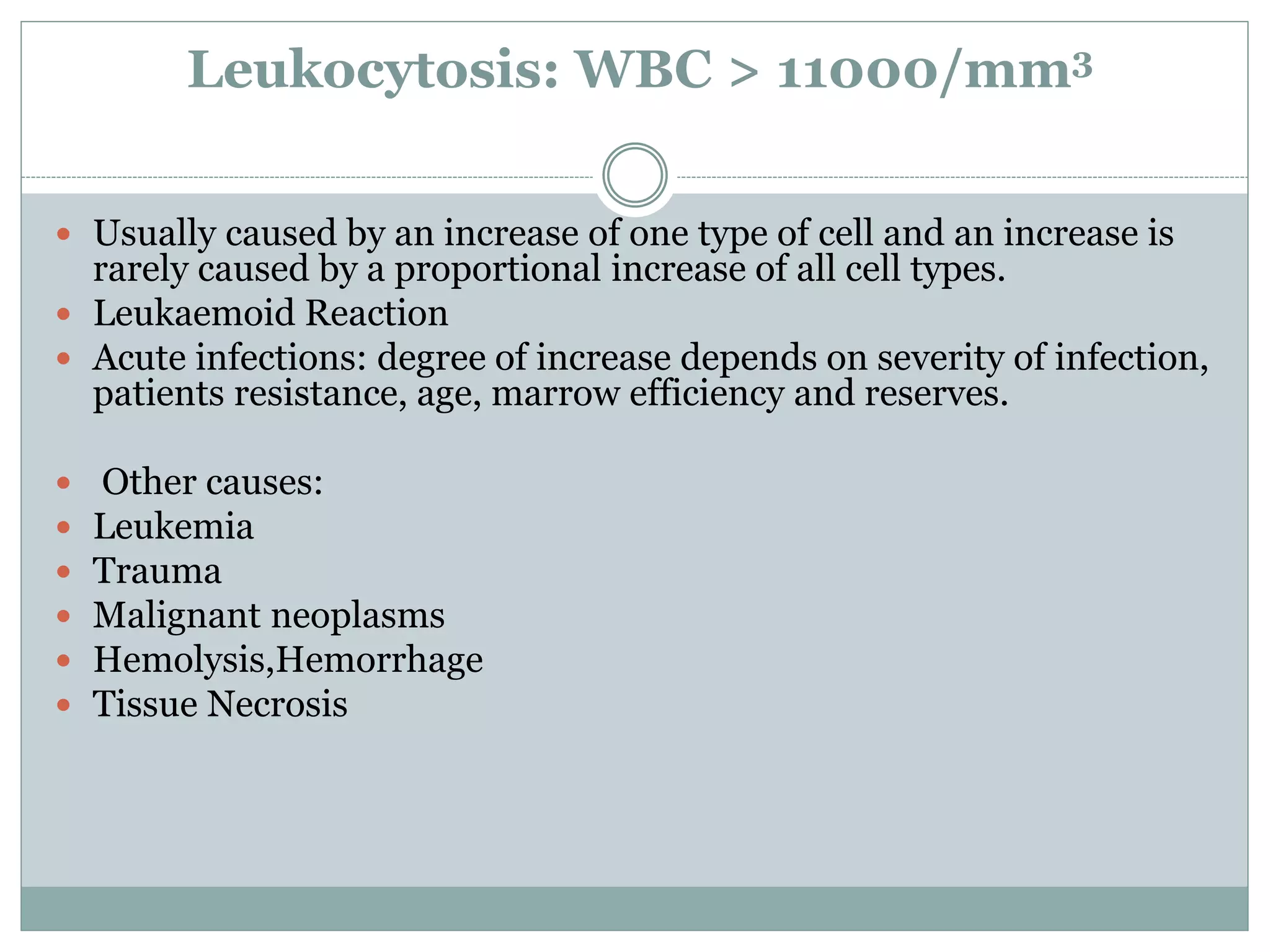
Leukocytosis: WBC > 11000/mm3
 Usually caused by an increase of one type of cell and an increase is
rarely caused by a proportional increase of all cell types.
 Leukaemoid Reaction
 Acute infections: degree of increase depends on severity of infection,
patients resistance, age, marrow efficiency and reserves.
 Other causes:
 Leukemia
 Trauma
 Malignant neoplasms
 Hemolysis,Hemorrhage
 Tissue Necrosis
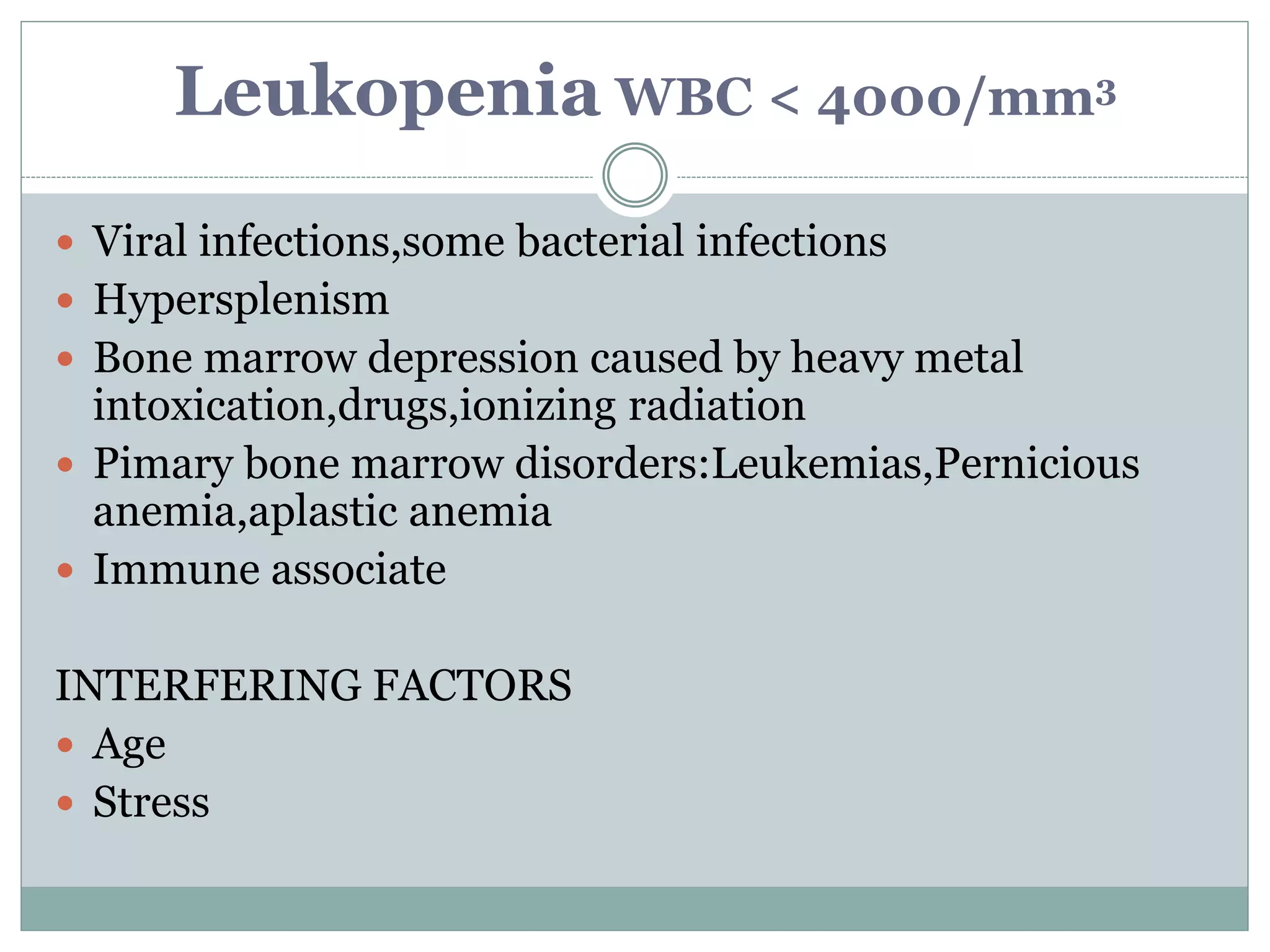
Leukopenia WBC < 4000/mm3
 Viral infections,some bacterial infections
 Hypersplenism
 Bone marrow depression caused by heavy metal
intoxication,drugs,ionizing radiation
 Pimary bone marrow disorders:Leukemias,Pernicious
anemia,aplastic anemia
 Immune associate
INTERFERING FACTORS
 Age
 Stress
Differential Leukocyte Count
 The total count of circulating WBC is differentiated
according to 5 types of leukocytes,each of which
performs specific function expressed as a % of total
WBC.
Neutrophils
 Neutrophils constitue a primary defense against
microbial infection through a process known as
phagocytosis..
 Neutrophilia- increase in absolute no. of neutrophils
 Neutropenia- decrease in the absolute no.
 Refrence values
 Normal absolute count- 3000-7000 cells/mm 3
 Differential- 50 % of total WBC
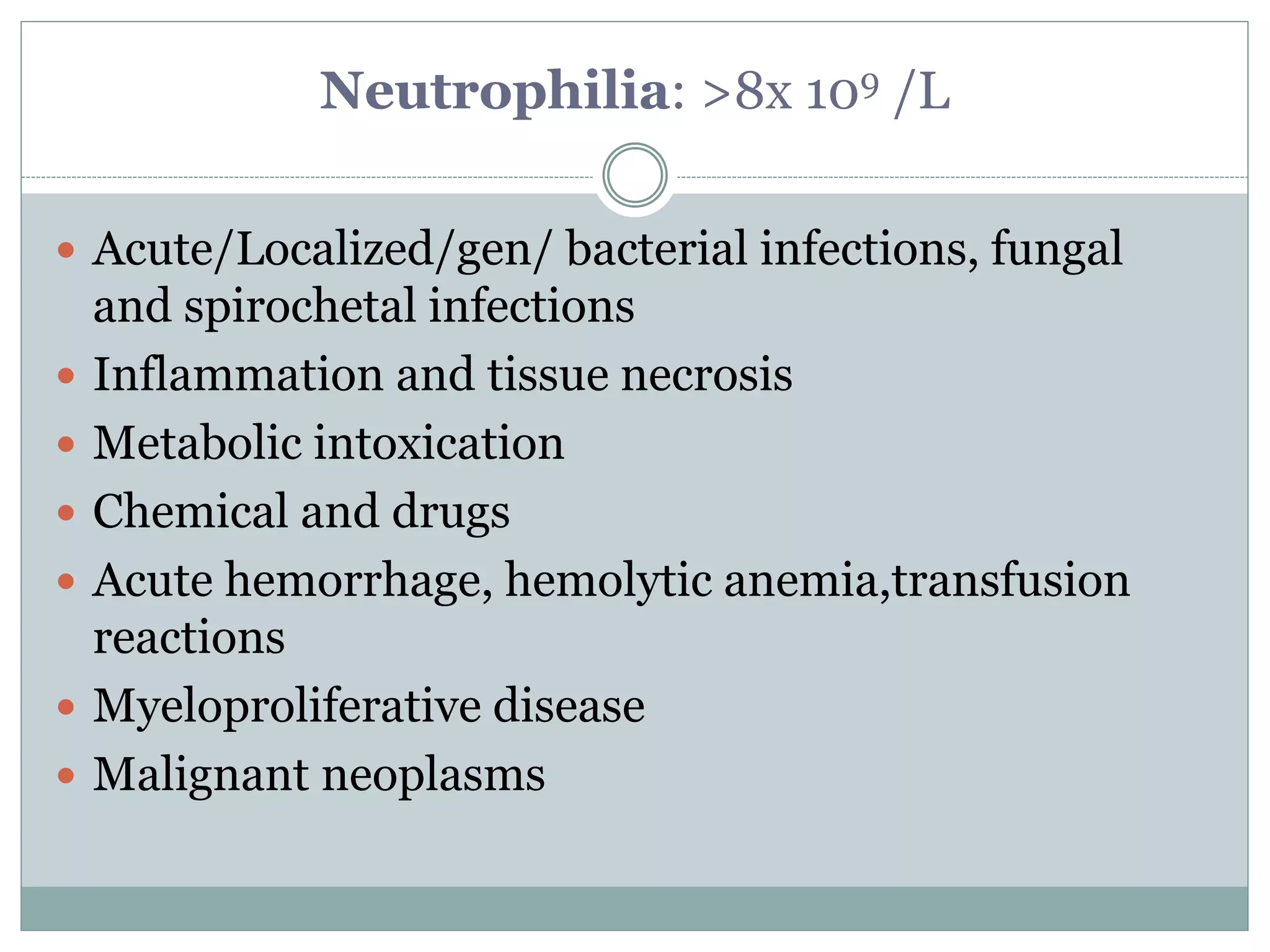
Neutrophilia: >8x 10⁹ /L
 Acute/Localized/gen/ bacterial infections, fungal
and spirochetal infections
 Inflammation and tissue necrosis
 Metabolic intoxication
 Chemical and drugs
 Acute hemorrhage, hemolytic anemia,transfusion
reactions
 Myeloproliferative disease
 Malignant neoplasms
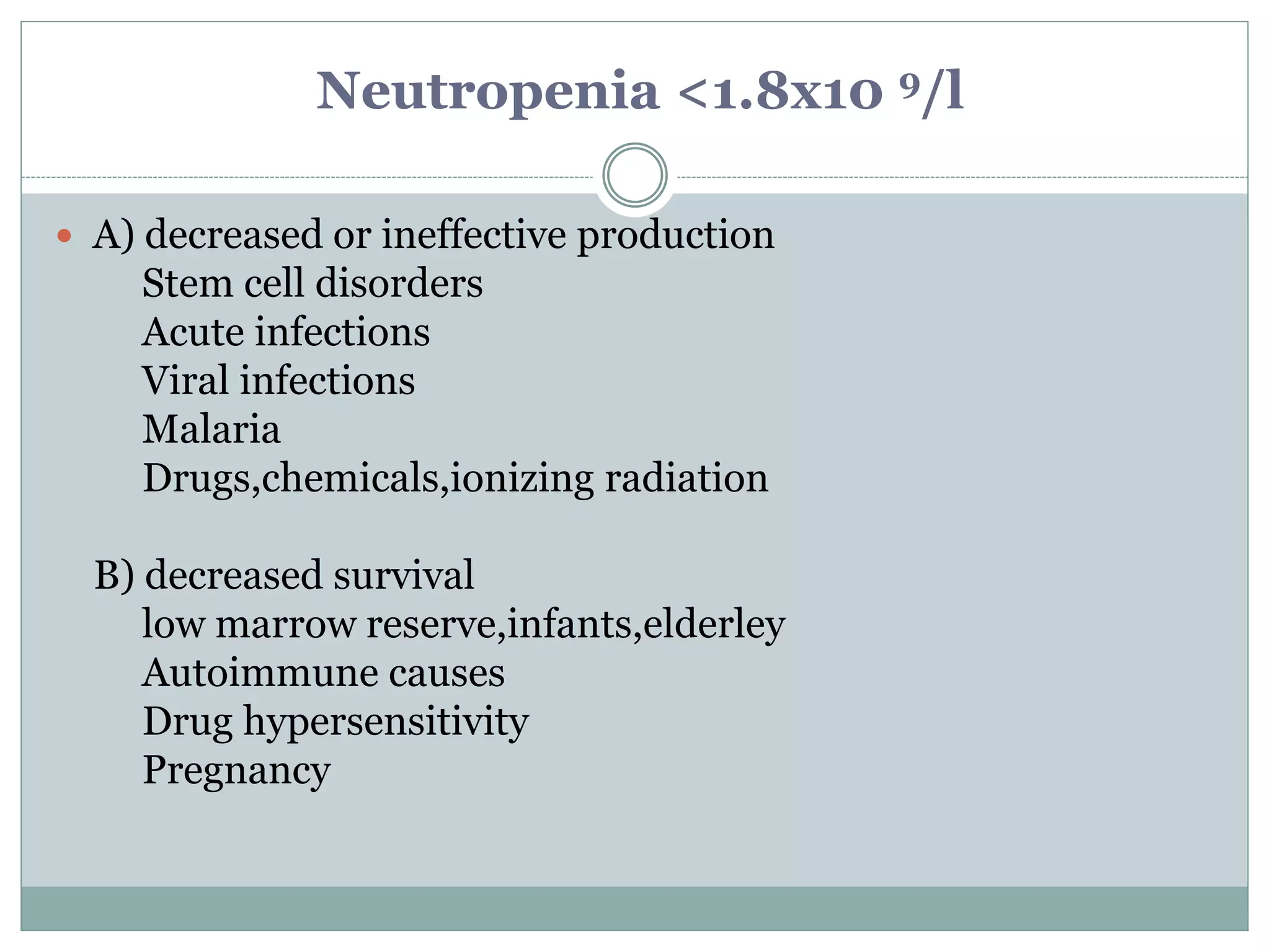
Neutropenia <1.8x10 9/l
 A) decreased or ineffective production
Stem cell disorders
Acute infections
Viral infections
Malaria
Drugs,chemicals,ionizing radiation
B) decreased survival
low marrow reserve,infants,elderley
Autoimmune causes
Drug hypersensitivity
Pregnancy
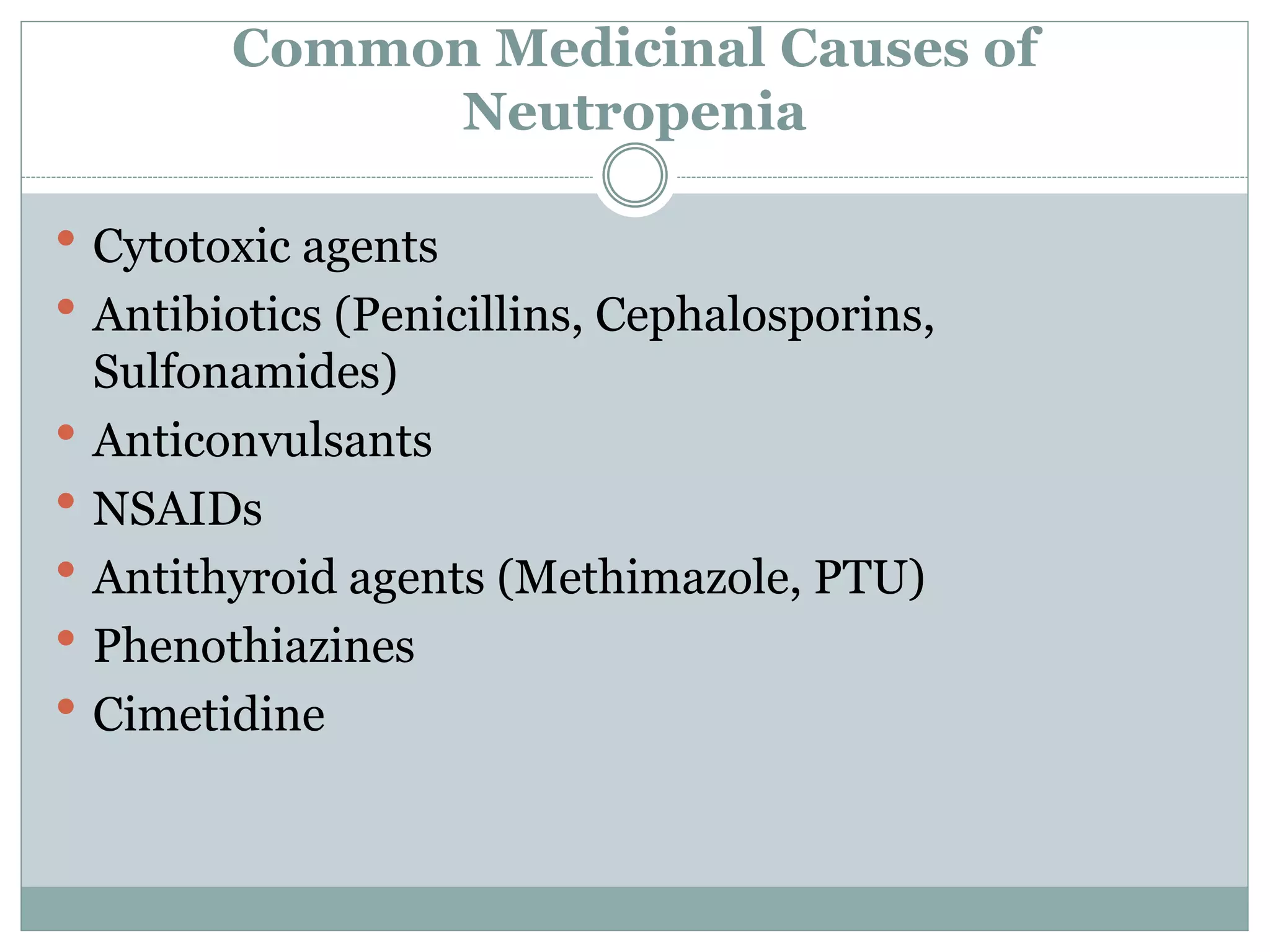
Common Medicinal Causes of
Neutropenia
 Cytotoxic agents
 Antibiotics (Penicillins, Cephalosporins,
Sulfonamides)
 Anticonvulsants
 NSAIDs
 Antithyroid agents (Methimazole, PTU)
 Phenothiazines
 Cimetidine
Eosinophils
 Capable of phagocytosis,ingest Ag-Ab complexes and become active in later
stages of inflammation
 Used to diagnose allergic states,
 Assess severity of infestation with worms and large parasite and monitor
Rx.
 Refrence Values
 Normal: Absoluute: 0-0.7x10⁹/l
Diff: 0%-3% of total WBC
CLINICAL IMPLICATIONS
Eosinophilia: > 5% or >500 cells/mm3
Allergies, asthma
Parasitic disease
Chronic skin disease- pemphigus,eczema,dermatitis herpetiforms
Allergic drug reactions
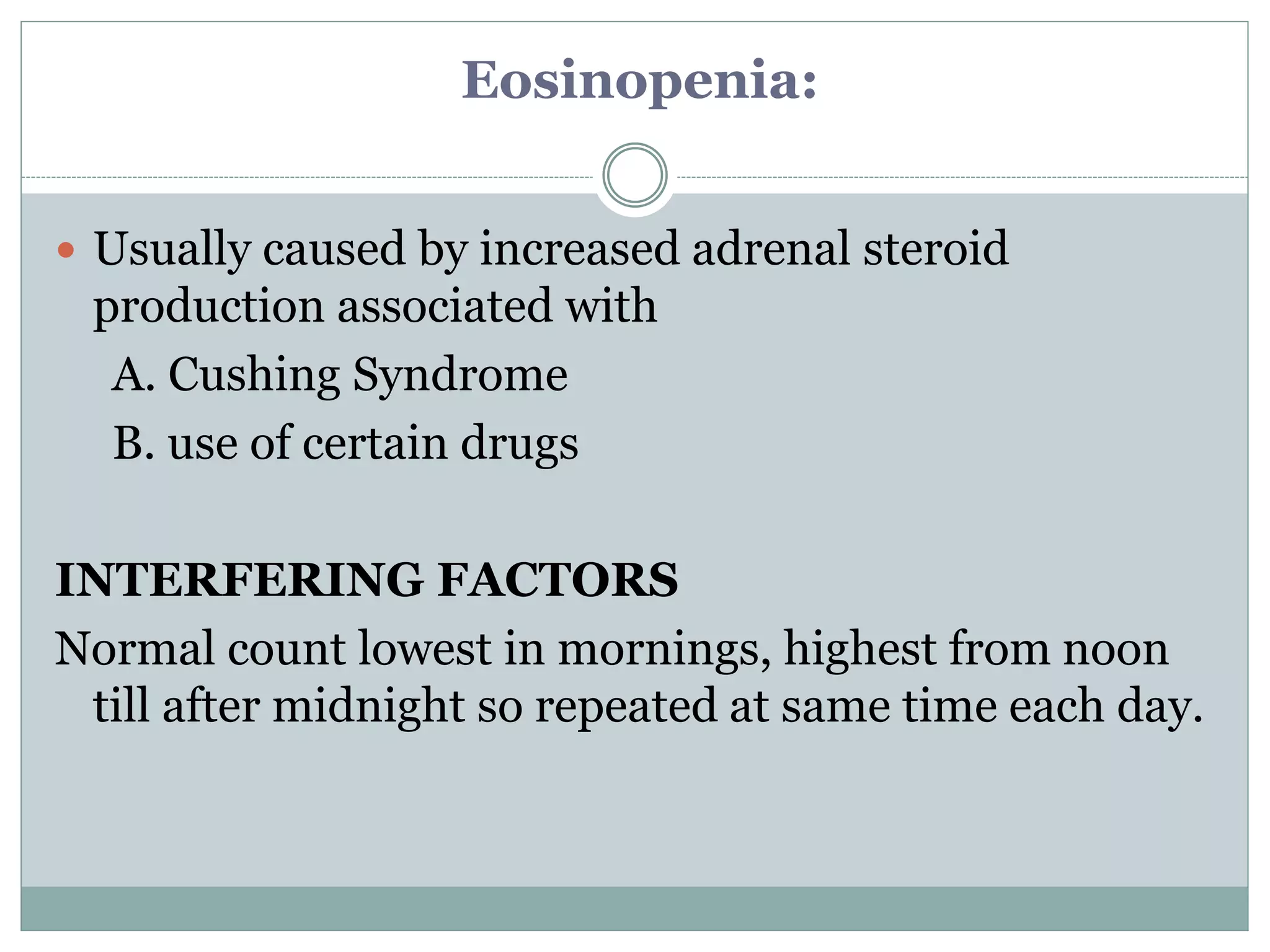
Eosinopenia:
 Usually caused by increased adrenal steroid
production associated with
A. Cushing Syndrome
B. use of certain drugs
INTERFERING FACTORS
Normal count lowest in mornings, highest from noon
till after midnight so repeated at same time each day.
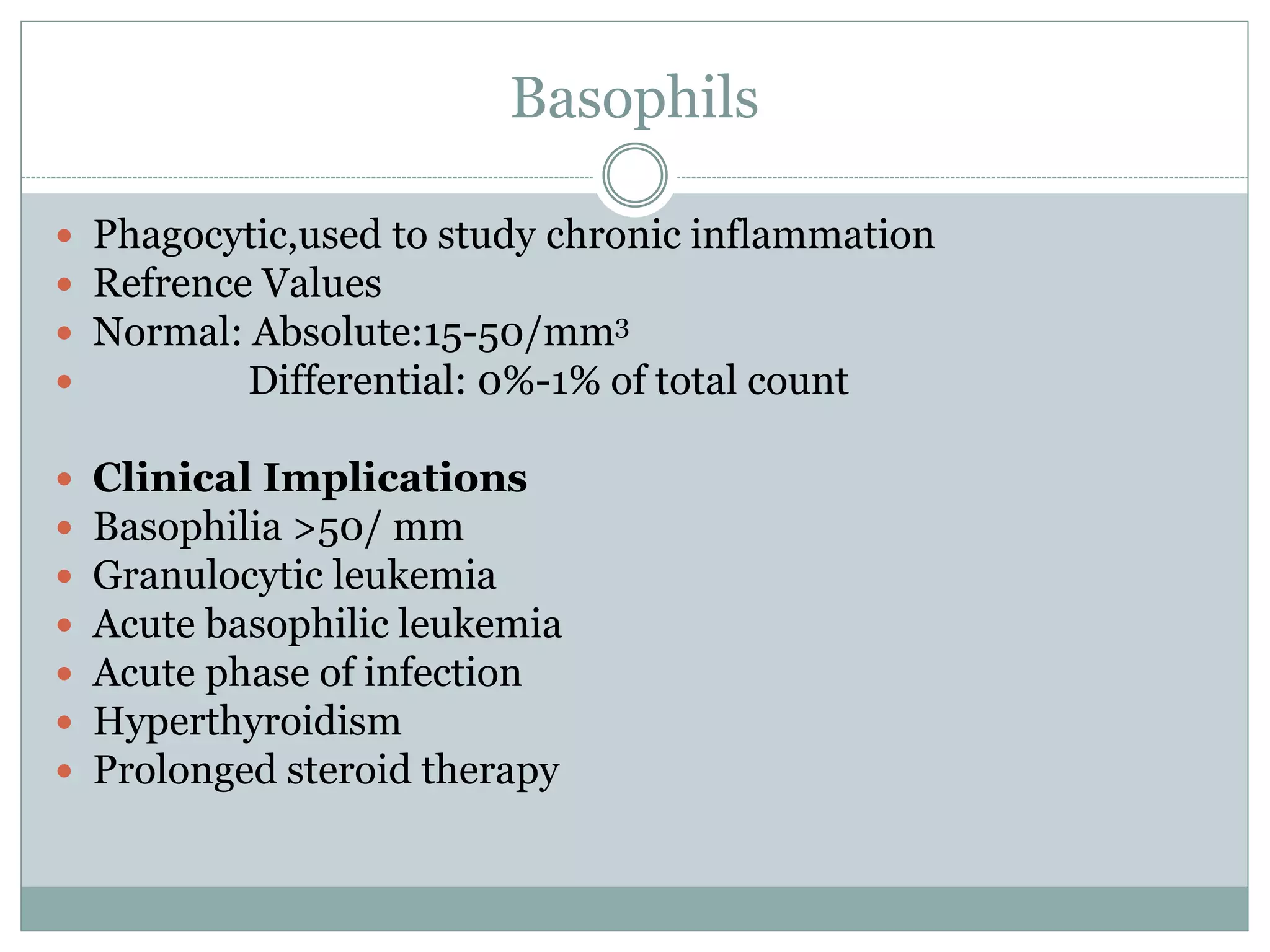
Basophils
 Phagocytic,used to study chronic inflammation
 Refrence Values
 Normal: Absolute:15-50/mm3
 Differential: 0%-1% of total count
 Clinical Implications
 Basophilia >50/ mm
 Granulocytic leukemia
 Acute basophilic leukemia
 Acute phase of infection
 Hyperthyroidism
 Prolonged steroid therapy
Monocytes
 Largest cell,second line of defense against infection;scavenger
action;produce antiviral agent interferon
 Reference values
 Normal: Absolute: 100-500 /mm3
 Differntial: 3-7% of total wbc
CLINICAL IMPLICATIONS
Monocytosis >500 cells/,mm
bacterial infection sabe,
syphilis
Ca breast, stomach
hodgkins disease
Monocytopenia <100 cells/ mm
Predisone Rx
Hairy cell leukemia
HIV
Lymphocytes
 Lymphocytosis adults> 4000/mm3
 children > 7200/mm3
 Lymphatic leukemia
 Infectious lymphocytosis
 Infectious mononucleousis- atypical lymphocytes
 Other viral diseases
 Cytomegalovirus
 Measles ,mumps,chickenpox
 HIV infection
 Infectious hepatitis
 Lymphocytopenia: adult<1000 cells/mm3
children < 2500 cellls /mm3
 Chemotherapy,radiation,immunosupressive
medication
 Increased loss through GIT
 Aplastic anemia
 Hodgkins lymphoma
 AIDS
 Rheumatoid arthritis, SLE
Some WBC abnormalities
 Atypical lymphocytes Infectious mononucleosis, any viral
infection,toxoplasmosis, drug reactions.
 Auer rods Seen in myeloblasts; pathognomonic of
AML.Prominent in AML M3 subtype (acute promyelocytic
leukaemia).
 Left shifted Immature WBCs seen in peripheral blood. Seen
in severe infections, inflammatory disorders, marrow ‘stress’,
CML.
 Right shifted Hypermature WBCs seen in peripheral
bloode.g. megaloblastic anaemia and iron deficiency.
 Toxic granulation: Coarse granules in
neutrophils. Seen in severe infection, post-
operatively and inflammatory disorders.
PLATELET COUNT
 As a screening tests for the disorders of platelet function
 both congenital and acquired and for Willebrand’s disease
 Bleeding time
 Normal range:
 Duke’s method: 3 ½ minute with a value of 4 min or more
being definitely abnormal
 Ivy method: Normal range upto 11 minutes most normal
people cease bleeding within 7 minutes
 Increased:
 I.T.P. - > Due to lack of platelets
 Secondary Thrombocytopenia
Acute leukemias
Aplastic Anemias
Septicemia
BLEEDING TIME
 Range – 2–10 minutes
 This is a test of platelet function, not a test of
coagulation factors.
 ↑ Platelet disorders, thrombocytopenia, thrombasthenia
. Drugs: aspirin and other preparations containing
aspirin.
 Test is useful as a screening test (with aspirin challenge)
for diagnosis of von Willebrand’s disease and platelet
disorders.
CLOTTING TIME
 It is the time taken by blood to coagulate after it has been
shed.
 Wright’s capillary tube method - Normal – 1-3 minutes
 Lee and whites method – Normal – 5 to 11 minutes at 370
 INCREASED IN
 In hemophelia, (due to the lack of the antihemophilic
globulin ) – may be upto 60mts or more.
 In liver disease - when liver is unable to synthesize factor
II, V, VII, X
 In hereditary
 In von willebrand’s disease
 Occasionally in leukemia
 Acute febrile conditions.
Conditions where CT is reduced
 In typhoid
 In endocarditis
 After meal
 After hemorrhage
 After Splenectomy
 After GA
 Digitalis Therapy
Prothrombin time (PT)
 The prothrombin time (PT) and its derived measures
of international normalized ratio (INR) are measures
of the extrinsic pathway of coagulation.
 The INR is the ratio of a patients prothrombin time
to a normal (control)sample, raised to the power of
the ISI value for the analytical system used.
 The reference range for prothrombin time is usually
around 11–16 seconds (70% - 100%)
 The normal range for the INR is 0.8–1.2
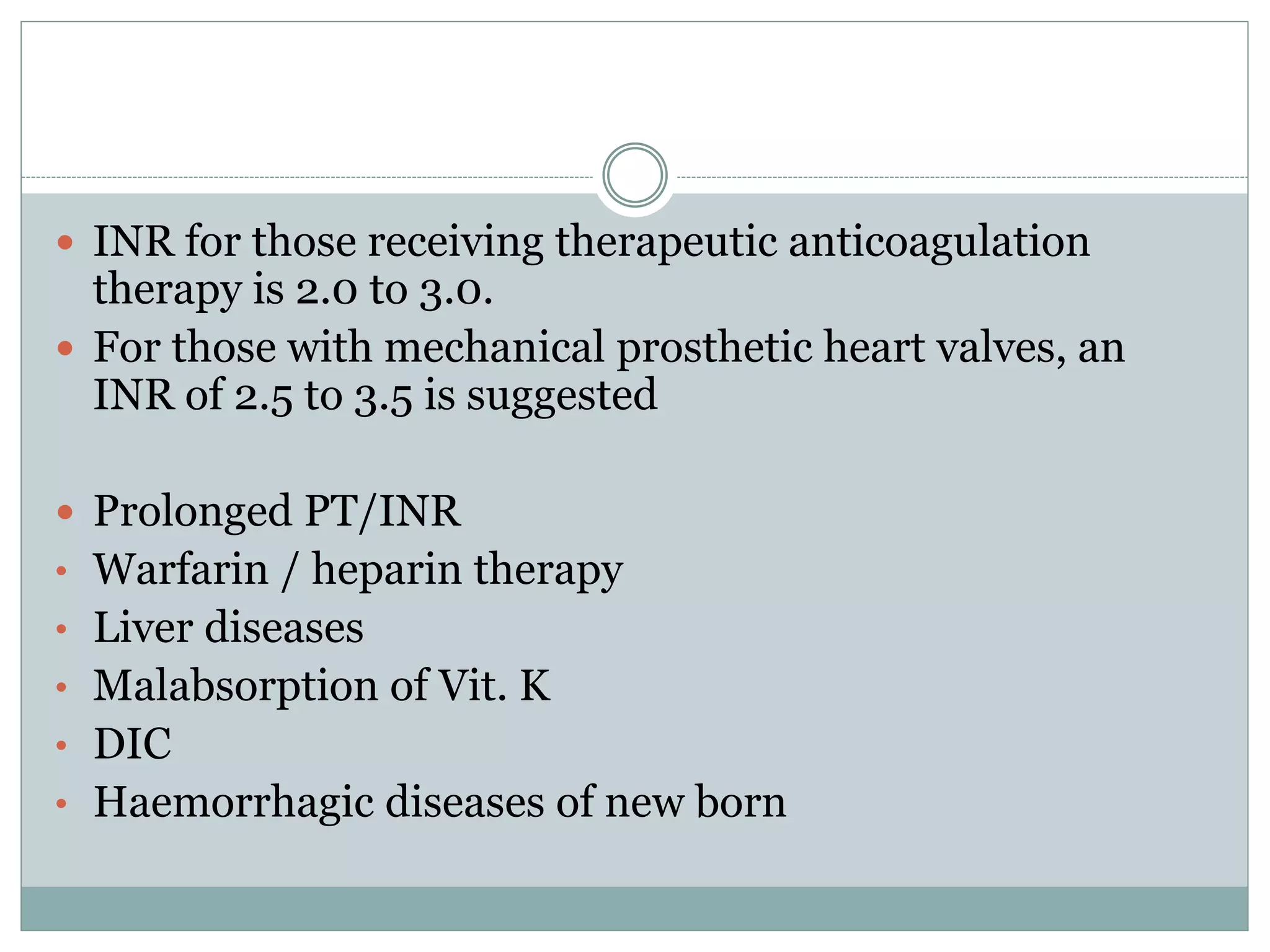
 INR for those receiving therapeutic anticoagulation
therapy is 2.0 to 3.0.
 For those with mechanical prosthetic heart valves, an
INR of 2.5 to 3.5 is suggested
 Prolonged PT/INR
• Warfarin / heparin therapy
• Liver diseases
• Malabsorption of Vit. K
• DIC
• Haemorrhagic diseases of new born
Activated partial thromboplastin time (aPTT or
APTT)
 Is a performance indicator measuring the efficacy of both
the "intrinsic" (now referred to as the contact activation
pathway) and the common coagulation pathways
 Normal:Partial thromboplastin time (PTT): 30 - 45
seconds
 Prolonged APTT
 Haemophilia
 Von Willibrand disease
 Warfarin/heparin therapy
 Liver diseases
 DIC
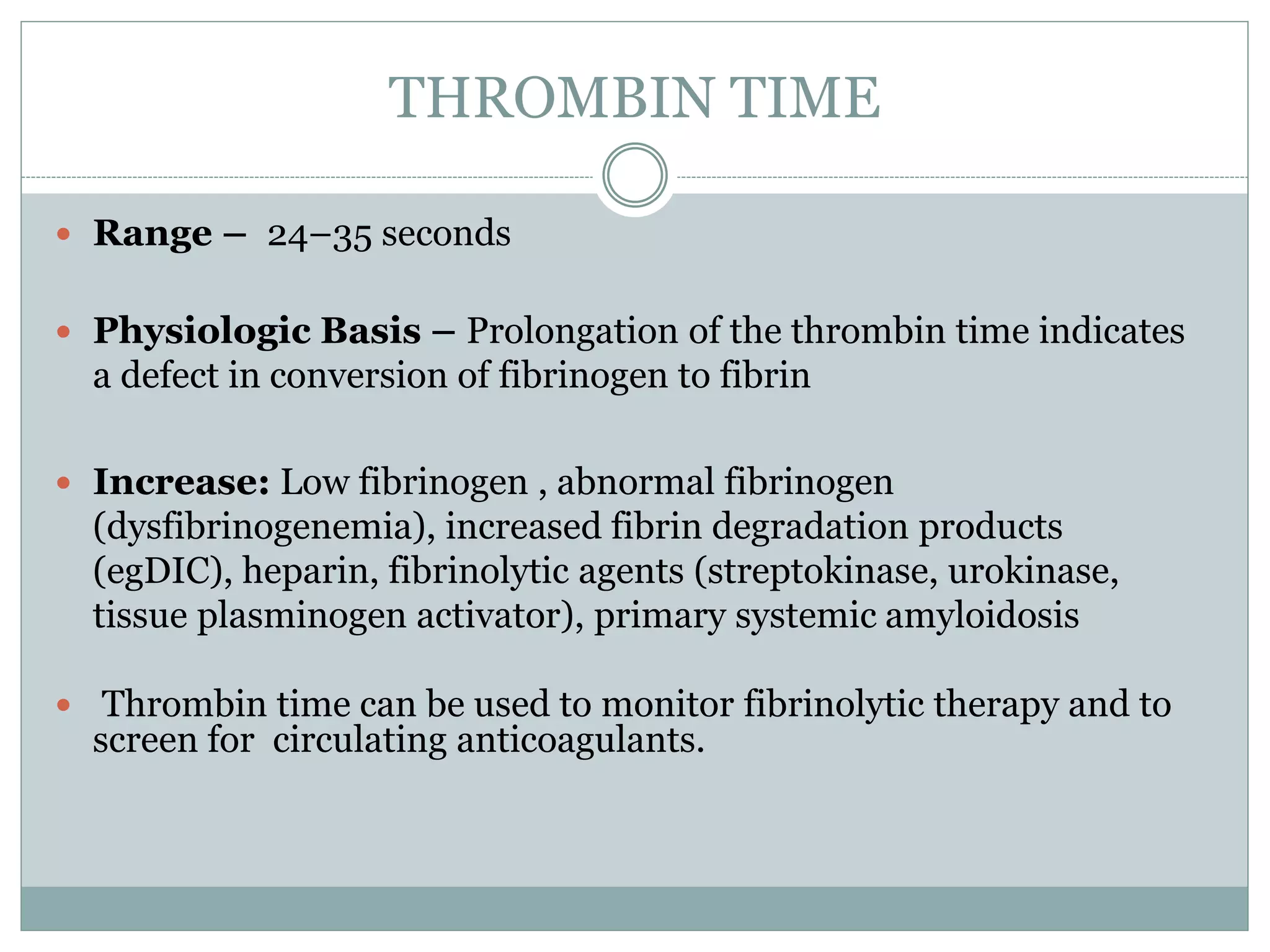
THROMBIN TIME
 Range – 24–35 seconds
 Physiologic Basis – Prolongation of the thrombin time indicates
a defect in conversion of fibrinogen to fibrin
 Increase: Low fibrinogen , abnormal fibrinogen
(dysfibrinogenemia), increased fibrin degradation products
(egDIC), heparin, fibrinolytic agents (streptokinase, urokinase,
tissue plasminogen activator), primary systemic amyloidosis
 Thrombin time can be used to monitor fibrinolytic therapy and to
screen for circulating anticoagulants.
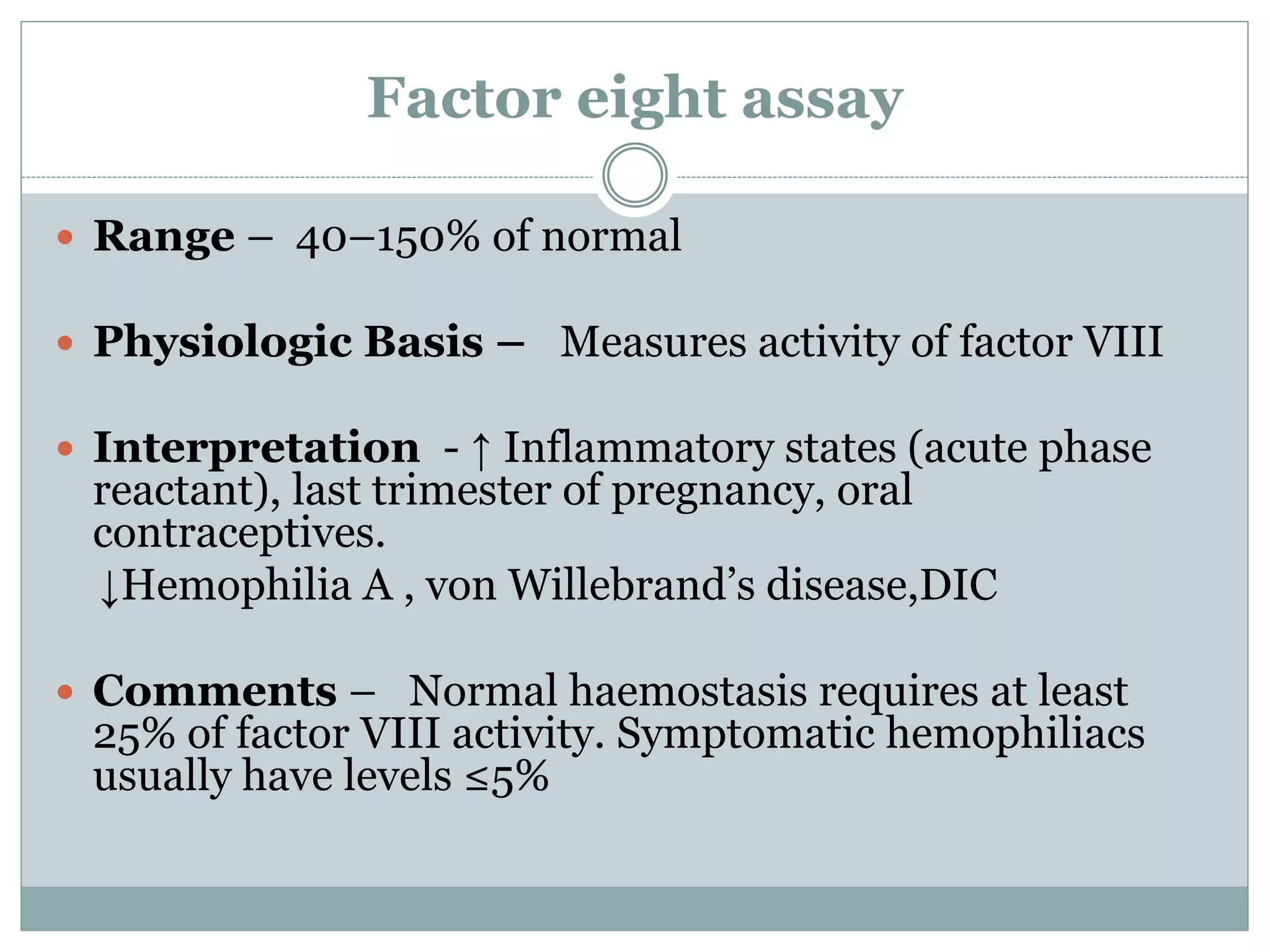
Factor eight assay
 Range – 40–150% of normal
 Physiologic Basis – Measures activity of factor VIII
 Interpretation - ↑ Inflammatory states (acute phase
reactant), last trimester of pregnancy, oral
contraceptives.
↓Hemophilia A , von Willebrand’s disease,DIC
 Comments – Normal haemostasis requires at least
25% of factor VIII activity. Symptomatic hemophiliacs
usually have levels ≤5%
BLOOD CHEMISTRY
 Electrolyte panel Na,K,Cl,Ca,CO2,pH
 Kidney function BUN, Creatinine,,uric acid
 Lipids Cholesterol,triglycerides,LDL,HDL
 Liver function Total biliribin, alkaline phosphatase
GGT,Total protein,A/G ratio,Albumin,
AST,ALT
 Thyroid Function T3 uptake,free T3, T4, Total T3,T4,TSH
 Diabetes Panel Blood sugar(Fasting,PP,Random)GTT,
HbA1c
ELECTROLYTES
Sodium(Na)
 Detects changes in the water balance,acid-base balance and assess
dehydration and water intoxication.
 Reference values:
 Normal
 Adults: 136-145 mEq/L
 CLINICAL IMPLICATIONS
=> HYPONATREMIA
 Severe burns Severe Nephritis
 CHF Diabetic acidosis
 Fluid loss Diuretics
 Addisons disease water intoxication
HYPERNATREMIAA
 Dehydration and insufficient water intake
 Conns disease
 Primary aldosteronism
 Cushing disease
 Diabetes insipidus
Potassium
 Plays role in nerve conduction,muscle function,acid-
base balance and osmotic pressure,rate and force of
heart contraction and C.O
 REFERENCE VALUES
Normal
 Adults: 3.5-5.2mEq/L
 Children 3.4-4.7mEq/L
 Hypokalemia Hyperkalemia
 Diarrhea,vomiting,sweating Renal Failure
 Starvation,malabsorption
Burns,accidents,chemo,Surgery
 Drainig wounds, Metabolic acidosis
 Cystic fibrosis Addisons disease
 Severe burns Uncontrolled
diabetes
 Alcoholism Arrhythmias
 Respiratory alkalosis Sinus brachycardia
 Diuretic,mineralocorticoid Sinus arrest
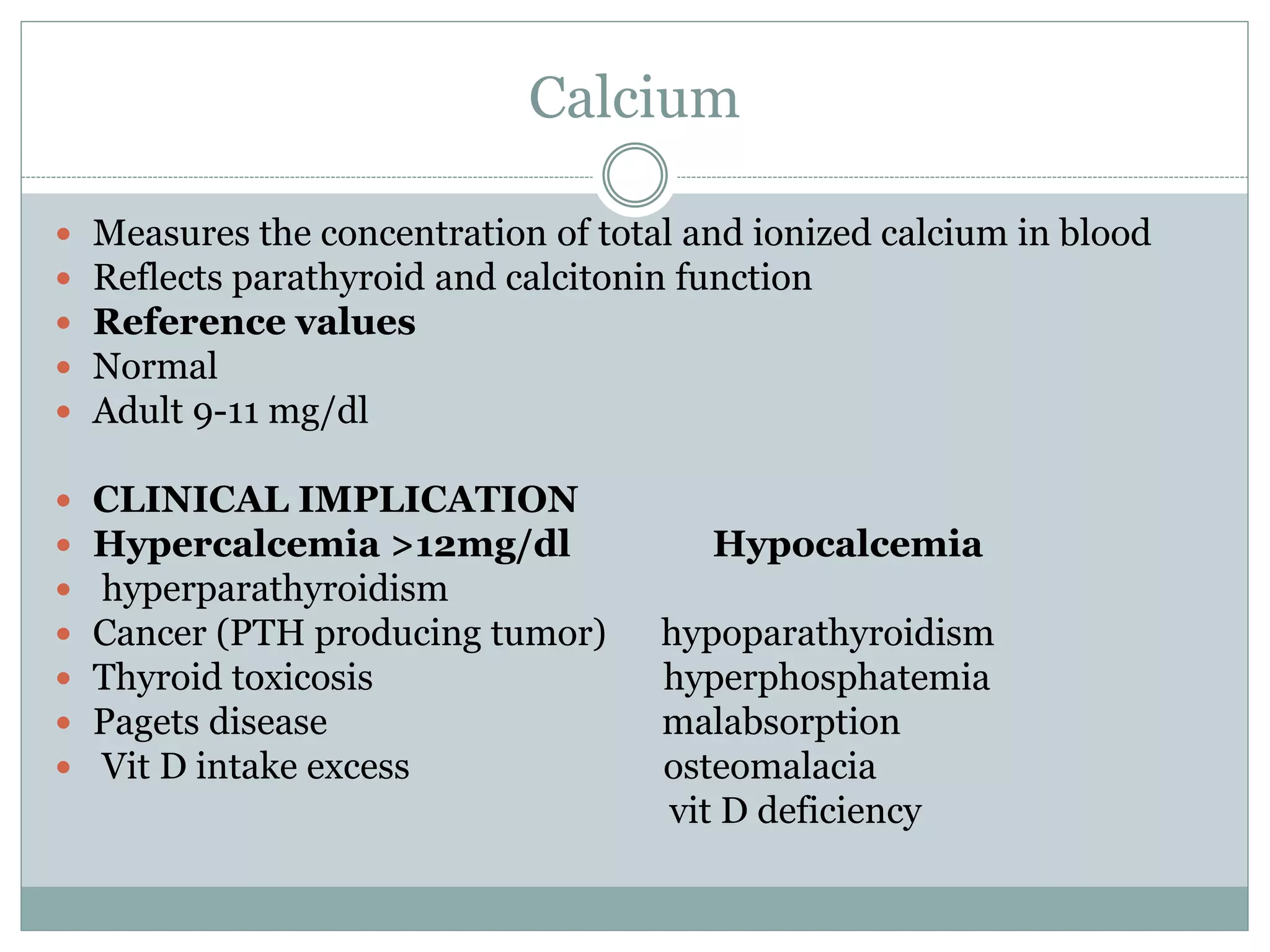
Calcium
 Measures the concentration of total and ionized calcium in blood
 Reflects parathyroid and calcitonin function
 Reference values
 Normal
 Adult 9-11 mg/dl
 CLINICAL IMPLICATION
 Hypercalcemia >12mg/dl Hypocalcemia
 hyperparathyroidism
 Cancer (PTH producing tumor) hypoparathyroidism
 Thyroid toxicosis hyperphosphatemia
 Pagets disease malabsorption
 Vit D intake excess osteomalacia
vit D deficiency
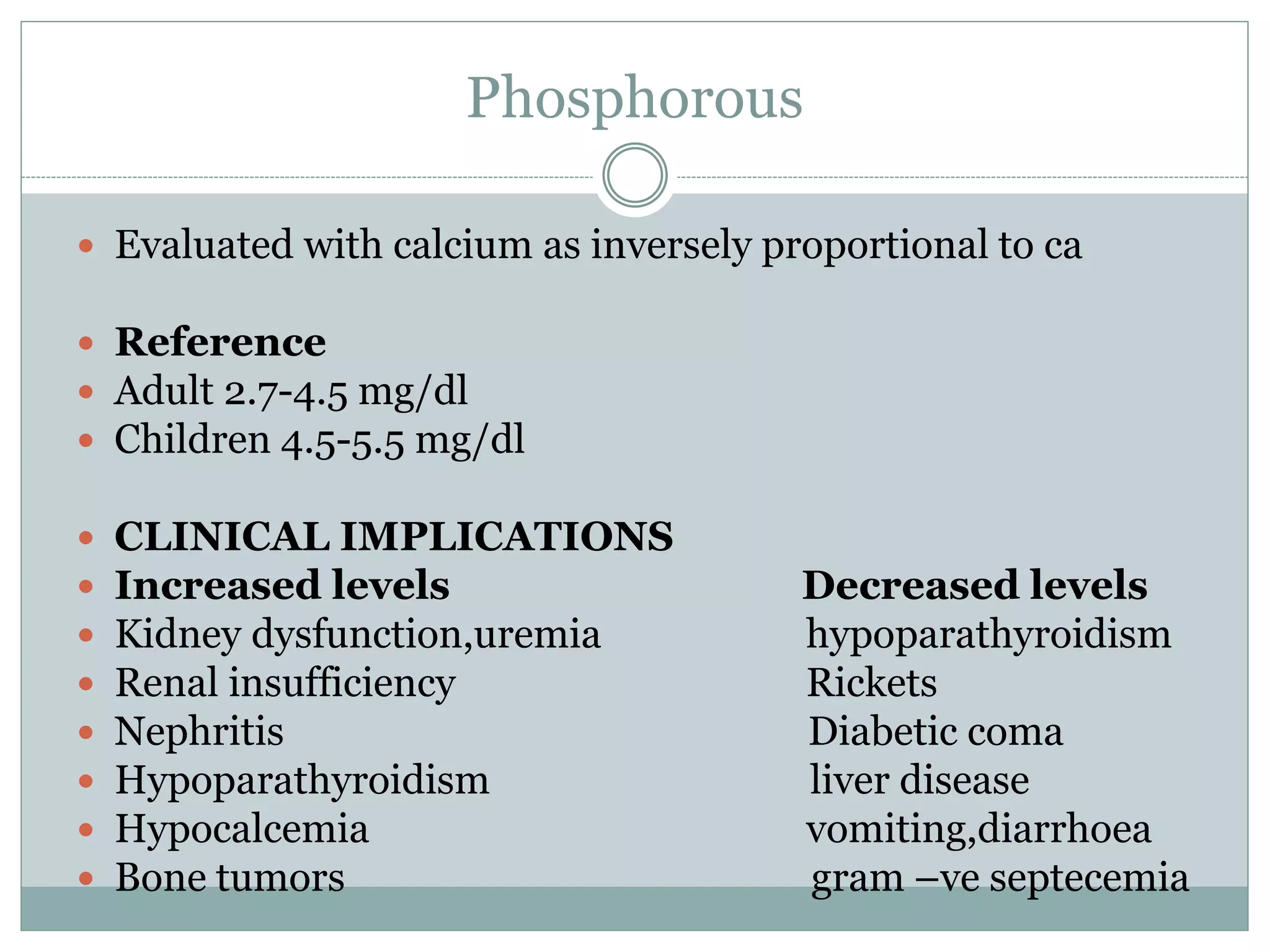
Phosphorous
 Evaluated with calcium as inversely proportional to ca
 Reference
 Adult 2.7-4.5 mg/dl
 Children 4.5-5.5 mg/dl
 CLINICAL IMPLICATIONS
 Increased levels Decreased levels
 Kidney dysfunction,uremia hypoparathyroidism
 Renal insufficiency Rickets
 Nephritis Diabetic coma
 Hypoparathyroidism liver disease
 Hypocalcemia vomiting,diarrhoea
 Bone tumors gram –ve septecemia
KIDNEY FUNCTION
TESTS
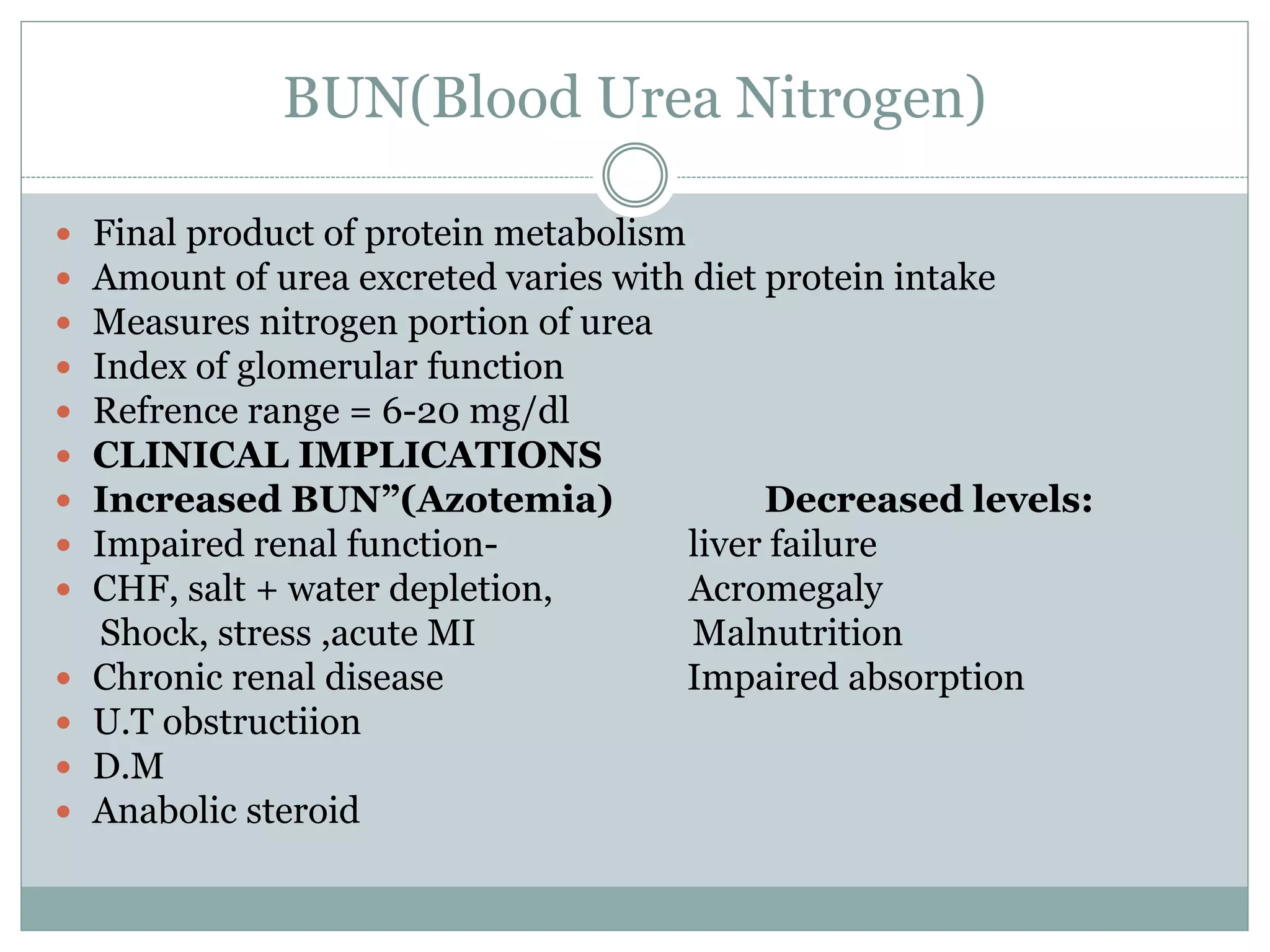
BUN(Blood Urea Nitrogen)
 Final product of protein metabolism
 Amount of urea excreted varies with diet protein intake
 Measures nitrogen portion of urea
 Index of glomerular function
 Refrence range = 6-20 mg/dl
 CLINICAL IMPLICATIONS
 Increased BUN”(Azotemia) Decreased levels:
 Impaired renal function- liver failure
 CHF, salt + water depletion, Acromegaly
Shock, stress ,acute MI Malnutrition
 Chronic renal disease Impaired absorption
 U.T obstructiion
 D.M
 Anabolic steroid
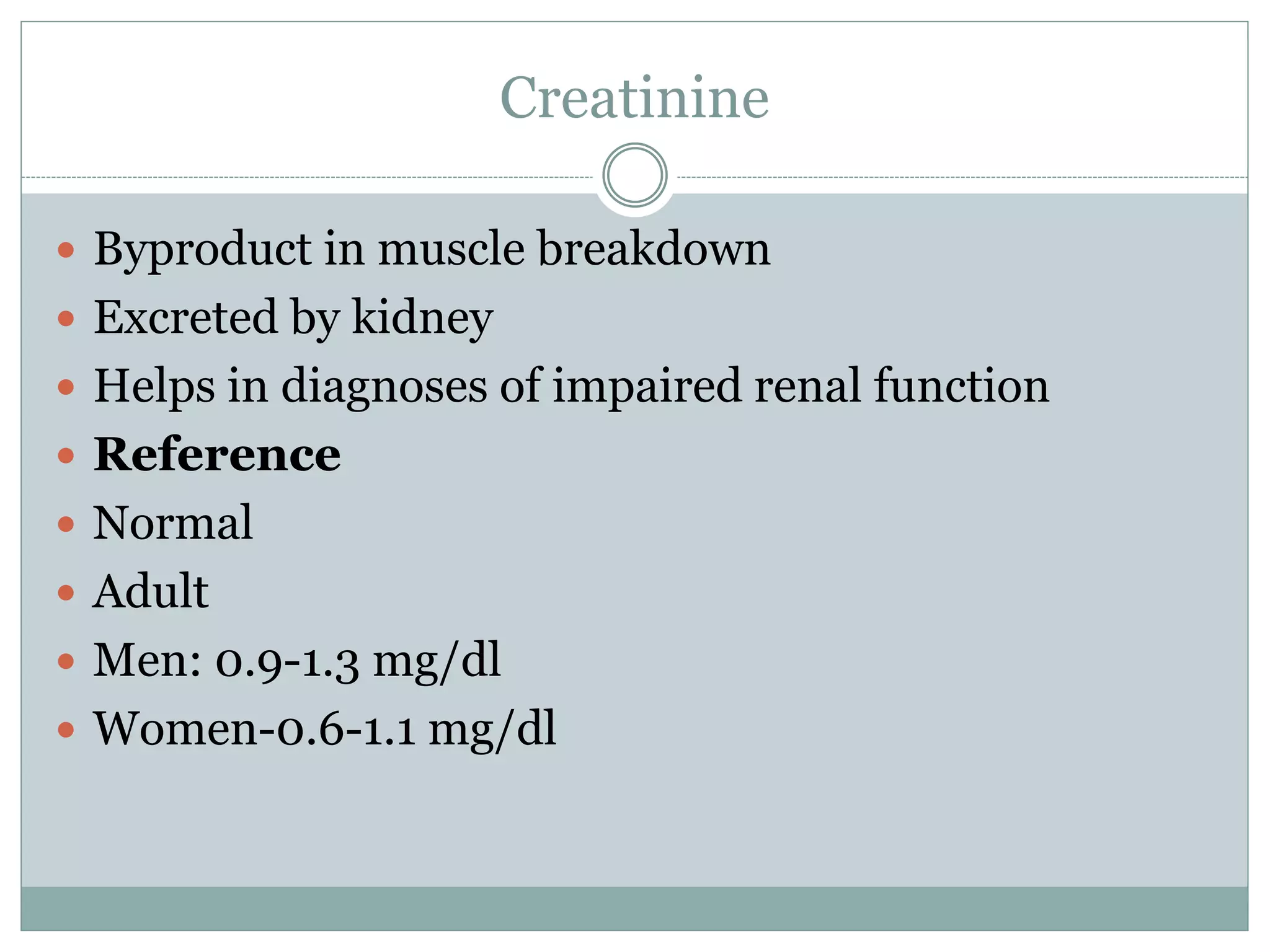
Creatinine
 Byproduct in muscle breakdown
 Excreted by kidney
 Helps in diagnoses of impaired renal function
 Reference
 Normal
 Adult
 Men: 0.9-1.3 mg/dl
 Women-0.6-1.1 mg/dl
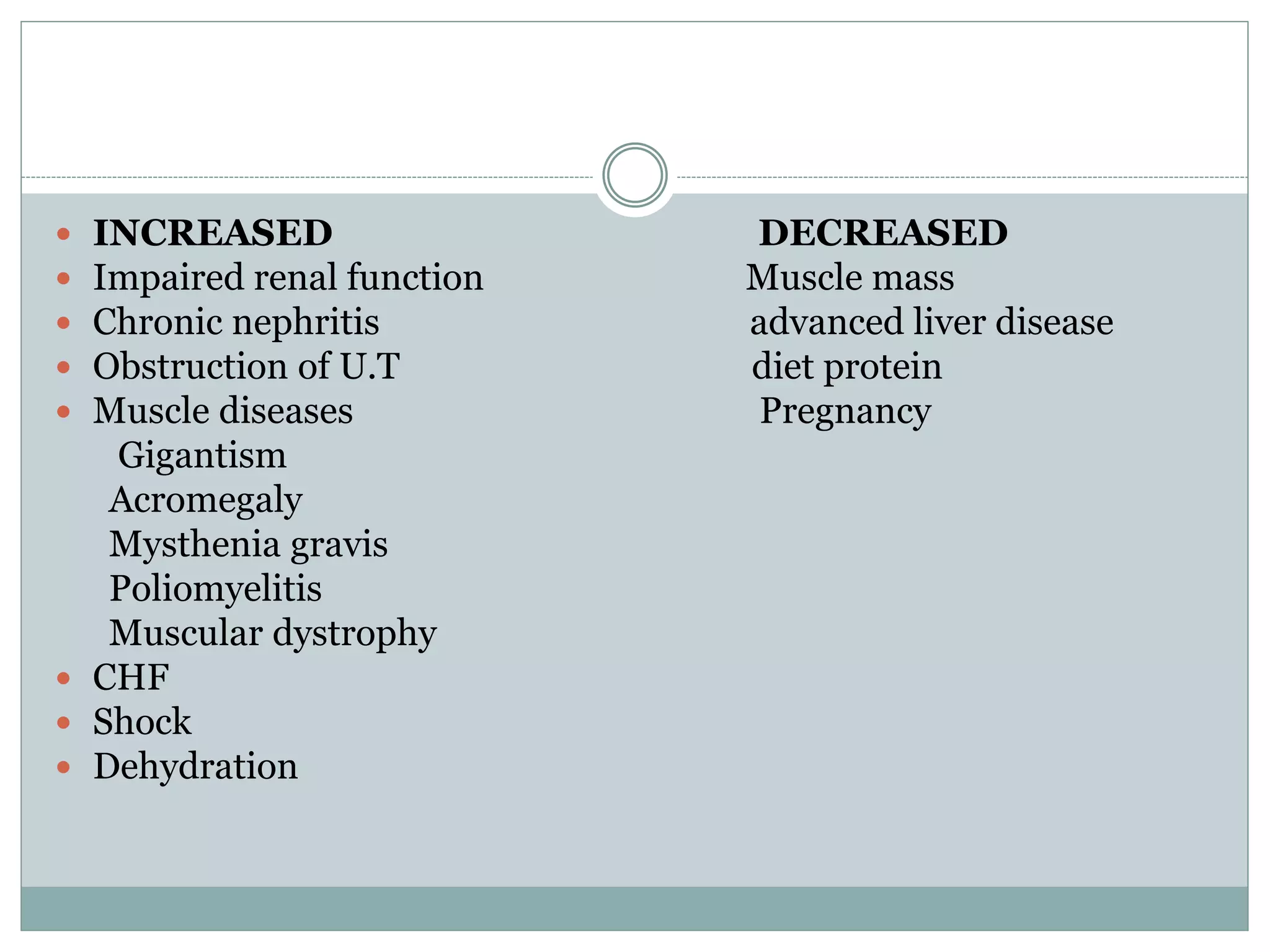
 INCREASED DECREASED
 Impaired renal function Muscle mass
 Chronic nephritis advanced liver disease
 Obstruction of U.T diet protein
 Muscle diseases Pregnancy
Gigantism
Acromegaly
Mysthenia gravis
Poliomyelitis
Muscular dystrophy
 CHF
 Shock
 Dehydration
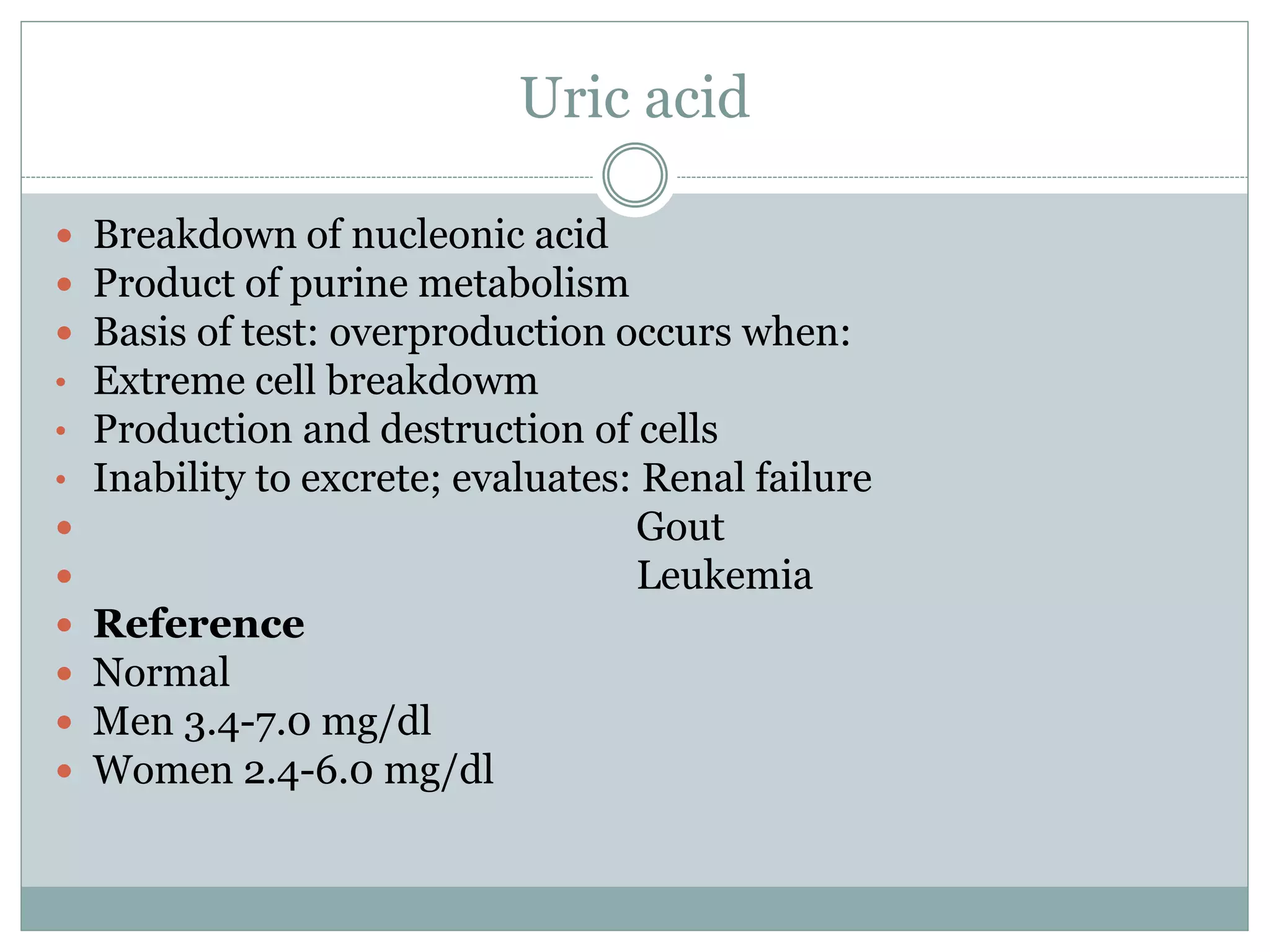
Uric acid
 Breakdown of nucleonic acid
 Product of purine metabolism
 Basis of test: overproduction occurs when:
• Extreme cell breakdowm
• Production and destruction of cells
• Inability to excrete; evaluates: Renal failure
 Gout
 Leukemia
 Reference
 Normal
 Men 3.4-7.0 mg/dl
 Women 2.4-6.0 mg/dl
Hyperuricemia Decreased
levels
 Renal disease Fancons syndrome
 Gout malignancies -Hodgkins
 Alcoholism
 Downs syndrome
 Leasd poisoning
 Luekemia lymphoma
 Metabolicacidosis
 Liver disease
 Hemolytic anemia
 Chemo and radiation
Liver function tests
Bilirubin
 Results from breakdown of Hb in RBC and is a byproduct
of hemolysis.
 Excreted into bile by liver
> indirect(unconjugated, protein bound)
> direct (conjugated, free)
 Allows evaluation for liver function and hemolytic
anemias
 Reference
 Normal
 Total 0.3-1.0 mg/dl
 Conjugated 0.0-0.2mg/dl
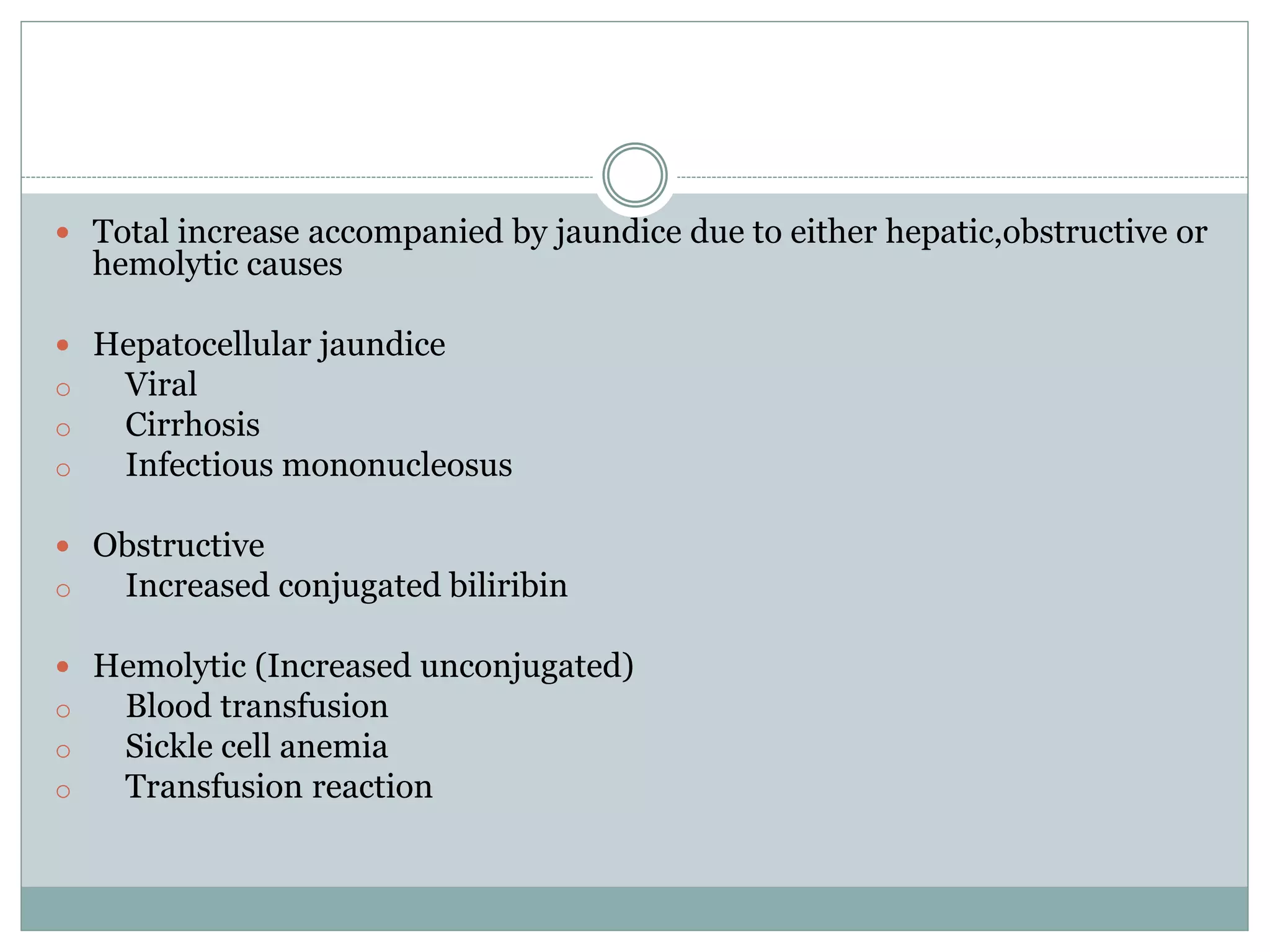
 Total increase accompanied by jaundice due to either hepatic,obstructive or
hemolytic causes
 Hepatocellular jaundice
o Viral
o Cirrhosis
o Infectious mononucleosus
 Obstructive
o Increased conjugated biliribin
 Hemolytic (Increased unconjugated)
o Blood transfusion
o Sickle cell anemia
o Transfusion reaction
 Increase in indirect
• Hemolytic anemia
• Trauma
• Gilbert syndrome
 Increase in direct bilirubin
• Cancer of pancreas
• Dubin johnsons
AST/SGOT
 Enzyme present in tissues of increased metabolic
activity like heart, liver, skeletal muscle, kidney,
brain, pancreas, spleen and lungs
 Released into circulation following injury or cell
death
 So any damage in these tissues-- increase in AST
 Reference
 Normal
 6-25 IU/l
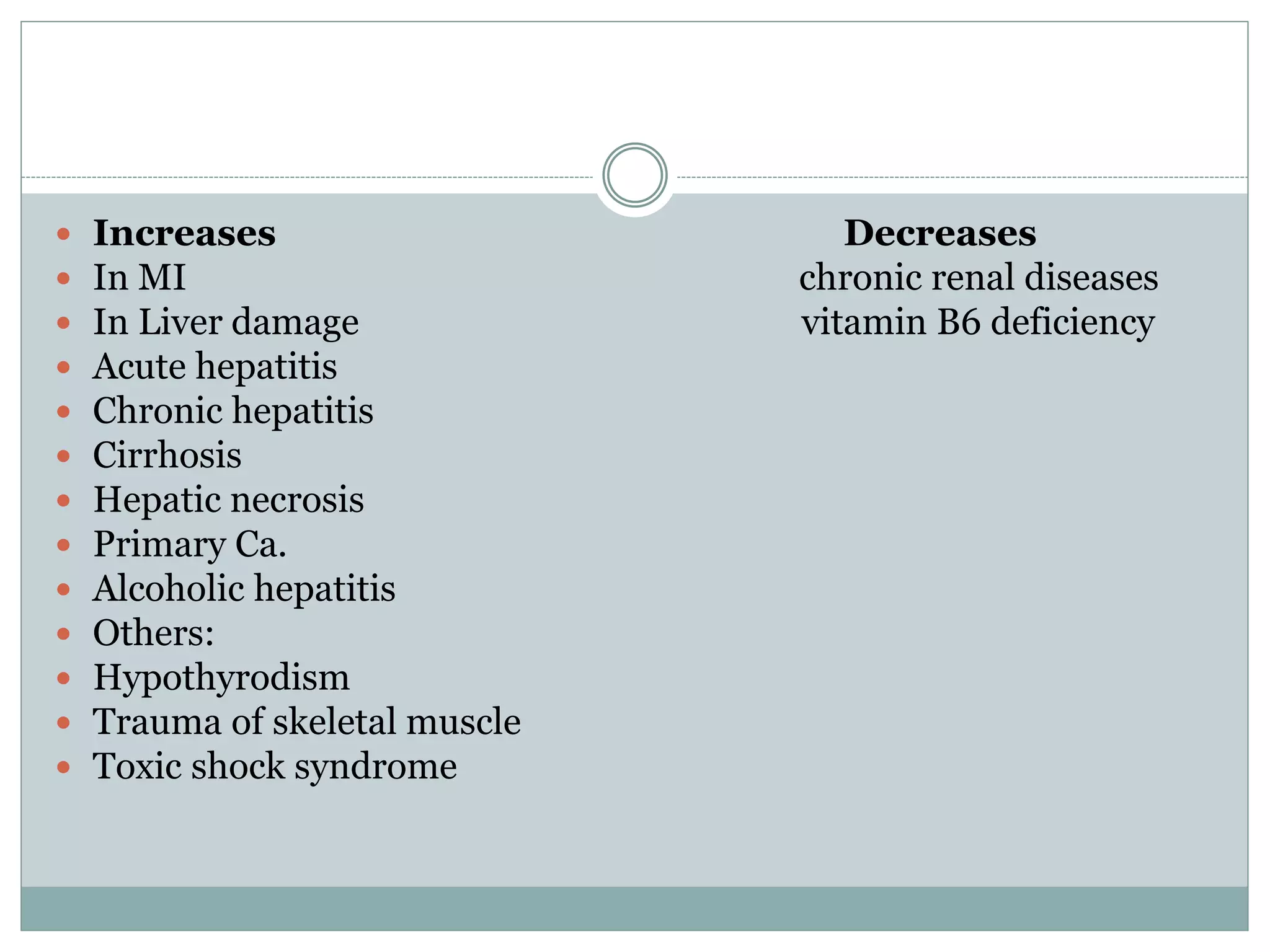
 Increases Decreases
 In MI chronic renal diseases
 In Liver damage vitamin B6 deficiency
 Acute hepatitis
 Chronic hepatitis
 Cirrhosis
 Hepatic necrosis
 Primary Ca.
 Alcoholic hepatitis
 Others:
 Hypothyrodism
 Trauma of skeletal muscle
 Toxic shock syndrome
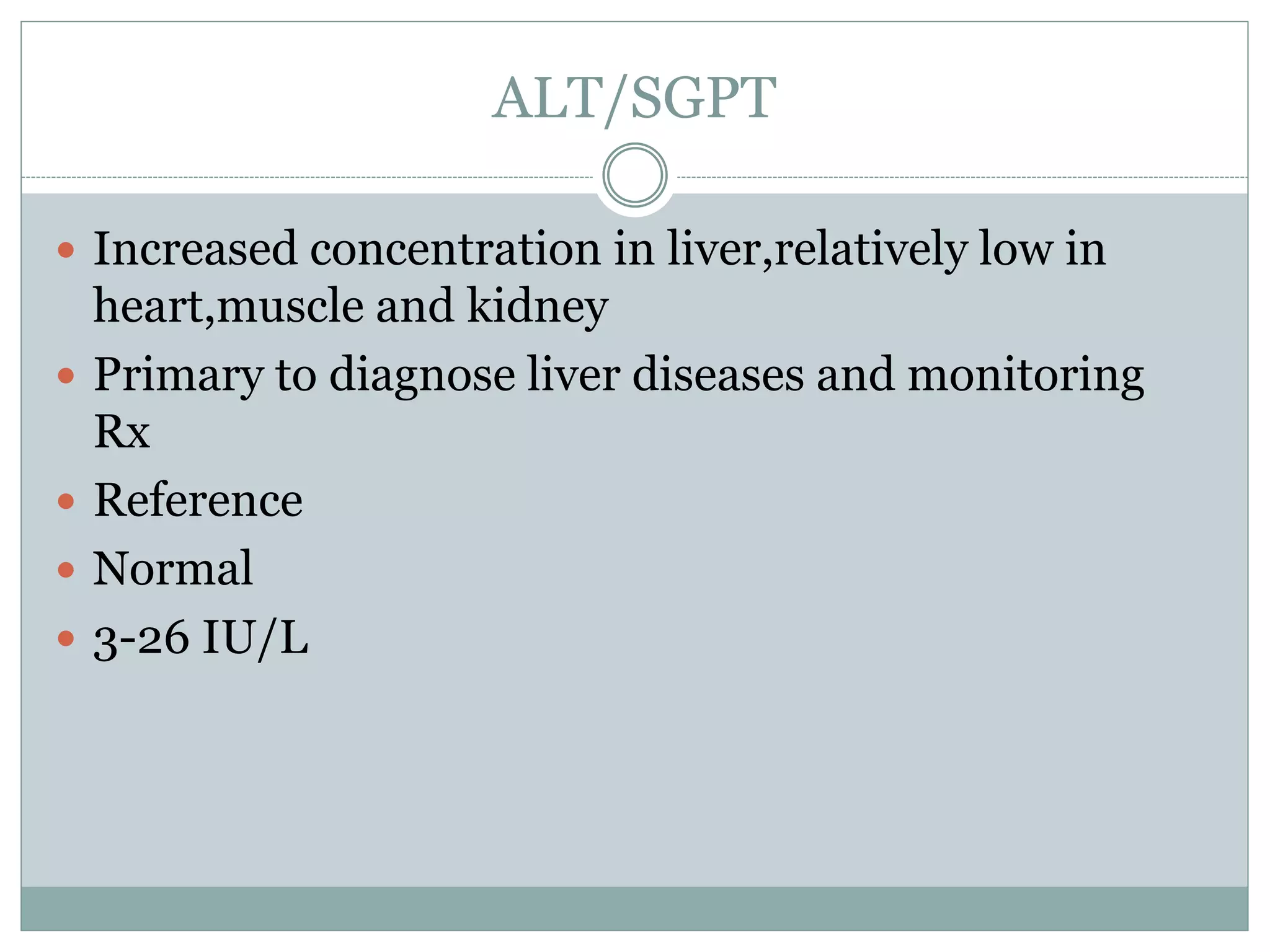
ALT/SGPT
 Increased concentration in liver,relatively low in
heart,muscle and kidney
 Primary to diagnose liver diseases and monitoring
Rx
 Reference
 Normal
 3-26 IU/L
 Increases
 Hepatocellular jaundice
 Alcoholic cirrhosis
 Metastatic liver tumor
 Obstructive jaundice
 Viral,infectious,toxic hepatitis
 MI,heart failure
 AST/ALT comparision
 AST always increases in acute MI,ALT does not unless liver
damage
 ALT increased > AST in acute extrahepatic biliary obstruction
 ALT more specific to liver disease
Alkaline phosphatase
 Enzyme originating in bone,liver
 Used as an index of liver and bone disease
 Refrence values
 Normal
 Males 1-12 yrs < 350 u/l
 12-14 <500 u/l
 >20 yrs 25-100 u/l
 Females 1-12 yrs <350 u/l
 >15 25-100 u/l
 INCREASES in
 Liver Diseases OTHER DISEASES
 Obstructive Jaundice hyperparathyroid
 Space Occupying Lesions Of Liver hyperthyroidism
 Hepatocellular cirrhosis hodgkins disease
 Biliary cirrhosis Ca liver, pancreas
 Intra and extra hepatic cholestasis DECREASES IN
 Hepatitis congenital
 DM malnutrition
 Bone diseases hypothyroidism
 Pagets disease anemias
 Metastatic bone tumors
 Osteogenic sarcoma
 Osteomalacia
 Rickets
Albumin
 Buffer function
 Reference
 Normal
 Adult -3.5-5.2 g/dl
 CLINICAL IMPLICATIONS
 Decreases
 Acute and chronic inflammation,infections
 Cirrhosis ,liver disease,alcoholism,
 Burns
 Starvation,malnutrition
 Thyroid diseases
TEST FOR DIABETES
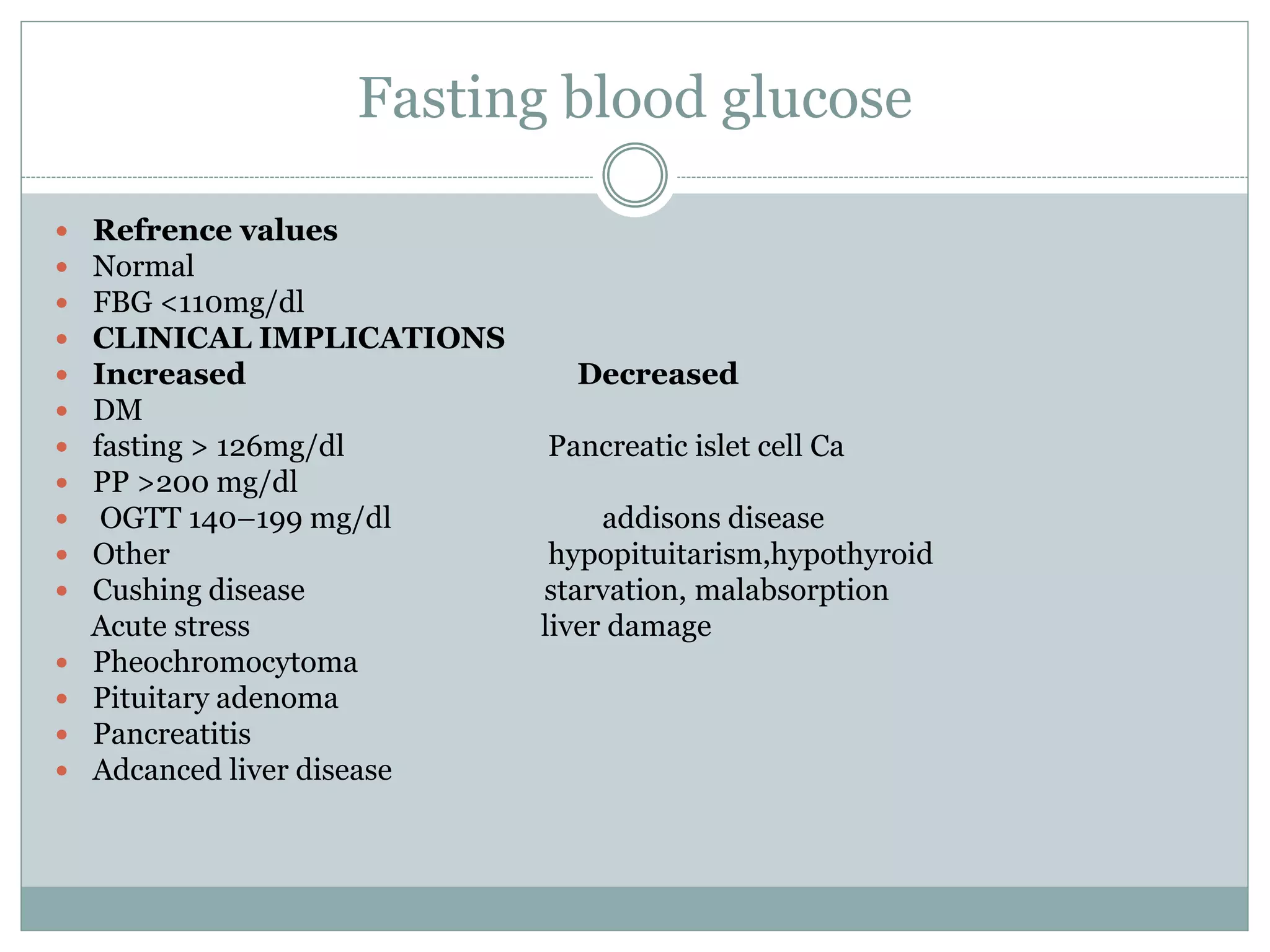
Fasting blood glucose
 Refrence values
 Normal
 FBG <110mg/dl
 CLINICAL IMPLICATIONS
 Increased Decreased
 DM
 fasting > 126mg/dl Pancreatic islet cell Ca
 PP >200 mg/dl
 OGTT 140–199 mg/dl addisons disease
 Other hypopituitarism,hypothyroid
 Cushing disease starvation, malabsorption
Acute stress liver damage
 Pheochromocytoma
 Pituitary adenoma
 Pancreatitis
 Adcanced liver disease
Hemoglobin A1c Test
 The hemoglobin A1c test, also called HbA1c, glycated
hemoglobin test, or glycohemoglobin, is an important
blood test that shows how well diabetes is being
controlled.
 Hemoglobin A1c provides an average of your blood sugar
control over the past 2 to 3 months
 used along with home blood sugar monitoring to make
adjustments in diabetes medicines. ,
 normal range = 4% -5.6%.
 levels between 5.7% and 6.4% indicate increased risk of
diabetes.
 levels of 6.5% or higher indicate uncontrolled diabetes
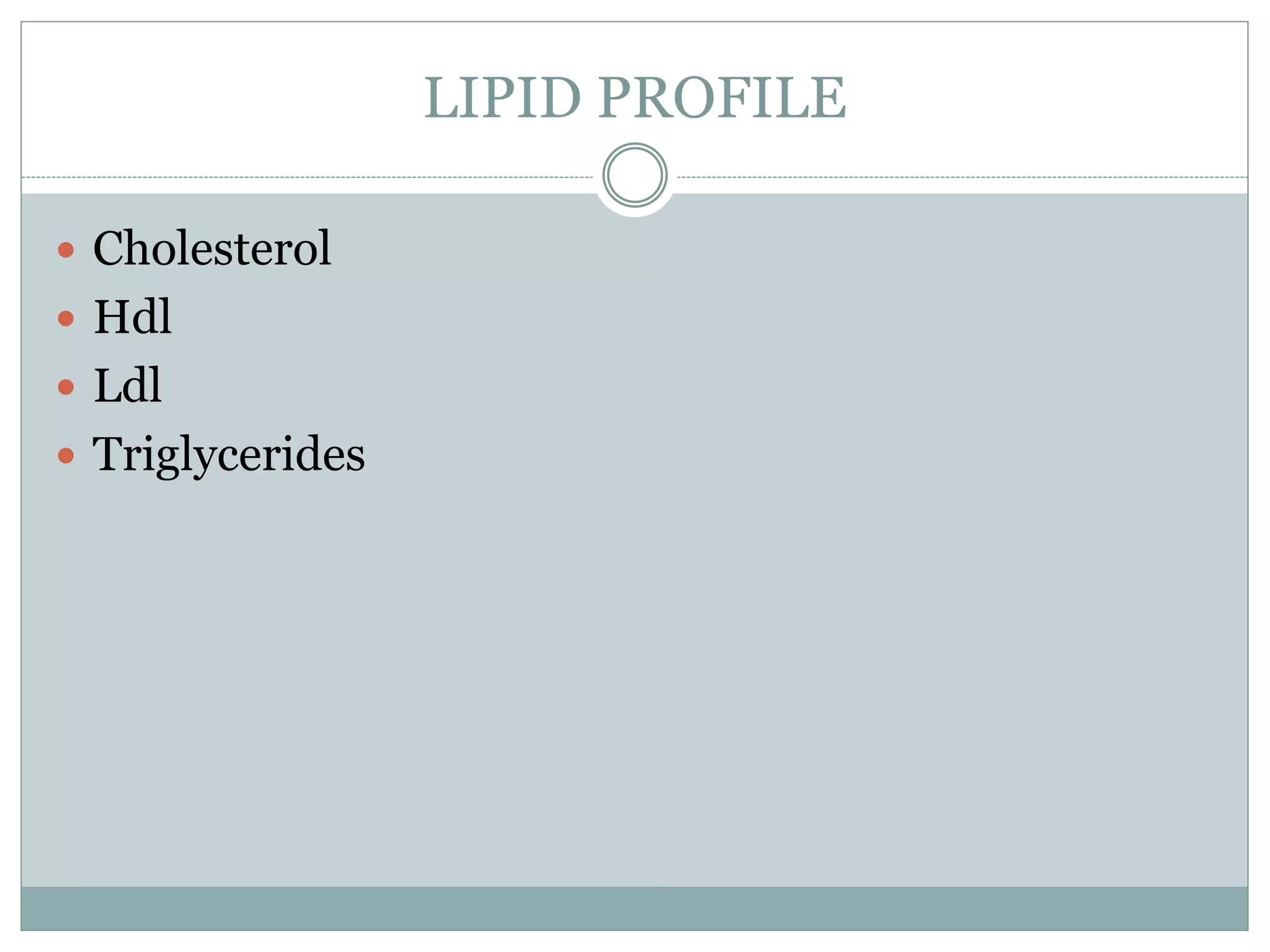
LIPID PROFILE
 Cholesterol
 Hdl
 Ldl
 Triglycerides
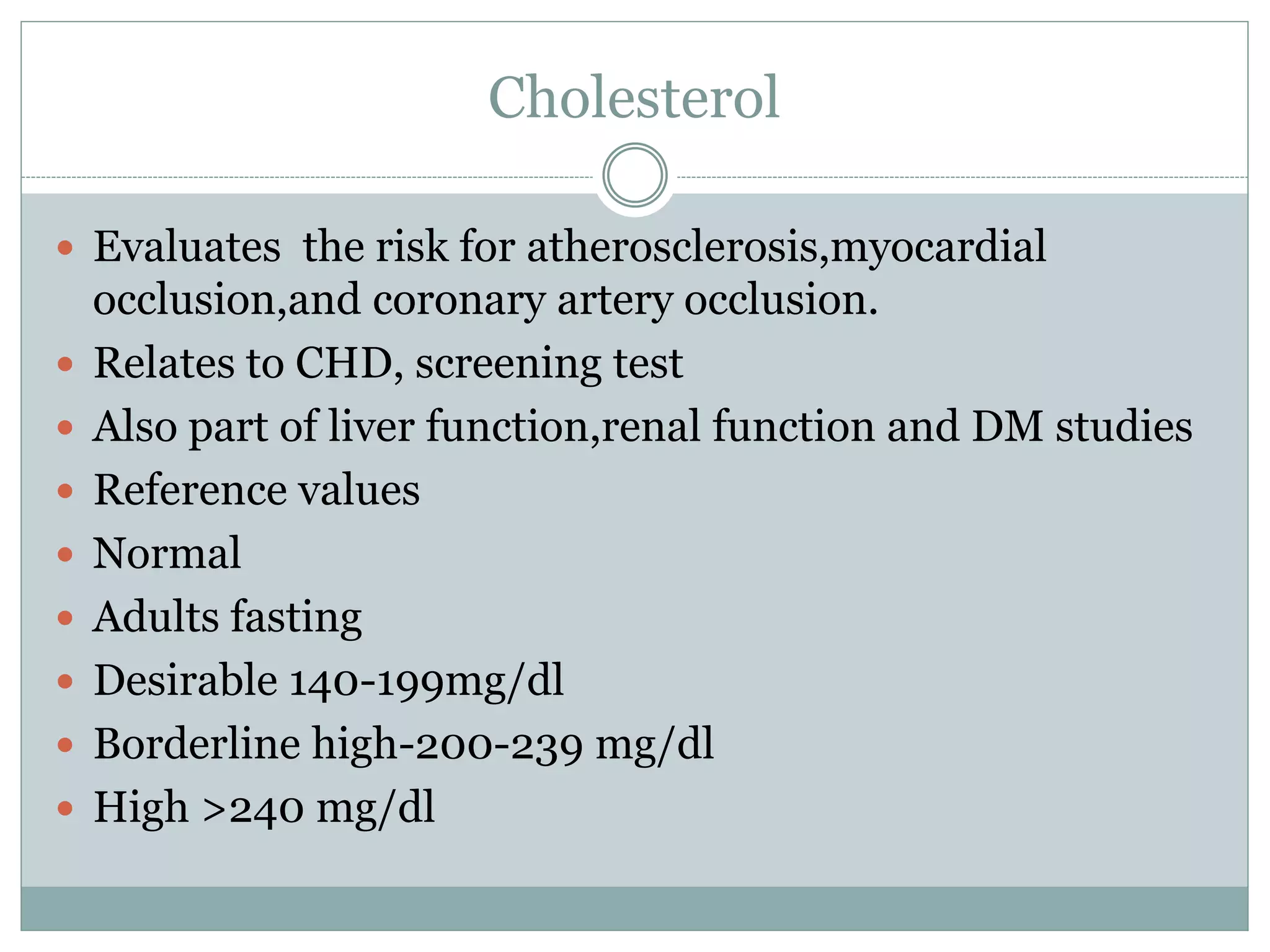
Cholesterol
 Evaluates the risk for atherosclerosis,myocardial
occlusion,and coronary artery occlusion.
 Relates to CHD, screening test
 Also part of liver function,renal function and DM studies
 Reference values
 Normal
 Adults fasting
 Desirable 140-199mg/dl
 Borderline high-200-239 mg/dl
 High >240 mg/dl
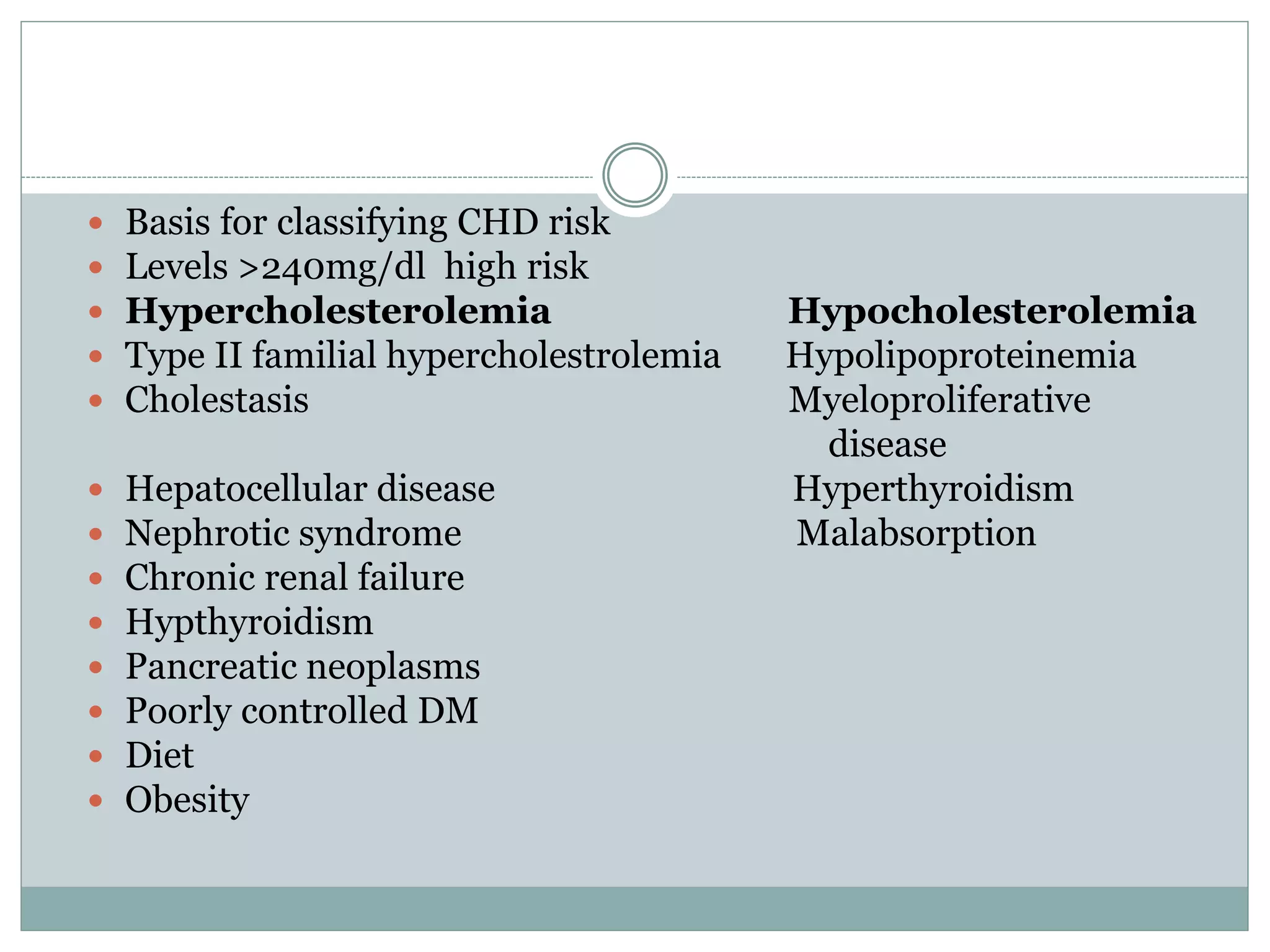
 Basis for classifying CHD risk
 Levels >240mg/dl high risk
 Hypercholesterolemia Hypocholesterolemia
 Type II familial hypercholestrolemia Hypolipoproteinemia
 Cholestasis Myeloproliferative
disease
 Hepatocellular disease Hyperthyroidism
 Nephrotic syndrome Malabsorption
 Chronic renal failure
 Hypthyroidism
 Pancreatic neoplasms
 Poorly controlled DM
 Diet
 Obesity
 Overnight fasting recommended
 Alcohol abstain 48 hrs before test
HDL
 Class Of Lipoprotein Produced By Liver And
Intestine
 Cholesterol Balance-removes It From Arteries
 INCREASED LEVELS- CARDIOPROTECTIVE
 Reference values
 Normal
 Men 35-65 mg/dl
 Women: 35-80 mg/dl
 Increased values
 Familial hyperlipoproteinemia
 Chronic liver disease
 Long term aerobic exercise
 Decreased values
 Familial hyplipoproteinemia
 Hypertriglyceridemia
 DM
 Hepatocellular diseases
 Cholestasis
 Increased levels:Estrogen therapy,alcohol,insulin
therapy
 Decreased levels:
steroids,antihypertensives,diuretics, stress,obesity
,smoking
 8-12 hour fast recommended
 Avoid alcohol consumption 24 hrs
 Withhold medication 24 hrs
LDL / VLDL
 70% of total serum cholesterol present in LDL
 Cholesterol rich remnants of VLDL lipid transport
vehicle
 Test done to determine CHD risk
 Reference values
 Adults
 Desirable <130 mg/dl
 Borderline 140-159 mg/dl
 High risk >160 mg/dl
Clinical Implications
 INCREASED Ldl Decreased
 Familial Hypercholeterolemia hypolipoproteinemia
 Secondary Causes Type I
 Diet hyperthyroidism
 Hyperlipidemia Secndary
to hypothyroidism
 Nephrotic syndrome
 multiple myelomas
 DM
 Porphyria
Triglycerides
 Account for >90% of dietary fat intake and 95% of stored
fat
 Main plasma glycerol ester
 Test evaluates suspected atherosclerosis and body’s
ability to metabolise fat
 Reference values
 Normal
 Desirable <150mg/dl
 Borderline 150-199mg/dl
 High 200-499mg/dl
 Very high> 500mg/dl
 Increased levels
 Hyperlipoproteinemia
 Liver disease , alcoholism
 Nephrotic syndrome
 Hypothyroidism
 DM
 Pancreatitis
 Glycogen storage disease
 Decrease levels
 Congenital lipoproteinemia
 Malnutrition’
 Hyperthyroidism
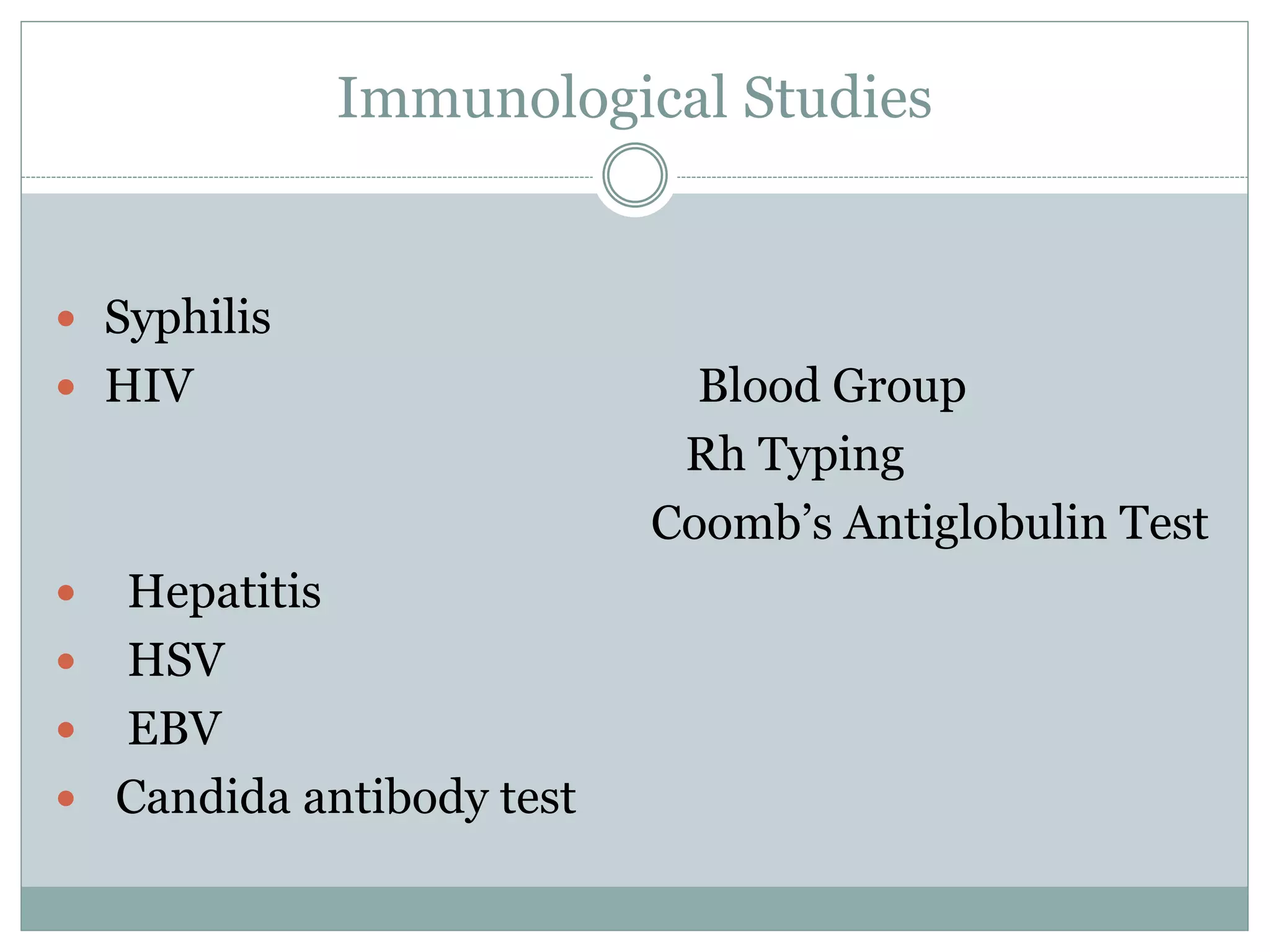
Immunological Studies
 Syphilis
 HIV Blood Group
Rh Typing
Coomb’s Antiglobulin Test
 Hepatitis
 HSV
 EBV
 Candida antibody test
MICROBIOLOGICAL STUDIES
 Microbiology is a broad term which includes
virology, mycology, parasitology, bacteriology,
immunology and other branches.
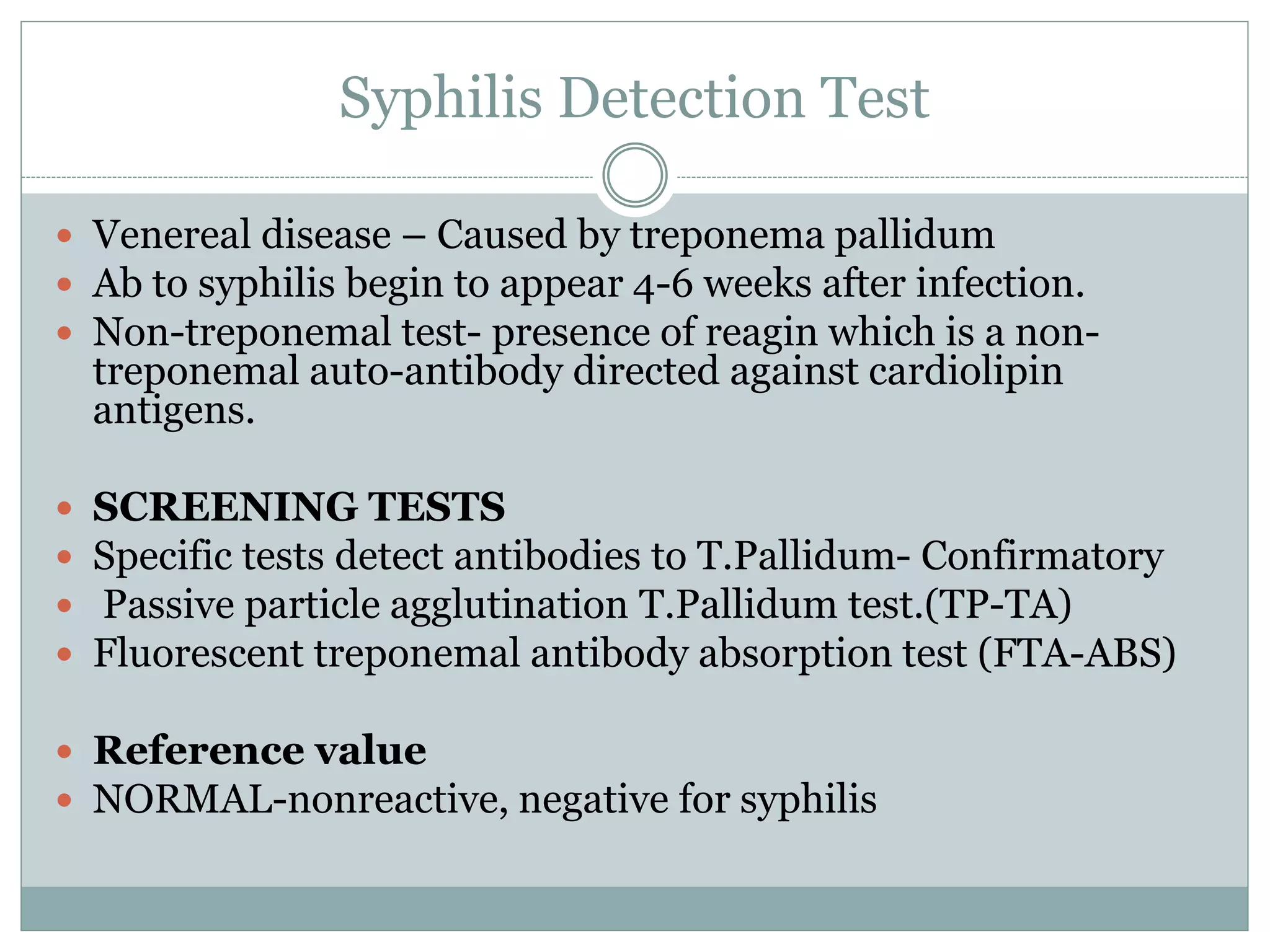
Syphilis Detection Test
 Venereal disease – Caused by treponema pallidum
 Ab to syphilis begin to appear 4-6 weeks after infection.
 Non-treponemal test- presence of reagin which is a non-
treponemal auto-antibody directed against cardiolipin
antigens.
 SCREENING TESTS
 Specific tests detect antibodies to T.Pallidum- Confirmatory
 Passive particle agglutination T.Pallidum test.(TP-TA)
 Fluorescent treponemal antibody absorption test (FTA-ABS)
 Reference value
 NORMAL-nonreactive, negative for syphilis
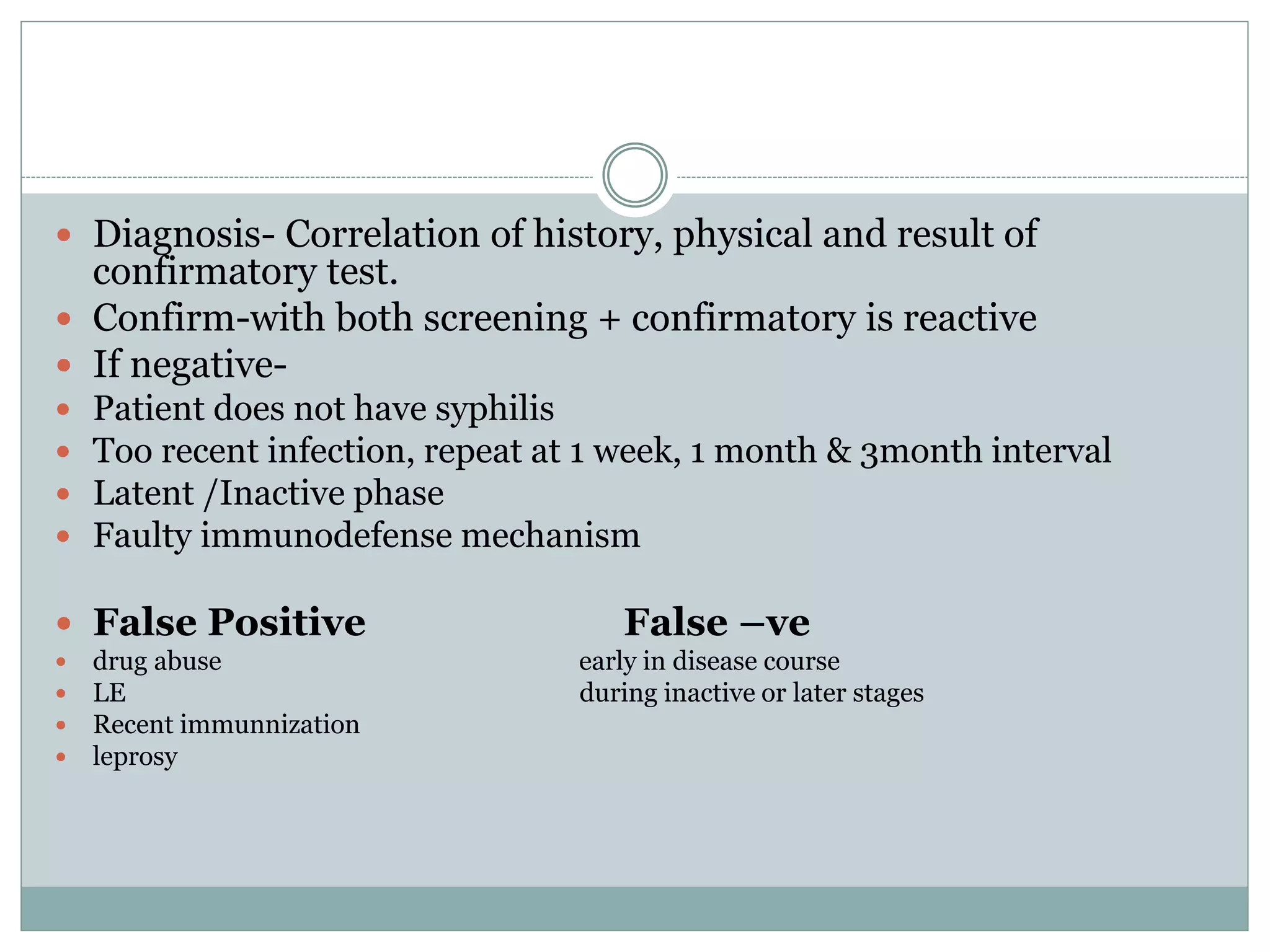
 Diagnosis- Correlation of history, physical and result of
confirmatory test.
 Confirm-with both screening + confirmatory is reactive
 If negative-
 Patient does not have syphilis
 Too recent infection, repeat at 1 week, 1 month & 3month interval
 Latent /Inactive phase
 Faulty immunodefense mechanism
 False Positive False –ve
 drug abuse early in disease course
 LE during inactive or later stages
 Recent immunnization
 leprosy
HIV
 Detec HIV virus type 1 and 2.
 used to determine the presence of antibodies to
HIV-1
 include ELISA, western blot & PCR.
 Single reactive ELISA – repeated in duplicate
 If repeatedly reactive – follow up western blot
 If positive– confirmatory
 HIV-1/2- also to screen blood + by products for
transfusion and organ transplant donors
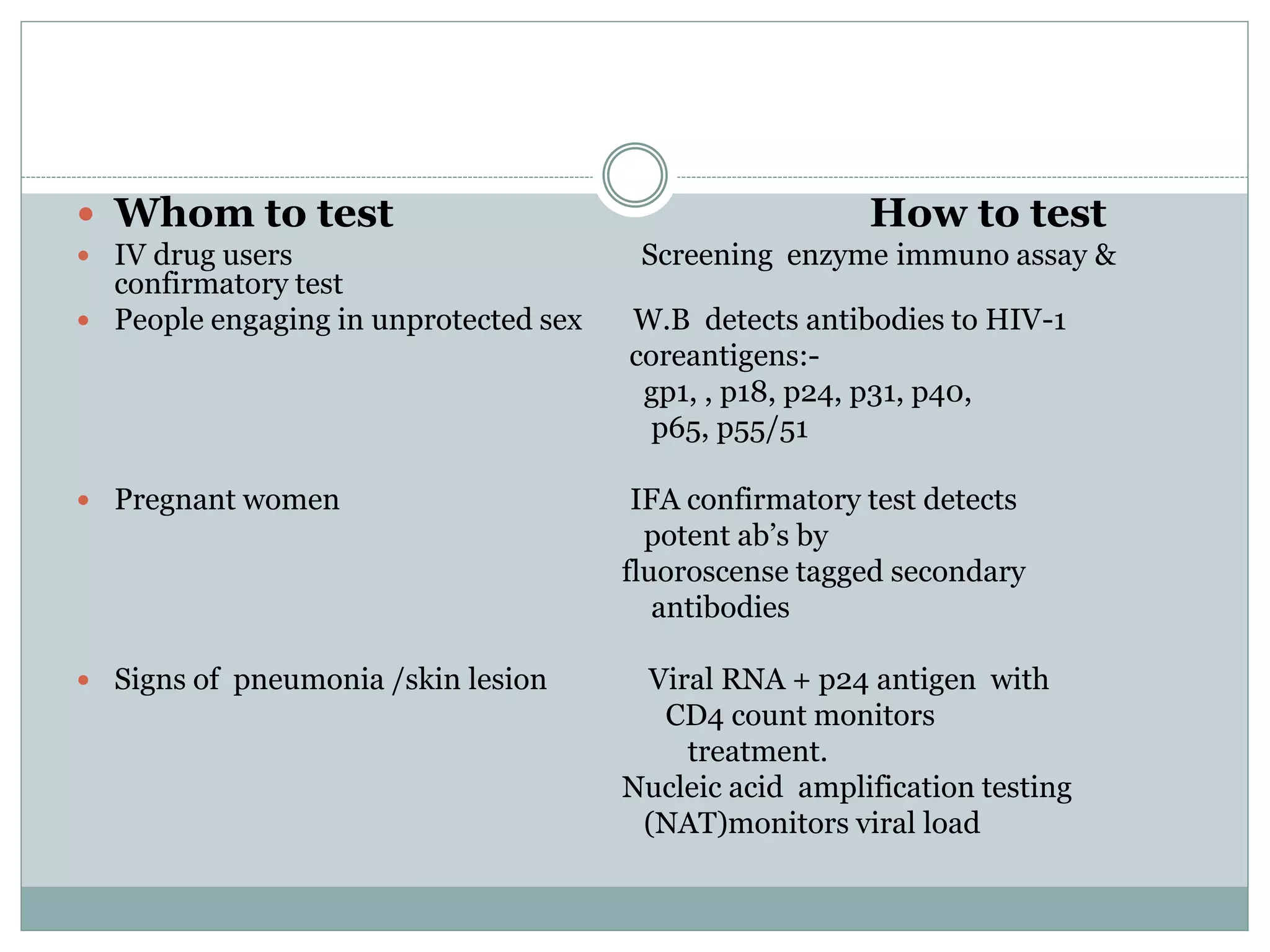
 Whom to test How to test
 IV drug users Screening enzyme immuno assay &
confirmatory test
 People engaging in unprotected sex W.B detects antibodies to HIV-1
coreantigens:-
gp1, , p18, p24, p31, p40,
p65, p55/51
 Pregnant women IFA confirmatory test detects
potent ab’s by
fluoroscense tagged secondary
antibodies
 Signs of pneumonia /skin lesion Viral RNA + p24 antigen with
CD4 count monitors
treatment.
Nucleic acid amplification testing
(NAT)monitors viral load
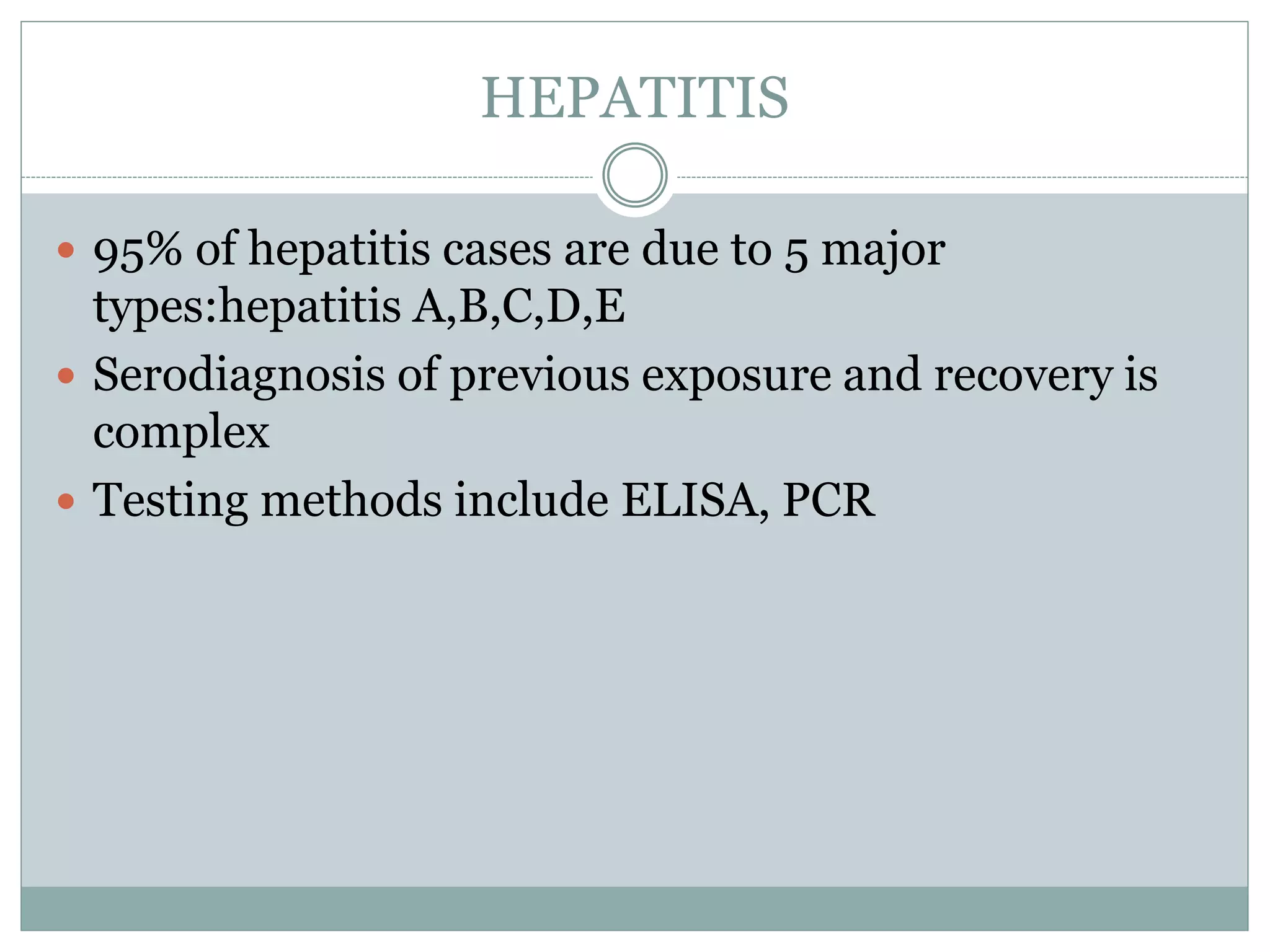
HEPATITIS
 95% of hepatitis cases are due to 5 major
types:hepatitis A,B,C,D,E
 Serodiagnosis of previous exposure and recovery is
complex
 Testing methods include ELISA, PCR
HEPATITIS TESTS
VIRUS TRANSMISSION INCUBATION
PERIOD
TEST FOR ACUTE
INFECTION
Hepatitis A Fecal-oral Av 30 Days (Range 15-50
Days)
Igm Antibody To
Hepatitis A Capsid
Protein
Hepatitis B Sexual,Blood and
other body parts
Av 120 days
(range 45-160 days)
HBsAg;the best test is
IgM antibody to HBcAg
Hepatitis C Blood Commonly 6-9 wk(range
2wk-6mo)
ELISA initial test
PCR confirmatory
Hepatitis D Sexual,Blood and
other body fluids
2-8 wk Total antibody to delta
hepatitis shows if ever
infected
Hepatitis E Fecal-oral Av 26-42 d(range,15-64d)
CANDIDA
 Candidiasis- usually caused by C. albicans
 Identifying candida Ab can be helpful for diagnosing systemic
candidiasis
 Tests used- Immunodiffusion,latex agglutination for candida
antigen
 Refrence Values
 Normal –ve for candida Abs
 Clinical Implications
 A titer ≥ 1:8 indicates systemic infection
 A fourfold increase in titres of paired blood samples 10-14
days apart indicate acute infection
 Long term IV antibiaotic therapy and diabetic patients- risk
Blood groups
 Blood is grouped according to presence or absence of specific blood
group antibodies
 Specifical linked sugars determine the antigenic activities.
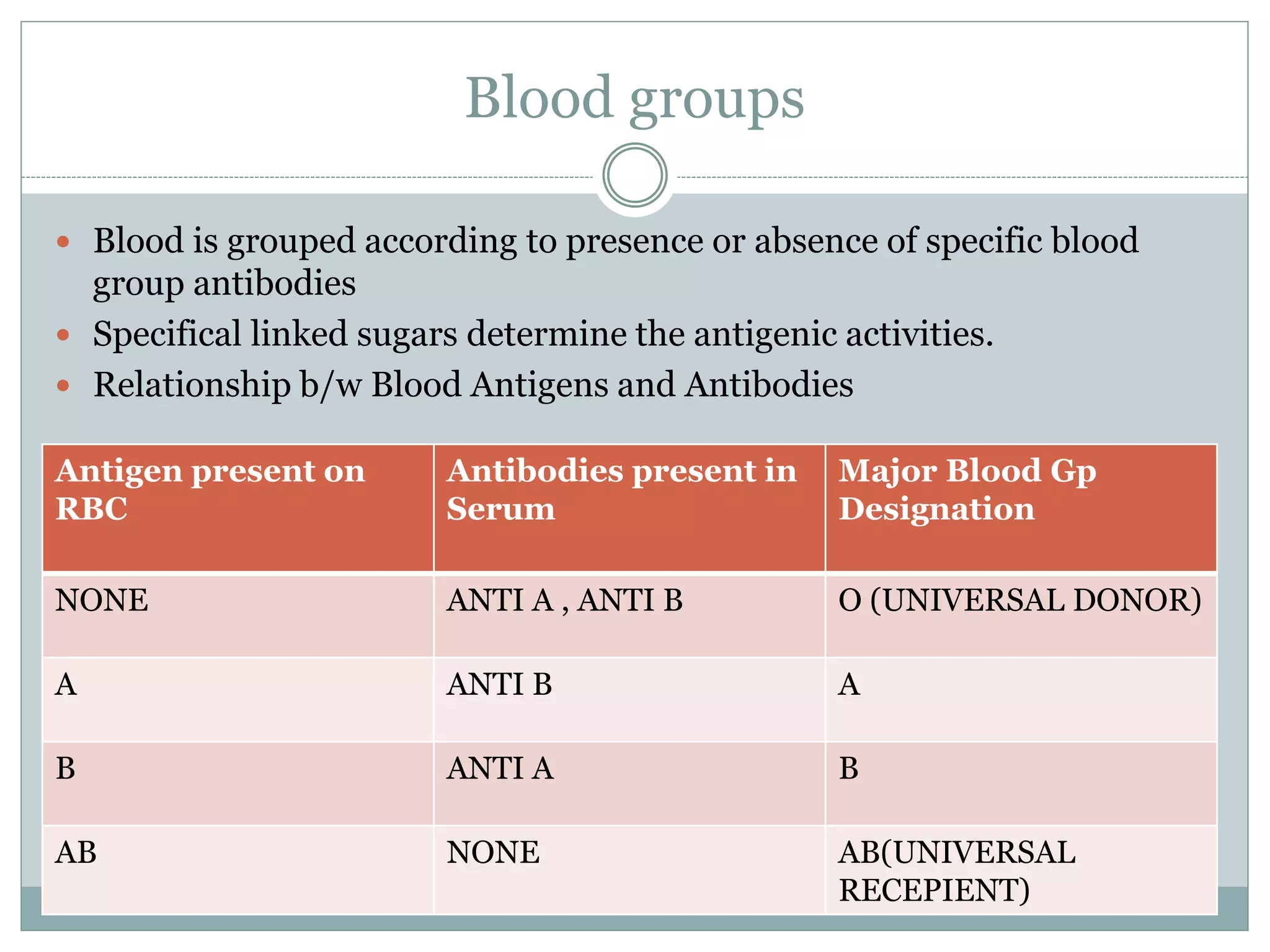
 Relationship b/w Blood Antigens and Antibodies
Antigen present on
RBC
Antibodies present in
Serum
Major Blood Gp
Designation
NONE ANTI A , ANTI B O (UNIVERSAL DONOR)
A ANTI B A
B ANTI A B
AB NONE AB(UNIVERSAL
RECEPIENT)
Rh Typing
 Human blood is classified as Rh +ve or -ve
 Relates to presence or absence of D antigen on the RBC
membrane.(now called the Rh1[D] antigen
 Rh –ve individuals may develop antibodies against Rh
positive antigens if they are challenged through a transfusion
of Rh +ve blood or through a fetomaternal bleed from an Rh
+ve fetus
 Rh typing must be done because:
 Rh +ve blood administered to Rh –ve person may sensitize
the person to form anti-D(Rh1)
 Rh +ve blood to person having serum anti-D. ~Fatal
 Rh –ve pregnant women:RhIG dose antepartum at 28 weeks
of gestation and a postpartum inj. Shortly after delivery of an
Rh +ve infant
Coomb’s Antiglobulin Test
 Direct Coombs test -detects Ag-Ab complexes on the RBC
membrane
 Used to test for autoimmune hemolytic anemia
 Indirect Coombs test -detects anti-RBC antibodies in the
serum
 Used in prenatal testing of pregnant women, and in
testing blood prior to transfusion.
 Clinical Implications
 Helps in diagnosing-
• Hemolytic disease of the newborn
• Acquired hemolytic anemia
• Transfusion reaction
Conclusion
 Laboratory and diagnostic tests are tools which when
used in conjunction with a thorough history and physical
examination may confirm a diagnosis or provide
information about patients status and response to
therapy.
 Test selections are based on subjective clinical
judgement, national recommendations and evidence
based health care
 Effective communication is the key to achieving desired
outcomes,preventing misunderstanding and errors,and
helping patients feel they are informed partners and are
connected to the diagnostic process.

Lab investigations in OMFS- ih

  • 2.
    P R ES E N T E R - D R . I T R A T H U S S A I N M O D E R A T O R – D R . A L O K B H A T N A G A R LABORATORY INVESTIGATIONS IN OMFS
  • 3.
    INTRODUCTION  Laboratory Testsinclude any test or examination of materials derived from the human body for the purpose of making patient care decisions and improving public health.  laboratory measurements form the scientific basis upon which medical diagnosis and management of patients is established.
  • 4.
    Laboratory tests requiredin oral surgical procedures 1. Blood studies 2. Biochemical 3. Histopathological 4. Immunological tests 5. Microbial
  • 5.
    HAEMATOLOGY  Is thebranch of internal medicine, physiology, pathology, clinical laboratory work, and pediatrics that is concerned with the study of blood, the blood- forming organs, and blood diseases.  Hematology includes the study of etiology, diagnosis, treatment, prognosis, and prevention of blood diseases.
  • 6.
    Haematological investigations  Hbconcentration.  Red cell count (RCC).  MCV.  MCH.  MCHC.  Haematocrit (Hct) or PCV.  White cell count.  WBC differential.  Platelet count  ESR
  • 7.
    Haemoglobin  Normal: Women:12.0-16.0g/dl Men:14.0-17.4 g/dl anemia states, thalassemia, hemoglobinopathie s Liver disease, hypothyroidism Hemorrhage(chroni c or acute) DECREASED IN Polycythemia vera COPD Congestive heart failure INCREASED IN high altitude = Hb Excessive fluid intake = Hb pregnancy INTERFER ING FACTORS
  • 8.
    RED BLOOD CELLCOUNT  The RCC is an important measurement in the evaluation of anemia or polycythemias and determines the total number of erythrocytes per ml of blood.  Reference Values  Men: 4.2-5.4x 10⁶/mm3  Women: 3.6-5.0 x 10⁶/mm3
  • 9.
     Decreased counts: Anemias Disorderssuch as: Hodgkins disease and lymphomas Rheumatic fever SABE  Erythrocytosis- Increased count: Polycythemis vera Renal disease Extrarenal tumors High altitude Pulmonary disease Cardiovascular disease Hemoglobinopathy
  • 10.
    Red Blood CellAbnormalities Seen on Stained Smear  Anisocytosis - Variability of cell size . pernicious anaemia  Leptocytosis - Hypochromic cells with central zone of Hgb (“target cells”) Thalassemias , Obstructive jaundice  Schistocytosis - MCHC high, Accelerated red blood cell destruction .  Acanthocytosis - Presence of cell fragments in Circulation , Increased intravascular mechanical trauma .  Echinocytosis - Irregularly spiculated surface , Irreversibly abnormal membrane lipid content , Liver disease.  Elliptocytosis - Oval cells , Hereditary anomaly, usually harmless .
  • 11.
     Macrocytosis -Megaloblastic anemias , Severe liver disease, Hypothyroidism  Microcytosis - Iron-deficiency anemia ,Thalassemias  Hypochromia - Increased zone of central pallor , Diminished Hgb content  Hyperchromia -Microcytic, hyperchromic cells, Increased bone marrow stores of Iron  Polychromatophilia -Presence of red cells not fully Hemoglobinized ; Reticulocytosis  Poikilocytosis - Variability of cell shape ; Sickle cell disease, Leukemias
  • 12.
    Hematocrit (PCV) Normal  Men:40-50%  Women: 37-47%  Decreased Hct  Leukiemias  Adrenal insufficiency  Chronic disease  Acute and chronic blood loss  Hemolytic reaction Increase values:  Erythrocytosis  Polycythemis Vera  Shock
  • 13.
    Red Blood CellIndices  MCV,MCHC and MCH  They are used to differentiate anemias and when they are used together with peripheral smear give a clear picture of the RBC morphology.
  • 14.
    MCV  This indexexpresses the volume occupied by a single RBC  Refrence Values  Normal:  80-100 fl  Decreased MCV- iron defeciency anemia, β- thalassemia trait, sideroblastic anemia.  Increased -Megaloblastic anemia,Myelodysplasia
  • 15.
    MCH  average weightof Hb per RBC.  This index is of value in diagnosing severely anemic patients.  Refrence Values  Normal 26-34 pg/cell  Clinical Implications  An increase in the MCH is associated with macrocytic anemias and newborns  A decrease is associated with microcytic anemia
  • 16.
    Mean Corpuscular HemoglobinConcentration (MCHC)  Monitoring the therapy for anemia.  Normal  32-36 %  CLINICAL IMPLICATIONS  Decreased MCHC values signify that a unit volume of packed RBC contains less Hb than normal  Hypochromic anemias <30g/dl occurs in: Iron deficiency Microcytic anemias,chronic blood loss anemias  Increased MCHC values occur in :  Spherocytosis  Newborns and infants
  • 17.
    Total Leukocyte Count WBC serve as a useful guide to the severity of the disease process.It calculates total number of leukocytes per mm3 of blood  Normal  Adults 4.5-10.5x 10³ cells/mm3  Children:  2 months – 6 years: 5.0-21.0x10³ cells/mm3  6-18 years: 4.8-10.8x 10³ cells/mm3
  • 18.
    Leukocytosis: WBC >11000/mm3  Usually caused by an increase of one type of cell and an increase is rarely caused by a proportional increase of all cell types.  Leukaemoid Reaction  Acute infections: degree of increase depends on severity of infection, patients resistance, age, marrow efficiency and reserves.  Other causes:  Leukemia  Trauma  Malignant neoplasms  Hemolysis,Hemorrhage  Tissue Necrosis
  • 19.
    Leukopenia WBC <4000/mm3  Viral infections,some bacterial infections  Hypersplenism  Bone marrow depression caused by heavy metal intoxication,drugs,ionizing radiation  Pimary bone marrow disorders:Leukemias,Pernicious anemia,aplastic anemia  Immune associate INTERFERING FACTORS  Age  Stress
  • 20.
    Differential Leukocyte Count The total count of circulating WBC is differentiated according to 5 types of leukocytes,each of which performs specific function expressed as a % of total WBC.
  • 21.
    Neutrophils  Neutrophils constituea primary defense against microbial infection through a process known as phagocytosis..  Neutrophilia- increase in absolute no. of neutrophils  Neutropenia- decrease in the absolute no.  Refrence values  Normal absolute count- 3000-7000 cells/mm 3  Differential- 50 % of total WBC
  • 22.
    Neutrophilia: >8x 10⁹/L  Acute/Localized/gen/ bacterial infections, fungal and spirochetal infections  Inflammation and tissue necrosis  Metabolic intoxication  Chemical and drugs  Acute hemorrhage, hemolytic anemia,transfusion reactions  Myeloproliferative disease  Malignant neoplasms
  • 23.
    Neutropenia <1.8x10 9/l A) decreased or ineffective production Stem cell disorders Acute infections Viral infections Malaria Drugs,chemicals,ionizing radiation B) decreased survival low marrow reserve,infants,elderley Autoimmune causes Drug hypersensitivity Pregnancy
  • 24.
    Common Medicinal Causesof Neutropenia  Cytotoxic agents  Antibiotics (Penicillins, Cephalosporins, Sulfonamides)  Anticonvulsants  NSAIDs  Antithyroid agents (Methimazole, PTU)  Phenothiazines  Cimetidine
  • 25.
    Eosinophils  Capable ofphagocytosis,ingest Ag-Ab complexes and become active in later stages of inflammation  Used to diagnose allergic states,  Assess severity of infestation with worms and large parasite and monitor Rx.  Refrence Values  Normal: Absoluute: 0-0.7x10⁹/l Diff: 0%-3% of total WBC CLINICAL IMPLICATIONS Eosinophilia: > 5% or >500 cells/mm3 Allergies, asthma Parasitic disease Chronic skin disease- pemphigus,eczema,dermatitis herpetiforms Allergic drug reactions
  • 26.
    Eosinopenia:  Usually causedby increased adrenal steroid production associated with A. Cushing Syndrome B. use of certain drugs INTERFERING FACTORS Normal count lowest in mornings, highest from noon till after midnight so repeated at same time each day.
  • 27.
    Basophils  Phagocytic,used tostudy chronic inflammation  Refrence Values  Normal: Absolute:15-50/mm3  Differential: 0%-1% of total count  Clinical Implications  Basophilia >50/ mm  Granulocytic leukemia  Acute basophilic leukemia  Acute phase of infection  Hyperthyroidism  Prolonged steroid therapy
  • 28.
    Monocytes  Largest cell,secondline of defense against infection;scavenger action;produce antiviral agent interferon  Reference values  Normal: Absolute: 100-500 /mm3  Differntial: 3-7% of total wbc CLINICAL IMPLICATIONS Monocytosis >500 cells/,mm bacterial infection sabe, syphilis Ca breast, stomach hodgkins disease Monocytopenia <100 cells/ mm Predisone Rx Hairy cell leukemia HIV
  • 29.
    Lymphocytes  Lymphocytosis adults>4000/mm3  children > 7200/mm3  Lymphatic leukemia  Infectious lymphocytosis  Infectious mononucleousis- atypical lymphocytes  Other viral diseases  Cytomegalovirus  Measles ,mumps,chickenpox  HIV infection  Infectious hepatitis
  • 30.
     Lymphocytopenia: adult<1000cells/mm3 children < 2500 cellls /mm3  Chemotherapy,radiation,immunosupressive medication  Increased loss through GIT  Aplastic anemia  Hodgkins lymphoma  AIDS  Rheumatoid arthritis, SLE
  • 31.
    Some WBC abnormalities Atypical lymphocytes Infectious mononucleosis, any viral infection,toxoplasmosis, drug reactions.  Auer rods Seen in myeloblasts; pathognomonic of AML.Prominent in AML M3 subtype (acute promyelocytic leukaemia).  Left shifted Immature WBCs seen in peripheral blood. Seen in severe infections, inflammatory disorders, marrow ‘stress’, CML.  Right shifted Hypermature WBCs seen in peripheral bloode.g. megaloblastic anaemia and iron deficiency.
  • 32.
     Toxic granulation:Coarse granules in neutrophils. Seen in severe infection, post- operatively and inflammatory disorders.
  • 33.
    PLATELET COUNT  Asa screening tests for the disorders of platelet function  both congenital and acquired and for Willebrand’s disease  Bleeding time  Normal range:  Duke’s method: 3 ½ minute with a value of 4 min or more being definitely abnormal  Ivy method: Normal range upto 11 minutes most normal people cease bleeding within 7 minutes  Increased:  I.T.P. - > Due to lack of platelets  Secondary Thrombocytopenia Acute leukemias Aplastic Anemias Septicemia
  • 34.
    BLEEDING TIME  Range– 2–10 minutes  This is a test of platelet function, not a test of coagulation factors.  ↑ Platelet disorders, thrombocytopenia, thrombasthenia . Drugs: aspirin and other preparations containing aspirin.  Test is useful as a screening test (with aspirin challenge) for diagnosis of von Willebrand’s disease and platelet disorders.
  • 35.
    CLOTTING TIME  Itis the time taken by blood to coagulate after it has been shed.  Wright’s capillary tube method - Normal – 1-3 minutes  Lee and whites method – Normal – 5 to 11 minutes at 370  INCREASED IN  In hemophelia, (due to the lack of the antihemophilic globulin ) – may be upto 60mts or more.  In liver disease - when liver is unable to synthesize factor II, V, VII, X  In hereditary  In von willebrand’s disease  Occasionally in leukemia  Acute febrile conditions.
  • 36.
    Conditions where CTis reduced  In typhoid  In endocarditis  After meal  After hemorrhage  After Splenectomy  After GA  Digitalis Therapy
  • 37.
    Prothrombin time (PT) The prothrombin time (PT) and its derived measures of international normalized ratio (INR) are measures of the extrinsic pathway of coagulation.  The INR is the ratio of a patients prothrombin time to a normal (control)sample, raised to the power of the ISI value for the analytical system used.  The reference range for prothrombin time is usually around 11–16 seconds (70% - 100%)  The normal range for the INR is 0.8–1.2
  • 38.
     INR forthose receiving therapeutic anticoagulation therapy is 2.0 to 3.0.  For those with mechanical prosthetic heart valves, an INR of 2.5 to 3.5 is suggested  Prolonged PT/INR • Warfarin / heparin therapy • Liver diseases • Malabsorption of Vit. K • DIC • Haemorrhagic diseases of new born
  • 39.
    Activated partial thromboplastintime (aPTT or APTT)  Is a performance indicator measuring the efficacy of both the "intrinsic" (now referred to as the contact activation pathway) and the common coagulation pathways  Normal:Partial thromboplastin time (PTT): 30 - 45 seconds  Prolonged APTT  Haemophilia  Von Willibrand disease  Warfarin/heparin therapy  Liver diseases  DIC
  • 40.
    THROMBIN TIME  Range– 24–35 seconds  Physiologic Basis – Prolongation of the thrombin time indicates a defect in conversion of fibrinogen to fibrin  Increase: Low fibrinogen , abnormal fibrinogen (dysfibrinogenemia), increased fibrin degradation products (egDIC), heparin, fibrinolytic agents (streptokinase, urokinase, tissue plasminogen activator), primary systemic amyloidosis  Thrombin time can be used to monitor fibrinolytic therapy and to screen for circulating anticoagulants.
  • 41.
    Factor eight assay Range – 40–150% of normal  Physiologic Basis – Measures activity of factor VIII  Interpretation - ↑ Inflammatory states (acute phase reactant), last trimester of pregnancy, oral contraceptives. ↓Hemophilia A , von Willebrand’s disease,DIC  Comments – Normal haemostasis requires at least 25% of factor VIII activity. Symptomatic hemophiliacs usually have levels ≤5%
  • 42.
    BLOOD CHEMISTRY  Electrolytepanel Na,K,Cl,Ca,CO2,pH  Kidney function BUN, Creatinine,,uric acid  Lipids Cholesterol,triglycerides,LDL,HDL  Liver function Total biliribin, alkaline phosphatase GGT,Total protein,A/G ratio,Albumin, AST,ALT  Thyroid Function T3 uptake,free T3, T4, Total T3,T4,TSH  Diabetes Panel Blood sugar(Fasting,PP,Random)GTT, HbA1c
  • 43.
    ELECTROLYTES Sodium(Na)  Detects changesin the water balance,acid-base balance and assess dehydration and water intoxication.  Reference values:  Normal  Adults: 136-145 mEq/L  CLINICAL IMPLICATIONS => HYPONATREMIA  Severe burns Severe Nephritis  CHF Diabetic acidosis  Fluid loss Diuretics  Addisons disease water intoxication
  • 44.
    HYPERNATREMIAA  Dehydration andinsufficient water intake  Conns disease  Primary aldosteronism  Cushing disease  Diabetes insipidus
  • 45.
    Potassium  Plays rolein nerve conduction,muscle function,acid- base balance and osmotic pressure,rate and force of heart contraction and C.O  REFERENCE VALUES Normal  Adults: 3.5-5.2mEq/L  Children 3.4-4.7mEq/L
  • 46.
     Hypokalemia Hyperkalemia Diarrhea,vomiting,sweating Renal Failure  Starvation,malabsorption Burns,accidents,chemo,Surgery  Drainig wounds, Metabolic acidosis  Cystic fibrosis Addisons disease  Severe burns Uncontrolled diabetes  Alcoholism Arrhythmias  Respiratory alkalosis Sinus brachycardia  Diuretic,mineralocorticoid Sinus arrest
  • 47.
    Calcium  Measures theconcentration of total and ionized calcium in blood  Reflects parathyroid and calcitonin function  Reference values  Normal  Adult 9-11 mg/dl  CLINICAL IMPLICATION  Hypercalcemia >12mg/dl Hypocalcemia  hyperparathyroidism  Cancer (PTH producing tumor) hypoparathyroidism  Thyroid toxicosis hyperphosphatemia  Pagets disease malabsorption  Vit D intake excess osteomalacia vit D deficiency
  • 48.
    Phosphorous  Evaluated withcalcium as inversely proportional to ca  Reference  Adult 2.7-4.5 mg/dl  Children 4.5-5.5 mg/dl  CLINICAL IMPLICATIONS  Increased levels Decreased levels  Kidney dysfunction,uremia hypoparathyroidism  Renal insufficiency Rickets  Nephritis Diabetic coma  Hypoparathyroidism liver disease  Hypocalcemia vomiting,diarrhoea  Bone tumors gram –ve septecemia
  • 49.
  • 50.
    BUN(Blood Urea Nitrogen) Final product of protein metabolism  Amount of urea excreted varies with diet protein intake  Measures nitrogen portion of urea  Index of glomerular function  Refrence range = 6-20 mg/dl  CLINICAL IMPLICATIONS  Increased BUN”(Azotemia) Decreased levels:  Impaired renal function- liver failure  CHF, salt + water depletion, Acromegaly Shock, stress ,acute MI Malnutrition  Chronic renal disease Impaired absorption  U.T obstructiion  D.M  Anabolic steroid
  • 51.
    Creatinine  Byproduct inmuscle breakdown  Excreted by kidney  Helps in diagnoses of impaired renal function  Reference  Normal  Adult  Men: 0.9-1.3 mg/dl  Women-0.6-1.1 mg/dl
  • 52.
     INCREASED DECREASED Impaired renal function Muscle mass  Chronic nephritis advanced liver disease  Obstruction of U.T diet protein  Muscle diseases Pregnancy Gigantism Acromegaly Mysthenia gravis Poliomyelitis Muscular dystrophy  CHF  Shock  Dehydration
  • 53.
    Uric acid  Breakdownof nucleonic acid  Product of purine metabolism  Basis of test: overproduction occurs when: • Extreme cell breakdowm • Production and destruction of cells • Inability to excrete; evaluates: Renal failure  Gout  Leukemia  Reference  Normal  Men 3.4-7.0 mg/dl  Women 2.4-6.0 mg/dl
  • 54.
    Hyperuricemia Decreased levels  Renaldisease Fancons syndrome  Gout malignancies -Hodgkins  Alcoholism  Downs syndrome  Leasd poisoning  Luekemia lymphoma  Metabolicacidosis  Liver disease  Hemolytic anemia  Chemo and radiation
  • 55.
  • 56.
    Bilirubin  Results frombreakdown of Hb in RBC and is a byproduct of hemolysis.  Excreted into bile by liver > indirect(unconjugated, protein bound) > direct (conjugated, free)  Allows evaluation for liver function and hemolytic anemias  Reference  Normal  Total 0.3-1.0 mg/dl  Conjugated 0.0-0.2mg/dl
  • 57.
     Total increaseaccompanied by jaundice due to either hepatic,obstructive or hemolytic causes  Hepatocellular jaundice o Viral o Cirrhosis o Infectious mononucleosus  Obstructive o Increased conjugated biliribin  Hemolytic (Increased unconjugated) o Blood transfusion o Sickle cell anemia o Transfusion reaction
  • 58.
     Increase inindirect • Hemolytic anemia • Trauma • Gilbert syndrome  Increase in direct bilirubin • Cancer of pancreas • Dubin johnsons
  • 59.
    AST/SGOT  Enzyme presentin tissues of increased metabolic activity like heart, liver, skeletal muscle, kidney, brain, pancreas, spleen and lungs  Released into circulation following injury or cell death  So any damage in these tissues-- increase in AST  Reference  Normal  6-25 IU/l
  • 60.
     Increases Decreases In MI chronic renal diseases  In Liver damage vitamin B6 deficiency  Acute hepatitis  Chronic hepatitis  Cirrhosis  Hepatic necrosis  Primary Ca.  Alcoholic hepatitis  Others:  Hypothyrodism  Trauma of skeletal muscle  Toxic shock syndrome
  • 61.
    ALT/SGPT  Increased concentrationin liver,relatively low in heart,muscle and kidney  Primary to diagnose liver diseases and monitoring Rx  Reference  Normal  3-26 IU/L
  • 62.
     Increases  Hepatocellularjaundice  Alcoholic cirrhosis  Metastatic liver tumor  Obstructive jaundice  Viral,infectious,toxic hepatitis  MI,heart failure  AST/ALT comparision  AST always increases in acute MI,ALT does not unless liver damage  ALT increased > AST in acute extrahepatic biliary obstruction  ALT more specific to liver disease
  • 63.
    Alkaline phosphatase  Enzymeoriginating in bone,liver  Used as an index of liver and bone disease  Refrence values  Normal  Males 1-12 yrs < 350 u/l  12-14 <500 u/l  >20 yrs 25-100 u/l  Females 1-12 yrs <350 u/l  >15 25-100 u/l
  • 64.
     INCREASES in Liver Diseases OTHER DISEASES  Obstructive Jaundice hyperparathyroid  Space Occupying Lesions Of Liver hyperthyroidism  Hepatocellular cirrhosis hodgkins disease  Biliary cirrhosis Ca liver, pancreas  Intra and extra hepatic cholestasis DECREASES IN  Hepatitis congenital  DM malnutrition  Bone diseases hypothyroidism  Pagets disease anemias  Metastatic bone tumors  Osteogenic sarcoma  Osteomalacia  Rickets
  • 65.
    Albumin  Buffer function Reference  Normal  Adult -3.5-5.2 g/dl  CLINICAL IMPLICATIONS  Decreases  Acute and chronic inflammation,infections  Cirrhosis ,liver disease,alcoholism,  Burns  Starvation,malnutrition  Thyroid diseases
  • 66.
  • 67.
    Fasting blood glucose Refrence values  Normal  FBG <110mg/dl  CLINICAL IMPLICATIONS  Increased Decreased  DM  fasting > 126mg/dl Pancreatic islet cell Ca  PP >200 mg/dl  OGTT 140–199 mg/dl addisons disease  Other hypopituitarism,hypothyroid  Cushing disease starvation, malabsorption Acute stress liver damage  Pheochromocytoma  Pituitary adenoma  Pancreatitis  Adcanced liver disease
  • 68.
    Hemoglobin A1c Test The hemoglobin A1c test, also called HbA1c, glycated hemoglobin test, or glycohemoglobin, is an important blood test that shows how well diabetes is being controlled.  Hemoglobin A1c provides an average of your blood sugar control over the past 2 to 3 months  used along with home blood sugar monitoring to make adjustments in diabetes medicines. ,  normal range = 4% -5.6%.  levels between 5.7% and 6.4% indicate increased risk of diabetes.  levels of 6.5% or higher indicate uncontrolled diabetes
  • 69.
    LIPID PROFILE  Cholesterol Hdl  Ldl  Triglycerides
  • 70.
    Cholesterol  Evaluates therisk for atherosclerosis,myocardial occlusion,and coronary artery occlusion.  Relates to CHD, screening test  Also part of liver function,renal function and DM studies  Reference values  Normal  Adults fasting  Desirable 140-199mg/dl  Borderline high-200-239 mg/dl  High >240 mg/dl
  • 71.
     Basis forclassifying CHD risk  Levels >240mg/dl high risk  Hypercholesterolemia Hypocholesterolemia  Type II familial hypercholestrolemia Hypolipoproteinemia  Cholestasis Myeloproliferative disease  Hepatocellular disease Hyperthyroidism  Nephrotic syndrome Malabsorption  Chronic renal failure  Hypthyroidism  Pancreatic neoplasms  Poorly controlled DM  Diet  Obesity
  • 72.
     Overnight fastingrecommended  Alcohol abstain 48 hrs before test
  • 73.
    HDL  Class OfLipoprotein Produced By Liver And Intestine  Cholesterol Balance-removes It From Arteries  INCREASED LEVELS- CARDIOPROTECTIVE  Reference values  Normal  Men 35-65 mg/dl  Women: 35-80 mg/dl
  • 74.
     Increased values Familial hyperlipoproteinemia  Chronic liver disease  Long term aerobic exercise  Decreased values  Familial hyplipoproteinemia  Hypertriglyceridemia  DM  Hepatocellular diseases  Cholestasis
  • 75.
     Increased levels:Estrogentherapy,alcohol,insulin therapy  Decreased levels: steroids,antihypertensives,diuretics, stress,obesity ,smoking  8-12 hour fast recommended  Avoid alcohol consumption 24 hrs  Withhold medication 24 hrs
  • 76.
    LDL / VLDL 70% of total serum cholesterol present in LDL  Cholesterol rich remnants of VLDL lipid transport vehicle  Test done to determine CHD risk  Reference values  Adults  Desirable <130 mg/dl  Borderline 140-159 mg/dl  High risk >160 mg/dl
  • 77.
    Clinical Implications  INCREASEDLdl Decreased  Familial Hypercholeterolemia hypolipoproteinemia  Secondary Causes Type I  Diet hyperthyroidism  Hyperlipidemia Secndary to hypothyroidism  Nephrotic syndrome  multiple myelomas  DM  Porphyria
  • 78.
    Triglycerides  Account for>90% of dietary fat intake and 95% of stored fat  Main plasma glycerol ester  Test evaluates suspected atherosclerosis and body’s ability to metabolise fat  Reference values  Normal  Desirable <150mg/dl  Borderline 150-199mg/dl  High 200-499mg/dl  Very high> 500mg/dl
  • 79.
     Increased levels Hyperlipoproteinemia  Liver disease , alcoholism  Nephrotic syndrome  Hypothyroidism  DM  Pancreatitis  Glycogen storage disease  Decrease levels  Congenital lipoproteinemia  Malnutrition’  Hyperthyroidism
  • 80.
    Immunological Studies  Syphilis HIV Blood Group Rh Typing Coomb’s Antiglobulin Test  Hepatitis  HSV  EBV  Candida antibody test
  • 81.
    MICROBIOLOGICAL STUDIES  Microbiologyis a broad term which includes virology, mycology, parasitology, bacteriology, immunology and other branches.
  • 84.
    Syphilis Detection Test Venereal disease – Caused by treponema pallidum  Ab to syphilis begin to appear 4-6 weeks after infection.  Non-treponemal test- presence of reagin which is a non- treponemal auto-antibody directed against cardiolipin antigens.  SCREENING TESTS  Specific tests detect antibodies to T.Pallidum- Confirmatory  Passive particle agglutination T.Pallidum test.(TP-TA)  Fluorescent treponemal antibody absorption test (FTA-ABS)  Reference value  NORMAL-nonreactive, negative for syphilis
  • 85.
     Diagnosis- Correlationof history, physical and result of confirmatory test.  Confirm-with both screening + confirmatory is reactive  If negative-  Patient does not have syphilis  Too recent infection, repeat at 1 week, 1 month & 3month interval  Latent /Inactive phase  Faulty immunodefense mechanism  False Positive False –ve  drug abuse early in disease course  LE during inactive or later stages  Recent immunnization  leprosy
  • 86.
    HIV  Detec HIVvirus type 1 and 2.  used to determine the presence of antibodies to HIV-1  include ELISA, western blot & PCR.  Single reactive ELISA – repeated in duplicate  If repeatedly reactive – follow up western blot  If positive– confirmatory  HIV-1/2- also to screen blood + by products for transfusion and organ transplant donors
  • 87.
     Whom totest How to test  IV drug users Screening enzyme immuno assay & confirmatory test  People engaging in unprotected sex W.B detects antibodies to HIV-1 coreantigens:- gp1, , p18, p24, p31, p40, p65, p55/51  Pregnant women IFA confirmatory test detects potent ab’s by fluoroscense tagged secondary antibodies  Signs of pneumonia /skin lesion Viral RNA + p24 antigen with CD4 count monitors treatment. Nucleic acid amplification testing (NAT)monitors viral load
  • 88.
    HEPATITIS  95% ofhepatitis cases are due to 5 major types:hepatitis A,B,C,D,E  Serodiagnosis of previous exposure and recovery is complex  Testing methods include ELISA, PCR
  • 89.
    HEPATITIS TESTS VIRUS TRANSMISSIONINCUBATION PERIOD TEST FOR ACUTE INFECTION Hepatitis A Fecal-oral Av 30 Days (Range 15-50 Days) Igm Antibody To Hepatitis A Capsid Protein Hepatitis B Sexual,Blood and other body parts Av 120 days (range 45-160 days) HBsAg;the best test is IgM antibody to HBcAg Hepatitis C Blood Commonly 6-9 wk(range 2wk-6mo) ELISA initial test PCR confirmatory Hepatitis D Sexual,Blood and other body fluids 2-8 wk Total antibody to delta hepatitis shows if ever infected Hepatitis E Fecal-oral Av 26-42 d(range,15-64d)
  • 90.
    CANDIDA  Candidiasis- usuallycaused by C. albicans  Identifying candida Ab can be helpful for diagnosing systemic candidiasis  Tests used- Immunodiffusion,latex agglutination for candida antigen  Refrence Values  Normal –ve for candida Abs  Clinical Implications  A titer ≥ 1:8 indicates systemic infection  A fourfold increase in titres of paired blood samples 10-14 days apart indicate acute infection  Long term IV antibiaotic therapy and diabetic patients- risk
  • 91.
    Blood groups  Bloodis grouped according to presence or absence of specific blood group antibodies  Specifical linked sugars determine the antigenic activities.  Relationship b/w Blood Antigens and Antibodies Antigen present on RBC Antibodies present in Serum Major Blood Gp Designation NONE ANTI A , ANTI B O (UNIVERSAL DONOR) A ANTI B A B ANTI A B AB NONE AB(UNIVERSAL RECEPIENT)
  • 92.
    Rh Typing  Humanblood is classified as Rh +ve or -ve  Relates to presence or absence of D antigen on the RBC membrane.(now called the Rh1[D] antigen  Rh –ve individuals may develop antibodies against Rh positive antigens if they are challenged through a transfusion of Rh +ve blood or through a fetomaternal bleed from an Rh +ve fetus  Rh typing must be done because:  Rh +ve blood administered to Rh –ve person may sensitize the person to form anti-D(Rh1)  Rh +ve blood to person having serum anti-D. ~Fatal  Rh –ve pregnant women:RhIG dose antepartum at 28 weeks of gestation and a postpartum inj. Shortly after delivery of an Rh +ve infant
  • 93.
    Coomb’s Antiglobulin Test Direct Coombs test -detects Ag-Ab complexes on the RBC membrane  Used to test for autoimmune hemolytic anemia  Indirect Coombs test -detects anti-RBC antibodies in the serum  Used in prenatal testing of pregnant women, and in testing blood prior to transfusion.  Clinical Implications  Helps in diagnosing- • Hemolytic disease of the newborn • Acquired hemolytic anemia • Transfusion reaction
  • 94.
    Conclusion  Laboratory anddiagnostic tests are tools which when used in conjunction with a thorough history and physical examination may confirm a diagnosis or provide information about patients status and response to therapy.  Test selections are based on subjective clinical judgement, national recommendations and evidence based health care  Effective communication is the key to achieving desired outcomes,preventing misunderstanding and errors,and helping patients feel they are informed partners and are connected to the diagnostic process.