Chapter 1:Megaloblastic
anemia
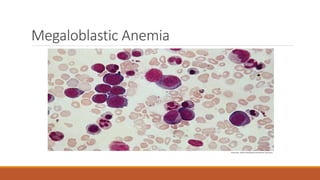
Definition
Characterized by the
presence of large,
immature, abnormal red
blood cell precursors in
the bone marrow
Often attributable to
folic acid or vitamin B12
deficiency
Epidemiology
Seen in specific population groups such as
women who have insufficient stores for
pregnancy, infants of deficient mothers,
elderly persons, persons with atrophic
gastritis, and chronic alcohol consumers
Increases with age
Megaloblastic Anemia
Pernicious
Anemia
A macrocytic, megaloblastic anemia caused by a deficiency of vitamin B12.
Usually secondary to lack of intrinsic factor (IF)
May be caused by strict vegan diet
Also can be caused by ↓gastric acid secretion, gastric atrophy, H-pylori,
gastrectomy, disorders of the small intestine (celiac disease, regional
enteritis, resections), drugs that inhibit B12 absorption including
neomycin, alcohol, colchicine, metformin, pancreatic disease
Possible causes
of pernicious
anemia
Other possible causes of vitamin B12 deficiency and some
examples :
◦ Inadequate absorption (gastric disorder)
◦ Increased excretion (liver or renal disease)
◦ Increased requirements (infancy, hyperthyroidism)
◦ Increased destruction by antioxidants (ascorbic acid)
◦ Inadequate use (B12 antagonists)
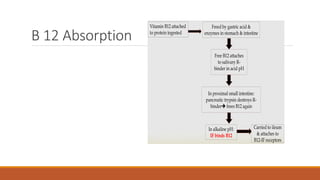
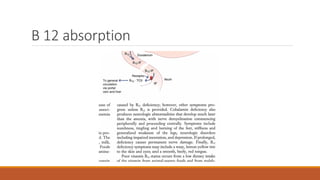
B 12 Absorption
Vitamin B12 attached
to protein ingested
Freed by gastric acid &
enzymes in stomach & intestine
Free B12 attaches
to salivary R-
binder in acid pH
In proximal small intestine:
pancreatic trypsin destroys R-
binder frees B12 again
In alkaline pH:
IF binds B12
Carried to ileum
& attaches to
B12-IF receptors
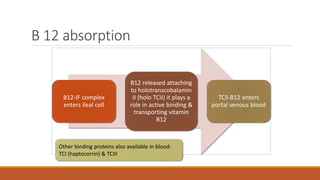
B 12 absorption
B 12 absorption
B12-IF complex
enters ileal cell
B12 released attaching
to holotranscobalamin
II (holo TCII) it plays a
role in active binding &
transporting vitamin
B12
TCll-B12 enters
portal venous blood
Other binding proteins also available in blood:
TCI (haptocorrin) & TCIII
B 12 Absorption
75%of B12 in serum is bound to haptocorrin
•ONLY TCII important in delivering B12 to all cells that need it
•TCII recognized by receptors on cell surfaces
25% bound to TCII
In the case of haptocorrin abnormalitiesèno symptoms of vitamin B12 deficiency
In the case of lack of TCII megaloblastic anemia rapidly develops
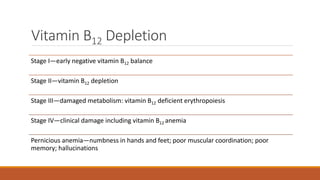
Vitamin B12 Depletion
Stage I—early negative vitamin B12 balance
Stage II—vitamin B12 depletion
Stage III—damaged metabolism: vitamin B12 deficient erythropoiesis
Stage IV—clinical damage including vitamin B12 anemia
Pernicious anemia—numbness in hands and feet; poor muscular coordination; poor
memory; hallucinations
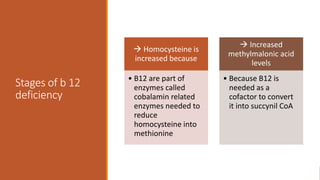
Stages of b 12
deficiency
 Homocysteine is
increased because
• B12 are part of
enzymes called
cobalamin related
enzymes needed to
reduce
homocysteine into
methionine
 Increased
methylmalonic acid
levels
• Because B12 is
needed as a
cofactor to convert
it into succynil CoA
Symptoms of
Pernicious
Anemia
Paresthesia (especially numbness and
tingling in hands and feet)
Poor muscular coordination
Impaired memory and hallucinations
Damage can be permanent
Diagnosis
Levels of serum vitamin B12 & serum folate measured at the
same time
Other tests:
◦ Measure of unsaturated B12 binding capacity
◦ IF antibody (IFAB)
◦ Schilling test
◦ Tests to determine serum homocysteine & serum methionine
levels
Diagnosis
To determine if deficiency caused by lack of IF: IFAB &
Schilling urinary excretion
IFAB on patient's serum
Schilling test requires 2 steps
1-Patient swallows radioactive B12 alone
2-Patient swallows B12 & IF
Then assay performed on urine
In the case of pernicious anemia:
1st step: very little excretion of B12
2nd step: urinary excretion becomes almost normal because
more B12 absorbed with addition of IF
If another type of anemia: in 2nd step little urinary excretion
even after administration of IF
Medical
management
Intramuscular or subcutaneous injection of 100 mcg or more
vitamin B12/week
• After initial response frequency reduced until
remission
• Very large ORAL doses of B12 ((1000 mcg daily) also
effective even with absence of IF
• 1% will be absorbed by diffusion
Nutrition
management
• Nutrition intervention
◦ Use of fortified foods
◦ Animal foods for B12
◦ Supplementation
• Monitoring and evaluation
◦ Lab values
◦ Food intake
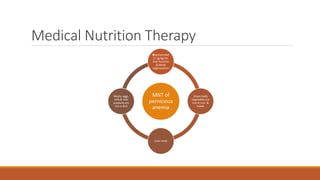
Medical Nutrition Therapy
MNT of
pernicious
anemia
protein diet
(1.5g/kg) for
liver function
& blood
regeneration
Green leafy
vegetables are
rich in iron &
folate
Liver meat
Meats, eggs,
milk & milk
products are
rich in B12
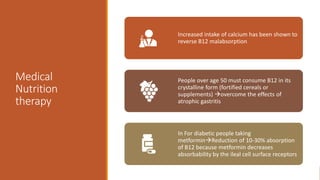
Medical
Nutrition
therapy
Increased intake of calcium has been shown to
reverse B12 malabsorption
People over age 50 must consume B12 in its
crystalline form (fortified cereals or
supplements) overcome the effects of
atrophic gastritis
In For diabetic people taking
metforminReduction of 10-30% absorption
of B12 because metformin decreases
absorbability by the ileal cell surface receptors
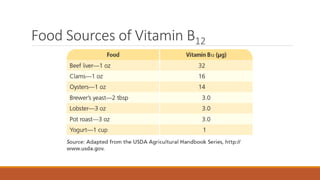
Food Sources of Vitamin B12
Folic Acid
Deficiency
Tropical sprue; pregnancy;
infants born to deficient
mothers
Alcoholics
People taking medications
chronically that affect folic
acid absorption
Malabsorption syndromes
Causes of Folate
Deficiency
Inadequate ingestion
Inadequate absorption
Inadequate utilization
Increased requirement
Increased excretion
Increased destruction
Vitamin B12 deficiency can cause folate deficiency due to the
methylfolate trap
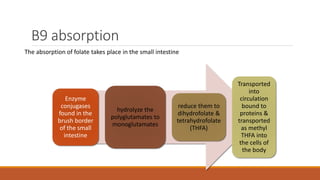
B9 absorption
The absorption of folate takes place in the small intestine
Enzyme
conjugases
found in the
brush border
of the small
intestine
hydrolyze the
polyglutamates to
monoglutamates
reduce them to
dihydrofolate &
tetrahydrofolate
(THFA)
Transported
into
circulation
bound to
proteins &
transported
as methyl
THFA into
the cells of
the body
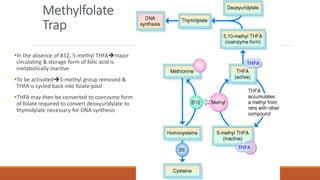
Methylfolate
Trap
In the absence of B12, 5-methyl THFAmajor
circulating & storage form of folic acid is
metabolically inactive
To be activated5-methyl group removed &
THFA is cycled back into folate pool
THFA may then be converted to coenzyme form
of folate required to convert deoxyuridylate to
thymidylate necessary for DNA synthesis
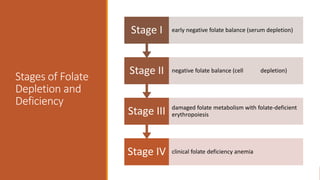
Stages of Folate
Depletion and
Deficiency
Stage IV clinical folate deficiency anemia
Stage III damaged folate metabolism with folate-deficient
erythropoiesis
Stage II negative folate balance (cell depletion)
Stage I early negative folate balance (serum depletion)
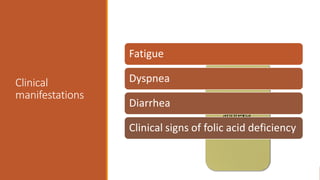
Clinical
manifestations + irritability,
forgetfulness,
anorexia,
glossitis &
weight loss
Fatigue
Dyspnea
Diarrhea
Clinical signs of folic acid deficiency
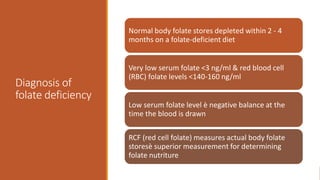
Diagnosis of
folate deficiency
Normal body folate stores depleted within 2 - 4
months on a folate-deficient diet
Very low serum folate <3 ng/ml & red blood cell
(RBC) folate levels <140-160 ng/ml
Low serum folate level è negative balance at the
time the blood is drawn
RCF (red cell folate) measures actual body folate
storesè superior measurement for determining
folate nutriture
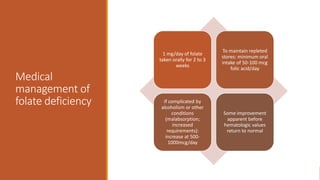
Medical
management of
folate deficiency
1 mg/day of folate
taken orally for 2 to 3
weeks
To maintain repleted
stores: minimum oral
intake of 50-100 mcg
folic acid/day
If complicated by
alcoholism or other
conditions
(malabsorption;
increased
requirements):
increase at 500-
1000mcg/day
Some improvement
apparent before
hematologic values
return to normal
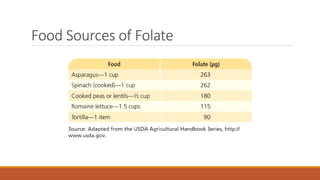
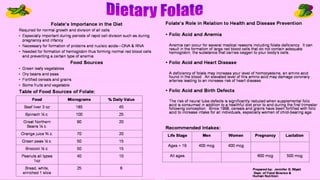
Food Sources of Folate
Megaloblastic anemias
g) Medical nutrition therapy of folate deficiency anemia
MNT of
folate
deficiency
anemia
Or drink 1 glass of
fruit juice daily (1
cup=135 mcg of folic
acid)
After correction of
anemia: at least
1 fresh uncooked
fruit or vegetable
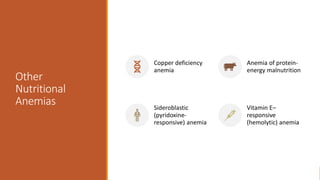
Other
Nutritional
Anemias
Copper deficiency
anemia
Anemia of protein-
energy malnutrition
Sideroblastic
(pyridoxine-
responsive) anemia
Vitamin E–
responsive
(hemolytic) anemia
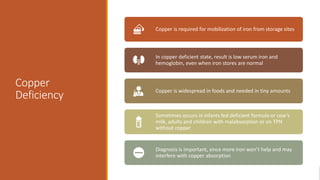
Copper
Deficiency
Copper is required for mobilization of iron from storage sites
In copper deficient state, result is low serum iron and
hemoglobin, even when iron stores are normal
Copper is widespread in foods and needed in tiny amounts
Sometimes occurs in infants fed deficient formula or cow’s
milk, adults and children with malabsorption or on TPN
without copper
Diagnosis is important, since more iron won’t help and may
interfere with copper absorption
Sideroblastic
Anemia
Microcytic, hypochromic form
Inherited defect of heme synthesis enzyme
High serum and tissue iron levels
Buildup of immature sideroblasts—hence the name
B6 is essential—must replace 25 to 100 times the RDA; may
need lifelong replacement
Pyridoxine-responsive anemia, distinguished from anemia
caused by pyridoxine deficiency
Hemolytic Anemia
Oxidative damage to cells—lysis occurs
Vitamin E is an antioxidant that seems to be protective.
This anemia can occur in newborns, especially preemies.
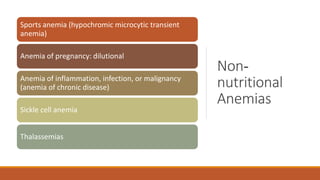
Non-
nutritional
Anemias
Sports anemia (hypochromic microcytic transient
anemia)
Anemia of pregnancy: dilutional
Anemia of inflammation, infection, or malignancy
(anemia of chronic disease)
Sickle cell anemia
Thalassemias
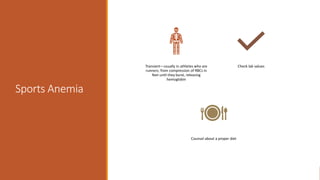
Sports Anemia
Transient—usually in athletes who are
runners; from compression of RBCs in
feet until they burst, releasing
hemoglobin
Check lab values
Counsel about a proper diet
Sickle Cell
Anemia
Protein-energy malnutrition common; may have poor intake
and increased energy needs
Be careful not to overdo iron in diet or supplements; iron
stores are often high due to frequent transfusions; avoid iron
rich foods, alcohol, and ascorbic acid which enhance iron
absorption
Promote foods high in copper, zinc and folate as needs are
increased due to constant replacement of erythrocytes
Zinc supplements may be useful
Thalassemia
Severe inherited anemia
affecting mostly people of
Mediterranean extraction
Defective globin formation in
hemoglobin leads to
increased blood volume,
splenomegaly, bone marrow
expansion, facial deformities,
osteomalacia, bone changes
Iron buildup due to
transfusions requires
chelation therapy to remove
excess iron
Medical and Nutritional
Management of different types of Anemia
It is important to be familiar with the etiology and treatment of nutritional and non-nutritional
anemias
Many non-nutritional anemias have nutritional implications
It is critical to DIAGNOSE before treating anemias with nutritional or non-nutritional therapies

Ch 1 Hematological disorders - Megaloblastic anemia.pdf

  • 1.
  • 2.
    Definition Characterized by the presenceof large, immature, abnormal red blood cell precursors in the bone marrow Often attributable to folic acid or vitamin B12 deficiency
  • 3.
    Epidemiology Seen in specificpopulation groups such as women who have insufficient stores for pregnancy, infants of deficient mothers, elderly persons, persons with atrophic gastritis, and chronic alcohol consumers Increases with age
  • 4.
  • 5.
    Pernicious Anemia A macrocytic, megaloblasticanemia caused by a deficiency of vitamin B12. Usually secondary to lack of intrinsic factor (IF) May be caused by strict vegan diet Also can be caused by ↓gastric acid secretion, gastric atrophy, H-pylori, gastrectomy, disorders of the small intestine (celiac disease, regional enteritis, resections), drugs that inhibit B12 absorption including neomycin, alcohol, colchicine, metformin, pancreatic disease
  • 6.
    Possible causes of pernicious anemia Otherpossible causes of vitamin B12 deficiency and some examples : ◦ Inadequate absorption (gastric disorder) ◦ Increased excretion (liver or renal disease) ◦ Increased requirements (infancy, hyperthyroidism) ◦ Increased destruction by antioxidants (ascorbic acid) ◦ Inadequate use (B12 antagonists)
  • 7.
    B 12 Absorption VitaminB12 attached to protein ingested Freed by gastric acid & enzymes in stomach & intestine Free B12 attaches to salivary R- binder in acid pH In proximal small intestine: pancreatic trypsin destroys R- binder frees B12 again In alkaline pH: IF binds B12 Carried to ileum & attaches to B12-IF receptors
  • 8.
  • 9.
    B 12 absorption B12-IFcomplex enters ileal cell B12 released attaching to holotranscobalamin II (holo TCII) it plays a role in active binding & transporting vitamin B12 TCll-B12 enters portal venous blood Other binding proteins also available in blood: TCI (haptocorrin) & TCIII
  • 10.
    B 12 Absorption 75%ofB12 in serum is bound to haptocorrin •ONLY TCII important in delivering B12 to all cells that need it •TCII recognized by receptors on cell surfaces 25% bound to TCII In the case of haptocorrin abnormalitiesèno symptoms of vitamin B12 deficiency In the case of lack of TCII megaloblastic anemia rapidly develops
  • 11.
    Vitamin B12 Depletion StageI—early negative vitamin B12 balance Stage II—vitamin B12 depletion Stage III—damaged metabolism: vitamin B12 deficient erythropoiesis Stage IV—clinical damage including vitamin B12 anemia Pernicious anemia—numbness in hands and feet; poor muscular coordination; poor memory; hallucinations
  • 12.
    Stages of b12 deficiency  Homocysteine is increased because • B12 are part of enzymes called cobalamin related enzymes needed to reduce homocysteine into methionine  Increased methylmalonic acid levels • Because B12 is needed as a cofactor to convert it into succynil CoA
  • 13.
    Symptoms of Pernicious Anemia Paresthesia (especiallynumbness and tingling in hands and feet) Poor muscular coordination Impaired memory and hallucinations Damage can be permanent
  • 14.
    Diagnosis Levels of serumvitamin B12 & serum folate measured at the same time Other tests: ◦ Measure of unsaturated B12 binding capacity ◦ IF antibody (IFAB) ◦ Schilling test ◦ Tests to determine serum homocysteine & serum methionine levels
  • 15.
    Diagnosis To determine ifdeficiency caused by lack of IF: IFAB & Schilling urinary excretion IFAB on patient's serum Schilling test requires 2 steps 1-Patient swallows radioactive B12 alone 2-Patient swallows B12 & IF Then assay performed on urine In the case of pernicious anemia: 1st step: very little excretion of B12 2nd step: urinary excretion becomes almost normal because more B12 absorbed with addition of IF If another type of anemia: in 2nd step little urinary excretion even after administration of IF
  • 16.
    Medical management Intramuscular or subcutaneousinjection of 100 mcg or more vitamin B12/week • After initial response frequency reduced until remission • Very large ORAL doses of B12 ((1000 mcg daily) also effective even with absence of IF • 1% will be absorbed by diffusion
  • 17.
    Nutrition management • Nutrition intervention ◦Use of fortified foods ◦ Animal foods for B12 ◦ Supplementation • Monitoring and evaluation ◦ Lab values ◦ Food intake
  • 18.
    Medical Nutrition Therapy MNTof pernicious anemia protein diet (1.5g/kg) for liver function & blood regeneration Green leafy vegetables are rich in iron & folate Liver meat Meats, eggs, milk & milk products are rich in B12
  • 19.
    Medical Nutrition therapy Increased intake ofcalcium has been shown to reverse B12 malabsorption People over age 50 must consume B12 in its crystalline form (fortified cereals or supplements) overcome the effects of atrophic gastritis In For diabetic people taking metforminReduction of 10-30% absorption of B12 because metformin decreases absorbability by the ileal cell surface receptors
  • 20.
    Food Sources ofVitamin B12
  • 21.
    Folic Acid Deficiency Tropical sprue;pregnancy; infants born to deficient mothers Alcoholics People taking medications chronically that affect folic acid absorption Malabsorption syndromes
  • 22.
    Causes of Folate Deficiency Inadequateingestion Inadequate absorption Inadequate utilization Increased requirement Increased excretion Increased destruction Vitamin B12 deficiency can cause folate deficiency due to the methylfolate trap
  • 23.
    B9 absorption The absorptionof folate takes place in the small intestine Enzyme conjugases found in the brush border of the small intestine hydrolyze the polyglutamates to monoglutamates reduce them to dihydrofolate & tetrahydrofolate (THFA) Transported into circulation bound to proteins & transported as methyl THFA into the cells of the body
  • 24.
    Methylfolate Trap In the absenceof B12, 5-methyl THFAmajor circulating & storage form of folic acid is metabolically inactive To be activated5-methyl group removed & THFA is cycled back into folate pool THFA may then be converted to coenzyme form of folate required to convert deoxyuridylate to thymidylate necessary for DNA synthesis
  • 25.
    Stages of Folate Depletionand Deficiency Stage IV clinical folate deficiency anemia Stage III damaged folate metabolism with folate-deficient erythropoiesis Stage II negative folate balance (cell depletion) Stage I early negative folate balance (serum depletion)
  • 26.
    Clinical manifestations + irritability, forgetfulness, anorexia, glossitis& weight loss Fatigue Dyspnea Diarrhea Clinical signs of folic acid deficiency
  • 27.
    Diagnosis of folate deficiency Normalbody folate stores depleted within 2 - 4 months on a folate-deficient diet Very low serum folate <3 ng/ml & red blood cell (RBC) folate levels <140-160 ng/ml Low serum folate level è negative balance at the time the blood is drawn RCF (red cell folate) measures actual body folate storesè superior measurement for determining folate nutriture
  • 28.
    Medical management of folate deficiency 1mg/day of folate taken orally for 2 to 3 weeks To maintain repleted stores: minimum oral intake of 50-100 mcg folic acid/day If complicated by alcoholism or other conditions (malabsorption; increased requirements): increase at 500- 1000mcg/day Some improvement apparent before hematologic values return to normal
  • 29.
  • 30.
    Megaloblastic anemias g) Medicalnutrition therapy of folate deficiency anemia MNT of folate deficiency anemia Or drink 1 glass of fruit juice daily (1 cup=135 mcg of folic acid) After correction of anemia: at least 1 fresh uncooked fruit or vegetable
  • 31.
    Other Nutritional Anemias Copper deficiency anemia Anemia ofprotein- energy malnutrition Sideroblastic (pyridoxine- responsive) anemia Vitamin E– responsive (hemolytic) anemia
  • 32.
    Copper Deficiency Copper is requiredfor mobilization of iron from storage sites In copper deficient state, result is low serum iron and hemoglobin, even when iron stores are normal Copper is widespread in foods and needed in tiny amounts Sometimes occurs in infants fed deficient formula or cow’s milk, adults and children with malabsorption or on TPN without copper Diagnosis is important, since more iron won’t help and may interfere with copper absorption
  • 33.
    Sideroblastic Anemia Microcytic, hypochromic form Inheriteddefect of heme synthesis enzyme High serum and tissue iron levels Buildup of immature sideroblasts—hence the name B6 is essential—must replace 25 to 100 times the RDA; may need lifelong replacement Pyridoxine-responsive anemia, distinguished from anemia caused by pyridoxine deficiency
  • 34.
    Hemolytic Anemia Oxidative damageto cells—lysis occurs Vitamin E is an antioxidant that seems to be protective. This anemia can occur in newborns, especially preemies.
  • 35.
    Non- nutritional Anemias Sports anemia (hypochromicmicrocytic transient anemia) Anemia of pregnancy: dilutional Anemia of inflammation, infection, or malignancy (anemia of chronic disease) Sickle cell anemia Thalassemias
  • 36.
    Sports Anemia Transient—usually inathletes who are runners; from compression of RBCs in feet until they burst, releasing hemoglobin Check lab values Counsel about a proper diet
  • 37.
    Sickle Cell Anemia Protein-energy malnutritioncommon; may have poor intake and increased energy needs Be careful not to overdo iron in diet or supplements; iron stores are often high due to frequent transfusions; avoid iron rich foods, alcohol, and ascorbic acid which enhance iron absorption Promote foods high in copper, zinc and folate as needs are increased due to constant replacement of erythrocytes Zinc supplements may be useful
  • 38.
    Thalassemia Severe inherited anemia affectingmostly people of Mediterranean extraction Defective globin formation in hemoglobin leads to increased blood volume, splenomegaly, bone marrow expansion, facial deformities, osteomalacia, bone changes Iron buildup due to transfusions requires chelation therapy to remove excess iron
  • 39.
    Medical and Nutritional Managementof different types of Anemia It is important to be familiar with the etiology and treatment of nutritional and non-nutritional anemias Many non-nutritional anemias have nutritional implications It is critical to DIAGNOSE before treating anemias with nutritional or non-nutritional therapies