
HAEMATINICS
Dr Mayur Chaudhari
Assistant Professor
Department of Pharmacology
Government Medical College, Surat
Objectives
■ Haematinics
■ Iron Deficiency Anaemia
■ Vitamin B12
■ Folic Acid
■ Erythropoietin
Haematinics
■ Substances required for formation of blood
■ Iron
■ Vitamin B12
■ Folic Acid
Anaemia
■ Blood loss
■ Impaired red cell formation – Iron,Vit B12, folic
Acid deficiency
■ Bone marrow depression
■ Erythropoietin deficiency
■ Haemolytic anaemia
Distribution of iron
Protein Tissue Iron (mg)
Haemoglobin Erythrocytes 2600
Myoglobin Muscles 400
Enzymes Liver 25
Transferrin Plasma and ECF 8
Ferritin and
Hemosiderin
Liver,
Spleen,
Bone marrow
410
48
300
Iron
■ Stored on as ferric form with apoferritin.
■ Major storage – Reticuloendothelial cells
■ Parenchymal iron in Enzymes
Daily requirements
■ Adult Male: 0.5-1 mg (13ug/kg)
■ Adult Female: 1-2 mg (21ug/kg )
■ Infants: 60 ug/kg
■ Children: 25 ug/kg
■ Pregnancy: 3-5 mg (80 ug/kg)
Dietary Sources
■ Rich: Liver, Egg yolk, dry beans, dry fruits,
Wheat germ,Yeast
■ Medium: Meat, Chicken, Fish, Spinach, Banana,
Apple
■ Poor: Milk products, RootVegetables
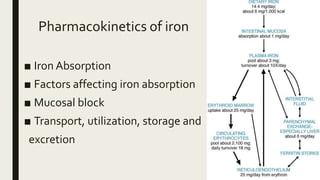
Pharmacokinetics of iron
■ Iron Absorption
■ Factors affecting iron absorption
■ Mucosal block
■ Transport, utilization, storage and
excretion
Iron absorption
Factors facilitating iron absorption
■ Acid
■ Reducing substances:Ascorbic acid
■ Meat
Factors impending absorption
■ Tea, Coffee, Antacids
■ Phosphates
■ Phytates (Maize,Wheat)
■ Tetracyclines
■ Presence of food
Mucosal Block
■ Ferritin curtain
■ Erythropoiesis and iron status of body
govern absorption
■ Larger % absorbed during deficiency
■ In gross excess, mucosal block fails
Transport and Utilization
■ On entering plasma iron is immediately
converted to the ferric form
■ Complexed with a glycoprotein transferrin (Tf)
■ Transported into cells through transferrin which
binds withTransferrin receptors
■ Iron dissociates at acidic pH, and utilized.
Storage
■ Stored in RE cells of Liver, Spleen and bone
marrow & Hepatocytes and Myocytes.
■ Apoferritin synthesis is regulated by iron status
of the body
■ Low – Less apoferritin and moreTf produces
■ High – More apoferritin synthesis
Excretion
■ Highly conserved (one way substance)
■ Excreted by Shedding of mucosal cells, bile,
Desquamated skin, urine and sweat.
■ Menstruation – (0.5 – 1 mg/day)
■ Excess iron requirement in pregnancy.
Pharmacokinetics of iron
Iron Preparations
■ Oral
■ Parenteral
Oral iron
■ Preferred route
■ Ferrous salts preferred – cheap, high iron
content, better absorption
■ Gastric irritation and constipation depends on
quantity of iron
■ Elemental iron
Oral iron preparations
■ Ferrous sulphate – 20 % in hydrated form, 32 %
in dried salt
■ Ferrous Gluconate – 12 % elemental iron
■ Ferrous fumarate – 33 % elemental iron,
tasteless.
■ Carbonyl iron – Powder form, better gastric
tolerance, less bioavailability
Oral iron
■ SR preparation costly and irrational
■ Liquid formulation stain the teeth
■ 200 mg elemental iron divided into 3 doses
■ Better absorption on empty stomach – irritateGI mucosa
■ Larger dose after meal / smaller dose in between meals
Adverse effects
■ Epigastric pain, Heartburn, Nausea,Vomiting
■ Bloating, staining of teeth, metallic taste
■ Start with low dose and gradually increase the dose
■ Constipation is more common than diarrhoea
Parenteral iron
■ Intolerance
■ Malabsorption
■ Non compliance
■ Severe deficiency
■ Along with erythropoietin
Calculations
Iron requirement = 4.4 X BodyWeight (kg) X Hb deficit (%)
(mg)
■ Response same as maximum dose of parenteral
iron therapy
■ Iron stores replenishment in shorter time
Parenteral iron preparations
■ Iron dextran
■ Iron sorbitol citric acid
■ Ferrous sucrose
■ Ferric carboxymaltose
Iron Dextran
■ High molecular weight colloid
■ Only preparation given by IM and IV
■ Dextran is allergic – Anaphylactic reaction
■ Small test dose for sensitivity testing
■ By IM, circulates through lymphatics without
transferrin
■ Dose needs to be adjusted in IM due to local
binding
■ 2 ml daily/ alternate day/ 5 ml on each side
■ Given in gluteal region, deep IM by Z technique
■ IV bolus given slowly over 10 minutes daily
■ Total dose diluted in saline over 5-6 hours under
observation
■ Infusion terminated if giddiness, paresthesias or
chest tightness
■ Pain at injection site, Sterile abscess, Staining of
skin
■ Fever, headache, flushing, joint pain,
palpitation
■ Dyspnoea, lymph node enlargement
■ Anaphylactoid reaction
Ferrous Sucrose
■ Iron hydroxide with sucrose
■ Highly alkaline, so only given by IV over 5
minutes daily
■ Total dose can’t be given by infusion
■ Safer than older preparation, less antigenic
Ferric Carboxymaltose
■ Rapidly taken up by RE cell, liver and spleen on IV
■ 100 mg daily /1000 mg in 100 ml saline slowly IV
■ Rapid increase in Hb and stores
■ Less antigenic
■ Pain@ injection site, rashes, Headache, nausea,
hypotension
■ Not recommended < 14 years
Therapeutic Uses: Iron
Iron DeficiencyAnaemia
■ Treatment of cause
■ Oral iron preferred
■ 0.5-1 g/dl Hb ↑ desired, rate decreases later
■ Continue till Normal level, 2-3 months
thereafter t0 replenish stores
Prophylaxis
■ Pregnancy
■ Infancy
■ Chronic illness
■ Menorrhagia
■ Acute blood loss
MegaloblasticAnaemia
■ Along withVit B12 and folic acid
■ Depending on iron status
Acute Iron Poisoning
■ Common in children, rare in adults
■ vomiting, abdominal pain,
■ haematemesis, diarrhoea, lethargy, cyanosis,
■ dehydration, acidosis, convulsions; shock,
■ cardiovascular collapse and death.
Iron Poisoning:Treatment
■ Induction of vomiting/ Gastric lavage with bicarbonate
■ Egg yolk/ milk orally
■ Desferioxamine
■ DTPA and Calcium Edetate – alternate
■ Supportive measures
Maturation factors
■ Vitamin B12
■ Folic acid
Vitamin B12 (COBALAMIN)
■ Synthesised by microorganism
■ Dietary sources – Liver, kidney, Sea fish, egg yolk, meat
■ Vegetables, fruits lacks cobalamin unless contaminated
by microorganism
■ Daily 1–3 μg, Pregnancy and lactation : 3–5 μg./day
■ Present in food as protein conjugates is released by
cooking or by proteolysis
■ Intrinsic factor (a glycoprotein) secreted by stomach
forms a complex with B12
■ attach to specific receptors present on intestinal
mucosal cells at the ileum.
■ Absorbed by active carrier mediated transport
■ Transported in blood in combination with a β
globulin, transcobalamin II (TCII).
■ ExcessVit B12 is stored in liver cells as
5’- deoxyadenosylcobalamin.
■ Not degraded in the body.
■ It is secreted in bile (normally) or excreted in urine
by glomerular filtration (therapeutic doses).
Vitamin B12: Functions
■ Essential for cell growth and replication.
■ Re-arrangement of methylmalonyl CoA to Succinyl
CoA (for fatty acid synthesis in neural tissue)
■ Conversion of homocysteine to methionine.
■ Essential to support folate metabolism
Vitamin B12 Deficiency
■ Megaloblastic Anaemia
■ Gastric mucosal damage
■ Neurological: subacute combined degeneration of spinal cord;
■ Peripheral neuritis—diminished vibration and position sense,
paresthesias,
■ Depressed stretch reflexes Poor memory, mood changes,
hallucinations,
Preparations
■ Cyanocobalamin 35 ug/ 5ml liq
■ Hydroxocobalamin 500 ug, 1000 ug inj.
■ Oral and Injectable
■ Hydroxocobalamin preferred over cyanocobalamin
■ Higher protein binding, Better retention in blood
■ Prophylactic – 3-10 ug/day orally
■ Therapeutic dose - Hydroxocobalamin 1 mg IM/SC
daily for 2 weeks
■ Cyanocobalamin – 100 ug IM/SC daily for 1 week
Methylcobalamin
■ Active coenzyme form ofVitamin B12
■ Needed for integrity of myelin
■ Neurological defects in Diabetic Alcoholic and
peripheral neuropathy
Therapeutic Uses
■ Vitamin B12 deficiency
■ Prophylaxis
■ Neuropathies, psychiatric disorders, Cutaneous
sarcoid
■ Tobacco amblyopia
Folic Acid
■ Contains 2 to 8 molecules of glutamic acid.
■ Humans do not synthesize FA and meet the need from
green leafy vegetables (spinach), egg, meat, milk.
■ Synthesized by gut flora, but this is largely unavailable
for absorption
■ Daily requirement of an adult : 0.2 mg/day.
■ During pregnancy, lactation: 0.8 mg/day.
■ Total body folate in the adult is ~10 mg,
■ Stores are sufficient for only 3–4 months.
■ Folate is transported in plasma about one-third is
loosely bound to albumin, and two-thirds is
unbound.
■ Methyltetrahydrofolate (Me-THF) is the principal
folate congener supplied to cells.
■ Rapidly extracted by tissues and stored in cells
as polyglutamates.
■ Alcohol interferes with release of methyl-THFA
from hepatocytes.
■ Pharmacological doses are excreted in urine.
Metabolic functions of Folic acid
■ Conversion of Homocysteine to Methionine:- Me-
THF (vitamin B12 as a cofactor).
■ Conversion of Serine to Glycine
■ Purine synthesis
■ Synthesis of thymidylate
■ Histidine metabolism
Deficiency
■ Megaloblastic anaemia
■ Epithelial damage
■ Neural tube defects including spina bifida
■ General debility, weight loss, sterility
Preparations and dose
■ Liquid oral preparation and injectable
■ 2 to 5 mg/day, prophylactic 0.5 mg/day
Therapeutic Uses
■ Megaloblastic Anaemia
- Nutritional Deficiency
- Increased demand
- Pernicious anaemia
- Malabsorption syndrome
- Antiepileptic therapy
■ Prophylaxis
■ Methotrexate toxicity : Folinic acid
■ Citrovorum factor rescue
■ To enhance anticancer efficacy of 5-fluorouracil
Erythropoietin (EPO)
■ Secreted by peritubular cells of kidney
■ Kidney cells release EPO in response to anaemia and
hypoxia
■ Stimulates proliferation of colony forming cells of the
erythroid series.
■ Induces haemoglobin formation and erythroblast
maturation.
■ Releases reticulocytes in the circulation.
Therapeutic Uses
■ Anaemia of chronic renal failure
■ Hb < 8 mg/dl
■ Epoetin 25–100 U/kg s.c. or i.v. 3 times a week
■ Anaemia due to zidovudine therapy
■ Cancer chemotherapy induced anaemia
■ Before autologous blood transfusion
Adverse Effects
■ Increased clot formation in the A-V shunts
■ Hypertensive episodes
■ Serious thromboembolic events
■ Seizures
■ Flu like symptoms
Summary
■ Pharmacokinetic of iron
■ Iron Deficiency anaemia
■ Megaloblastic anaemia
■ Erythropoetin

Hematinics

  • 1.
    HAEMATINICS Dr Mayur Chaudhari AssistantProfessor Department of Pharmacology Government Medical College, Surat
  • 2.
    Objectives ■ Haematinics ■ IronDeficiency Anaemia ■ Vitamin B12 ■ Folic Acid ■ Erythropoietin
  • 3.
    Haematinics ■ Substances requiredfor formation of blood ■ Iron ■ Vitamin B12 ■ Folic Acid
  • 4.
    Anaemia ■ Blood loss ■Impaired red cell formation – Iron,Vit B12, folic Acid deficiency ■ Bone marrow depression ■ Erythropoietin deficiency ■ Haemolytic anaemia
  • 5.
    Distribution of iron ProteinTissue Iron (mg) Haemoglobin Erythrocytes 2600 Myoglobin Muscles 400 Enzymes Liver 25 Transferrin Plasma and ECF 8 Ferritin and Hemosiderin Liver, Spleen, Bone marrow 410 48 300
  • 7.
    Iron ■ Stored onas ferric form with apoferritin. ■ Major storage – Reticuloendothelial cells ■ Parenchymal iron in Enzymes
  • 8.
    Daily requirements ■ AdultMale: 0.5-1 mg (13ug/kg) ■ Adult Female: 1-2 mg (21ug/kg ) ■ Infants: 60 ug/kg ■ Children: 25 ug/kg ■ Pregnancy: 3-5 mg (80 ug/kg)
  • 9.
    Dietary Sources ■ Rich:Liver, Egg yolk, dry beans, dry fruits, Wheat germ,Yeast ■ Medium: Meat, Chicken, Fish, Spinach, Banana, Apple ■ Poor: Milk products, RootVegetables
  • 10.
    Pharmacokinetics of iron ■Iron Absorption ■ Factors affecting iron absorption ■ Mucosal block ■ Transport, utilization, storage and excretion
  • 11.
  • 12.
    Factors facilitating ironabsorption ■ Acid ■ Reducing substances:Ascorbic acid ■ Meat
  • 13.
    Factors impending absorption ■Tea, Coffee, Antacids ■ Phosphates ■ Phytates (Maize,Wheat) ■ Tetracyclines ■ Presence of food
  • 14.
    Mucosal Block ■ Ferritincurtain ■ Erythropoiesis and iron status of body govern absorption ■ Larger % absorbed during deficiency ■ In gross excess, mucosal block fails
  • 15.
    Transport and Utilization ■On entering plasma iron is immediately converted to the ferric form ■ Complexed with a glycoprotein transferrin (Tf) ■ Transported into cells through transferrin which binds withTransferrin receptors ■ Iron dissociates at acidic pH, and utilized.
  • 16.
    Storage ■ Stored inRE cells of Liver, Spleen and bone marrow & Hepatocytes and Myocytes. ■ Apoferritin synthesis is regulated by iron status of the body ■ Low – Less apoferritin and moreTf produces ■ High – More apoferritin synthesis
  • 17.
    Excretion ■ Highly conserved(one way substance) ■ Excreted by Shedding of mucosal cells, bile, Desquamated skin, urine and sweat. ■ Menstruation – (0.5 – 1 mg/day) ■ Excess iron requirement in pregnancy.
  • 18.
  • 19.
  • 20.
    Oral iron ■ Preferredroute ■ Ferrous salts preferred – cheap, high iron content, better absorption ■ Gastric irritation and constipation depends on quantity of iron ■ Elemental iron
  • 21.
    Oral iron preparations ■Ferrous sulphate – 20 % in hydrated form, 32 % in dried salt ■ Ferrous Gluconate – 12 % elemental iron ■ Ferrous fumarate – 33 % elemental iron, tasteless. ■ Carbonyl iron – Powder form, better gastric tolerance, less bioavailability
  • 22.
    Oral iron ■ SRpreparation costly and irrational ■ Liquid formulation stain the teeth ■ 200 mg elemental iron divided into 3 doses ■ Better absorption on empty stomach – irritateGI mucosa ■ Larger dose after meal / smaller dose in between meals
  • 23.
    Adverse effects ■ Epigastricpain, Heartburn, Nausea,Vomiting ■ Bloating, staining of teeth, metallic taste ■ Start with low dose and gradually increase the dose ■ Constipation is more common than diarrhoea
  • 24.
    Parenteral iron ■ Intolerance ■Malabsorption ■ Non compliance ■ Severe deficiency ■ Along with erythropoietin
  • 25.
    Calculations Iron requirement =4.4 X BodyWeight (kg) X Hb deficit (%) (mg)
  • 26.
    ■ Response sameas maximum dose of parenteral iron therapy ■ Iron stores replenishment in shorter time
  • 27.
    Parenteral iron preparations ■Iron dextran ■ Iron sorbitol citric acid ■ Ferrous sucrose ■ Ferric carboxymaltose
  • 28.
    Iron Dextran ■ Highmolecular weight colloid ■ Only preparation given by IM and IV ■ Dextran is allergic – Anaphylactic reaction ■ Small test dose for sensitivity testing
  • 29.
    ■ By IM,circulates through lymphatics without transferrin ■ Dose needs to be adjusted in IM due to local binding ■ 2 ml daily/ alternate day/ 5 ml on each side ■ Given in gluteal region, deep IM by Z technique
  • 30.
    ■ IV bolusgiven slowly over 10 minutes daily ■ Total dose diluted in saline over 5-6 hours under observation ■ Infusion terminated if giddiness, paresthesias or chest tightness
  • 31.
    ■ Pain atinjection site, Sterile abscess, Staining of skin ■ Fever, headache, flushing, joint pain, palpitation ■ Dyspnoea, lymph node enlargement ■ Anaphylactoid reaction
  • 32.
    Ferrous Sucrose ■ Ironhydroxide with sucrose ■ Highly alkaline, so only given by IV over 5 minutes daily ■ Total dose can’t be given by infusion ■ Safer than older preparation, less antigenic
  • 33.
    Ferric Carboxymaltose ■ Rapidlytaken up by RE cell, liver and spleen on IV ■ 100 mg daily /1000 mg in 100 ml saline slowly IV ■ Rapid increase in Hb and stores ■ Less antigenic ■ Pain@ injection site, rashes, Headache, nausea, hypotension ■ Not recommended < 14 years
  • 34.
  • 35.
    Iron DeficiencyAnaemia ■ Treatmentof cause ■ Oral iron preferred ■ 0.5-1 g/dl Hb ↑ desired, rate decreases later ■ Continue till Normal level, 2-3 months thereafter t0 replenish stores
  • 36.
    Prophylaxis ■ Pregnancy ■ Infancy ■Chronic illness ■ Menorrhagia ■ Acute blood loss
  • 37.
    MegaloblasticAnaemia ■ Along withVitB12 and folic acid ■ Depending on iron status
  • 38.
    Acute Iron Poisoning ■Common in children, rare in adults ■ vomiting, abdominal pain, ■ haematemesis, diarrhoea, lethargy, cyanosis, ■ dehydration, acidosis, convulsions; shock, ■ cardiovascular collapse and death.
  • 39.
    Iron Poisoning:Treatment ■ Inductionof vomiting/ Gastric lavage with bicarbonate ■ Egg yolk/ milk orally ■ Desferioxamine ■ DTPA and Calcium Edetate – alternate ■ Supportive measures
  • 40.
  • 41.
    Vitamin B12 (COBALAMIN) ■Synthesised by microorganism ■ Dietary sources – Liver, kidney, Sea fish, egg yolk, meat ■ Vegetables, fruits lacks cobalamin unless contaminated by microorganism ■ Daily 1–3 μg, Pregnancy and lactation : 3–5 μg./day ■ Present in food as protein conjugates is released by cooking or by proteolysis
  • 42.
    ■ Intrinsic factor(a glycoprotein) secreted by stomach forms a complex with B12 ■ attach to specific receptors present on intestinal mucosal cells at the ileum. ■ Absorbed by active carrier mediated transport ■ Transported in blood in combination with a β globulin, transcobalamin II (TCII).
  • 43.
    ■ ExcessVit B12is stored in liver cells as 5’- deoxyadenosylcobalamin. ■ Not degraded in the body. ■ It is secreted in bile (normally) or excreted in urine by glomerular filtration (therapeutic doses).
  • 44.
    Vitamin B12: Functions ■Essential for cell growth and replication. ■ Re-arrangement of methylmalonyl CoA to Succinyl CoA (for fatty acid synthesis in neural tissue) ■ Conversion of homocysteine to methionine. ■ Essential to support folate metabolism
  • 45.
    Vitamin B12 Deficiency ■Megaloblastic Anaemia ■ Gastric mucosal damage ■ Neurological: subacute combined degeneration of spinal cord; ■ Peripheral neuritis—diminished vibration and position sense, paresthesias, ■ Depressed stretch reflexes Poor memory, mood changes, hallucinations,
  • 46.
    Preparations ■ Cyanocobalamin 35ug/ 5ml liq ■ Hydroxocobalamin 500 ug, 1000 ug inj. ■ Oral and Injectable
  • 47.
    ■ Hydroxocobalamin preferredover cyanocobalamin ■ Higher protein binding, Better retention in blood ■ Prophylactic – 3-10 ug/day orally ■ Therapeutic dose - Hydroxocobalamin 1 mg IM/SC daily for 2 weeks ■ Cyanocobalamin – 100 ug IM/SC daily for 1 week
  • 48.
    Methylcobalamin ■ Active coenzymeform ofVitamin B12 ■ Needed for integrity of myelin ■ Neurological defects in Diabetic Alcoholic and peripheral neuropathy
  • 49.
    Therapeutic Uses ■ VitaminB12 deficiency ■ Prophylaxis ■ Neuropathies, psychiatric disorders, Cutaneous sarcoid ■ Tobacco amblyopia
  • 50.
    Folic Acid ■ Contains2 to 8 molecules of glutamic acid. ■ Humans do not synthesize FA and meet the need from green leafy vegetables (spinach), egg, meat, milk. ■ Synthesized by gut flora, but this is largely unavailable for absorption
  • 51.
    ■ Daily requirementof an adult : 0.2 mg/day. ■ During pregnancy, lactation: 0.8 mg/day. ■ Total body folate in the adult is ~10 mg, ■ Stores are sufficient for only 3–4 months.
  • 52.
    ■ Folate istransported in plasma about one-third is loosely bound to albumin, and two-thirds is unbound. ■ Methyltetrahydrofolate (Me-THF) is the principal folate congener supplied to cells.
  • 53.
    ■ Rapidly extractedby tissues and stored in cells as polyglutamates. ■ Alcohol interferes with release of methyl-THFA from hepatocytes. ■ Pharmacological doses are excreted in urine.
  • 54.
    Metabolic functions ofFolic acid ■ Conversion of Homocysteine to Methionine:- Me- THF (vitamin B12 as a cofactor). ■ Conversion of Serine to Glycine ■ Purine synthesis ■ Synthesis of thymidylate ■ Histidine metabolism
  • 55.
    Deficiency ■ Megaloblastic anaemia ■Epithelial damage ■ Neural tube defects including spina bifida ■ General debility, weight loss, sterility
  • 56.
    Preparations and dose ■Liquid oral preparation and injectable ■ 2 to 5 mg/day, prophylactic 0.5 mg/day
  • 57.
    Therapeutic Uses ■ MegaloblasticAnaemia - Nutritional Deficiency - Increased demand - Pernicious anaemia - Malabsorption syndrome - Antiepileptic therapy
  • 58.
    ■ Prophylaxis ■ Methotrexatetoxicity : Folinic acid ■ Citrovorum factor rescue ■ To enhance anticancer efficacy of 5-fluorouracil
  • 59.
    Erythropoietin (EPO) ■ Secretedby peritubular cells of kidney ■ Kidney cells release EPO in response to anaemia and hypoxia ■ Stimulates proliferation of colony forming cells of the erythroid series. ■ Induces haemoglobin formation and erythroblast maturation. ■ Releases reticulocytes in the circulation.
  • 60.
    Therapeutic Uses ■ Anaemiaof chronic renal failure ■ Hb < 8 mg/dl ■ Epoetin 25–100 U/kg s.c. or i.v. 3 times a week
  • 61.
    ■ Anaemia dueto zidovudine therapy ■ Cancer chemotherapy induced anaemia ■ Before autologous blood transfusion
  • 62.
    Adverse Effects ■ Increasedclot formation in the A-V shunts ■ Hypertensive episodes ■ Serious thromboembolic events ■ Seizures ■ Flu like symptoms
  • 63.
    Summary ■ Pharmacokinetic ofiron ■ Iron Deficiency anaemia ■ Megaloblastic anaemia ■ Erythropoetin

Editor's Notes

  • #5 - Decrease O2 carrying capacity of blood.
  • #7 Haemoglobin is a protoporphyrin; each molecule having 4 iron containing haeme residues. It has 0.33% iron; thus loss of 100 ml of blood (containing 15 g Hb) means loss of 50 mg elemental iron. To raise the Hb level of blood by 1 g/dl—about 200 mg of iron is needed.
  • #12 Avg 10-20 mg Major absorption from upper part of small intestine - Absorption of haeme iron is better upto 35% compared to inorganic iron which averages 5 The major part of dietary iron is inorganic and in the ferric form. It needs to be reduced to the ferrous form before absorption. Two separate iron transporters. At the luminal membrane the divalent metal transporter 1 (DMT1) carrys ferrous iron into the mucosal cell. This along with the iron released from haeme is transported across the basolateral membrane by another iron transporter ferroportin (FP).
  • #13 Acid: by favouring dissolution and reduction of ferric iron Reducing substances: ascorbic acid, amino acids containing SH radical. These agents reduce ferric iron and form absorbable complexes. - Meat: by increasing HCl secretion and providing haeme iron.
  • #15 - Iron reaching inside mucosal cell is either transported to plasma or oxidised to ferric form and complexed with apoferritin to form ferritin This ferritin generally remains stored in the mucosal cells and is lost when they are shed This is called the ‘Ferritin curtain’. - When body iron is low or erythropoiesis is occurring briskly, ferritin is either not formed or dissociates soon— the released iron is transported to the blood.
  • #16 - Free iron is highly toxic. Iron dissociates from the complex at the acidic pH of the intracellular vesicles; the released iron is utilized for haemoglobin synthesis or other purposes, while Tf and TfR are returned to the cell surface to carry fresh loads. - In iron deficiency and haemolytic states when brisk erythropoiesis is occurring, erythropoietic cells express more TfRs, but other cells do not.
  • #17 When it is low—the ‘iron regulating element’ (IRE) on mRNA is blocked—transcription of apoferritin does not occur, while more Tf is produced. On the other hand, more apoferritin is synthesized to trap iron when iron stores are rich
  • #18 Only chronic insufficient intake leads to iron deficiency. Excess iron is required during pregnancy for expansion of RBC mass, transfer to foetus and loss during delivery; totalling to about 700 mg. This is to be met in the later 2 trimesters.
  • #22 Ferrous sulphate – Cheapest, Metallic taste (65 mg in 325 mg hydrated, 65 mg in 200mg dried preparation)e - Ferrous gluconate – 36 mg in 300mg tablets
  • #24 - Depends on amount of elemental iron, common @ therapeutic doses
  • #32 - Adverse Drug reaction
  • #36 Apart from nutritional deficiency, chronic bleeding from g.i. tract (ulcers, inflammatory bowel disease, hookworm infestation) is a common cause.
  • #39 In few cases death occurs early (within 6 hours), but is typically delayed to 12– 36 hours, with apparent improvement in the intervening period. The pathological lesion is haemorrhage and inflammation in the gut, hepatic necrosis and brain damage.
  • #40 i.m. (preferably) 0.5–1 g (50 mg/kg) repeated 4–12 hourly as required, or i.v. (if shock is present) 10–15 mg/kg/hour; max 75 mg/kg in a day till serum iron falls below 300 μg/dl. DTPA - diethylene triamine penta acetic acid
  • #42 Body stores are of the order of 2–3 mg, sufficient for 3–4 years if supplies are completely cut off.
  • #45 The conversion of 5,10-methylen-THF into 5-methyl-THF, which is catalysed by MTHFR, is irreversible. The only way to make further use of 5-methyl-THF and to maintain the folate cycle consists in the vitamin-B12-dependent remethylation of homocysteine to methionine (regenerating THF). In cases of vitamin-B12 deficiency, it is possible that, in spite of sufficient availability of folates (and 5-methyl-THF), an intracellular deficiency of biologically active THF arises. This situation is called a ‘folate trap’ (or methyl group trap) 
  • #48 - Oral vit B12 is not dependable for treatment of confirmed vit B12 deficiency because its absorption from the intestine is unreliable.
  • #50 - Folic acid and iron added in case of vit b12 deficiency
  • #56 - Inadequate dietary intake, Malabsorption, Biliary fistula, Chronic alcoholism, increased demand, Drug induced (phenytoin, phenobarbitone, primidone and oral Contraceptives)
  • #59 In certain malignancies, high dose of methotrexate is injected i.v. and is followed within ½ –1 hour with 1–3 mg i.v. of Folinic acid to rescue the normal cells. t is ineffective if given > 3 hours after methotrexate. - Folinic acid is now routinely infused i.v. along with 5-FU, because THFA is required for inhibition of thymidylate synthase by 5-FU.
  • #60 - The recombinant human erythropoietin (Epoetin α, β) is administered by i.v. or s.c. injection and has a plasma t½ of 6–10 hr, but action lasts several days.
  • #63 - Due to sudden increase in haematocrit, blood viscosity and peripheral vascular resistance