Aditia Retno Fitri Department of Pharmacology Faculty of Medicine  Diponegoro University Indonesia
Overview Hematinic Agents Iron Folic Acid and Vitamine B12 Haemopoetic Growth Factors
 
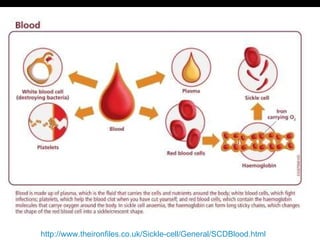
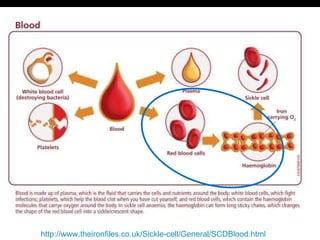
http://www.theironfiles.co.uk/Sickle-cell/General/SCDBlood.html
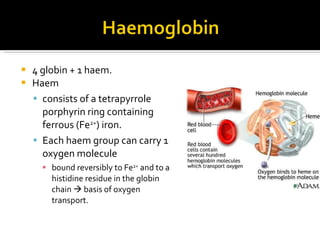
4 globin + 1 haem .  Haem  consists of a tetrapyrrole porphyrin ring containing ferrous (Fe 2+ ) iron.  Each haem group can carry  1  oxygen molecule bound reversibly to Fe 2+  and to a histidine residue in the globin chain      basis of oxygen transport.
Definition:   ↓  [Hb] i n blood  & / RBC per age, sex and geographical location. Normal  Hb :  14g to 16g /dl in Male  13g to 15g /dl in   Female Acute:  fatigue     chronic :  asymptomatic. Classification based on  indices of red cell  are : hypochromic, microcytic anaemia macrocytic anaemia normochromic normocytic anaemia mixed pictures.
 
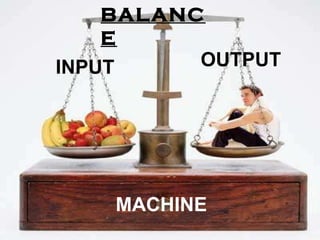
BALANCE OUTPUT MACHINE INPUT
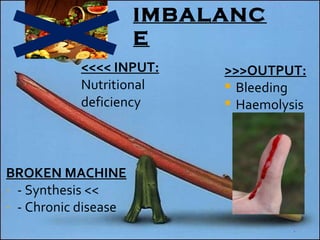
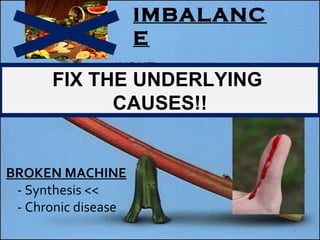
<<<< INPUT: Nutritional  deficiency IMBALANCE BROKEN MACHINE - Synthesis << - Chronic disease >>>OUTPUT: Bleeding  Haemolysis
<<<< INPUT: Nutritional  deficiency IMBALANCE BROKEN MACHINE - Synthesis << - Chronic disease >>>OUTPUT: Bleeding  Haemolysis FIX THE UNDERLYING  CAUSES!!
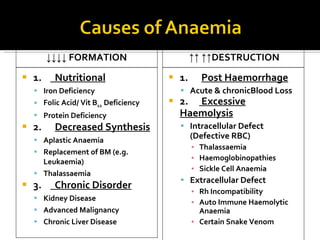
↓↓↓↓   FORMATION  1.       Nutritional Iron Deficiency    Folic Acid/ Vit B 12   Deficiency Protein Deficiency 2.       Decreased Synthesis Aplastic Anaemia  Replacement of BM (e.g. Leukaemia) Thalassaemia 3.       Chronic Disorder Kidney Disease Advanced Malignancy Chronic Liver Disease ↑↑ ↑↑ DESTRUCTION 1.       Post Haemorrhage Acute & chronicBlood Loss 2.       Excessive Haemolysis Intracellular Defect (Defective RBC) Thalassaemia Haemoglobinopathies Sickle Cell Anaemia Extracellular Defect Rh Incompatibility Auto Immune Haemolytic Anaemia Certain Snake Venom
 
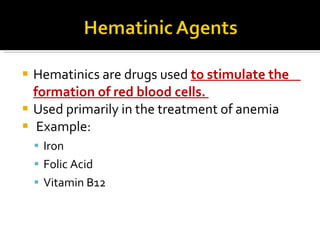
Hematinics are drugs used  to stimulate the    formation of red blood cells.  Us ed primarily in the treatment of   anemia   Example: Iron Folic Acid Vitamin B12
 
Basic Pharmacology Pharmacokinetic Absorption Pharmacodynamic Indication Drug Interaction Side Effect
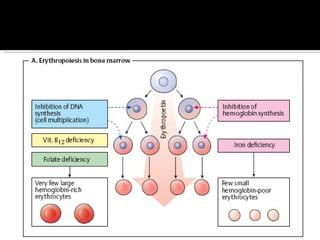
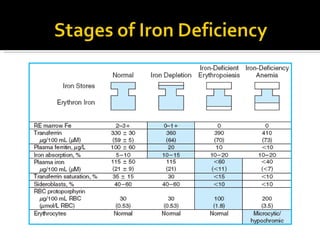
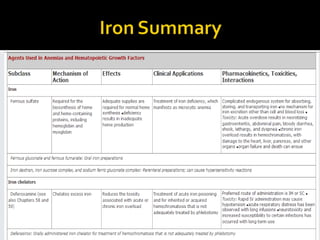
I mportant properties :  several  oxidation   states  form stable coordination  complexes F e + protoporfirin    Heme Heme + globin    Hemoglobin Hemoglobin binds  O2 &  provides  O2  delivery Fe deficiency     microcytic hypochromic anemia Body content of iron: Essential: myoglobin, Hb, enzym, transferrin     not available for haemoglobin synthesis Storage :  Ferritin, hemosiderin   Hb synthesis
 
 
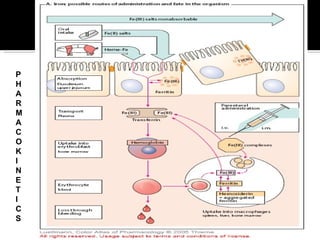
P H A R M A C O K I N E T I C S
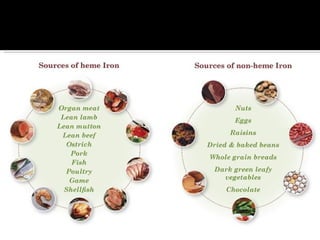
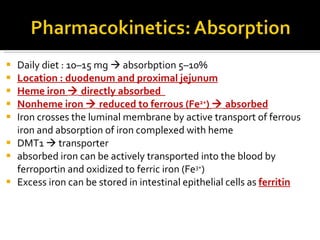
D aily diet   :  10–15 mg     absorb ption  5–10% Location :  duodenum and proximal jejunum H eme iron    directly  absorbed  Nonheme iron     reduced  to  ferrous (Fe 2+ )    absorbed Iron crosses the luminal membrane by active transport of ferrous iron and absorption of iron complexed with heme DMT1     transporter a bsorbed iron can be actively transported into the blood by ferroportin and oxidized to ferric iron (Fe 3+ ) Excess iron can be stored in intestinal epithelial cells as  ferritin
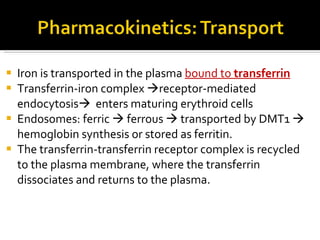
Iron is transported in the plasma  bound to  transferrin T ransferrin-iron complex   receptor-mediated endocytosis    enters maturing erythroid cells   E ndosomes :  ferric    ferrous     transported by DMT1    hemoglobin synthesis or stored as ferritin.  The transferrin-transferrin receptor complex is recycled to the plasma membrane, where the transferrin dissociates and returns to the plasma.
S torage  :  in intestinal mucosal cells :  as ferritin in macrophages in the liver, spleen, and bone, and in parenchymal liver cells . Apoferritin synthesis is regulated by the levels of free iron.  F erritin present in serum is in equilibrium with storage ferritin in reticuloendothelial tissues      the serum ferritin level can be used to estimate total body iron stores.
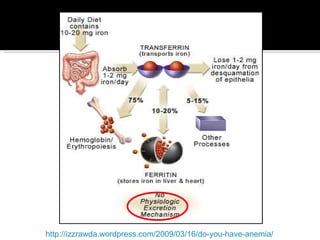
no mechanism for excretion  Small amounts are lost in the feces by  : exfoliation of intestinal mucosal cells trace amounts are excreted in bile, urine, and sweat    no more than  1 mg of iron per day.  regulation of iron balance  :  absorption and storage
http://izzrawda.wordpress.com/2009/03/16/do-you-have-anemia/
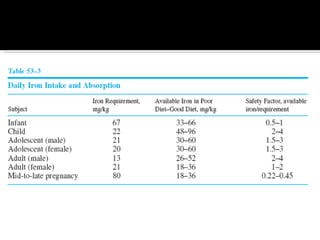
The daily requirement of iron Male  :  1mg / day Female  2mg / day 3mg / day (during pregnancy and lactation) Iron de fi ciency anaemia can occur under the following four conditions: Less Intake of Fe, Vitamins and Protein Diminished Absorption Increased Loss Excessive Demand
 
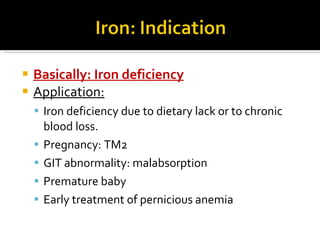
Basically: Iron deficiency Application: Iron deficiency due to dietary lack or to chronic  blood loss. Pregnancy: TM2 GIT abnormality: malabsorption Premature baby Early treatment of pernicious anemia
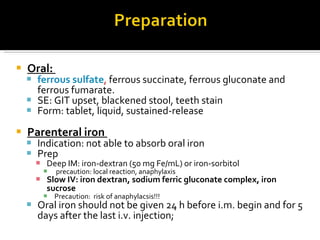
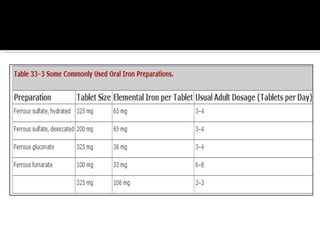
Oral:  ferrous sulfate ,  ferrous succinate, ferrous gluconate and ferrous fumarate.  SE: GIT upset, blackened stool, teeth stain Form: tablet, liquid,  sustained-releas e Parenteral iron  In dication:  not able to absorb oral iron Prep Deep IM:  iron-dextran  (50 mg Fe/mL)  or iron-sorbitol   precaution: local reaction, anaphylaxis Slow IV:  iron dextran, sodium ferric gluconate complex,   iron sucrose   Precaution:  risk of anaphylac sis!!! Oral iron should not be given 24 h   before i.m. begin and for 5 days after the  last i.v. injection;
 
Therapeutic dose: 3-6 mg/Kg/day of elemental iron  Induces an  ↑ Hb of 0.25-0.4 g/dl per day  or 1%/day rise in hematocrit. Adequate response:  ↑   Hb  of 2 g/dl after 3 weeks of  tx Failure of response  after 2 weeks of oral iron requires reevaluation for ongoing blood losses,infection,poor compliance or other causes of  microcytic anaemia. Priority: oral preparation.
Iron chelates in the gut with tetracyclines,  penicillamine, methyldopa, levodopa, carbidopa, ciprofloxacin, norfloxacin and ofloxacin; it also forms stable complexes with thyroxine,   captopril and biphosphonates.  Ingestion should be  separated by 3 hours. ↑ absorption: vit C   ↓ absorption:  desferrioxamine , t ea  ( tannins)  , Ca, Zn,  and bran
chronic infection  in   haemolytic anaemias unless there is also haemoglobinuria increased erythropoiesis   associated with chronic haemolytic states stimulates   increased iron absorption and adding to the iron  load may cause haemosiderosis.
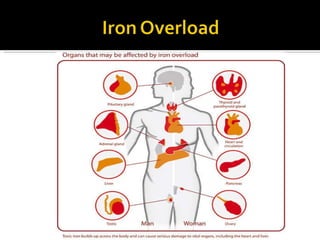
D ose related ,  include nausea, abdominal cramps and diarrhoea. overcome  :  ↓ dose or by taking the tablets after or with meals  Acute iron toxicity I ngestion of large quantities of iron salts.  R esult :  severe necrotising gastritis with vomiting, haemorrhage and diarrhoea     collapse   T reatment  :  gastric lavage with NaHCO3, iron chelating agent, and treatment of causes. Chronic iron toxicity   C aused by conditions other than ingestion of iron salts,  C ause pancreatic damage and leading to diabetes.
 
 
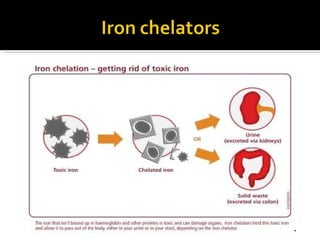
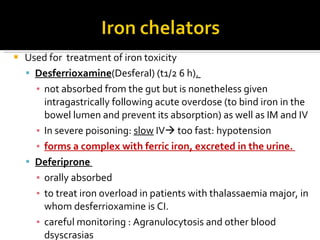
Used for  treatment of iron toxicity  D esferrioxamine (Desferal) (t1/2 6 h) .  not absorbed from the gut but is nonetheless given intragastrically following acute overdose (to bind iron in the bowel lumen and prevent its absorption) as well as  IM  and  IV In severe poisoning :  slow  IV   too fast: hypotension forms a complex with ferric iron, excreted in the urine.  D eferiprone   orally absorbed  to treat iron overload in patients with thalassaemia major, in whom desferrioxamine is  CI .  careful monitoring  :  Agranulocytosis and other blood dsyscrasias
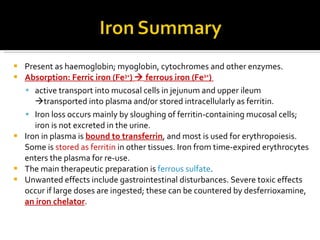
Present as  haemoglobin; myoglobin, cytochromes and other enzymes.  Absorption :  Ferric iron (Fe 3+ )     ferrous iron (Fe 2+ )  active transport into mucosal cells in jejunum and upper ileum    transported into plasma and/or stored intracellularly as ferritin.  Iron loss occurs mainly by sloughing of ferritin-containing mucosal cells; iron is not excreted in the urine.  Iron in plasma is  bound to transferrin , and most is used for erythropoiesis. Some is  stored as ferritin  in other tissues. Iron from time-expired erythrocytes enters the plasma for re-use.  The main therapeutic preparation is  ferrous sulfate .  Unwanted effects include gastrointestinal disturbances. Severe toxic effects occur if large doses are ingested; these can be countered by desferrioxamine,  an iron chelator .
 
Basic and Clinical Pharmacology 11th Ed, Katzung Pharmacology Rang et al 5th Edition Goodman & Gilman’s  The Pharmacological  Basis of Therapeutics, 11th ed. Color atlas of pharmacology Clinical Pharmacology, 9th Ed USMLE Pharmacology Recall Pharmacology for the health care profession
 

Hematinic I

  • 1.
    Aditia Retno FitriDepartment of Pharmacology Faculty of Medicine Diponegoro University Indonesia
  • 2.
    Overview Hematinic AgentsIron Folic Acid and Vitamine B12 Haemopoetic Growth Factors
  • 3.
  • 4.
  • 5.
  • 6.
    4 globin +1 haem . Haem consists of a tetrapyrrole porphyrin ring containing ferrous (Fe 2+ ) iron. Each haem group can carry 1 oxygen molecule bound reversibly to Fe 2+ and to a histidine residue in the globin chain  basis of oxygen transport.
  • 7.
    Definition: ↓ [Hb] i n blood & / RBC per age, sex and geographical location. Normal Hb : 14g to 16g /dl in Male 13g to 15g /dl in Female Acute: fatigue  chronic : asymptomatic. Classification based on indices of red cell are : hypochromic, microcytic anaemia macrocytic anaemia normochromic normocytic anaemia mixed pictures.
  • 8.
  • 9.
  • 10.
    <<<< INPUT: Nutritional deficiency IMBALANCE BROKEN MACHINE - Synthesis << - Chronic disease >>>OUTPUT: Bleeding Haemolysis
  • 11.
    <<<< INPUT: Nutritional deficiency IMBALANCE BROKEN MACHINE - Synthesis << - Chronic disease >>>OUTPUT: Bleeding Haemolysis FIX THE UNDERLYING CAUSES!!
  • 12.
    ↓↓↓↓ FORMATION 1.       Nutritional Iron Deficiency    Folic Acid/ Vit B 12   Deficiency Protein Deficiency 2.       Decreased Synthesis Aplastic Anaemia  Replacement of BM (e.g. Leukaemia) Thalassaemia 3.       Chronic Disorder Kidney Disease Advanced Malignancy Chronic Liver Disease ↑↑ ↑↑ DESTRUCTION 1.       Post Haemorrhage Acute & chronicBlood Loss 2.       Excessive Haemolysis Intracellular Defect (Defective RBC) Thalassaemia Haemoglobinopathies Sickle Cell Anaemia Extracellular Defect Rh Incompatibility Auto Immune Haemolytic Anaemia Certain Snake Venom
  • 13.
  • 14.
    Hematinics are drugs used  to stimulate the  formation of red blood cells.  Us ed primarily in the treatment of anemia   Example: Iron Folic Acid Vitamin B12
  • 15.
  • 16.
    Basic Pharmacology PharmacokineticAbsorption Pharmacodynamic Indication Drug Interaction Side Effect
  • 17.
    I mportant properties: several oxidation states form stable coordination complexes F e + protoporfirin  Heme Heme + globin  Hemoglobin Hemoglobin binds O2 & provides O2 delivery Fe deficiency  microcytic hypochromic anemia Body content of iron: Essential: myoglobin, Hb, enzym, transferrin  not available for haemoglobin synthesis Storage : Ferritin, hemosiderin  Hb synthesis
  • 18.
  • 19.
  • 20.
    P H AR M A C O K I N E T I C S
  • 21.
    D aily diet : 10–15 mg  absorb ption 5–10% Location : duodenum and proximal jejunum H eme iron  directly absorbed Nonheme iron  reduced to ferrous (Fe 2+ )  absorbed Iron crosses the luminal membrane by active transport of ferrous iron and absorption of iron complexed with heme DMT1  transporter a bsorbed iron can be actively transported into the blood by ferroportin and oxidized to ferric iron (Fe 3+ ) Excess iron can be stored in intestinal epithelial cells as ferritin
  • 22.
    Iron is transportedin the plasma bound to transferrin T ransferrin-iron complex  receptor-mediated endocytosis  enters maturing erythroid cells E ndosomes : ferric  ferrous  transported by DMT1  hemoglobin synthesis or stored as ferritin. The transferrin-transferrin receptor complex is recycled to the plasma membrane, where the transferrin dissociates and returns to the plasma.
  • 23.
    S torage : in intestinal mucosal cells : as ferritin in macrophages in the liver, spleen, and bone, and in parenchymal liver cells . Apoferritin synthesis is regulated by the levels of free iron. F erritin present in serum is in equilibrium with storage ferritin in reticuloendothelial tissues  the serum ferritin level can be used to estimate total body iron stores.
  • 24.
    no mechanism forexcretion Small amounts are lost in the feces by : exfoliation of intestinal mucosal cells trace amounts are excreted in bile, urine, and sweat  no more than 1 mg of iron per day. regulation of iron balance : absorption and storage
  • 25.
  • 26.
    The daily requirementof iron Male : 1mg / day Female 2mg / day 3mg / day (during pregnancy and lactation) Iron de fi ciency anaemia can occur under the following four conditions: Less Intake of Fe, Vitamins and Protein Diminished Absorption Increased Loss Excessive Demand
  • 27.
  • 28.
    Basically: Iron deficiencyApplication: Iron deficiency due to dietary lack or to chronic blood loss. Pregnancy: TM2 GIT abnormality: malabsorption Premature baby Early treatment of pernicious anemia
  • 29.
    Oral: ferroussulfate , ferrous succinate, ferrous gluconate and ferrous fumarate. SE: GIT upset, blackened stool, teeth stain Form: tablet, liquid, sustained-releas e Parenteral iron In dication: not able to absorb oral iron Prep Deep IM: iron-dextran (50 mg Fe/mL) or iron-sorbitol precaution: local reaction, anaphylaxis Slow IV: iron dextran, sodium ferric gluconate complex, iron sucrose Precaution: risk of anaphylac sis!!! Oral iron should not be given 24 h before i.m. begin and for 5 days after the last i.v. injection;
  • 30.
  • 31.
    Therapeutic dose: 3-6mg/Kg/day of elemental iron  Induces an ↑ Hb of 0.25-0.4 g/dl per day or 1%/day rise in hematocrit. Adequate response: ↑ Hb of 2 g/dl after 3 weeks of tx Failure of response after 2 weeks of oral iron requires reevaluation for ongoing blood losses,infection,poor compliance or other causes of microcytic anaemia. Priority: oral preparation.
  • 32.
    Iron chelates inthe gut with tetracyclines, penicillamine, methyldopa, levodopa, carbidopa, ciprofloxacin, norfloxacin and ofloxacin; it also forms stable complexes with thyroxine, captopril and biphosphonates. Ingestion should be separated by 3 hours. ↑ absorption: vit C ↓ absorption: desferrioxamine , t ea ( tannins) , Ca, Zn, and bran
  • 33.
    chronic infection in haemolytic anaemias unless there is also haemoglobinuria increased erythropoiesis associated with chronic haemolytic states stimulates increased iron absorption and adding to the iron load may cause haemosiderosis.
  • 34.
    D ose related, include nausea, abdominal cramps and diarrhoea. overcome : ↓ dose or by taking the tablets after or with meals Acute iron toxicity I ngestion of large quantities of iron salts. R esult : severe necrotising gastritis with vomiting, haemorrhage and diarrhoea  collapse   T reatment : gastric lavage with NaHCO3, iron chelating agent, and treatment of causes. Chronic iron toxicity C aused by conditions other than ingestion of iron salts, C ause pancreatic damage and leading to diabetes.
  • 35.
  • 36.
  • 37.
    Used for treatment of iron toxicity D esferrioxamine (Desferal) (t1/2 6 h) . not absorbed from the gut but is nonetheless given intragastrically following acute overdose (to bind iron in the bowel lumen and prevent its absorption) as well as IM and IV In severe poisoning : slow IV  too fast: hypotension forms a complex with ferric iron, excreted in the urine. D eferiprone orally absorbed to treat iron overload in patients with thalassaemia major, in whom desferrioxamine is CI . careful monitoring : Agranulocytosis and other blood dsyscrasias
  • 38.
    Present as haemoglobin; myoglobin, cytochromes and other enzymes. Absorption : Ferric iron (Fe 3+ )  ferrous iron (Fe 2+ ) active transport into mucosal cells in jejunum and upper ileum  transported into plasma and/or stored intracellularly as ferritin. Iron loss occurs mainly by sloughing of ferritin-containing mucosal cells; iron is not excreted in the urine. Iron in plasma is bound to transferrin , and most is used for erythropoiesis. Some is stored as ferritin in other tissues. Iron from time-expired erythrocytes enters the plasma for re-use. The main therapeutic preparation is ferrous sulfate . Unwanted effects include gastrointestinal disturbances. Severe toxic effects occur if large doses are ingested; these can be countered by desferrioxamine, an iron chelator .
  • 39.
  • 40.
    Basic and ClinicalPharmacology 11th Ed, Katzung Pharmacology Rang et al 5th Edition Goodman & Gilman’s The Pharmacological Basis of Therapeutics, 11th ed. Color atlas of pharmacology Clinical Pharmacology, 9th Ed USMLE Pharmacology Recall Pharmacology for the health care profession
  • 41.