Meningitis is an acute inflammation of the protective
membranes covering the brain and spinal cord, known
collectively as the meninges
The most common causes of meningitis are viral and
bacterial infections. Other causes may include:
 cancer
 chemical irritation
 fungi
 drug allergies
 Some viral and bacterial meningitis are contagious.
They can be transmitted by coughing, sneezing, or
close contact.
 Viral meningitis
 Viral meningitis is the most common type of
meningitis.
 These include:
 West Nile virus
 influenza
 mumps
 HIV
 measles
 herpes viruses
 Streptococcus pneumoniae, which is typically
found in the respiratory tract, sinuses, and nasal
cavity”
 Neisseria meningitidis, which is spread through
saliva and other respiratory fluids
 Haemophilus influenza, which can cause not only
meningitis but infection of the blood, inflammation
of the windpipe, cellulitis, and infectious arthritis
 Listeria monocytogenes, which are foodborne
bacteria
 Staphylococcus aureus, which is typically found
on the skin and in the respiratory tract,
Fungal meningitis
 Cryptococcus,
 Blastomyces,
 Histoplasma,
 Candida
Parasitic meningitis
 Angiostrongylus cantonensis
 Gnathostoma spinigerum
Tuberculosis meningitis is caused by
mycobacterium tuberculosis which is a
severe infection that carries a high
morbidity and mortality
 Non-infectious meningitis : Non-infectious
meningitis is not an infection. Instead, it is a type of
meningitis that’s caused by other medical conditions
or treatments. These include:
 a head injury
 brain surgery
 cancer
 certain medications
 Bloodstream: Middle ear infection, mastoiditis,
sinusitis, cellulitis or any other infection of body.
 Direct extension: fracture of frontal or facial
bone.
 CSF infection: poor sterile technique during
lumbar puncture or spinal surgery
 Mouth and Nasopharynx
 In utero: during amniocentesis, maternal
infection such as rubella etc.
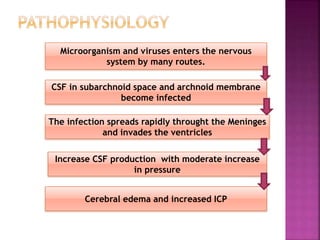
Microorganism and viruses enters the nervous
system by many routes.
The infection spreads rapidly throught the Meninges
and invades the ventricles
Increase CSF production with moderate increase
in pressure
Cerebral edema and increased ICP
CSF in subarchnoid space and archnoid membrane
become infected
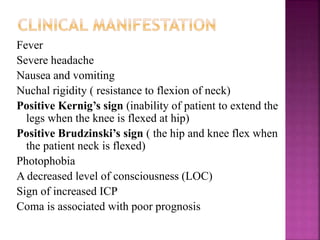
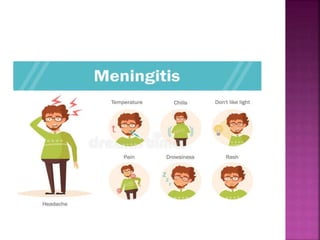
Fever
Severe headache
Nausea and vomiting
Nuchal rigidity ( resistance to flexion of neck)
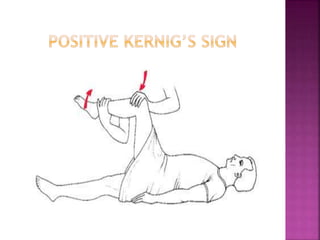
Positive Kernig’s sign (inability of patient to extend the
legs when the knee is flexed at hip)
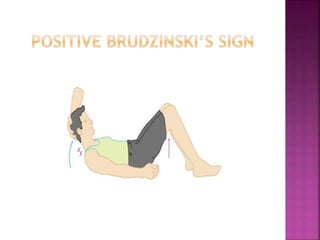
Positive Brudzinski’s sign ( the hip and knee flex when
the patient neck is flexed)
Photophobia
A decreased level of consciousness (LOC)
Sign of increased ICP
Coma is associated with poor prognosis
 History collection, physical examination
 Analysis of CSF
 CBC, coagulation profile, electrolyte
level, glucose, platelet count
 Blood culture
 Urine specific gravity (1.010-1.030)
 CT Scan, MRI, EEG,
 Chest X-rays can reveal the presence of
pneumonia, tuberculosis
 Hearing loss
 Memory difficulty
 Learning disabilities
 Brain damage
 Gait problems
 Seizures
 Kidney failure
 hydrocephalus
 Shock
 Death
 Meningitis is potentially life-threatening and has a
high mortality rate if untreated;
 Intravenous fluids should be administered if
hypotension (low blood pressure) or shock are
present.
 Mechanical ventilation may be needed if the level of
consciousness is very low, or if there is evidence of
respiratory failure
 Treatments to decrease the intracranial pressure
with medication (e.g. mannitol).
 Seizures are treated with anticonvulsants
 Hydrocephalus may require insertion of a temporary
or long-term drainage device, such as a cerebral
shunt
 Antibiotics: (e.g. rifampicin, ciprofloxacin or
ceftriaxone)
 corticosteroids (usually dexamethasone)
 treatment with antiviral drugs such as
aciclovir
 Antifungals medication
 Seizure (phenytoin)
 Assess neurological status vital sign constently
 Oxygenation, pulse oximetry
 Assess blood pressure
 IV fluids
 Reduce high fever
 Protect patient from injury
 Monitor daily weight, serum electrolyte, urine
specific gravity
 Prevent complication associated with immobility
 Infection control
 Inform family about patients condition
 Ineffective Tissue Perfusion
 Observe for any signs of increased
intracranial pressure.
 Monitor arterial blood gases (ABGs) and
oxygen saturation.
 Maintain head or neck in midline position,
provide small pillow for support.
 Administer oxygen as needed.
 Osmotic diuretic: Mannitol
Anticonvulsants: Diazepam (Valium) or
phenytoin (Dilantin)
 Hyperthermia:
 Assess the vital signs closely.
 Perform tepid sponge.
 Maintain adequate fluid intake as tolerated.
 Administer antibiotics
 Administer antipyretics as indicated.
Meningitis

Meningitis

  • 2.
    Meningitis is anacute inflammation of the protective membranes covering the brain and spinal cord, known collectively as the meninges The most common causes of meningitis are viral and bacterial infections. Other causes may include:  cancer  chemical irritation  fungi  drug allergies  Some viral and bacterial meningitis are contagious. They can be transmitted by coughing, sneezing, or close contact.
  • 3.
     Viral meningitis Viral meningitis is the most common type of meningitis.  These include:  West Nile virus  influenza  mumps  HIV  measles  herpes viruses
  • 4.
     Streptococcus pneumoniae,which is typically found in the respiratory tract, sinuses, and nasal cavity”  Neisseria meningitidis, which is spread through saliva and other respiratory fluids  Haemophilus influenza, which can cause not only meningitis but infection of the blood, inflammation of the windpipe, cellulitis, and infectious arthritis  Listeria monocytogenes, which are foodborne bacteria  Staphylococcus aureus, which is typically found on the skin and in the respiratory tract,
  • 5.
    Fungal meningitis  Cryptococcus, Blastomyces,  Histoplasma,  Candida Parasitic meningitis  Angiostrongylus cantonensis  Gnathostoma spinigerum
  • 6.
    Tuberculosis meningitis iscaused by mycobacterium tuberculosis which is a severe infection that carries a high morbidity and mortality
  • 7.
     Non-infectious meningitis: Non-infectious meningitis is not an infection. Instead, it is a type of meningitis that’s caused by other medical conditions or treatments. These include:  a head injury  brain surgery  cancer  certain medications
  • 8.
     Bloodstream: Middleear infection, mastoiditis, sinusitis, cellulitis or any other infection of body.  Direct extension: fracture of frontal or facial bone.  CSF infection: poor sterile technique during lumbar puncture or spinal surgery  Mouth and Nasopharynx  In utero: during amniocentesis, maternal infection such as rubella etc.
  • 9.
    Microorganism and virusesenters the nervous system by many routes. The infection spreads rapidly throught the Meninges and invades the ventricles Increase CSF production with moderate increase in pressure Cerebral edema and increased ICP CSF in subarchnoid space and archnoid membrane become infected
  • 10.
    Fever Severe headache Nausea andvomiting Nuchal rigidity ( resistance to flexion of neck) Positive Kernig’s sign (inability of patient to extend the legs when the knee is flexed at hip) Positive Brudzinski’s sign ( the hip and knee flex when the patient neck is flexed) Photophobia A decreased level of consciousness (LOC) Sign of increased ICP Coma is associated with poor prognosis
  • 14.
     History collection,physical examination  Analysis of CSF  CBC, coagulation profile, electrolyte level, glucose, platelet count  Blood culture  Urine specific gravity (1.010-1.030)  CT Scan, MRI, EEG,  Chest X-rays can reveal the presence of pneumonia, tuberculosis
  • 15.
     Hearing loss Memory difficulty  Learning disabilities  Brain damage  Gait problems  Seizures  Kidney failure  hydrocephalus  Shock  Death
  • 16.
     Meningitis ispotentially life-threatening and has a high mortality rate if untreated;  Intravenous fluids should be administered if hypotension (low blood pressure) or shock are present.  Mechanical ventilation may be needed if the level of consciousness is very low, or if there is evidence of respiratory failure  Treatments to decrease the intracranial pressure with medication (e.g. mannitol).  Seizures are treated with anticonvulsants  Hydrocephalus may require insertion of a temporary or long-term drainage device, such as a cerebral shunt
  • 17.
     Antibiotics: (e.g.rifampicin, ciprofloxacin or ceftriaxone)  corticosteroids (usually dexamethasone)  treatment with antiviral drugs such as aciclovir  Antifungals medication  Seizure (phenytoin)
  • 18.
     Assess neurologicalstatus vital sign constently  Oxygenation, pulse oximetry  Assess blood pressure  IV fluids  Reduce high fever  Protect patient from injury  Monitor daily weight, serum electrolyte, urine specific gravity  Prevent complication associated with immobility  Infection control  Inform family about patients condition
  • 19.
     Ineffective TissuePerfusion  Observe for any signs of increased intracranial pressure.  Monitor arterial blood gases (ABGs) and oxygen saturation.  Maintain head or neck in midline position, provide small pillow for support.  Administer oxygen as needed.  Osmotic diuretic: Mannitol Anticonvulsants: Diazepam (Valium) or phenytoin (Dilantin)
  • 20.
     Hyperthermia:  Assessthe vital signs closely.  Perform tepid sponge.  Maintain adequate fluid intake as tolerated.  Administer antibiotics  Administer antipyretics as indicated.