Hepatocellular Carcinoma
Dr Shatdal Chaudhary
Incidence
• One of most common malignancy world wide
• Annual 1 million case
• M:F 4:1
• Mean Age 56 ± 13
• Associated with
– cirrhosis 81%
– No cirrhosis 19%
• Etiology
– Cirrhosis from any cause
– Hep B&C chronic infection
– Chronic ethanol consumption
– NASH/NAFLD
– Mycotoxin- Alfatoxin B1
• Unusual
– Pri biliay cirrhosis
– Hemachromatosis
– Α1 Antitrypsin def
– Glycogen storage disorder
– Wilson disease
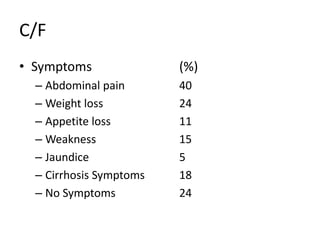
C/F
• Symptoms (%)
– Abdominal pain 40
– Weight loss 24
– Appetite loss 11
– Weakness 15
– Jaundice 5
– Cirrhosis Symptoms 18
– No Symptoms 24
Physical Signs
• Hepatomegaly 50-90%
• Ascites 30-60%
• Splenomegaly
• Abdominal bruit
• Fever 10-50%
• Signs of cirrhosis
• Paraneoplastic syndromes
– Hypoglycemis
– Erytherocytosis
– Hypercalcemia
– Hypercholesterolemia
– Dysfibrogenemia
– Carcinoid synd
– Chage in sexual characteristic
Staging
• Okuda Classification + -
– Tumor extent ≥50% <50%
– Ascites + -
– Albumin ≤3(g/L) >3
– Bilirubin ≥3 <3
• Stage 1 all-
• Stage 2 1/2 +
• Stage 3 3/4 +
CLIP staging
• 0 1 2
• Tumor number single multiple -
• Tumor extent <50 <50 >50
• Child Pugh score A B C
• AFP <400 >400 -
• Portal vein thromb No Yes -
• CLIP 0, CLIP1, CLIP2, CLIP3.
Investigation
• USG- Liver mass with hyper vascularity
Portal vein thrombosis
• Helical CT Scan
• Serological assay
– AFP 50%
– AFP-L3 80%
– DCP/PIVKA-2
• USG guided Core Liver Biopsy/FNAC
Treatment
Treatment option
• Surgery: Resection/ Liver Transplant
• Local Ablative therapies
– Cryosurgery
– Radiofrequency Ablation
– Percutaneous ethanol injection
• Regional Therapies
– Transarterial chemotherapy
– Transarterial embolization
– Transarterial chemoembolization
– Transarterial radiotherapy
• Conformal External-Beam radiation
• Chemotherapy
• Immunotherapy
Stages 1 and 2 HCC
• Surgical resection/RFA/ Local injection
– Child A, Noncirrhotic, No Metastasis, Single lesion
– Child B, C – Orthotopic liver trasplant
– Percutaneous ethanol injection
Stages 3 and 4
• Poor prognosis
• If no meastasis – transplant
• Chemotherapy
– Doxorubicin
– Cisplatin
– Mitomycin C
– Oral Sorefenib

Hepatocellular Carcinoma

  • 1.
  • 2.
    Incidence • One ofmost common malignancy world wide • Annual 1 million case • M:F 4:1 • Mean Age 56 ± 13 • Associated with – cirrhosis 81% – No cirrhosis 19%
  • 3.
    • Etiology – Cirrhosisfrom any cause – Hep B&C chronic infection – Chronic ethanol consumption – NASH/NAFLD – Mycotoxin- Alfatoxin B1
  • 4.
    • Unusual – Pribiliay cirrhosis – Hemachromatosis – Α1 Antitrypsin def – Glycogen storage disorder – Wilson disease
  • 5.
    C/F • Symptoms (%) –Abdominal pain 40 – Weight loss 24 – Appetite loss 11 – Weakness 15 – Jaundice 5 – Cirrhosis Symptoms 18 – No Symptoms 24
  • 6.
    Physical Signs • Hepatomegaly50-90% • Ascites 30-60% • Splenomegaly • Abdominal bruit • Fever 10-50% • Signs of cirrhosis
  • 7.
    • Paraneoplastic syndromes –Hypoglycemis – Erytherocytosis – Hypercalcemia – Hypercholesterolemia – Dysfibrogenemia – Carcinoid synd – Chage in sexual characteristic
  • 8.
    Staging • Okuda Classification+ - – Tumor extent ≥50% <50% – Ascites + - – Albumin ≤3(g/L) >3 – Bilirubin ≥3 <3 • Stage 1 all- • Stage 2 1/2 + • Stage 3 3/4 +
  • 9.
    CLIP staging • 01 2 • Tumor number single multiple - • Tumor extent <50 <50 >50 • Child Pugh score A B C • AFP <400 >400 - • Portal vein thromb No Yes - • CLIP 0, CLIP1, CLIP2, CLIP3.
  • 10.
    Investigation • USG- Livermass with hyper vascularity Portal vein thrombosis • Helical CT Scan • Serological assay – AFP 50% – AFP-L3 80% – DCP/PIVKA-2 • USG guided Core Liver Biopsy/FNAC
  • 11.
    Treatment Treatment option • Surgery:Resection/ Liver Transplant • Local Ablative therapies – Cryosurgery – Radiofrequency Ablation – Percutaneous ethanol injection
  • 12.
    • Regional Therapies –Transarterial chemotherapy – Transarterial embolization – Transarterial chemoembolization – Transarterial radiotherapy • Conformal External-Beam radiation • Chemotherapy • Immunotherapy
  • 13.
    Stages 1 and2 HCC • Surgical resection/RFA/ Local injection – Child A, Noncirrhotic, No Metastasis, Single lesion – Child B, C – Orthotopic liver trasplant – Percutaneous ethanol injection
  • 14.
    Stages 3 and4 • Poor prognosis • If no meastasis – transplant • Chemotherapy – Doxorubicin – Cisplatin – Mitomycin C – Oral Sorefenib