PRIMARY
LYMPHOMAS OF
GASTROINTESTINAL
TRACT
Presenter: Dr Harsh Shah
MS, FMAS, DNB, MCh(GI)
Kaizen Hospital
Ahmedabad
Abbreviations
DLBCL – Diffuse large B-cell lymphoma
MALT – Mucosa associated lymphoid tissue
MCL- Mantle cell lymphoma
FL – Follicular lymphoma
IPSID – Immunoproliferative small intestinal disease
EATL – Enteropathy associated T-cell lymphoma
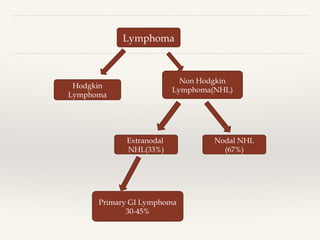
Lymphoma
Hodgkin
Lymphoma
Non Hodgkin
Lymphoma(NHL)
Extranodal
NHL(33%)
Primary GI Lymphoma
30-45%
Nodal NHL
(67%)
Introduction
Usually secondary to widespread nodal disease
Gastrointestinal tract – most common extra-nodal site
Primary gastrointestinal lymphoma
- 1-4% of all GI malignancies
- 10-15% of all lymphomas
- 30-40% of all extra nodal lymphomas
Majority – Non Hodgkins Lymphoma [B cell- 90%]
Most common site – stomach (60-65%)
Rare sites – esophagus, pancreas, liver
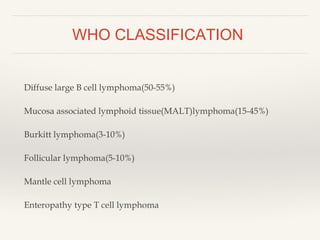
WHO CLASSIFICATION
Diffuse large B cell lymphoma(50-55%)
Mucosa associated lymphoid tissue(MALT)lymphoma(15-45%)
Burkitt lymphoma(3-10%)
Follicular lymphoma(5-10%)
Mantle cell lymphoma
Enteropathy type T cell lymphoma
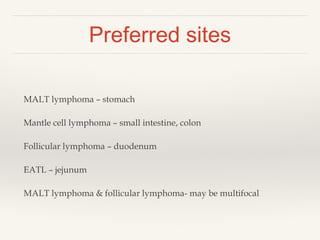
Preferred sites
MALT lymphoma – stomach
Mantle cell lymphoma – small intestine, colon
Follicular lymphoma – duodenum
EATL – jejunum
MALT lymphoma & follicular lymphoma- may be multifocal
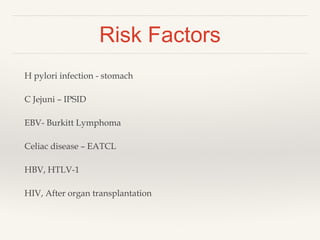
Risk Factors
H pylori infection - stomach
C Jejuni – IPSID
EBV- Burkitt Lymphoma
Celiac disease – EATCL
HBV, HTLV-1
HIV, After organ transplantation
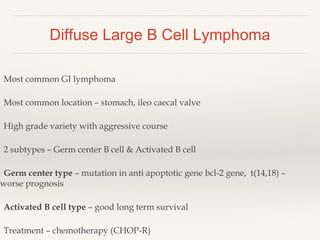
Diffuse Large B Cell Lymphoma
Most common GI lymphoma
Most common location – stomach, ileo caecal valve
High grade variety with aggressive course
2 subtypes – Germ center B cell & Activated B cell
Germ center type – mutation in anti apoptotic gene bcl-2 gene, t(14,18) –
worse prognosis
Activated B cell type – good long term survival
Treatment – chemotherapy (CHOP-R)
MALT lymphoma
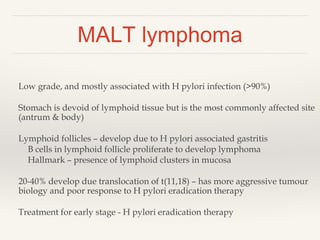
Low grade, and mostly associated with H pylori infection (>90%)
Stomach is devoid of lymphoid tissue but is the most commonly affected site
(antrum & body)
Lymphoid follicles – develop due to H pylori associated gastritis
B cells in lymphoid follicle proliferate to develop lymphoma
Hallmark – presence of lymphoid clusters in mucosa
20-40% develop due translocation of t(11,18) – has more aggressive tumour
biology and poor response to H pylori eradication therapy
Treatment for early stage - H pylori eradication therapy
Burkitt Lymphoma
Association with EBV
Aggressive tumour with poor
prognosis
Terminal ileal mass in children &
young adult
Increased cellular turnover attracts
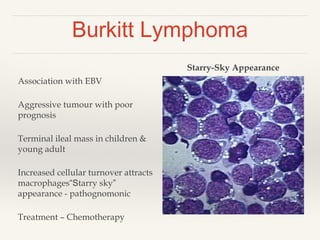
macrophages“Starry sky”
appearance - pathognomonic
Treatment – Chemotherapy
Starry-Sky Appearance
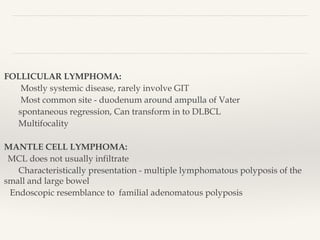
FOLLICULAR LYMPHOMA:
Mostly systemic disease, rarely involve GIT
Most common site - duodenum around ampulla of Vater
spontaneous regression, Can transform in to DLBCL
Multifocality
MANTLE CELL LYMPHOMA:
MCL does not usually infiltrate
Characteristically presentation - multiple lymphomatous polyposis of the
small and large bowel
Endoscopic resemblance to familial adenomatous polyposis
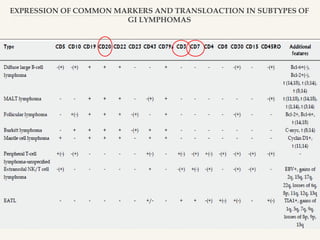
EXPRESSION OF COMMON MARKERS AND TRANSLOACTION IN SUBTYPES OF
GI LYMPHOMAS
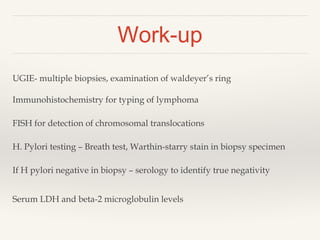
Work-up
UGIE- multiple biopsies, examination of waldeyer’s ring
Immunohistochemistry for typing of lymphoma
FISH for detection of chromosomal translocations
H. Pylori testing – Breath test, Warthin-starry stain in biopsy specimen
If H pylori negative in biopsy – serology to identify true negativity
Serum LDH and beta-2 microglobulin levels
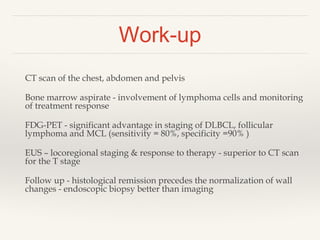
Work-up
CT scan of the chest, abdomen and pelvis
Bone marrow aspirate - involvement of lymphoma cells and monitoring
of treatment response
FDG-PET - significant advantage in staging of DLBCL, follicular
lymphoma and MCL (sensitivity = 80%, specificity =90% )
EUS – locoregional staging & response to therapy - superior to CT scan
for the T stage
Follow up - histological remission precedes the normalization of wall
changes - endoscopic biopsy better than imaging
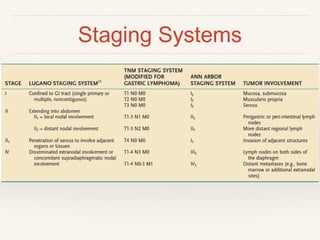
Staging Systems
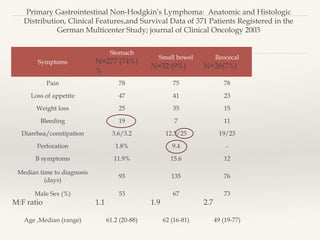
Symptoms
Stomach
N=277 (74%)
%
Small bowel
N=32 (9%)
Ileocecal
N=26(7%)
Pain 78 75 78
Loss of appetite 47 41 23
Weight loss 25 35 15
Bleeding 19 7 11
Diarrhea/constipation 3.6/3.2 12.5/25 19/23
Perforation 1.8% 9.4 -
B symptoms 11.9% 15.6 12
Median time to diagnosis
(days)
93 135 76
Male Sex (%)
M:F ratio
53
1.1
67
1.9
73
2.7
Age ,Median (range) 61.2 (20-88) 62 (16-81) 49 (19-77)
Primary Gastrointestinal Non-Hodgkin’s Lymphoma: Anatomic and Histologic
Distribution, Clinical Features,and Survival Data of 371 Patients Registered in the
German Multicenter Study; journal of Clinical Oncology 2003
Gastric Lymphoma
Most common site of extra-nodal primary GI lymphoma(60-65%)
Accounts for only <10% of all gastric malignancies
MC age of presentation – 60-70 years. M>F
MC site – Antrum & body
MC type – DLBCL(55%) followed by MALT lymphoma(40%), Burkitt’s(3%).
H pylori association – 85-90% of MALT lymphomas
H pylori is detected in 35% of DLBCL – indolent MALT component
Presentation – non specific – abdominal pain, early satiety, loss of weight.
Bleeding in 10-15% & perforation is rare(1%). B symptoms are less common.
DLBCL – de novo variety or from MALT lymphoma transformation
MALT lymphoma:
- t(11,18), t(1,14), t(14,18)
- t(11,18) – non responders to H pylori eradication
Gastric Lymphoma
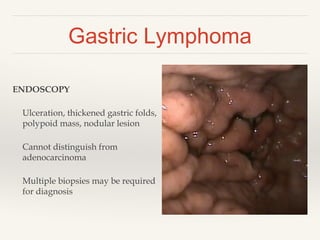
ENDOSCOPY
Ulceration, thickened gastric folds,
polypoid mass, nodular lesion
Cannot distinguish from
adenocarcinoma
Multiple biopsies may be required
for diagnosis
Gastric Lymphoma
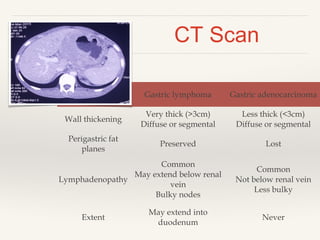
Gastric lymphoma Gastric adenocarcinoma
Wall thickening
Very thick (>3cm)
Diffuse or segmental
Less thick (<3cm)
Diffuse or segmental
Perigastric fat
planes
Preserved Lost
Lymphadenopathy
Common
May extend below renal
vein
Bulky nodes
Common
Not below renal vein
Less bulky
Extent
May extend into
duodenum
Never
CT Scan
EUS
Assessment of gut wall infiltration
and local lymph-node involvement
In assessing treatment response
Gastric Lymphoma
Treatment Of MALT Lymphoma
ERADICATION THERAPY:
H. PYLORI POSITIVE
• Stage I (OMC/OAC) - Eradication of H pylori - complete remission of gastric
MALT lymphoma ( 80%) MALT lymphoma in
• Breath test 3 months after treatment to confirm H. pylori eradication
• Repeat endoscopies with biopsies every 6 months for 2 years and then annually
to document remission of the lymphoma
• stage II – H. Pylori eradication therapy  re-assessment every 3 months
progression or persistent disease at 1 year CHOP-R
H. Pylori Negative or t(11;18) or Stage IV – CHOP-R
Treatment of DLBCL
Stage I & II: surgery vs. Chemotherapy vs. XRT : equally effective
Stage IV : Chemotherapy : (CHOP-R) 6-8 cycles + XRT
XRT – 30-40Gy in 20-3- fractions
Role of surgery: D2 gastrectomy
Stage I or II disease
Residual disease after chemotherapy
Complication - perforation
Small Intestinal Lymphoma
Primary malignant tumors of the small intestine rare
20%-30% of all primary G I lymphomas.
Presentation as perforation is more common(10-15%)
Sites
• Ileum - 60%-65%
• Jejunum -20%-25%
• Duodenum -6%-8%
Histological Subtypes
•Diffuse large B cell lymphoma-58%
•Low grade marginal zone MALT lymphoma-19%
•Burkitt’lymphoma-5%
•Mantle cell lymphoma-2.7%
•T-cell NHL-15 %
•IPSID-1.2%
CT Scan
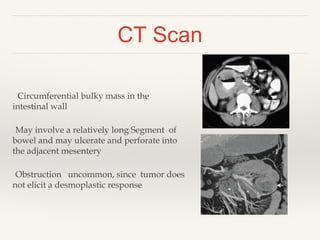
Circumferential bulky mass in the
intestinal wall
May involve a relatively long Segment of
bowel and may ulcerate and perforate into
the adjacent mesentery
Obstruction uncommon, since tumor does
not elicit a desmoplastic response
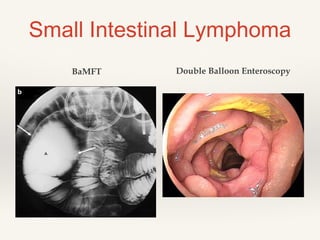
Small Intestinal Lymphoma
BaMFT Double Balloon Enteroscopy
Treatment
Outcome poor compared to gastric lymphoma
DLBCL & MALT lymphoma:
Stage I (low grade) – surgery alone – resection with 10cm margin with
minimum of 12 L
Stage II and above & all high grade – CHOP with or without rituximab.
Surgery for complications and in bulky tumour to prevent perforation after
chemotherapy
H pylori eradication – duodenal MALT lymphoma
MCT, FL – primary modality is chemotherapy. Surgery for complications
Overall 5 year survival rate – 30-45%
Immunoproliferative Small Intestinal Disease
(IPSID)
Mediterranean lymphoma
Association with C jejuni
Also known as α-heavy chain disease due to heavy chain of the
immunoglobulin A (IgA) class produced by tumour cells
Affects the mucosa-associated lymphoid tissue (MALT)of the gastrointestinal
tract
Immunoproliferative Small Intestinal Disease
(IPSID)
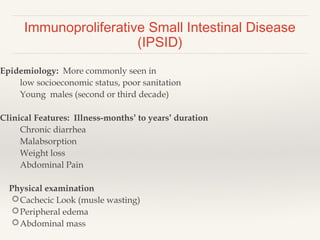
Epidemiology: More commonly seen in
low socioeconomic status, poor sanitation
Young males (second or third decade)
Clinical Features: Illness-months’ to years’ duration
Chronic diarrhea
Malabsorption
Weight loss
Abdominal Pain
Physical examination
Cachecic Look (musle wasting)
Peripheral edema
Abdominal mass
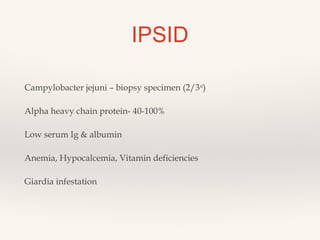
IPSID
Campylobacter jejuni – biopsy specimen (2/3rd
)
Alpha heavy chain protein- 40-100%
Low serum Ig & albumin
Anemia, Hypocalcemia, Vitamin deficiencies
Giardia infestation
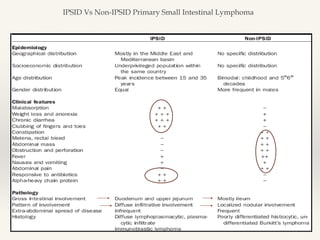
IPSID Vs Non-IPSID Primary Small Intestinal Lymphoma
IPSID
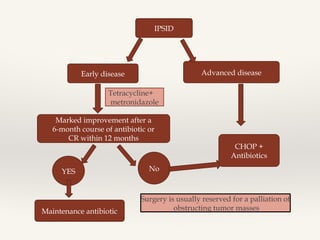
Early disease Advanced disease
Tetracycline+
metronidazole
Marked improvement after a
6-month course of antibiotic or
CR within 12 months
YES No
Maintenance antibiotic
CHOP +
Antibiotics
Surgery is usually reserved for a palliation of
obstructing tumor masses
Enteropathy-associated T-cell lymphoma
(EATL)
Tumour of intraepithelial T lymphocytes
6th
to 7th
decade; male predominance
Most common complication of celiac disease
Mainly localised in the jejunum, may be multifocal
Diagnosis
History & physical examination
CT/MR enterography, DBE + Biopsy
PET-CT may help
Treatment
Pre-op nutritional support
Debulking surgery
Adjuvant chemotherapy (CHOP)
Outcome is very poor with a 2-year survival rate of 15–20%
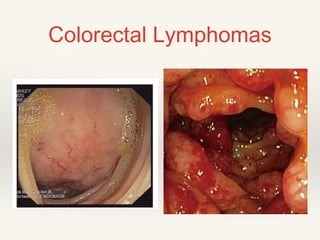
Colorectal Lymphomas
Accounts for 10-20% of all GI lymphomas
M>F ; 6th
decade
Third most common large bowel malignancy after adenocarcinoma and
carcinoid
Risk factors: Inflammatory bowel disease, Immunosuppressed states
DLBCL – most common variety. MALT lymphoma – next common, no
association with H pylori
The caecum is the most frequent location - probably due to the larger amount
of lymphoid tissue
Rectal involvement – 8.5 – 30%
Colorectal Lymphomas
Symptoms –
Abdominal pain and weight loss
Altered bowel habits
Lower gastrointestinal bleeding
Obstruction & perforation are rare
Colonoscopy
Large, polypoid lesions
Mucosal ulceration –less common
Lymphomatous polyposis – FL & MCL - can appear similar to familial
adenomatous polyposis
Colorectal Lymphomas
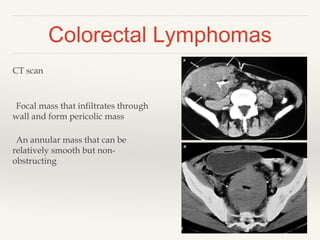
CT scan
Focal mass that infiltrates through
wall and form pericolic mass
An annular mass that can be
relatively smooth but non-
obstructing
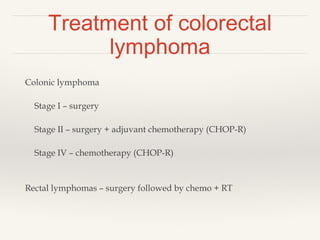
Treatment of colorectal
lymphoma
Colonic lymphoma
Stage I – surgery
Stage II – surgery + adjuvant chemotherapy (CHOP-R)
Stage IV – chemotherapy (CHOP-R)
Rectal lymphomas – surgery followed by chemo + RT
Esophageal Lymphoma
< 1% of all gastrointestinal lymphomas
Primary esophageal lymphoma is extremely rare - less than 30 cases
reported in the literature
The majority are the DLBCL type of NHL
MC site – distal third of esophagus
dysphagia, odynophagia, weight loss, chest pain
complications such as hemorrhage, obstruction or perforation with a
tracheoesophageal fistula
Esophageal Lymphoma
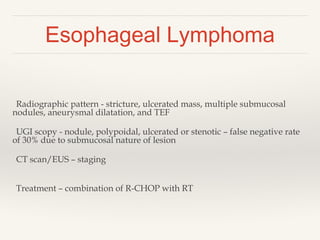
Radiographic pattern - stricture, ulcerated mass, multiple submucosal
nodules, aneurysmal dilatation, and TEF
UGI scopy - nodule, polypoidal, ulcerated or stenotic – false negative rate
of 30% due to submucosal nature of lesion
CT scan/EUS – staging
Treatment – combination of R-CHOP with RT
Hepatic Lymphoma
PHL – rare
M>F, 5th
decade
Hepatitis C is found in 40%–60%, HIV, EBV
chronic antigenic stimulation may play a role
DLBCL – most common, followed by MALT lymphoma
Presentation – varies from asymptomatic to FHF
Variety – nodular or diffuse – no prognostic significance
Hepatic Lymphoma
Elevated LDH with normal alpha-fetoprotein
Multiple liver lesions > solitary lesions
CECT – hypodense lesion with central necrosis with peripheral rim
enhancement
MRI - hypo-intense T1-weighted images and hyper-intense T2-weighted
images
Liver biopsy remains the most valuable tool for diagnosis
Treatment – Anti-HCV therapy + R-CHOP + Radiotherapy
Primary Pancreatic Lymphoma
PPL – accounts for <2% of extra-nodal malignant lymphoma
<0.5% of all pancreatic masses constitutes PPL
Male preponderance M:F – 7:1
Majority are of DLBCL
Presentation – abdominal pain, mass, weight loss, acute pancreatitis
Jaundice – less frequent in PPL than adenocarcinoma
better prognosis and different management strategy in comparison with pancreatic
adenocarcinoma
Present with mass lesion – most common in head of pancreas(80%)
Primary Pancreatic
Lymphoma
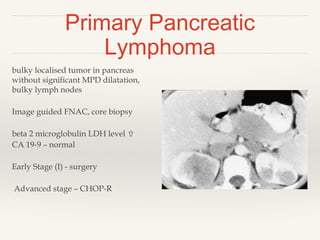
bulky localised tumor in pancreas
without significant MPD dilatation,
bulky lymph nodes
Image guided FNAC, core biopsy
beta 2 microglobulin LDH level 
CA 19-9 – normal
Early Stage (I) - surgery
Advanced stage – CHOP-R
GB & EHBD Lymphomas
Very rare
Most common variety – DLBCL,
followed by MALT lymphoma
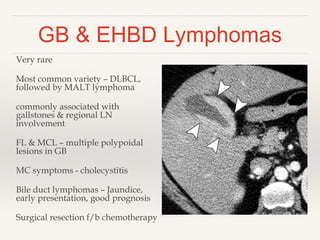
commonly associated with
gallstones & regional LN
involvement
FL & MCL – multiple polypoidal
lesions in GB
MC symptoms - cholecystitis
Bile duct lymphomas – Jaundice,
early presentation, good prognosis
Surgical resection f/b chemotherapy
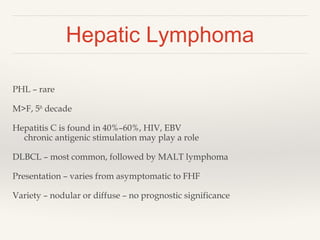
International Prognostic Index – IPI
Risk factors
Ann Arbor stage III–IV
>1 extra-nodal site
High LDH
Age>60 years
Performance status >2 (ECOG)
Low risk= 0–1 risk factors
Low intermediate risk= 2 risk factors
High intermediate risk =3 risk factors
High risk =4–5 risk factors
5-year survivals of 73%, 51%, 43%, and 26%, respectively
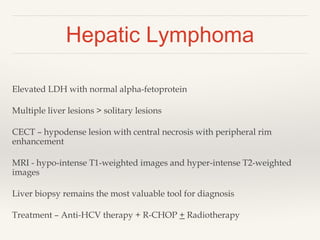
SUMMARY
Gastrointestinal tract - most common extranodal site involved by lymphoma –
majority are NHL B cell type – most common variety is DLBCL
MC site in GIT – stomach, small intestine, colorectum
Non specific symptoms with no pathognomic imaging features
Histopathology & immunohistochemistry clinches diagnosis
In general, primary GI lymphomas are treated with chemotherapy with or
without RT
Surgical role – Early lesions & for complications
Thank You

GI Lymphoma

  • 1.
    PRIMARY LYMPHOMAS OF GASTROINTESTINAL TRACT Presenter: DrHarsh Shah MS, FMAS, DNB, MCh(GI) Kaizen Hospital Ahmedabad
  • 2.
    Abbreviations DLBCL – Diffuselarge B-cell lymphoma MALT – Mucosa associated lymphoid tissue MCL- Mantle cell lymphoma FL – Follicular lymphoma IPSID – Immunoproliferative small intestinal disease EATL – Enteropathy associated T-cell lymphoma
  • 3.
  • 4.
    Introduction Usually secondary towidespread nodal disease Gastrointestinal tract – most common extra-nodal site Primary gastrointestinal lymphoma - 1-4% of all GI malignancies - 10-15% of all lymphomas - 30-40% of all extra nodal lymphomas Majority – Non Hodgkins Lymphoma [B cell- 90%] Most common site – stomach (60-65%) Rare sites – esophagus, pancreas, liver
  • 5.
    WHO CLASSIFICATION Diffuse largeB cell lymphoma(50-55%) Mucosa associated lymphoid tissue(MALT)lymphoma(15-45%) Burkitt lymphoma(3-10%) Follicular lymphoma(5-10%) Mantle cell lymphoma Enteropathy type T cell lymphoma
  • 6.
    Preferred sites MALT lymphoma– stomach Mantle cell lymphoma – small intestine, colon Follicular lymphoma – duodenum EATL – jejunum MALT lymphoma & follicular lymphoma- may be multifocal
  • 7.
    Risk Factors H pyloriinfection - stomach C Jejuni – IPSID EBV- Burkitt Lymphoma Celiac disease – EATCL HBV, HTLV-1 HIV, After organ transplantation
  • 8.
    Diffuse Large BCell Lymphoma Most common GI lymphoma Most common location – stomach, ileo caecal valve High grade variety with aggressive course 2 subtypes – Germ center B cell & Activated B cell Germ center type – mutation in anti apoptotic gene bcl-2 gene, t(14,18) – worse prognosis Activated B cell type – good long term survival Treatment – chemotherapy (CHOP-R)
  • 9.
    MALT lymphoma Low grade,and mostly associated with H pylori infection (>90%) Stomach is devoid of lymphoid tissue but is the most commonly affected site (antrum & body) Lymphoid follicles – develop due to H pylori associated gastritis B cells in lymphoid follicle proliferate to develop lymphoma Hallmark – presence of lymphoid clusters in mucosa 20-40% develop due translocation of t(11,18) – has more aggressive tumour biology and poor response to H pylori eradication therapy Treatment for early stage - H pylori eradication therapy
  • 10.
    Burkitt Lymphoma Association withEBV Aggressive tumour with poor prognosis Terminal ileal mass in children & young adult Increased cellular turnover attracts macrophages“Starry sky” appearance - pathognomonic Treatment – Chemotherapy Starry-Sky Appearance
  • 11.
    FOLLICULAR LYMPHOMA: Mostly systemicdisease, rarely involve GIT Most common site - duodenum around ampulla of Vater spontaneous regression, Can transform in to DLBCL Multifocality MANTLE CELL LYMPHOMA: MCL does not usually infiltrate Characteristically presentation - multiple lymphomatous polyposis of the small and large bowel Endoscopic resemblance to familial adenomatous polyposis
  • 12.
    EXPRESSION OF COMMONMARKERS AND TRANSLOACTION IN SUBTYPES OF GI LYMPHOMAS
  • 13.
    Work-up UGIE- multiple biopsies,examination of waldeyer’s ring Immunohistochemistry for typing of lymphoma FISH for detection of chromosomal translocations H. Pylori testing – Breath test, Warthin-starry stain in biopsy specimen If H pylori negative in biopsy – serology to identify true negativity Serum LDH and beta-2 microglobulin levels
  • 14.
    Work-up CT scan ofthe chest, abdomen and pelvis Bone marrow aspirate - involvement of lymphoma cells and monitoring of treatment response FDG-PET - significant advantage in staging of DLBCL, follicular lymphoma and MCL (sensitivity = 80%, specificity =90% ) EUS – locoregional staging & response to therapy - superior to CT scan for the T stage Follow up - histological remission precedes the normalization of wall changes - endoscopic biopsy better than imaging
  • 15.
  • 16.
    Symptoms Stomach N=277 (74%) % Small bowel N=32(9%) Ileocecal N=26(7%) Pain 78 75 78 Loss of appetite 47 41 23 Weight loss 25 35 15 Bleeding 19 7 11 Diarrhea/constipation 3.6/3.2 12.5/25 19/23 Perforation 1.8% 9.4 - B symptoms 11.9% 15.6 12 Median time to diagnosis (days) 93 135 76 Male Sex (%) M:F ratio 53 1.1 67 1.9 73 2.7 Age ,Median (range) 61.2 (20-88) 62 (16-81) 49 (19-77) Primary Gastrointestinal Non-Hodgkin’s Lymphoma: Anatomic and Histologic Distribution, Clinical Features,and Survival Data of 371 Patients Registered in the German Multicenter Study; journal of Clinical Oncology 2003
  • 17.
    Gastric Lymphoma Most commonsite of extra-nodal primary GI lymphoma(60-65%) Accounts for only <10% of all gastric malignancies MC age of presentation – 60-70 years. M>F MC site – Antrum & body MC type – DLBCL(55%) followed by MALT lymphoma(40%), Burkitt’s(3%). H pylori association – 85-90% of MALT lymphomas H pylori is detected in 35% of DLBCL – indolent MALT component
  • 18.
    Presentation – nonspecific – abdominal pain, early satiety, loss of weight. Bleeding in 10-15% & perforation is rare(1%). B symptoms are less common. DLBCL – de novo variety or from MALT lymphoma transformation MALT lymphoma: - t(11,18), t(1,14), t(14,18) - t(11,18) – non responders to H pylori eradication Gastric Lymphoma
  • 19.
    ENDOSCOPY Ulceration, thickened gastricfolds, polypoid mass, nodular lesion Cannot distinguish from adenocarcinoma Multiple biopsies may be required for diagnosis Gastric Lymphoma
  • 20.
    Gastric lymphoma Gastricadenocarcinoma Wall thickening Very thick (>3cm) Diffuse or segmental Less thick (<3cm) Diffuse or segmental Perigastric fat planes Preserved Lost Lymphadenopathy Common May extend below renal vein Bulky nodes Common Not below renal vein Less bulky Extent May extend into duodenum Never CT Scan
  • 21.
    EUS Assessment of gutwall infiltration and local lymph-node involvement In assessing treatment response Gastric Lymphoma
  • 22.
    Treatment Of MALTLymphoma ERADICATION THERAPY: H. PYLORI POSITIVE • Stage I (OMC/OAC) - Eradication of H pylori - complete remission of gastric MALT lymphoma ( 80%) MALT lymphoma in • Breath test 3 months after treatment to confirm H. pylori eradication • Repeat endoscopies with biopsies every 6 months for 2 years and then annually to document remission of the lymphoma • stage II – H. Pylori eradication therapy  re-assessment every 3 months progression or persistent disease at 1 year CHOP-R H. Pylori Negative or t(11;18) or Stage IV – CHOP-R
  • 23.
    Treatment of DLBCL StageI & II: surgery vs. Chemotherapy vs. XRT : equally effective Stage IV : Chemotherapy : (CHOP-R) 6-8 cycles + XRT XRT – 30-40Gy in 20-3- fractions Role of surgery: D2 gastrectomy Stage I or II disease Residual disease after chemotherapy Complication - perforation
  • 24.
    Small Intestinal Lymphoma Primarymalignant tumors of the small intestine rare 20%-30% of all primary G I lymphomas. Presentation as perforation is more common(10-15%) Sites • Ileum - 60%-65% • Jejunum -20%-25% • Duodenum -6%-8% Histological Subtypes •Diffuse large B cell lymphoma-58% •Low grade marginal zone MALT lymphoma-19% •Burkitt’lymphoma-5% •Mantle cell lymphoma-2.7% •T-cell NHL-15 % •IPSID-1.2%
  • 25.
    CT Scan Circumferential bulkymass in the intestinal wall May involve a relatively long Segment of bowel and may ulcerate and perforate into the adjacent mesentery Obstruction uncommon, since tumor does not elicit a desmoplastic response
  • 26.
    Small Intestinal Lymphoma BaMFTDouble Balloon Enteroscopy
  • 27.
    Treatment Outcome poor comparedto gastric lymphoma DLBCL & MALT lymphoma: Stage I (low grade) – surgery alone – resection with 10cm margin with minimum of 12 L Stage II and above & all high grade – CHOP with or without rituximab. Surgery for complications and in bulky tumour to prevent perforation after chemotherapy H pylori eradication – duodenal MALT lymphoma MCT, FL – primary modality is chemotherapy. Surgery for complications Overall 5 year survival rate – 30-45%
  • 28.
    Immunoproliferative Small IntestinalDisease (IPSID) Mediterranean lymphoma Association with C jejuni Also known as α-heavy chain disease due to heavy chain of the immunoglobulin A (IgA) class produced by tumour cells Affects the mucosa-associated lymphoid tissue (MALT)of the gastrointestinal tract
  • 29.
    Immunoproliferative Small IntestinalDisease (IPSID) Epidemiology: More commonly seen in low socioeconomic status, poor sanitation Young males (second or third decade) Clinical Features: Illness-months’ to years’ duration Chronic diarrhea Malabsorption Weight loss Abdominal Pain Physical examination Cachecic Look (musle wasting) Peripheral edema Abdominal mass
  • 30.
    IPSID Campylobacter jejuni –biopsy specimen (2/3rd ) Alpha heavy chain protein- 40-100% Low serum Ig & albumin Anemia, Hypocalcemia, Vitamin deficiencies Giardia infestation
  • 31.
    IPSID Vs Non-IPSIDPrimary Small Intestinal Lymphoma
  • 32.
    IPSID Early disease Advanceddisease Tetracycline+ metronidazole Marked improvement after a 6-month course of antibiotic or CR within 12 months YES No Maintenance antibiotic CHOP + Antibiotics Surgery is usually reserved for a palliation of obstructing tumor masses
  • 33.
    Enteropathy-associated T-cell lymphoma (EATL) Tumourof intraepithelial T lymphocytes 6th to 7th decade; male predominance Most common complication of celiac disease Mainly localised in the jejunum, may be multifocal Diagnosis History & physical examination CT/MR enterography, DBE + Biopsy PET-CT may help
  • 34.
    Treatment Pre-op nutritional support Debulkingsurgery Adjuvant chemotherapy (CHOP) Outcome is very poor with a 2-year survival rate of 15–20%
  • 35.
    Colorectal Lymphomas Accounts for10-20% of all GI lymphomas M>F ; 6th decade Third most common large bowel malignancy after adenocarcinoma and carcinoid Risk factors: Inflammatory bowel disease, Immunosuppressed states DLBCL – most common variety. MALT lymphoma – next common, no association with H pylori The caecum is the most frequent location - probably due to the larger amount of lymphoid tissue Rectal involvement – 8.5 – 30%
  • 36.
    Colorectal Lymphomas Symptoms – Abdominalpain and weight loss Altered bowel habits Lower gastrointestinal bleeding Obstruction & perforation are rare Colonoscopy Large, polypoid lesions Mucosal ulceration –less common Lymphomatous polyposis – FL & MCL - can appear similar to familial adenomatous polyposis
  • 37.
  • 38.
    Colorectal Lymphomas CT scan Focalmass that infiltrates through wall and form pericolic mass An annular mass that can be relatively smooth but non- obstructing
  • 39.
    Treatment of colorectal lymphoma Coloniclymphoma Stage I – surgery Stage II – surgery + adjuvant chemotherapy (CHOP-R) Stage IV – chemotherapy (CHOP-R) Rectal lymphomas – surgery followed by chemo + RT
  • 40.
    Esophageal Lymphoma < 1%of all gastrointestinal lymphomas Primary esophageal lymphoma is extremely rare - less than 30 cases reported in the literature The majority are the DLBCL type of NHL MC site – distal third of esophagus dysphagia, odynophagia, weight loss, chest pain complications such as hemorrhage, obstruction or perforation with a tracheoesophageal fistula
  • 41.
    Esophageal Lymphoma Radiographic pattern- stricture, ulcerated mass, multiple submucosal nodules, aneurysmal dilatation, and TEF UGI scopy - nodule, polypoidal, ulcerated or stenotic – false negative rate of 30% due to submucosal nature of lesion CT scan/EUS – staging Treatment – combination of R-CHOP with RT
  • 42.
    Hepatic Lymphoma PHL –rare M>F, 5th decade Hepatitis C is found in 40%–60%, HIV, EBV chronic antigenic stimulation may play a role DLBCL – most common, followed by MALT lymphoma Presentation – varies from asymptomatic to FHF Variety – nodular or diffuse – no prognostic significance
  • 43.
    Hepatic Lymphoma Elevated LDHwith normal alpha-fetoprotein Multiple liver lesions > solitary lesions CECT – hypodense lesion with central necrosis with peripheral rim enhancement MRI - hypo-intense T1-weighted images and hyper-intense T2-weighted images Liver biopsy remains the most valuable tool for diagnosis Treatment – Anti-HCV therapy + R-CHOP + Radiotherapy
  • 44.
    Primary Pancreatic Lymphoma PPL– accounts for <2% of extra-nodal malignant lymphoma <0.5% of all pancreatic masses constitutes PPL Male preponderance M:F – 7:1 Majority are of DLBCL Presentation – abdominal pain, mass, weight loss, acute pancreatitis Jaundice – less frequent in PPL than adenocarcinoma better prognosis and different management strategy in comparison with pancreatic adenocarcinoma Present with mass lesion – most common in head of pancreas(80%)
  • 45.
    Primary Pancreatic Lymphoma bulky localisedtumor in pancreas without significant MPD dilatation, bulky lymph nodes Image guided FNAC, core biopsy beta 2 microglobulin LDH level  CA 19-9 – normal Early Stage (I) - surgery Advanced stage – CHOP-R
  • 46.
    GB & EHBDLymphomas Very rare Most common variety – DLBCL, followed by MALT lymphoma commonly associated with gallstones & regional LN involvement FL & MCL – multiple polypoidal lesions in GB MC symptoms - cholecystitis Bile duct lymphomas – Jaundice, early presentation, good prognosis Surgical resection f/b chemotherapy
  • 47.
    International Prognostic Index– IPI Risk factors Ann Arbor stage III–IV >1 extra-nodal site High LDH Age>60 years Performance status >2 (ECOG) Low risk= 0–1 risk factors Low intermediate risk= 2 risk factors High intermediate risk =3 risk factors High risk =4–5 risk factors 5-year survivals of 73%, 51%, 43%, and 26%, respectively
  • 48.
    SUMMARY Gastrointestinal tract -most common extranodal site involved by lymphoma – majority are NHL B cell type – most common variety is DLBCL MC site in GIT – stomach, small intestine, colorectum Non specific symptoms with no pathognomic imaging features Histopathology & immunohistochemistry clinches diagnosis In general, primary GI lymphomas are treated with chemotherapy with or without RT Surgical role – Early lesions & for complications
  • 49.

Editor's Notes

  • #4 PGIL – 10-15% of all NHL
  • #13 Mark diagnotic markers and tell them only
  • #14 MALT lymphoma are indolent tumour, non-FDG avid
  • #18 Don’t repeat same thing you however you can keep slide continuity
  • #21 Reduce number of slides for gastric lymphoma, avoid repetition and concise it
  • #25 are very rare,
  • #27 BaMFT, DBE
  • #31 Bacterial overgrowth in the small intestine and intestinal parasitosis (mainly with Giardia) are common, as are anemia and vitamin deficiencies Free mono-clonal immunoglobulin light chain (Bence Jones protein) characteristically is absent.
  • #34 in contrast to uncomplicated CD (male:female ratio 1:2).
  • #39 there is no desmoplastic reaction to lymphoma and the wall is weakened by infiltration