HEPATOCELLULAR CARCINOMA 
[HCC] 
Dr. D.K.Sharma 
M.S., MCh. (GI Surgery) 
Prof. & Head, Deptt. Of Surgery 
RNT Medical College, Udaipur, Raj.
EPIDEMIOLOGY
Worldwide Incidence of Hepatocellular Carcinoma 
Epidemiology 
High (> 30:100,000) 
Intermediate (3-30:100,000) 
Low or data unavailable (< 
3:100,000) 
Worldwide Incidence of Hepatocellular Carcinoma 
Tumor incidence varies significantly, depending on geographical 
location.
Epidemiology 
 5th most common malignancy worldwide 
 3rd most common cause of cancer related death 
 5 yr survival < 10% 
 Most common primary liver malignancy 
 Reversal in cirrhosis 
 Metastases >> Primary  Primary > Metastases 
 80%-90% of HCC cases occur in cirrhotic livers
Epidemiology 
 Male-to-female ratio 
 5:1 in Asia 
 2:1 in the United States 
 Overall- 4:1 
 Increases with age. 
 53 years in Asia 
 67 years in the United States. 
 HCC incidence has tripled over last three decades 
• Rising incidence of cirrhosis 
• HCV (main reason) 
• HBV 
• Other (?NAFLD/insulin 
resistance) 
• Improved survival of patients 
with cirrhosis
ETIOLOGY
• Hepatitis B 
• increased risk 100 -200 fold 
• 90% of HCC are positive for 
HBs Ag 
• Hepatitis C 
• Cirrhosis- Any Cause 
• 70% of HCC arise on top of 
cirrhosis 
• HBV, HCV, Alcoholic, NAFLD, 
PBC 
• Toxins -Alcohol -Tobacco - 
Aflatoxins 
• States of insulin resistance 
• Overweight in males 
• Diabetes mellitus 
• Inherited metabolic diseases 
• Hemochromatosis 
• Alpha-1 antitrypsin deficiency 
• Glycogen storage disease 
• Porphyria cutanea tarda 
• Tyrosinemia 
• Autoimmune hepatitis 
• Other Risk Factors 
• Hepatic Adenomas 
• Alcohol : Bad with concurrent 
virus 
• Aflatoxin- 3x 
Etiology
PATHOGENESIS
Malignant Transformation 
Multistep 
HCC[2] 
Potential Targets 
Oxidative stress and 
inflammation 
Viral oncogenes Carcinogens 
Growth factors Telomere 
shortening 
Cancer stem 
cells 
Loss of cell cycle 
checkpoints 
Antiapoptosis Angiogenesis 
Normal liver 
Liver cirrhosis 
Hepatitis C 
Hepatitis B 
Ethanol 
NASH 
Epigenetic alterations 
Genetic alterations 
Dysplastic nodules[1] 
1. Tornillo L, et al. Lab Invest. 2002;82:547-553. 
2. Verslype C, et al. AASLD 2007. Abstract 24.
 Fibrolamellar Hepatocellular 
Carcinoma 
- Distinctive clinical and pathologic 
subtype of hepatocellular carcinoma 
(HCC) 
-Young adults (20-40 y/o) without 
underlying parenchymal liver disease 
- AFP usually not elevated 
- Non-encapsulated but well 
circumscribed and contains fibrous 
lamellae 
- Arterial Enhancement 
- Central Scar- 40% (Hypo, Delayed 
enhancement 
- Slowly growing tumor 
- Better Prognosis
Signs & symptoms 
 Nonspecific symptoms 
 Abdominal pain 
 Fever, chills 
 Anorexia, Weight loss 
 jaundice 
 Physical findings 
 Abdominal mass in one third 
 Splenomegaly 
 Ascites 
 Abdominal tenderness
SCREENING / SURVEILLANCE FOR 
HEPATOCELLULAR CARCINOMA 
SOC
AASLD Practice Guidelines 
(a) which patients are at high risk for the development of HCC & 
should be offered surveillance 
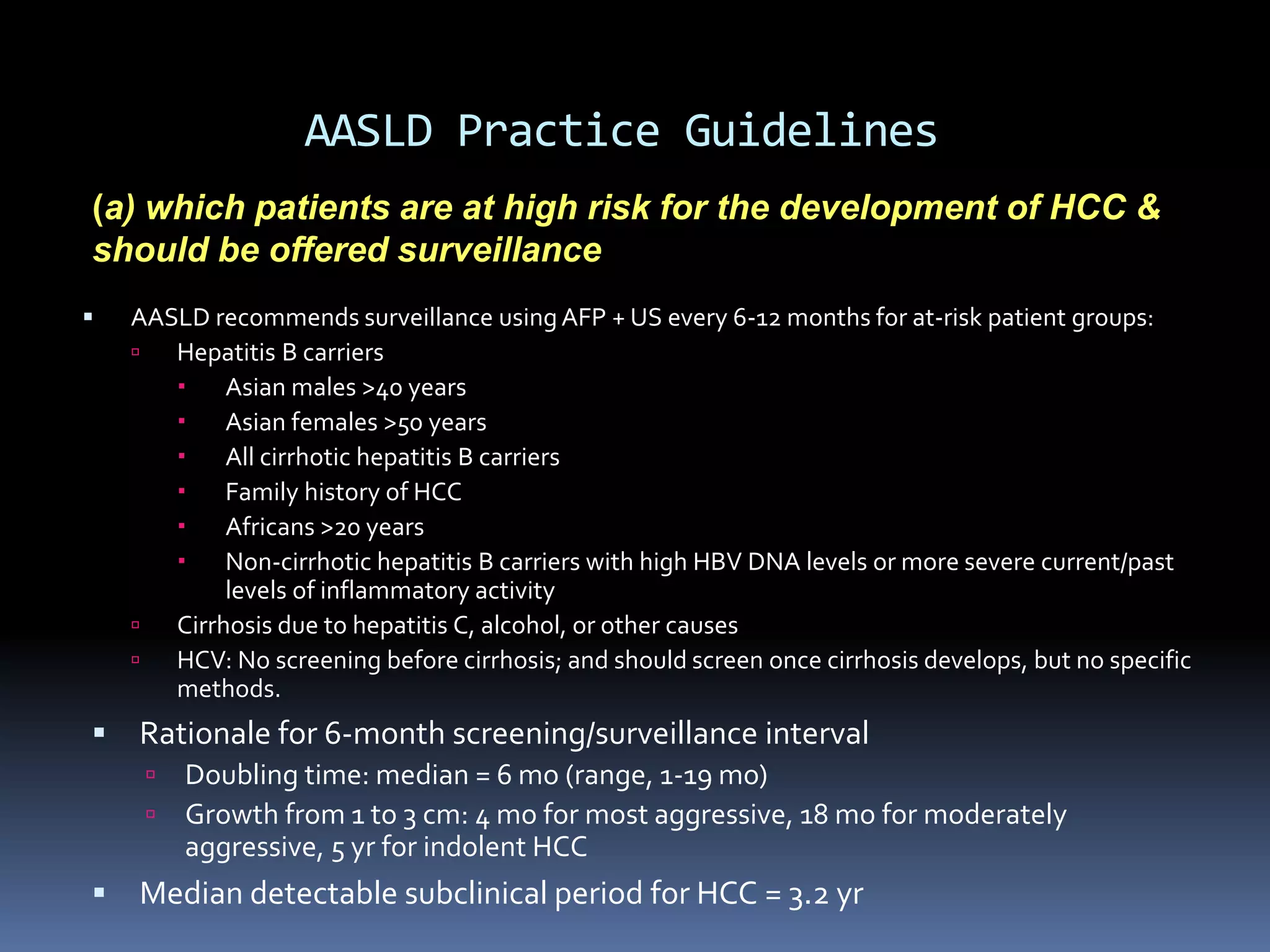
 AASLD recommends surveillance using AFP + US every 6-12 months for at-risk patient groups: 
 Hepatitis B carriers 
 Asian males >40 years 
 Asian females >50 years 
 All cirrhotic hepatitis B carriers 
 Family history of HCC 
 Africans >20 years 
 Non-cirrhotic hepatitis B carriers with high HBV DNA levels or more severe current/past 
levels of inflammatory activity 
 Cirrhosis due to hepatitis C, alcohol, or other causes 
 HCV: No screening before cirrhosis; and should screen once cirrhosis develops, but no specific 
methods. 
 Rationale for 6-month screening/surveillance interval 
 Doubling time: median = 6 mo (range, 1-19 mo) 
 Growth from 1 to 3 cm: 4 mo for most aggressive, 18 mo for moderately 
aggressive, 5 yr for indolent HCC 
 Median detectable subclinical period for HCC = 3.2 yr
DIAGNOSIS OF HCC
Diagnosis 
(b) What investigations are required to make a definite 
diagnosis 
I. AFP produced by 70%of HCC 
a) > 400ng/ml 
b) AFP over time 
II. Imaging 
a) Focal liver lesion cirrhotic patient  highly likely to be HCC 
b) Spiral CT of the liver 
c) MRI with contrast enhancement 
III. Biopsy is rarely required for diagnosis 
a) Seeding in 1–3%. 
b) Biopsy of potentially operable lesions should be avoided where 
possible
STAGING
Staging Systems for Hepatocellular Carcinoma 
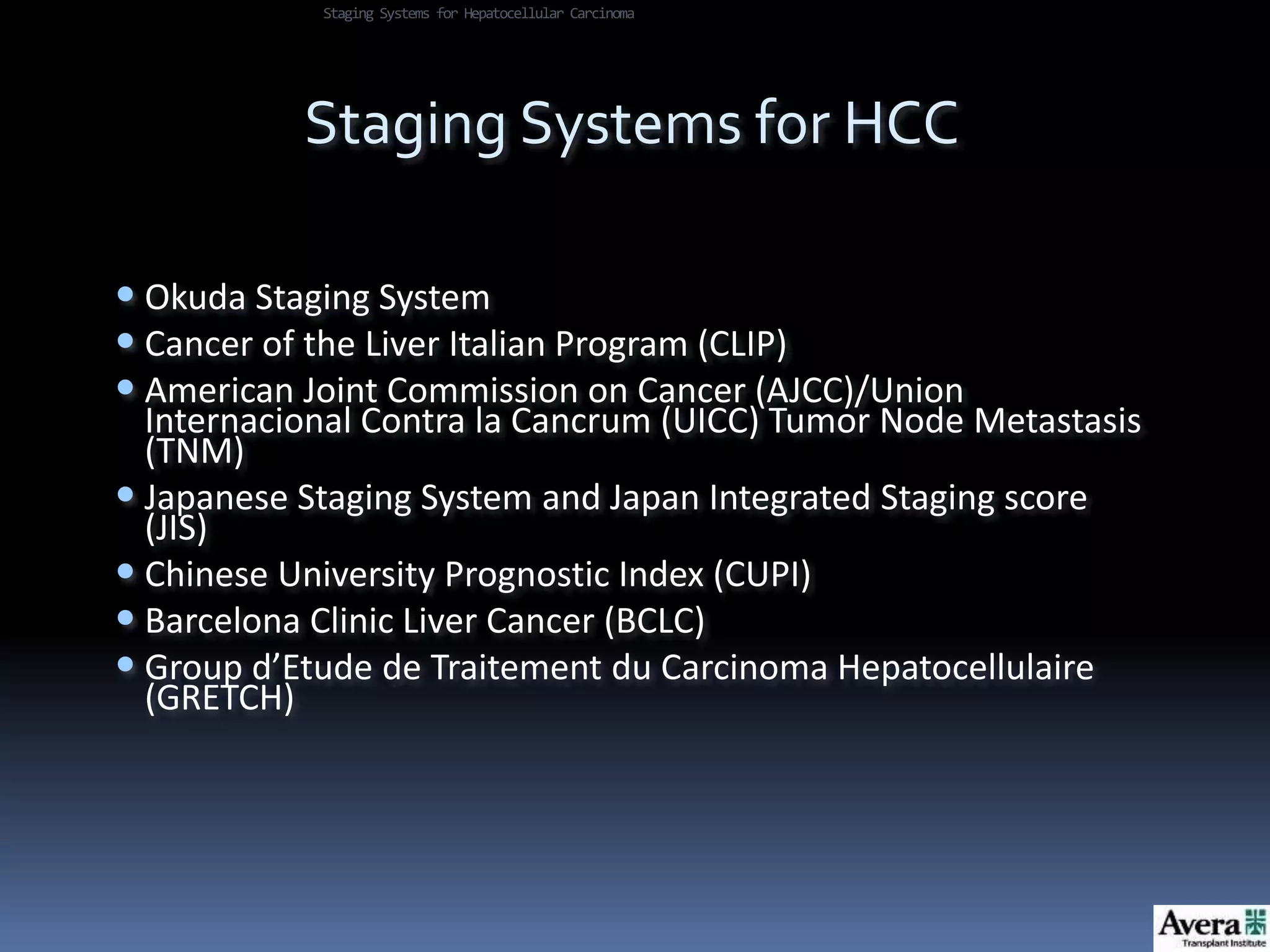
Staging Systems for HCC 
• Okuda Staging System 
• Cancer of the Liver Italian Program (CLIP) 
• American Joint Commission on Cancer (AJCC)/Union 
Internacional Contra la Cancrum (UICC) Tumor Node Metastasis 
(TNM) 
• Japanese Staging System and Japan Integrated Staging score 
(JIS) 
• Chinese University Prognostic Index (CUPI) 
• Barcelona Clinic Liver Cancer (BCLC) 
• Group d’Etude de Traitement du Carcinoma Hepatocellulaire 
(GRETCH)
MANAGEMENT
Management 
 Liver transplantation 
 Resection 
 Tumor ablation 
 Radiofrequency thermal ablation 
 Cryotherapy 
 Alcohol injection 
 Chemoembolization 
 Targeted molecular therapy 
 Chemotherapy 
 Regional/systemic 
Potentially 
curative
SURGICAL TREATMENT
Surgery 
 Only proven potentially curative therapy 
 Hepatic resection or liver transplantation 
 Resection: 
 HCC and a non-cirrhotic liver (including fibrolamellar variant) 
 Highly selected patients with cirrhosis 
 Well preserved hepatic function (Child-Pugh A) who are unsuitable for liver transplantation 
 Carries a high risk of postoperative decompensation. 
 Recurrence rates of 50–60% after 5 years after resection are usual (intrahepatic) 
 Patients with single small HCC (≤5 cm) or up to three lesions ≤3 cm 
 Involvement of large vessels (portal vein, Inferior vena cava) doesn’t automatically mitigate 
against a resection; especially in fibrolamellar histology 
 No RCTs comparing the outcome of resection and transplantation for HCC. 
 Perioperative mortality in experienced centres remains between 6% and 20% depending on 
the extent of the resection and the severity of preoperative liver impairment. 
 The majority of early mortality is due to liver failure.
Liver Transplantation 
 The only treatment with a major chance of cure for HCC 
 Should be considered in any patient with cirrhosis 
 Patients with replicating HBV/ HCV-Worse outlook 
 Recurrence 
 previously not considered candidates for transplantation. 
 Effective antiviral therapy is now available and patients 
with small HCC, should be assessed for transplantation
Liver Transplant for HCC in 
cirrhosis 
Milan Criteria (Stage I+II) 
Single, not > 5cm Up to 3, none > 3cm 
+ 
Absence of Macroscopic Vascular Invasion 
Absence of Extrahepatic Spread 
Mazzaferro V, et al. N Engl J Med. 1996;334:693-699.
NON-SURGICAL TREATMENT
Should only be used where surgical therapy is not possible. 
1. Percutaneous ethanol injection (PEI) 
2. Radiofrequency ablation (RFA) 
3. Cryotherapy 
4. Chemoembolization 
5. Selective Internal Radiation Therapy [SIRT] 
6. Systemic chemotherapy 
7. Hormonal therapy 
8. Interferon-alfa 
9. Retinoids and adaptive immunotherapy (adjuvant) 
10.Targeted Therapy 
11.Other Agents
Treatment (non-Surgical) 
Selection of agents for targeted therapy 
Name Target 
Gefitinib 
Erlotinib 
Lapatanib 
Cetuximab 
Bevacizumab 
Sorafenib (Nexavar) 
Sunitinib 
Vatalanib 
Cediranib 
Rapamycin 
Everolimus 
Bortezomib (Velcade) 
EGFR 
EGFR 
EGFR 
EGFR 
VEGF 
Raf1, B-Raf, VEGFR , PDGFR 
PDGFR, VEGFR, c-KIT, FLT-3 
VEGFR, PDGFR, c-KIT 
VEGFR 
mTOR (mammalian target of rapamycin) 
mTOR 
Proteasome
Summary 
 Hepatocellular Carcinoma 
 HCC is one the most rapidly increasing cancers 
 Risk driven by cirrhosis 
 Viral load in HBV 
 Prevention is possible by vaccine 
 Treatment of underlying disease decreases risk 
 Treatment is mainly palliative 
 The 5-year survival is 8-12% 
 Less than 20% are candidates for surgery/transplant at 
diagnosis 
 HCC is curable in some patients 
 Screening to detect early HCC is the main priority of 
primary care physicians 
 Referral to a tertiary center indicated 
 Team approach is current standard to manage HCC

Hcc 08.11.2014 ix sem rnt

  • 1.
    HEPATOCELLULAR CARCINOMA [HCC] Dr. D.K.Sharma M.S., MCh. (GI Surgery) Prof. & Head, Deptt. Of Surgery RNT Medical College, Udaipur, Raj.
  • 2.
  • 3.
    Worldwide Incidence ofHepatocellular Carcinoma Epidemiology High (> 30:100,000) Intermediate (3-30:100,000) Low or data unavailable (< 3:100,000) Worldwide Incidence of Hepatocellular Carcinoma Tumor incidence varies significantly, depending on geographical location.
  • 4.
    Epidemiology  5thmost common malignancy worldwide  3rd most common cause of cancer related death  5 yr survival < 10%  Most common primary liver malignancy  Reversal in cirrhosis  Metastases >> Primary  Primary > Metastases  80%-90% of HCC cases occur in cirrhotic livers
  • 5.
    Epidemiology  Male-to-femaleratio  5:1 in Asia  2:1 in the United States  Overall- 4:1  Increases with age.  53 years in Asia  67 years in the United States.  HCC incidence has tripled over last three decades • Rising incidence of cirrhosis • HCV (main reason) • HBV • Other (?NAFLD/insulin resistance) • Improved survival of patients with cirrhosis
  • 6.
  • 7.
    • Hepatitis B • increased risk 100 -200 fold • 90% of HCC are positive for HBs Ag • Hepatitis C • Cirrhosis- Any Cause • 70% of HCC arise on top of cirrhosis • HBV, HCV, Alcoholic, NAFLD, PBC • Toxins -Alcohol -Tobacco - Aflatoxins • States of insulin resistance • Overweight in males • Diabetes mellitus • Inherited metabolic diseases • Hemochromatosis • Alpha-1 antitrypsin deficiency • Glycogen storage disease • Porphyria cutanea tarda • Tyrosinemia • Autoimmune hepatitis • Other Risk Factors • Hepatic Adenomas • Alcohol : Bad with concurrent virus • Aflatoxin- 3x Etiology
  • 8.
  • 9.
    Malignant Transformation Multistep HCC[2] Potential Targets Oxidative stress and inflammation Viral oncogenes Carcinogens Growth factors Telomere shortening Cancer stem cells Loss of cell cycle checkpoints Antiapoptosis Angiogenesis Normal liver Liver cirrhosis Hepatitis C Hepatitis B Ethanol NASH Epigenetic alterations Genetic alterations Dysplastic nodules[1] 1. Tornillo L, et al. Lab Invest. 2002;82:547-553. 2. Verslype C, et al. AASLD 2007. Abstract 24.
  • 10.
     Fibrolamellar Hepatocellular Carcinoma - Distinctive clinical and pathologic subtype of hepatocellular carcinoma (HCC) -Young adults (20-40 y/o) without underlying parenchymal liver disease - AFP usually not elevated - Non-encapsulated but well circumscribed and contains fibrous lamellae - Arterial Enhancement - Central Scar- 40% (Hypo, Delayed enhancement - Slowly growing tumor - Better Prognosis
  • 11.
    Signs & symptoms  Nonspecific symptoms  Abdominal pain  Fever, chills  Anorexia, Weight loss  jaundice  Physical findings  Abdominal mass in one third  Splenomegaly  Ascites  Abdominal tenderness
  • 12.
    SCREENING / SURVEILLANCEFOR HEPATOCELLULAR CARCINOMA SOC
  • 13.
    AASLD Practice Guidelines (a) which patients are at high risk for the development of HCC & should be offered surveillance  AASLD recommends surveillance using AFP + US every 6-12 months for at-risk patient groups:  Hepatitis B carriers  Asian males >40 years  Asian females >50 years  All cirrhotic hepatitis B carriers  Family history of HCC  Africans >20 years  Non-cirrhotic hepatitis B carriers with high HBV DNA levels or more severe current/past levels of inflammatory activity  Cirrhosis due to hepatitis C, alcohol, or other causes  HCV: No screening before cirrhosis; and should screen once cirrhosis develops, but no specific methods.  Rationale for 6-month screening/surveillance interval  Doubling time: median = 6 mo (range, 1-19 mo)  Growth from 1 to 3 cm: 4 mo for most aggressive, 18 mo for moderately aggressive, 5 yr for indolent HCC  Median detectable subclinical period for HCC = 3.2 yr
  • 14.
  • 15.
    Diagnosis (b) Whatinvestigations are required to make a definite diagnosis I. AFP produced by 70%of HCC a) > 400ng/ml b) AFP over time II. Imaging a) Focal liver lesion cirrhotic patient  highly likely to be HCC b) Spiral CT of the liver c) MRI with contrast enhancement III. Biopsy is rarely required for diagnosis a) Seeding in 1–3%. b) Biopsy of potentially operable lesions should be avoided where possible
  • 16.
  • 17.
    Staging Systems forHepatocellular Carcinoma Staging Systems for HCC • Okuda Staging System • Cancer of the Liver Italian Program (CLIP) • American Joint Commission on Cancer (AJCC)/Union Internacional Contra la Cancrum (UICC) Tumor Node Metastasis (TNM) • Japanese Staging System and Japan Integrated Staging score (JIS) • Chinese University Prognostic Index (CUPI) • Barcelona Clinic Liver Cancer (BCLC) • Group d’Etude de Traitement du Carcinoma Hepatocellulaire (GRETCH)
  • 18.
  • 19.
    Management  Livertransplantation  Resection  Tumor ablation  Radiofrequency thermal ablation  Cryotherapy  Alcohol injection  Chemoembolization  Targeted molecular therapy  Chemotherapy  Regional/systemic Potentially curative
  • 20.
  • 21.
    Surgery  Onlyproven potentially curative therapy  Hepatic resection or liver transplantation  Resection:  HCC and a non-cirrhotic liver (including fibrolamellar variant)  Highly selected patients with cirrhosis  Well preserved hepatic function (Child-Pugh A) who are unsuitable for liver transplantation  Carries a high risk of postoperative decompensation.  Recurrence rates of 50–60% after 5 years after resection are usual (intrahepatic)  Patients with single small HCC (≤5 cm) or up to three lesions ≤3 cm  Involvement of large vessels (portal vein, Inferior vena cava) doesn’t automatically mitigate against a resection; especially in fibrolamellar histology  No RCTs comparing the outcome of resection and transplantation for HCC.  Perioperative mortality in experienced centres remains between 6% and 20% depending on the extent of the resection and the severity of preoperative liver impairment.  The majority of early mortality is due to liver failure.
  • 22.
    Liver Transplantation The only treatment with a major chance of cure for HCC  Should be considered in any patient with cirrhosis  Patients with replicating HBV/ HCV-Worse outlook  Recurrence  previously not considered candidates for transplantation.  Effective antiviral therapy is now available and patients with small HCC, should be assessed for transplantation
  • 23.
    Liver Transplant forHCC in cirrhosis Milan Criteria (Stage I+II) Single, not > 5cm Up to 3, none > 3cm + Absence of Macroscopic Vascular Invasion Absence of Extrahepatic Spread Mazzaferro V, et al. N Engl J Med. 1996;334:693-699.
  • 24.
  • 25.
    Should only beused where surgical therapy is not possible. 1. Percutaneous ethanol injection (PEI) 2. Radiofrequency ablation (RFA) 3. Cryotherapy 4. Chemoembolization 5. Selective Internal Radiation Therapy [SIRT] 6. Systemic chemotherapy 7. Hormonal therapy 8. Interferon-alfa 9. Retinoids and adaptive immunotherapy (adjuvant) 10.Targeted Therapy 11.Other Agents
  • 26.
    Treatment (non-Surgical) Selectionof agents for targeted therapy Name Target Gefitinib Erlotinib Lapatanib Cetuximab Bevacizumab Sorafenib (Nexavar) Sunitinib Vatalanib Cediranib Rapamycin Everolimus Bortezomib (Velcade) EGFR EGFR EGFR EGFR VEGF Raf1, B-Raf, VEGFR , PDGFR PDGFR, VEGFR, c-KIT, FLT-3 VEGFR, PDGFR, c-KIT VEGFR mTOR (mammalian target of rapamycin) mTOR Proteasome
  • 27.
    Summary  HepatocellularCarcinoma  HCC is one the most rapidly increasing cancers  Risk driven by cirrhosis  Viral load in HBV  Prevention is possible by vaccine  Treatment of underlying disease decreases risk  Treatment is mainly palliative  The 5-year survival is 8-12%  Less than 20% are candidates for surgery/transplant at diagnosis  HCC is curable in some patients  Screening to detect early HCC is the main priority of primary care physicians  Referral to a tertiary center indicated  Team approach is current standard to manage HCC