1. WHAT IS HAPTIC TECHNOLOGY
2. TYPES OF HAPTIC FEEDBACKS
3. HAPTIC TECHNOLOGY WORKING
4. HAPTIC DEVICES
5. APPLICATIONS
6. FUTURE SCOPE
7. CONCLUSION
CONTENTS
WHAT IS HAPTIC
TECHNOLOGY?
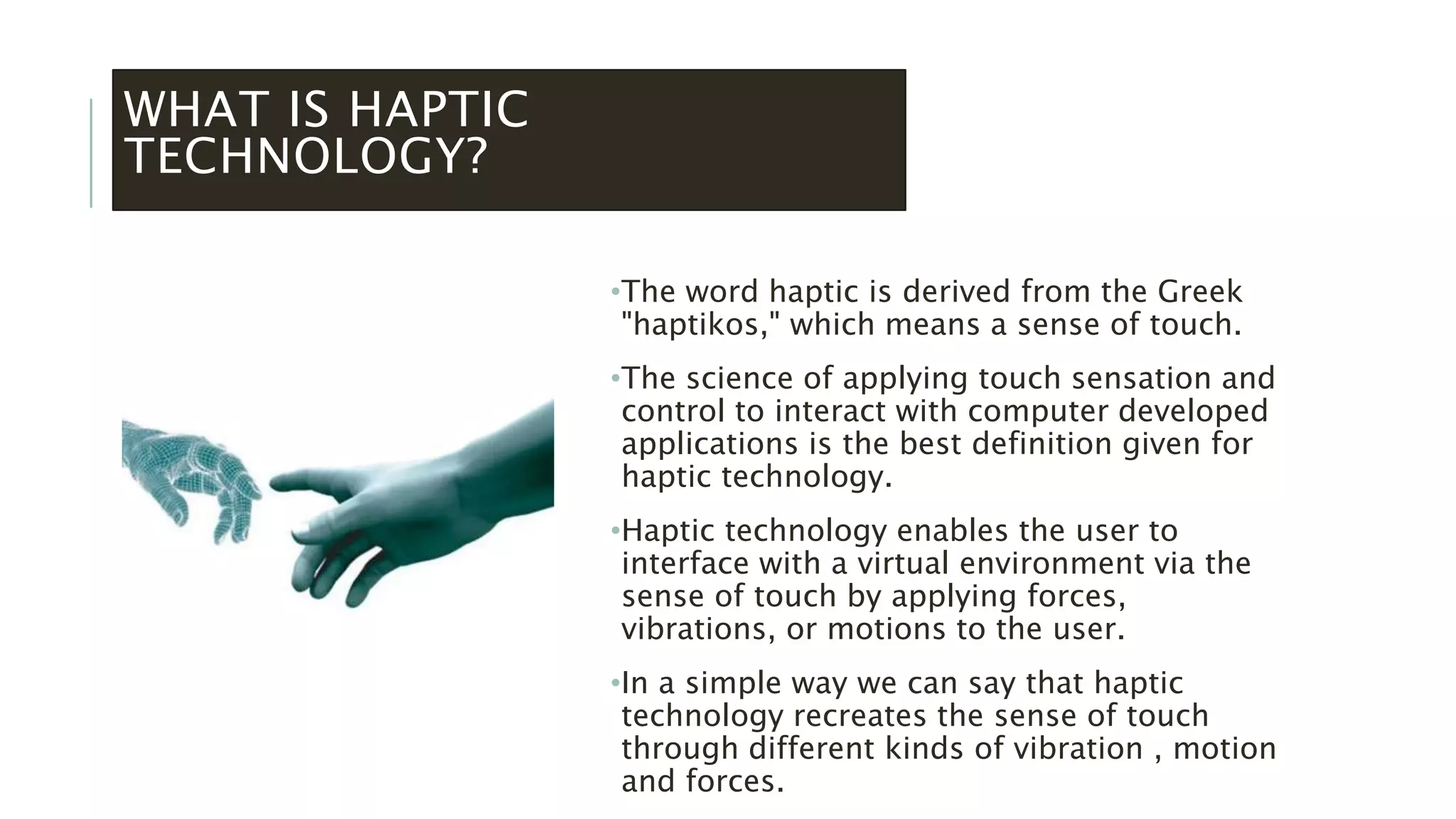
•The word haptic is derived from the Greek
"haptikos," which means a sense of touch.
•The science of applying touch sensation and
control to interact with computer developed
applications is the best definition given for
haptic technology.
•Haptic technology enables the user to
interface with a virtual environment via the
sense of touch by applying forces,
vibrations, or motions to the user.
•In a simple way we can say that haptic
technology recreates the sense of touch
through different kinds of vibration , motion
and forces.
Haptics is implemented through different type of interactions
with a haptic device communicating with the computer. These
interactions can be categorized into the different types of
touch sensations a user can receive:
1) Tactile Feedback
2) Force Feedback
TYPES OF HAPTIC FEEDBACKS
• Refers to the sensations felt by the skin.
• It allows the user to feel things such as the texture of
surfaces, temperature and vibration.
TACTILE FEEDBACK
 It reproduces the directional forces that can result from solid
boundaries.
 E.g. the weight of virtual objects, inertia, etc.
FORCE FEEDBACK
•Haptic feedback is the use of touch to
communicate with users.
•Most people are familiar with the
vibration in a mobile phone or the
rumble in a game controller.
•Smart phone or tablet is pretty much
just a smooth sheet of glass, it's
difficult to register any sort of tactile
feedback to our fingers.
•Haptics helps here. The short and light
vibration when typing out a message
with an on-screen keyboard can make
a big difference. Here vibrations is the
feedback from the device to the end
user.
•Haptic feedback is the use of touch
HAPTIC TECHNOLOGY WORKING
•They allow users to touch, interact, feel the
texture of 3d virtual objects.
•Haptic devices are both input and output
devices unlike keyboard or mouse.
•Haptic devices collect the data from the
surface of the object.
•They the store the information that is
collected.
•When we want to feel the object whose
information is stored, haptic rendering is done
and the sense of touch is felt.
•In this way haptic devices proved the sense of
touch to the end user.
•There are many haptic devices, lets see some
of them.
PHANTOM
• Provides a 3D touch to the virtual objects.
• When the user move his finger, then he could really
feel the shape and size of the virtual 3D object that
has been already programmed.
• The Cyber Grasp system fits over the users entire hand like an
exoskeleton and adds resistive force feedback to each finger
• Adapted to different size of the fingers
• Located on the back of the hand
CYBER GRASP
HAPTIC
DEVICES
ULTRA HAPTICS
•In ultrahaptics we create tactile sensations in mid-air.
•No controllers or wearables are needed: the patented “virtual touch”
technology uses ultrasound to project shapes and textures directly onto the
user’s hands.
•Controls can be operated without touching a surface, gestures can be
enhanced with tactile feedback, and users can interact in a natural way with
virtual objects.
APPLICATIO
NS
Videogames
Medicine
• Haptic interfaces for medical simulation may
especially useful for training in minimally invasive
procedures such as laparoscopy and interventional
radiology as well as for performing remote surgery.
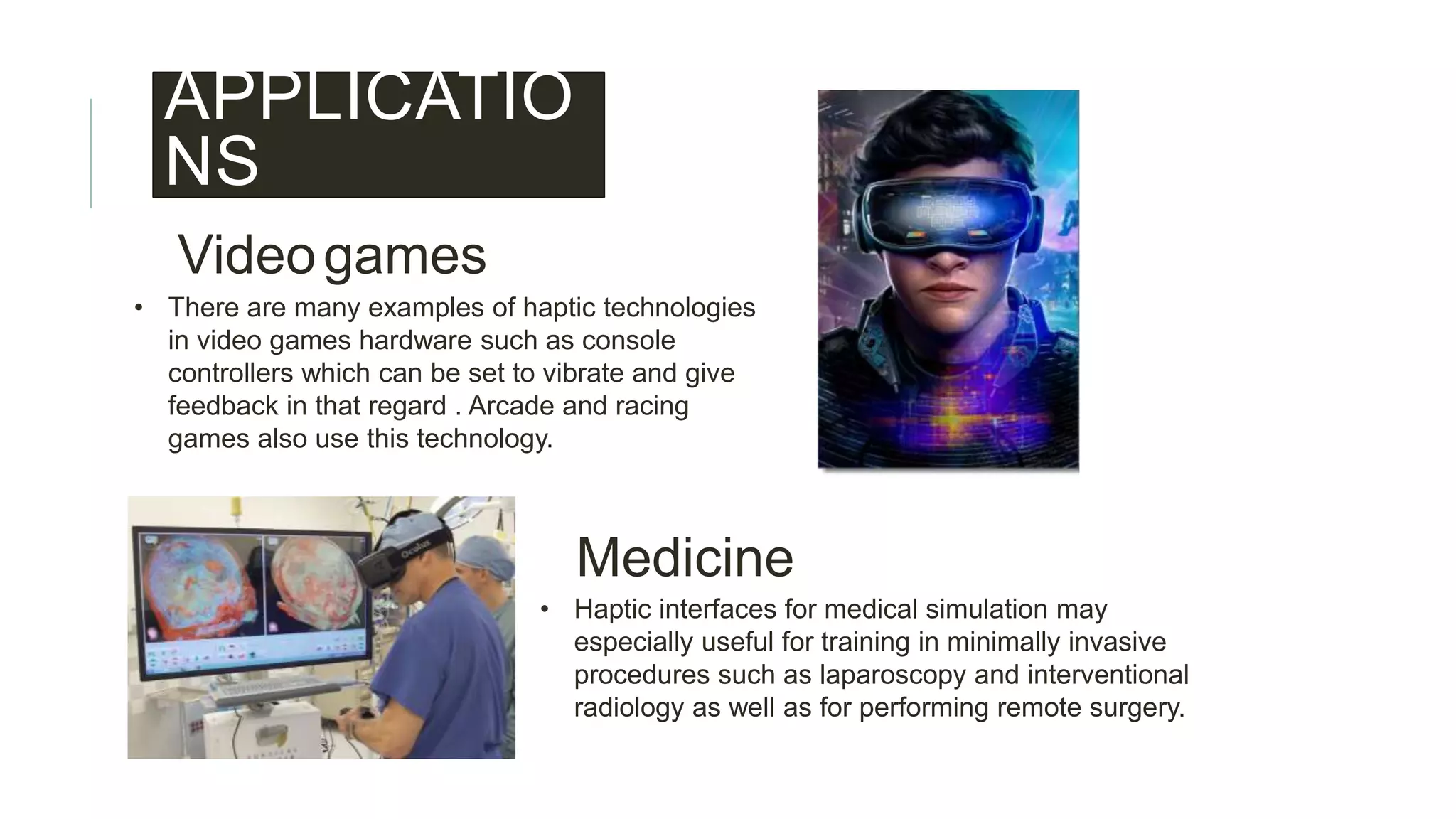
• There are many examples of haptic technologies
in video games hardware such as console
controllers which can be set to vibrate and give
feedback in that regard . Arcade and racing
games also use this technology.
APPLICATION
S
VIRTUAL REALITY
•Virtual reality has been able to engage a users
senses of sight and sound . Recent
developments have attached the technology of
haptic devices to virtual reality thus engaging
the sense of touch.
FUTURE
APPLICATIONS
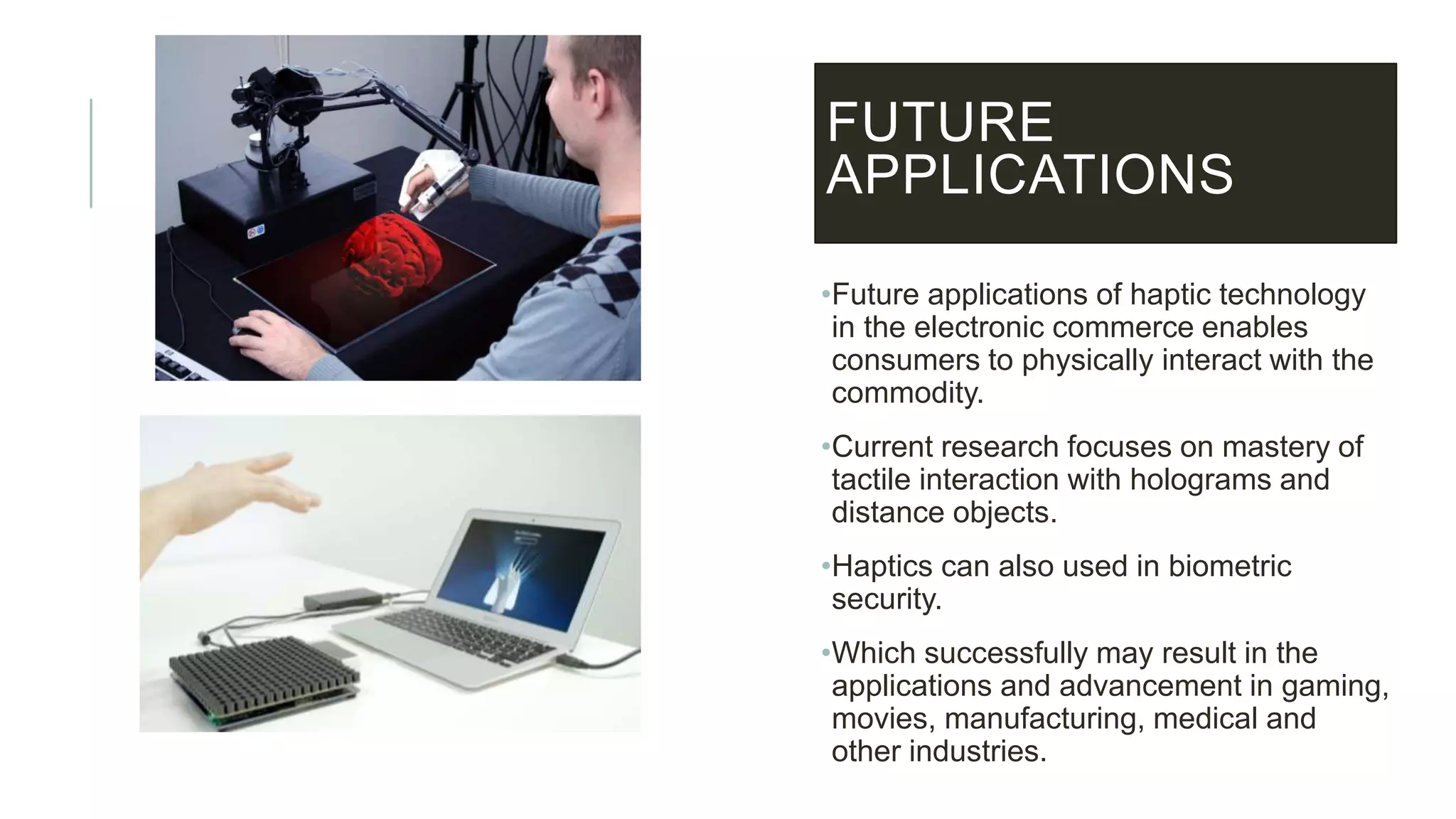
•Future applications of haptic technology
in the electronic commerce enables
consumers to physically interact with the
commodity.
•Current research focuses on mastery of
tactile interaction with holograms and
distance objects.
•Haptics can also used in biometric
security.
•Which successfully may result in the
applications and advancement in gaming,
movies, manufacturing, medical and
other industries.
CONCLUSION
Haptic technology is a gate way where virtual world
meets the real world.
Haptic  technology

Haptic technology

  • 2.
    1. WHAT ISHAPTIC TECHNOLOGY 2. TYPES OF HAPTIC FEEDBACKS 3. HAPTIC TECHNOLOGY WORKING 4. HAPTIC DEVICES 5. APPLICATIONS 6. FUTURE SCOPE 7. CONCLUSION CONTENTS
  • 3.
    WHAT IS HAPTIC TECHNOLOGY? •Theword haptic is derived from the Greek "haptikos," which means a sense of touch. •The science of applying touch sensation and control to interact with computer developed applications is the best definition given for haptic technology. •Haptic technology enables the user to interface with a virtual environment via the sense of touch by applying forces, vibrations, or motions to the user. •In a simple way we can say that haptic technology recreates the sense of touch through different kinds of vibration , motion and forces.
  • 4.
    Haptics is implementedthrough different type of interactions with a haptic device communicating with the computer. These interactions can be categorized into the different types of touch sensations a user can receive: 1) Tactile Feedback 2) Force Feedback TYPES OF HAPTIC FEEDBACKS
  • 5.
    • Refers tothe sensations felt by the skin. • It allows the user to feel things such as the texture of surfaces, temperature and vibration. TACTILE FEEDBACK
  • 6.
     It reproducesthe directional forces that can result from solid boundaries.  E.g. the weight of virtual objects, inertia, etc. FORCE FEEDBACK
  • 7.
    •Haptic feedback isthe use of touch to communicate with users. •Most people are familiar with the vibration in a mobile phone or the rumble in a game controller. •Smart phone or tablet is pretty much just a smooth sheet of glass, it's difficult to register any sort of tactile feedback to our fingers. •Haptics helps here. The short and light vibration when typing out a message with an on-screen keyboard can make a big difference. Here vibrations is the feedback from the device to the end user. •Haptic feedback is the use of touch
  • 8.
    HAPTIC TECHNOLOGY WORKING •Theyallow users to touch, interact, feel the texture of 3d virtual objects. •Haptic devices are both input and output devices unlike keyboard or mouse. •Haptic devices collect the data from the surface of the object. •They the store the information that is collected. •When we want to feel the object whose information is stored, haptic rendering is done and the sense of touch is felt. •In this way haptic devices proved the sense of touch to the end user. •There are many haptic devices, lets see some of them.
  • 9.
    PHANTOM • Provides a3D touch to the virtual objects. • When the user move his finger, then he could really feel the shape and size of the virtual 3D object that has been already programmed. • The Cyber Grasp system fits over the users entire hand like an exoskeleton and adds resistive force feedback to each finger • Adapted to different size of the fingers • Located on the back of the hand CYBER GRASP HAPTIC DEVICES
  • 10.
    ULTRA HAPTICS •In ultrahapticswe create tactile sensations in mid-air. •No controllers or wearables are needed: the patented “virtual touch” technology uses ultrasound to project shapes and textures directly onto the user’s hands. •Controls can be operated without touching a surface, gestures can be enhanced with tactile feedback, and users can interact in a natural way with virtual objects.
  • 11.
    APPLICATIO NS Videogames Medicine • Haptic interfacesfor medical simulation may especially useful for training in minimally invasive procedures such as laparoscopy and interventional radiology as well as for performing remote surgery. • There are many examples of haptic technologies in video games hardware such as console controllers which can be set to vibrate and give feedback in that regard . Arcade and racing games also use this technology.
  • 12.
    APPLICATION S VIRTUAL REALITY •Virtual realityhas been able to engage a users senses of sight and sound . Recent developments have attached the technology of haptic devices to virtual reality thus engaging the sense of touch.
  • 13.
    FUTURE APPLICATIONS •Future applications ofhaptic technology in the electronic commerce enables consumers to physically interact with the commodity. •Current research focuses on mastery of tactile interaction with holograms and distance objects. •Haptics can also used in biometric security. •Which successfully may result in the applications and advancement in gaming, movies, manufacturing, medical and other industries.
  • 14.
    CONCLUSION Haptic technology isa gate way where virtual world meets the real world.