Engaging
The Sense Of
Touch
Presented By
SHAIBIN KB
2
1. INDROUCTION
2. WHAT IS HAPTIC?
3. HAPTIC FEEDBACK
4. WORKING PRINCIPLE
5. HAPTIC DEVICES
6. ULTRA HAPTICS
7. ADVANTAGES
8. DISADVANTAGES
9. FUTURE VISION
10.APPLICATIONS
11.CONCLUTION
3
 Haptics is a technology of adding the
sensation of touch and feelings to the
computer.
 When virtual objects are touched,they
seem real & tangile.
 It senses links to the brain’s sensing
position and movement of the body by the
means of sensory nerves within the
muscles and joints
HAPTICS=INTERACTIONBETWEENHUMANS AND
COMPUTERSORVIRTUALWORLD
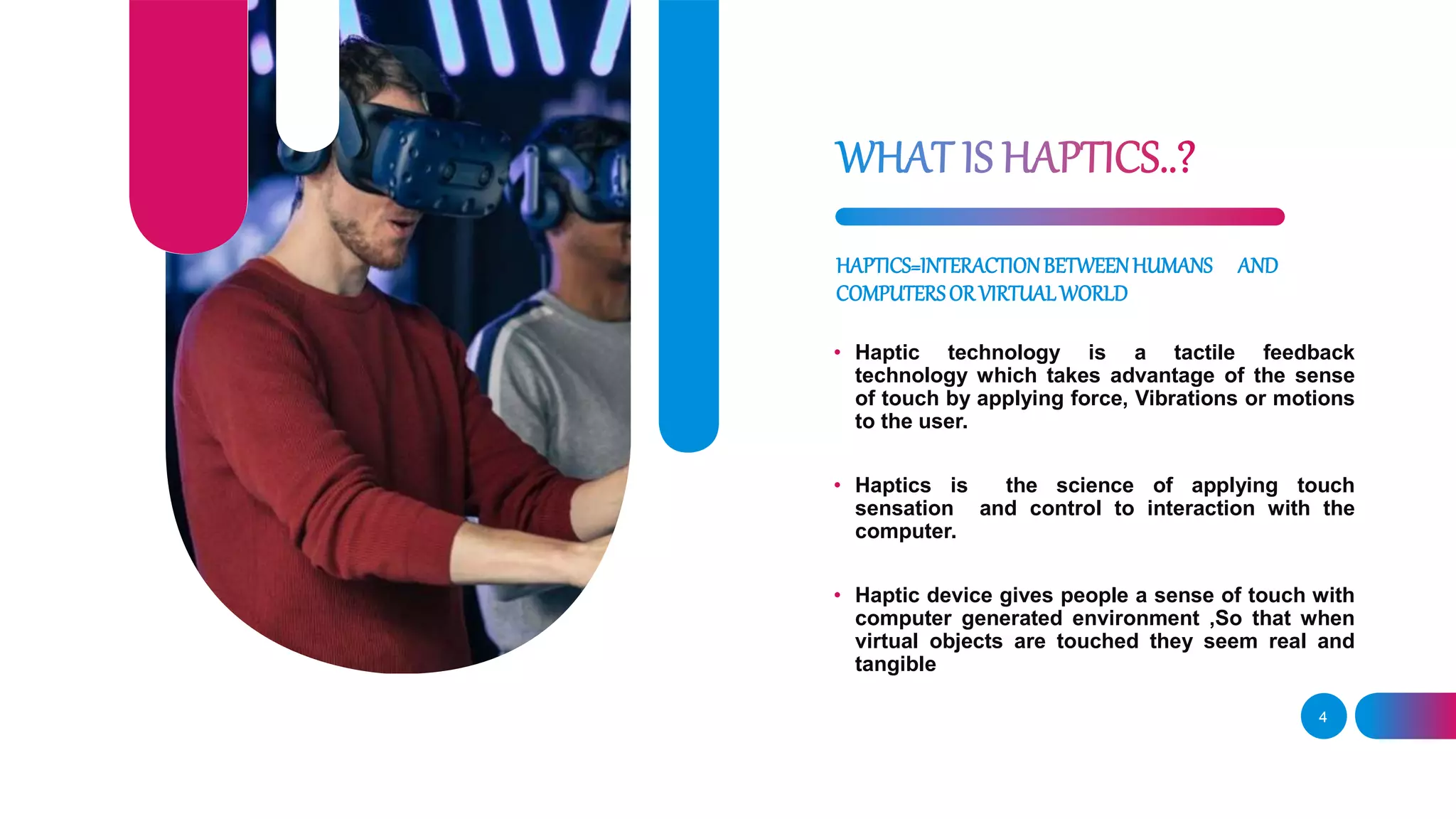
• Haptic technology is a tactile feedback
technology which takes advantage of the sense
of touch by applying force, Vibrations or motions
to the user.
• Haptics is the science of applying touch
sensation and control to interaction with the
computer.
• Haptic device gives people a sense of touch with
computer generated environment ,So that when
virtual objects are touched they seem real and
tangible
4
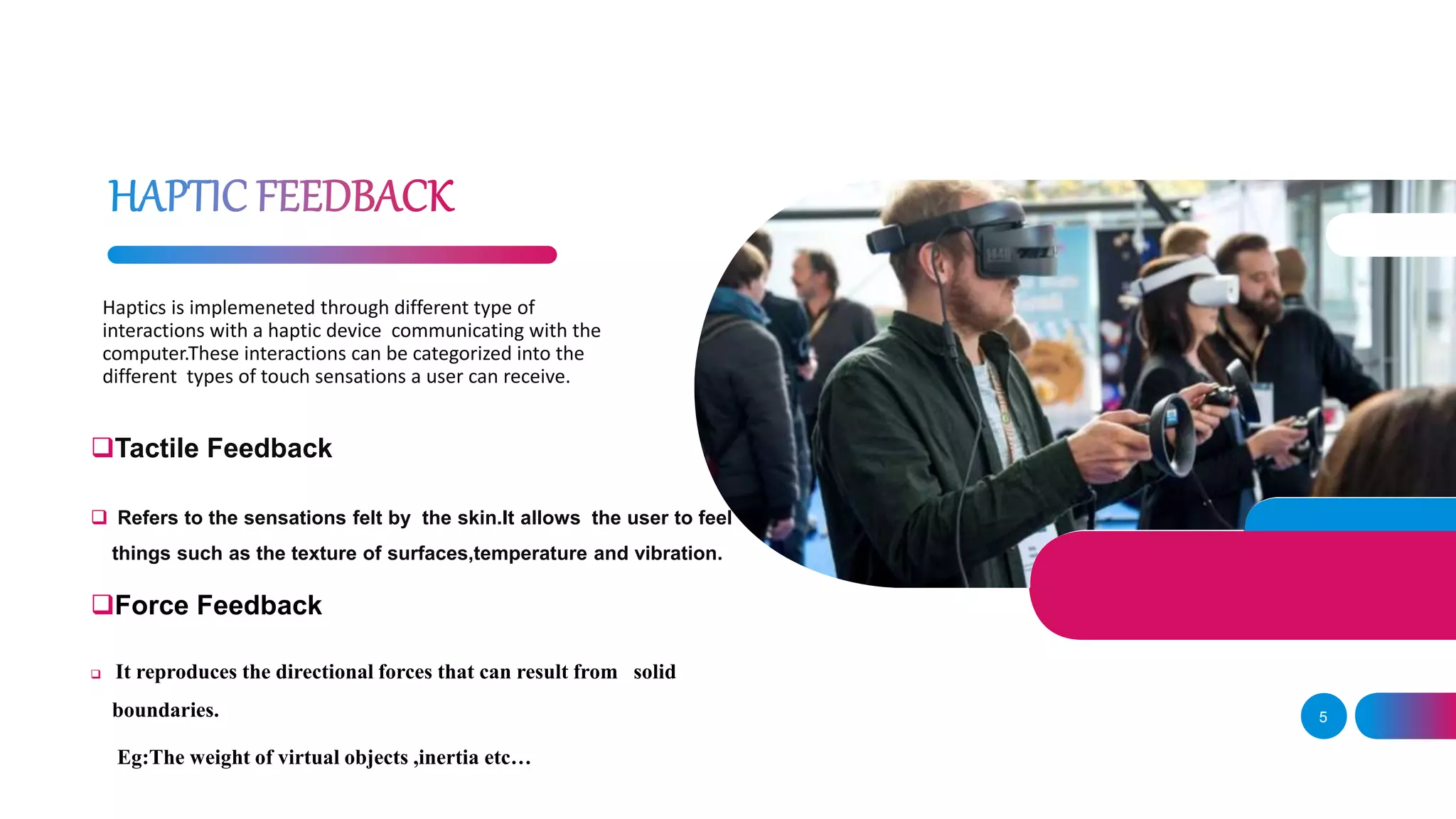
Haptics is implemeneted through different type of
interactions with a haptic device communicating with the
computer.These interactions can be categorized into the
different types of touch sensations a user can receive.
Tactile Feedback
 Refers to the sensations felt by the skin.It allows the user to feel
things such as the texture of surfaces,temperature and vibration.
Force Feedback
 It reproduces the directional forces that can result from solid
boundaries.
Eg:The weight of virtual objects ,inertia etc…
5
6
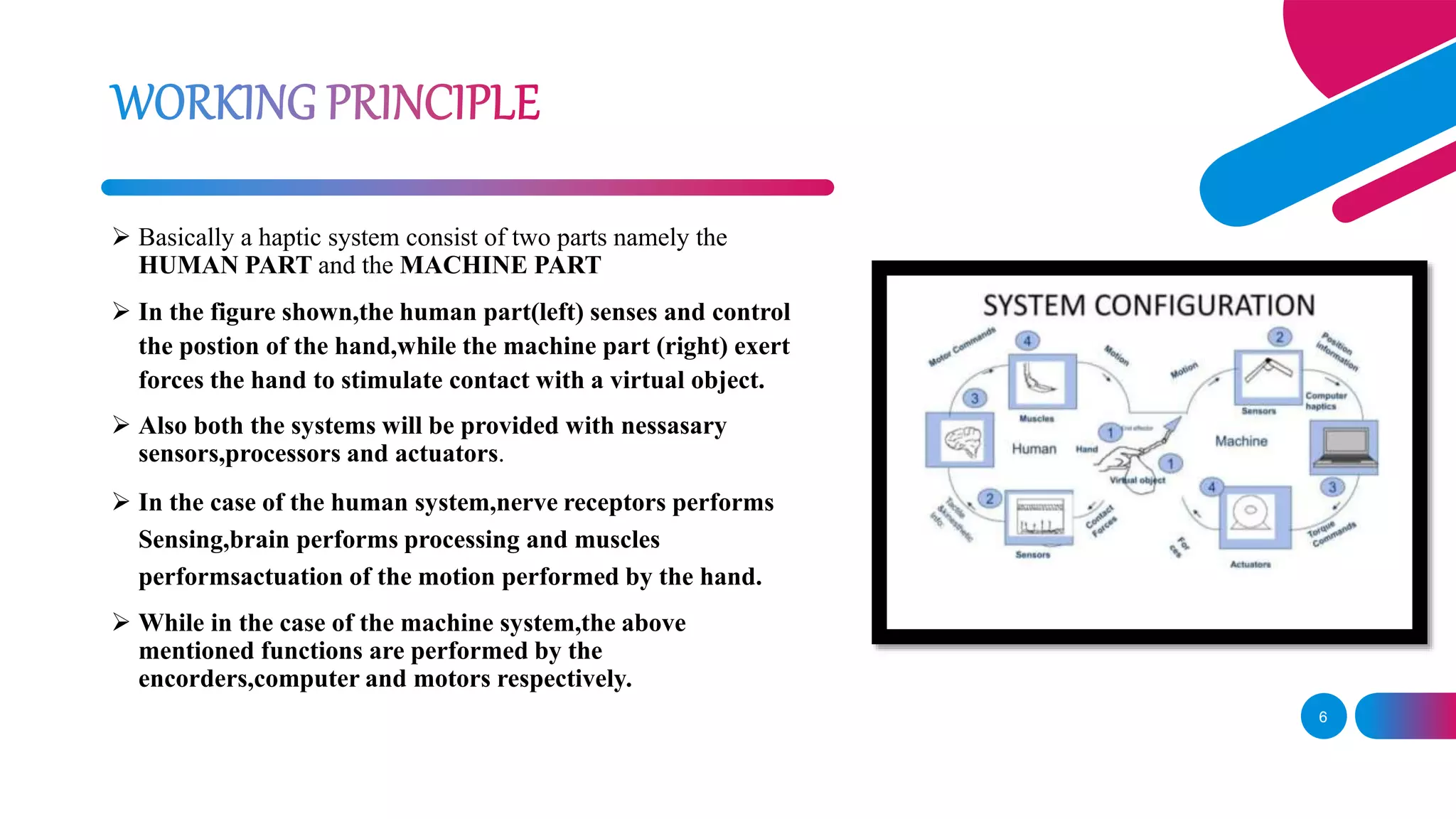
 Basically a haptic system consist of two parts namely the
HUMAN PART and the MACHINE PART
 In the figure shown,the human part(left) senses and control
the postion of the hand,while the machine part (right) exert
forces the hand to stimulate contact with a virtual object.
 Also both the systems will be provided with nessasary
sensors,processors and actuators.
 In the case of the human system,nerve receptors performs
Sensing,brain performs processing and muscles
performsactuation of the motion performed by the hand.
 While in the case of the machine system,the above
mentioned functions are performed by the
encorders,computer and motors respectively.
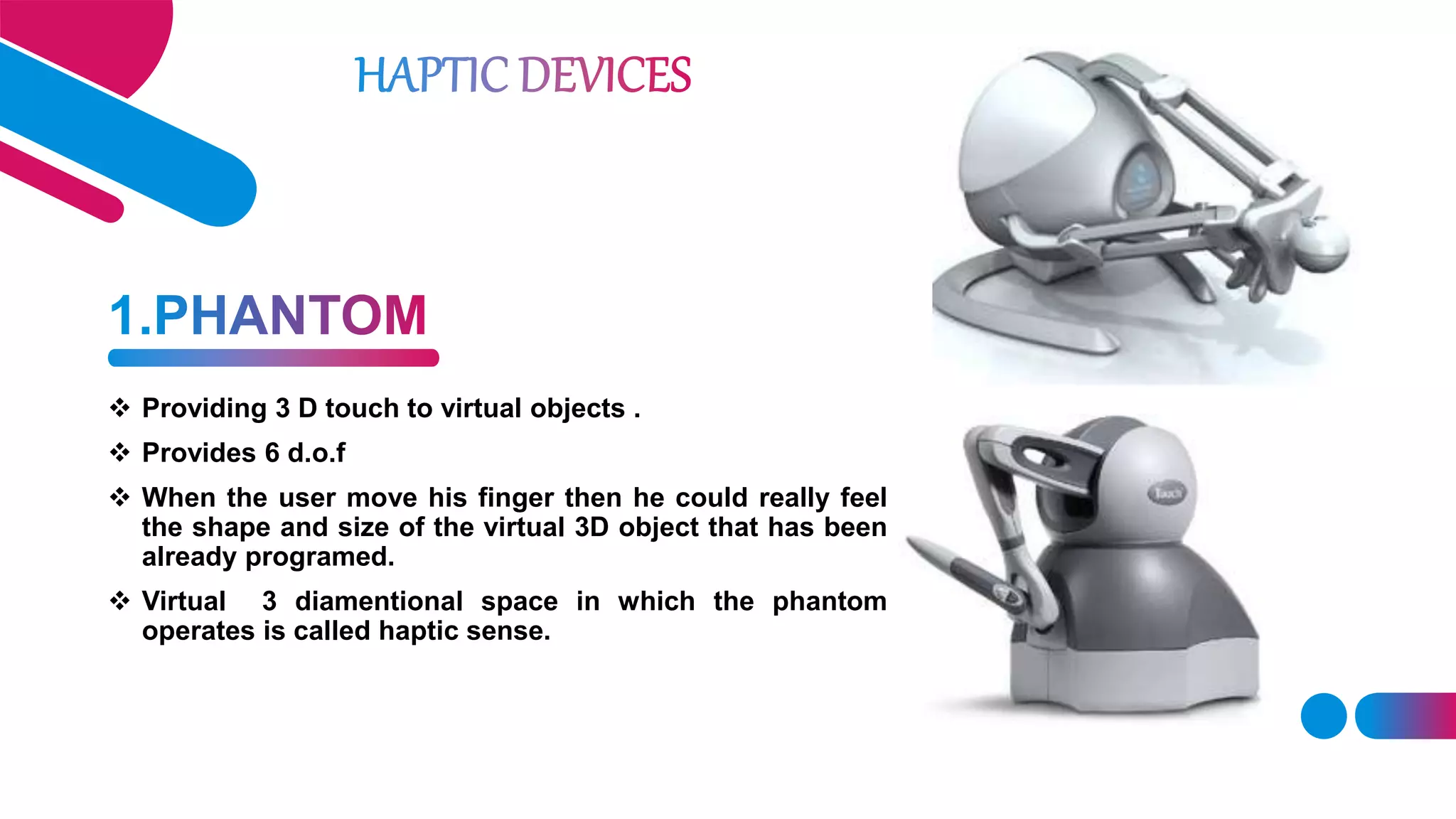
 Providing 3 D touch to virtual objects .
 Provides 6 d.o.f
 When the user move his finger then he could really feel
the shape and size of the virtual 3D object that has been
already programed.
 Virtual 3 diamentional space in which the phantom
operates is called haptic sense.
8
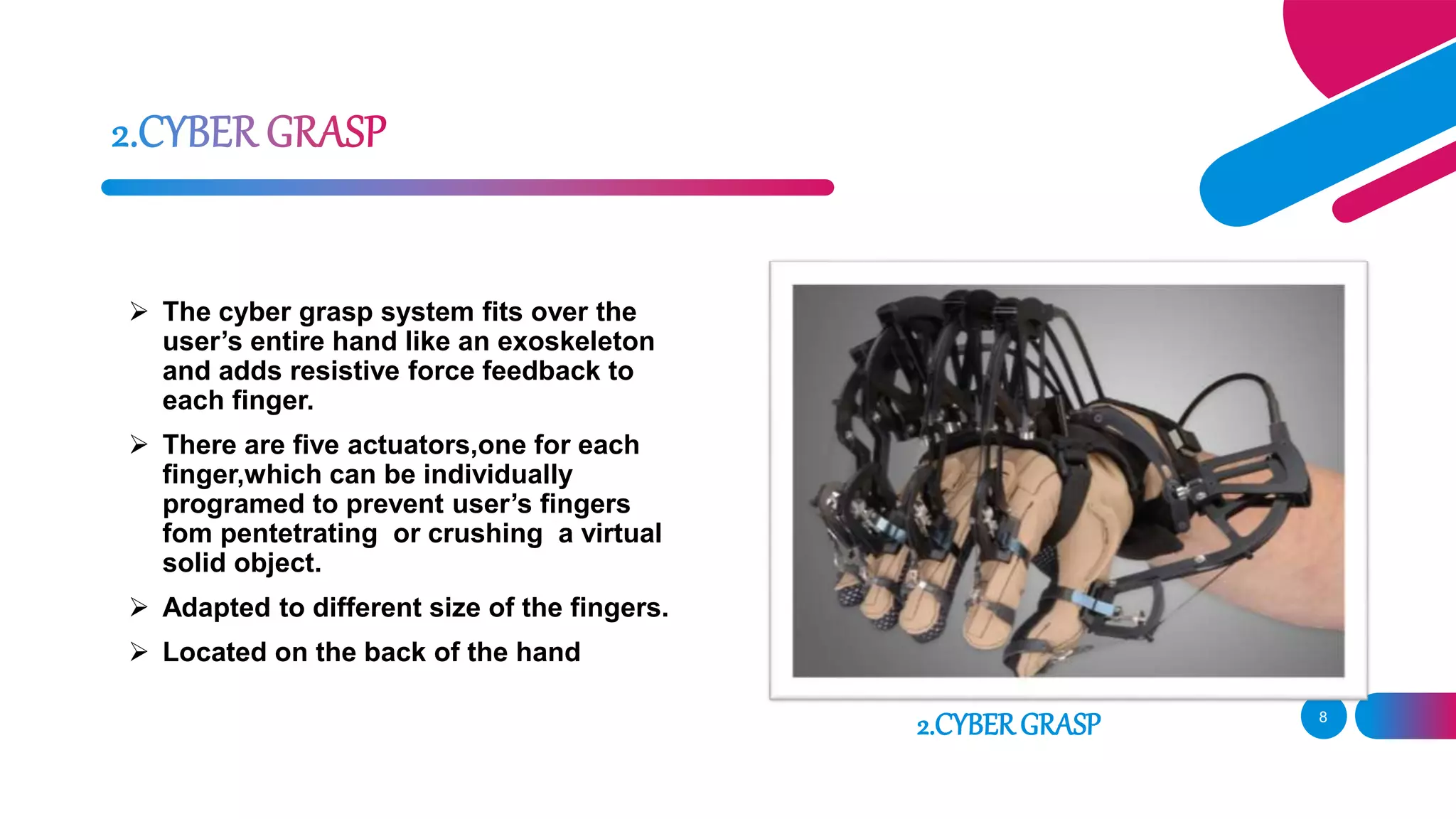
 The cyber grasp system fits over the
user’s entire hand like an exoskeleton
and adds resistive force feedback to
each finger.
 There are five actuators,one for each
finger,which can be individually
programed to prevent user’s fingers
fom pentetrating or crushing a virtual
solid object.
 Adapted to different size of the fingers.
 Located on the back of the hand
2.CYBERGRASP
9
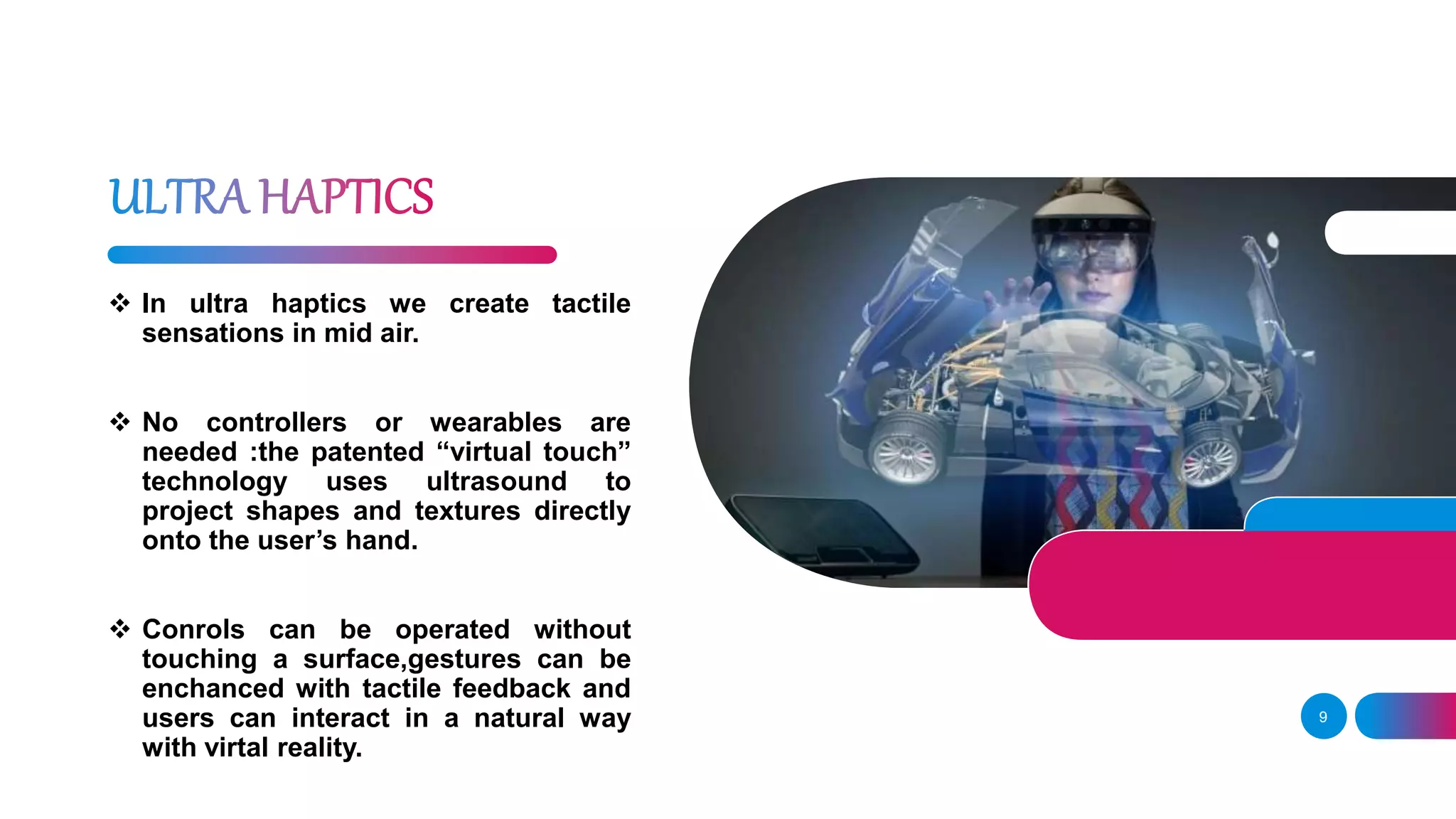
 In ultra haptics we create tactile
sensations in mid air.
 No controllers or wearables are
needed :the patented “virtual touch”
technology uses ultrasound to
project shapes and textures directly
onto the user’s hand.
 Conrols can be operated without
touching a surface,gestures can be
enchanced with tactile feedback and
users can interact in a natural way
with virtal reality.
10
 Working time is redued.
 Communication is centered through touch and the digital world
can behave like the real world.
 Increase confidence in medical field.
 With haptic hardware and software designer can feel the result as if
he were handling the physical object.
11
Higher cost.
Large weight and size(especially for wearable ones).
From point of algorithm ,output is not saturate.
The precision of touch require a lots of advance
design.
Haptic interfaces can only exert forces with limited
magnitude and not equally well in all directions.
 HOLOGRAPHIC INTERACTION
The feedback allows the user to interact with a hologram and actually receive
tactile responses using acoustic radiation pressure.
 MEDICAL APPLICATION
Use of a central workstation from which surgeons would perform operations in
various locations ,with machine setup and patient preparation performed by local
nursing staff.
 TEXTILE INDUSTRY
User could study and feel the texture and quality of material during the sale of
cloth through internet.
11
13
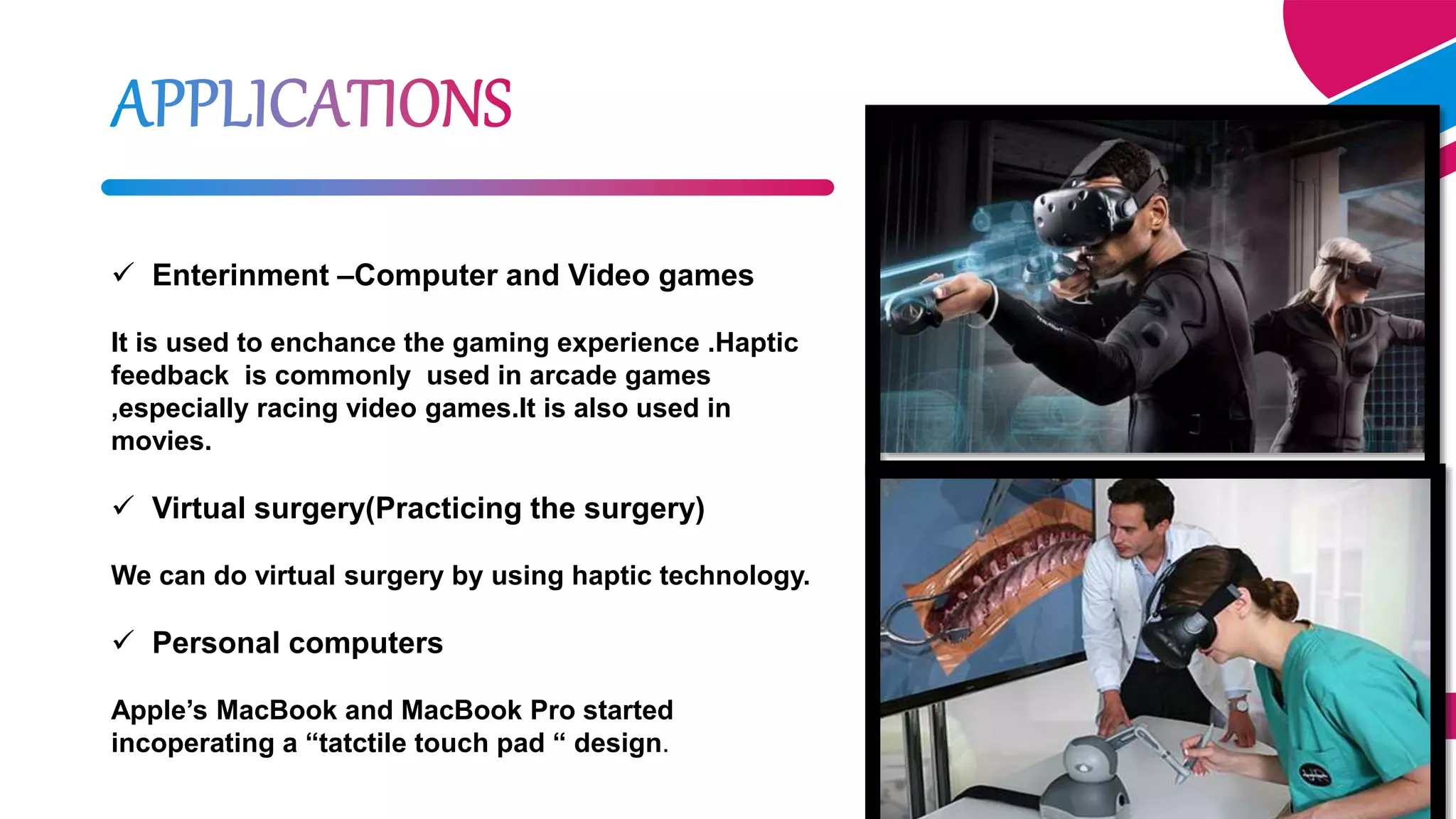
 Enterinment –Computer and Video games
It is used to enchance the gaming experience .Haptic
feedback is commonly used in arcade games
,especially racing video games.It is also used in
movies.
 Virtual surgery(Practicing the surgery)
We can do virtual surgery by using haptic technology.
 Personal computers
Apple’s MacBook and MacBook Pro started
incoperating a “tatctile touch pad “ design.
14
 Haptic Technology is the only solution which provides high range of
interaction that cannot be provided by virtual reality.
 Continued implementation of tctile devices to aid people with disablities will
advance further.
 Toadys ,commercial success of haptic has been in the areas of entertainment
,medical simulation,and design ,although new devices and applications are
regularly appearing.
 Haptic technology will make the future world as a sensible one.
HAPTIC TECHNOLOGY.pptx

HAPTIC TECHNOLOGY.pptx

  • 1.
  • 2.
    2 1. INDROUCTION 2. WHATIS HAPTIC? 3. HAPTIC FEEDBACK 4. WORKING PRINCIPLE 5. HAPTIC DEVICES 6. ULTRA HAPTICS 7. ADVANTAGES 8. DISADVANTAGES 9. FUTURE VISION 10.APPLICATIONS 11.CONCLUTION
  • 3.
    3  Haptics isa technology of adding the sensation of touch and feelings to the computer.  When virtual objects are touched,they seem real & tangile.  It senses links to the brain’s sensing position and movement of the body by the means of sensory nerves within the muscles and joints
  • 4.
    HAPTICS=INTERACTIONBETWEENHUMANS AND COMPUTERSORVIRTUALWORLD • Haptictechnology is a tactile feedback technology which takes advantage of the sense of touch by applying force, Vibrations or motions to the user. • Haptics is the science of applying touch sensation and control to interaction with the computer. • Haptic device gives people a sense of touch with computer generated environment ,So that when virtual objects are touched they seem real and tangible 4
  • 5.
    Haptics is implemenetedthrough different type of interactions with a haptic device communicating with the computer.These interactions can be categorized into the different types of touch sensations a user can receive. Tactile Feedback  Refers to the sensations felt by the skin.It allows the user to feel things such as the texture of surfaces,temperature and vibration. Force Feedback  It reproduces the directional forces that can result from solid boundaries. Eg:The weight of virtual objects ,inertia etc… 5
  • 6.
    6  Basically ahaptic system consist of two parts namely the HUMAN PART and the MACHINE PART  In the figure shown,the human part(left) senses and control the postion of the hand,while the machine part (right) exert forces the hand to stimulate contact with a virtual object.  Also both the systems will be provided with nessasary sensors,processors and actuators.  In the case of the human system,nerve receptors performs Sensing,brain performs processing and muscles performsactuation of the motion performed by the hand.  While in the case of the machine system,the above mentioned functions are performed by the encorders,computer and motors respectively.
  • 7.
     Providing 3D touch to virtual objects .  Provides 6 d.o.f  When the user move his finger then he could really feel the shape and size of the virtual 3D object that has been already programed.  Virtual 3 diamentional space in which the phantom operates is called haptic sense.
  • 8.
    8  The cybergrasp system fits over the user’s entire hand like an exoskeleton and adds resistive force feedback to each finger.  There are five actuators,one for each finger,which can be individually programed to prevent user’s fingers fom pentetrating or crushing a virtual solid object.  Adapted to different size of the fingers.  Located on the back of the hand 2.CYBERGRASP
  • 9.
    9  In ultrahaptics we create tactile sensations in mid air.  No controllers or wearables are needed :the patented “virtual touch” technology uses ultrasound to project shapes and textures directly onto the user’s hand.  Conrols can be operated without touching a surface,gestures can be enchanced with tactile feedback and users can interact in a natural way with virtal reality.
  • 10.
    10  Working timeis redued.  Communication is centered through touch and the digital world can behave like the real world.  Increase confidence in medical field.  With haptic hardware and software designer can feel the result as if he were handling the physical object.
  • 11.
    11 Higher cost. Large weightand size(especially for wearable ones). From point of algorithm ,output is not saturate. The precision of touch require a lots of advance design. Haptic interfaces can only exert forces with limited magnitude and not equally well in all directions.
  • 12.
     HOLOGRAPHIC INTERACTION Thefeedback allows the user to interact with a hologram and actually receive tactile responses using acoustic radiation pressure.  MEDICAL APPLICATION Use of a central workstation from which surgeons would perform operations in various locations ,with machine setup and patient preparation performed by local nursing staff.  TEXTILE INDUSTRY User could study and feel the texture and quality of material during the sale of cloth through internet. 11
  • 13.
    13  Enterinment –Computerand Video games It is used to enchance the gaming experience .Haptic feedback is commonly used in arcade games ,especially racing video games.It is also used in movies.  Virtual surgery(Practicing the surgery) We can do virtual surgery by using haptic technology.  Personal computers Apple’s MacBook and MacBook Pro started incoperating a “tatctile touch pad “ design.
  • 14.
    14  Haptic Technologyis the only solution which provides high range of interaction that cannot be provided by virtual reality.  Continued implementation of tctile devices to aid people with disablities will advance further.  Toadys ,commercial success of haptic has been in the areas of entertainment ,medical simulation,and design ,although new devices and applications are regularly appearing.  Haptic technology will make the future world as a sensible one.