What is it…?
 Haptic technology is a tactile feedback technology
which takes advantage of the sense of touch by
applying forces, vibrations, or motions to the user.
 Haptics (pronounced HAP-tiks) is the science of
applying touch (tactile) sensation and control to
interaction with computer applications.
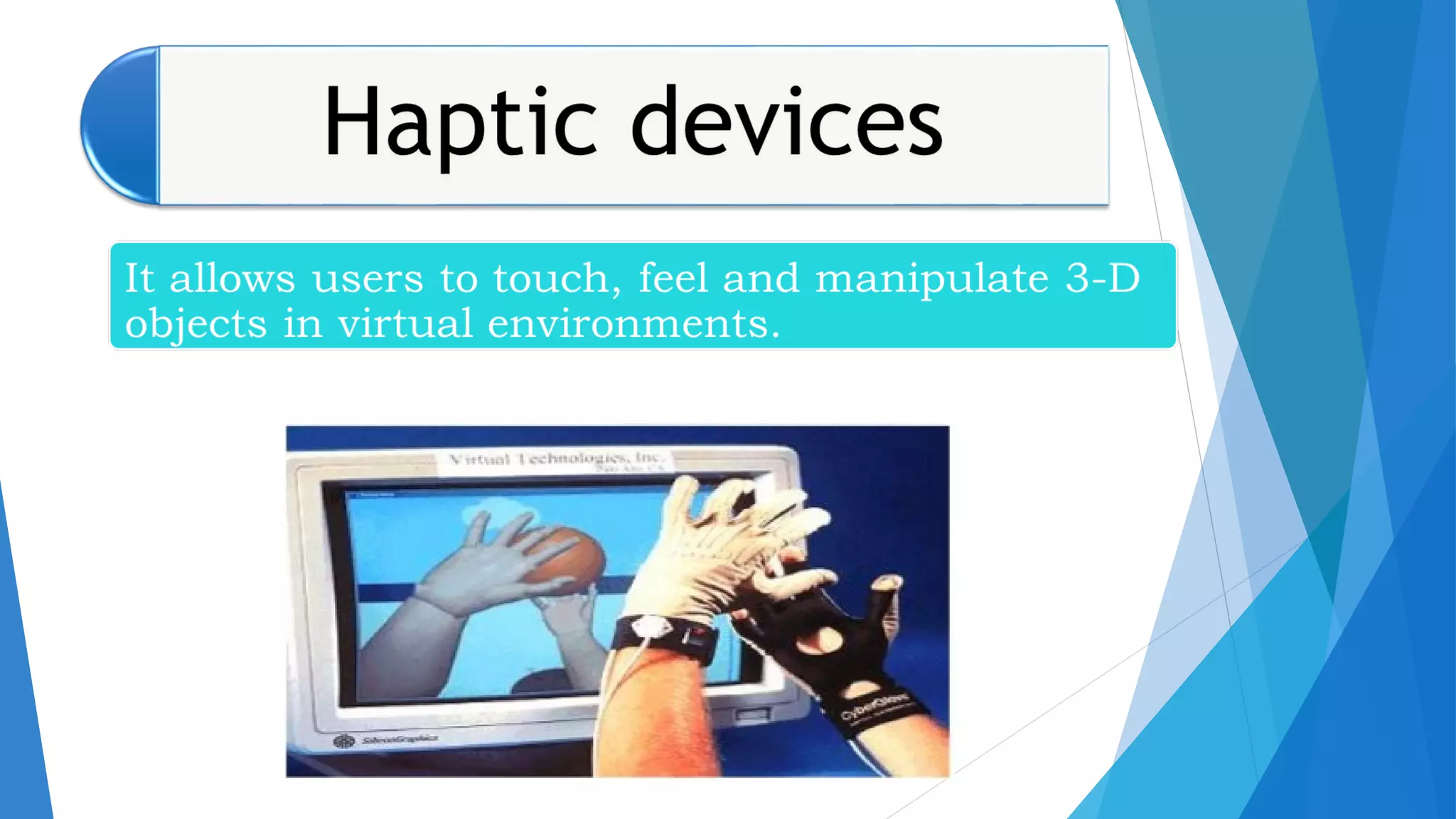
 A haptic device gives people a sense of touch with
computer-generated environments, so that when
virtual objects are touched, they seem real and
tangible.
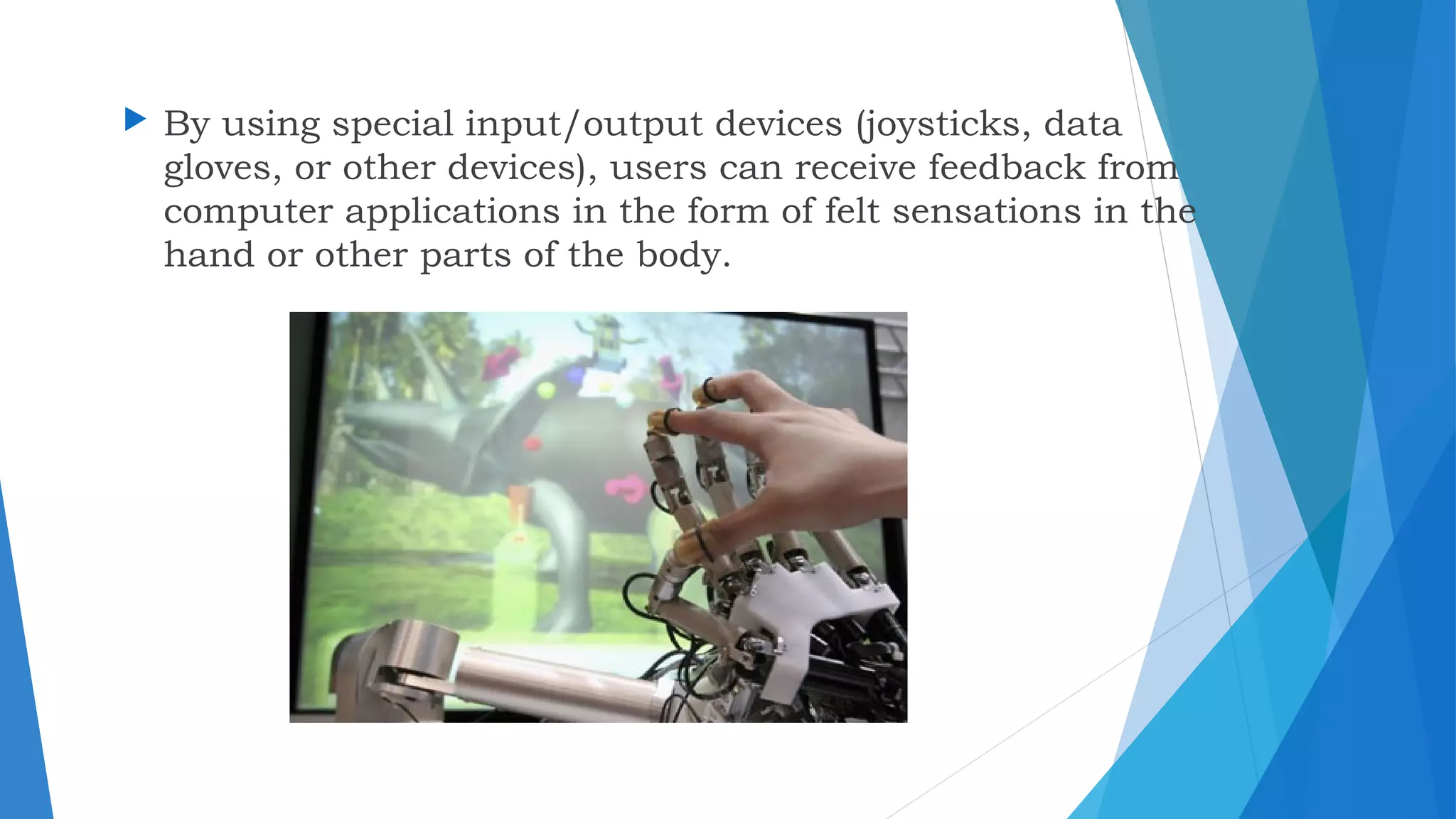
 By using special input/output devices (joysticks, data
gloves, or other devices), users can receive feedback from
computer applications in the form of felt sensations in the
hand or other parts of the body. 
• Virtual reality is a form of human-computer interaction providing
a virtual environment that one can explore through direct
interaction with our senses.
• User should be able to touch the virtual object and feel a response
from it.
• In order to complete the imitation of the real world one should be
able to interact with the environment and get a feedback.
• This feedback is called Haptic Feedback.
Continued…
  Haptics is implemented through different type of
interactions with a haptic device communicating with
the computer.
 These interactions can be categorized into the
different types of touch sensations a user can receive:
 Tactile Feedback: Refers to the sensations felt by the
skin. It allows the user to feel things such as the
texture of surfaces, temperature and vibration.
 Force Feedback: It reproduces the directional forces
that can result from solid boundaries. E.g. the weight
of virtual objects, inertia, etc.
How it works..?
Continued…
Continued…
 Common interface devices like mouse and joystick
are only input devices. No feedback.
 Haptic devices are input-output devices where
output is in the form of sensation .
COMMONLY USED HAPTIC DEVICES
1.PHANTOM
 Provides a 3D touch to the virtual objects.
When the user move his finger, then he could really
feel the shape and size of the virtual 3D object that has
been already programmed.
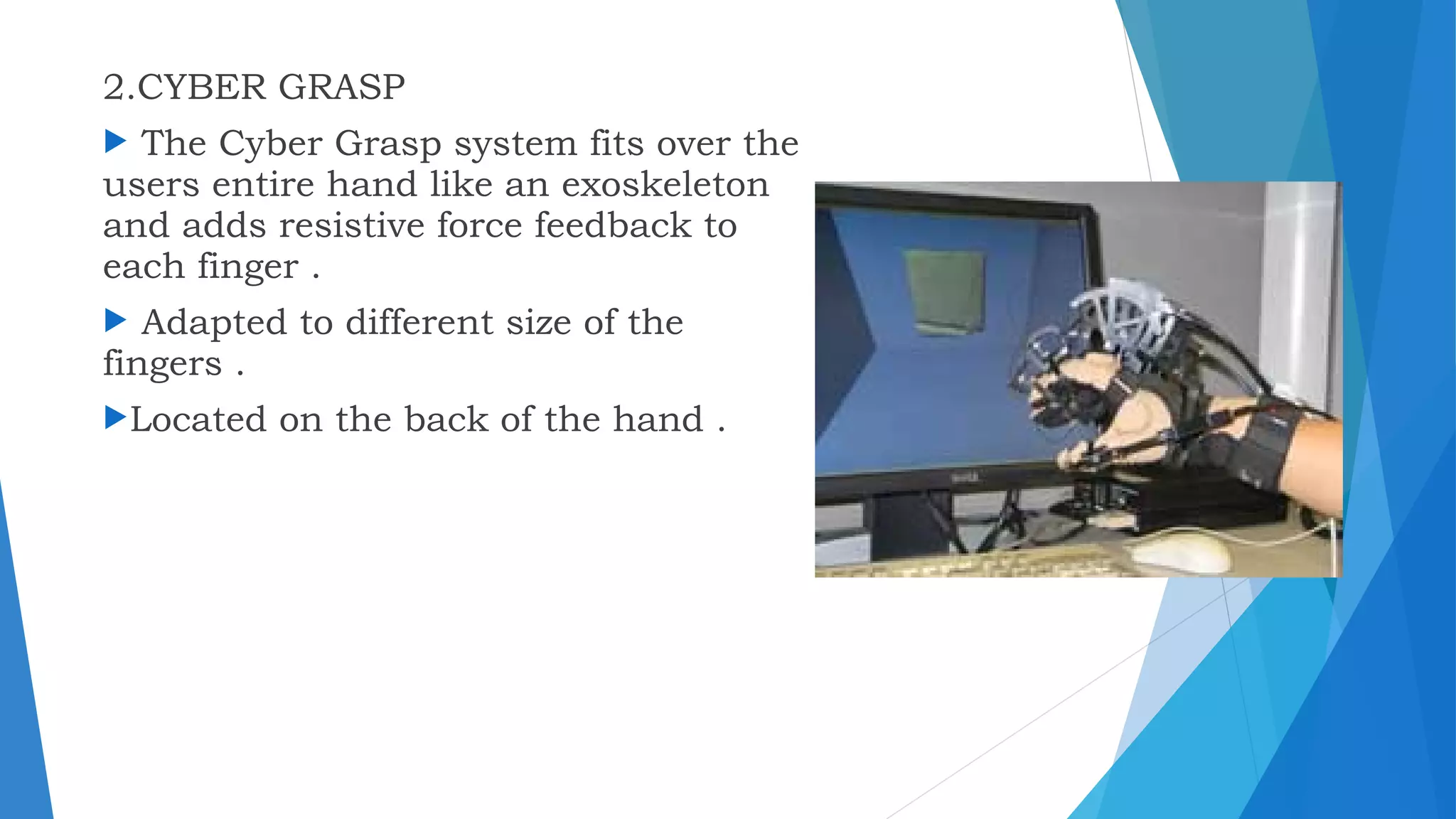
2.CYBER GRASP
 The Cyber Grasp system fits over the
users entire hand like an exoskeleton
and adds resistive force feedback to
each finger .
 Adapted to different size of the
fingers .
Located on the back of the hand .
MEDICAL APPLICATIONS
 Sense of touch is crucial for medical training.
 Various haptic interfaces for medical
simulation may prove especially useful for
training.
COMPUTER AND VIDEO GAMES
 Haptic feedback is commonly used in arcade games,
especially racing video games.
 Disney Research, Pittsburg (DRP) has shown off a
revolutionary technology called ‘Surround Haptics’
that can bring real life experience in video gaming
and film watching.
MOBILE DEVICES
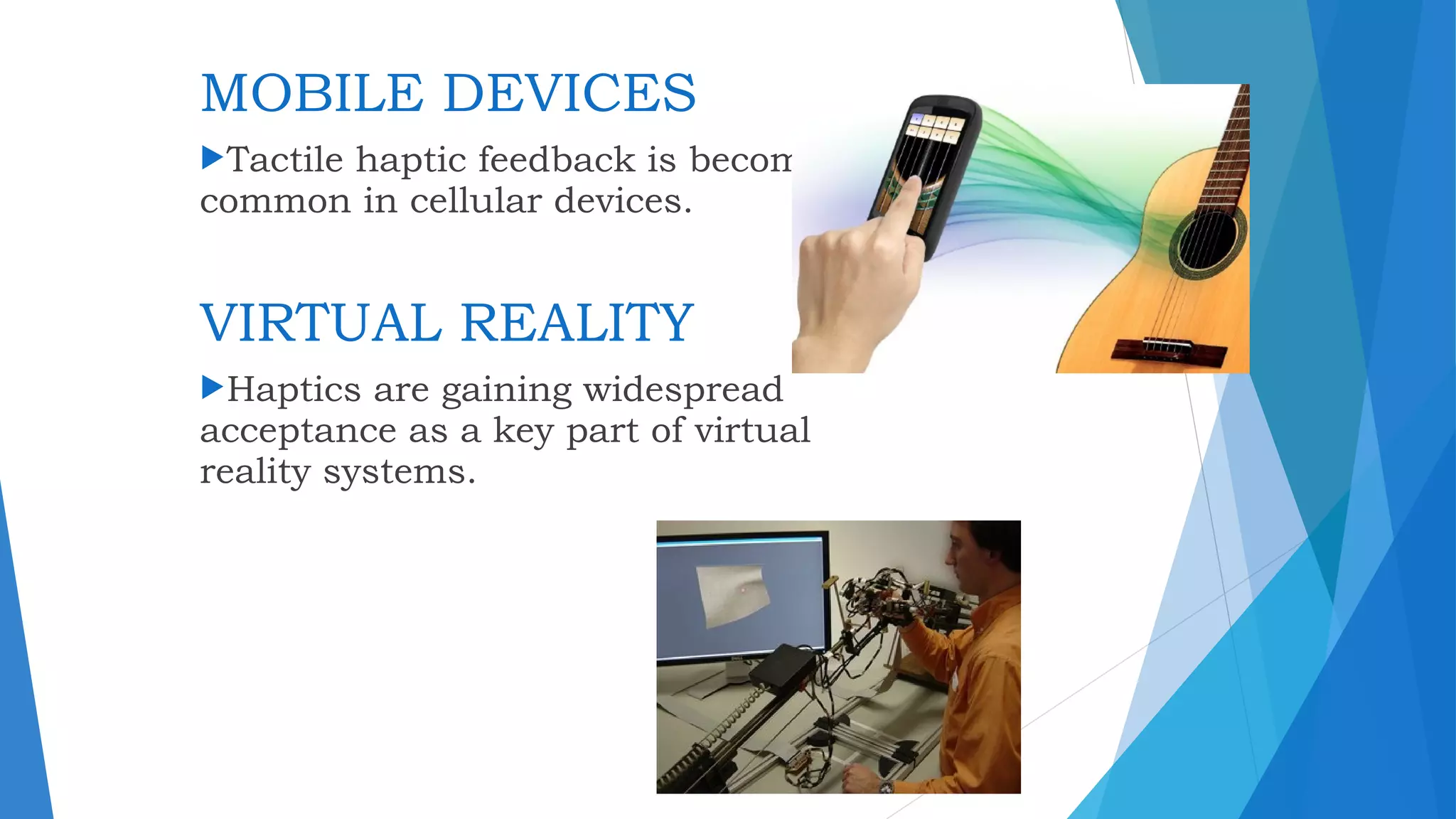
Tactile haptic feedback is becoming
common in cellular devices.
VIRTUAL REALITY
Haptics are gaining widespread
acceptance as a key part of virtual
reality systems.
ARTS AND DESIGN
Haptics is used in virtual arts, such as
sound synthesis or graphic design and
animation.
ROBOTICS-
Haptic technology is also widely used in
teleoperation, or telerobotics.
FUTURE VISION
HOLOGRAPHIC INTERACTION
The feedback allows the user to interact with a hologram and
actually receive tactile response using radiation pressure.
MEDICAL APPLICATION
Use of a central workstation from which surgeons would perform
operations in various locations; with machine setup and patient
preparation performed by local nursing staff.
TEXTILE INDUSTRY
 User could study and feel the texture and quality of material
during the sale of cloth through internet.
Y.Vaishnavi
14311A1202
IT - A

Haptics ppt

  • 2.
    What is it…? Haptic technology is a tactile feedback technology which takes advantage of the sense of touch by applying forces, vibrations, or motions to the user.  Haptics (pronounced HAP-tiks) is the science of applying touch (tactile) sensation and control to interaction with computer applications.  A haptic device gives people a sense of touch with computer-generated environments, so that when virtual objects are touched, they seem real and tangible.
  • 3.
     By usingspecial input/output devices (joysticks, data gloves, or other devices), users can receive feedback from computer applications in the form of felt sensations in the hand or other parts of the body. 
  • 4.
    • Virtual realityis a form of human-computer interaction providing a virtual environment that one can explore through direct interaction with our senses. • User should be able to touch the virtual object and feel a response from it. • In order to complete the imitation of the real world one should be able to interact with the environment and get a feedback. • This feedback is called Haptic Feedback.
  • 5.
    Continued…   Haptics isimplemented through different type of interactions with a haptic device communicating with the computer.  These interactions can be categorized into the different types of touch sensations a user can receive:  Tactile Feedback: Refers to the sensations felt by the skin. It allows the user to feel things such as the texture of surfaces, temperature and vibration.  Force Feedback: It reproduces the directional forces that can result from solid boundaries. E.g. the weight of virtual objects, inertia, etc.
  • 6.
  • 8.
  • 9.
  • 11.
     Common interfacedevices like mouse and joystick are only input devices. No feedback.  Haptic devices are input-output devices where output is in the form of sensation .
  • 12.
    COMMONLY USED HAPTICDEVICES 1.PHANTOM  Provides a 3D touch to the virtual objects. When the user move his finger, then he could really feel the shape and size of the virtual 3D object that has been already programmed.
  • 13.
    2.CYBER GRASP  TheCyber Grasp system fits over the users entire hand like an exoskeleton and adds resistive force feedback to each finger .  Adapted to different size of the fingers . Located on the back of the hand .
  • 15.
    MEDICAL APPLICATIONS  Senseof touch is crucial for medical training.  Various haptic interfaces for medical simulation may prove especially useful for training.
  • 16.
    COMPUTER AND VIDEOGAMES  Haptic feedback is commonly used in arcade games, especially racing video games.  Disney Research, Pittsburg (DRP) has shown off a revolutionary technology called ‘Surround Haptics’ that can bring real life experience in video gaming and film watching.
  • 17.
    MOBILE DEVICES Tactile hapticfeedback is becoming common in cellular devices. VIRTUAL REALITY Haptics are gaining widespread acceptance as a key part of virtual reality systems.
  • 18.
    ARTS AND DESIGN Hapticsis used in virtual arts, such as sound synthesis or graphic design and animation. ROBOTICS- Haptic technology is also widely used in teleoperation, or telerobotics.
  • 20.
    FUTURE VISION HOLOGRAPHIC INTERACTION Thefeedback allows the user to interact with a hologram and actually receive tactile response using radiation pressure. MEDICAL APPLICATION Use of a central workstation from which surgeons would perform operations in various locations; with machine setup and patient preparation performed by local nursing staff. TEXTILE INDUSTRY  User could study and feel the texture and quality of material during the sale of cloth through internet.
  • 21.