

Contents
 Haptic meaning
 Introduction
 Working
 Types of haptics
 Haptics Information
 Applications
 Conclusion
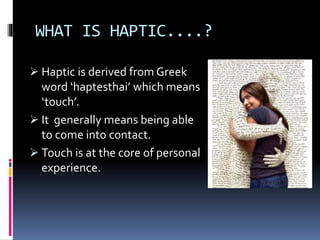
WHAT IS HAPTIC....?
 Haptic is derived from Greek
word ‘haptesthai’ which means
‘touch’.
 It generally means being able
to come into contact.
 Touch is at the core of personal
experience.
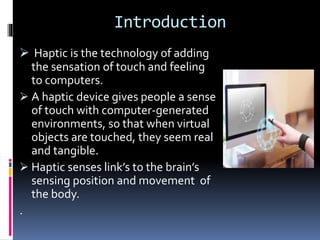
Introduction
 Haptic is the technology of adding
the sensation of touch and feeling
to computers.
 A haptic device gives people a sense
of touch with computer-generated
environments, so that when virtual
objects are touched, they seem real
and tangible.
 Haptic senses link’s to the brain’s
sensing position and movement of
the body.
.
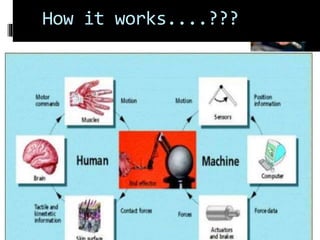
How it works....???
Types of Haptics
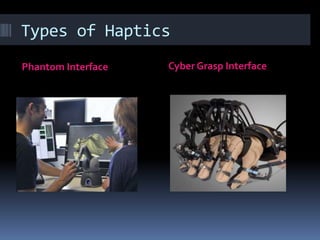
Phantom Interface Cyber Grasp Interface
Phantom Haptic Interface
 It was developed by Sensible technologies.
 It Allows the user to feel the texture and shape of
theVirtual Object.
 providing a 3D touch to the virtual objects
Cyber Grasp Interface
CGI fits over the user’s entire hand like an Exo –
Skeleton.
Adds Resistive to each of the finger.
Haptic Information
Tactile Information-
Refers to the sensations felt by the skin. It allows the
user to feel things such as the texture of surfaces,
temperature and vibration.
Force information-
It reproduces the directional forces that can result
from solid boundaries.
E.g. the weight of virtual objects, inertia, etc..
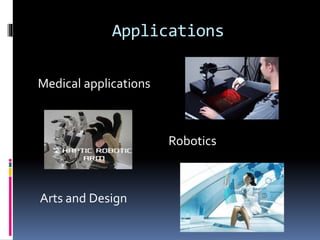
Applications
Medical applications
Robotics
Arts and Design
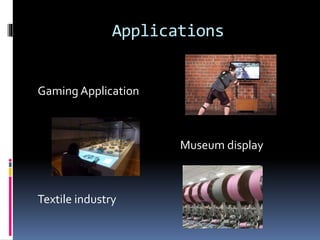
Applications
Gaming Application
Museum display
Textile industry
Conclusion
 Continued implementation of tactile devices
to aid people with disabilities will advance
further
 Currently limited to consumers
 Future generations of mobile devices and
game console accessories will implement
more haptic feedback
Any
Queries

Haptic Technology #Manoj_Rockstar

  • 2.
    Contents  Haptic meaning Introduction  Working  Types of haptics  Haptics Information  Applications  Conclusion
  • 3.
    WHAT IS HAPTIC....? Haptic is derived from Greek word ‘haptesthai’ which means ‘touch’.  It generally means being able to come into contact.  Touch is at the core of personal experience.
  • 4.
    Introduction  Haptic isthe technology of adding the sensation of touch and feeling to computers.  A haptic device gives people a sense of touch with computer-generated environments, so that when virtual objects are touched, they seem real and tangible.  Haptic senses link’s to the brain’s sensing position and movement of the body. .
  • 5.
  • 6.
    Types of Haptics PhantomInterface Cyber Grasp Interface
  • 7.
    Phantom Haptic Interface It was developed by Sensible technologies.  It Allows the user to feel the texture and shape of theVirtual Object.  providing a 3D touch to the virtual objects Cyber Grasp Interface CGI fits over the user’s entire hand like an Exo – Skeleton. Adds Resistive to each of the finger.
  • 8.
    Haptic Information Tactile Information- Refersto the sensations felt by the skin. It allows the user to feel things such as the texture of surfaces, temperature and vibration. Force information- It reproduces the directional forces that can result from solid boundaries. E.g. the weight of virtual objects, inertia, etc..
  • 9.
  • 10.
  • 11.
    Conclusion  Continued implementationof tactile devices to aid people with disabilities will advance further  Currently limited to consumers  Future generations of mobile devices and game console accessories will implement more haptic feedback
  • 13.