Richard Hay
 Overview of upper limb anatomy
 Assessment of upper limb injuries affecting the
hand
 Common injuries seen in ED
◦ Soft tissue
◦ Bones
 Other considerations
 Anatomical terminology
◦ Surfaces
◦ Movements
 Flexor and extensor compartments of the forearm
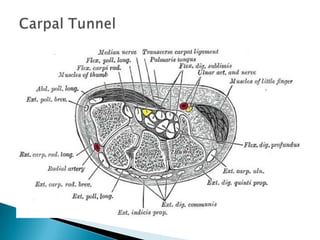
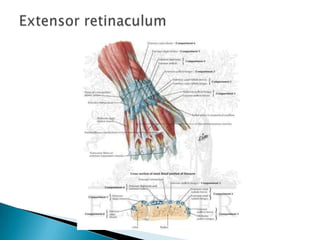
 Flexor and extensor retinaculum
◦ Carpal tunnel
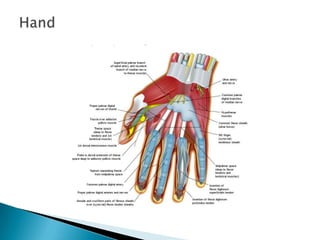
 Hand
 History
◦ Hand dominence / ischaemic time / ADT / occupation /
hobbies / conditions affecting peripheral circulation
 Look
 Feel
 Move
◦ Functional assessment of all muscles / tendons
◦ Assessment of neural function
 Sensory and motor
 Anaesthetise and explore wounds only after
completing neurological assessment
◦ Digital blocks
◦ Wrist blocks
 Lacerations
◦ Irrigation with either N/S or tap water
 Tendon injuries
◦ Surgical repair if >50% (?75% if no triggering)
 FB
◦ XR / US / CT
 Bite wounds
◦ Good evidence for the use of prophylactic Abx
 Nerve injuries
◦ All motor branches
◦ Digital nerves proximal to DIP
 Radial aspect IF / MF
 Ulnar aspect LF
 Both sides of thumb
 Fingertip amputations
◦ Different classification systems
 Nail bed injuries
◦ Subungualhaematoma
 Trephination
 If significant pain
 Antibacterial soaking / dressing
◦ When to explore / repair nail bed
 If nail fold disrupted
 If nail plate is dislodged from nail bed
 If nail plate adherent to nail bed then probably does not require
exploration
 Management primarily non-operative
◦ Closed reduction and splinting
 <2mm articular congruity
 Accept angulation and rotation that does not interfere with
function or cause significant cosmetic deformity
 Shaft #s
◦ Acceptable angulation varies with MC involved and location
of #
 Greater deformity acceptable in 4th/5th MC
 10° for 2nd/3rd
 20° for 4th
 30° for 5th
 Less angulation if # closer to CMC jts
 Neck #s
◦ Acceptable angulation
 10-15° for 2nd/3rd
 45° for 5th
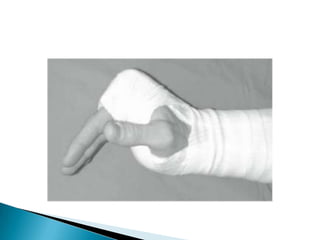
 Immobilisation
◦ Forearm based extending to the PIP dorsally and distal
palmar crease on volar aspect (ie allow motion of IP jts)
 Wrist at 20-30 degrees
 MCP jts at 70-90 degrees
◦ Can buddy strap for rotational control
Hand injury assessment

Hand injury assessment

  • 1.
  • 2.
     Overview ofupper limb anatomy  Assessment of upper limb injuries affecting the hand  Common injuries seen in ED ◦ Soft tissue ◦ Bones  Other considerations
  • 3.
     Anatomical terminology ◦Surfaces ◦ Movements  Flexor and extensor compartments of the forearm  Flexor and extensor retinaculum ◦ Carpal tunnel  Hand
  • 8.
     History ◦ Handdominence / ischaemic time / ADT / occupation / hobbies / conditions affecting peripheral circulation  Look  Feel  Move ◦ Functional assessment of all muscles / tendons ◦ Assessment of neural function  Sensory and motor  Anaesthetise and explore wounds only after completing neurological assessment ◦ Digital blocks ◦ Wrist blocks
  • 9.
     Lacerations ◦ Irrigationwith either N/S or tap water  Tendon injuries ◦ Surgical repair if >50% (?75% if no triggering)  FB ◦ XR / US / CT  Bite wounds ◦ Good evidence for the use of prophylactic Abx
  • 10.
     Nerve injuries ◦All motor branches ◦ Digital nerves proximal to DIP  Radial aspect IF / MF  Ulnar aspect LF  Both sides of thumb  Fingertip amputations ◦ Different classification systems
  • 12.
     Nail bedinjuries ◦ Subungualhaematoma  Trephination  If significant pain  Antibacterial soaking / dressing ◦ When to explore / repair nail bed  If nail fold disrupted  If nail plate is dislodged from nail bed  If nail plate adherent to nail bed then probably does not require exploration
  • 13.
     Management primarilynon-operative ◦ Closed reduction and splinting  <2mm articular congruity  Accept angulation and rotation that does not interfere with function or cause significant cosmetic deformity  Shaft #s ◦ Acceptable angulation varies with MC involved and location of #  Greater deformity acceptable in 4th/5th MC  10° for 2nd/3rd  20° for 4th  30° for 5th  Less angulation if # closer to CMC jts
  • 14.
     Neck #s ◦Acceptable angulation  10-15° for 2nd/3rd  45° for 5th  Immobilisation ◦ Forearm based extending to the PIP dorsally and distal palmar crease on volar aspect (ie allow motion of IP jts)  Wrist at 20-30 degrees  MCP jts at 70-90 degrees ◦ Can buddy strap for rotational control