Influenza A (H1N1) Virus & Pandemic Preparedness Dr Richard Saint Cyr June 25, 2009 [email_address] http://www.myhealthbeijing.com
 
First, What is a Pandemic? An  epidemic  is a disease that is more widespread than expected A pandemic is a  world-wide  epidemic (but not necessarily more severe!) Usually is new virus -- population has  no immunity Severity can  vary
What We Know About Pandemics More than one pandemic  wave  likely Can be  weeks or months  between waves Severity is unpredictable F uture waves could be worse  than first Typically affects  young, healthy adults  (unlike regular seasonal flu)
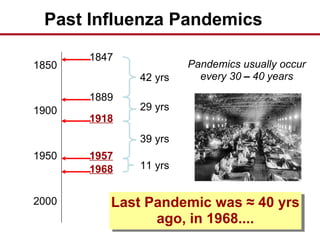
Past Influenza Pandemics 1900 1850 1950 2000 1847 1889 1918 1957 1968 42   yrs 29   yrs 39   yrs 11   yrs Pandemics usually occur every 30   –   40   years Last Pandemic was ≈ 40 yrs ago, in 1968....
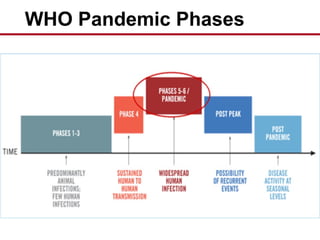
WHO Pandemic Phases
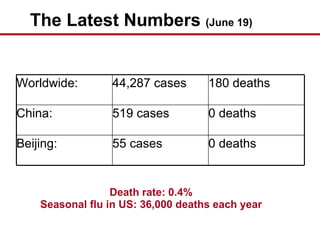
The Latest Numbers  (June 19) Death rate: 0.4% Seasonal flu in US: 36,000 deaths each year 0 deaths 55 cases Beijing: 0 deaths 519 cases China: 180 deaths 44,287 cases Worldwide:
Phase 6  = pandemic phase Community level outbreaks in at least one other country in two different WHO regions  Now: WHO Pandemic Phase 6
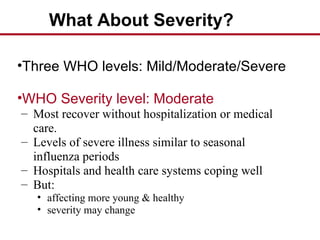
Three WHO levels: Mild/Moderate/Severe WHO Severity level: Moderate Most recover without hospitalization or medical care. Levels of severe illness similar to seasonal influenza periods Hospitals and health care systems coping well But:  affecting more young & healthy severity may change What About Severity?
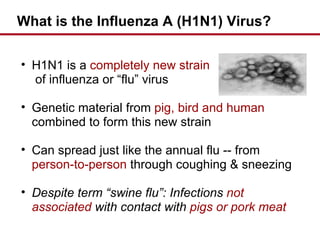
What is the Influenza A (H1N1) Virus? H1N1 is a  completely new strain  of influenza or “flu” virus  Genetic material from  pig, bird and human  combined to form this new strain   Can spread just like the annual flu -- from  person-to-person  through coughing & sneezing Despite term “swine flu”: Infections  not associated  with contact with  pigs or pork meat
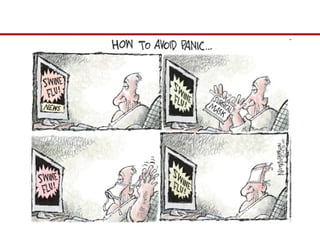
Speaking of pork…
Is Pork Safe? YES! Despite term “swine flu”: Infections  not associated  with contact with  pigs or pork meat This A(H1N1) is a mutated pork virus Always cook pork well
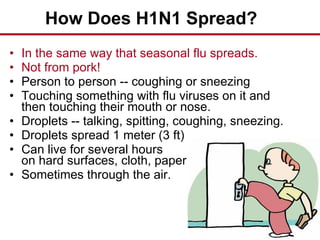
How Does H1N1 Spread?   In the same way that seasonal flu spreads.  Not from pork! Person to person -- coughing or sneezing  Touching something with flu viruses on it and then touching their mouth or nose.  Droplets -- talking, spitting, coughing, sneezing.  Droplets spread 1 meter (3 ft) Can live for several hours  on hard surfaces, cloth, paper.  Sometimes through the air.
Who is at risk of Infection?   Everyone Higher risk: Diabetes; age>65 or <2; pregnant; major chronic illness; immunosupressed New virus = no immunity = more infections Even young and healthy people may develop serious complications and die.  The vast majority of people have a mild, normal flu-like syndrome and recover
What Can You Do?
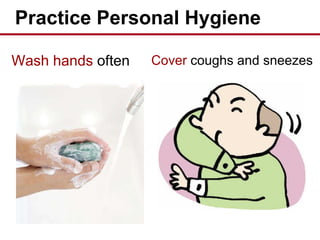
Practice Personal Hygiene Wash hands  often Cover  coughs and sneezes
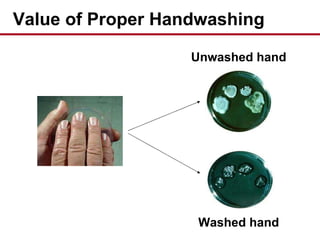
Value of Proper Handwashing Unwashed hand Washed hand
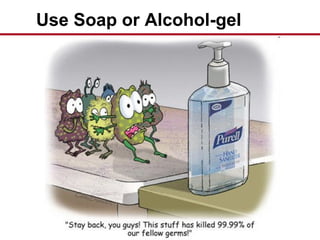
Use Soap or Alcohol-gel
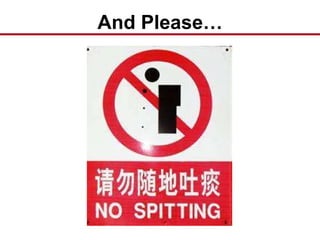
And Please…
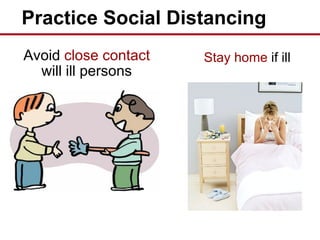
Practice Social Distancing Avoid  close contact  will ill persons Stay home  if ill
Similar  to regular seasonal flu symptoms Fever (often >101 o F), chills, dry cough, sore throat, body aches, headache, extreme tiredness, runny nose/nasal congestion For H1N1, may get  nausea, vomiting, diarrhea Know The H1N1 Symptoms
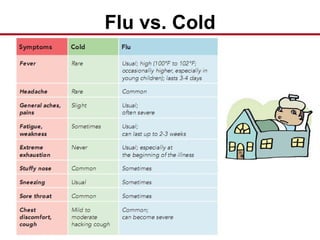
Flu vs. Cold
When Should You Stay Home? FEVER + any cold/flu type symptoms  Family member has or is suspected to have influenza Recent contact (<48 hours) with someone now known to have pandemic influenza.  If you become ill, stay at home for 7 days from the onset of symptoms, and not return until 2 days after the symptoms end Wear a simple surgical mask when meeting other people.
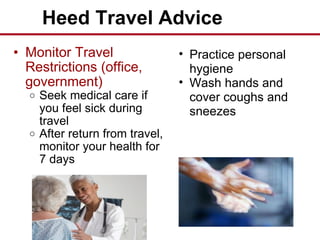
Heed Travel Advice Monitor Travel Restrictions (office, government) Seek medical care if you feel sick during travel  After return from travel, monitor your health for 7 days Practice personal hygiene Wash hands and cover coughs and sneezes
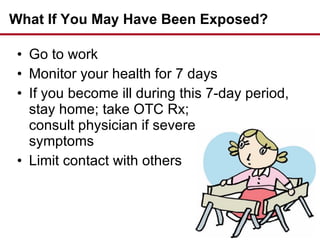
What If You May Have Been Exposed? Go to work Monitor your health for 7 days If you become ill during this 7-day period, stay home; take OTC Rx;  consult physician if severe  symptoms Limit contact with others
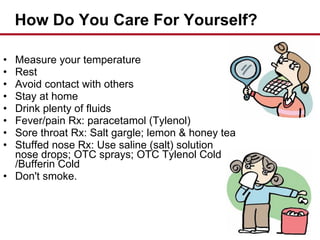
How Do You Care For Yourself? Measure your temperature Rest Avoid contact with others Stay at home Drink plenty of fluids  Fever/pain Rx: paracetamol (Tylenol)  Sore throat Rx: Salt gargle; lemon & honey tea Stuffed nose Rx: Use saline (salt) solution  nose drops; OTC sprays; OTC Tylenol Cold /Bufferin Cold Don't smoke.
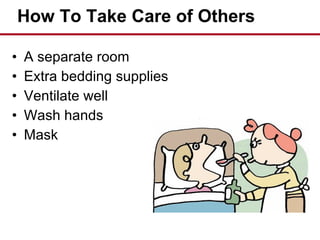
How To Take Care of Others A separate room  Extra bedding supplies Ventilate well Wash hands Mask
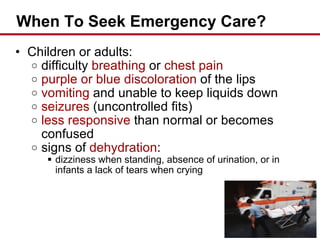
Children or adults: difficulty  breathing  or  chest pain purple or blue discoloration  of the lips vomiting  and unable to keep liquids down seizures  (uncontrolled fits) less responsive  than normal or becomes confused signs of  dehydration :  dizziness when standing, absence of urination, or in infants a lack of tears when crying When To Seek Emergency Care?
What Will Happen At The Local Clinic? Temperatures checked at the door If you have fever + flu-like symptoms or travel exposure: Isolation room Beijing Public Health evaluation  Possible escort to local hospital for rapid H1N1 test
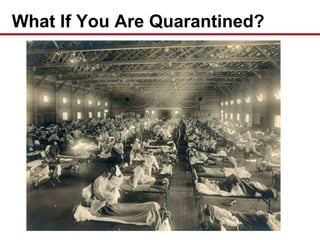
What If You Are Quarantined?
What If You Are Quarantined? Don’t resist – it’s China law Relax  – China’s doing a good job treating patients – and releasing them You can get food delivered
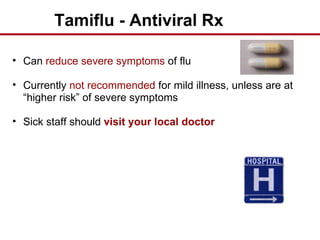
Tamiflu - Antiviral Rx Can  reduce severe symptoms  of flu  Currently  not recommended  for mild illness, unless are at “higher risk” of severe symptoms  Sick staff should  visit your local doctor
Is There A Vaccine? Available starting late summer  – probably not for general public at first (supplies for 1-5%) Seasonal influenza vaccine not helpful for the pandemic influenza May not even be needed for healthy persons Pandemic H1N1 is not severe New vaccine may cause more deaths than prevent Stay tuned
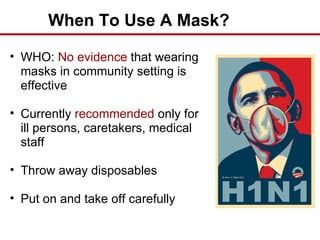
When To Use A Mask? WHO:  No evidence  that wearing masks in community setting is effective Currently  recommended  only for ill persons, caretakers, medical staff Throw away disposables Put on and take off carefully
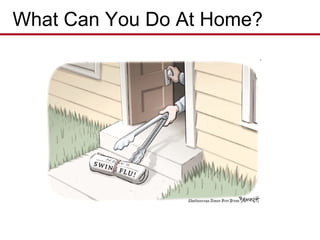
What Can You Do At Home?
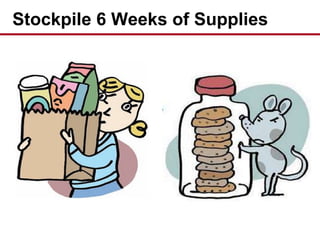
Stockpile 6 Weeks of Supplies
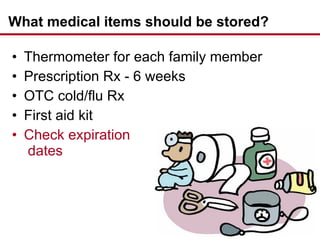
What medical items should be stored? Thermometer for each family member Prescription Rx - 6 weeks OTC cold/flu Rx First aid kit Check expiration  dates
Websites WHO H1N1 Center www.who.int/csr/disease/swineflu/ (English & Chinese) China Ministry of Health www.moh.gov.cn/ (chinese)
Hotlines China CDC  (Center for Diease Control and Prevention) 010-63022935 Beijing CDC 010-64407014