Downloaded 19 times
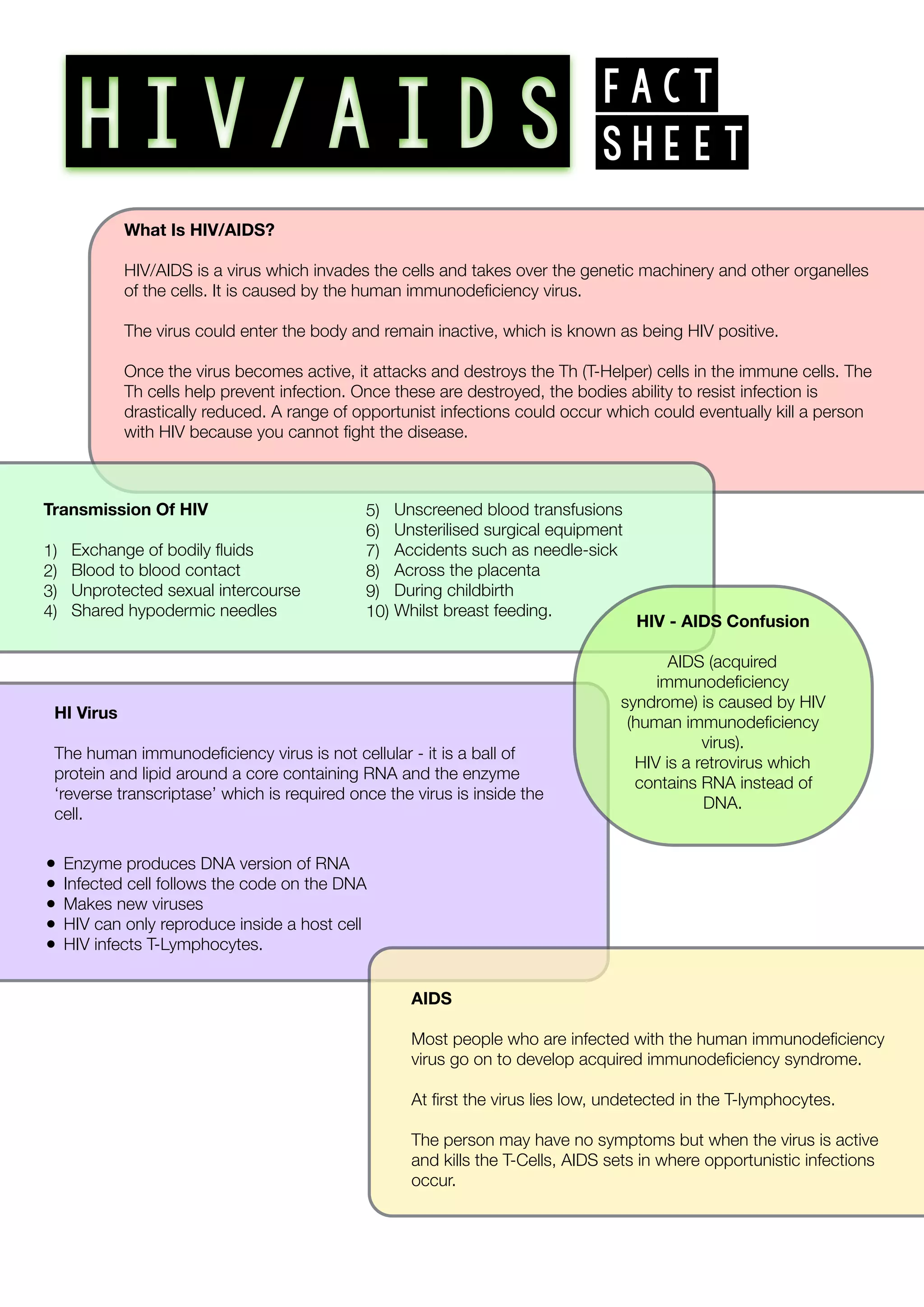

HIV (human immunodeficiency virus) invades and takes over the genetic machinery of the body's cells, primarily targeting T-helper cells essential for immune function. Transmission occurs through bodily fluids, unprotected sexual intercourse, and sharing needles, leading to AIDS (acquired immunodeficiency syndrome) as the virus progresses and compromises the immune system. Individuals may initially be HIV positive and asymptomatic, but disease progression can lead to opportunistic infections and increased mortality risk.


![08 hiv and aids[1]](https://cdn.slidesharecdn.com/ss_thumbnails/08hivandaids1-120111073934-phpapp02-thumbnail.jpg?width=640&height=640&fit=bounds)


