Total Anomalous Pulmonary
Venous Connection
TAPVC is a congenital heart defect in which the
pulmonary veins do not connect normally to the left
atrium. Instead they connect to the right atrium, often
by way of the superior venacava.
Relatively rare, it occurs in about 1 in 17,000 live
births.(Fulton,2008).ASD or foramen ovale always
present. Right to left shunt. Accounts for only 1-2% of
CHD.
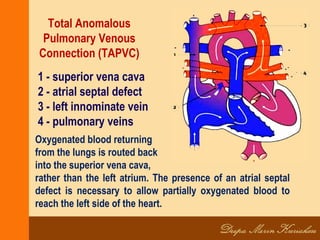
Total Anomalous
Pulmonary Venous
Connection (TAPVC)
1 - superior vena cava
2 - atrial septal defect
3 - left innominate vein
4 - pulmonary veins
Oxygenated blood returning
from the lungs is routed back
into the superior vena cava,
rather than the left atrium. The presence of an atrial septal
defect is necessary to allow partially oxygenated blood to
reach the left side of the heart.
Pathophysiology
Oxygenated blood that would normally enter the
left atrium now enters the right atrium and
passes to the right ventricle. As a result the
pressure on the right side of the heart
increases, leading to hypertrophy. TAPVC is
incompatible with life unless there is an
associated defect present that allows for
shunting of blood from the highly pressured
right side of the heart. A patent foramen ovale
or an ASD is usually present.
Since none of the pulmonary veins connect normally
to the left atrium, the only source of blood to the left
atrium is blood that is shunted from the right atrium
across the defect to the left side of the heart. The
highly oxygenated blood from the lungs completely
mixes with the poorly oxygenated blood returning
from the systemic circulation. This causes an
overload of the right atrium and right ventricle. The
increased blood volume going into the lungs can
lead to pulmonary hypertension and pulmonary
edema.
(Fulton,2008; Miyamoto etal,2011)
Types
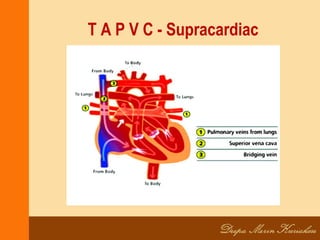
Supracardiac (type 1): The pulmonary veins
drain into the right atrium through the superior
venacava.(50% of cases)
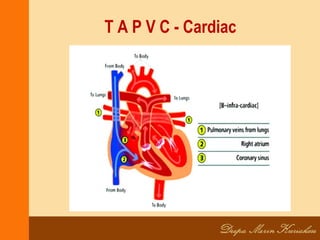
Cardiac (type 2): There are two types: The
pulmonary veins can directly enter into right
atrium.
Or the pulmonary veins can drain into the
coronary sinus.(30% of cases)
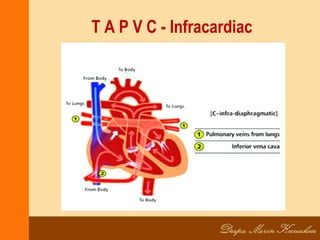
Infracardiac (type 3): The pulmonary veins
drain into the right atrium through the
liver(hepatic) veins and
the inferior vena cava.(15% of cases).
Mixed (type 4): The pulmonary veins split up
and drain partially to more than one of these
options.(5% of cases).
T A P V C - Supracardiac
T A P V C - Cardiac
T A P V C - Infracardiac
Clinical manifestations
Depends on the presence of obstruction to
pulmonary venous drainage and size of ASD.
In supracardiac type without obstruction: mild
cyanosis, CHF, S2 wide and splitted.
Infracardiac type is always obstuctive. Infants
are always symptomatic, Pulmonary
hypertension, cyanosis, tachycardia etc.
Investigations
Chest x-ray:
normal or mildly cardiomegaly
Varying degrees of pulmonary edema
ECG:
With obstruction: RV volume overload
Right axis deviation
RVH
Echocardiograhy: confirms the diagnosis.
Right heart volume overloaded
ASD if present.
R-L atrial level shunting
PulmonaryVein(site of drainage and degree
of obstruction)
Cardiac catheterization : To visualise the
abnormal connection of pulmonary veins
particularly if an obstruction is present.
Treatment options
TAPVR requires open-heart surgery in all
cases. Critically ill newborns will have
surgery immediately. If the child is not
critically ill, doctors may wait up to two
months to perform surgery, depending on
the strength of the child and on the heart
anatomy.
Surgery: In TAPVC, the pulmonary veins despite their
abnormal connections to other veins, all end in a
collection(called a ‘confluence’) at the back of the left
atrium. The surgeon opens the confluence so that the
veins can drain into the left atrium. Then ties off all
the abnormal connections between the pulmonary
veins and other veins, so that blood can follow only
the path to the left atrium. The surgeon also closes
septal defects with tiny patches or stitches, and
closes the PDA. As the child ages, the lining of the
heart grows over the stitches. In a nutshell surgery
is, the pulmonary vein is repositioned to the back of
the left atrium & the ASD is closed.
Nursing management
Preoperatively note history of cyanosis,
tiring easily and difficulty in feeding. Observe
the chest for prominence of right ventricular
impulse & retractions with tachypnea.
Auscultate the heart, noting fixed splitting of
the second heart sound & a murmur. Palpate
the abdomen for hepatomegaly.
Postoperatively, monitor for
dysrhythmias, heart block & persistent heart
failure.
Prognosis
Prognosis without surgery is poor, with
80% of symptomatic infants dying before 1
year of age. There is no long-term palliative
intervention for TAPVD & total correction is
necessary for all cases. The long-term
results for survivors of the surgery are
generally good.
Late death following repair is uncommon
but, when it occurs, it is often caused by
intimal fibroplasia of the pulmonary veins
away from the anastamosis.
Thank
You…
Deepa Merin
Kuriakose
Assistant Professor
Govt. College of
Nursing, Kottayam

T a p v c

  • 2.
    Total Anomalous Pulmonary VenousConnection TAPVC is a congenital heart defect in which the pulmonary veins do not connect normally to the left atrium. Instead they connect to the right atrium, often by way of the superior venacava. Relatively rare, it occurs in about 1 in 17,000 live births.(Fulton,2008).ASD or foramen ovale always present. Right to left shunt. Accounts for only 1-2% of CHD.
  • 3.
    Total Anomalous Pulmonary Venous Connection(TAPVC) 1 - superior vena cava 2 - atrial septal defect 3 - left innominate vein 4 - pulmonary veins Oxygenated blood returning from the lungs is routed back into the superior vena cava, rather than the left atrium. The presence of an atrial septal defect is necessary to allow partially oxygenated blood to reach the left side of the heart.
  • 4.
    Pathophysiology Oxygenated blood thatwould normally enter the left atrium now enters the right atrium and passes to the right ventricle. As a result the pressure on the right side of the heart increases, leading to hypertrophy. TAPVC is incompatible with life unless there is an associated defect present that allows for shunting of blood from the highly pressured right side of the heart. A patent foramen ovale or an ASD is usually present.
  • 5.
    Since none ofthe pulmonary veins connect normally to the left atrium, the only source of blood to the left atrium is blood that is shunted from the right atrium across the defect to the left side of the heart. The highly oxygenated blood from the lungs completely mixes with the poorly oxygenated blood returning from the systemic circulation. This causes an overload of the right atrium and right ventricle. The increased blood volume going into the lungs can lead to pulmonary hypertension and pulmonary edema. (Fulton,2008; Miyamoto etal,2011)
  • 6.
    Types Supracardiac (type 1):The pulmonary veins drain into the right atrium through the superior venacava.(50% of cases) Cardiac (type 2): There are two types: The pulmonary veins can directly enter into right atrium. Or the pulmonary veins can drain into the coronary sinus.(30% of cases)
  • 7.
    Infracardiac (type 3):The pulmonary veins drain into the right atrium through the liver(hepatic) veins and the inferior vena cava.(15% of cases). Mixed (type 4): The pulmonary veins split up and drain partially to more than one of these options.(5% of cases).
  • 8.
    T A PV C - Supracardiac
  • 9.
    T A PV C - Cardiac
  • 10.
    T A PV C - Infracardiac
  • 11.
    Clinical manifestations Depends onthe presence of obstruction to pulmonary venous drainage and size of ASD. In supracardiac type without obstruction: mild cyanosis, CHF, S2 wide and splitted. Infracardiac type is always obstuctive. Infants are always symptomatic, Pulmonary hypertension, cyanosis, tachycardia etc.
  • 12.
    Investigations Chest x-ray: normal ormildly cardiomegaly Varying degrees of pulmonary edema ECG: With obstruction: RV volume overload Right axis deviation RVH
  • 13.
    Echocardiograhy: confirms thediagnosis. Right heart volume overloaded ASD if present. R-L atrial level shunting PulmonaryVein(site of drainage and degree of obstruction) Cardiac catheterization : To visualise the abnormal connection of pulmonary veins particularly if an obstruction is present.
  • 14.
    Treatment options TAPVR requiresopen-heart surgery in all cases. Critically ill newborns will have surgery immediately. If the child is not critically ill, doctors may wait up to two months to perform surgery, depending on the strength of the child and on the heart anatomy.
  • 15.
    Surgery: In TAPVC,the pulmonary veins despite their abnormal connections to other veins, all end in a collection(called a ‘confluence’) at the back of the left atrium. The surgeon opens the confluence so that the veins can drain into the left atrium. Then ties off all the abnormal connections between the pulmonary veins and other veins, so that blood can follow only the path to the left atrium. The surgeon also closes septal defects with tiny patches or stitches, and closes the PDA. As the child ages, the lining of the heart grows over the stitches. In a nutshell surgery is, the pulmonary vein is repositioned to the back of the left atrium & the ASD is closed.
  • 16.
    Nursing management Preoperatively notehistory of cyanosis, tiring easily and difficulty in feeding. Observe the chest for prominence of right ventricular impulse & retractions with tachypnea. Auscultate the heart, noting fixed splitting of the second heart sound & a murmur. Palpate the abdomen for hepatomegaly. Postoperatively, monitor for dysrhythmias, heart block & persistent heart failure.
  • 17.
    Prognosis Prognosis without surgeryis poor, with 80% of symptomatic infants dying before 1 year of age. There is no long-term palliative intervention for TAPVD & total correction is necessary for all cases. The long-term results for survivors of the surgery are generally good.
  • 18.
    Late death followingrepair is uncommon but, when it occurs, it is often caused by intimal fibroplasia of the pulmonary veins away from the anastamosis.
  • 19.