Groups in the Organization
Working in teams
Amjad Idries
Human Relations School
Formal groups functions:
1. Share resources to achieve tasks,
2. Solve problems and take decisions,
3. Ideas and solutions,
4. Communicate and coordinate,
5. Negotiate and resolve conflicts,
6. Socialization and networking,
7. Training,
8. Involvement
Informal groups functions:
1. Individual needs,
2. Sense of identity,
3. Self-esteem,
4. Networking,
5. Reducing insecurity and powerlessness,
6. Supporting individual objectives,
7. Supporting common objectives
Factors determined group effectiveness:
• 1/ skills required for the task,
• 2/ relations b/w the members of the group,
• 3/compatibility,
• 4/contribution of members,
• 5/size of the group,
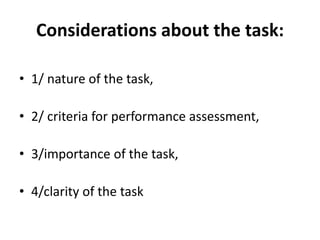
Considerations about the task:
• 1/ nature of the task,
• 2/ criteria for performance assessment,
• 3/importance of the task,
• 4/clarity of the task
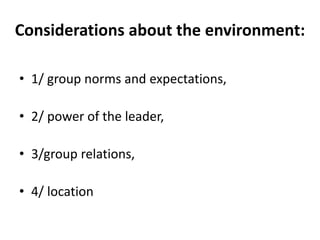
Considerations about the environment:
• 1/ group norms and expectations,
• 2/ power of the leader,
• 3/group relations,
• 4/ location
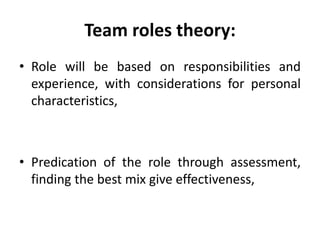
Team roles theory:
• Role will be based on responsibilities and
experience, with considerations for personal
characteristics,
• Predication of the role through assessment,
finding the best mix give effectiveness,
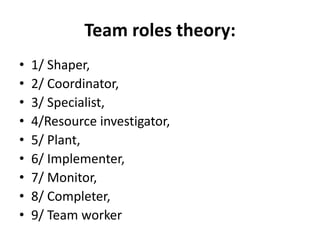
Team roles theory:
• 1/ Shaper,
• 2/ Coordinator,
• 3/ Specialist,
• 4/Resource investigator,
• 5/ Plant,
• 6/ Implementer,
• 7/ Monitor,
• 8/ Completer,
• 9/ Team worker
Difference b/w team & group:
• Group: to share information, to support, no
need for collective work, output is the sum of
individuals’ works, no synergy, affected by
(conflicts, poor communication, avoidance of
responsibilities)
• Team: committed to common purpose, need
collective efforts, common performance goal,
accountability, affected by (conflicts, poor
communication, avoidance of responsibilities)
Life cycle of the team:
• 1/Forming,
• 2/Storming,
• 3/ Norming ,
• 4/ Performing
Group think:
• Happened when cohesion and conformity
increased over personal thinking,
• Support from the individuals,
• Limited alternatives (seen unattractive),
• No seeking for additional information
(dissolve by forming subgroups),
• Close work is important,
• Shared values,
• Perfect in crisis and stress situations

Groups in the organization

  • 1.
    Groups in theOrganization Working in teams Amjad Idries
  • 2.
  • 3.
    Formal groups functions: 1.Share resources to achieve tasks, 2. Solve problems and take decisions, 3. Ideas and solutions, 4. Communicate and coordinate, 5. Negotiate and resolve conflicts, 6. Socialization and networking, 7. Training, 8. Involvement
  • 4.
    Informal groups functions: 1.Individual needs, 2. Sense of identity, 3. Self-esteem, 4. Networking, 5. Reducing insecurity and powerlessness, 6. Supporting individual objectives, 7. Supporting common objectives
  • 5.
    Factors determined groupeffectiveness: • 1/ skills required for the task, • 2/ relations b/w the members of the group, • 3/compatibility, • 4/contribution of members, • 5/size of the group,
  • 6.
    Considerations about thetask: • 1/ nature of the task, • 2/ criteria for performance assessment, • 3/importance of the task, • 4/clarity of the task
  • 7.
    Considerations about theenvironment: • 1/ group norms and expectations, • 2/ power of the leader, • 3/group relations, • 4/ location
  • 8.
    Team roles theory: •Role will be based on responsibilities and experience, with considerations for personal characteristics, • Predication of the role through assessment, finding the best mix give effectiveness,
  • 9.
    Team roles theory: •1/ Shaper, • 2/ Coordinator, • 3/ Specialist, • 4/Resource investigator, • 5/ Plant, • 6/ Implementer, • 7/ Monitor, • 8/ Completer, • 9/ Team worker
  • 10.
    Difference b/w team& group: • Group: to share information, to support, no need for collective work, output is the sum of individuals’ works, no synergy, affected by (conflicts, poor communication, avoidance of responsibilities) • Team: committed to common purpose, need collective efforts, common performance goal, accountability, affected by (conflicts, poor communication, avoidance of responsibilities)
  • 11.
    Life cycle ofthe team: • 1/Forming, • 2/Storming, • 3/ Norming , • 4/ Performing
  • 12.
    Group think: • Happenedwhen cohesion and conformity increased over personal thinking, • Support from the individuals, • Limited alternatives (seen unattractive), • No seeking for additional information (dissolve by forming subgroups), • Close work is important, • Shared values, • Perfect in crisis and stress situations