Group Dynamics: Theory and
         Practice


           Ari Sudan
         Tiwari, Ph. D.
Objectives


To identify and analyze the processes that impact on group’s:
      Formation
      Development
      Performance
      Interaction among the group members
To acquire the necessary skills to intervene and improve
individual and group performance in an organizational context
To build more successful organizations by applying techniques
that provide positive impact on goal achievement
Groups: Concept


Group means there are
    Two or more individuals

    Interacting and interdependent

    Perceive themselves as members of the group

    Come together to achieve particular shared objectives
    and goals
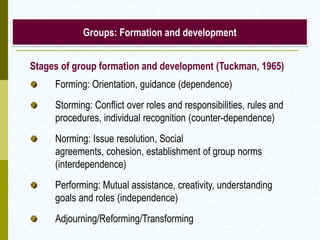
Groups: Formation and development


Stages of group formation and development (Tuckman, 1965)
     Forming: Orientation, guidance (dependence)
     Storming: Conflict over roles and responsibilities, rules and
     procedures, individual recognition (counter-dependence)
     Norming: Issue resolution, Social
     agreements, cohesion, establishment of group norms
     (interdependence)
     Performing: Mutual assistance, creativity, understanding
     goals and roles (independence)
     Adjourning/Reforming/Transforming
Groups: Functions


Task behaviours

Maintenance behaviours

Self-interest behaviours
Task behaviours


Initiating

Information seeking/giving

Clarifying ideas

Brining closure

Consensus testing
Maintenance behaviours


Encouraging
Improving group atmosphere
Harmonizing
Compromising
Gate-keeping
Self-interest behaviours


Dominating/controlling

Blocking

Manipulating

Belittling

Splitting hairs
Group dynamics: Concept


Structure of the group guiding interaction among
group members

The social process by which people interact in a
group environment

The influences of personality, power and behaviour
on the group process
Group dynamics: Exchange theory


Cost involved

Reward received

Outcome (reward-cost)

Comparison level: Societal norms, past
experiences, observations, alternate
interactions

(Reward-Cost)-CL
Factors of group dynamics: Types


Structural factors
      Norms
      Roles
      Status
Functional factors
      Cohesiveness
      Social loafing
      Conflict: Group and inter-personal
Group norms


Social standards and acceptable behaviours
(formal/informal)
Collectively held expectations of group functioning
Provide regularity and predictability to group functioning
Norms differ among groups, communities and societies;
but they all have them
Group norms: Types and classes


     Prescriptive Norms: Expectations within group regarding
     what is prescribed/supposed to be done
     Proscriptive Norms: Expectations within group regarding
     behaviors in which members are not prescribed/supposed to
     engage
Classes of norms
     Performance norms
     Appearance norms
     Arrangement norms
     Allocation of resources norms
Roles


Concept
The set of behaviours and tasks that a group member is expected
to perform because of his or her position in the group
Types
      Assigned roles: Cross-functional/specific
      Emergent roles
Issues in role play
      Role Identity: Attitude and behavior associated with a role
      Role Ambiguity: Unclear job definition
      Role Conflict: Job overlap
Status


Socially defined position or rank given to the group
members

Differences in status characteristics create status
hierarchies within group
Cohesiveness


Degree to which members are:
     Attracted to one another
     Motivated to stay in the group
     Share group goals
     Have common values
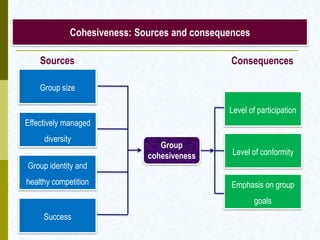
Cohesiveness: Sources and consequences

    Sources                                    Consequences

    Group size

                                              Level of participation
Effectively managed
     diversity
                                Group
                             cohesiveness      Level of conformity
Group identity and
healthy competition                            Emphasis on group
                                                      goals
     Success
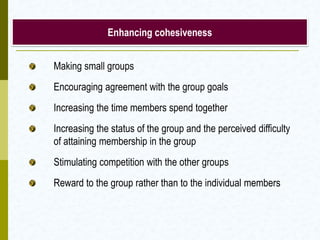
Enhancing cohesiveness


Making small groups
Encouraging agreement with the group goals
Increasing the time members spend together
Increasing the status of the group and the perceived difficulty
of attaining membership in the group
Stimulating competition with the other groups
Reward to the group rather than to the individual members
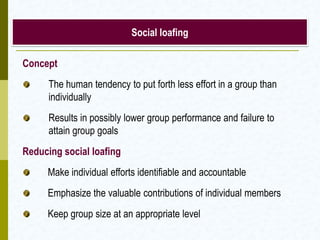
Social loafing

Concept
      The human tendency to put forth less effort in a group than
      individually
      Results in possibly lower group performance and failure to
      attain group goals
Reducing social loafing
     Make individual efforts identifiable and accountable
     Emphasize the valuable contributions of individual members
     Keep group size at an appropriate level
Conflict: Group and inter-personal


Concept
     Scarcity of resources and valued commodities
     Competition and struggle between people of
     groups over:
           Opposing needs and goals
           Ideas, values and attitudes
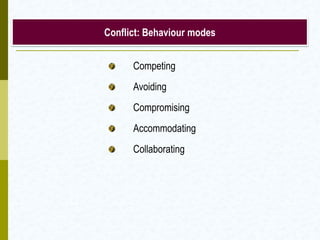
Conflict: Behaviour modes


      Competing
      Avoiding
      Compromising
      Accommodating
      Collaborating
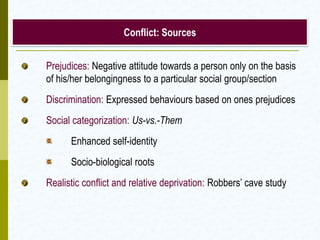
Conflict: Sources


Prejudices: Negative attitude towards a person only on the basis
of his/her belongingness to a particular social group/section
Discrimination: Expressed behaviours based on ones prejudices
Social categorization: Us-vs.-Them
      Enhanced self-identity
      Socio-biological roots
Realistic conflict and relative deprivation: Robbers’ cave study
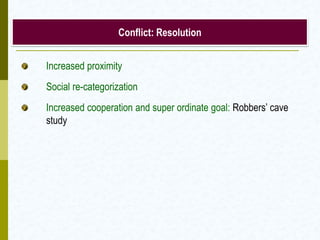
Conflict: Resolution


Increased proximity
Social re-categorization
Increased cooperation and super ordinate goal: Robbers’ cave
study
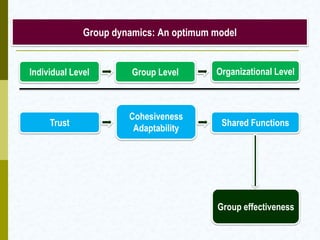
Group dynamics: An optimum model


Individual Level        Group Level      Organizational Level


                       Cohesiveness
     Trust                                Shared Functions
                        Adaptability


                                         Group effectiveness
Group dynamics: Practicing principles


What is the group’s goal
What are the patterns of communication in the group?
What determines how influential each member is?
What method of decision making is used and how effective is it?
Why do/why don’t members challenge each other?
What and how do conflicts arise and how are they managed?
What actions by the group members help/hurt the group
effectiveness?
Thank You

Group Dynamics: Theory and Practice

  • 1.
    Group Dynamics: Theoryand Practice Ari Sudan Tiwari, Ph. D.
  • 2.
    Objectives To identify andanalyze the processes that impact on group’s: Formation Development Performance Interaction among the group members To acquire the necessary skills to intervene and improve individual and group performance in an organizational context To build more successful organizations by applying techniques that provide positive impact on goal achievement
  • 3.
    Groups: Concept Group meansthere are Two or more individuals Interacting and interdependent Perceive themselves as members of the group Come together to achieve particular shared objectives and goals
  • 4.
    Groups: Formation anddevelopment Stages of group formation and development (Tuckman, 1965) Forming: Orientation, guidance (dependence) Storming: Conflict over roles and responsibilities, rules and procedures, individual recognition (counter-dependence) Norming: Issue resolution, Social agreements, cohesion, establishment of group norms (interdependence) Performing: Mutual assistance, creativity, understanding goals and roles (independence) Adjourning/Reforming/Transforming
  • 5.
    Groups: Functions Task behaviours Maintenancebehaviours Self-interest behaviours
  • 6.
  • 7.
    Maintenance behaviours Encouraging Improving groupatmosphere Harmonizing Compromising Gate-keeping
  • 8.
  • 9.
    Group dynamics: Concept Structureof the group guiding interaction among group members The social process by which people interact in a group environment The influences of personality, power and behaviour on the group process
  • 10.
    Group dynamics: Exchangetheory Cost involved Reward received Outcome (reward-cost) Comparison level: Societal norms, past experiences, observations, alternate interactions (Reward-Cost)-CL
  • 11.
    Factors of groupdynamics: Types Structural factors Norms Roles Status Functional factors Cohesiveness Social loafing Conflict: Group and inter-personal
  • 12.
    Group norms Social standardsand acceptable behaviours (formal/informal) Collectively held expectations of group functioning Provide regularity and predictability to group functioning Norms differ among groups, communities and societies; but they all have them
  • 13.
    Group norms: Typesand classes Prescriptive Norms: Expectations within group regarding what is prescribed/supposed to be done Proscriptive Norms: Expectations within group regarding behaviors in which members are not prescribed/supposed to engage Classes of norms Performance norms Appearance norms Arrangement norms Allocation of resources norms
  • 14.
    Roles Concept The set ofbehaviours and tasks that a group member is expected to perform because of his or her position in the group Types Assigned roles: Cross-functional/specific Emergent roles Issues in role play Role Identity: Attitude and behavior associated with a role Role Ambiguity: Unclear job definition Role Conflict: Job overlap
  • 15.
    Status Socially defined positionor rank given to the group members Differences in status characteristics create status hierarchies within group
  • 16.
    Cohesiveness Degree to whichmembers are: Attracted to one another Motivated to stay in the group Share group goals Have common values
  • 17.
    Cohesiveness: Sources andconsequences Sources Consequences Group size Level of participation Effectively managed diversity Group cohesiveness Level of conformity Group identity and healthy competition Emphasis on group goals Success
  • 18.
    Enhancing cohesiveness Making smallgroups Encouraging agreement with the group goals Increasing the time members spend together Increasing the status of the group and the perceived difficulty of attaining membership in the group Stimulating competition with the other groups Reward to the group rather than to the individual members
  • 19.
    Social loafing Concept The human tendency to put forth less effort in a group than individually Results in possibly lower group performance and failure to attain group goals Reducing social loafing Make individual efforts identifiable and accountable Emphasize the valuable contributions of individual members Keep group size at an appropriate level
  • 20.
    Conflict: Group andinter-personal Concept Scarcity of resources and valued commodities Competition and struggle between people of groups over: Opposing needs and goals Ideas, values and attitudes
  • 21.
    Conflict: Behaviour modes Competing Avoiding Compromising Accommodating Collaborating
  • 22.
    Conflict: Sources Prejudices: Negativeattitude towards a person only on the basis of his/her belongingness to a particular social group/section Discrimination: Expressed behaviours based on ones prejudices Social categorization: Us-vs.-Them Enhanced self-identity Socio-biological roots Realistic conflict and relative deprivation: Robbers’ cave study
  • 23.
    Conflict: Resolution Increased proximity Socialre-categorization Increased cooperation and super ordinate goal: Robbers’ cave study
  • 24.
    Group dynamics: Anoptimum model Individual Level Group Level Organizational Level Cohesiveness Trust Shared Functions Adaptability Group effectiveness
  • 25.
    Group dynamics: Practicingprinciples What is the group’s goal What are the patterns of communication in the group? What determines how influential each member is? What method of decision making is used and how effective is it? Why do/why don’t members challenge each other? What and how do conflicts arise and how are they managed? What actions by the group members help/hurt the group effectiveness?
  • 26.