ORGANISATIONAL
BEHAVIOUR

PRESENTATION ON :
GROUPS AND TEAMS

                    Presented by:
                    MRINAL GAUTAM
                    IMBA , 3rd sem.
Topics of discussion:

1.   What are groups?
2.   What are teams?
3.   Importance of groups.
4.   Group formation.
5.   Types of groups.
6.   Group development model.
1. What are groups

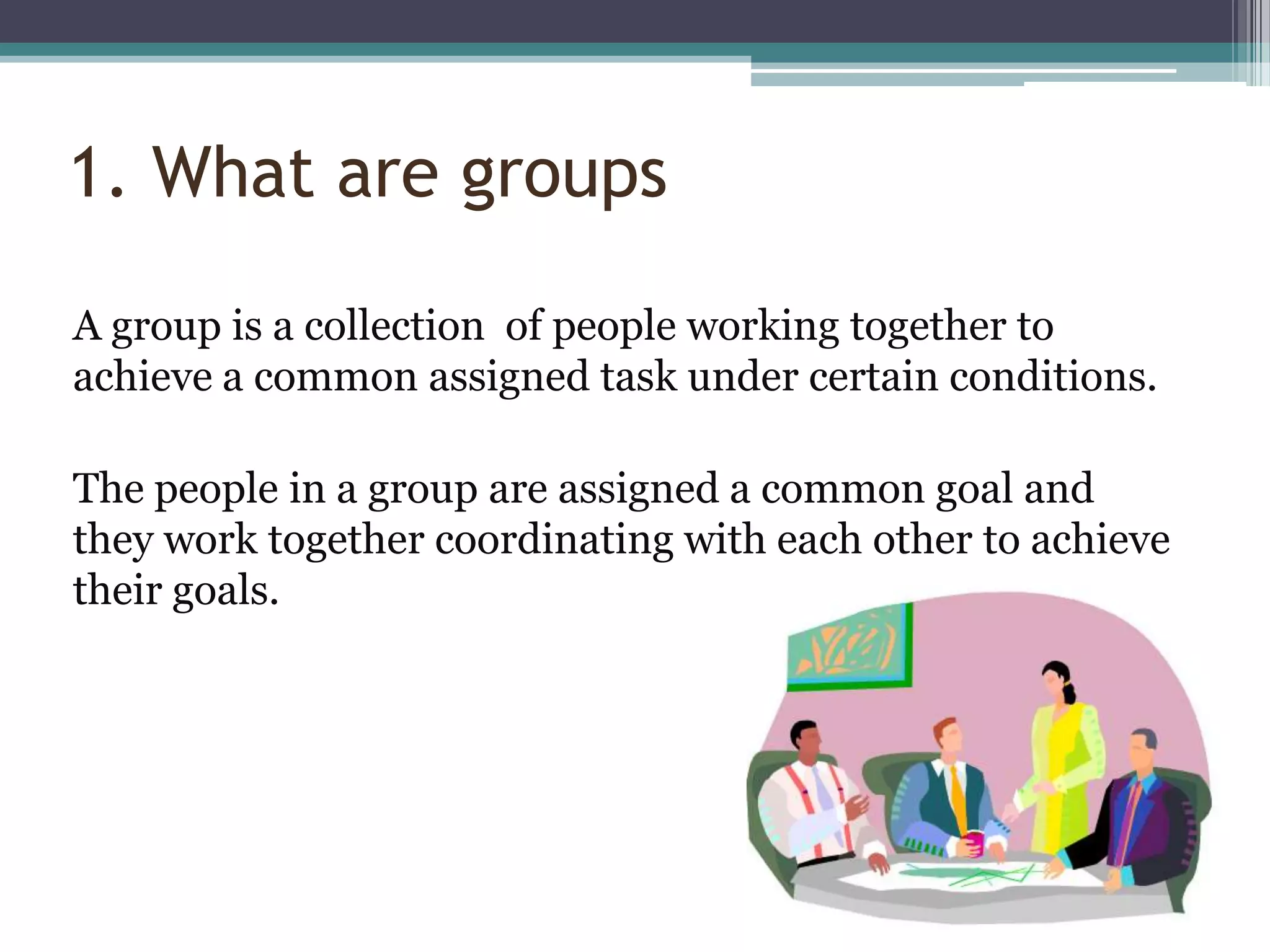
A group is a collection of people working together to
achieve a common assigned task under certain conditions.

The people in a group are assigned a common goal and
they work together coordinating with each other to achieve
their goals.
2. What are teams?
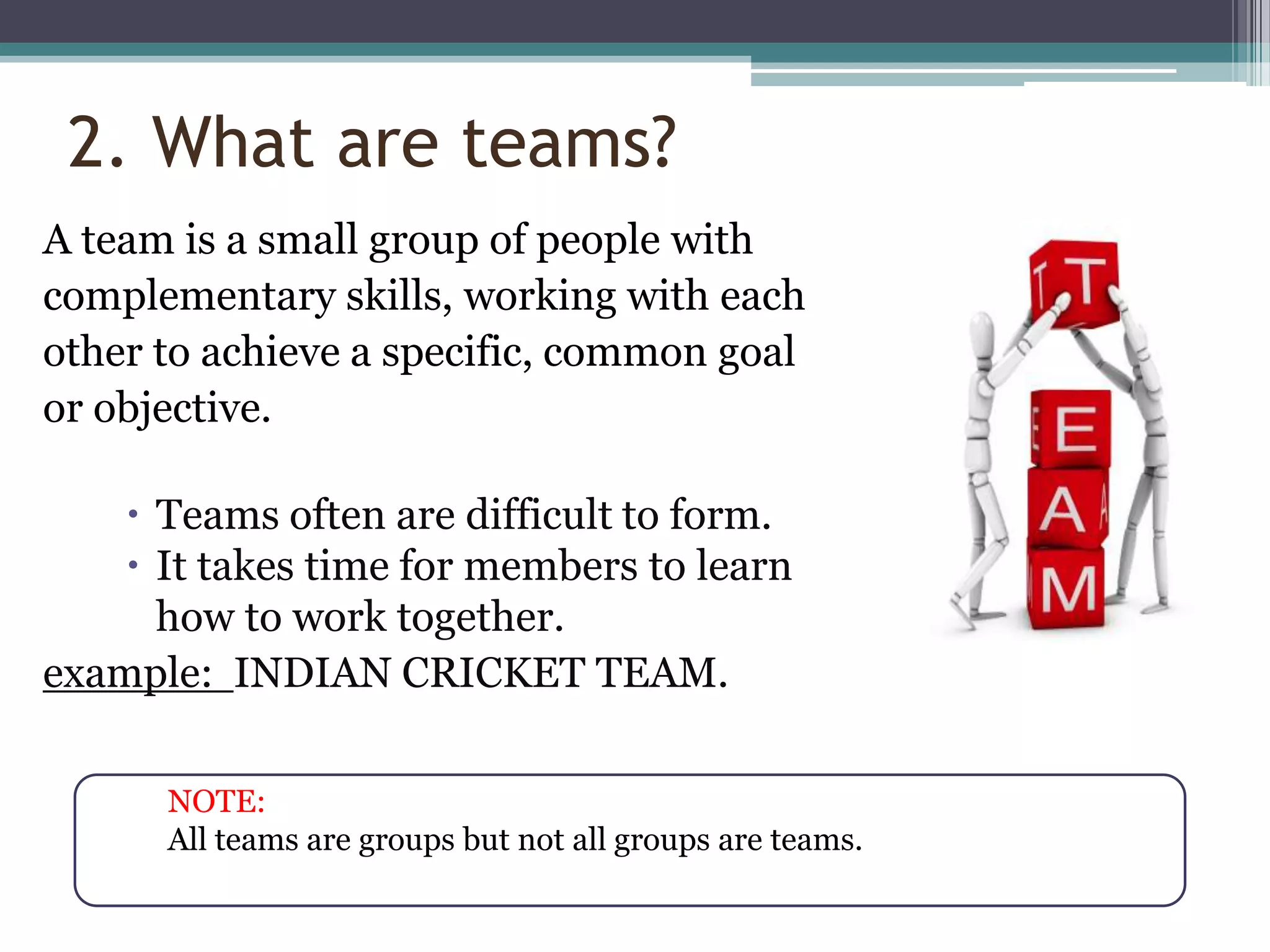
A team is a small group of people with
complementary skills, working with each
other to achieve a specific, common goal
or objective.

     Teams often are difficult to form.
     It takes time for members to learn
      how to work together.
example: INDIAN CRICKET TEAM.

      NOTE:
      All teams are groups but not all groups are teams.
3. Importance of groups
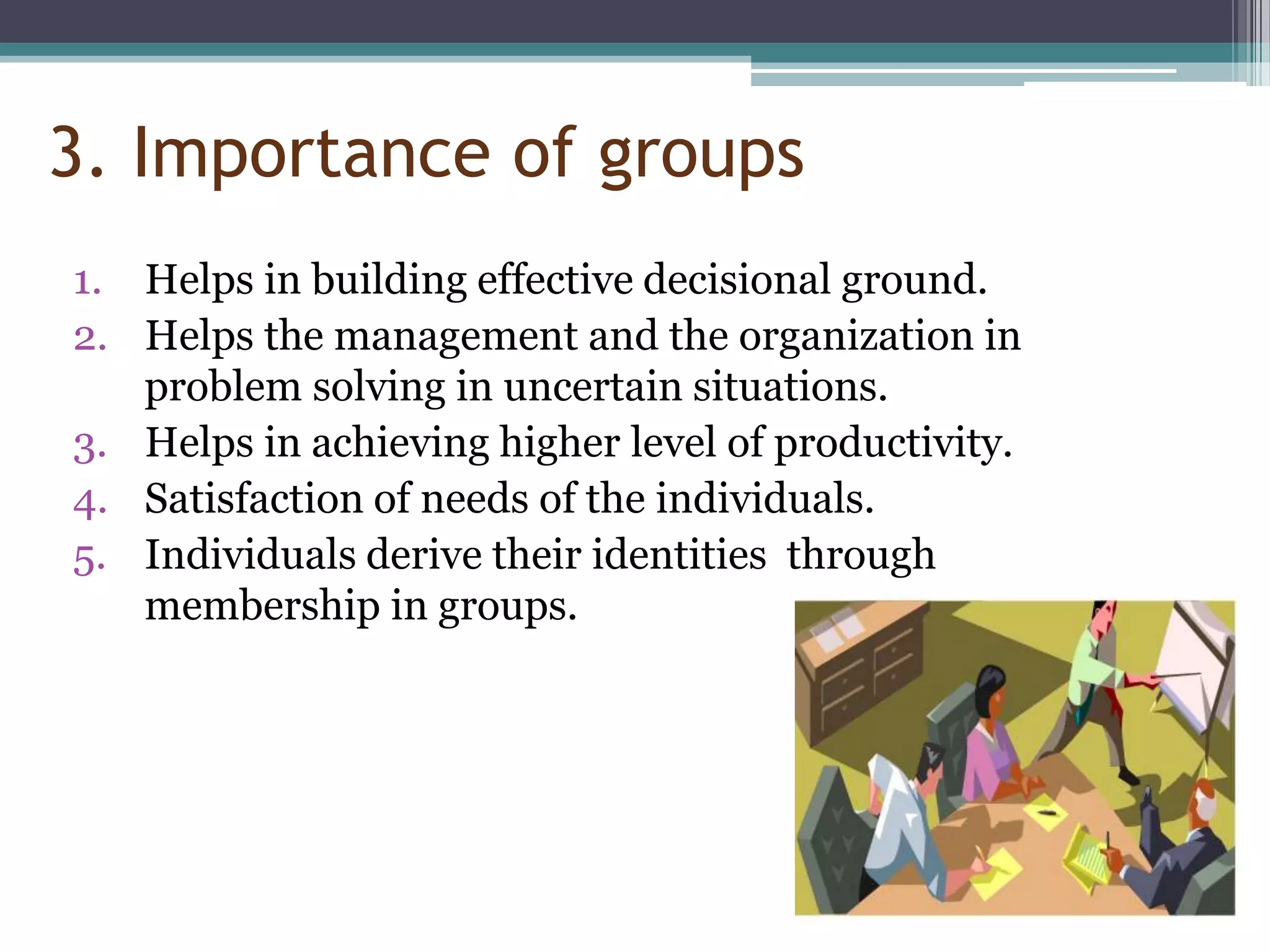
1. Helps in building effective decisional ground.
2. Helps the management and the organization in
   problem solving in uncertain situations.
3. Helps in achieving higher level of productivity.
4. Satisfaction of needs of the individuals.
5. Individuals derive their identities through
   membership in groups.
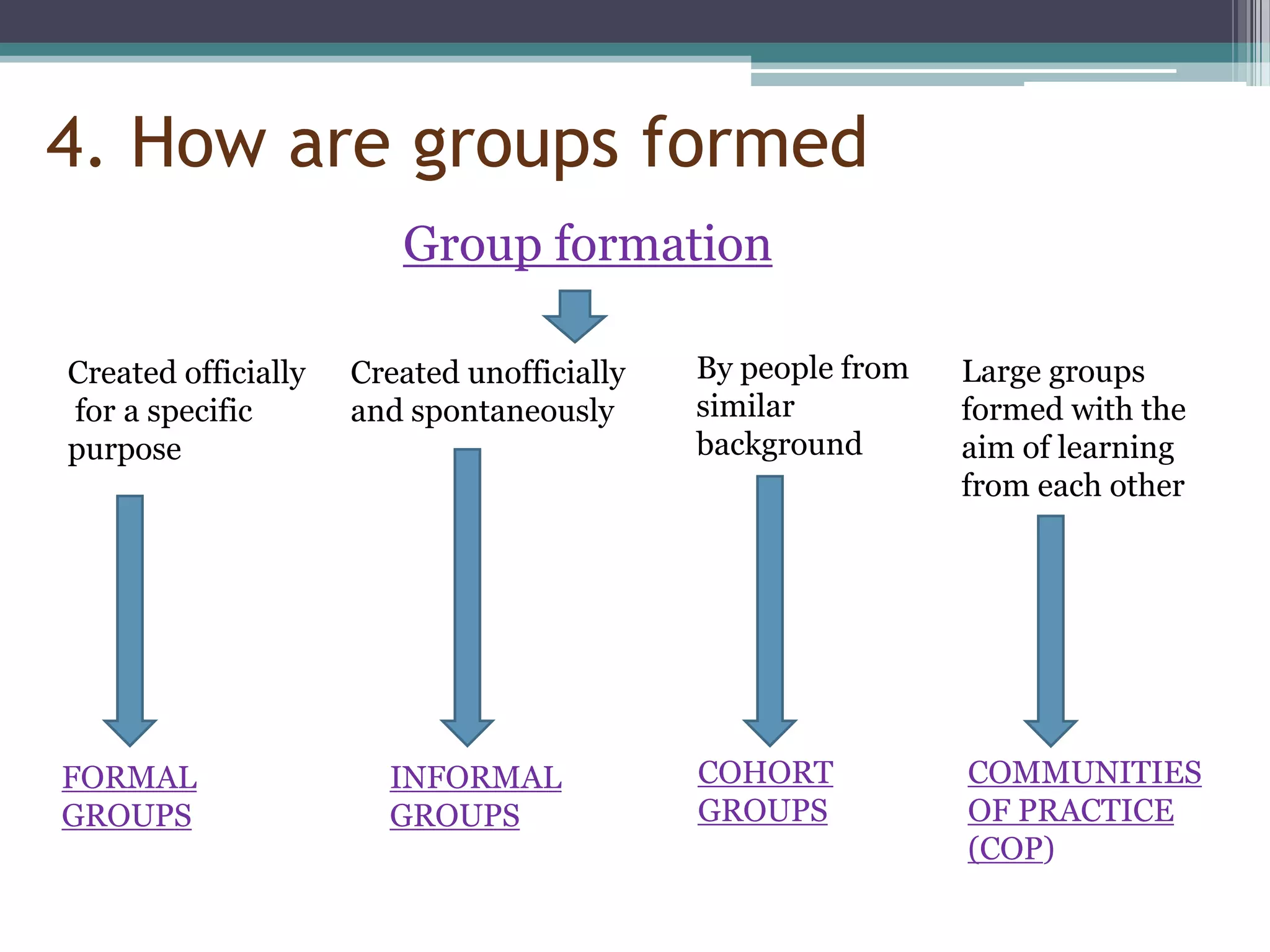
4. How are groups formed
                        Group formation

Created officially   Created unofficially   By people from   Large groups
for a specific       and spontaneously      similar          formed with the
purpose                                     background       aim of learning
                                                             from each other


FORMAL                 INFORMAL             COHORT           COMMUNITIES
GROUPS                 GROUPS               GROUPS           OF PRACTICE
                                                             (COP)
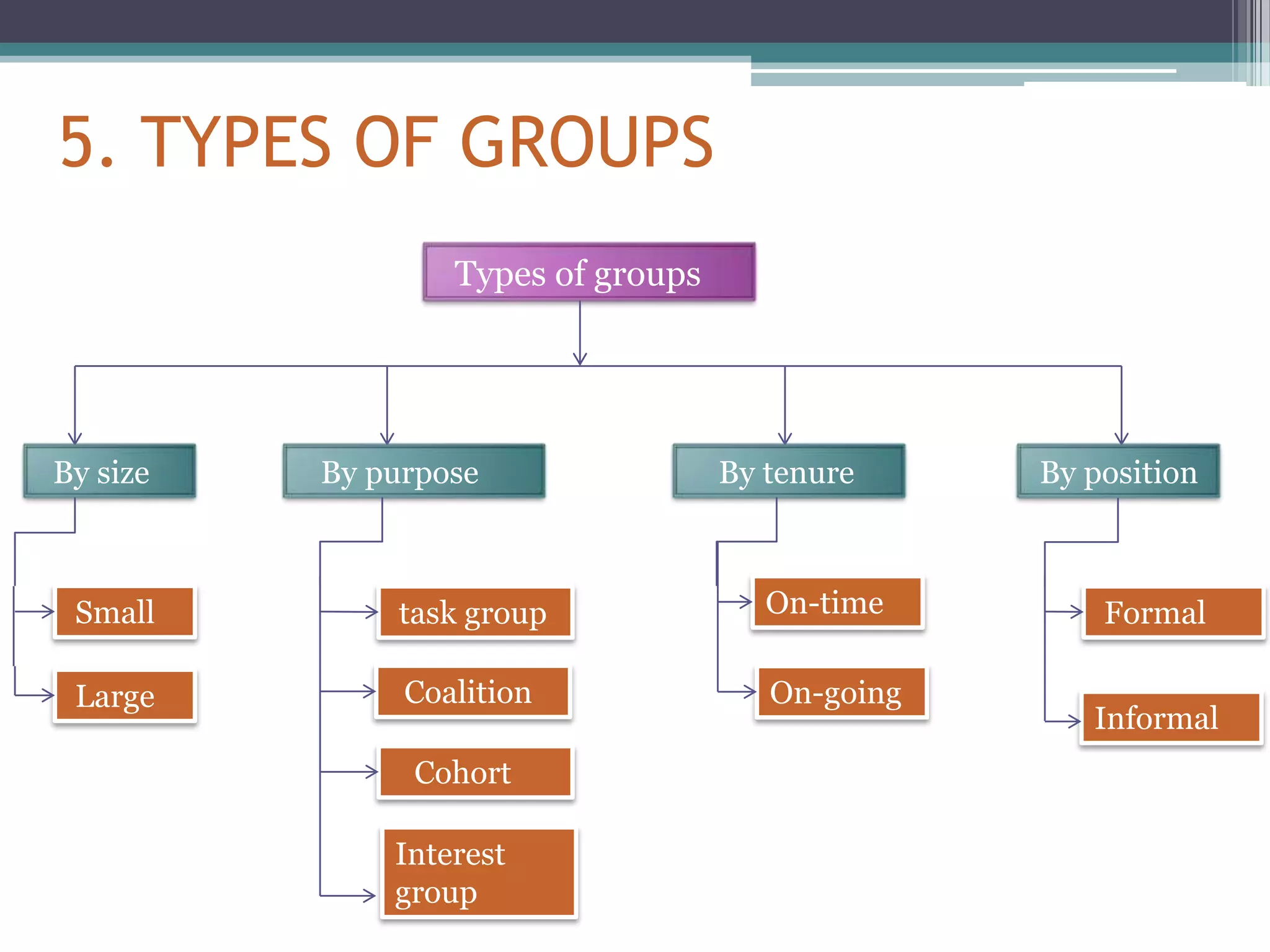
5. TYPES OF GROUPS
                  Types of groups


By size   By purpose                By tenure     By position


 Small        task group               On-time        Formal

 Large         Coalition               On-going
                                                     Informal
               Cohort

              Interest
              group
BY SIZE:
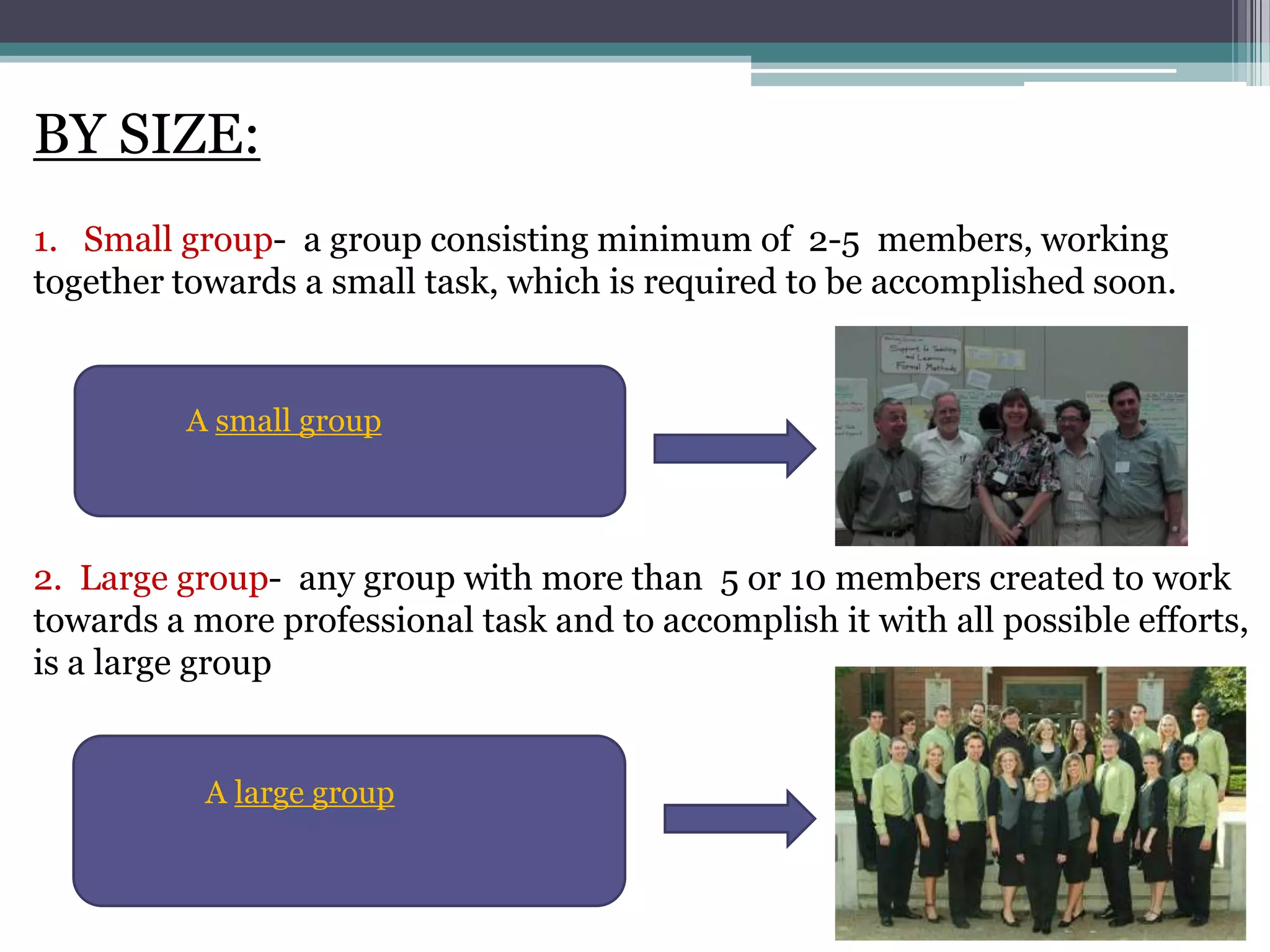
1. Small group- a group consisting minimum of 2-5 members, working
together towards a small task, which is required to be accomplished soon.


          A small group


2. Large group- any group with more than 5 or 10 members created to work
towards a more professional task and to accomplish it with all possible efforts,
is a large group


           A large group
BY PURPOSE:

1.   Task groups - includes task forces and planning groups which are
     formed for a specific task in hand.

2. Coalition        - formed by individuals when they want to protect
   their interests in a way that cannot be done by a single individual.

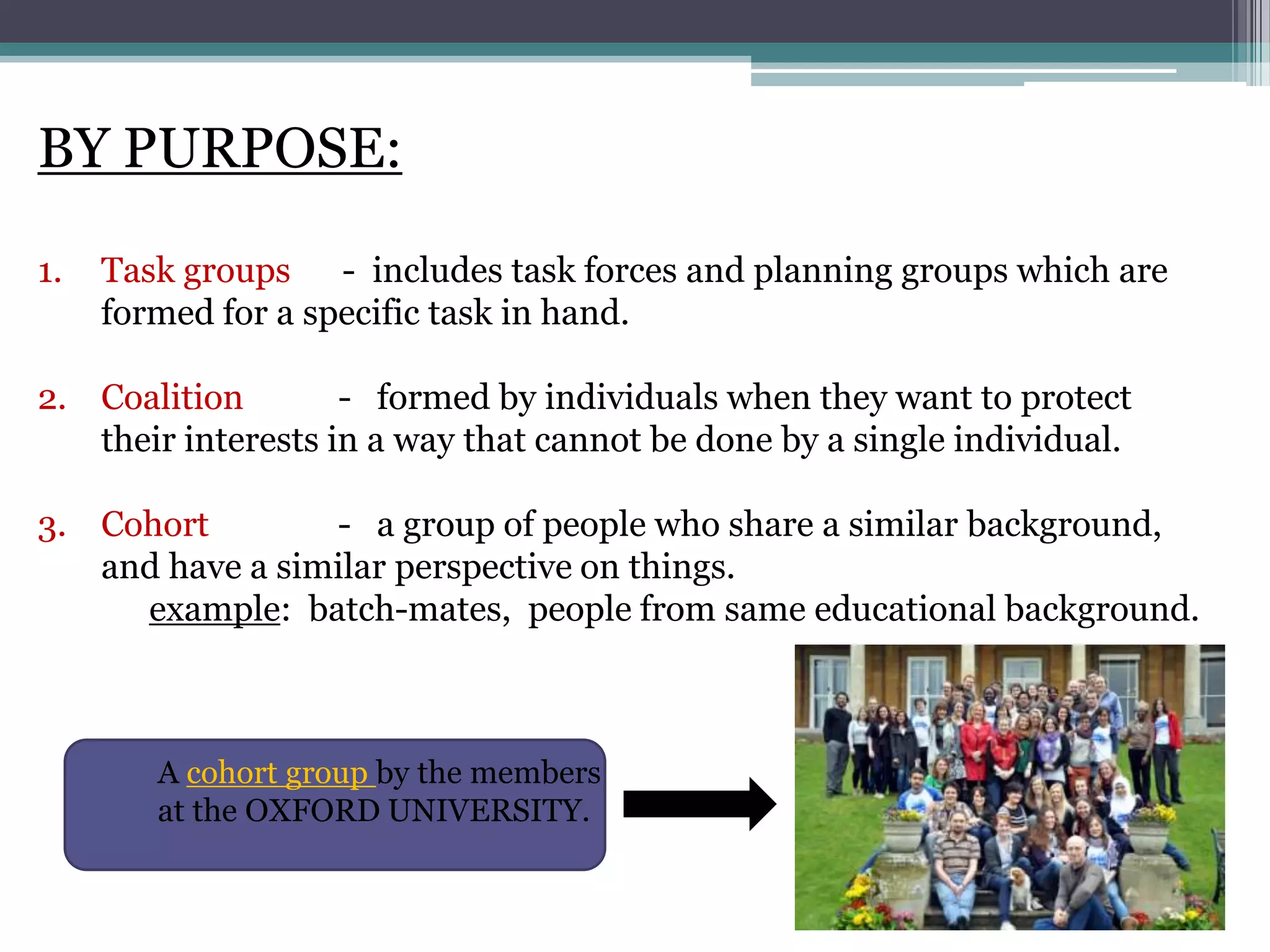
3. Cohort        - a group of people who share a similar background,
   and have a similar perspective on things.
     example: batch-mates, people from same educational background.


        A cohort group by the members
        at the OXFORD UNIVERSITY.
(cont.…)

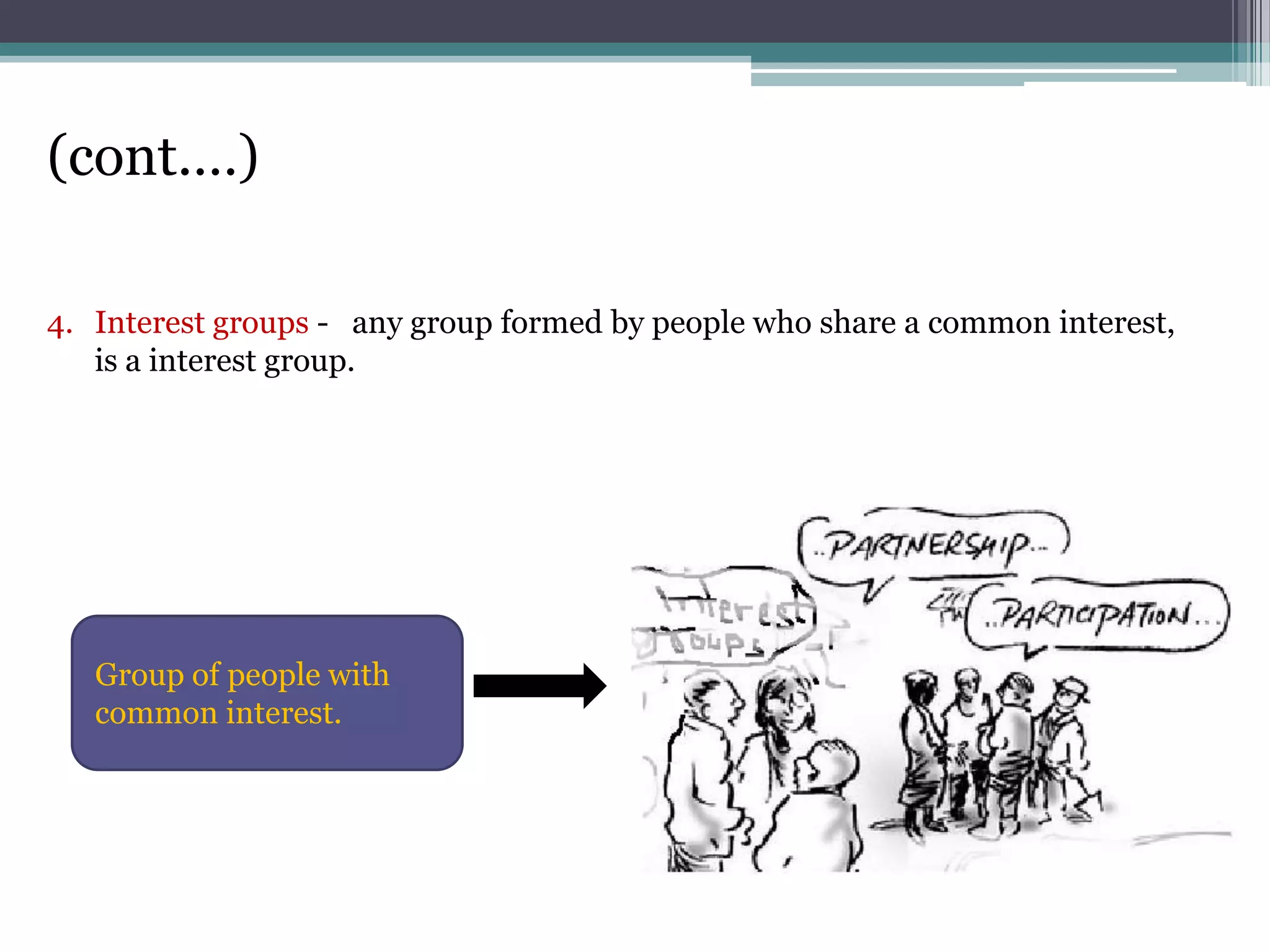
4. Interest groups - any group formed by people who share a common interest,
   is a interest group.


   Group of people with
   common interest.
BY TENURE:

1.   on-time - some groups are created only at the time when any specific
     task is needed to be accomplished. These are on-time groups. They stop
     working after the specified task is completed.


2. On-going -these are those groups that once created, keep on functioning
   all the times. They keep on going. They and their actions are involved in
   everyday functioning of the organisation.
BY POSITION:

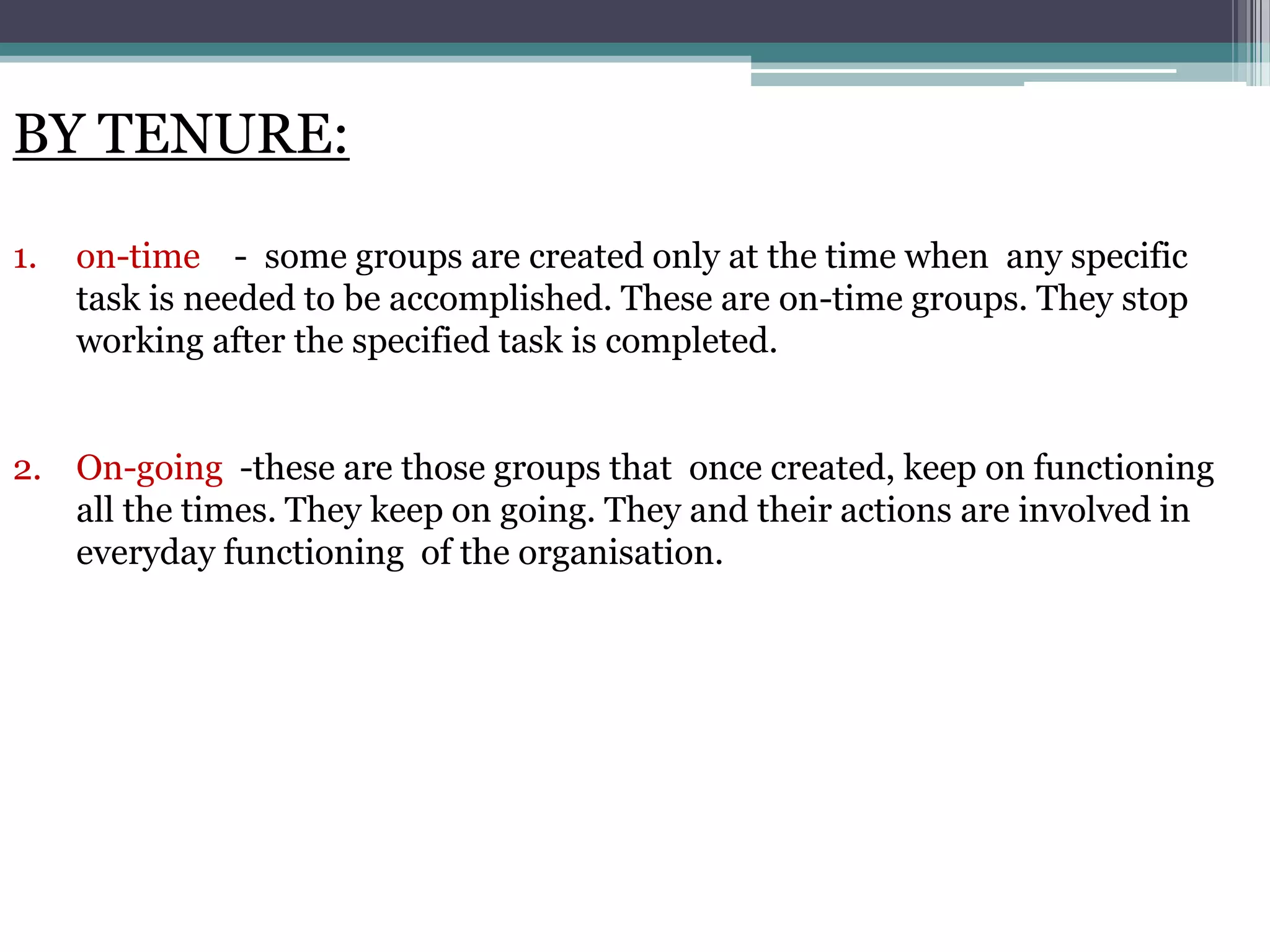
1. Formal groups     - are created officially for a specific purpose.


  A formal group at any
  business organisation


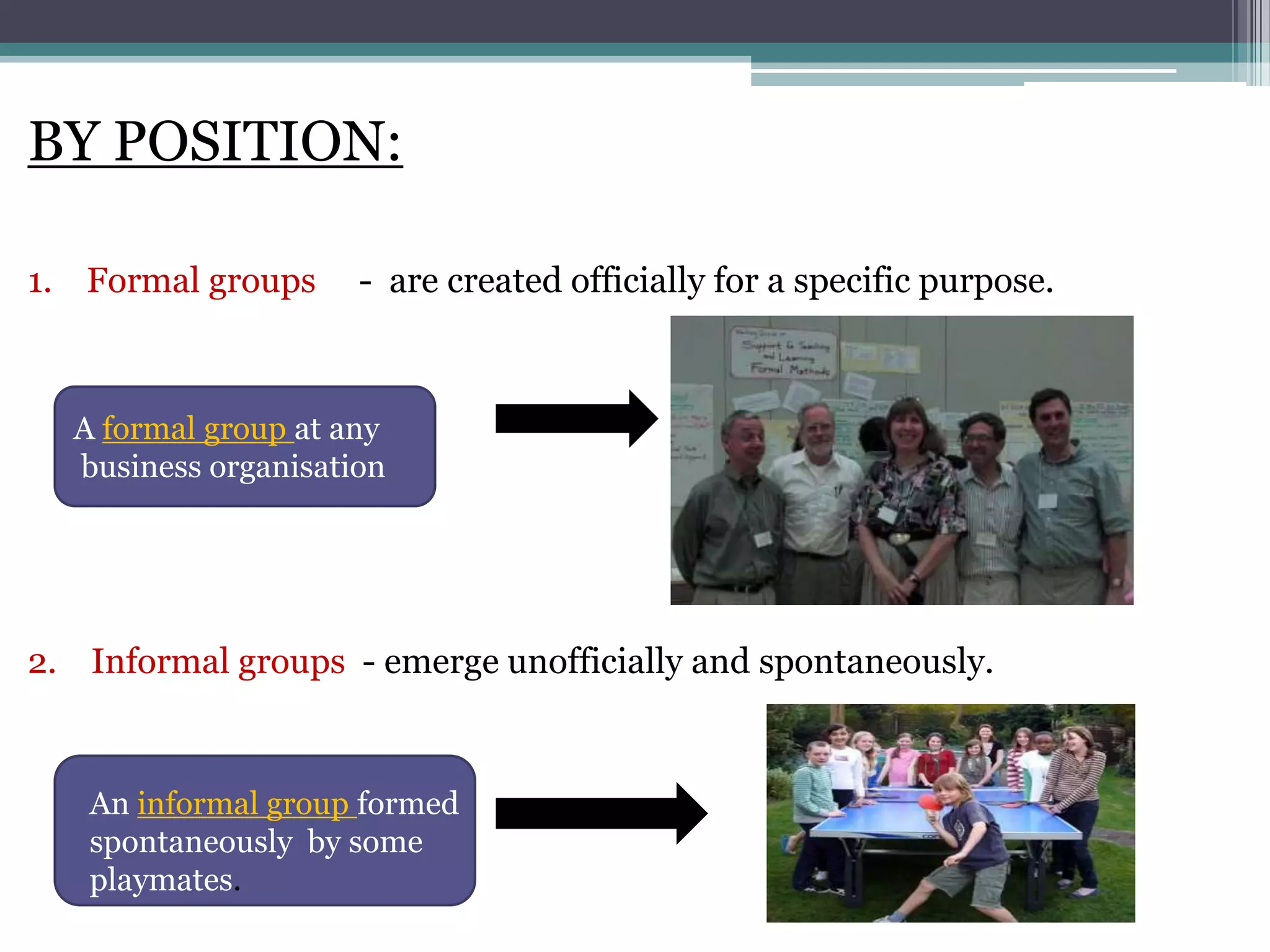
2. Informal groups - emerge unofficially and spontaneously.


   An informal group formed
   spontaneously by some
   playmates.
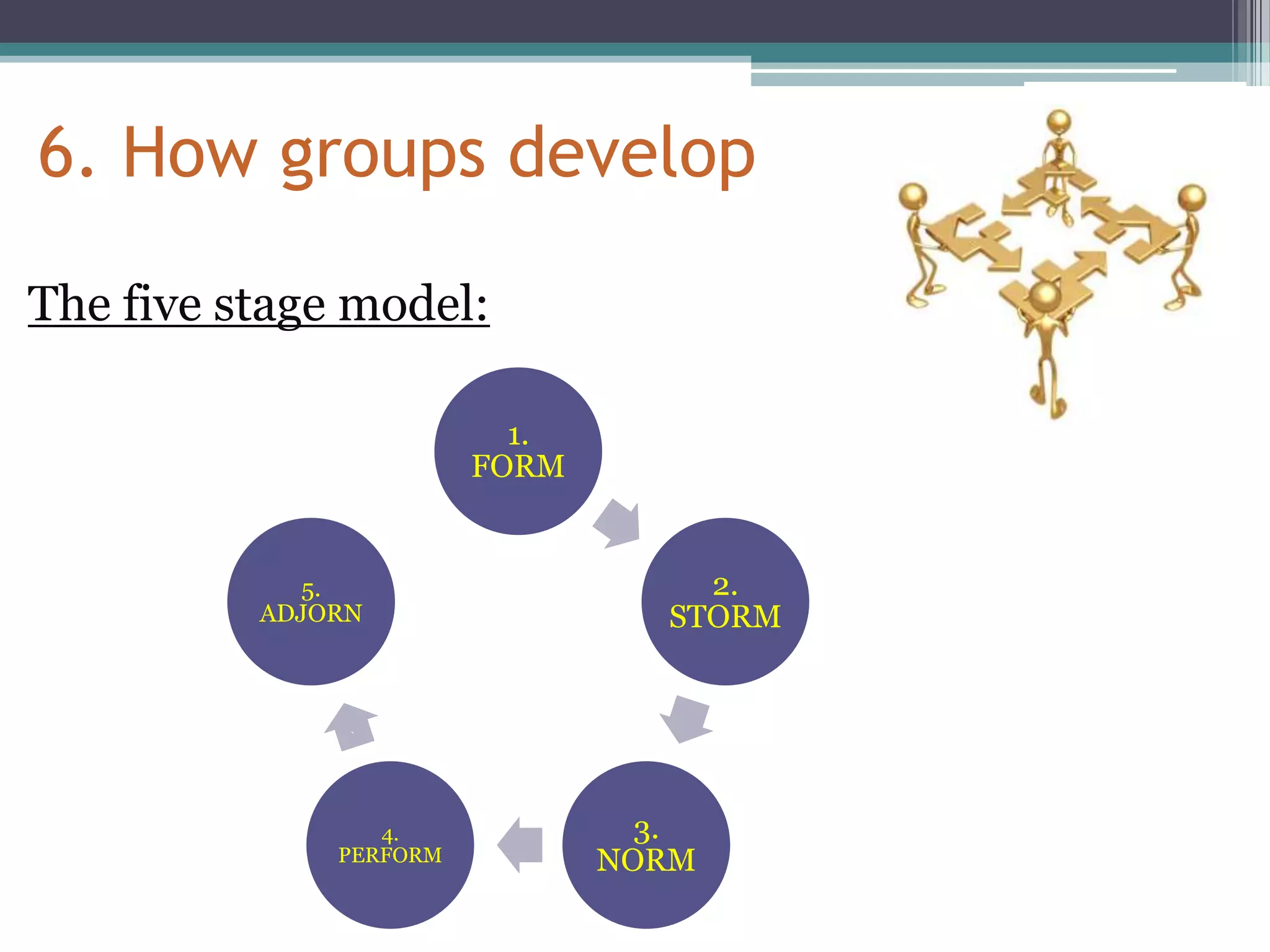
6. How groups develop

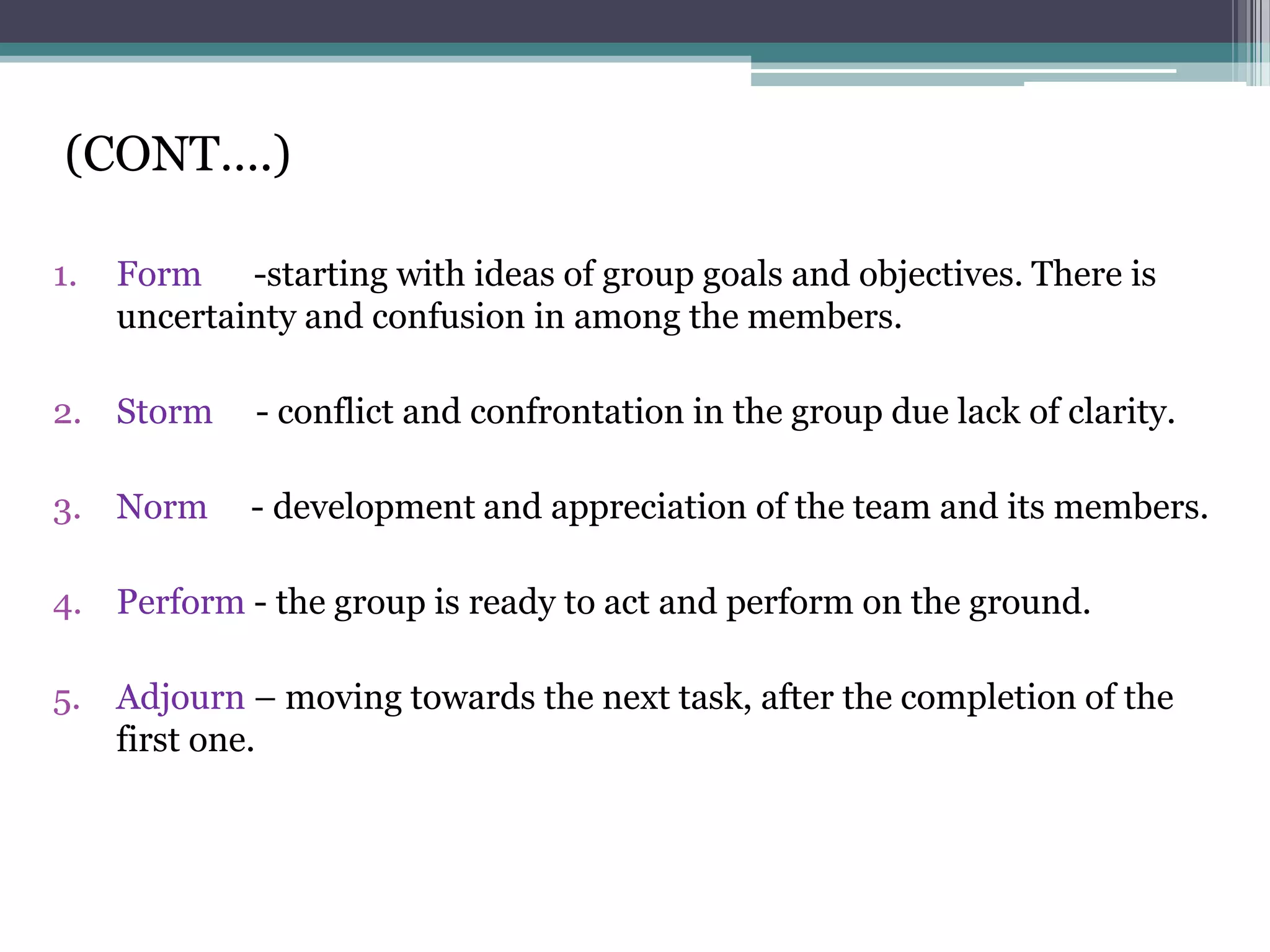
The five stage model:

                          1.
                        FORM


            5.                     2.
          ADJORN                 STORM


                 4.              3.
              PERFORM          NORM
(CONT….)

1.   Form -starting with ideas of group goals and objectives. There is
     uncertainty and confusion in among the members.

2. Storm     - conflict and confrontation in the group due lack of clarity.

3. Norm      - development and appreciation of the team and its members.

4. Perform - the group is ready to act and perform on the ground.

5. Adjourn – moving towards the next task, after the completion of the
   first one.
Questions---


Q1) Which type of group is one that managers
   establish to achieve organizational goals in a
   condition where there is a conflict in the
   organization and all the members are new?

Q2) Do people join and continue in groups
  because they want to get benefits out of the
  groups?
SYNERGY
• When individual work in group, the group
  output is greater than the sum of output of
  individuals taken together. This is called synergy
  which causes process gains.
Some common process gains:

• More information
  More objective evaluation
  Stimulation
  Learning
Social facilitation

It is a positive, predictable group phenomenon.
 Individuals to perform better in presence of
 others.
 Individuals desire to get the attention of other
     individuals in the group.
 Get attention by performing better or working
     harder.
Social compensation

Occurs when some group members work harder
 in a group , to cover for the other group
 members performance.
Social compensators feel compelled to
 contribute to the collective goal in order to make
 up for the inadequate contributions of their co-
 workers.
Social loafing
People in a group often do not work as hard as they
  do when they work on their own in presence of other
  co -workers.
 Social loafing is most likely to occur where direct
   observation or evaluation is not possible and when
   the goal and rewards are given on the team basis.
• Identifying and evaluating individuals member’s
  contribution
• Enhancing personal involvement with the task
• Recognizing the uniqueness of individual
  contributions
• Strengthening group cohesiveness
• Remedies against social
              loafing
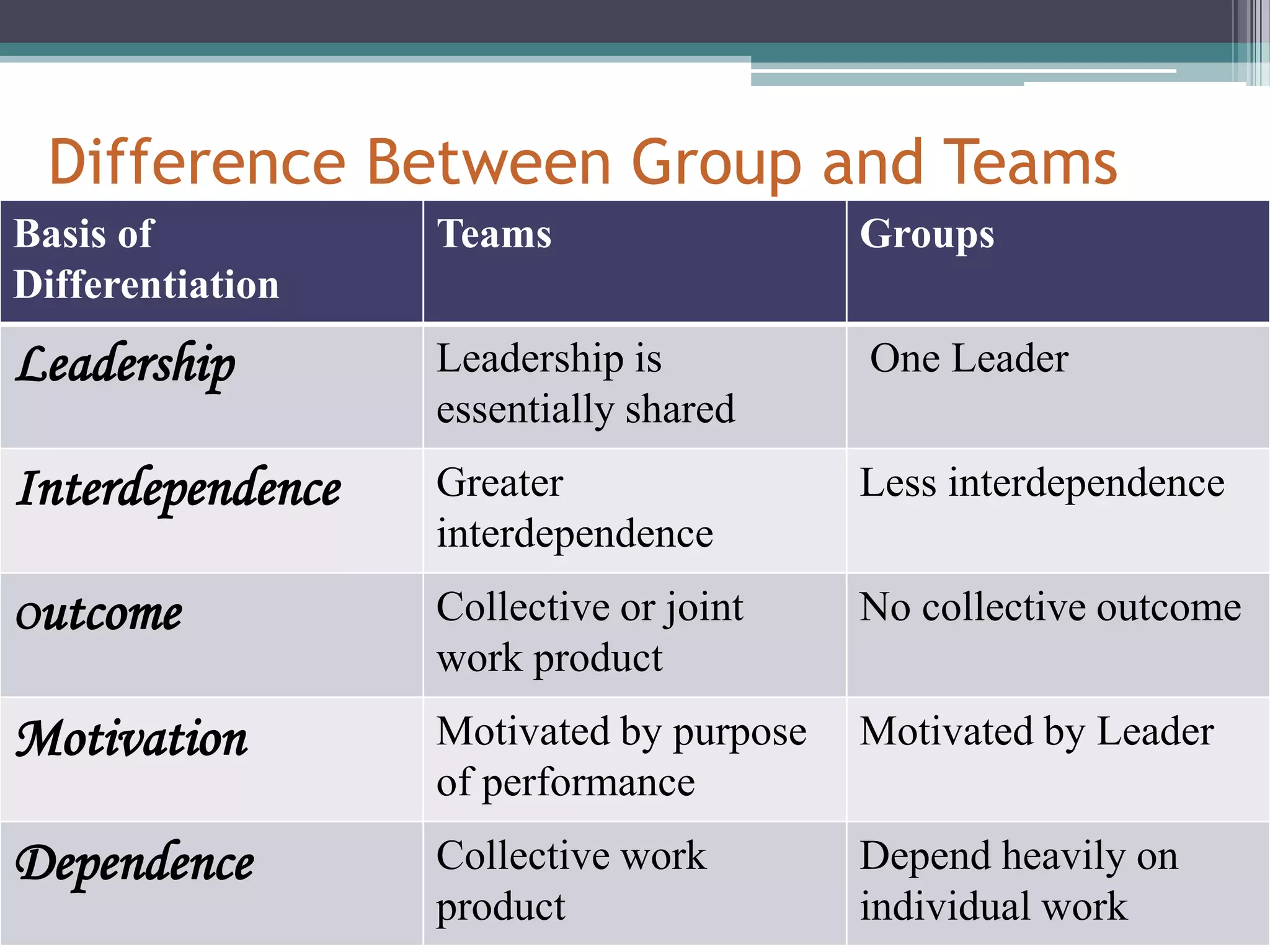
Difference Between Group and Teams
Basis of          Teams                  Groups
Differentiation
Leadership        Leadership is          One Leader
                  essentially shared
Interdependence   Greater                Less interdependence
                  interdependence
Outcome           Collective or joint    No collective outcome
                  work product
Motivation        Motivated by purpose   Motivated by Leader
                  of performance
Dependence        Collective work        Depend heavily on
                  product                individual work
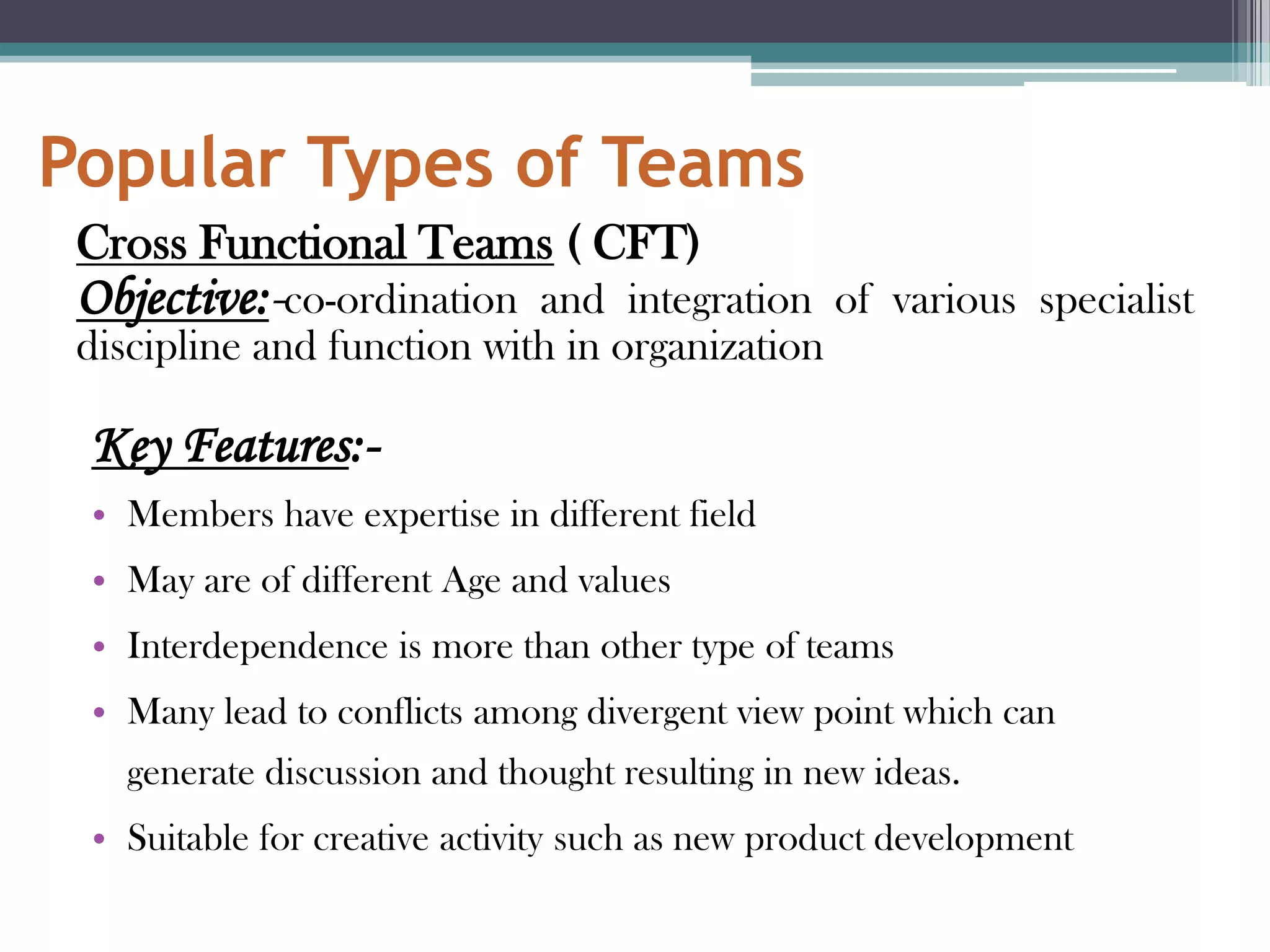
Popular Types of Teams
 Cross Functional Teams ( CFT)
 Objective:-co-ordination and integration of various specialist
 discipline and function with in organization

 Key Features:-
 • Members have expertise in different field
 • May are of different Age and values
 • Interdependence is more than other type of teams
 • Many lead to conflicts among divergent view point which can
   generate discussion and thought resulting in new ideas.
 • Suitable for creative activity such as new product development
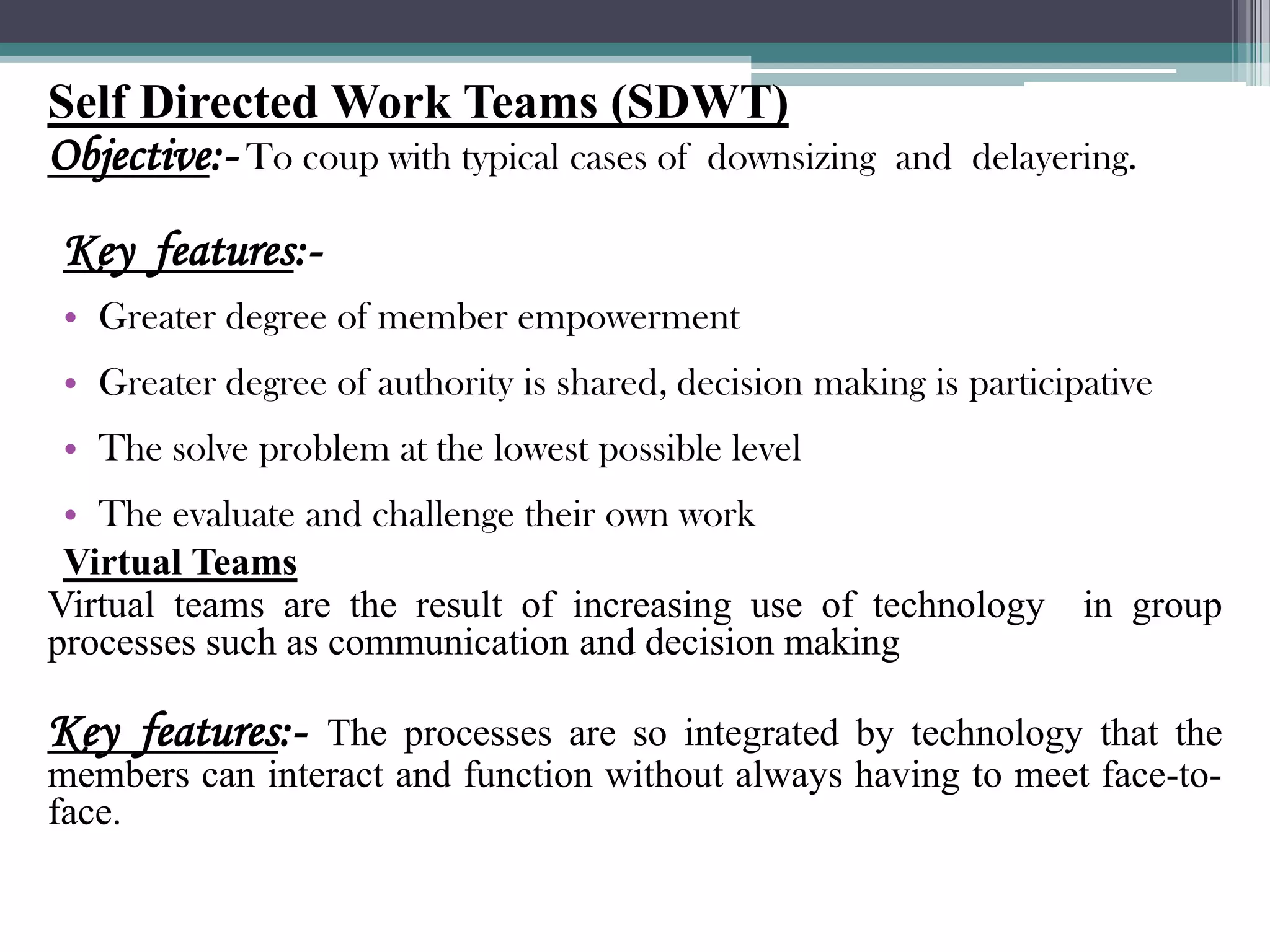
Self Directed Work Teams (SDWT)
Objective:- To coup with typical cases of downsizing   and delayering.

Key features:-
• Greater degree of member empowerment
• Greater degree of authority is shared, decision making is participative
• The solve problem at the lowest possible level
 • The evaluate and challenge their own work
 Virtual Teams
Virtual teams are the result of increasing use of technology in group
processes such as communication and decision making

Key features:-  The processes are so integrated by technology that the
members can interact and function without always having to meet face-to-
face.
THANK YOU

1 group & teams mrinal

  • 1.
    ORGANISATIONAL BEHAVIOUR PRESENTATION ON : GROUPSAND TEAMS Presented by: MRINAL GAUTAM IMBA , 3rd sem.
  • 2.
    Topics of discussion: 1. What are groups? 2. What are teams? 3. Importance of groups. 4. Group formation. 5. Types of groups. 6. Group development model.
  • 3.
    1. What aregroups A group is a collection of people working together to achieve a common assigned task under certain conditions. The people in a group are assigned a common goal and they work together coordinating with each other to achieve their goals.
  • 4.
    2. What areteams? A team is a small group of people with complementary skills, working with each other to achieve a specific, common goal or objective.  Teams often are difficult to form.  It takes time for members to learn how to work together. example: INDIAN CRICKET TEAM. NOTE: All teams are groups but not all groups are teams.
  • 5.
    3. Importance ofgroups 1. Helps in building effective decisional ground. 2. Helps the management and the organization in problem solving in uncertain situations. 3. Helps in achieving higher level of productivity. 4. Satisfaction of needs of the individuals. 5. Individuals derive their identities through membership in groups.
  • 6.
    4. How aregroups formed Group formation Created officially Created unofficially By people from Large groups for a specific and spontaneously similar formed with the purpose background aim of learning from each other FORMAL INFORMAL COHORT COMMUNITIES GROUPS GROUPS GROUPS OF PRACTICE (COP)
  • 7.
    5. TYPES OFGROUPS Types of groups By size By purpose By tenure By position Small task group On-time Formal Large Coalition On-going Informal Cohort Interest group
  • 8.
    BY SIZE: 1. Smallgroup- a group consisting minimum of 2-5 members, working together towards a small task, which is required to be accomplished soon. A small group 2. Large group- any group with more than 5 or 10 members created to work towards a more professional task and to accomplish it with all possible efforts, is a large group A large group
  • 9.
    BY PURPOSE: 1. Task groups - includes task forces and planning groups which are formed for a specific task in hand. 2. Coalition - formed by individuals when they want to protect their interests in a way that cannot be done by a single individual. 3. Cohort - a group of people who share a similar background, and have a similar perspective on things. example: batch-mates, people from same educational background. A cohort group by the members at the OXFORD UNIVERSITY.
  • 10.
    (cont.…) 4. Interest groups- any group formed by people who share a common interest, is a interest group. Group of people with common interest.
  • 11.
    BY TENURE: 1. on-time - some groups are created only at the time when any specific task is needed to be accomplished. These are on-time groups. They stop working after the specified task is completed. 2. On-going -these are those groups that once created, keep on functioning all the times. They keep on going. They and their actions are involved in everyday functioning of the organisation.
  • 12.
    BY POSITION: 1. Formalgroups - are created officially for a specific purpose. A formal group at any business organisation 2. Informal groups - emerge unofficially and spontaneously. An informal group formed spontaneously by some playmates.
  • 13.
    6. How groupsdevelop The five stage model: 1. FORM 5. 2. ADJORN STORM 4. 3. PERFORM NORM
  • 14.
    (CONT….) 1. Form -starting with ideas of group goals and objectives. There is uncertainty and confusion in among the members. 2. Storm - conflict and confrontation in the group due lack of clarity. 3. Norm - development and appreciation of the team and its members. 4. Perform - the group is ready to act and perform on the ground. 5. Adjourn – moving towards the next task, after the completion of the first one.
  • 15.
    Questions--- Q1) Which typeof group is one that managers establish to achieve organizational goals in a condition where there is a conflict in the organization and all the members are new? Q2) Do people join and continue in groups because they want to get benefits out of the groups?
  • 16.
    SYNERGY • When individualwork in group, the group output is greater than the sum of output of individuals taken together. This is called synergy which causes process gains.
  • 17.
    Some common processgains: • More information More objective evaluation Stimulation Learning
  • 18.
    Social facilitation It isa positive, predictable group phenomenon.  Individuals to perform better in presence of others.  Individuals desire to get the attention of other individuals in the group.  Get attention by performing better or working harder.
  • 19.
    Social compensation Occurs whensome group members work harder in a group , to cover for the other group members performance. Social compensators feel compelled to contribute to the collective goal in order to make up for the inadequate contributions of their co- workers.
  • 20.
    Social loafing People ina group often do not work as hard as they do when they work on their own in presence of other co -workers.  Social loafing is most likely to occur where direct observation or evaluation is not possible and when the goal and rewards are given on the team basis. • Identifying and evaluating individuals member’s contribution • Enhancing personal involvement with the task • Recognizing the uniqueness of individual contributions • Strengthening group cohesiveness • Remedies against social loafing
  • 21.
    Difference Between Groupand Teams Basis of Teams Groups Differentiation Leadership Leadership is One Leader essentially shared Interdependence Greater Less interdependence interdependence Outcome Collective or joint No collective outcome work product Motivation Motivated by purpose Motivated by Leader of performance Dependence Collective work Depend heavily on product individual work
  • 22.
    Popular Types ofTeams Cross Functional Teams ( CFT) Objective:-co-ordination and integration of various specialist discipline and function with in organization Key Features:- • Members have expertise in different field • May are of different Age and values • Interdependence is more than other type of teams • Many lead to conflicts among divergent view point which can generate discussion and thought resulting in new ideas. • Suitable for creative activity such as new product development
  • 23.
    Self Directed WorkTeams (SDWT) Objective:- To coup with typical cases of downsizing and delayering. Key features:- • Greater degree of member empowerment • Greater degree of authority is shared, decision making is participative • The solve problem at the lowest possible level • The evaluate and challenge their own work Virtual Teams Virtual teams are the result of increasing use of technology in group processes such as communication and decision making Key features:- The processes are so integrated by technology that the members can interact and function without always having to meet face-to- face.
  • 24.