Individual behavior,
group behavior,
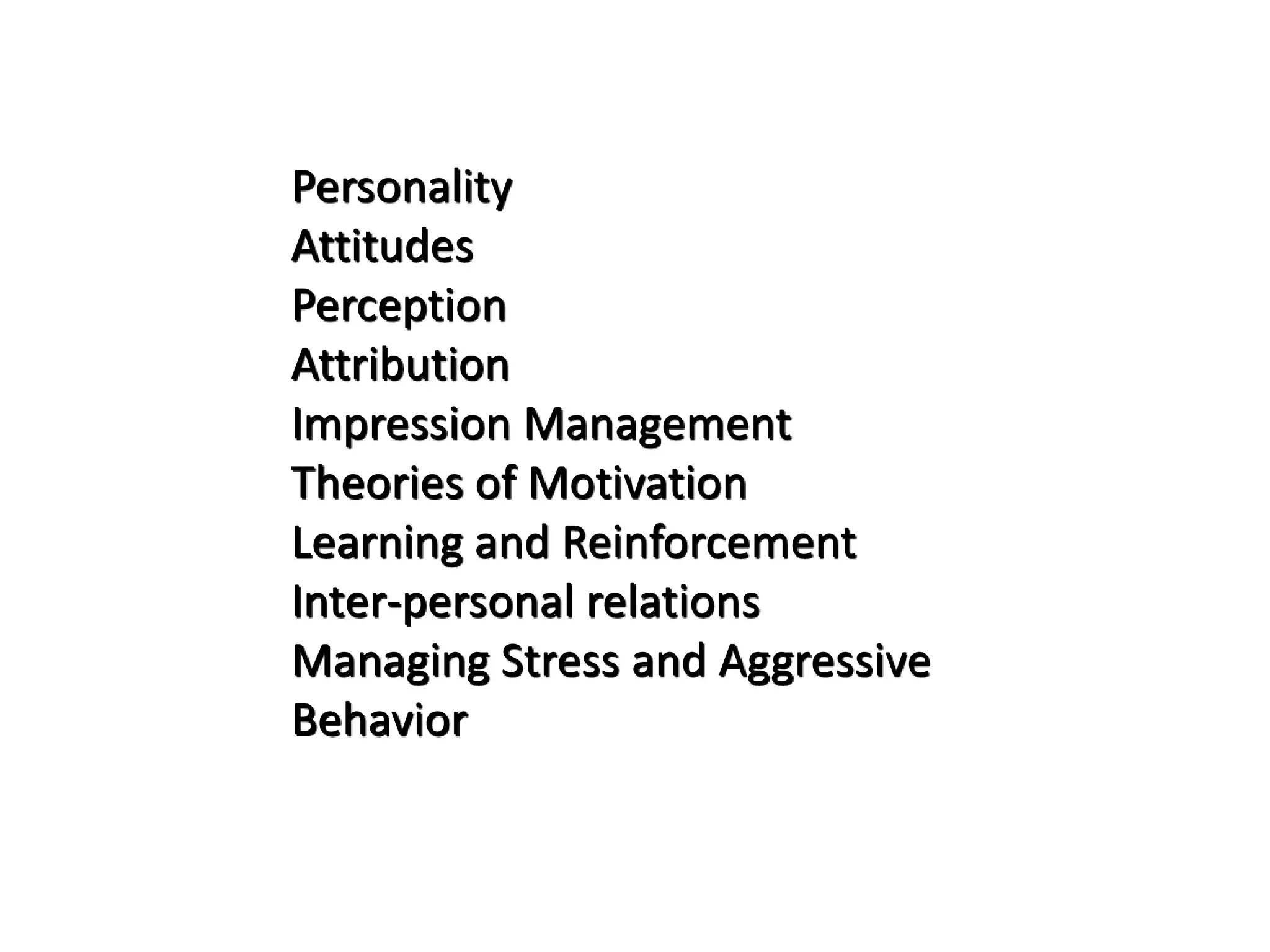
Personality
Attitudes
Perception
Attribution
Impression Management
Theories of Motivation
Learning and Reinforcement
Inter-personal relations
Managing Stress and Aggressive
Behavior
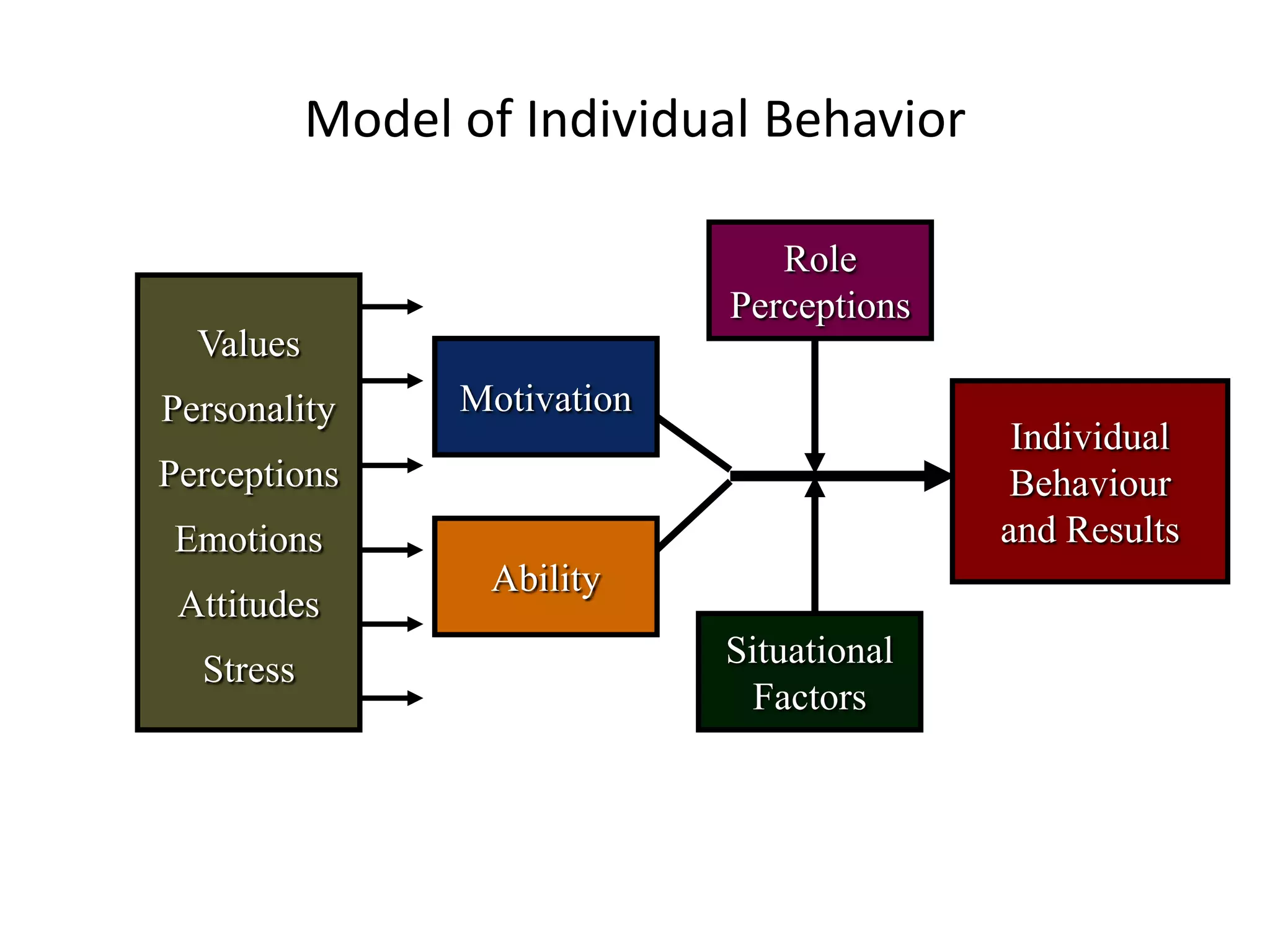
Individual
Behaviour
and Results
Role
Perceptions
Situational
Factors
Motivation
Ability
Values
Personality
Perceptions
Emotions
Attitudes
Stress
Model of Individual Behavior
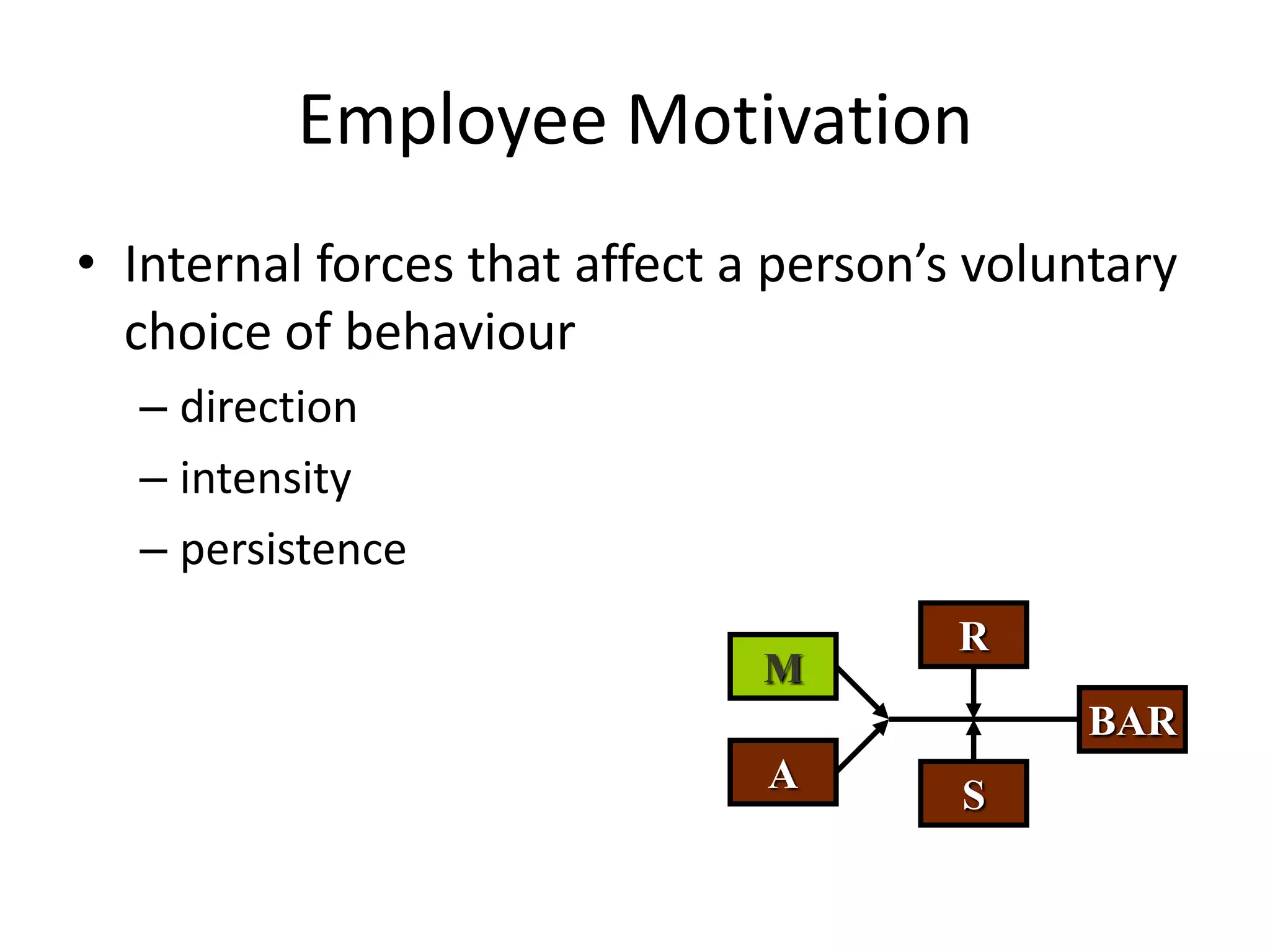
M
A
R
S
BAR
Employee Motivation
• Internal forces that affect a person’s voluntary
choice of behaviour
– direction
– intensity
– persistence
M
A
R
S
BAR
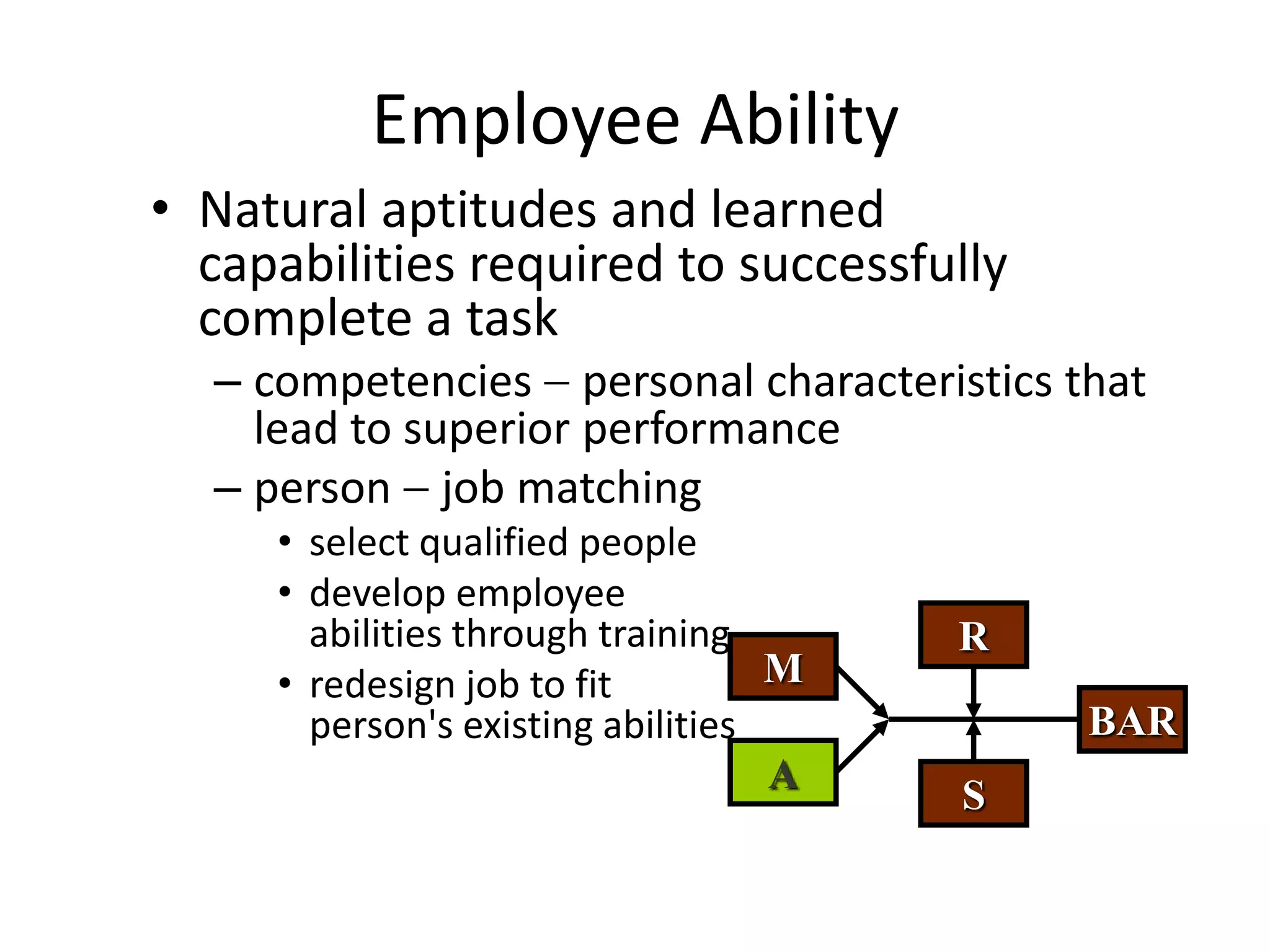
Employee Ability
• Natural aptitudes and learned
capabilities required to successfully
complete a task
– competencies personal characteristics that
lead to superior performance
– person job matching
• select qualified people
• develop employee
abilities through training
• redesign job to fit
person's existing abilities
M
A
R
S
BAR
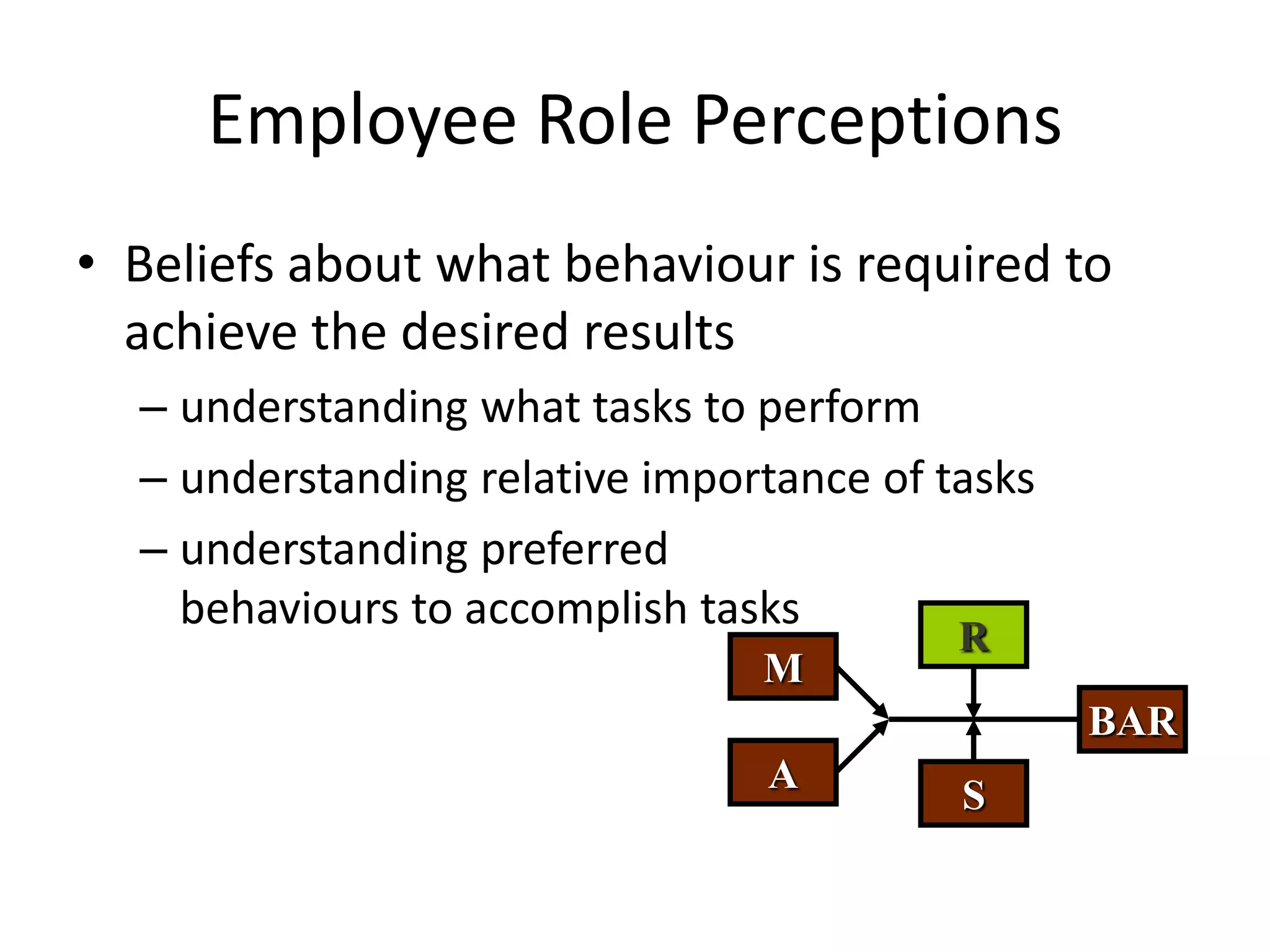
Employee Role Perceptions
• Beliefs about what behaviour is required to
achieve the desired results
– understanding what tasks to perform
– understanding relative importance of tasks
– understanding preferred
behaviours to accomplish tasks
M
A
R
S
BAR
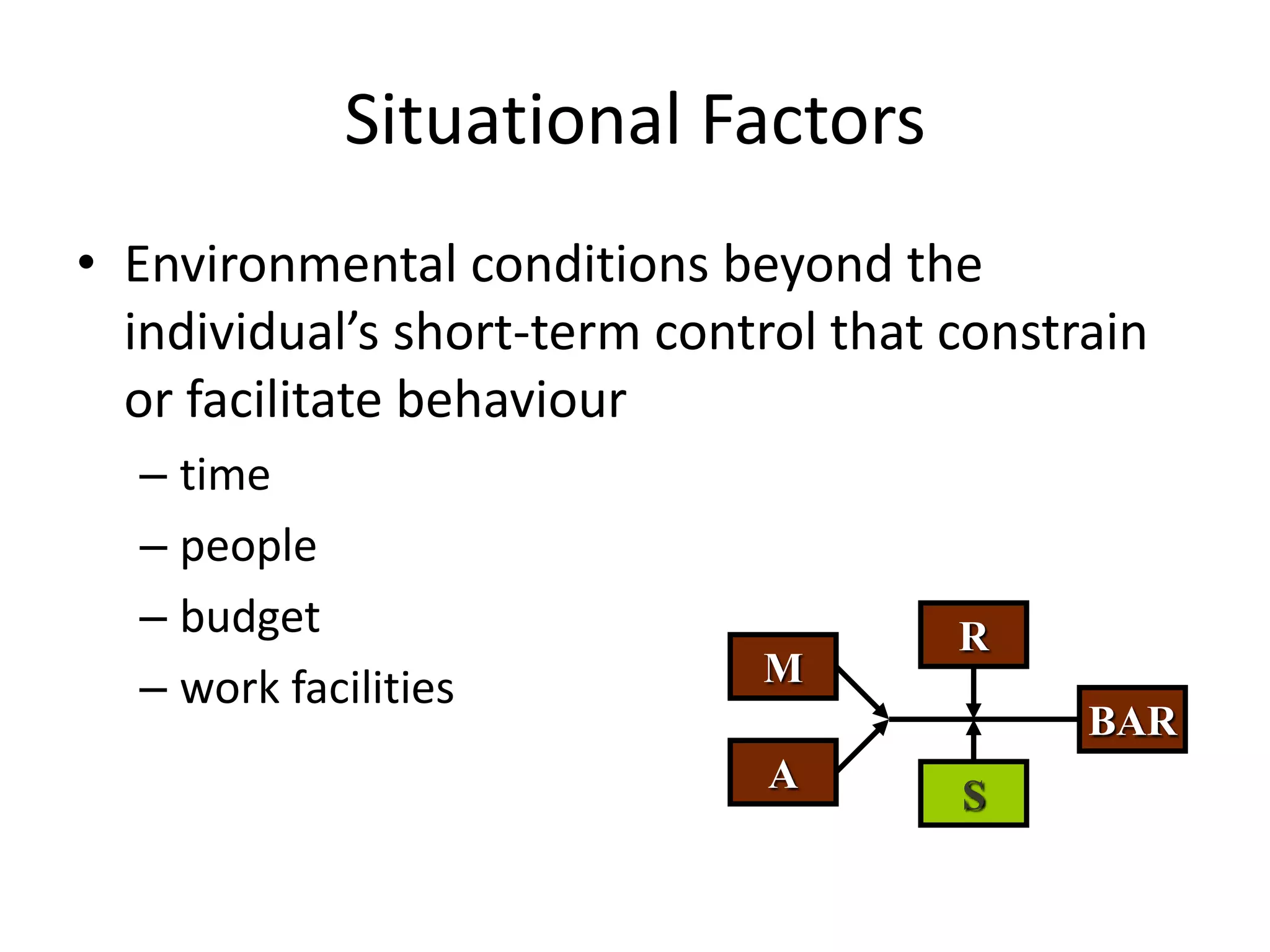
Situational Factors
• Environmental conditions beyond the
individual’s short-term control that constrain
or facilitate behaviour
– time
– people
– budget
– work facilities
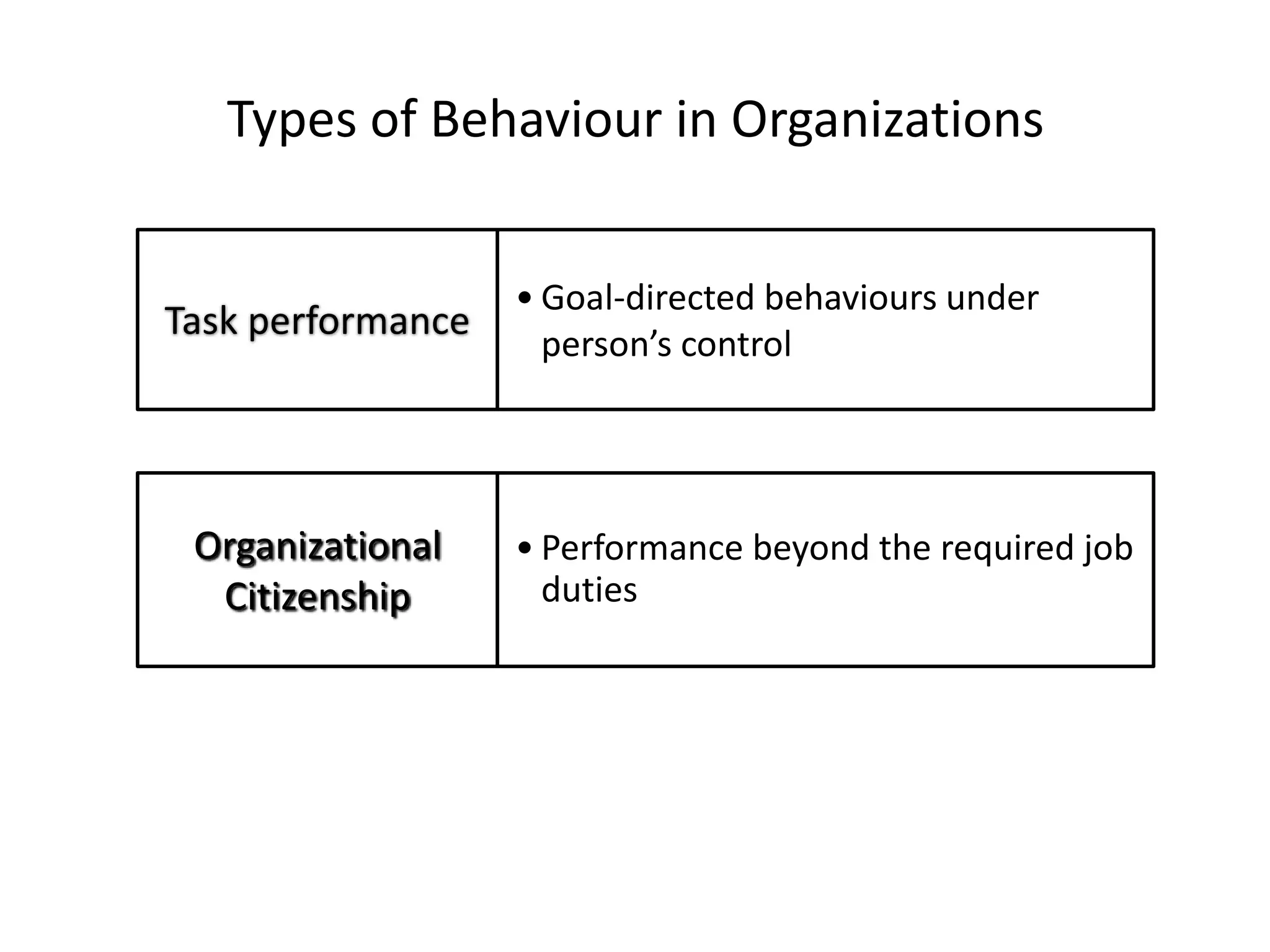
Organizational
Citizenship
• Performance beyond the required job
duties
Task performance
• Goal-directed behaviours under
person’s control
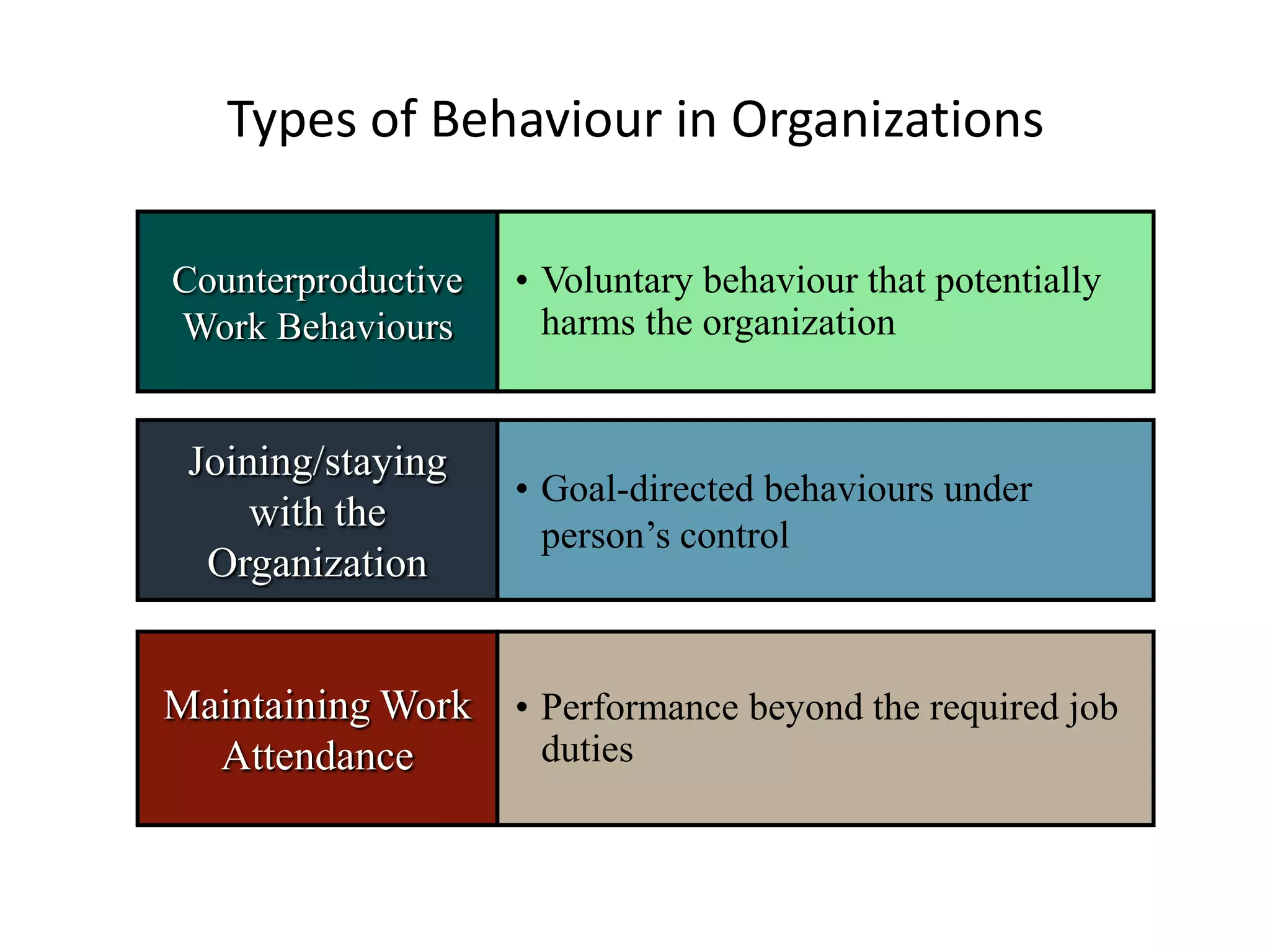
Types of Behaviour in Organizations
Maintaining Work
Attendance
• Performance beyond the required job
duties
Joining/staying
with the
Organization
• Goal-directed behaviours under
person’s control
Types of Behaviour in Organizations
Counterproductive
Work Behaviours
• Voluntary behaviour that potentially
harms the organization
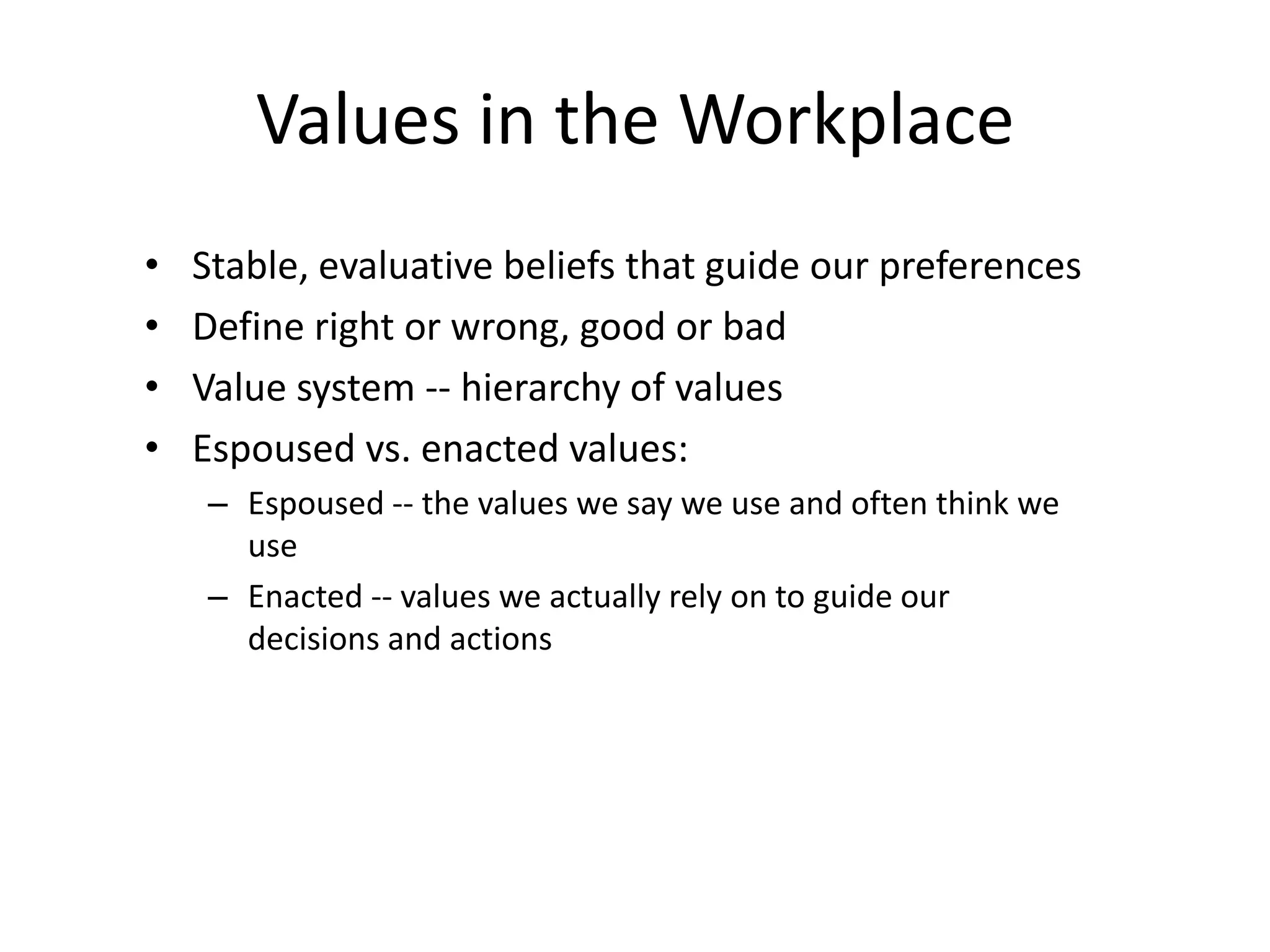
Values in the Workplace
• Stable, evaluative beliefs that guide our preferences
• Define right or wrong, good or bad
• Value system -- hierarchy of values
• Espoused vs. enacted values:
– Espoused -- the values we say we use and often think we
use
– Enacted -- values we actually rely on to guide our
decisions and actions
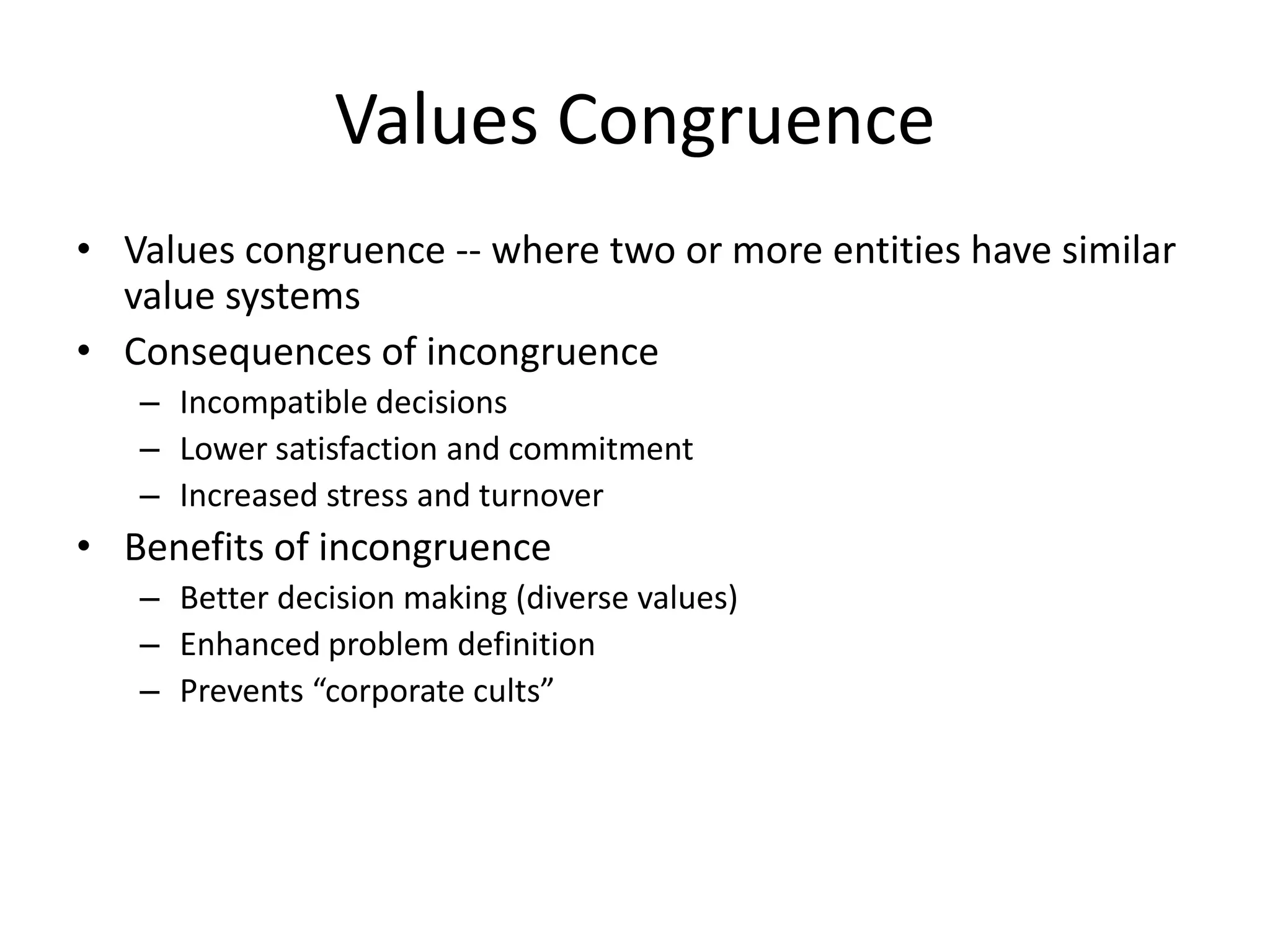
Values Congruence
• Values congruence -- where two or more entities have similar
value systems
• Consequences of incongruence
– Incompatible decisions
– Lower satisfaction and commitment
– Increased stress and turnover
• Benefits of incongruence
– Better decision making (diverse values)
– Enhanced problem definition
– Prevents “corporate cults”
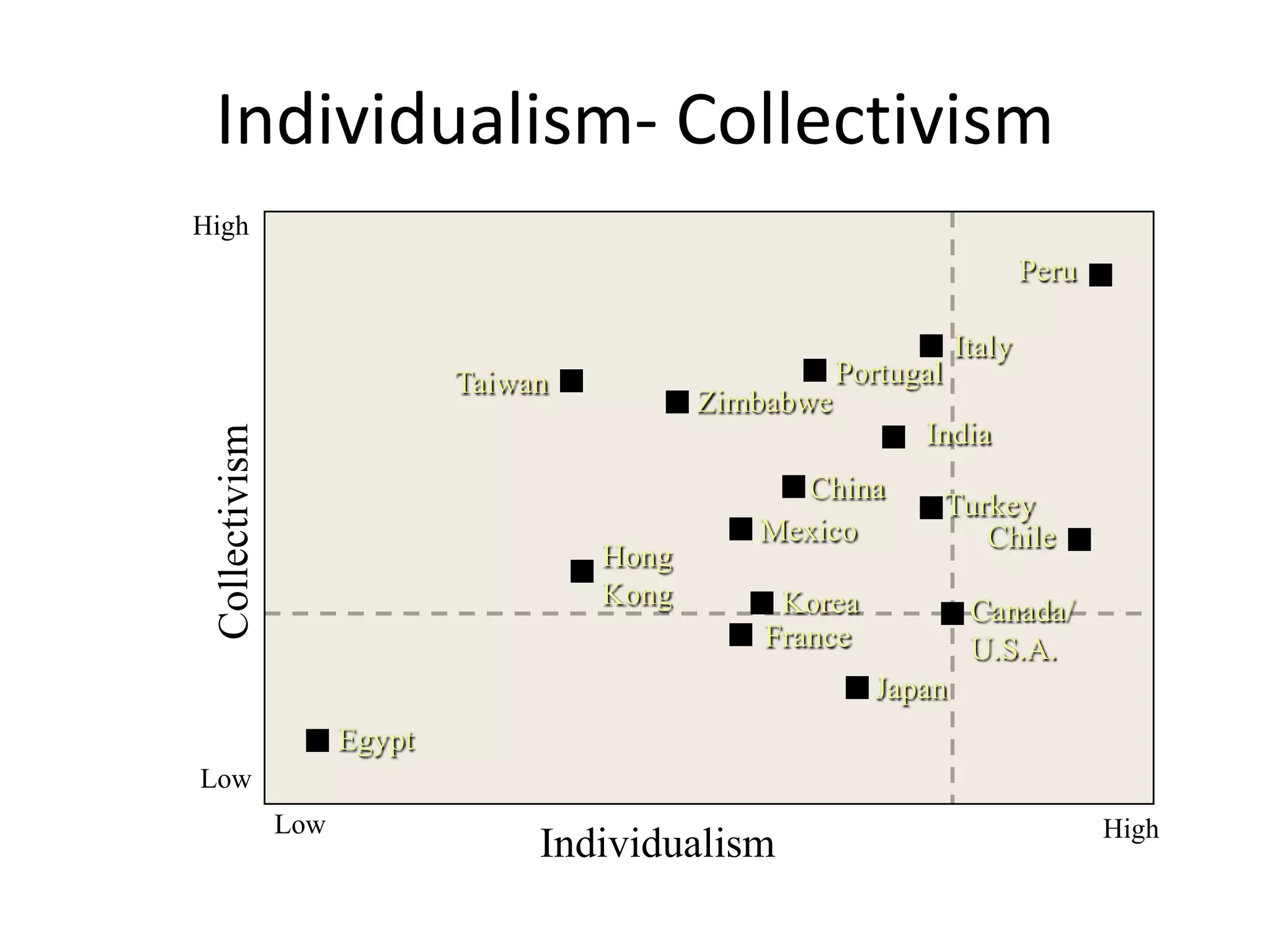
Individualism- Collectivism
Peru
Chile
Italy
Portugal
Turkey
Canada/
U.S.A.
Japan
Egypt
Korea
France
China
Zimbabwe
Mexico
Hong
Kong
Taiwan
CollectivismHigh
Low
Individualism HighLow
India
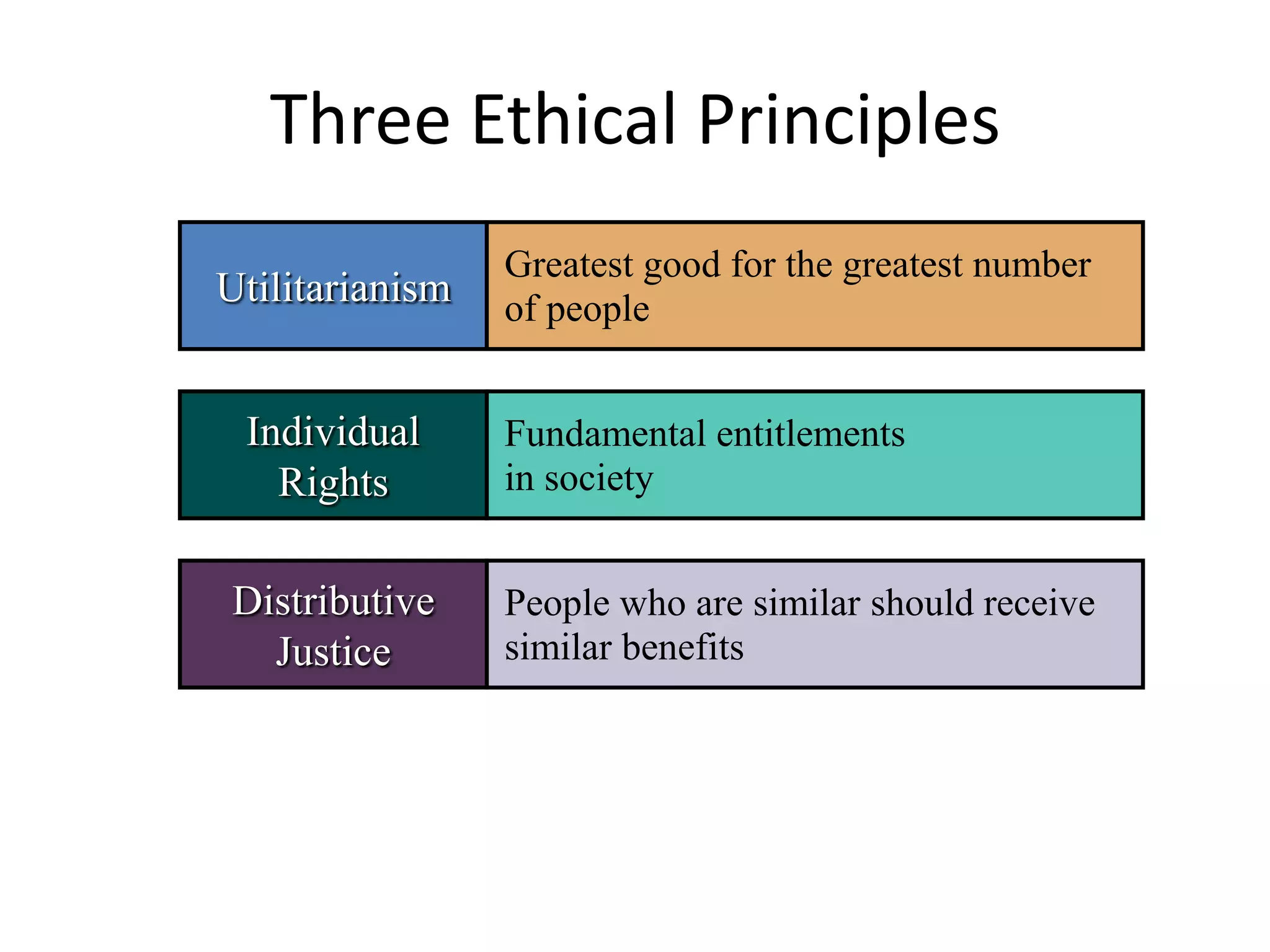
Utilitarianism
Individual
Rights
Greatest good for the greatest number
of people
Fundamental entitlements
in society
Distributive
Justice
People who are similar should receive
similar benefits
Three Ethical Principles
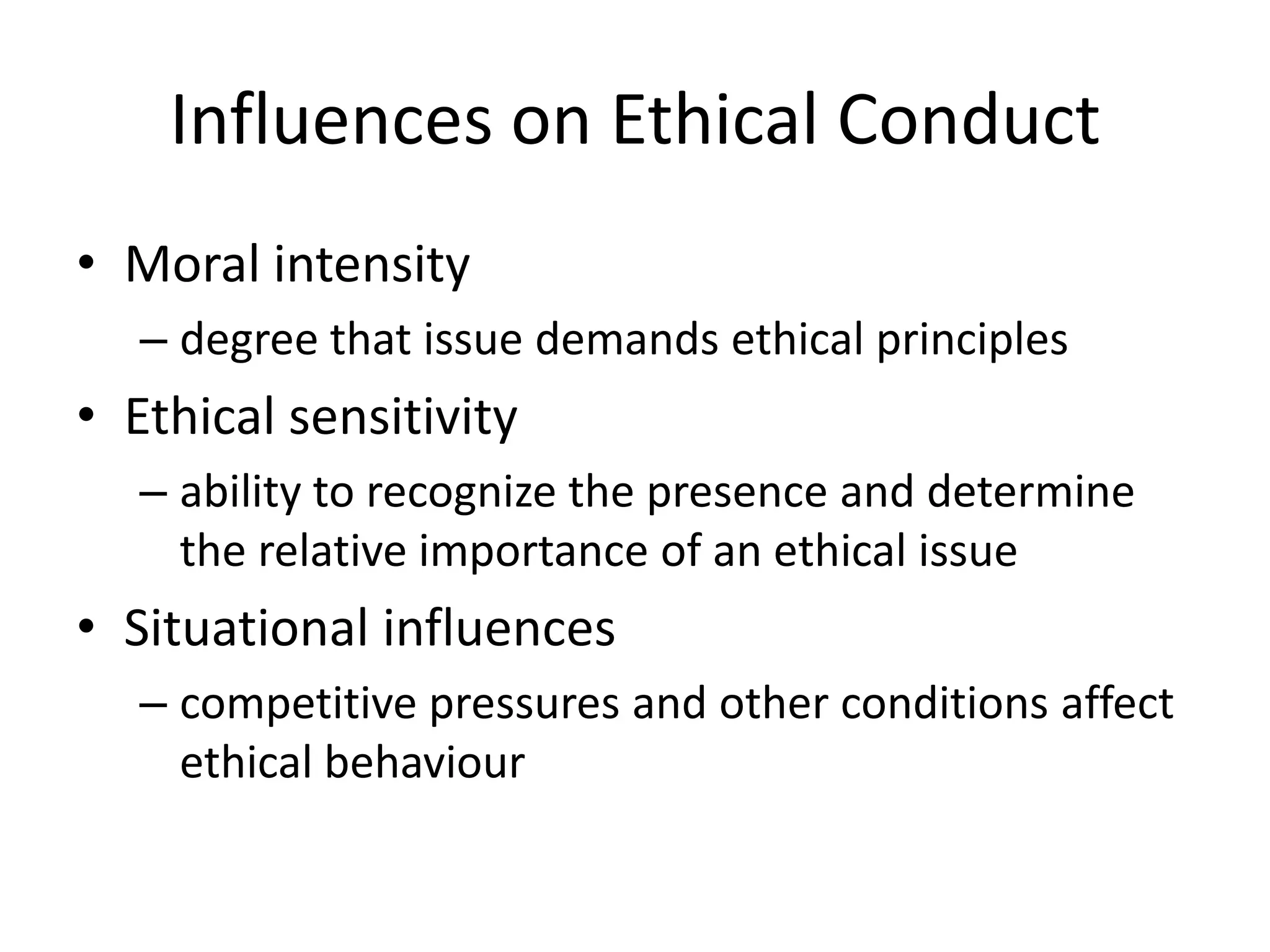
Influences on Ethical Conduct
• Moral intensity
– degree that issue demands ethical principles
• Ethical sensitivity
– ability to recognize the presence and determine
the relative importance of an ethical issue
• Situational influences
– competitive pressures and other conditions affect
ethical behaviour
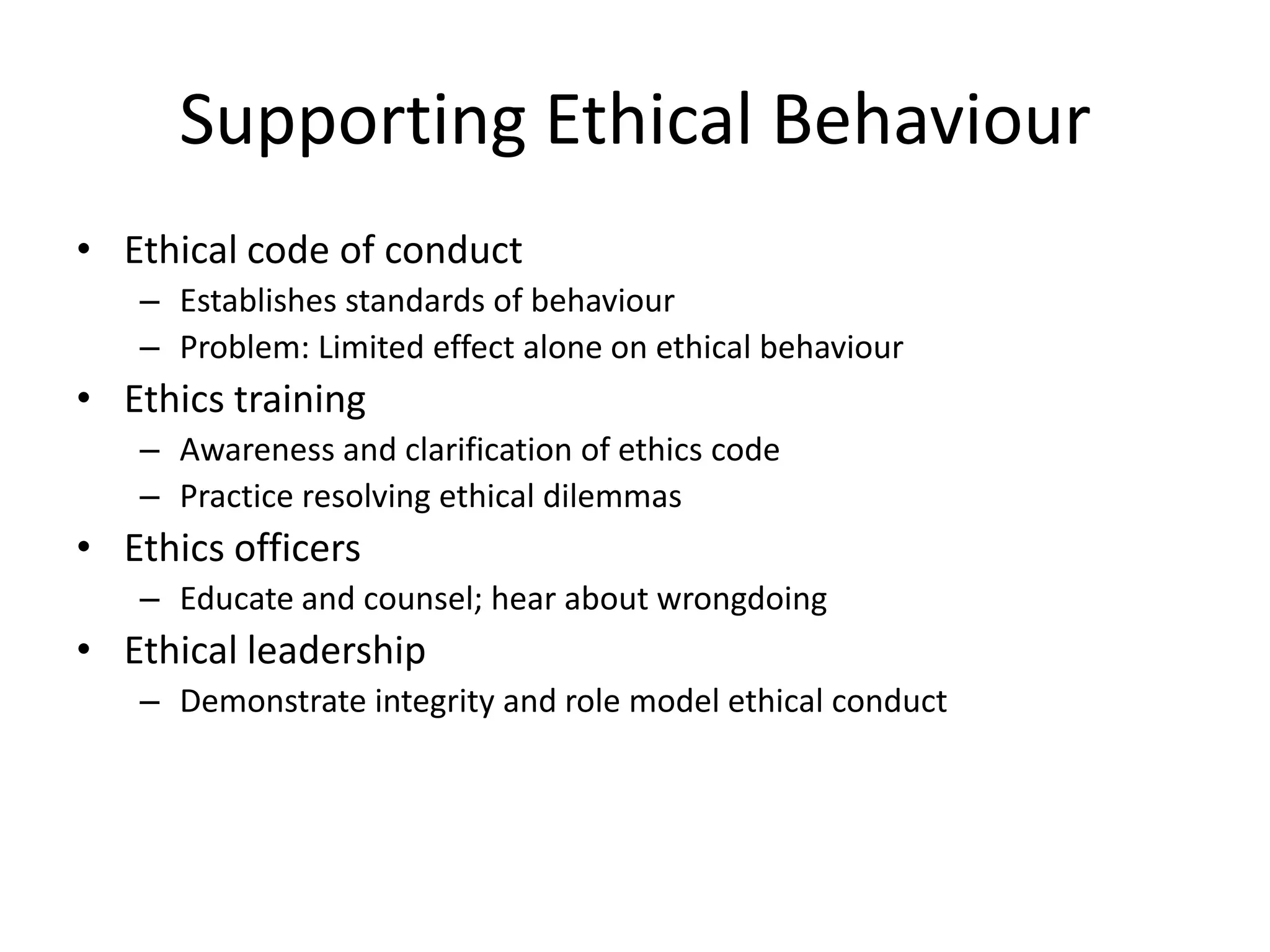
Supporting Ethical Behaviour
• Ethical code of conduct
– Establishes standards of behaviour
– Problem: Limited effect alone on ethical behaviour
• Ethics training
– Awareness and clarification of ethics code
– Practice resolving ethical dilemmas
• Ethics officers
– Educate and counsel; hear about wrongdoing
• Ethical leadership
– Demonstrate integrity and role model ethical conduct
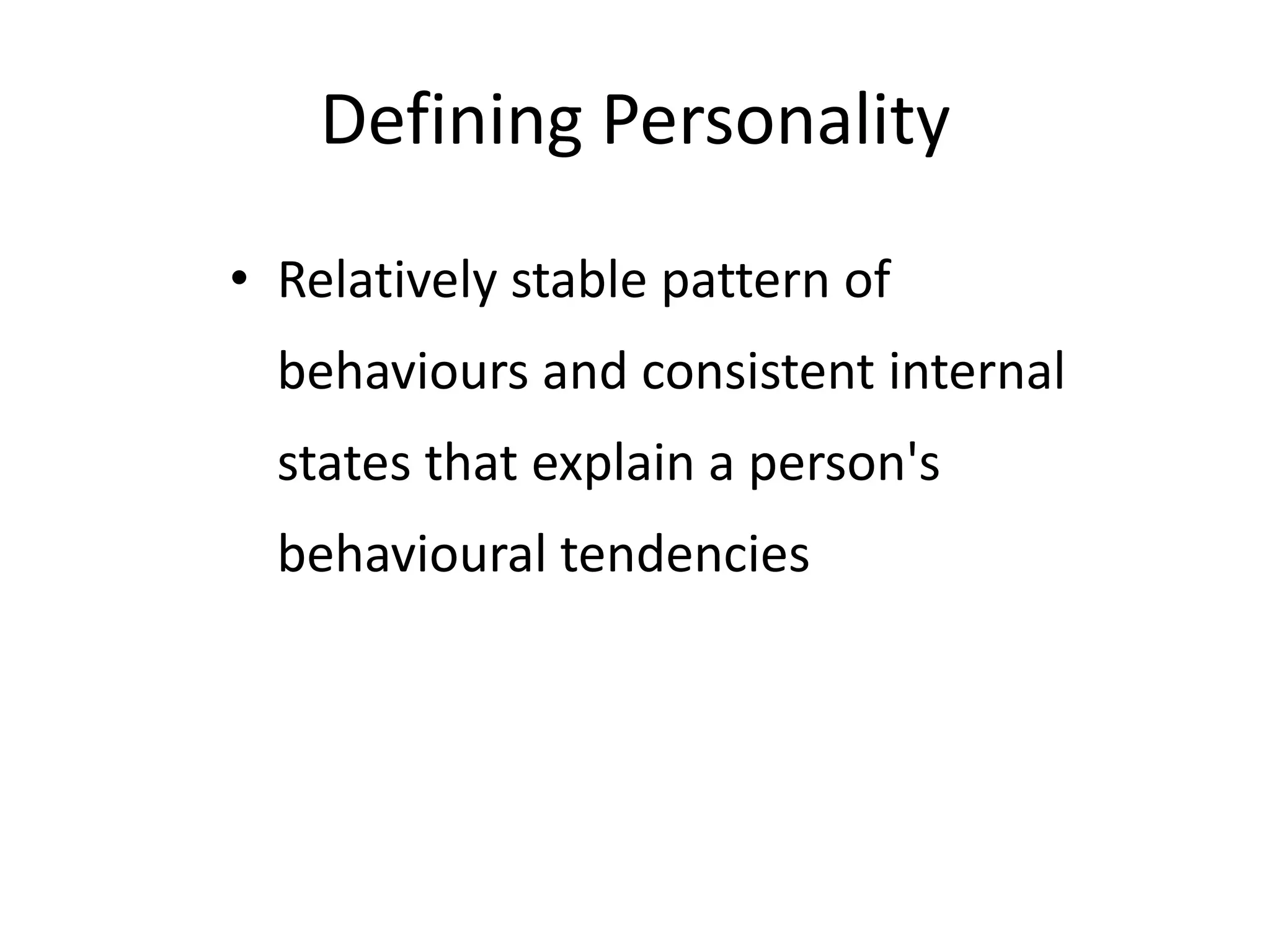
Defining Personality
• Relatively stable pattern of
behaviours and consistent internal
states that explain a person's
behavioural tendencies
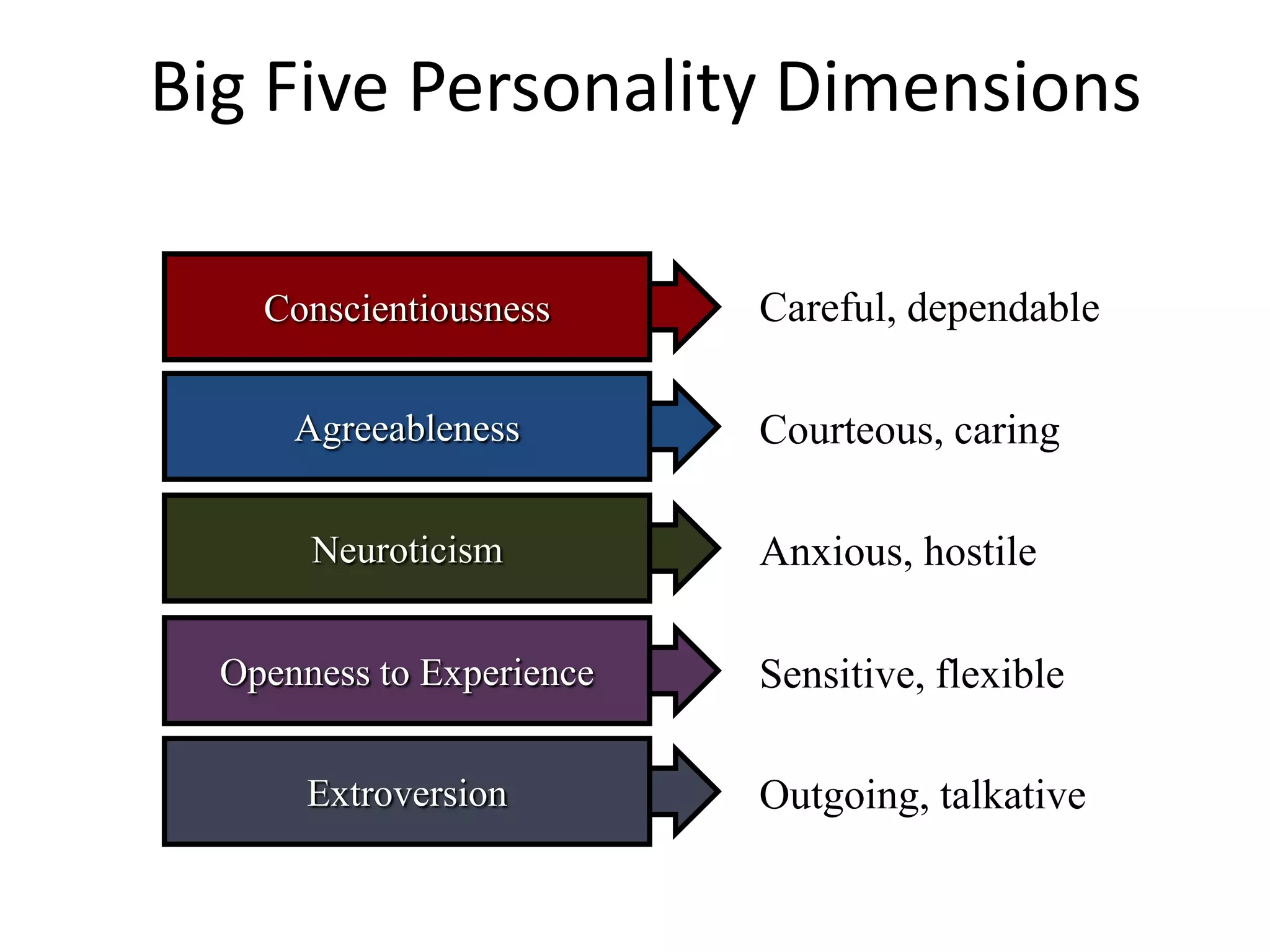
Big Five Personality Dimensions
Outgoing, talkative
Sensitive, flexible
Careful, dependable
Courteous, caring
Anxious, hostile
Extroversion
Openness to Experience
Conscientiousness
Agreeableness
Neuroticism
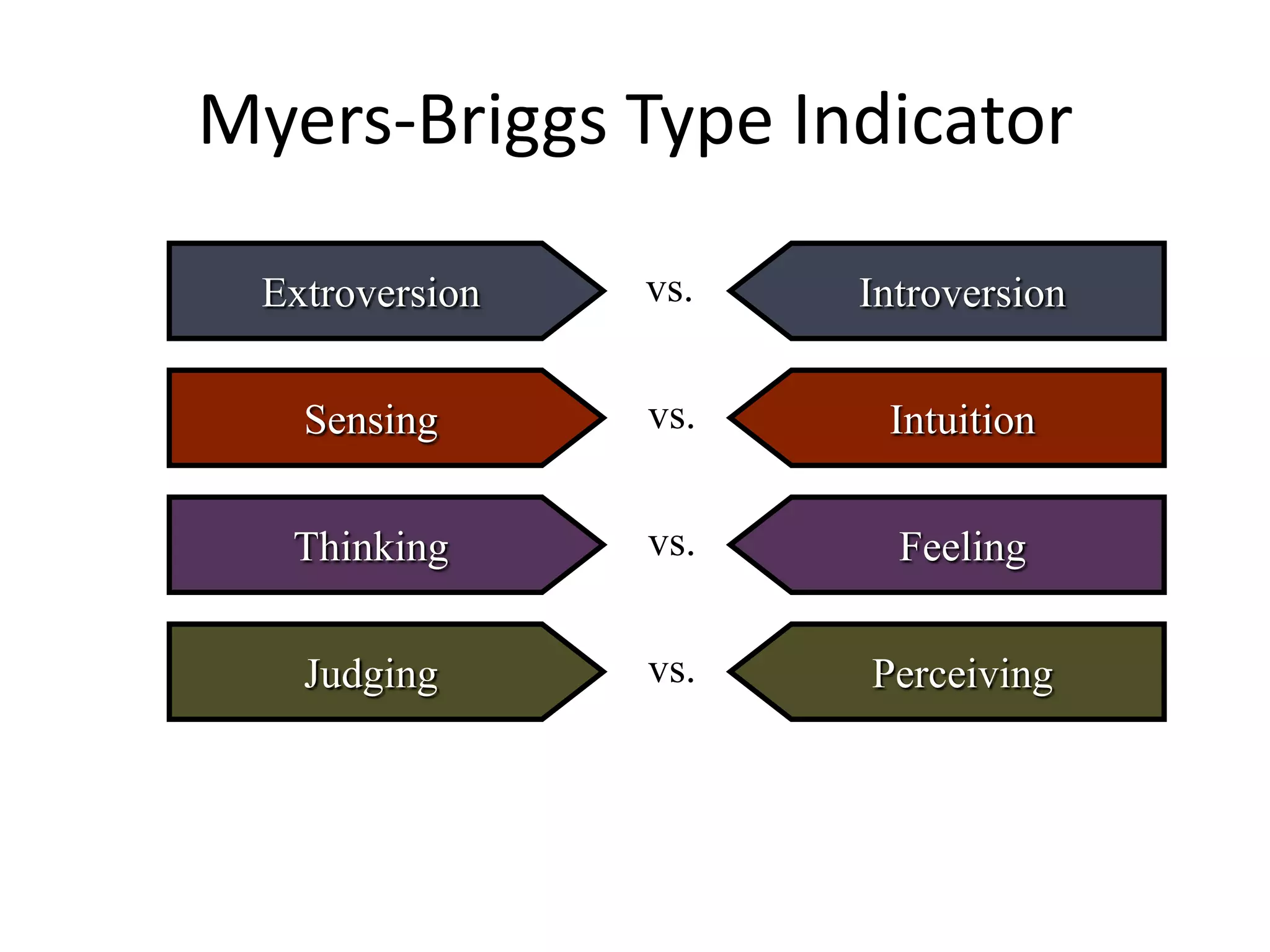
Myers-Briggs Type Indicator
Extroversion Introversionvs.
Sensing Intuitionvs.
Thinking Feelingvs.
Judging Perceivingvs.
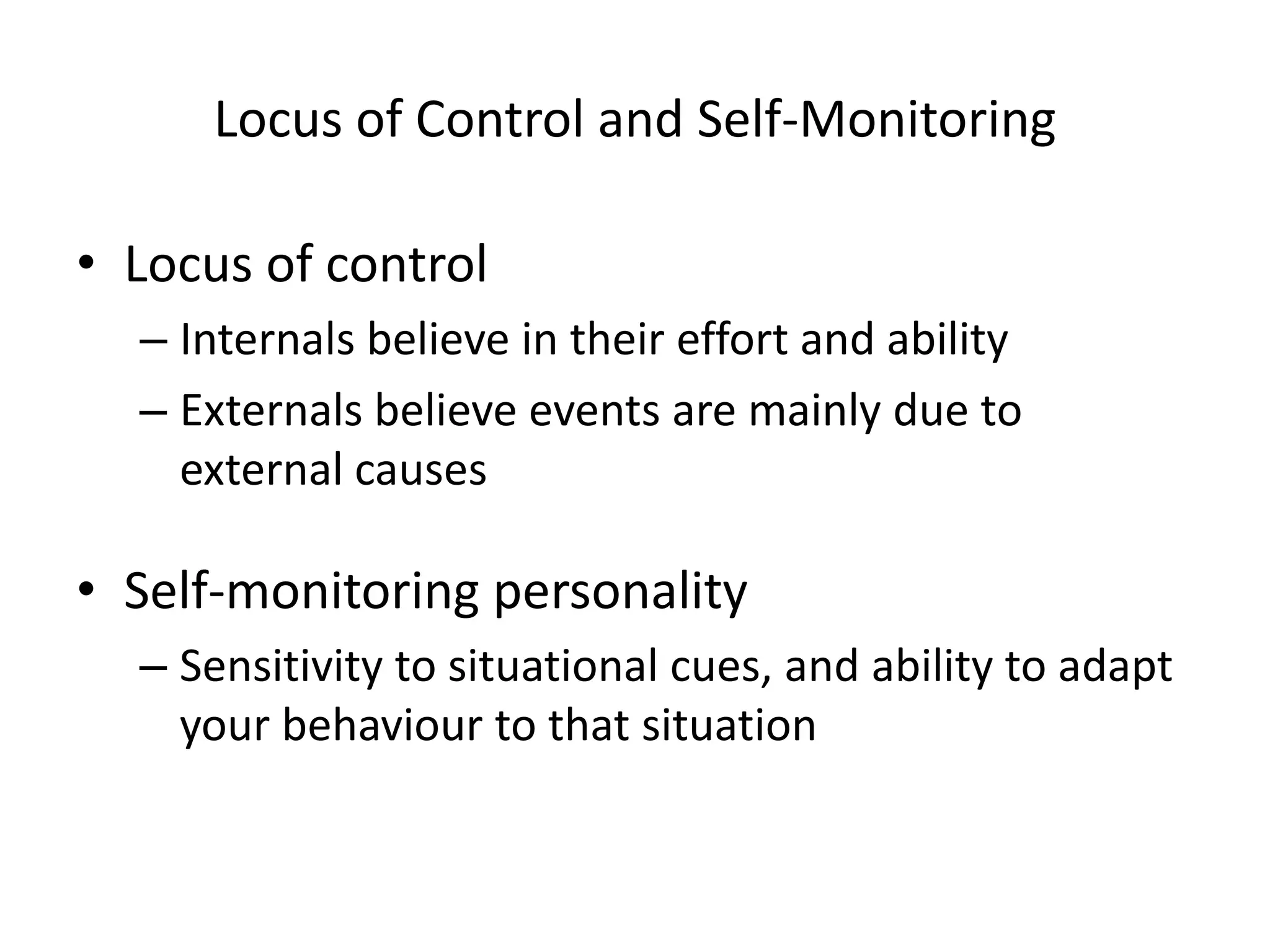
Locus of Control and Self-Monitoring
• Locus of control
– Internals believe in their effort and ability
– Externals believe events are mainly due to
external causes
• Self-monitoring personality
– Sensitivity to situational cues, and ability to adapt
your behaviour to that situation
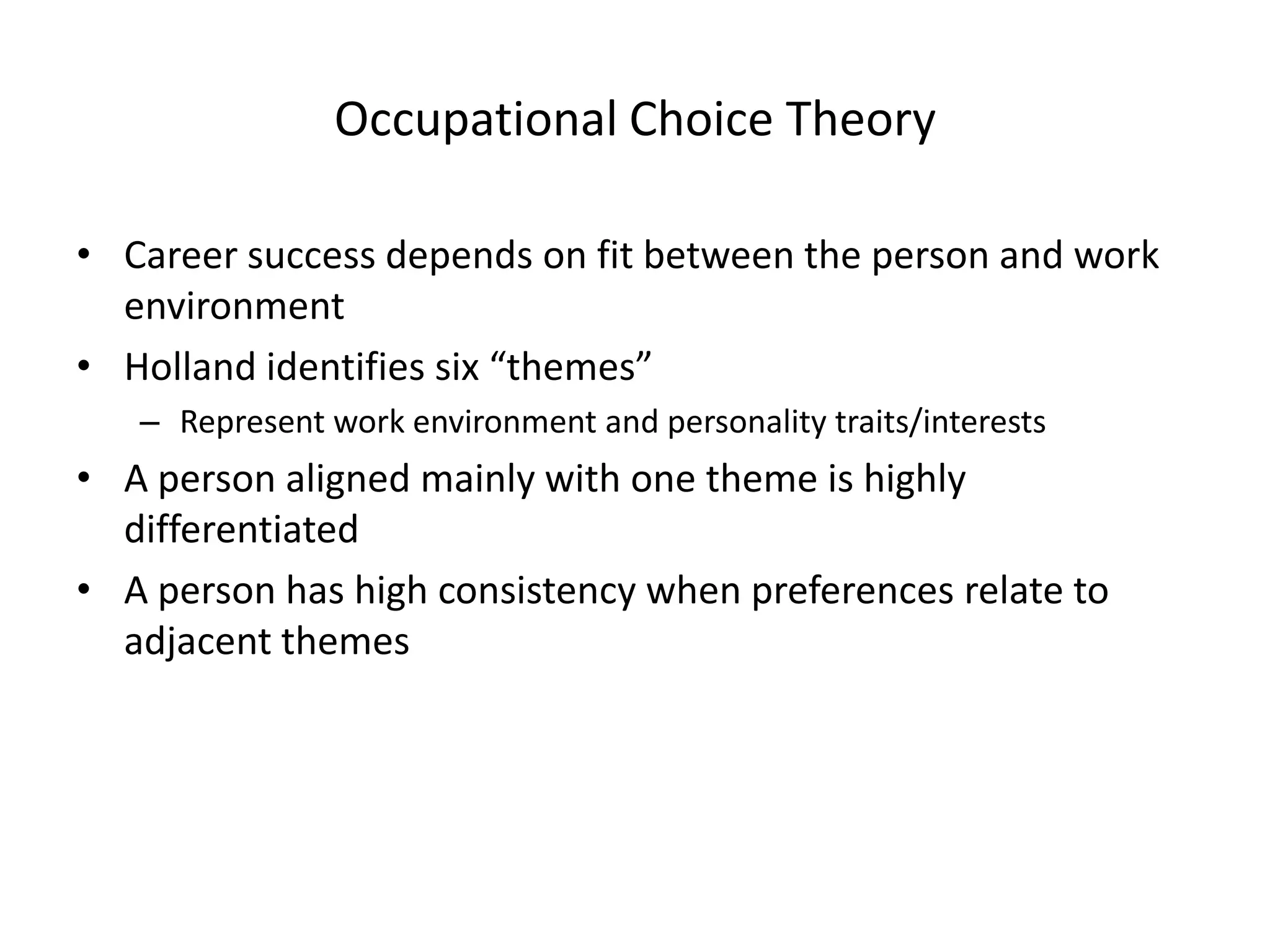
Occupational Choice Theory
• Career success depends on fit between the person and work
environment
• Holland identifies six “themes”
– Represent work environment and personality traits/interests
• A person aligned mainly with one theme is highly
differentiated
• A person has high consistency when preferences relate to
adjacent themes
Individual
Behaviour,
Values, and
Personality
Chapter Two
Extras
Group Behavior
23
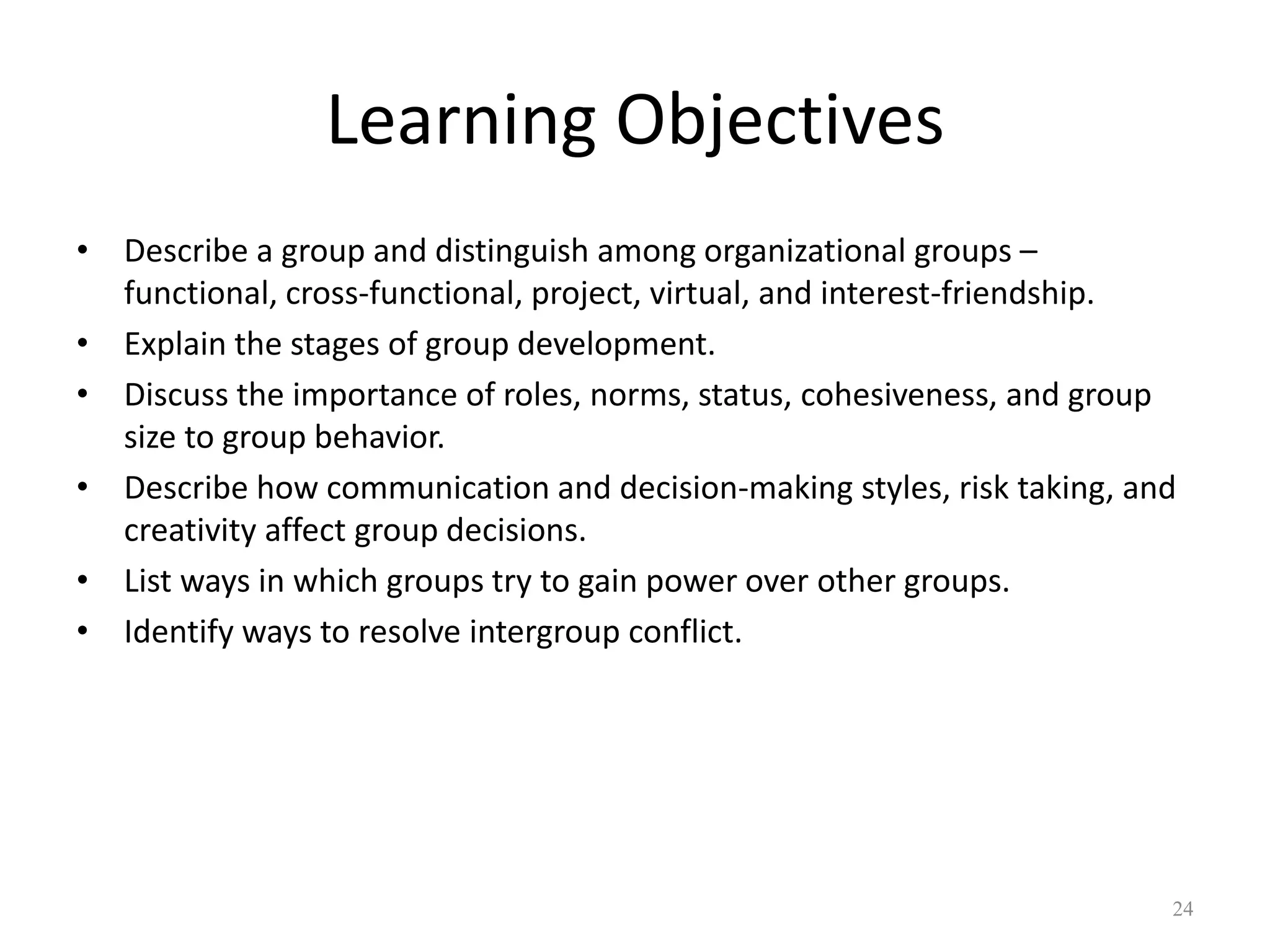
Learning Objectives
• Describe a group and distinguish among organizational groups –
functional, cross-functional, project, virtual, and interest-friendship.
• Explain the stages of group development.
• Discuss the importance of roles, norms, status, cohesiveness, and group
size to group behavior.
• Describe how communication and decision-making styles, risk taking, and
creativity affect group decisions.
• List ways in which groups try to gain power over other groups.
• Identify ways to resolve intergroup conflict.
24
Definition of a Group
25
A group is a social unit of two
or more independent, interactive
people striving for common
goals
Types of Groups
• A functional group is composed of individuals
performing the same tasks
• A cross-functional group is a group composed of
individuals from two or more functional areas
• A project group includes members from many
different backgrounds
26
Types of Groups (contd.)
• A virtual group is a task-focused group that meets
without all the members being present in the same
locale or at the same time
• Interest-friendship groups are formed on the basis
of common beliefs, concerns, or activities
27
Stages of Group Development
• The FORMING stage is characterized by efforts to
determine initial direction
• The STORMING stage is characterized by
confrontation, questioning, and resistance
• The NORMING stage is characterized by cooperation
and teamwork
• The PERFORMING stage is characterized by openness
and collaboration
28
Roles
29
A role is an expected behavior
Role ambiguity occurs when
the job description is vague
In role conflict, two roles are
mutually incompatible
Norms and Status
30
Norms are rules of conduct adopted by group
members
Status is the relative ranking of an individual
in a group
Status incongruence is a discrepancy between
a person’s supposed status and the way the
individual is treated
Status discrepancy occurs when people do
things that do not fit in with their status in the
group
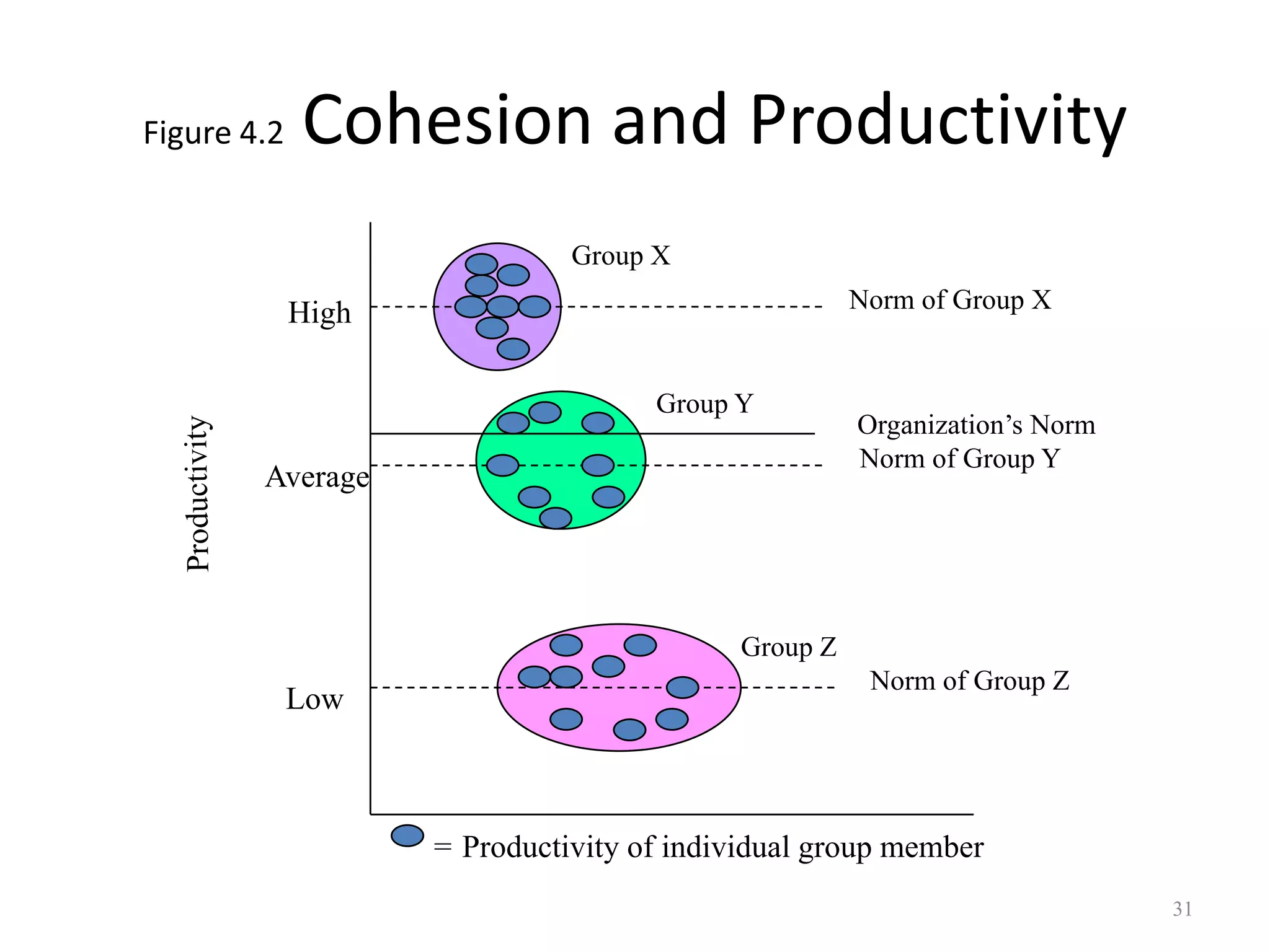
Figure 4.2 Cohesion and Productivity
31
Group X
Norm of Group X
Group Y
Norm of Group Y
Organization’s Norm
Group Z
Norm of Group Z
Low
Average
High
= Productivity of individual group member
Communication Roles
• The OPINION LEADER is typically the informal leader
• The GATEKEEPER controls the flow of information to
the group members
• The LIAISON links the group to other groups
• The ISOLATE is a person who is generally ignored
• The FOLLOWER goes along with the opinion leader or
group at large
32
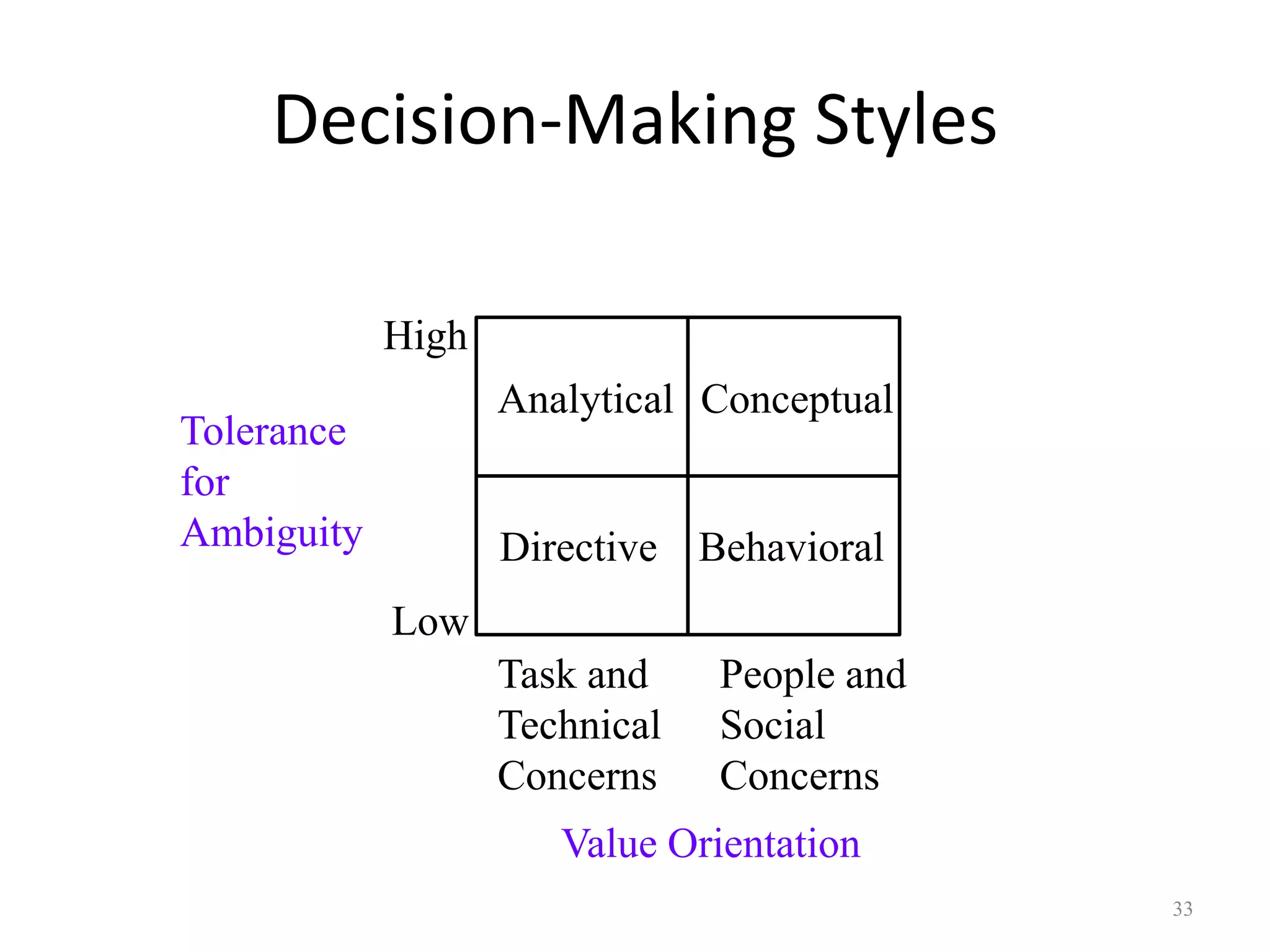
Decision-Making Styles
33
Analytical Conceptual
Directive Behavioral
High
Low
Tolerance
for
Ambiguity
Task and
Technical
Concerns
People and
Social
Concerns
Value Orientation
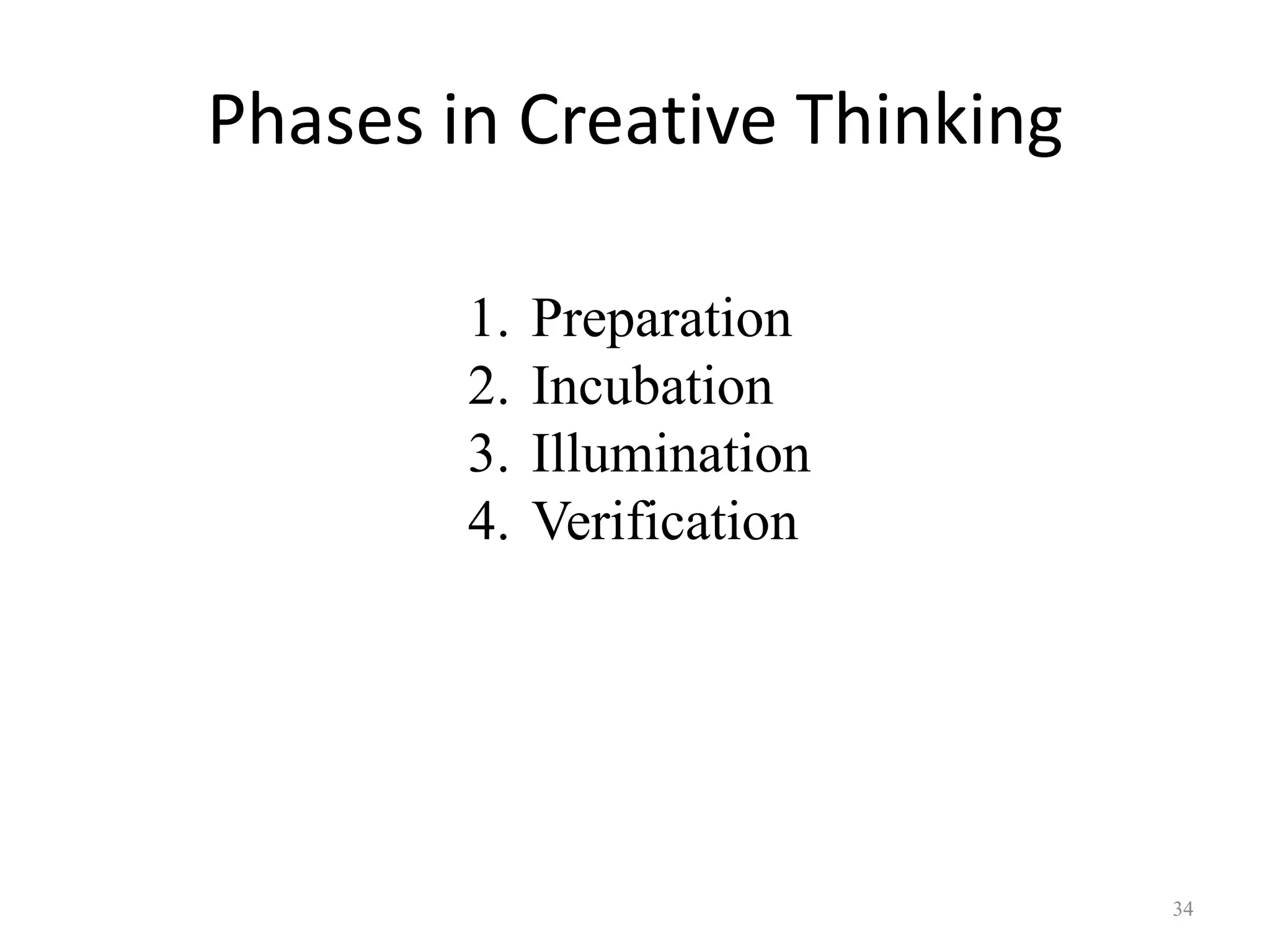
Phases in Creative Thinking
34
1. Preparation
2. Incubation
3. Illumination
4. Verification
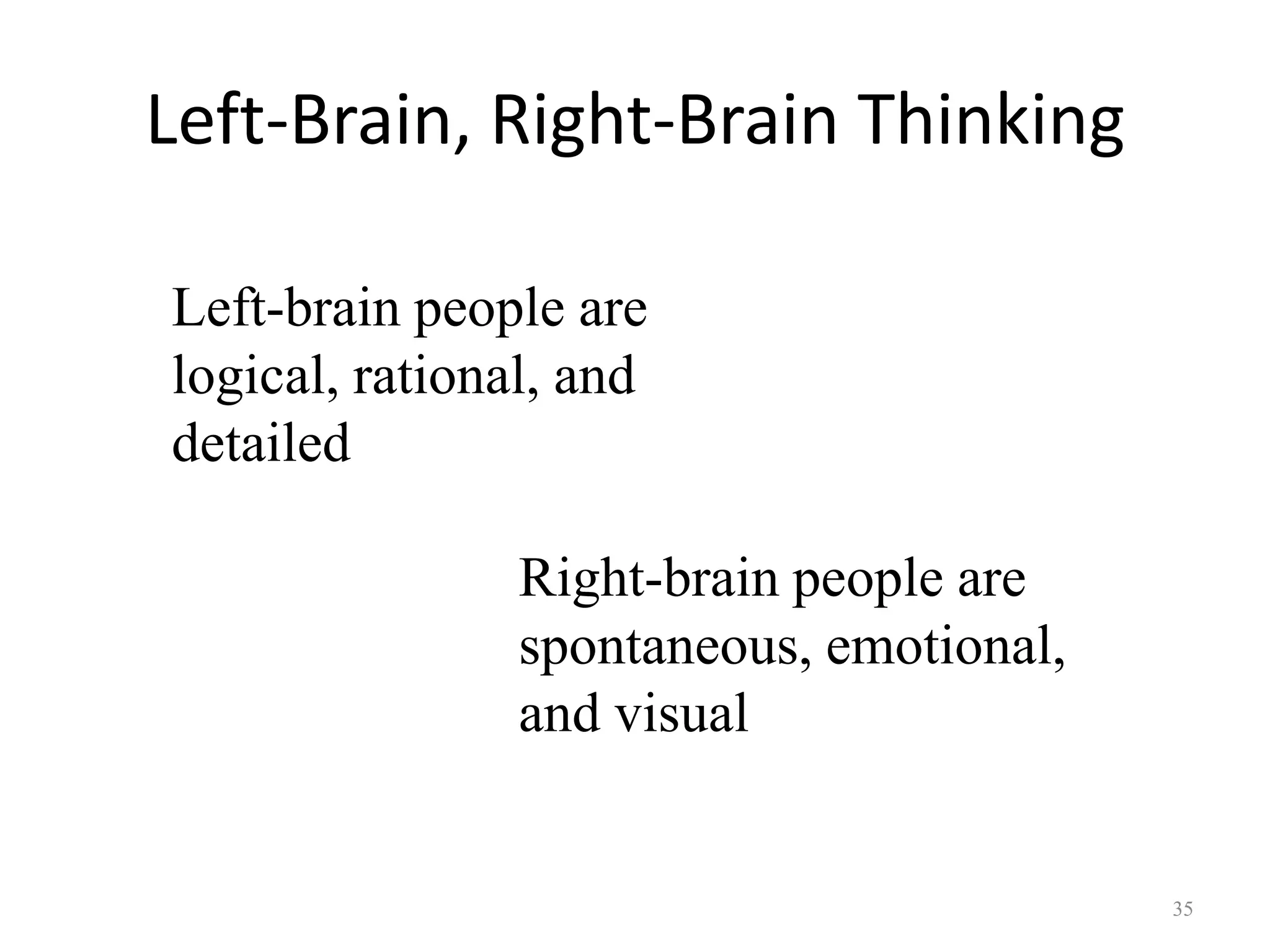
Left-Brain, Right-Brain Thinking
35
Left-brain people are
logical, rational, and
detailed
Right-brain people are
spontaneous, emotional,
and visual
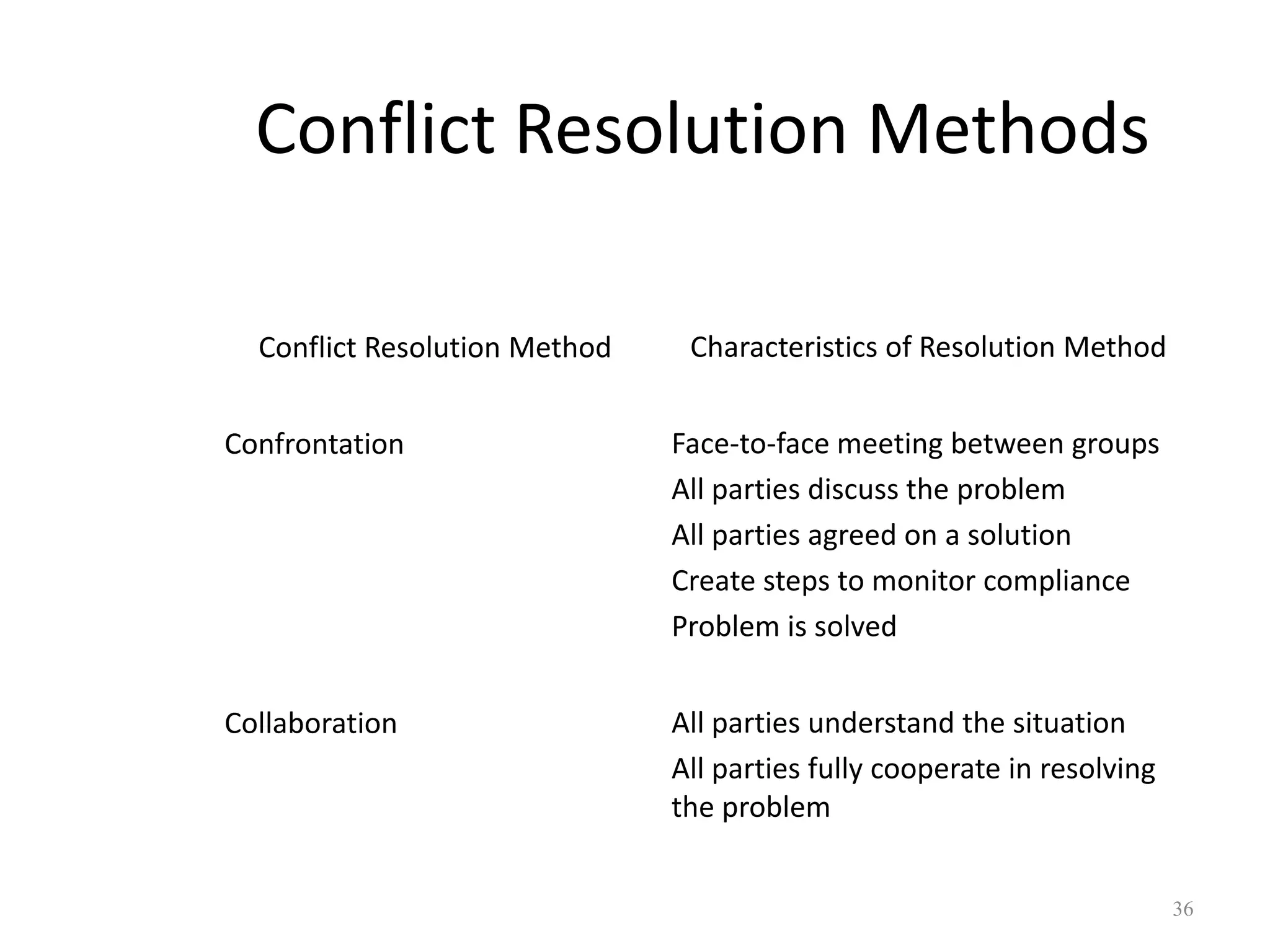
Conflict Resolution Methods
36
Conflict Resolution Method Characteristics of Resolution Method
Confrontation Face-to-face meeting between groups
All parties discuss the problem
All parties agreed on a solution
Create steps to monitor compliance
Problem is solved
Collaboration All parties understand the situation
All parties fully cooperate in resolving
the problem
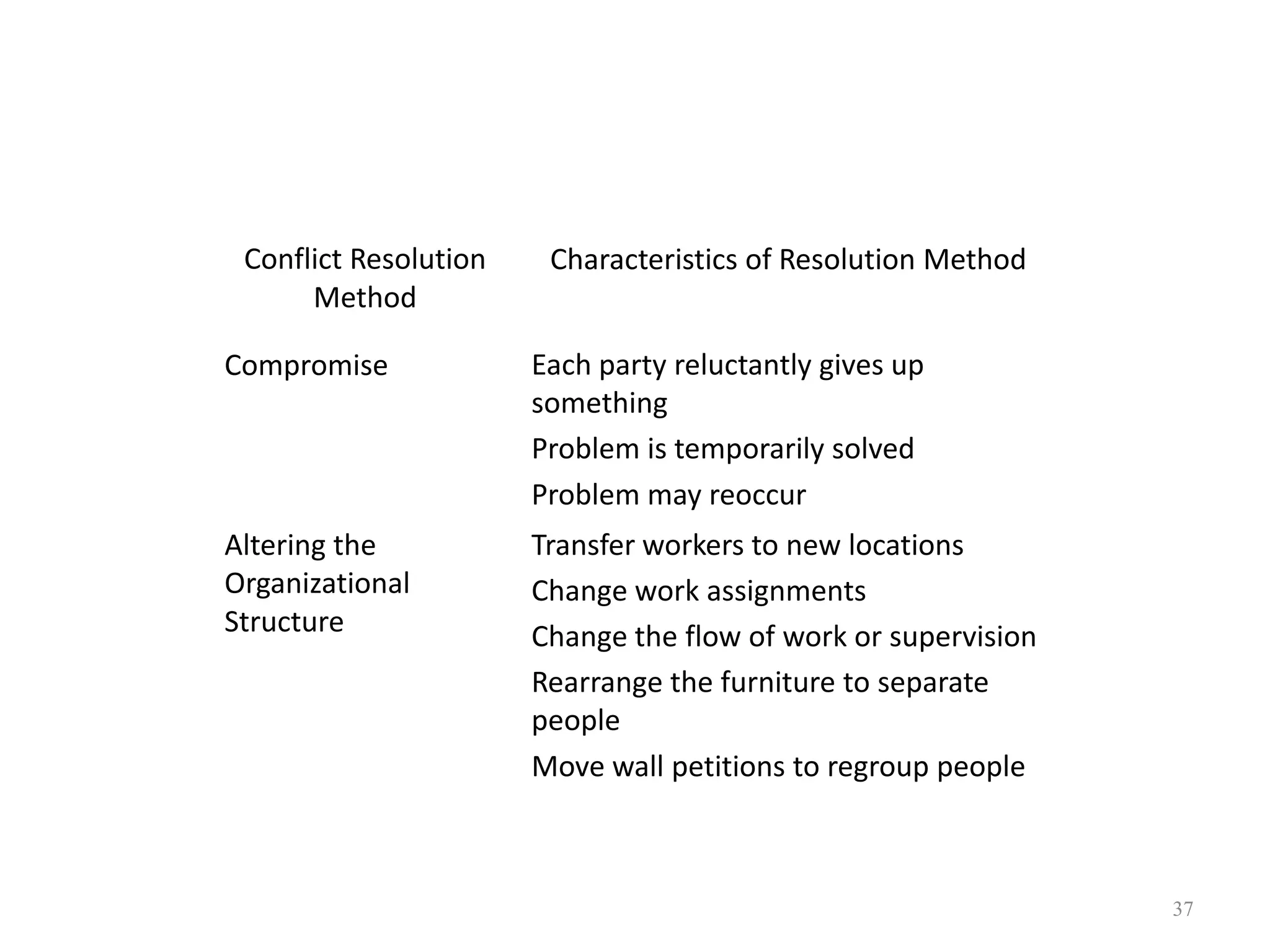
37
Conflict Resolution
Method
Characteristics of Resolution Method
Compromise Each party reluctantly gives up
something
Problem is temporarily solved
Problem may reoccur
Altering the
Organizational
Structure
Transfer workers to new locations
Change work assignments
Change the flow of work or supervision
Rearrange the furniture to separate
people
Move wall petitions to regroup people
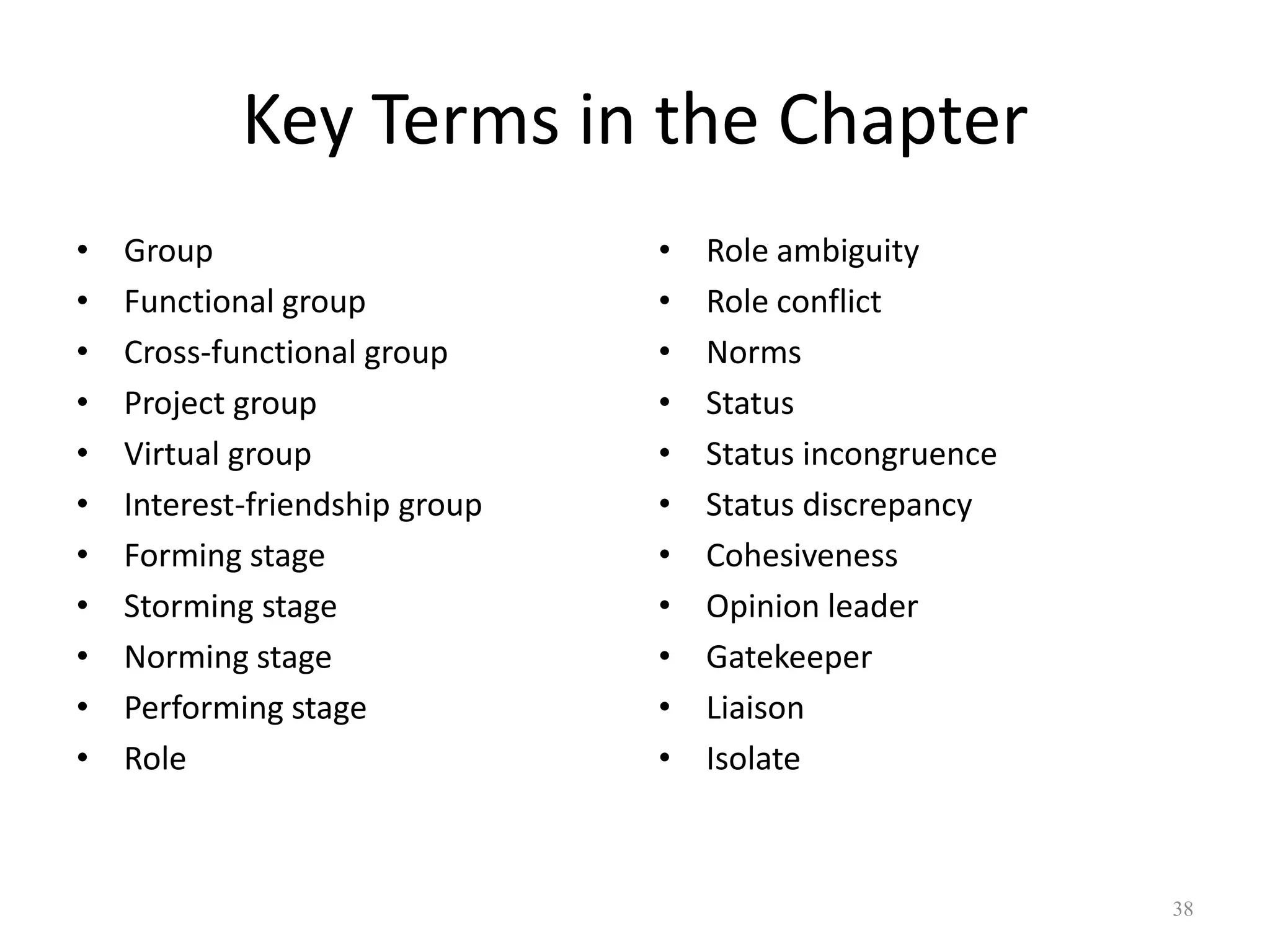
Key Terms in the Chapter
• Group
• Functional group
• Cross-functional group
• Project group
• Virtual group
• Interest-friendship group
• Forming stage
• Storming stage
• Norming stage
• Performing stage
• Role
• Role ambiguity
• Role conflict
• Norms
• Status
• Status incongruence
• Status discrepancy
• Cohesiveness
• Opinion leader
• Gatekeeper
• Liaison
• Isolate
38
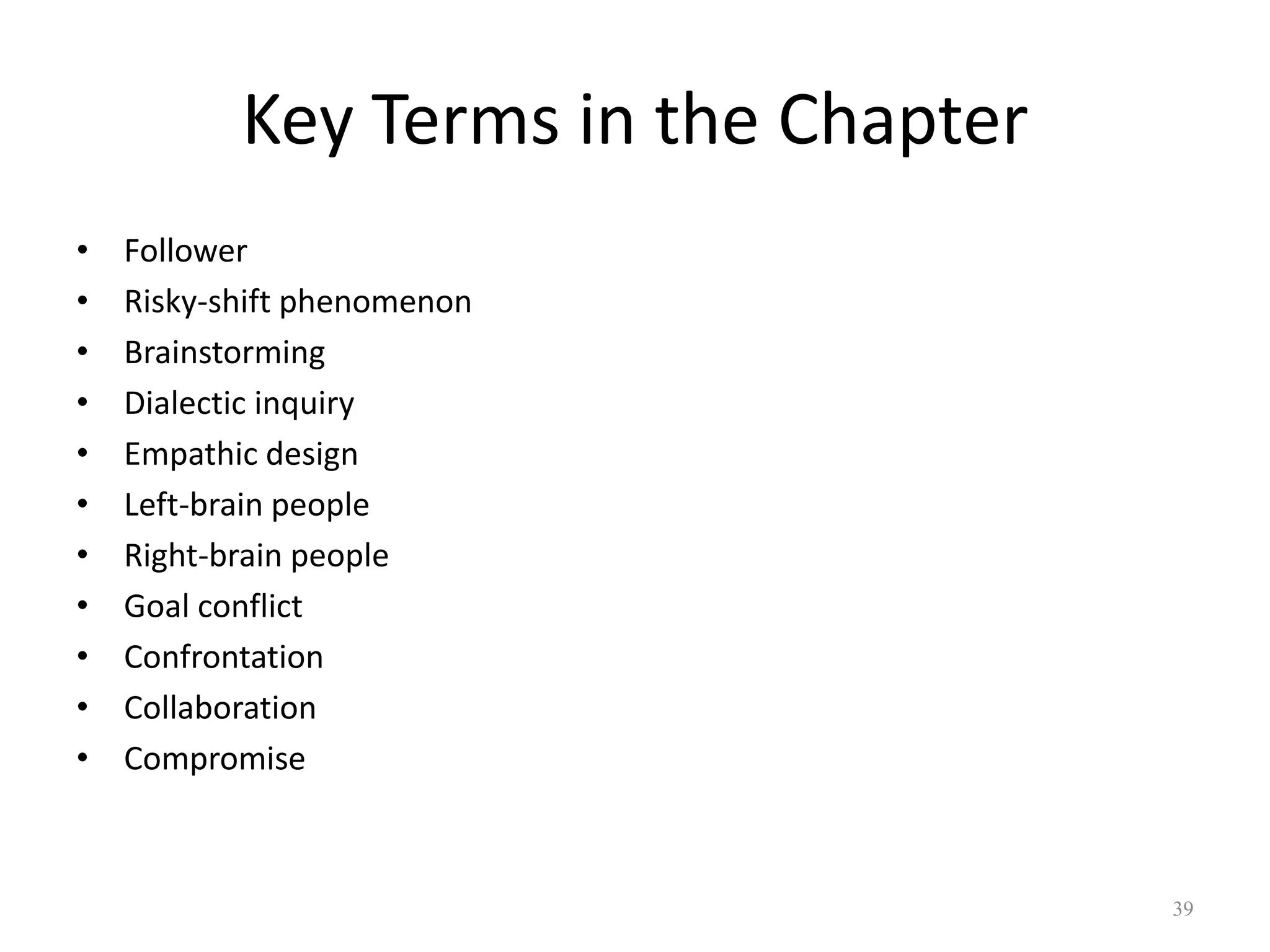
Key Terms in the Chapter
• Follower
• Risky-shift phenomenon
• Brainstorming
• Dialectic inquiry
• Empathic design
• Left-brain people
• Right-brain people
• Goal conflict
• Confrontation
• Collaboration
• Compromise
39

Group behaviour

  • 1.
  • 2.
    Personality Attitudes Perception Attribution Impression Management Theories ofMotivation Learning and Reinforcement Inter-personal relations Managing Stress and Aggressive Behavior
  • 3.
  • 4.
    M A R S BAR Employee Motivation • Internalforces that affect a person’s voluntary choice of behaviour – direction – intensity – persistence
  • 5.
    M A R S BAR Employee Ability • Naturalaptitudes and learned capabilities required to successfully complete a task – competencies personal characteristics that lead to superior performance – person job matching • select qualified people • develop employee abilities through training • redesign job to fit person's existing abilities
  • 6.
    M A R S BAR Employee Role Perceptions •Beliefs about what behaviour is required to achieve the desired results – understanding what tasks to perform – understanding relative importance of tasks – understanding preferred behaviours to accomplish tasks
  • 7.
    M A R S BAR Situational Factors • Environmentalconditions beyond the individual’s short-term control that constrain or facilitate behaviour – time – people – budget – work facilities
  • 8.
    Organizational Citizenship • Performance beyondthe required job duties Task performance • Goal-directed behaviours under person’s control Types of Behaviour in Organizations
  • 9.
    Maintaining Work Attendance • Performancebeyond the required job duties Joining/staying with the Organization • Goal-directed behaviours under person’s control Types of Behaviour in Organizations Counterproductive Work Behaviours • Voluntary behaviour that potentially harms the organization
  • 10.
    Values in theWorkplace • Stable, evaluative beliefs that guide our preferences • Define right or wrong, good or bad • Value system -- hierarchy of values • Espoused vs. enacted values: – Espoused -- the values we say we use and often think we use – Enacted -- values we actually rely on to guide our decisions and actions
  • 11.
    Values Congruence • Valuescongruence -- where two or more entities have similar value systems • Consequences of incongruence – Incompatible decisions – Lower satisfaction and commitment – Increased stress and turnover • Benefits of incongruence – Better decision making (diverse values) – Enhanced problem definition – Prevents “corporate cults”
  • 12.
  • 13.
    Utilitarianism Individual Rights Greatest good forthe greatest number of people Fundamental entitlements in society Distributive Justice People who are similar should receive similar benefits Three Ethical Principles
  • 14.
    Influences on EthicalConduct • Moral intensity – degree that issue demands ethical principles • Ethical sensitivity – ability to recognize the presence and determine the relative importance of an ethical issue • Situational influences – competitive pressures and other conditions affect ethical behaviour
  • 15.
    Supporting Ethical Behaviour •Ethical code of conduct – Establishes standards of behaviour – Problem: Limited effect alone on ethical behaviour • Ethics training – Awareness and clarification of ethics code – Practice resolving ethical dilemmas • Ethics officers – Educate and counsel; hear about wrongdoing • Ethical leadership – Demonstrate integrity and role model ethical conduct
  • 16.
    Defining Personality • Relativelystable pattern of behaviours and consistent internal states that explain a person's behavioural tendencies
  • 17.
    Big Five PersonalityDimensions Outgoing, talkative Sensitive, flexible Careful, dependable Courteous, caring Anxious, hostile Extroversion Openness to Experience Conscientiousness Agreeableness Neuroticism
  • 18.
    Myers-Briggs Type Indicator ExtroversionIntroversionvs. Sensing Intuitionvs. Thinking Feelingvs. Judging Perceivingvs.
  • 19.
    Locus of Controland Self-Monitoring • Locus of control – Internals believe in their effort and ability – Externals believe events are mainly due to external causes • Self-monitoring personality – Sensitivity to situational cues, and ability to adapt your behaviour to that situation
  • 20.
    Occupational Choice Theory •Career success depends on fit between the person and work environment • Holland identifies six “themes” – Represent work environment and personality traits/interests • A person aligned mainly with one theme is highly differentiated • A person has high consistency when preferences relate to adjacent themes
  • 21.
  • 22.
  • 23.
  • 24.
    Learning Objectives • Describea group and distinguish among organizational groups – functional, cross-functional, project, virtual, and interest-friendship. • Explain the stages of group development. • Discuss the importance of roles, norms, status, cohesiveness, and group size to group behavior. • Describe how communication and decision-making styles, risk taking, and creativity affect group decisions. • List ways in which groups try to gain power over other groups. • Identify ways to resolve intergroup conflict. 24
  • 25.
    Definition of aGroup 25 A group is a social unit of two or more independent, interactive people striving for common goals
  • 26.
    Types of Groups •A functional group is composed of individuals performing the same tasks • A cross-functional group is a group composed of individuals from two or more functional areas • A project group includes members from many different backgrounds 26
  • 27.
    Types of Groups(contd.) • A virtual group is a task-focused group that meets without all the members being present in the same locale or at the same time • Interest-friendship groups are formed on the basis of common beliefs, concerns, or activities 27
  • 28.
    Stages of GroupDevelopment • The FORMING stage is characterized by efforts to determine initial direction • The STORMING stage is characterized by confrontation, questioning, and resistance • The NORMING stage is characterized by cooperation and teamwork • The PERFORMING stage is characterized by openness and collaboration 28
  • 29.
    Roles 29 A role isan expected behavior Role ambiguity occurs when the job description is vague In role conflict, two roles are mutually incompatible
  • 30.
    Norms and Status 30 Normsare rules of conduct adopted by group members Status is the relative ranking of an individual in a group Status incongruence is a discrepancy between a person’s supposed status and the way the individual is treated Status discrepancy occurs when people do things that do not fit in with their status in the group
  • 31.
    Figure 4.2 Cohesionand Productivity 31 Group X Norm of Group X Group Y Norm of Group Y Organization’s Norm Group Z Norm of Group Z Low Average High = Productivity of individual group member
  • 32.
    Communication Roles • TheOPINION LEADER is typically the informal leader • The GATEKEEPER controls the flow of information to the group members • The LIAISON links the group to other groups • The ISOLATE is a person who is generally ignored • The FOLLOWER goes along with the opinion leader or group at large 32
  • 33.
    Decision-Making Styles 33 Analytical Conceptual DirectiveBehavioral High Low Tolerance for Ambiguity Task and Technical Concerns People and Social Concerns Value Orientation
  • 34.
    Phases in CreativeThinking 34 1. Preparation 2. Incubation 3. Illumination 4. Verification
  • 35.
    Left-Brain, Right-Brain Thinking 35 Left-brainpeople are logical, rational, and detailed Right-brain people are spontaneous, emotional, and visual
  • 36.
    Conflict Resolution Methods 36 ConflictResolution Method Characteristics of Resolution Method Confrontation Face-to-face meeting between groups All parties discuss the problem All parties agreed on a solution Create steps to monitor compliance Problem is solved Collaboration All parties understand the situation All parties fully cooperate in resolving the problem
  • 37.
    37 Conflict Resolution Method Characteristics ofResolution Method Compromise Each party reluctantly gives up something Problem is temporarily solved Problem may reoccur Altering the Organizational Structure Transfer workers to new locations Change work assignments Change the flow of work or supervision Rearrange the furniture to separate people Move wall petitions to regroup people
  • 38.
    Key Terms inthe Chapter • Group • Functional group • Cross-functional group • Project group • Virtual group • Interest-friendship group • Forming stage • Storming stage • Norming stage • Performing stage • Role • Role ambiguity • Role conflict • Norms • Status • Status incongruence • Status discrepancy • Cohesiveness • Opinion leader • Gatekeeper • Liaison • Isolate 38
  • 39.
    Key Terms inthe Chapter • Follower • Risky-shift phenomenon • Brainstorming • Dialectic inquiry • Empathic design • Left-brain people • Right-brain people • Goal conflict • Confrontation • Collaboration • Compromise 39