Amabilis Jelliarko Palgunadi
Std. id: 2007315247


Department of Chemistry, Kyung Hee University,
1 Hoegi-dong, Dongdaemun-gu, 130-70l Seoul, Republic
of Korea
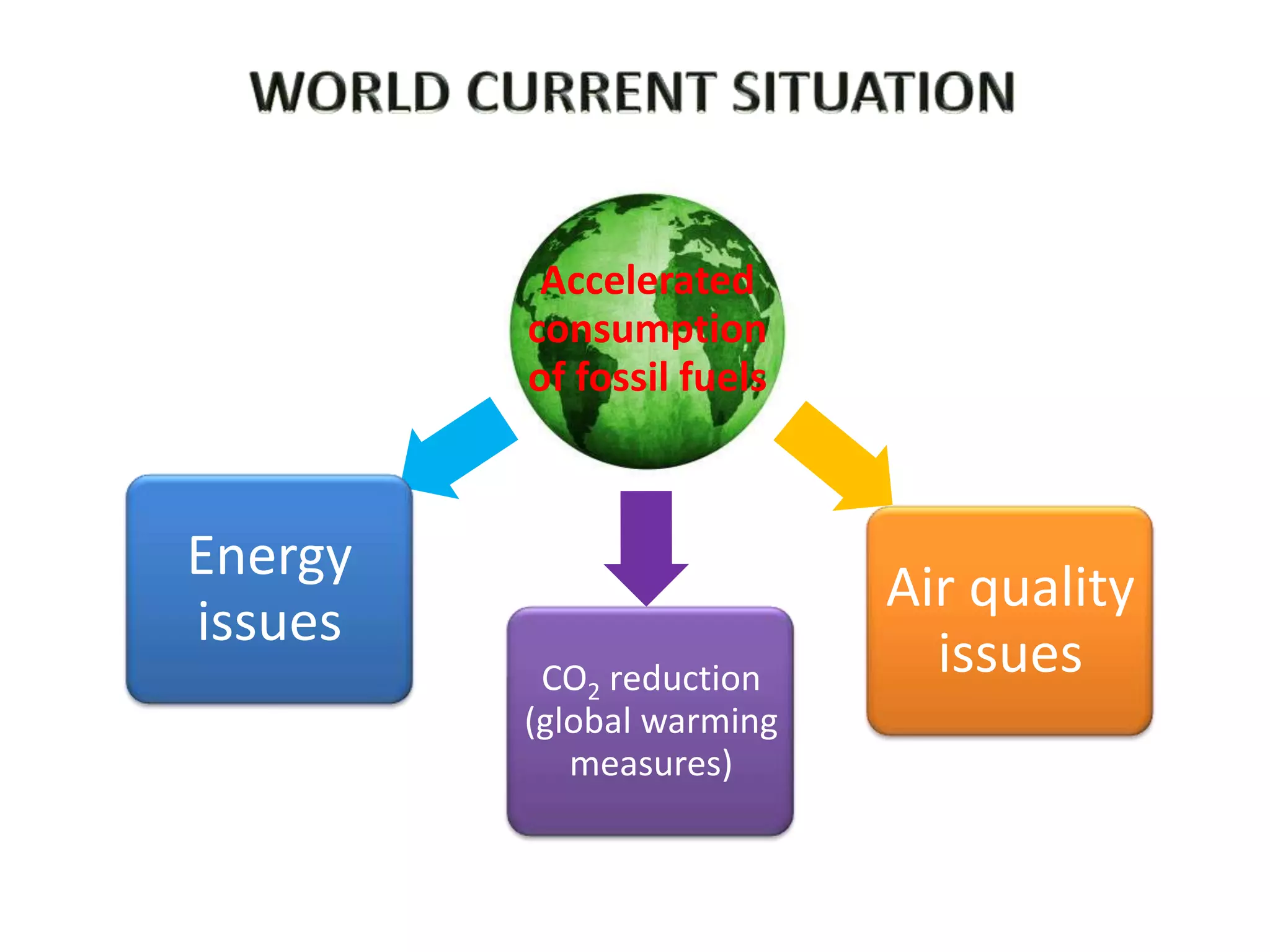
Accelerated
         consumption
         of fossil fuels


Energy
                           Air quality
issues
          CO2 reduction      issues
         (global warming
            measures)
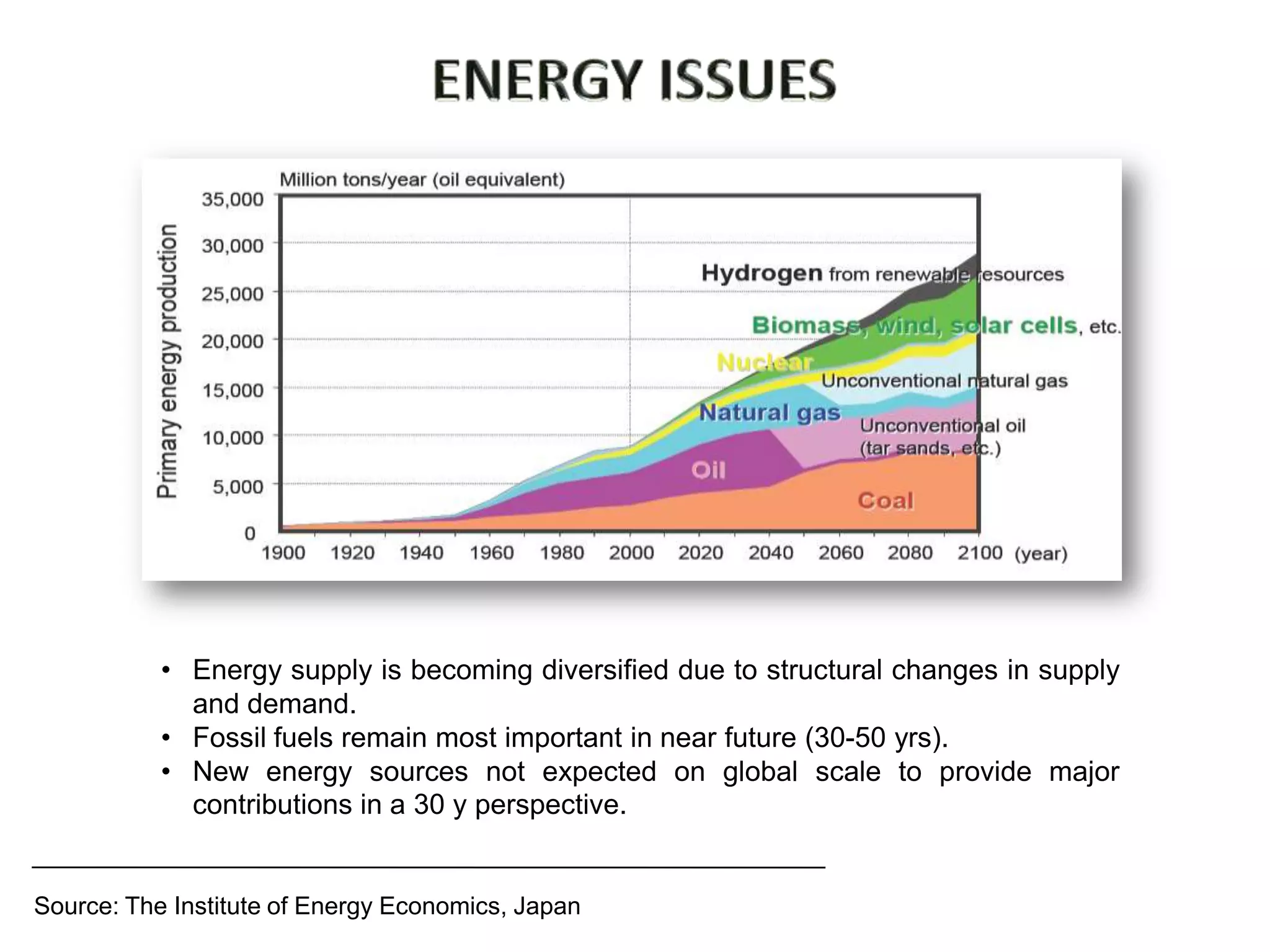
• Energy supply is becoming diversified due to structural changes in supply
             and demand.
           • Fossil fuels remain most important in near future (30-50 yrs).
           • New energy sources not expected on global scale to provide major
             contributions in a 30 y perspective.


Source: The Institute of Energy Economics, Japan
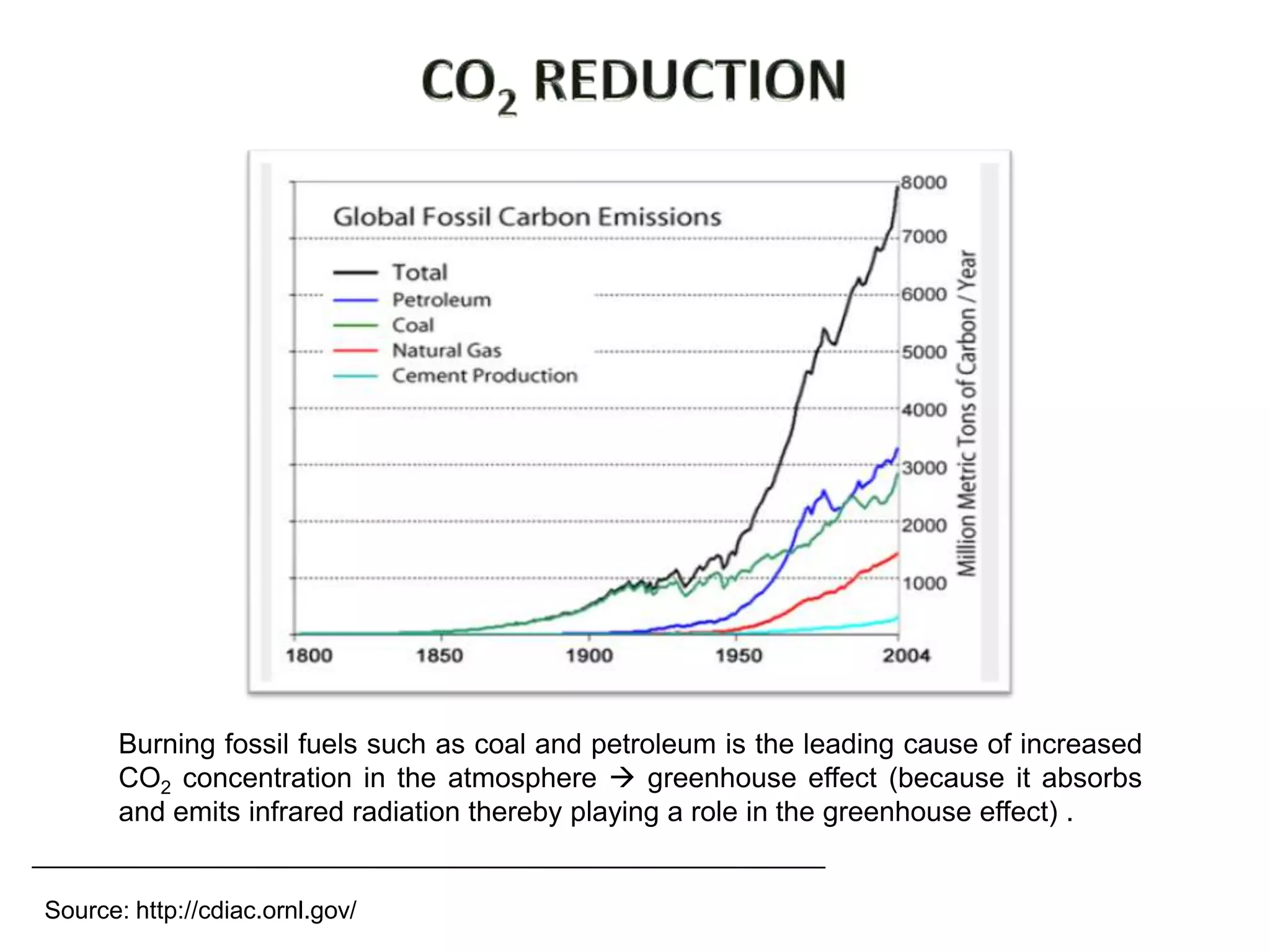
Burning fossil fuels such as coal and petroleum is the leading cause of increased
       CO2 concentration in the atmosphere  greenhouse effect (because it absorbs
       and emits infrared radiation thereby playing a role in the greenhouse effect) .


Source: http://cdiac.ornl.gov/
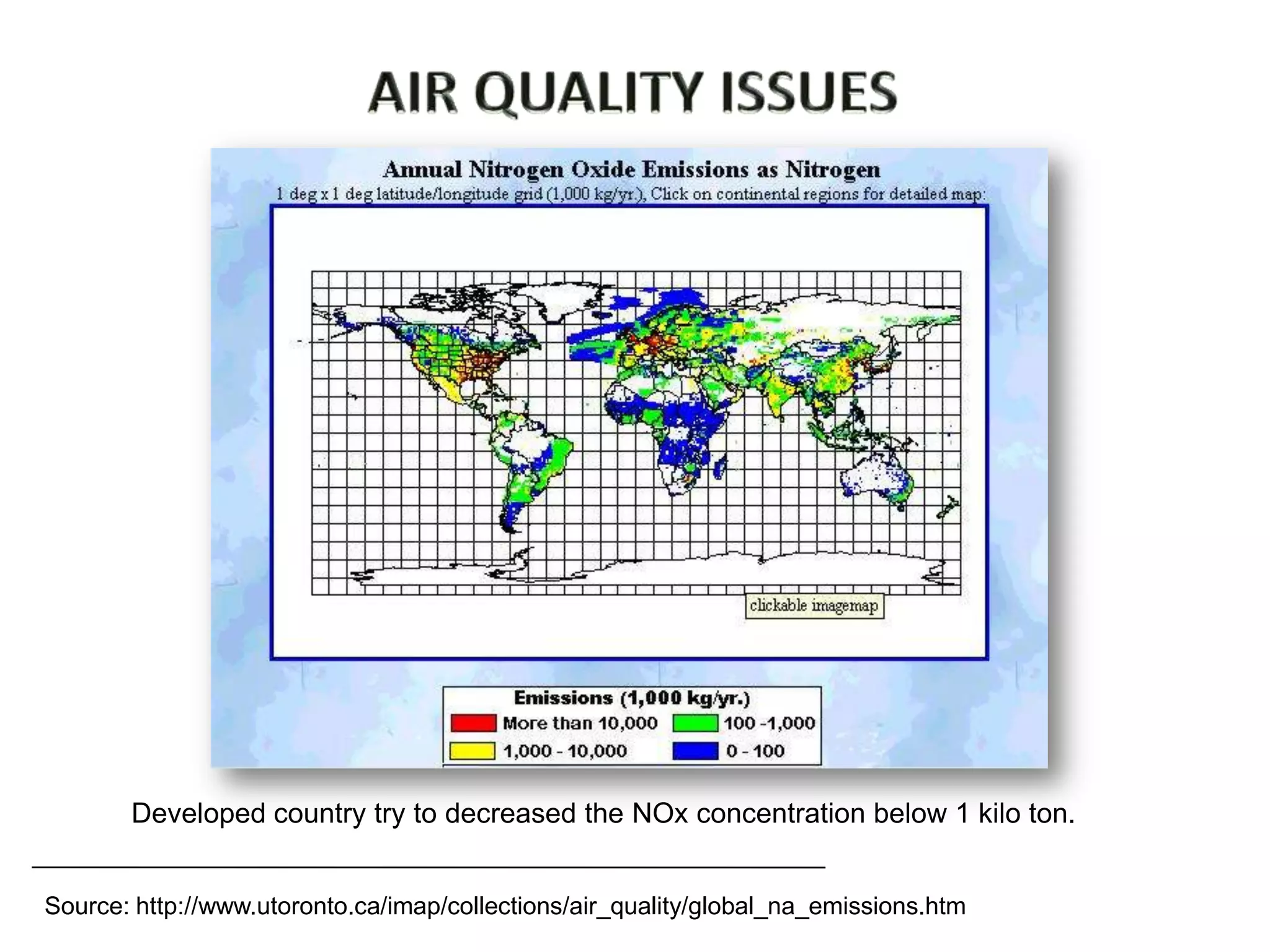
Developed country try to decreased the NOx concentration below 1 kilo ton.


Source: http://www.utoronto.ca/imap/collections/air_quality/global_na_emissions.htm
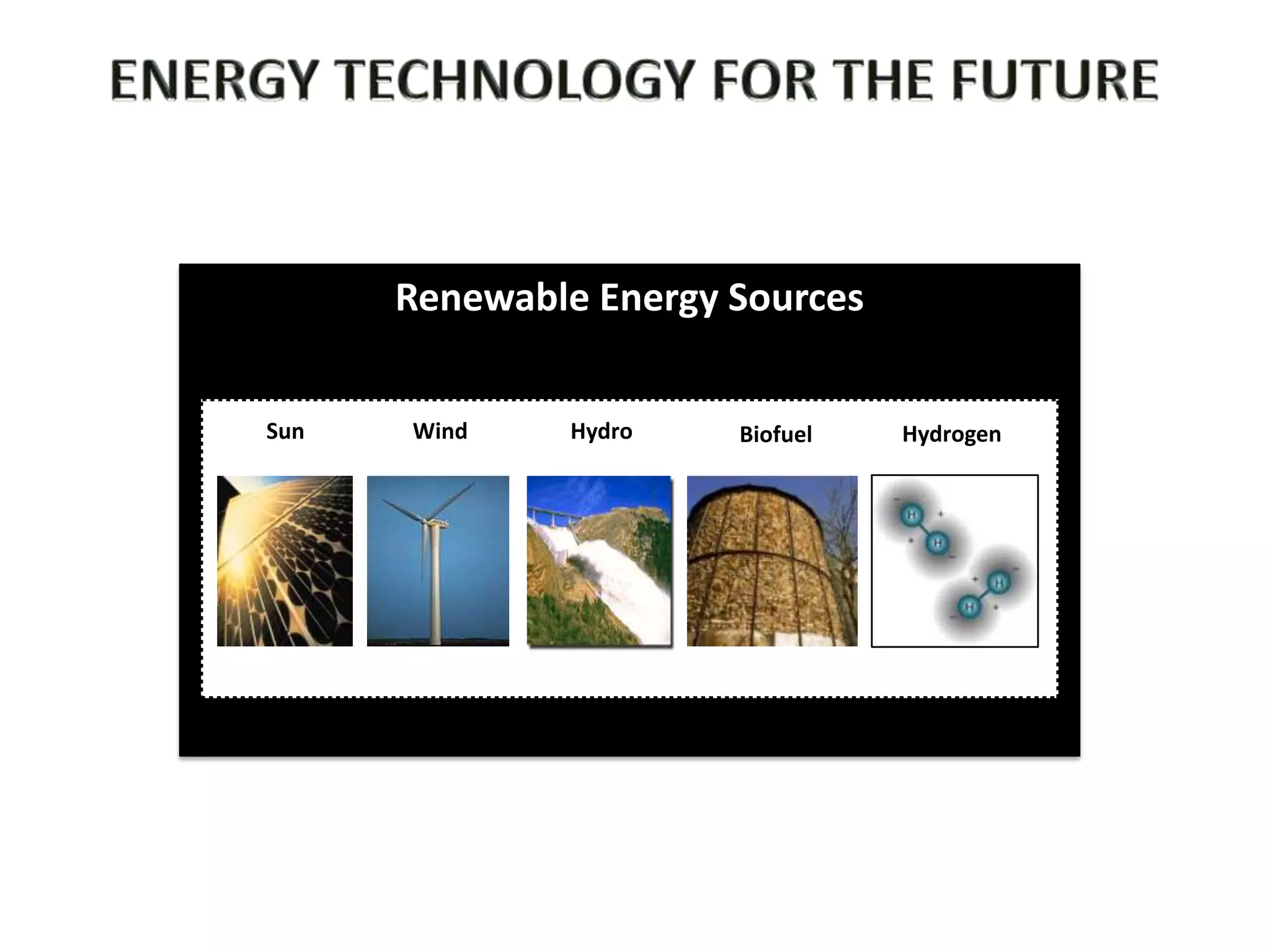
Renewable Energy Sources


Sun   Wind    Hydro    Biofuel   Hydrogen
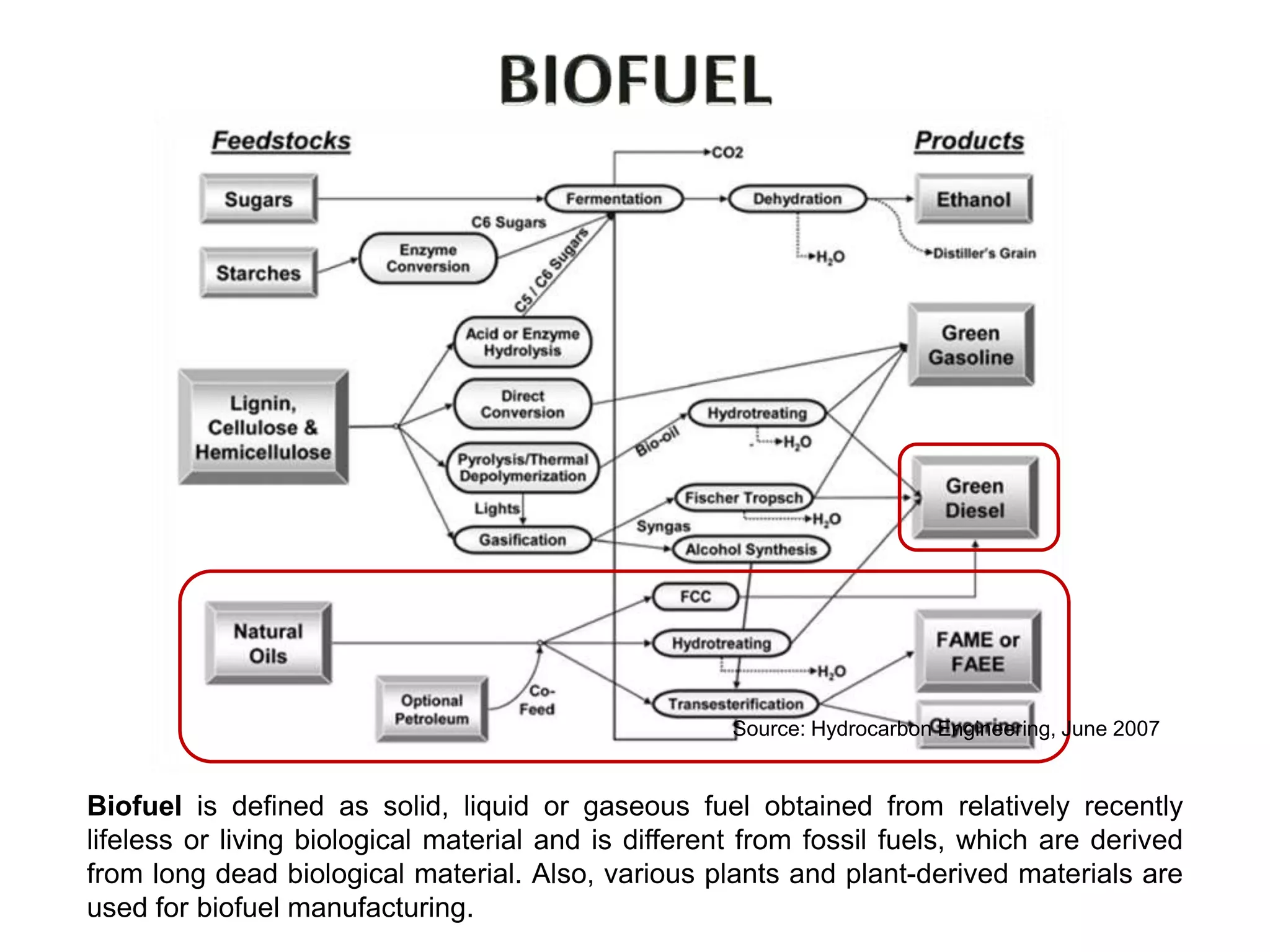
Source: Hydrocarbon Engineering, June 2007


Biofuel is defined as solid, liquid or gaseous fuel obtained from relatively recently
lifeless or living biological material and is different from fossil fuels, which are derived
from long dead biological material. Also, various plants and plant-derived materials are
used for biofuel manufacturing.
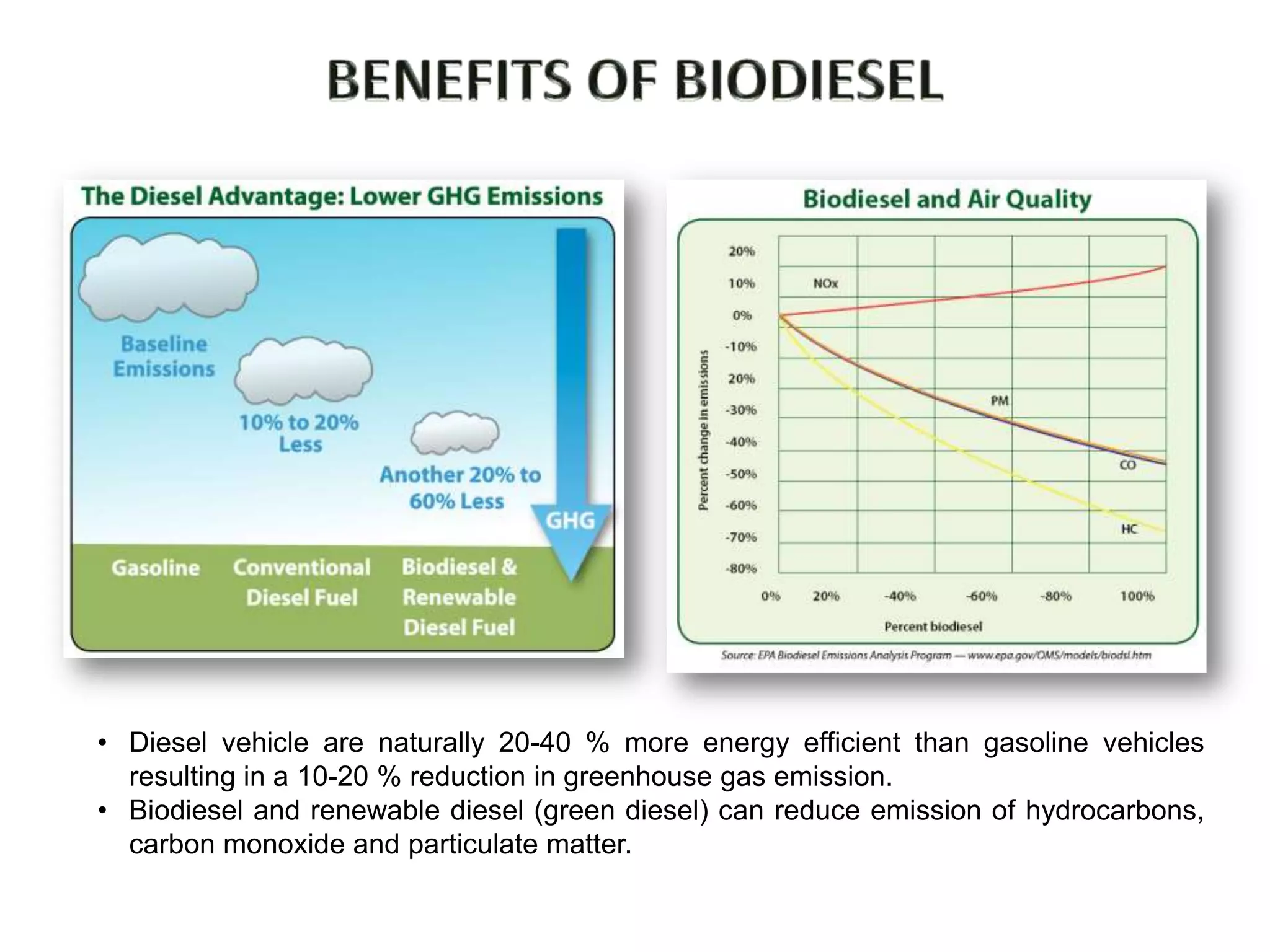
• Diesel vehicle are naturally 20-40 % more energy efficient than gasoline vehicles
  resulting in a 10-20 % reduction in greenhouse gas emission.
• Biodiesel and renewable diesel (green diesel) can reduce emission of hydrocarbons,
  carbon monoxide and particulate matter.
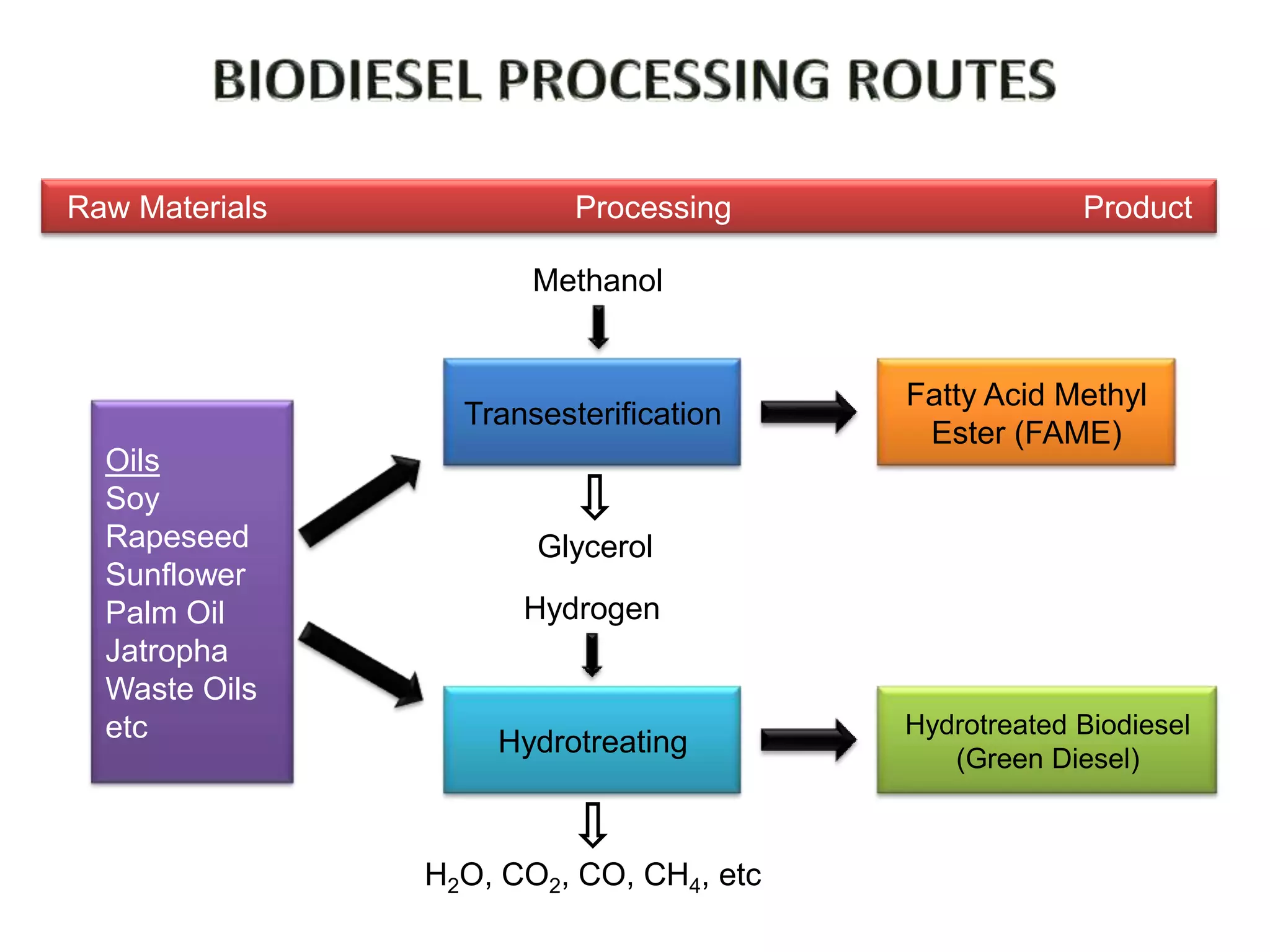
Raw Materials             Processing                  Product

                       Methanol


                                         Fatty Acid Methyl
                  Transesterification
                                          Ester (FAME)
  Oils
  Soy
  Rapeseed             Glycerol
  Sunflower
  Palm Oil            Hydrogen
  Jatropha
  Waste Oils
  etc                                    Hydrotreated Biodiesel
                    Hydrotreating           (Green Diesel)


                H2O, CO2, CO, CH4, etc
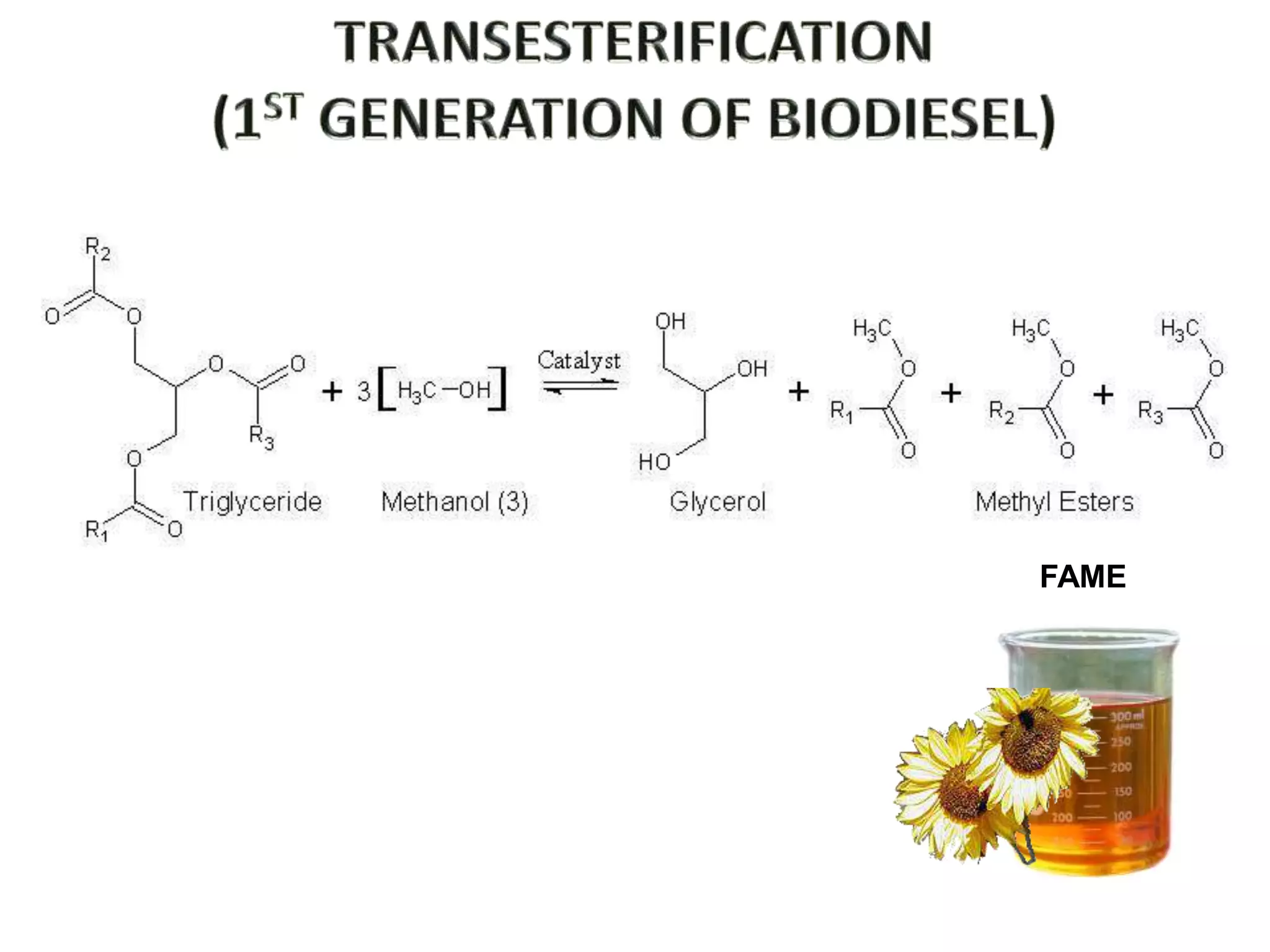
FAME
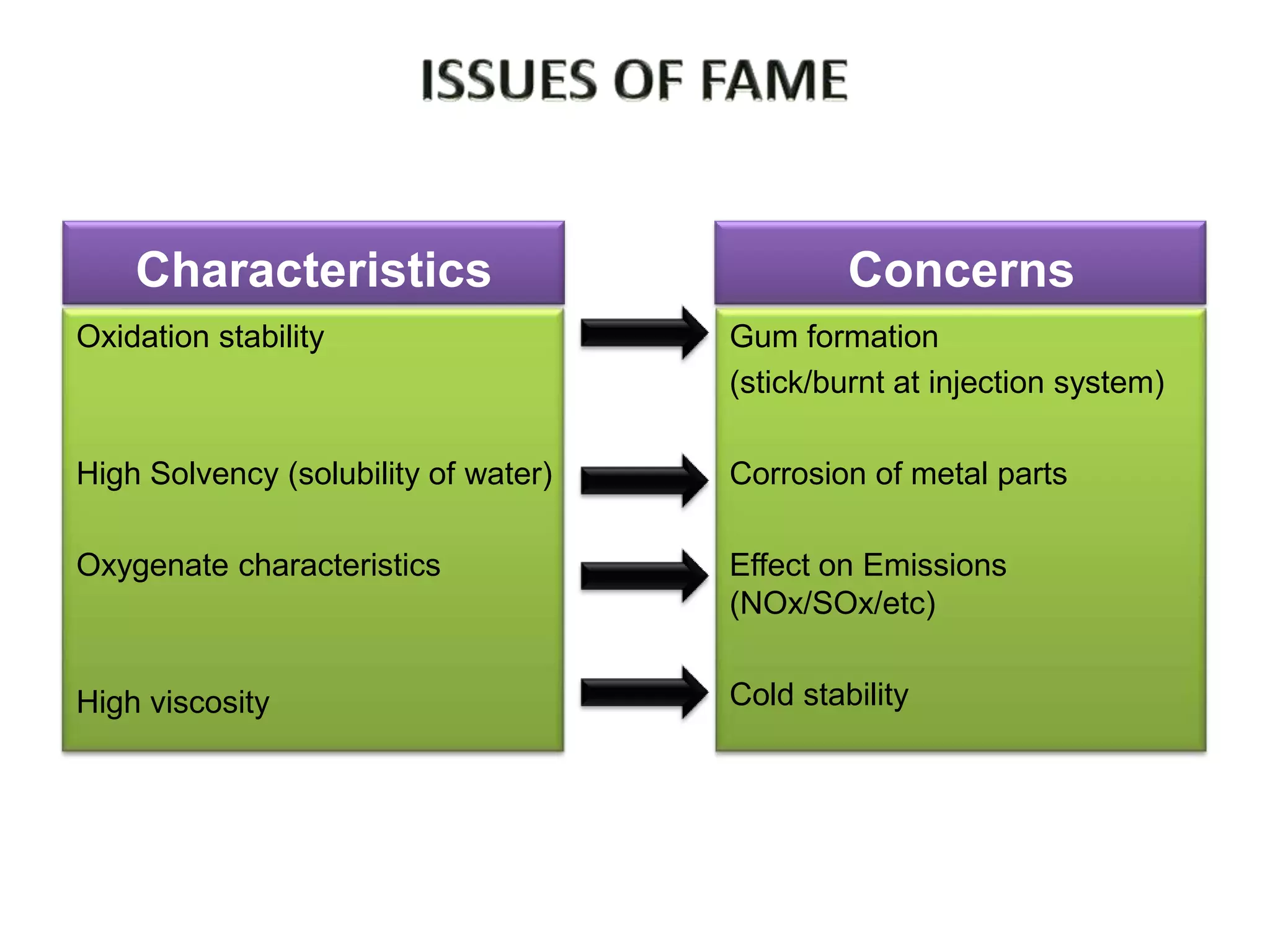
Characteristics                            Concerns
Oxidation stability                   Gum formation
                                      (stick/burnt at injection system)

High Solvency (solubility of water)   Corrosion of metal parts

Oxygenate characteristics             Effect on Emissions
                                      (NOx/SOx/etc)


High viscosity                        Cold stability
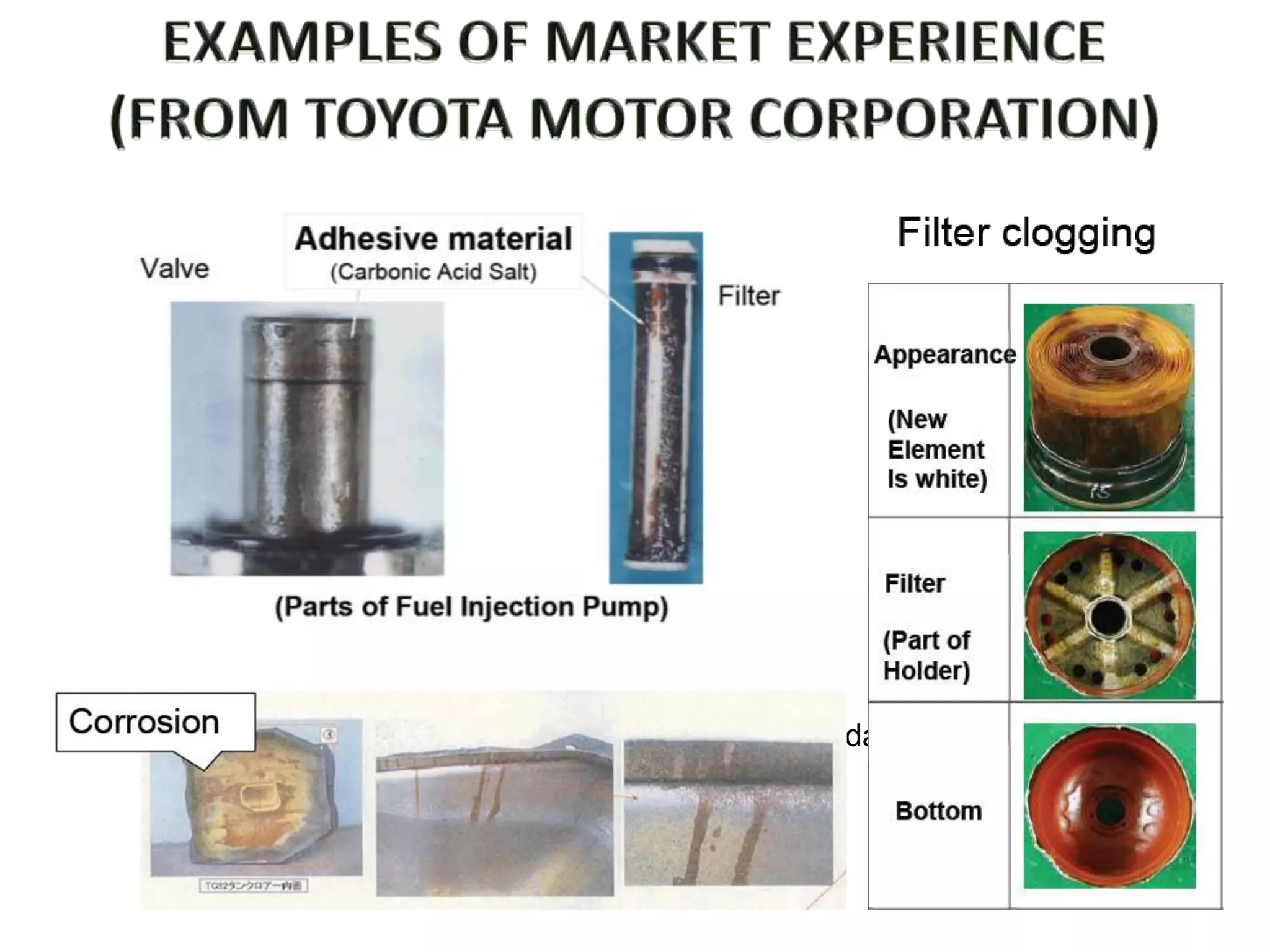
Biodiesel produce adhesive deposit because of low oxidation stability
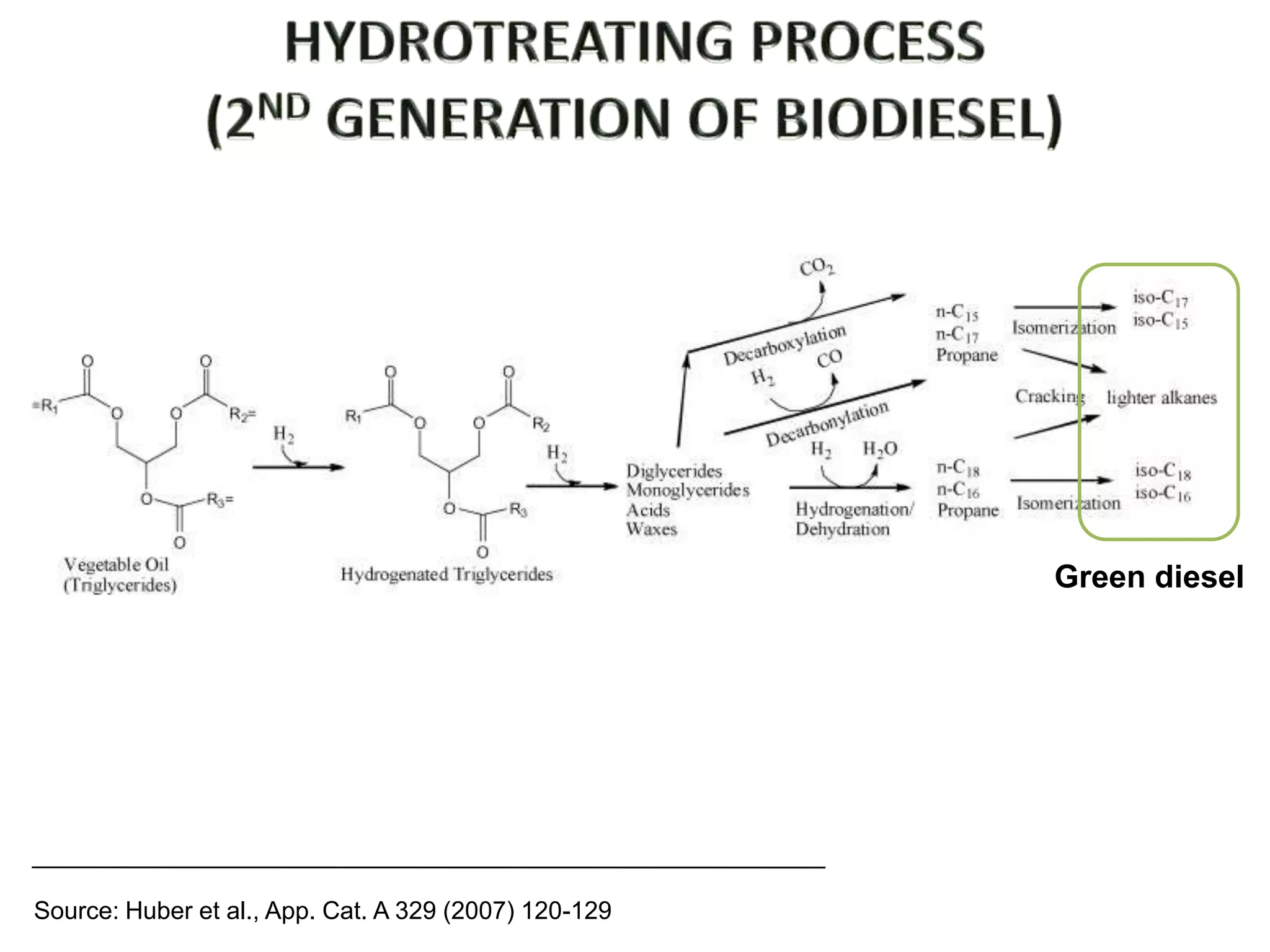
Green diesel


Source: Huber et al., App. Cat. A 329 (2007) 120-129
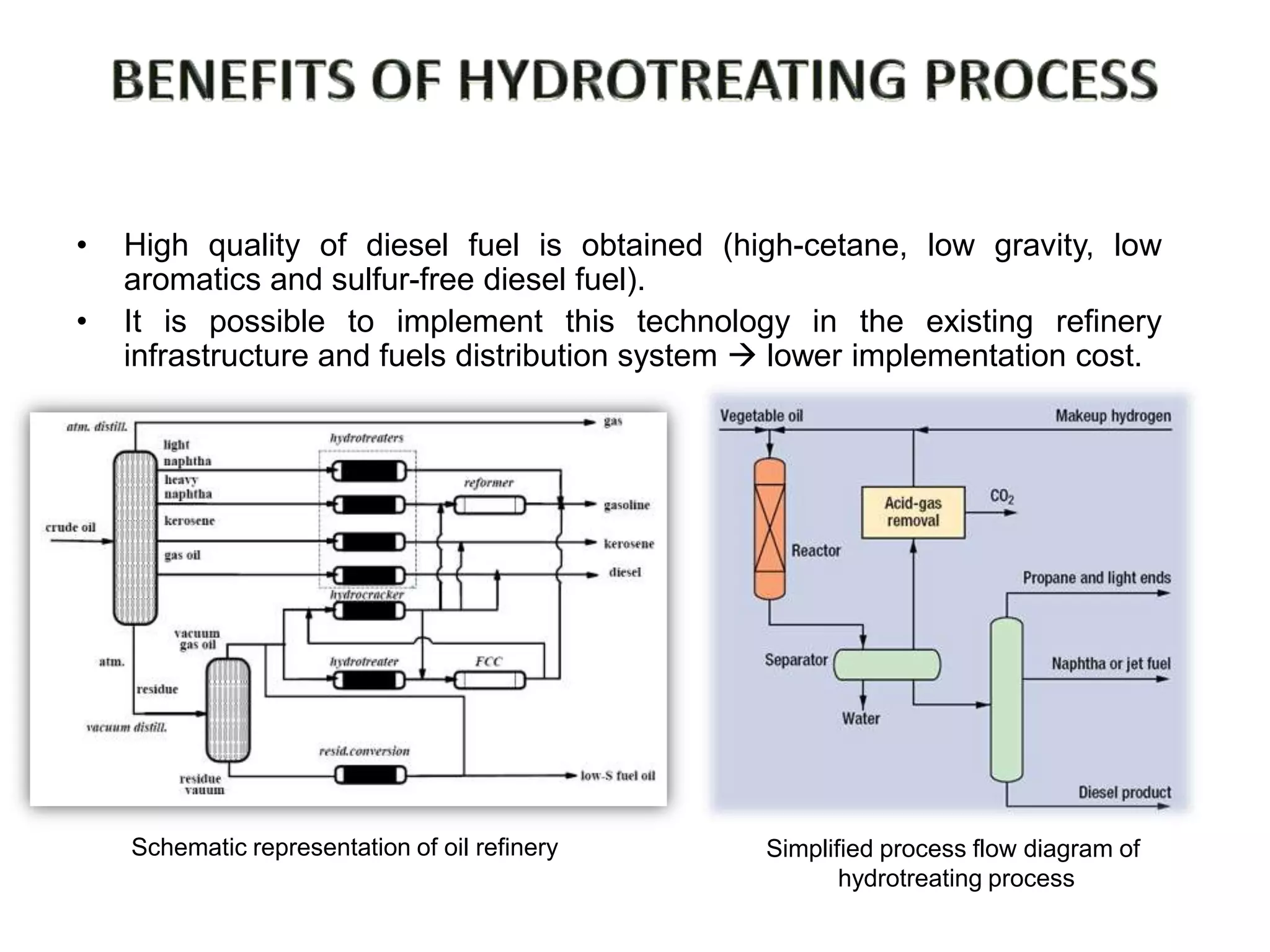
•   High quality of diesel fuel is obtained (high-cetane, low gravity, low
    aromatics and sulfur-free diesel fuel).
•   It is possible to implement this technology in the existing refinery
    infrastructure and fuels distribution system  lower implementation cost.


    Schematic representation of oil refinery     Simplified process flow diagram of
                                                        hydrotreating process
Parameters                Petroleum                Biodiesel              Green diesel
                            Ultra-low sulfur diesel         (FAME)           (Hydrotreated biodiesel)
   Oxygen content (%)                 0                        11                        0
   Specific gravity                  0.84                    0.88                      0.78
   Sulfur content, ppm               <10                      <1                        <1
   Heating value,                     43                      38                        44
   MJ/kg
   Cloud point, oC                    -5                   -5 to +15                -10 to +20
   Distillation, oC              200 to 350               340 to 355                265 to 320
   Cetane number                      40                   50 to 65                  70 to 90
   Stability                        Good                   Marginal                    Good


Source: Alternative Fuels Comparison Chart, National Renewable Energy Laboratory, US Department of Energy
Website: http://www.eere.energy.gov
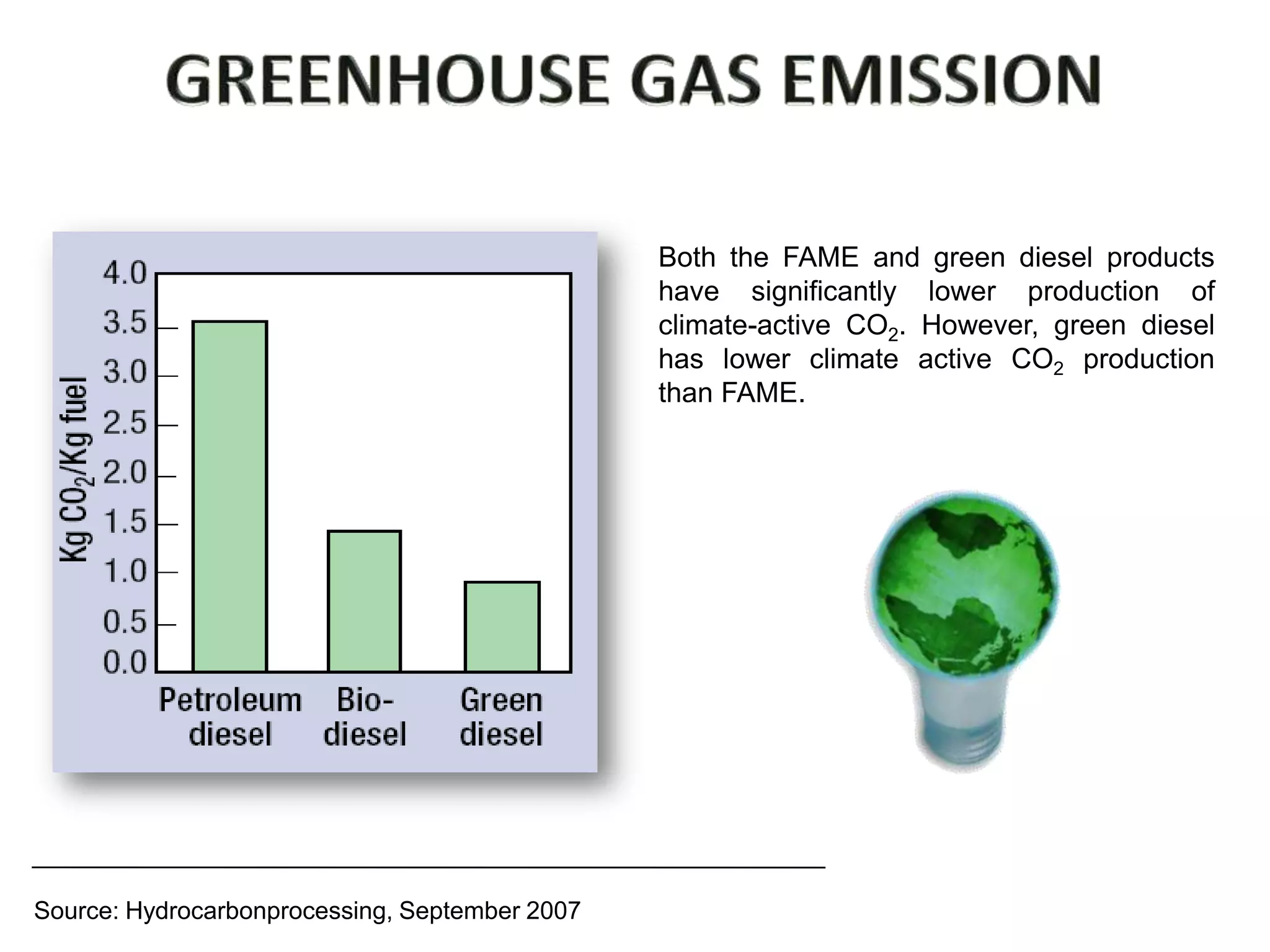
Both the FAME and green diesel products
                                                have significantly lower production of
                                                climate-active CO2. However, green diesel
                                                has lower climate active CO2 production
                                                than FAME.


Source: Hydrocarbonprocessing, September 2007
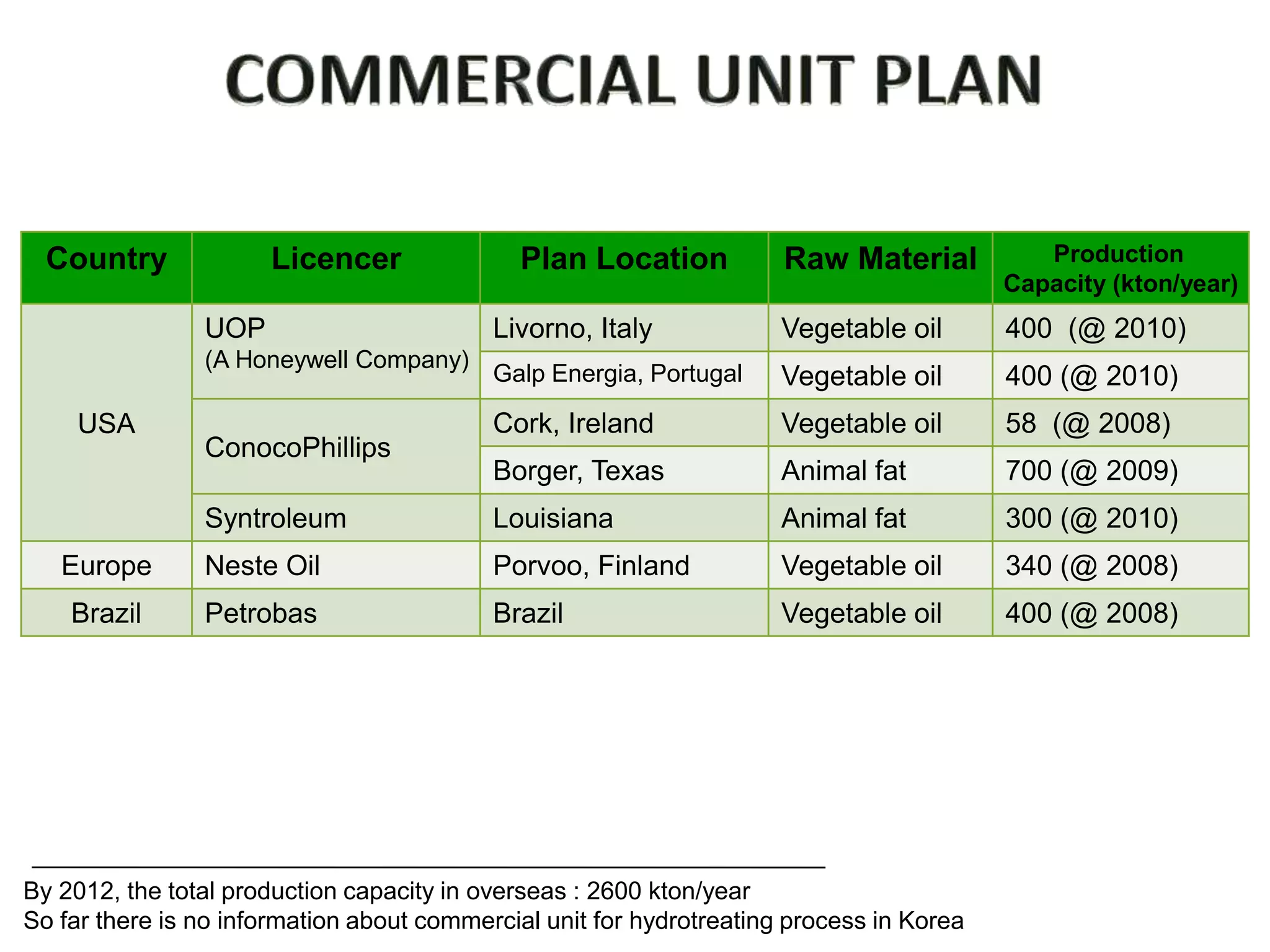
Country             Licencer               Plan Location            Raw Material           Production
                                                                                          Capacity (kton/year)
                UOP                        Livorno, Italy             Vegetable oil       400 (@ 2010)
                (A Honeywell Company)
                                           Galp Energia, Portugal     Vegetable oil       400 (@ 2010)
     USA                                   Cork, Ireland              Vegetable oil       58 (@ 2008)
                ConocoPhillips
                                           Borger, Texas              Animal fat          700 (@ 2009)
                Syntroleum                 Louisiana                  Animal fat          300 (@ 2010)
   Europe       Neste Oil                  Porvoo, Finland            Vegetable oil       340 (@ 2008)
    Brazil      Petrobas                   Brazil                     Vegetable oil       400 (@ 2008)


By 2012, the total production capacity in overseas : 2600 kton/year
So far there is no information about commercial unit for hydrotreating process in Korea
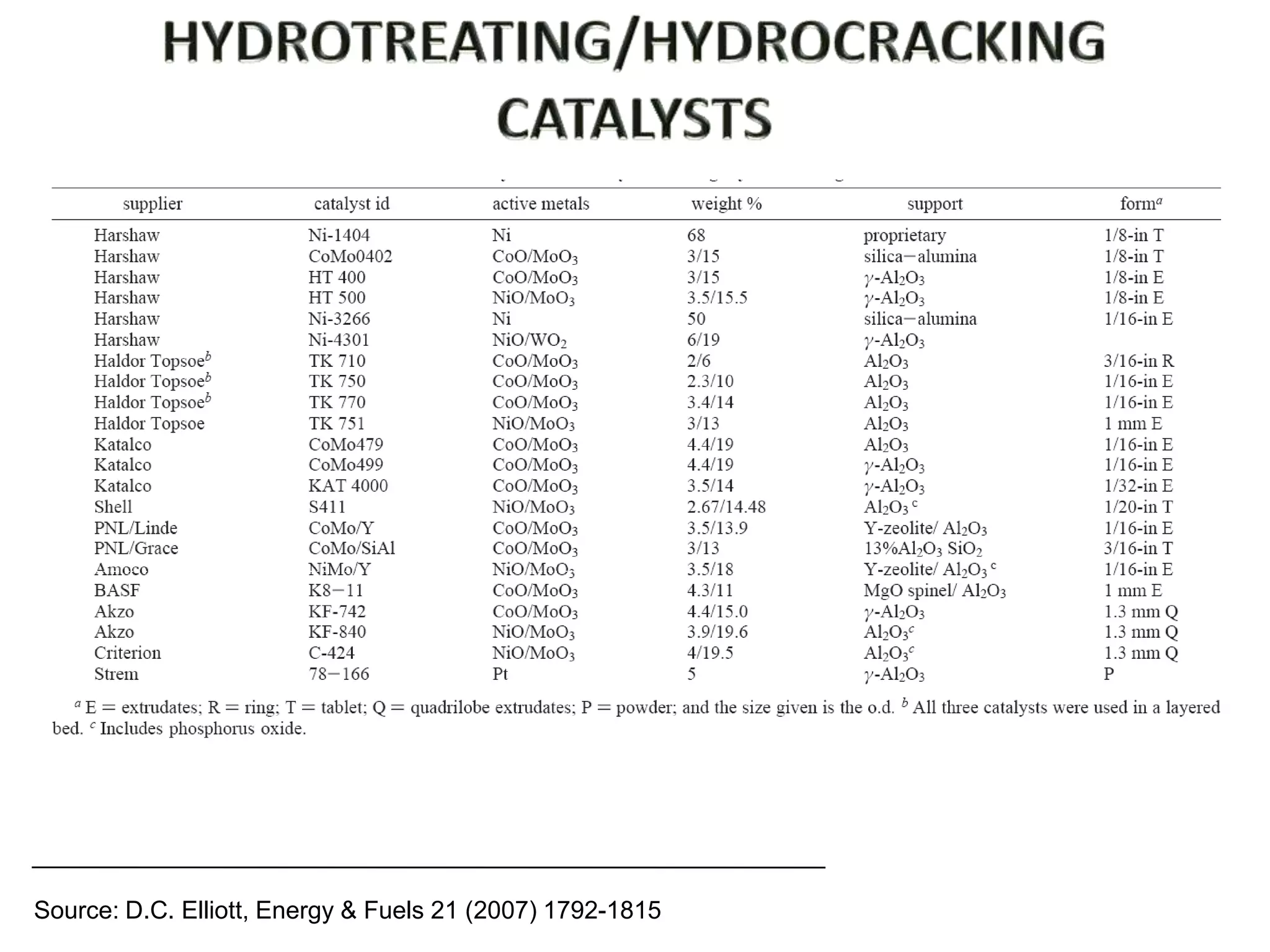
Source: D.C. Elliott, Energy & Fuels 21 (2007) 1792-1815

Greener 2nd generation of biodiesel oil

  • 1.
    Amabilis Jelliarko Palgunadi Std.id: 2007315247 Department of Chemistry, Kyung Hee University, 1 Hoegi-dong, Dongdaemun-gu, 130-70l Seoul, Republic of Korea
  • 2.
    Accelerated consumption of fossil fuels Energy Air quality issues CO2 reduction issues (global warming measures)
  • 3.
    • Energy supplyis becoming diversified due to structural changes in supply and demand. • Fossil fuels remain most important in near future (30-50 yrs). • New energy sources not expected on global scale to provide major contributions in a 30 y perspective. Source: The Institute of Energy Economics, Japan
  • 4.
    Burning fossil fuelssuch as coal and petroleum is the leading cause of increased CO2 concentration in the atmosphere  greenhouse effect (because it absorbs and emits infrared radiation thereby playing a role in the greenhouse effect) . Source: http://cdiac.ornl.gov/
  • 5.
    Developed country tryto decreased the NOx concentration below 1 kilo ton. Source: http://www.utoronto.ca/imap/collections/air_quality/global_na_emissions.htm
  • 6.
    Renewable Energy Sources Sun Wind Hydro Biofuel Hydrogen
  • 7.
    Source: Hydrocarbon Engineering,June 2007 Biofuel is defined as solid, liquid or gaseous fuel obtained from relatively recently lifeless or living biological material and is different from fossil fuels, which are derived from long dead biological material. Also, various plants and plant-derived materials are used for biofuel manufacturing.
  • 8.
    • Diesel vehicleare naturally 20-40 % more energy efficient than gasoline vehicles resulting in a 10-20 % reduction in greenhouse gas emission. • Biodiesel and renewable diesel (green diesel) can reduce emission of hydrocarbons, carbon monoxide and particulate matter.
  • 9.
    Raw Materials Processing Product Methanol Fatty Acid Methyl Transesterification Ester (FAME) Oils Soy Rapeseed Glycerol Sunflower Palm Oil Hydrogen Jatropha Waste Oils etc Hydrotreated Biodiesel Hydrotreating (Green Diesel) H2O, CO2, CO, CH4, etc
  • 10.
  • 11.
    Characteristics Concerns Oxidation stability Gum formation (stick/burnt at injection system) High Solvency (solubility of water) Corrosion of metal parts Oxygenate characteristics Effect on Emissions (NOx/SOx/etc) High viscosity Cold stability
  • 12.
    Biodiesel produce adhesivedeposit because of low oxidation stability
  • 13.
    Green diesel Source: Huberet al., App. Cat. A 329 (2007) 120-129
  • 14.
    High quality of diesel fuel is obtained (high-cetane, low gravity, low aromatics and sulfur-free diesel fuel). • It is possible to implement this technology in the existing refinery infrastructure and fuels distribution system  lower implementation cost. Schematic representation of oil refinery Simplified process flow diagram of hydrotreating process
  • 15.
    Parameters Petroleum Biodiesel Green diesel Ultra-low sulfur diesel (FAME) (Hydrotreated biodiesel) Oxygen content (%) 0 11 0 Specific gravity 0.84 0.88 0.78 Sulfur content, ppm <10 <1 <1 Heating value, 43 38 44 MJ/kg Cloud point, oC -5 -5 to +15 -10 to +20 Distillation, oC 200 to 350 340 to 355 265 to 320 Cetane number 40 50 to 65 70 to 90 Stability Good Marginal Good Source: Alternative Fuels Comparison Chart, National Renewable Energy Laboratory, US Department of Energy Website: http://www.eere.energy.gov
  • 16.
    Both the FAMEand green diesel products have significantly lower production of climate-active CO2. However, green diesel has lower climate active CO2 production than FAME. Source: Hydrocarbonprocessing, September 2007
  • 17.
    Country Licencer Plan Location Raw Material Production Capacity (kton/year) UOP Livorno, Italy Vegetable oil 400 (@ 2010) (A Honeywell Company) Galp Energia, Portugal Vegetable oil 400 (@ 2010) USA Cork, Ireland Vegetable oil 58 (@ 2008) ConocoPhillips Borger, Texas Animal fat 700 (@ 2009) Syntroleum Louisiana Animal fat 300 (@ 2010) Europe Neste Oil Porvoo, Finland Vegetable oil 340 (@ 2008) Brazil Petrobas Brazil Vegetable oil 400 (@ 2008) By 2012, the total production capacity in overseas : 2600 kton/year So far there is no information about commercial unit for hydrotreating process in Korea
  • 18.
    Source: D.C. Elliott,Energy & Fuels 21 (2007) 1792-1815