Downloaded 19 times

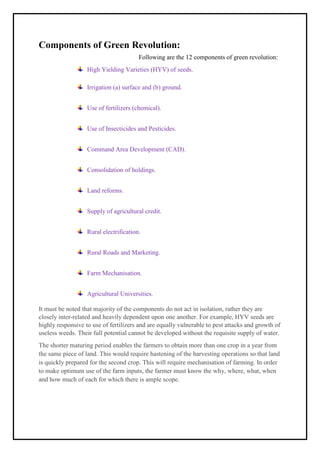
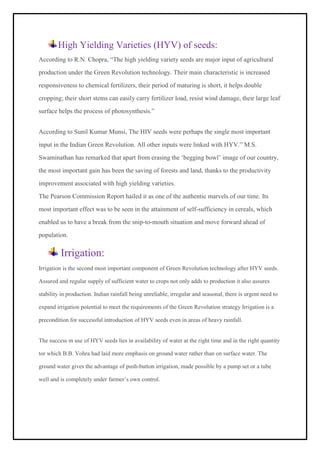
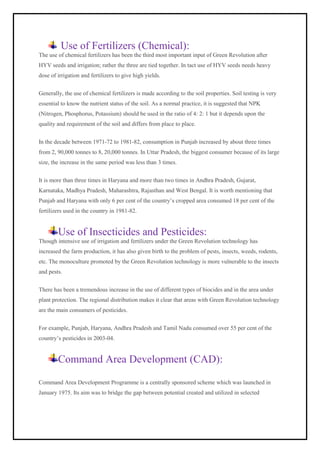
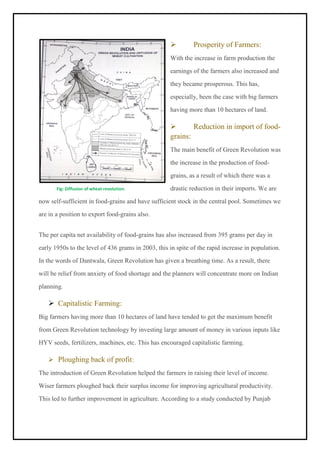
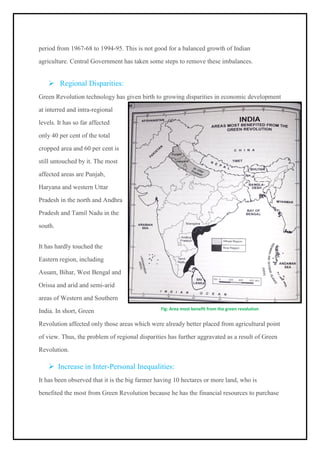
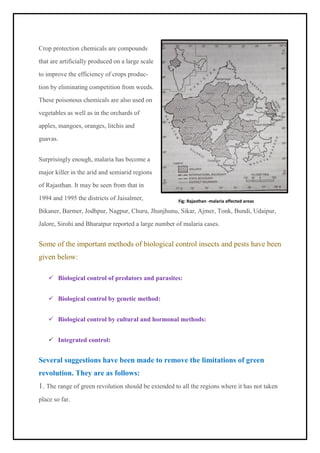

Green Revolution began in India in the 1960s in response to concerns about food security. New high-yielding varieties of wheat and rice developed by Dr. Norman Borlaug were introduced, along with increased use of irrigation, fertilizers, pesticides, and farm mechanization. This led to greatly increased food grain production, making India self-sufficient and reducing the need for food imports. Key components of the Green Revolution included development of infrastructure like irrigation projects, rural electrification, and agriculture support services. The document provides details on the introduction and impact of these Green Revolution strategies and technologies in India.


