GREEN REVOLUTION
Introduction of new technology in agriculture sector,
in order to increase its production through different
measures
Increase in production was made by different
ways
1. Introduction of new high yield varieties of
wheat, rice, and maize.
2. Improvement in per acre yield through quality
fertilizers to compensate for land deficiencies in
many less developed countries
3. Pesticides and insecticides have expanded the
acreage a single farmer can tend by reducing the time
required to disinfect the crop.
4. Irrigation has made double cropping feasible in
many countries where formerly one harvest a year was
standard.
5. New methods of rotating crops were developed
which increased land productivity.
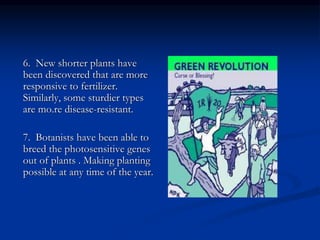
6. New shorter plants have
been discovered that are more
responsive to fertilizer.
Similarly, some sturdier types
are mo.re disease-resistant.
7. Botanists have been able to
breed the photosensitive genes
out of plants . Making planting
possible at any time of the year.
 Green Revolution occured between the 1940s
and the late 1970s, that increased agriculture
production around the world, beginning most
markedly in the late 1960s.
 The term "Green Revolution" was first used in
1968 by former United States Agency for
International Development (USAID)
director William Gaud.
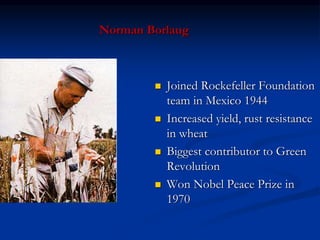
Norman Borlaug
 Joined Rockefeller Foundation
team in Mexico 1944
 Increased yield, rust resistance
in wheat
 Biggest contributor to Green
Revolution
 Won Nobel Peace Prize in
1970
The green revolution can be divided into four
different stages
 Scientific Breakthrough
 Technological Breakthrough
 Production Breakthrough
 Agricultural Breakthrough
 The discovery of high yield varieties of seeds;
 Mexican wheat varieties ( Mexi -Pak) developed in
the international corn and wheat improvement
center .
 high yielding rice verities in the International Rice
Research Institute (IRRI) in Philippines.
 To achieve optimal level of output from above
HYVs.
 Technological developments were made in the field
of mechanization .
 water resource utilization.
 Excess supply of inputs such as fertilizers,
chemicals, machinery and HYVs of seeds
 The government made facilitating policies
pertaining to easy and cheap availability of inputs
and prices stability of outputs etc
 The efforts made in earlier phases helped a lot to
give enormous output
 It covered all the main crops and also the various
enterprises of animal production
 This agriculture produce directly and indirectly
benefited the small as well as large-scale farmers
 High yield varieties were introduced which gave
more production.
 Progress in fertilizer manufacturing was
observed.
 Better quality pesticides and insecticides
increased acreage of land.
 Better management of human resources and
induction of newly trained laborers.

 Water availability was ensured, keeping in view its
quantity required.
 Pakistan Government policies to provide subsidies
and credit to the producers.
 Incentive prices were offered to the farmers
through the price support program.
 Manufacturing and installation of tube wells and
machinery and allied equipments.
 The annual increase in 1963-64 and 1964-65 was
around 35 percent.
 Transmission of the improved technology to the
farmers through Extension Service Programs.
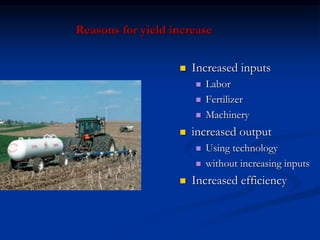
Reasons for yield increase
 Increased inputs
 Labor
 Fertilizer
 Machinery
 increased output
 Using technology
 without increasing inputs
 Increased efficiency
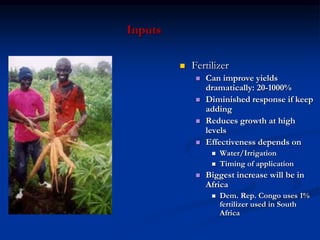
Inputs
 Fertilizer
 Can improve yields
dramatically: 20-1000%
 Diminished response if keep
adding
 Reduces growth at high
levels
 Effectiveness depends on
 Water/Irrigation
 Timing of application
 Biggest increase will be in
Africa
 Dem. Rep. Congo uses 1%
fertilizer used in South
Africa
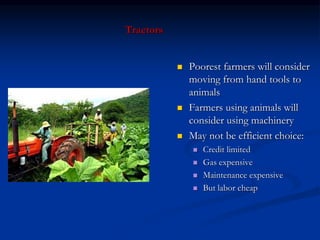
Tractors
 Poorest farmers will consider
moving from hand tools to
animals
 Farmers using animals will
consider using machinery
 May not be efficient choice:
 Credit limited
 Gas expensive
 Maintenance expensive
 But labor cheap
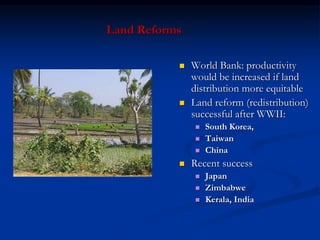
Land Reforms
 World Bank: productivity
would be increased if land
distribution more equitable
 Land reform (redistribution)
successful after WWII:
 South Korea,
 Taiwan
 China
 Recent success
 Japan
 Zimbabwe
 Kerala, India
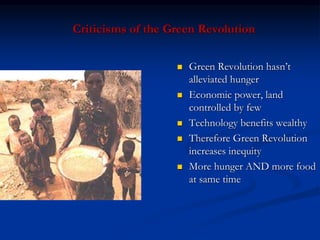
Criticisms of the Green Revolution
 Green Revolution hasn’t
alleviated hunger
 Economic power, land
controlled by few
 Technology benefits wealthy
 Therefore Green Revolution
increases inequity
 More hunger AND more food
at same time
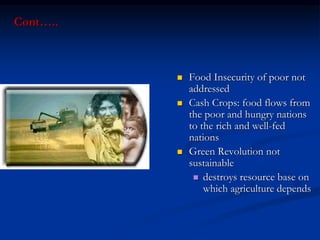
Cont…..
 Food Insecurity of poor not
addressed
 Cash Crops: food flows from
the poor and hungry nations
to the rich and well-fed
nations
 Green Revolution not
sustainable
 destroys resource base on
which agriculture depends
Cont….
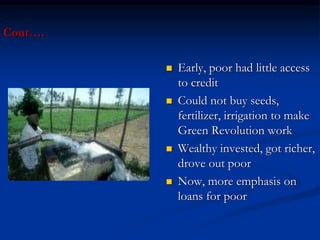
 Early, poor had little access
to credit
 Could not buy seeds,
fertilizer, irrigation to make
Green Revolution work
 Wealthy invested, got richer,
drove out poor
 Now, more emphasis on
loans for poor
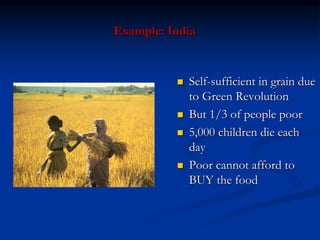
Example: India
 Self-sufficient in grain due
to Green Revolution
 But 1/3 of people poor
 5,000 children die each
day
 Poor cannot afford to
BUY the food
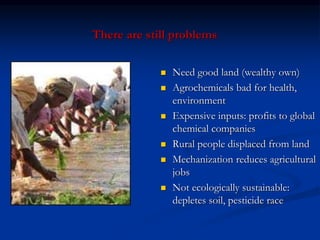
There are still problems
 Need good land (wealthy own)
 Agrochemicals bad for health,
environment
 Expensive inputs: profits to global
chemical companies
 Rural people displaced from land
 Mechanization reduces agricultural
jobs
 Not ecologically sustainable:
depletes soil, pesticide race
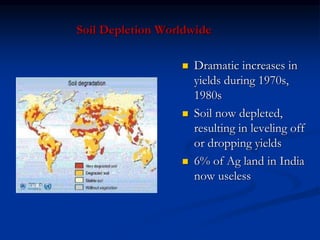
Soil Depletion Worldwide
 Dramatic increases in
yields during 1970s,
1980s
 Soil now depleted,
resulting in leveling off
or dropping yields
 6% of Ag land in India
now useless
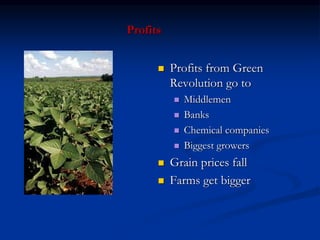
Profits
 Profits from Green
Revolution go to
 Middlemen
 Banks
 Chemical companies
 Biggest growers
 Grain prices fall
 Farms get bigger
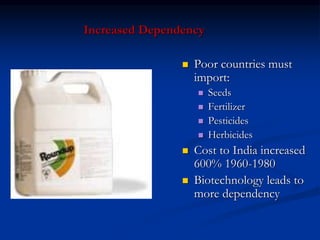
Increased Dependency
 Poor countries must
import:
 Seeds
 Fertilizer
 Pesticides
 Herbicides
 Cost to India increased
600% 1960-1980
 Biotechnology leads to
more dependency
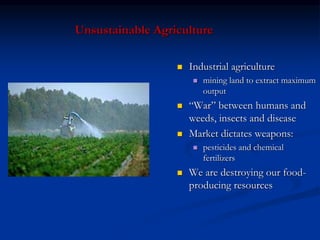
Unsustainable Agriculture
 Industrial agriculture
 mining land to extract maximum
output
 “War” between humans and
weeds, insects and disease
 Market dictates weapons:
 pesticides and chemical
fertilizers
 We are destroying our food-
producing resources
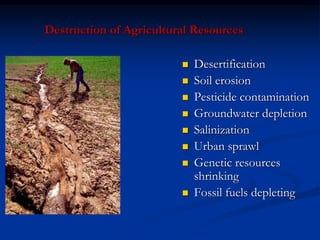
Destruction of Agricultural Resources
 Desertification
 Soil erosion
 Pesticide contamination
 Groundwater depletion
 Salinization
 Urban sprawl
 Genetic resources
shrinking
 Fossil fuels depleting
Sustainable Agriculture Goals
 Environmental Health
 Economic Profitability
 Social and Economic
Equity
Questions and suggestions

GREEN REVOLUTION.ppt

  • 2.
  • 3.
    Introduction of newtechnology in agriculture sector, in order to increase its production through different measures
  • 4.
    Increase in productionwas made by different ways 1. Introduction of new high yield varieties of wheat, rice, and maize. 2. Improvement in per acre yield through quality fertilizers to compensate for land deficiencies in many less developed countries
  • 5.
    3. Pesticides andinsecticides have expanded the acreage a single farmer can tend by reducing the time required to disinfect the crop. 4. Irrigation has made double cropping feasible in many countries where formerly one harvest a year was standard. 5. New methods of rotating crops were developed which increased land productivity.
  • 6.
    6. New shorterplants have been discovered that are more responsive to fertilizer. Similarly, some sturdier types are mo.re disease-resistant. 7. Botanists have been able to breed the photosensitive genes out of plants . Making planting possible at any time of the year.
  • 10.
     Green Revolutionoccured between the 1940s and the late 1970s, that increased agriculture production around the world, beginning most markedly in the late 1960s.  The term "Green Revolution" was first used in 1968 by former United States Agency for International Development (USAID) director William Gaud.
  • 11.
    Norman Borlaug  JoinedRockefeller Foundation team in Mexico 1944  Increased yield, rust resistance in wheat  Biggest contributor to Green Revolution  Won Nobel Peace Prize in 1970
  • 12.
    The green revolutioncan be divided into four different stages  Scientific Breakthrough  Technological Breakthrough  Production Breakthrough  Agricultural Breakthrough
  • 13.
     The discoveryof high yield varieties of seeds;  Mexican wheat varieties ( Mexi -Pak) developed in the international corn and wheat improvement center .  high yielding rice verities in the International Rice Research Institute (IRRI) in Philippines.
  • 14.
     To achieveoptimal level of output from above HYVs.  Technological developments were made in the field of mechanization .  water resource utilization.
  • 15.
     Excess supplyof inputs such as fertilizers, chemicals, machinery and HYVs of seeds  The government made facilitating policies pertaining to easy and cheap availability of inputs and prices stability of outputs etc
  • 16.
     The effortsmade in earlier phases helped a lot to give enormous output  It covered all the main crops and also the various enterprises of animal production  This agriculture produce directly and indirectly benefited the small as well as large-scale farmers
  • 17.
     High yieldvarieties were introduced which gave more production.  Progress in fertilizer manufacturing was observed.  Better quality pesticides and insecticides increased acreage of land.  Better management of human resources and induction of newly trained laborers.
  • 18.
     Water availabilitywas ensured, keeping in view its quantity required.  Pakistan Government policies to provide subsidies and credit to the producers.  Incentive prices were offered to the farmers through the price support program.  Manufacturing and installation of tube wells and machinery and allied equipments.
  • 19.
     The annualincrease in 1963-64 and 1964-65 was around 35 percent.  Transmission of the improved technology to the farmers through Extension Service Programs.
  • 20.
    Reasons for yieldincrease  Increased inputs  Labor  Fertilizer  Machinery  increased output  Using technology  without increasing inputs  Increased efficiency
  • 21.
    Inputs  Fertilizer  Canimprove yields dramatically: 20-1000%  Diminished response if keep adding  Reduces growth at high levels  Effectiveness depends on  Water/Irrigation  Timing of application  Biggest increase will be in Africa  Dem. Rep. Congo uses 1% fertilizer used in South Africa
  • 22.
    Tractors  Poorest farmerswill consider moving from hand tools to animals  Farmers using animals will consider using machinery  May not be efficient choice:  Credit limited  Gas expensive  Maintenance expensive  But labor cheap
  • 23.
    Land Reforms  WorldBank: productivity would be increased if land distribution more equitable  Land reform (redistribution) successful after WWII:  South Korea,  Taiwan  China  Recent success  Japan  Zimbabwe  Kerala, India
  • 24.
    Criticisms of theGreen Revolution  Green Revolution hasn’t alleviated hunger  Economic power, land controlled by few  Technology benefits wealthy  Therefore Green Revolution increases inequity  More hunger AND more food at same time
  • 25.
    Cont…..  Food Insecurityof poor not addressed  Cash Crops: food flows from the poor and hungry nations to the rich and well-fed nations  Green Revolution not sustainable  destroys resource base on which agriculture depends
  • 26.
    Cont….  Early, poorhad little access to credit  Could not buy seeds, fertilizer, irrigation to make Green Revolution work  Wealthy invested, got richer, drove out poor  Now, more emphasis on loans for poor
  • 27.
    Example: India  Self-sufficientin grain due to Green Revolution  But 1/3 of people poor  5,000 children die each day  Poor cannot afford to BUY the food
  • 28.
    There are stillproblems  Need good land (wealthy own)  Agrochemicals bad for health, environment  Expensive inputs: profits to global chemical companies  Rural people displaced from land  Mechanization reduces agricultural jobs  Not ecologically sustainable: depletes soil, pesticide race
  • 29.
    Soil Depletion Worldwide Dramatic increases in yields during 1970s, 1980s  Soil now depleted, resulting in leveling off or dropping yields  6% of Ag land in India now useless
  • 30.
    Profits  Profits fromGreen Revolution go to  Middlemen  Banks  Chemical companies  Biggest growers  Grain prices fall  Farms get bigger
  • 31.
    Increased Dependency  Poorcountries must import:  Seeds  Fertilizer  Pesticides  Herbicides  Cost to India increased 600% 1960-1980  Biotechnology leads to more dependency
  • 32.
    Unsustainable Agriculture  Industrialagriculture  mining land to extract maximum output  “War” between humans and weeds, insects and disease  Market dictates weapons:  pesticides and chemical fertilizers  We are destroying our food- producing resources
  • 33.
    Destruction of AgriculturalResources  Desertification  Soil erosion  Pesticide contamination  Groundwater depletion  Salinization  Urban sprawl  Genetic resources shrinking  Fossil fuels depleting
  • 34.
    Sustainable Agriculture Goals Environmental Health  Economic Profitability  Social and Economic Equity
  • 35.