



GRAM -POSITIVE
BACTERIA
RAMZA RASHEED
Aerotolerant fermentative cocci:
 Definition:
Aerotolerant organisms cannot use oxygen for growth but are tolerate
its presence. use fermentation to produce ATP.
 Characteristics:
 They don’t possess cytochromes.
 The cells are arranged in pairs, chain or tetrads.
 They have only fermentative type of metabolism and don’t respire
 They can grow anaerobically or aerobically.
 Genera
1. Streptococcus
2. Leuconostoc
3. Pediococcus
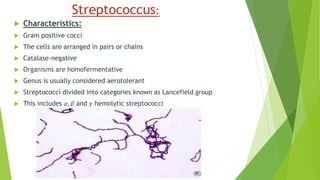
Streptococcus:
 Characteristics:
 Gram positive cocci
 The cells are arranged in pairs or chains
 Catalase-negative
 Organisms are homofermentative
 Genus is usually considered aerotolerant
 Streptococci divided into categories known as Lancefield group
 This includes 𝛼, 𝛽 and 𝛾 hemolytic streptococci
Type of hemolysis:
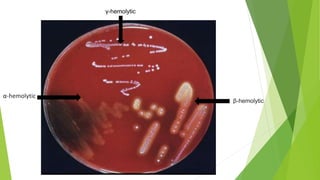
 α-hemolysis:
 Partially hemolyzed red blood cells of certain species of animals
 Colonies are surrounded by cloudy appearance
 Colonies on blood agar plates are surrounded by a greenish-colored zone
 Enzymes produced by some streptococci such as S. pneumoniae
 β-hemolytic:
 Complete lysis of red blood cells
 Colonies are surrounded by clear
 And colorless zone that indicate the complete lysis of the erythrocytes
 γ-hemolytic:
 Also called non-hemolytic
 Partially decomposition of the hemoglobin of the red blood cell
α-hemolytic
β-hemolytic
γ-hemolytic
Species of streptococci
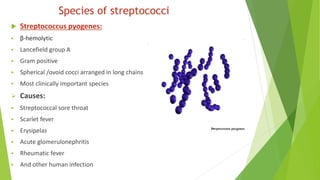
 Streptococcus pyogenes:
 β-hemolytic
 Lancefield group A
 Gram positive
 Spherical /ovoid cocci arranged in long chains
 Most clinically important species
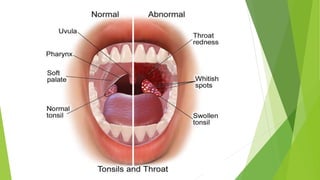
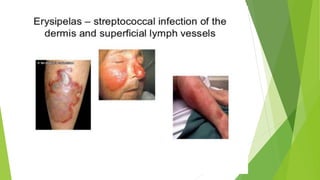
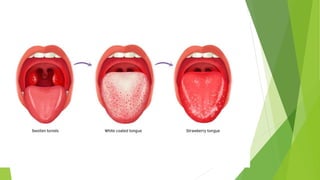
 Causes:
 Streptococcal sore throat
 Scarlet fever
 Erysipelas
 Acute glomerulonephritis
 Rheumatic fever
 And other human infection
fogs
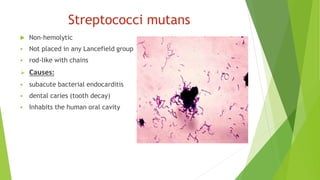
Streptococci mutans
 Non-hemolytic
 Not placed in any Lancefield group
 rod-like with chains
 Causes:
 subacute bacterial endocarditis
 dental caries (tooth decay)
 Inhabits the human oral cavity
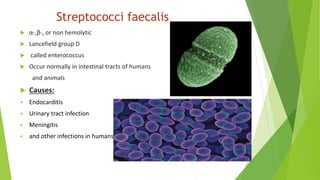
Streptococci faecalis
 α-,β-, or non hemolytic
 Lancefield group D
 called enterococcus
 Occur normally in intestinal tracts of humans
and animals
 Causes:
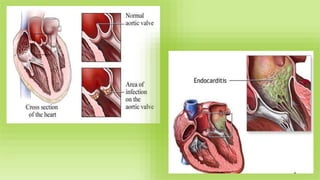
 Endocarditis
 Urinary tract infection
 Meningitis
 and other infections in humans.
S. lactis and S. cremoris
 Lancefield group N
 They are harmless contaminants of milk and dairy products
 Causes:
 Rapid souring and curdling of milk
Because of this are widely used as starter culture in the
manufacture of buttermilk and cheese
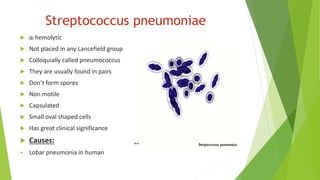
Streptococcus pneumoniae
 α-hemolytic
 Not placed in any Lancefield group
 Colloquially called pneumococcus
 They are usually found in pairs
 Don’t form spores
 Non motile
 Capsulated
 Small oval shaped cells
 Has great clinical significance
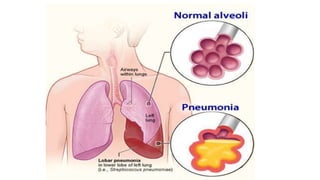
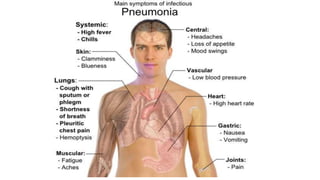
 Causes:
 Lobar pneumonia in human
xnbn
mbnn
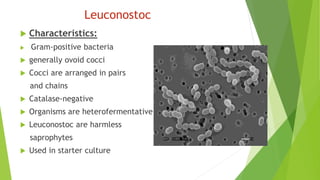
Leuconostoc
 Characteristics:
 Gram-positive bacteria
 generally ovoid cocci
 Cocci are arranged in pairs
and chains
 Catalase-negative
 Organisms are heterofermentative
 Leuconostoc are harmless
saprophytes
 Used in starter culture
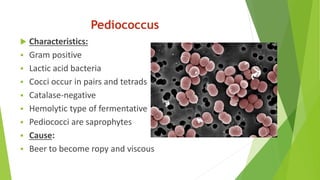
Pediococcus
 Characteristics:
 Gram positive
 Lactic acid bacteria
 Cocci occur in pairs and tetrads
 Catalase-negative
 Hemolytic type of fermentative
 Pediococci are saprophytes
 Cause:
 Beer to become ropy and viscous
Anaerobic gram positive cocci
 These cocci have a fermentative type of metabolism
 Some genera supplied fermentative carbohydrates
 Some can ferment amino acid
 Most genera contain CO2, H2, short chain fatty acid and ethanol or
succinate acid
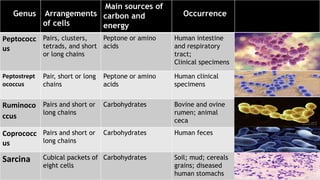
Genus Arrangements
of cells
Main sources of
carbon and
energy
Occurrence
Peptococc
us
Pairs, clusters,
tetrads, and short
or long chains
Peptone or amino
acids
Human intestine
and respiratory
tract;
Clinical specimens
Peptostrept
ococcus
Pair, short or long
chains
Peptone or amino
acids
Human clinical
specimens
Ruminoco
ccus
Pairs and short or
long chains
Carbohydrates Bovine and ovine
rumen; animal
ceca
Coprococc
us
Pairs and short or
long chains
Carbohydrates Human feces
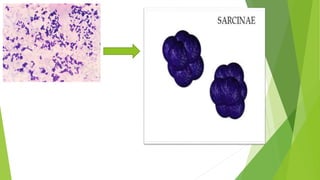
Sarcina Cubical packets of
eight cells
Carbohydrates Soil; mud; cereals
grains; diseased
human stomachs
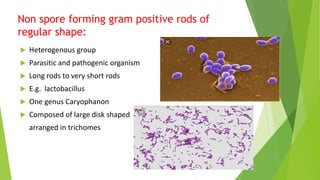
Non spore forming gram positive rods of
regular shape:
 Heterogenous group
 Parasitic and pathogenic organism
 Long rods to very short rods
 E.g. lactobacillus
 One genus Caryophanon
 Composed of large disk shaped
arranged in trichomes
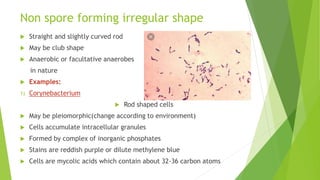
Non spore forming irregular shape
 Straight and slightly curved rod
 May be club shape
 Anaerobic or facultative anaerobes
in nature
 Examples:
1) Corynebacterium
 Rod shaped cells
 May be pleiomorphic(change according to environment)
 Cells accumulate intracellular granules
 Formed by complex of inorganic phosphates
 Stains are reddish purple or dilute methylene blue
 Cells are mycolic acids which contain about 32-36 carbon atoms
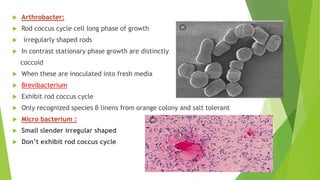
 Arthrobacter:
 Rod coccus cycle cell long phase of growth
 irregularly shaped rods
 In contrast stationary phase growth are distinctly
coccoid
 When these are inoculated into fresh media
 Brevibacterium
 Exhibit rod coccus cycle
 Only recognized species β linens from orange colony and salt tolerant
 Micro bacterium :
 Small slender irregular shaped
 Don’t exhibit rod coccus cycle
 Occur in milk and dairy products
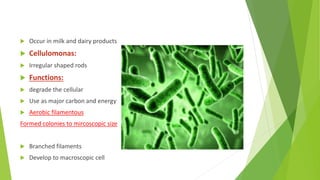
 Cellulomonas:
 Irregular shaped rods
 Functions:
 degrade the cellular
 Use as major carbon and energy
 Aerobic filamentous
Formed colonies to mircoscopic size
 Branched filaments
 Develop to macroscopic cell
 Parasite and pathogenic for human and animals
 Belong to causative agents
 Anaerobic non filaments:
 Diff by their morphology
 And their fermentation and products
 2 Genera:
 Propionibacterium
 Actinomyces
Thank you

Gram positive bacteria

  • 1.
  • 2.
    Aerotolerant fermentative cocci: Definition: Aerotolerant organisms cannot use oxygen for growth but are tolerate its presence. use fermentation to produce ATP.  Characteristics:  They don’t possess cytochromes.  The cells are arranged in pairs, chain or tetrads.  They have only fermentative type of metabolism and don’t respire  They can grow anaerobically or aerobically.  Genera 1. Streptococcus 2. Leuconostoc 3. Pediococcus
  • 3.
    Streptococcus:  Characteristics:  Grampositive cocci  The cells are arranged in pairs or chains  Catalase-negative  Organisms are homofermentative  Genus is usually considered aerotolerant  Streptococci divided into categories known as Lancefield group  This includes 𝛼, 𝛽 and 𝛾 hemolytic streptococci
  • 4.
    Type of hemolysis: α-hemolysis:  Partially hemolyzed red blood cells of certain species of animals  Colonies are surrounded by cloudy appearance  Colonies on blood agar plates are surrounded by a greenish-colored zone  Enzymes produced by some streptococci such as S. pneumoniae  β-hemolytic:  Complete lysis of red blood cells  Colonies are surrounded by clear  And colorless zone that indicate the complete lysis of the erythrocytes  γ-hemolytic:  Also called non-hemolytic  Partially decomposition of the hemoglobin of the red blood cell
  • 5.
  • 6.
    Species of streptococci Streptococcus pyogenes:  β-hemolytic  Lancefield group A  Gram positive  Spherical /ovoid cocci arranged in long chains  Most clinically important species  Causes:  Streptococcal sore throat  Scarlet fever  Erysipelas  Acute glomerulonephritis  Rheumatic fever  And other human infection fogs
  • 10.
    Streptococci mutans  Non-hemolytic Not placed in any Lancefield group  rod-like with chains  Causes:  subacute bacterial endocarditis  dental caries (tooth decay)  Inhabits the human oral cavity
  • 12.
    Streptococci faecalis  α-,β-,or non hemolytic  Lancefield group D  called enterococcus  Occur normally in intestinal tracts of humans and animals  Causes:  Endocarditis  Urinary tract infection  Meningitis  and other infections in humans.
  • 14.
    S. lactis andS. cremoris  Lancefield group N  They are harmless contaminants of milk and dairy products  Causes:  Rapid souring and curdling of milk Because of this are widely used as starter culture in the manufacture of buttermilk and cheese
  • 15.
    Streptococcus pneumoniae  α-hemolytic Not placed in any Lancefield group  Colloquially called pneumococcus  They are usually found in pairs  Don’t form spores  Non motile  Capsulated  Small oval shaped cells  Has great clinical significance  Causes:  Lobar pneumonia in human xnbn mbnn
  • 18.
    Leuconostoc  Characteristics:  Gram-positivebacteria  generally ovoid cocci  Cocci are arranged in pairs and chains  Catalase-negative  Organisms are heterofermentative  Leuconostoc are harmless saprophytes  Used in starter culture
  • 19.
    Pediococcus  Characteristics:  Grampositive  Lactic acid bacteria  Cocci occur in pairs and tetrads  Catalase-negative  Hemolytic type of fermentative  Pediococci are saprophytes  Cause:  Beer to become ropy and viscous
  • 20.
    Anaerobic gram positivecocci  These cocci have a fermentative type of metabolism  Some genera supplied fermentative carbohydrates  Some can ferment amino acid  Most genera contain CO2, H2, short chain fatty acid and ethanol or succinate acid
  • 21.
    Genus Arrangements of cells Mainsources of carbon and energy Occurrence Peptococc us Pairs, clusters, tetrads, and short or long chains Peptone or amino acids Human intestine and respiratory tract; Clinical specimens Peptostrept ococcus Pair, short or long chains Peptone or amino acids Human clinical specimens Ruminoco ccus Pairs and short or long chains Carbohydrates Bovine and ovine rumen; animal ceca Coprococc us Pairs and short or long chains Carbohydrates Human feces Sarcina Cubical packets of eight cells Carbohydrates Soil; mud; cereals grains; diseased human stomachs
  • 23.
    Non spore forminggram positive rods of regular shape:  Heterogenous group  Parasitic and pathogenic organism  Long rods to very short rods  E.g. lactobacillus  One genus Caryophanon  Composed of large disk shaped arranged in trichomes
  • 24.
    Non spore formingirregular shape  Straight and slightly curved rod  May be club shape  Anaerobic or facultative anaerobes in nature  Examples: 1) Corynebacterium  Rod shaped cells  May be pleiomorphic(change according to environment)  Cells accumulate intracellular granules  Formed by complex of inorganic phosphates  Stains are reddish purple or dilute methylene blue  Cells are mycolic acids which contain about 32-36 carbon atoms
  • 25.
     Arthrobacter:  Rodcoccus cycle cell long phase of growth  irregularly shaped rods  In contrast stationary phase growth are distinctly coccoid  When these are inoculated into fresh media  Brevibacterium  Exhibit rod coccus cycle  Only recognized species β linens from orange colony and salt tolerant  Micro bacterium :  Small slender irregular shaped  Don’t exhibit rod coccus cycle
  • 26.
     Occur inmilk and dairy products  Cellulomonas:  Irregular shaped rods  Functions:  degrade the cellular  Use as major carbon and energy  Aerobic filamentous Formed colonies to mircoscopic size  Branched filaments  Develop to macroscopic cell
  • 27.
     Parasite andpathogenic for human and animals  Belong to causative agents  Anaerobic non filaments:  Diff by their morphology  And their fermentation and products  2 Genera:  Propionibacterium  Actinomyces
  • 28.