Gram Negative Cocci
Neisseria gonorrhea
Neisseria meningitidis
• Common pathogen in man
• 70% they are related with DNA homology
Genera and Species
Neisseria
- N. gonorrheae= Gonococci
Encapsulated and have plasmids
- N. meningitidis= Meningococci
Capsulated and don’t have plasmids
Other Neisseria spp. (rare cause of infection)
-N. cinerea N. sicca N. flavescens
-N. lactamica N. subflava N. elongate(bacillus, - catalase)
-N. polysarccharea N.mucosa
Genera and Species
Moraxella catarrhalis
- Formerly Branhamella Neisseria catarrhalis
Veillonella
- GIT, GUT and RT
Family Neisseriaceae Genera:
• Neisseria- prevalent pathogen
• Kingella
• Cikenella
• Simonsiella
• Alysiella
Morphology and Identification
A. Typical Neisseria
 Gram negative diplococci
 Non-motile and non-spore forming
Approximately 0.8 um in diameter
Individual cocci is KIDNEY/COFFEE BEAN SHAPED (except
elongate)
 In pairs, the flat or concave sides are adjacent
Cytochrome oxidase and catalase POSITIVE
 Non pathogenic is the normal flora of the URT
Obligate aerobe at the same time they need O₂ (that’s why
catalase +)
Morphology and Identification
B. Culture (BAP/CAP)
 On enriched medium in 48 to 72 hours= capnophilic
 Gonococci/Meningococci
- convex, glistening, elevated, mucoid colonies 1-5 mm in
diameter
- Transparent or opaque, non-pigmented, non-hemolytic
- Pathogenic Neisseria
- Very fastidious which requires BAP and CAP (iron, hemin,
coenzyme 1)
- Gonococci need cysteine for growth
Morphology and Identification
B.Culture
 N. flavescens, N. cinerea, N. subflava, N.
lactamica may have YELLOW pigmentation
N. sicca produces opaque, brittle, wrinkled
colonies
Moraxella catarrhalis produces nonpigmented or
PINKISH GRAY opaque colonies
Morphology and Identification
C. Growth/Biochemical Characteristics
Neisseria grow best under aerobic conditions
Some grow best in anaerobic environment
Most oxidize carbohydrates with acid but no gas
Produce oxidase and give (+) oxidase reaction
Atmospheric requirement: 5% CO₂ in CANDLE JAR
Morphology and Identification
C. Growth/Biochemical Characteristics
• Modified Thayer Martin, Lewis Martin, GC-Lect, New York City
• MTM: vancomycin, colistin, nystatin, trimethoprim
• ML: anisomycin and trimethoprim
• Contain antimicrobial drugs
 vancomycin: inhibits gram positive bacteria (3 ug/mL)
 lincomycin: alternative for vancomycin
 colistin: inhibits gram negative bacteria
 amphotericin B
 nystatin: inhibits fungi
 anisomycin: used in LM instead of nystatin
 trimethoprim: inhibits swarming of proteus
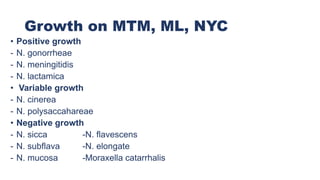
Growth on MTM, ML, NYC
• Positive growth
- N. gonorrheae
- N. meningitidis
- N. lactamica
• Variable growth
- N. cinerea
- N. polysaccahareae
• Negative growth
- N. sicca -N. flavescens
- N. subflava -N. elongate
- N. mucosa -Moraxella catarrhalis
Morphology and Identification
C. Growth/Biochemical Characteristics
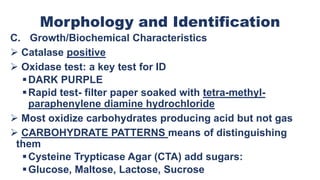
 Catalase positive
 Oxidase test: a key test for ID
DARK PURPLE
Rapid test- filter paper soaked with tetra-methyl-
paraphenylene diamine hydrochloride
 Most oxidize carbohydrates producing acid but not gas
 CARBOHYDRATE PATTERNS means of distinguishing
them
Cysteine Trypticase Agar (CTA) add sugars:
Glucose, Maltose, Lactose, Sucrose
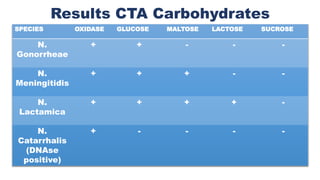
Results CTA Carbohydrates
SPECIES OXIDASE GLUCOSE MALTOSE LACTOSE SUCROSE
N.
Gonorrheae
+ + - - -
N.
Meningitidis
+ + + - -
N.
Lactamica
+ + + + -
N.
Catarrhalis
(DNAse
positive)
+ - - - -
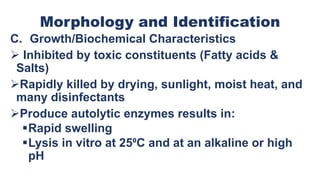
Morphology and Identification
C. Growth/Biochemical Characteristics
 Inhibited by toxic constituents (Fatty acids &
Salts)
Rapidly killed by drying, sunlight, moist heat, and
many disinfectants
Produce autolytic enzymes results in:
Rapid swelling
Lysis in vitro at 25⁰C and at an alkaline or high
pH

Gram negative cocci

  • 1.
    Gram Negative Cocci Neisseriagonorrhea Neisseria meningitidis • Common pathogen in man • 70% they are related with DNA homology
  • 2.
    Genera and Species Neisseria -N. gonorrheae= Gonococci Encapsulated and have plasmids - N. meningitidis= Meningococci Capsulated and don’t have plasmids Other Neisseria spp. (rare cause of infection) -N. cinerea N. sicca N. flavescens -N. lactamica N. subflava N. elongate(bacillus, - catalase) -N. polysarccharea N.mucosa
  • 3.
    Genera and Species Moraxellacatarrhalis - Formerly Branhamella Neisseria catarrhalis Veillonella - GIT, GUT and RT Family Neisseriaceae Genera: • Neisseria- prevalent pathogen • Kingella • Cikenella • Simonsiella • Alysiella
  • 4.
    Morphology and Identification A.Typical Neisseria  Gram negative diplococci  Non-motile and non-spore forming Approximately 0.8 um in diameter Individual cocci is KIDNEY/COFFEE BEAN SHAPED (except elongate)  In pairs, the flat or concave sides are adjacent Cytochrome oxidase and catalase POSITIVE  Non pathogenic is the normal flora of the URT Obligate aerobe at the same time they need O₂ (that’s why catalase +)
  • 5.
    Morphology and Identification B.Culture (BAP/CAP)  On enriched medium in 48 to 72 hours= capnophilic  Gonococci/Meningococci - convex, glistening, elevated, mucoid colonies 1-5 mm in diameter - Transparent or opaque, non-pigmented, non-hemolytic - Pathogenic Neisseria - Very fastidious which requires BAP and CAP (iron, hemin, coenzyme 1) - Gonococci need cysteine for growth
  • 6.
    Morphology and Identification B.Culture N. flavescens, N. cinerea, N. subflava, N. lactamica may have YELLOW pigmentation N. sicca produces opaque, brittle, wrinkled colonies Moraxella catarrhalis produces nonpigmented or PINKISH GRAY opaque colonies
  • 7.
    Morphology and Identification C.Growth/Biochemical Characteristics Neisseria grow best under aerobic conditions Some grow best in anaerobic environment Most oxidize carbohydrates with acid but no gas Produce oxidase and give (+) oxidase reaction Atmospheric requirement: 5% CO₂ in CANDLE JAR
  • 8.
    Morphology and Identification C.Growth/Biochemical Characteristics • Modified Thayer Martin, Lewis Martin, GC-Lect, New York City • MTM: vancomycin, colistin, nystatin, trimethoprim • ML: anisomycin and trimethoprim • Contain antimicrobial drugs  vancomycin: inhibits gram positive bacteria (3 ug/mL)  lincomycin: alternative for vancomycin  colistin: inhibits gram negative bacteria  amphotericin B  nystatin: inhibits fungi  anisomycin: used in LM instead of nystatin  trimethoprim: inhibits swarming of proteus
  • 9.
    Growth on MTM,ML, NYC • Positive growth - N. gonorrheae - N. meningitidis - N. lactamica • Variable growth - N. cinerea - N. polysaccahareae • Negative growth - N. sicca -N. flavescens - N. subflava -N. elongate - N. mucosa -Moraxella catarrhalis
  • 10.
    Morphology and Identification C.Growth/Biochemical Characteristics  Catalase positive  Oxidase test: a key test for ID DARK PURPLE Rapid test- filter paper soaked with tetra-methyl- paraphenylene diamine hydrochloride  Most oxidize carbohydrates producing acid but not gas  CARBOHYDRATE PATTERNS means of distinguishing them Cysteine Trypticase Agar (CTA) add sugars: Glucose, Maltose, Lactose, Sucrose
  • 11.
    Results CTA Carbohydrates SPECIESOXIDASE GLUCOSE MALTOSE LACTOSE SUCROSE N. Gonorrheae + + - - - N. Meningitidis + + + - - N. Lactamica + + + + - N. Catarrhalis (DNAse positive) + - - - -
  • 12.
    Morphology and Identification C.Growth/Biochemical Characteristics  Inhibited by toxic constituents (Fatty acids & Salts) Rapidly killed by drying, sunlight, moist heat, and many disinfectants Produce autolytic enzymes results in: Rapid swelling Lysis in vitro at 25⁰C and at an alkaline or high pH