Specimen Collection,
Processing and Handling
KEY POINTS
• Collect specimens from site of infection prior
to initiation of therapy.
• Collect adequate volume of sample for testing
required.
• For bacterial, fungal and viral cultures submit
tissue, fluid/aspirate if possible as these are
always superior to a swab specimen.
KEY POINTS
• Use required collection and transport
materials to preserve specimen integrity.
• Communicate clear orders and source
information.
• Expedite the transport of specimens to the
laboratory and do not allow them to sit in
collection areas.
GENERAL PRINCIPLES
• TIMING OF SPECIMEN COLLECTION
– Should be collected at a time when the likelihood
of recovering the suspected pathogen is greatest.
• RECOVERING VIRUSES : greatest in the acute phase of
the illness.
• RECOVERING BACTERIA : ideally be collected before
antimicrobial therapy is started.
TIMING OF SPECIMEN COLLECTION
• ENTERIC INFECTION
– Organisms are in greater number during
acute/diarrheal stage.
• TYPHOID FEVER
– Blood culture in the 1st week of infection.
– Stool/Urine culture on the 2nd week
– Serological tests in the 3rd week
SPECIMEN VOLUME
• MUST BE ADEQUATE for performance of the
microbiological studies requested.
• IF INSUFFICIENT : notify nurse/physician for
additional sample/to prioritize the requests.
• IF A SWAB :
– use polyester-tipped swab on a plate shaft
– avoid calcium alginate swab for viral culture
(inactivates herpes simplex virus)
• cotton toxic :Neisseria gonorrhoeae
• Wood toxic : Chlamydia trachomatis
SPECIMEN VOLUME
• SWAB : not optimal for detection of anaerobes,
mycobacteria/fungi, do not use.
• An actual tissue sample of fluid aspirate is
always superior to a swab specimen for the
recovery of pathogenic organisms.
SPECIMEN COLLECTION
• Obtained from the site of infection with
minimal contamination from adjacent tissues
and organ secretions and collected in a sterile
container.
• LABEL : name & identification number of the
patient, the source of specimen, date and time
of collection.
SPECIMEN TRANSPORT
• Placed in a biohazard bag and transported to the
laboratory as soon as possible.
• IF DELAY IS UNAVOIDABLE : refrigerate to prevent
overgrowth of microbiota.
– Urine, sputum, other respiratory specimens, stool.
– Specimens for detection of Chlamydia
trachomatis/viruses.
• Cerebrospinal fluid (CSF) and other body fluids,
blood, specimens collected for recovery of
– Neisseria gonorrhoeae : room tempt., if refrigerated
adversely affects recovery of potential pathogens
froms these sources.
UNACCEPTABLE SPECIMENS
• SPECIMENS
– Received in formalin
– In containers from which
the sample has leaked
– That have been
inoculated on to agar
plates that have dried
out/oudated
– Contaminated with
barium, dye/oily
chemicals
• 24hr sputum collection
• Foley catheter tips.
• Duplicate specimens
(except blood cultures)
received in a 24hr
period
• Blood catheter tips
submitted for patients
w/o concomitant
positive blood culture.
SPECIMEN REJECTED FOR ANAEROBIC
CULTURE:
• Gastric washings
• Urine other than suprapubic aspirate
• Stool (except for recovery of Clostridium difficile )
– for epidemiologic studies/ for diagnosis of bacteria
associated with food poisoning.
• Oropharyngeal specimens (except deep tissue samples
obtained during a surgical procedure)
• Sputum
• Swabs of ileostomy/ colostomy sites.
• Superficial skin specimens.
UNIVERSAL PRECAUTIONS
• Must be followed when handling all specimens
• APPROPRIATE BARRIERS : to prevent exposure of
skin & mucous membranes to the specimen
• PPE
– Gloves and a lab coat must be worn at all times
– Masks, goggles and impermeable gowns/ aprons must
be worn in situation which risk of splashes/ droplet
formation
• Open specimen container in serological safety
cabinet.
REFERRAL TESTING
• MUST BE PACKAGED
– Shipping specimens/cultures to reference lab
– Dangerous good shipping guidelines (IATA website)
• SPECIMENS : not more than 40 ml
• Cultures of bacteria and fungi
– Grown in solid media and tubes
• Cap sealed with waterproof tape
REFERRAL TESTING
• Sufficient packing (1°, 2°)
– Leak proof
– Prevent from breaking
– Individually wrapped/separated
• Itemized list of contents enclosed,
marked/labeled properly
• Labeled with an official label
– Address, contents, name, telephone number of
person responsible for shipping.
CLINICAL SPECIMENS
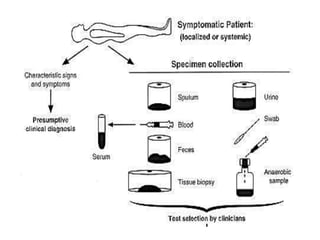
• BLOOD & BLOOD COMPONENTS
• THROAT & NASOPHARYNGEAL DISCHARGES
• SPUTUM
URINE
• CEREBROSPINAL FLUID (CSF)
• STOOL
• GENITAL DISCHARGE
• WOUND DISCHARGE
BLOOD
• Detect blood-borne pathogens
• Identify bacteria responsible for
– Bacteremia
– Sepsis infections of the native and prosthetic
valves
– Suppurative thrombophlebitis
– Mycotic aneurysms
– Infections of vascular grafts
• Collect before beginning antimicrobial therapy
BLOOD
• When any one/ a combination of the following:
– Fever (38°C or greater)
– Hypothermia ( 36°C or lower)
– Leukocytosis (especially with a left shift)
– Granulocytopenia
– Hypotension
BLOOD : SPECIMEN COLLECTION
• Phlebotomy technique
– Minimize contamination with skin flora
– 1st: Skin cleaned with 70% alcohol
– 2nd: Apply 1-2% iodine solution, an
iodophor/chlorhexidine; dry for 1-2minutes prior
to venipuncture.
BLOOD : APPROPRIATE TIMING FOR DETECTION
OF BACTEREMIA & FUNGEMIA
• Optimal time to collect : just before a chill (not
predictable)
• Collected after the onset of fever and chills
• Needle and syringe
– Without changing needles
– Injected directly into bottles of culture media
– Inverted several times to mix
– Transported to lab at room temp. as soon after
collection is possible.
– SHOULD NOT BE REFRIGERATED
BLOOD : SPECIMEN VOLUME
• Bacteremia in adults (CFU/ml) = low
– 20-30 ml of blood per culture set = strongly
recommended.
• Infants and children = higher concentration of
microorganisms
– 1-5 ml of blood per culture = adequate
BLOOD : SPECIMEN DRAWS
• Number of blood specimens = based in the nature
of bacteremia
– Transient, Intermittent or Continuous
– TRANSIENT BACTEREMIA
• Follows manipulation of a focus of infection, instrumentation of
a contaminated mucosal surface or a surgical procedure in a
contaminated site; also in the course of many systemic and
localized infections.
– INTERMITTENT BACTEREMIA
• Associated with an undrained abscess
– CONTINUOUS BACTEREMIA
• Hallmark of intravascular infection
BLOOD : SPECIMEN DRAWS
• 2-3 20 ml blood samples drawn over 24hr
period, aerobic and anaerobic blood culture
bottles (sufficient)
• 4 blood cultures within 24hr = yielded more
• Suggested 30-60 min time interval for the first 2
sets, another 1-2 sets drawn (remaining 24hr)
• If antimicrobial therapy is deemed urgent, collect
before therapy, 2 separate sites within few
minutes.
BLOOD : SPECIMEN DRAWS
• Frequent blood culture contaminants but also
true pathogens:
– Coagulase – negative Staphylococci
– Viridans Streptococci
– Corynebacteria
– Bacillus spp. , Propionbacterium spp.
• 2 sets of blood cultures per febrile episode
recommended for differentiation (present in only
1 bottle = contamination)
RECOVERY OF MICOORGANISMS
• Factors that may impede recovery of pathogens:
– Antibodies
– Complement
– Phagocytic WBC
– Antimicrobial agents
• Approaches :
– Dilute blood specimen in broth medium in a 1 : 10
ratio = optimal neutralization of the serum
bactericidal activity.
CONT..
• Incorporating 0.02-0.05% sodium polyethanol
sulfonate in the blood culture medium = inhibits
– Coagulation
– Phagocytosis
– Complement activation
– Inactivates aminoglycosides
• Other methods:
– Adding penicillinases to broth media to inactivate
penicillins
– Using antibiotic – absorbent resins and lysis –
centrifugation system
MANUAL BLOOD CULTURE
• CULTURE BOTTLES
– Examined daily for 7 days for evidence of growth
– Indicated by turbidity, hemolysis, gas production,
discrete colonies/combination of these.
• If growth +
– smear, stain with Gram stain,
– read subculture + broth to appropriate agar media
• Routine subculture of macrospically negative –
broths performed after 6 – 18hrs of inoculation;
anaerobic bottle : unnecessary
CONT..
– ADVANTAGES : low cost, low contamination rate
– DISADVANTAGE : time consuming process of routine
bottle examination and subculture
BIPHASIC SYSTEM
– Consists of a broth medium in a bottle to which a
chamber containing agar media on a paddle is
attached.
– Colonies on the agar ate used for identification and
susceptibility testing.
CONT..
LYSIS – CENTRIFUGATION SYSTEM
– Consist of a tube containing reagents that inhibit
• coagulation and the complement cascade
• lyse blood cells
• provide a cushion for the microorganisms during
centrifugation.
– Blood added to tube
• Inverted several times, prevent from clotting
• Transported ASAP
• Centrifuged 30 min at 3000x g
• Discard supermatant
• Sediment vortexed and plate to agar
CONT..
– ADVANTAGES :
• excellent recovery of Staphylococcus aureus, some
Enterobacteriaceae, and fungi (best for molds, Histoplasma
capsulatum)
• Direct availability of colonies for identification and suspectibility
testing
• Ability to carry out quantitative cultures
• FLEXIBLE : inoculate to special media (Legionella &
mycobacteria)
– DISADVANTAGES :
• Labor – intensive
• Less likely recover Steptococcus pneumoniae , Haemophilus
influenzae/ anaerobs
• Increased risk for contamination
HANDLING OF SPECIMEN
• Specimen can be placed in transport medium:
– TRANSGROW : Neiserria gonorrhoeae
– AMIES : Fastidious organisms
– CARY & BLAIR/STUART’s : Fecal specimen
• Urine may be refrigerated but it must be
examined within 24hrs
• Stool and sputum could also be refrigerated
but it must be examined within 2 – 3 hrs.
• CSF for bacterial culture :
– Incubate for not more than 12 hrs.
– Stand at room temp not longer than 1 hr.
– DO NOT REFRIGERATE : some organisms are
sensitive to low temp.
• Neisseria meningitidis, Haemophilus influenzae
• CSF for viral culture :
– Refrigerate immediately
– If held for more than 24hrs, freeze specimen at -
70°C
BLOOD
• GENERAL CONSIDERATIONS :
– Collect blood during febrile episode
– During a chill
– TIMING = + BC depends on the pathogenic process
of the organism
– Obtain 2 simultaneous blood cultures in 2 sites
(right and left arm)
• Single negative blood culture doe not rule out
bacteremia.
– Collect blood aseptically
– Ideal volume is 10 ml.
• Use anticoagulant (e.g. SPS)
• If Px is on penicillin, administer penicillinase
– Not effective against methicillin, cloxacillin, nafcillin
• Hold for 2 weeks before reporting for negative
– 21 days for Brucella spp.
• Indications of (+) blood culture :
– Turbidity
– Hemolysis
– Colony or pellicle formation
– Presence of gas or bubble
• MEDIA USED :
– Trypticase Soy Broth
– Brain – Heart Infusion
– Columbia Broth
– Castaneda Broth
– Brucella Broth
– Thioglycollate Broth
• ANTICOAGULANT :
– SODIUM POLYANETHOL SULFONASE
• Neutralization bactericidal effect of serum
• Prevents phagocytosis
• Inactivates some antimicrobial agents
BLOOD COMPONENTS
• Organisms found in fatal transfusion reactions
are psychrophilic
• Gram negative bacilli
– Pseudomonas spp. EXCEPT Pseudomonas
aeruginosa
• PLATELET
THROAT & NASOPHARYNGEAL
• Alpha strep (abundant) but Group A
strep.(common pathogen)
• Culture must include anaerobic conditions for
Beta strep.
• MEDIA
– Haemophilus influenzae : CAP or BAP w/Staph
– Neisseria meningitidis : CAP /Thayer Martin
– Bordetella pertussis : Charcoal cephalaxin
SPUTUM
• SUITABLE Sx :
– < 10 epithelial cells & >25 pus cells
– Early morning sputum
• PROCEDURE :
– Make a direct smear for GS & AFS
– Do concentration technique (ex. NaOH)
• Free bacteria by dissolving fats and mucus
– Culture
URINE
• Container : sterile wide mouth glass or plastic
jar with tight – fitting lids.
• Method :
– SUPRAPUBIC ASPIRATION (IDEAL)
– CATHERTERIZATION/CYSTOSCOPY
– CLEAN CATCH MIDSTREAM
• Collection : early morning
• Processing : within 2grs after collection
URINE
• GS of uncentrifuged Sx for rapid screening of UTI
• Presence of numerous squamous cells indicate
vaginal/ urethral contamination
• PROCEDURE :
– Inoculate the Sx in BAP, EMB, Mac using a calibrated
loop (0.01 or 0.001 mL)
– Incubate overnight
– No growth for the 1st 24hrs, continue for 24hrs more
before reporting negative.
Actual # of colonies X Calibrations of loop = # of CFU/mL
100,000 bacterial CFU/mL (indicate infection)
• POUR PLATE METHOD :
– Prepare 1 : 100 dilution of urine w/ sterile H20
– Transfer 0.1mL of the solution to the Petri dish
– Add agar and mix well
– Incubate for 18 – 24hrs
– Count colonies and multiple by 100
– Report result in bacteria/mL
CEREBROSPINAL FLUID
• PROCEDURE
– Centrifuge Sx; make a smear for GS and India ink
– Culture Sx
• Haemophilus influenzae type B
• Neisseria meningiditis
• Steptococcus pneumoniae
• MEDIA
– TSB/thiodlycollate
– BAP for Gram (+) cocci
– CAP for Gram (-) cocci
– EMB/Mac for Gram (-) bacilli
STOOL CULTURE
• Ideal Specimen :
– Freshly collected stool on early stage of disease
– Rectal swab may be used
• Amount : 1-2 grams
• Container : Clean, wide mouth with lid
• Transport time : 2hrs after collection
• Transport medium : Cary Blair
STOOL CULTURE
• PROCEDURE
– Put rectal swab in enrichment broth or transport
medium
– GS is NOT usually done but helps in identifying
etiologic agents
• Gram + cocci in clusters (Staphylococci)
• Gram – comma-shape bacilli (Vibrio)
• Gram + bacilli in large numbers
• Gram – bacilli
• 1st day
– Inoculate the Sx and incubate it overnight
– MEDIA :
• Differential (EMB, Mac)
• Selective (SSA, HEA, XLD)
• Enrichment (Selenite F, APW)
• 2nd day
– Check diff’l media for LF and NLF
– Subculture and do biochemical tests
– If there’s no growth, inoculate culture from the enrichment
medium into EMB or Mac
• 3rd day
– Note the patterns of biochemical reactions
– If suggestive of Salmonella Shigella, Vibrio DO serological typing
– If growth occurs after doing step 2 of 2nd day, subculture into
biochemical test media
– Incubate overnight and perform first step of day 3.
EXUDATES & TRANSUDATES
• Wounds
• Boils
• Abscesses
• Ulcers
• Granules
• Rash
• Gastric Aspirates
• Tissues
• Eye discharge
• Ear discharge
• Effusions
• Endocervical
• Urethral
• Anorectal discharge
EXUDATES & TRANSUDATES
• Discharge/ Fluids : best to aspirate
– Dry wound : moisten swab w/ NSS before collecting
– Skin lesion : remove crust of pustule/vesicle cap then
swab lesion (Tzanck smear)
– Endocervical : use swab
– Urethra : use swab or scrape mucosa of anterior
urethra
– Anorectal : insert swab about 4-5cm. Into the anal
canal
COLLECTION
• Aspirates : sterile vial
• Ulcerative lesions : biopsy w/o preservations
• Irrigation, intravenous : sterile vial
• Intra-arterial Catheter tips : sterile vial
• Swabs : 2 pcs in sterile tube
• Fluids : syringe w/ sterile rubber stopper
• Corneal scraping : direct inoculation
GENITAL DISCHARGE
• SPECIMEN
– Cervical (female)
– Urethral (male)
– Rectal & throat swabs
• STD caused by :
– Treponema pallidum
– Neisseria gonoreheae
– Chlamydia trachomatis
– Candida albicans
– Gardenerella vaginalis
– HSV (Herpes Simplex Virus)
SUCCESSFUL RECOVERY OF ETIOLOGIC AGENTS
DEPENDS ON:
• Advance planning
• Collection of appropriate and adequate
specimen
• Correct packaging and rapid transport to the
laboratory
• Ability of the laboratory to accurately perform
the diagnostic tests
GENERAL GUIDELINES FOR SPECIMEN
COLLECTION
• Obtain specimens before treatment
• Collect material from the appropriate site
• Obtain material for culture during the acute
stage of the illness
• Collect sufficient quantity
• Transport the specimen immediately
• Label all specimen
• Specimens should be accompanied with a
request form
CLINICAL SPECIMEN FOR BACTERIAL CULTURE
• Blood
• CVD
• CSF
• Respiratory
• Urine
• Transudates/Exudate
s
• Feces/Rectal swab
• effussions
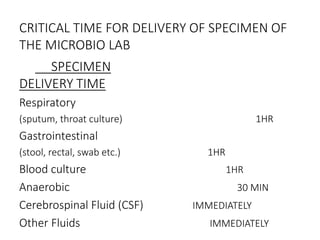
CRITICAL TIME FOR DELIVERY OF SPECIMEN OF
THE MICROBIO LAB
SPECIMEN
DELIVERY TIME
Respiratory
(sputum, throat culture) 1HR
Gastrointestinal
(stool, rectal, swab etc.) 1HR
Blood culture 1HR
Anaerobic 30 MIN
Cerebrospinal Fluid (CSF) IMMEDIATELY
Other Fluids IMMEDIATELY
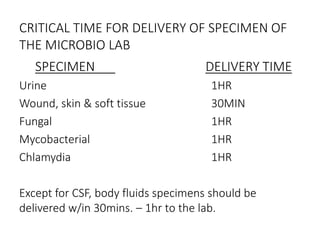
CRITICAL TIME FOR DELIVERY OF SPECIMEN OF
THE MICROBIO LAB
SPECIMEN DELIVERY TIME
Urine 1HR
Wound, skin & soft tissue 30MIN
Fungal 1HR
Mycobacterial 1HR
Chlamydia 1HR
Except for CSF, body fluids specimens should be
delivered w/in 30mins. – 1hr to the lab.
VARIABLES AFFECTING BLOOD CULTURES
• Number of Collections : 2-3 collections/ 24hrs
• Volume of Blood
YOUNG CHILDREN : 1-2mL in 20mL broth (1:10 to 1:20)
ADULTS : 5-10mL in 50mL broth (1:5 to 1:10)
• Broth Medium : TSB or BHI
• Normal Bactericidal Properties of Blood
• Sodium PolyanetholsulFonate (SPS): 0.025%
Gelatin : 1%
Agar : 0.1%
COMPONENT OF BLOOD CULTURE BROTH
1 % Gelatin
• enhance growth of Neisseria meningitidis
0.1 % Bacto-agar
• enhance growth of anaerobic organism
• anticoagulant
0.025 % Sodium Polyanetholsulfonate (SPS)
• inhibit activity of complement & lysosyme
• prevents phagocytosis
• inactivates therapeutic concentration of
aminoglycosides
BLOOD CULTURE
Incubation Temperature : 35°C – 37°C
Incubation Time : 7 DAYS
Subculture on BAP & CA : after 14 – 17hrs
3days, 5days, 7days
Note: BAP & CA should be incubated at 35°C - 37°C
under CO2 enhanced atmosphere.
COLLECTION & TRANSPORT OF CSF
Container  Dry Sterile screw caps
Volume of sample  3 to 4 mL
culture others
Transport time  immediately w/o delay
CSF
• The specimen should be taken before
antibiotics are administered.
• Antigen tests may give a specific diagnosis
even after antibiotic treatment.
• CSF should always be taken from patients with
suspected purulent meningitis, regardless of
antibiotic treatment.
CSF SPECIMEN
• Volume : 0.5 – 5.0mL
• Time of Collection : first week of illness
– 1st tube : cell count and differential staining
– 2nd tube : Gram’s stain and culture
– 3rd tube : protein, glucose and special tests
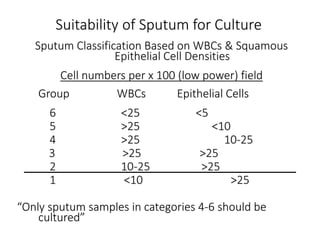
Suitability of Sputum for Culture
Sputum Classification Based on WBCs & Squamous
Epithelial Cell Densities
Cell numbers per x 100 (low power) field
Group WBCs Epithelial Cells
6 <25 <5
5 >25 <10
4 >25 10-25
3 >25 >25
2 10-25 >25
1 <10 >25
“Only sputum samples in categories 4-6 should be
cultured”
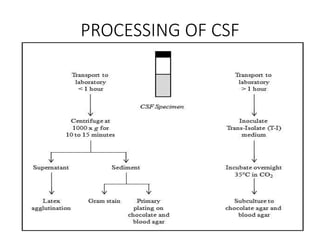
PROCESSING OF CSF
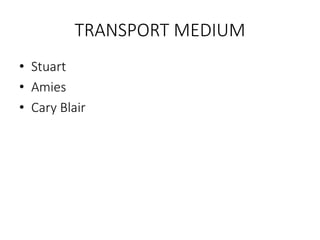
TRANSPORT MEDIUM
• Stuart
• Amies
• Cary Blair
Bacte lec 4

Bacte lec 4

  • 1.
  • 2.
    KEY POINTS • Collectspecimens from site of infection prior to initiation of therapy. • Collect adequate volume of sample for testing required. • For bacterial, fungal and viral cultures submit tissue, fluid/aspirate if possible as these are always superior to a swab specimen.
  • 3.
    KEY POINTS • Userequired collection and transport materials to preserve specimen integrity. • Communicate clear orders and source information. • Expedite the transport of specimens to the laboratory and do not allow them to sit in collection areas.
  • 4.
    GENERAL PRINCIPLES • TIMINGOF SPECIMEN COLLECTION – Should be collected at a time when the likelihood of recovering the suspected pathogen is greatest. • RECOVERING VIRUSES : greatest in the acute phase of the illness. • RECOVERING BACTERIA : ideally be collected before antimicrobial therapy is started.
  • 5.
    TIMING OF SPECIMENCOLLECTION • ENTERIC INFECTION – Organisms are in greater number during acute/diarrheal stage. • TYPHOID FEVER – Blood culture in the 1st week of infection. – Stool/Urine culture on the 2nd week – Serological tests in the 3rd week
  • 6.
    SPECIMEN VOLUME • MUSTBE ADEQUATE for performance of the microbiological studies requested. • IF INSUFFICIENT : notify nurse/physician for additional sample/to prioritize the requests. • IF A SWAB : – use polyester-tipped swab on a plate shaft – avoid calcium alginate swab for viral culture (inactivates herpes simplex virus) • cotton toxic :Neisseria gonorrhoeae • Wood toxic : Chlamydia trachomatis
  • 7.
    SPECIMEN VOLUME • SWAB: not optimal for detection of anaerobes, mycobacteria/fungi, do not use. • An actual tissue sample of fluid aspirate is always superior to a swab specimen for the recovery of pathogenic organisms.
  • 8.
    SPECIMEN COLLECTION • Obtainedfrom the site of infection with minimal contamination from adjacent tissues and organ secretions and collected in a sterile container. • LABEL : name & identification number of the patient, the source of specimen, date and time of collection.
  • 9.
    SPECIMEN TRANSPORT • Placedin a biohazard bag and transported to the laboratory as soon as possible. • IF DELAY IS UNAVOIDABLE : refrigerate to prevent overgrowth of microbiota. – Urine, sputum, other respiratory specimens, stool. – Specimens for detection of Chlamydia trachomatis/viruses. • Cerebrospinal fluid (CSF) and other body fluids, blood, specimens collected for recovery of – Neisseria gonorrhoeae : room tempt., if refrigerated adversely affects recovery of potential pathogens froms these sources.
  • 10.
    UNACCEPTABLE SPECIMENS • SPECIMENS –Received in formalin – In containers from which the sample has leaked – That have been inoculated on to agar plates that have dried out/oudated – Contaminated with barium, dye/oily chemicals • 24hr sputum collection • Foley catheter tips. • Duplicate specimens (except blood cultures) received in a 24hr period • Blood catheter tips submitted for patients w/o concomitant positive blood culture.
  • 11.
    SPECIMEN REJECTED FORANAEROBIC CULTURE: • Gastric washings • Urine other than suprapubic aspirate • Stool (except for recovery of Clostridium difficile ) – for epidemiologic studies/ for diagnosis of bacteria associated with food poisoning. • Oropharyngeal specimens (except deep tissue samples obtained during a surgical procedure) • Sputum • Swabs of ileostomy/ colostomy sites. • Superficial skin specimens.
  • 12.
    UNIVERSAL PRECAUTIONS • Mustbe followed when handling all specimens • APPROPRIATE BARRIERS : to prevent exposure of skin & mucous membranes to the specimen • PPE – Gloves and a lab coat must be worn at all times – Masks, goggles and impermeable gowns/ aprons must be worn in situation which risk of splashes/ droplet formation • Open specimen container in serological safety cabinet.
  • 13.
    REFERRAL TESTING • MUSTBE PACKAGED – Shipping specimens/cultures to reference lab – Dangerous good shipping guidelines (IATA website) • SPECIMENS : not more than 40 ml • Cultures of bacteria and fungi – Grown in solid media and tubes • Cap sealed with waterproof tape
  • 14.
    REFERRAL TESTING • Sufficientpacking (1°, 2°) – Leak proof – Prevent from breaking – Individually wrapped/separated • Itemized list of contents enclosed, marked/labeled properly • Labeled with an official label – Address, contents, name, telephone number of person responsible for shipping.
  • 15.
    CLINICAL SPECIMENS • BLOOD& BLOOD COMPONENTS • THROAT & NASOPHARYNGEAL DISCHARGES • SPUTUM URINE • CEREBROSPINAL FLUID (CSF) • STOOL • GENITAL DISCHARGE • WOUND DISCHARGE
  • 16.
    BLOOD • Detect blood-bornepathogens • Identify bacteria responsible for – Bacteremia – Sepsis infections of the native and prosthetic valves – Suppurative thrombophlebitis – Mycotic aneurysms – Infections of vascular grafts • Collect before beginning antimicrobial therapy
  • 17.
    BLOOD • When anyone/ a combination of the following: – Fever (38°C or greater) – Hypothermia ( 36°C or lower) – Leukocytosis (especially with a left shift) – Granulocytopenia – Hypotension
  • 18.
    BLOOD : SPECIMENCOLLECTION • Phlebotomy technique – Minimize contamination with skin flora – 1st: Skin cleaned with 70% alcohol – 2nd: Apply 1-2% iodine solution, an iodophor/chlorhexidine; dry for 1-2minutes prior to venipuncture.
  • 19.
    BLOOD : APPROPRIATETIMING FOR DETECTION OF BACTEREMIA & FUNGEMIA • Optimal time to collect : just before a chill (not predictable) • Collected after the onset of fever and chills • Needle and syringe – Without changing needles – Injected directly into bottles of culture media – Inverted several times to mix – Transported to lab at room temp. as soon after collection is possible. – SHOULD NOT BE REFRIGERATED
  • 20.
    BLOOD : SPECIMENVOLUME • Bacteremia in adults (CFU/ml) = low – 20-30 ml of blood per culture set = strongly recommended. • Infants and children = higher concentration of microorganisms – 1-5 ml of blood per culture = adequate
  • 21.
    BLOOD : SPECIMENDRAWS • Number of blood specimens = based in the nature of bacteremia – Transient, Intermittent or Continuous – TRANSIENT BACTEREMIA • Follows manipulation of a focus of infection, instrumentation of a contaminated mucosal surface or a surgical procedure in a contaminated site; also in the course of many systemic and localized infections. – INTERMITTENT BACTEREMIA • Associated with an undrained abscess – CONTINUOUS BACTEREMIA • Hallmark of intravascular infection
  • 22.
    BLOOD : SPECIMENDRAWS • 2-3 20 ml blood samples drawn over 24hr period, aerobic and anaerobic blood culture bottles (sufficient) • 4 blood cultures within 24hr = yielded more • Suggested 30-60 min time interval for the first 2 sets, another 1-2 sets drawn (remaining 24hr) • If antimicrobial therapy is deemed urgent, collect before therapy, 2 separate sites within few minutes.
  • 23.
    BLOOD : SPECIMENDRAWS • Frequent blood culture contaminants but also true pathogens: – Coagulase – negative Staphylococci – Viridans Streptococci – Corynebacteria – Bacillus spp. , Propionbacterium spp. • 2 sets of blood cultures per febrile episode recommended for differentiation (present in only 1 bottle = contamination)
  • 24.
    RECOVERY OF MICOORGANISMS •Factors that may impede recovery of pathogens: – Antibodies – Complement – Phagocytic WBC – Antimicrobial agents • Approaches : – Dilute blood specimen in broth medium in a 1 : 10 ratio = optimal neutralization of the serum bactericidal activity.
  • 25.
    CONT.. • Incorporating 0.02-0.05%sodium polyethanol sulfonate in the blood culture medium = inhibits – Coagulation – Phagocytosis – Complement activation – Inactivates aminoglycosides • Other methods: – Adding penicillinases to broth media to inactivate penicillins – Using antibiotic – absorbent resins and lysis – centrifugation system
  • 26.
    MANUAL BLOOD CULTURE •CULTURE BOTTLES – Examined daily for 7 days for evidence of growth – Indicated by turbidity, hemolysis, gas production, discrete colonies/combination of these. • If growth + – smear, stain with Gram stain, – read subculture + broth to appropriate agar media • Routine subculture of macrospically negative – broths performed after 6 – 18hrs of inoculation; anaerobic bottle : unnecessary
  • 27.
    CONT.. – ADVANTAGES :low cost, low contamination rate – DISADVANTAGE : time consuming process of routine bottle examination and subculture BIPHASIC SYSTEM – Consists of a broth medium in a bottle to which a chamber containing agar media on a paddle is attached. – Colonies on the agar ate used for identification and susceptibility testing.
  • 28.
    CONT.. LYSIS – CENTRIFUGATIONSYSTEM – Consist of a tube containing reagents that inhibit • coagulation and the complement cascade • lyse blood cells • provide a cushion for the microorganisms during centrifugation. – Blood added to tube • Inverted several times, prevent from clotting • Transported ASAP • Centrifuged 30 min at 3000x g • Discard supermatant • Sediment vortexed and plate to agar
  • 29.
    CONT.. – ADVANTAGES : •excellent recovery of Staphylococcus aureus, some Enterobacteriaceae, and fungi (best for molds, Histoplasma capsulatum) • Direct availability of colonies for identification and suspectibility testing • Ability to carry out quantitative cultures • FLEXIBLE : inoculate to special media (Legionella & mycobacteria) – DISADVANTAGES : • Labor – intensive • Less likely recover Steptococcus pneumoniae , Haemophilus influenzae/ anaerobs • Increased risk for contamination
  • 30.
    HANDLING OF SPECIMEN •Specimen can be placed in transport medium: – TRANSGROW : Neiserria gonorrhoeae – AMIES : Fastidious organisms – CARY & BLAIR/STUART’s : Fecal specimen • Urine may be refrigerated but it must be examined within 24hrs • Stool and sputum could also be refrigerated but it must be examined within 2 – 3 hrs.
  • 31.
    • CSF forbacterial culture : – Incubate for not more than 12 hrs. – Stand at room temp not longer than 1 hr. – DO NOT REFRIGERATE : some organisms are sensitive to low temp. • Neisseria meningitidis, Haemophilus influenzae • CSF for viral culture : – Refrigerate immediately – If held for more than 24hrs, freeze specimen at - 70°C
  • 32.
    BLOOD • GENERAL CONSIDERATIONS: – Collect blood during febrile episode – During a chill – TIMING = + BC depends on the pathogenic process of the organism – Obtain 2 simultaneous blood cultures in 2 sites (right and left arm) • Single negative blood culture doe not rule out bacteremia. – Collect blood aseptically – Ideal volume is 10 ml.
  • 33.
    • Use anticoagulant(e.g. SPS) • If Px is on penicillin, administer penicillinase – Not effective against methicillin, cloxacillin, nafcillin • Hold for 2 weeks before reporting for negative – 21 days for Brucella spp. • Indications of (+) blood culture : – Turbidity – Hemolysis – Colony or pellicle formation – Presence of gas or bubble
  • 34.
    • MEDIA USED: – Trypticase Soy Broth – Brain – Heart Infusion – Columbia Broth – Castaneda Broth – Brucella Broth – Thioglycollate Broth • ANTICOAGULANT : – SODIUM POLYANETHOL SULFONASE • Neutralization bactericidal effect of serum • Prevents phagocytosis • Inactivates some antimicrobial agents
  • 35.
    BLOOD COMPONENTS • Organismsfound in fatal transfusion reactions are psychrophilic • Gram negative bacilli – Pseudomonas spp. EXCEPT Pseudomonas aeruginosa • PLATELET
  • 36.
    THROAT & NASOPHARYNGEAL •Alpha strep (abundant) but Group A strep.(common pathogen) • Culture must include anaerobic conditions for Beta strep. • MEDIA – Haemophilus influenzae : CAP or BAP w/Staph – Neisseria meningitidis : CAP /Thayer Martin – Bordetella pertussis : Charcoal cephalaxin
  • 37.
    SPUTUM • SUITABLE Sx: – < 10 epithelial cells & >25 pus cells – Early morning sputum • PROCEDURE : – Make a direct smear for GS & AFS – Do concentration technique (ex. NaOH) • Free bacteria by dissolving fats and mucus – Culture
  • 38.
    URINE • Container :sterile wide mouth glass or plastic jar with tight – fitting lids. • Method : – SUPRAPUBIC ASPIRATION (IDEAL) – CATHERTERIZATION/CYSTOSCOPY – CLEAN CATCH MIDSTREAM • Collection : early morning • Processing : within 2grs after collection
  • 39.
    URINE • GS ofuncentrifuged Sx for rapid screening of UTI • Presence of numerous squamous cells indicate vaginal/ urethral contamination • PROCEDURE : – Inoculate the Sx in BAP, EMB, Mac using a calibrated loop (0.01 or 0.001 mL) – Incubate overnight – No growth for the 1st 24hrs, continue for 24hrs more before reporting negative.
  • 40.
    Actual # ofcolonies X Calibrations of loop = # of CFU/mL 100,000 bacterial CFU/mL (indicate infection) • POUR PLATE METHOD : – Prepare 1 : 100 dilution of urine w/ sterile H20 – Transfer 0.1mL of the solution to the Petri dish – Add agar and mix well – Incubate for 18 – 24hrs – Count colonies and multiple by 100 – Report result in bacteria/mL
  • 41.
    CEREBROSPINAL FLUID • PROCEDURE –Centrifuge Sx; make a smear for GS and India ink – Culture Sx • Haemophilus influenzae type B • Neisseria meningiditis • Steptococcus pneumoniae • MEDIA – TSB/thiodlycollate – BAP for Gram (+) cocci – CAP for Gram (-) cocci – EMB/Mac for Gram (-) bacilli
  • 42.
    STOOL CULTURE • IdealSpecimen : – Freshly collected stool on early stage of disease – Rectal swab may be used • Amount : 1-2 grams • Container : Clean, wide mouth with lid • Transport time : 2hrs after collection • Transport medium : Cary Blair
  • 43.
    STOOL CULTURE • PROCEDURE –Put rectal swab in enrichment broth or transport medium – GS is NOT usually done but helps in identifying etiologic agents • Gram + cocci in clusters (Staphylococci) • Gram – comma-shape bacilli (Vibrio) • Gram + bacilli in large numbers • Gram – bacilli
  • 44.
    • 1st day –Inoculate the Sx and incubate it overnight – MEDIA : • Differential (EMB, Mac) • Selective (SSA, HEA, XLD) • Enrichment (Selenite F, APW) • 2nd day – Check diff’l media for LF and NLF – Subculture and do biochemical tests – If there’s no growth, inoculate culture from the enrichment medium into EMB or Mac • 3rd day – Note the patterns of biochemical reactions – If suggestive of Salmonella Shigella, Vibrio DO serological typing – If growth occurs after doing step 2 of 2nd day, subculture into biochemical test media – Incubate overnight and perform first step of day 3.
  • 45.
    EXUDATES & TRANSUDATES •Wounds • Boils • Abscesses • Ulcers • Granules • Rash • Gastric Aspirates • Tissues • Eye discharge • Ear discharge • Effusions • Endocervical • Urethral • Anorectal discharge
  • 46.
    EXUDATES & TRANSUDATES •Discharge/ Fluids : best to aspirate – Dry wound : moisten swab w/ NSS before collecting – Skin lesion : remove crust of pustule/vesicle cap then swab lesion (Tzanck smear) – Endocervical : use swab – Urethra : use swab or scrape mucosa of anterior urethra – Anorectal : insert swab about 4-5cm. Into the anal canal
  • 47.
    COLLECTION • Aspirates :sterile vial • Ulcerative lesions : biopsy w/o preservations • Irrigation, intravenous : sterile vial • Intra-arterial Catheter tips : sterile vial • Swabs : 2 pcs in sterile tube • Fluids : syringe w/ sterile rubber stopper • Corneal scraping : direct inoculation
  • 48.
    GENITAL DISCHARGE • SPECIMEN –Cervical (female) – Urethral (male) – Rectal & throat swabs • STD caused by : – Treponema pallidum – Neisseria gonoreheae – Chlamydia trachomatis – Candida albicans – Gardenerella vaginalis – HSV (Herpes Simplex Virus)
  • 49.
    SUCCESSFUL RECOVERY OFETIOLOGIC AGENTS DEPENDS ON: • Advance planning • Collection of appropriate and adequate specimen • Correct packaging and rapid transport to the laboratory • Ability of the laboratory to accurately perform the diagnostic tests
  • 50.
    GENERAL GUIDELINES FORSPECIMEN COLLECTION • Obtain specimens before treatment • Collect material from the appropriate site • Obtain material for culture during the acute stage of the illness • Collect sufficient quantity • Transport the specimen immediately • Label all specimen • Specimens should be accompanied with a request form
  • 51.
    CLINICAL SPECIMEN FORBACTERIAL CULTURE • Blood • CVD • CSF • Respiratory • Urine • Transudates/Exudate s • Feces/Rectal swab • effussions
  • 52.
    CRITICAL TIME FORDELIVERY OF SPECIMEN OF THE MICROBIO LAB SPECIMEN DELIVERY TIME Respiratory (sputum, throat culture) 1HR Gastrointestinal (stool, rectal, swab etc.) 1HR Blood culture 1HR Anaerobic 30 MIN Cerebrospinal Fluid (CSF) IMMEDIATELY Other Fluids IMMEDIATELY
  • 53.
    CRITICAL TIME FORDELIVERY OF SPECIMEN OF THE MICROBIO LAB SPECIMEN DELIVERY TIME Urine 1HR Wound, skin & soft tissue 30MIN Fungal 1HR Mycobacterial 1HR Chlamydia 1HR Except for CSF, body fluids specimens should be delivered w/in 30mins. – 1hr to the lab.
  • 56.
    VARIABLES AFFECTING BLOODCULTURES • Number of Collections : 2-3 collections/ 24hrs • Volume of Blood YOUNG CHILDREN : 1-2mL in 20mL broth (1:10 to 1:20) ADULTS : 5-10mL in 50mL broth (1:5 to 1:10) • Broth Medium : TSB or BHI • Normal Bactericidal Properties of Blood • Sodium PolyanetholsulFonate (SPS): 0.025% Gelatin : 1% Agar : 0.1%
  • 57.
    COMPONENT OF BLOODCULTURE BROTH 1 % Gelatin • enhance growth of Neisseria meningitidis 0.1 % Bacto-agar • enhance growth of anaerobic organism • anticoagulant 0.025 % Sodium Polyanetholsulfonate (SPS) • inhibit activity of complement & lysosyme • prevents phagocytosis • inactivates therapeutic concentration of aminoglycosides
  • 58.
    BLOOD CULTURE Incubation Temperature: 35°C – 37°C Incubation Time : 7 DAYS Subculture on BAP & CA : after 14 – 17hrs 3days, 5days, 7days Note: BAP & CA should be incubated at 35°C - 37°C under CO2 enhanced atmosphere.
  • 59.
    COLLECTION & TRANSPORTOF CSF Container  Dry Sterile screw caps Volume of sample  3 to 4 mL culture others Transport time  immediately w/o delay
  • 60.
    CSF • The specimenshould be taken before antibiotics are administered. • Antigen tests may give a specific diagnosis even after antibiotic treatment. • CSF should always be taken from patients with suspected purulent meningitis, regardless of antibiotic treatment.
  • 61.
    CSF SPECIMEN • Volume: 0.5 – 5.0mL • Time of Collection : first week of illness – 1st tube : cell count and differential staining – 2nd tube : Gram’s stain and culture – 3rd tube : protein, glucose and special tests
  • 62.
    Suitability of Sputumfor Culture Sputum Classification Based on WBCs & Squamous Epithelial Cell Densities Cell numbers per x 100 (low power) field Group WBCs Epithelial Cells 6 <25 <5 5 >25 <10 4 >25 10-25 3 >25 >25 2 10-25 >25 1 <10 >25 “Only sputum samples in categories 4-6 should be cultured”
  • 63.
  • 64.
    TRANSPORT MEDIUM • Stuart •Amies • Cary Blair