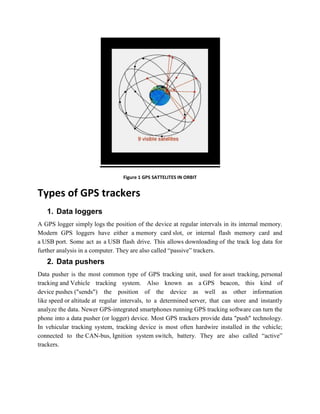
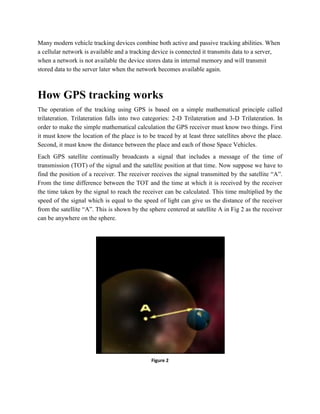
GPS tracking uses satellites and receivers to determine the precise location of a vehicle, mobile device, or other asset. It works by triangulating the position based on signals from at least three satellites which transmit their location and timing. This allows the receiver to calculate its distance from each satellite to determine its own position on Earth. GPS tracking provides real-time location data that can be stored or transmitted depending on the type of tracker - passive loggers store data while active pushers send data to a server. Common applications include vehicle tracking, robotics navigation, and geotagging photographs.