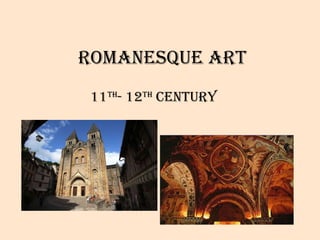
Romanesque art 11 th - 12 th  century
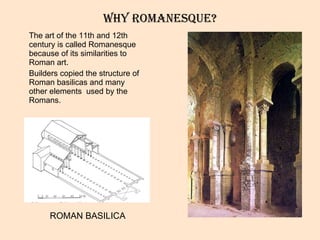
Why Romanesque? The art of the 11th and 12th century is called Romanesque because of its similarities to Roman art.  Builders copied the structure of Roman basilicas and many other elements  used by the Romans.  ROMAN BASILICA
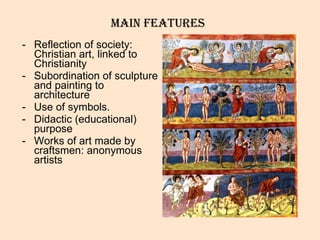
Main features Reflection of society: Christian art, linked to Christianity Subordination of sculpture and painting to architecture Use of symbols.  Didactic (educational) purpose Works of art made by craftsmen: anonymous artists
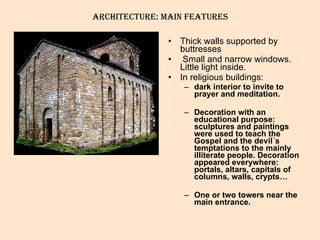
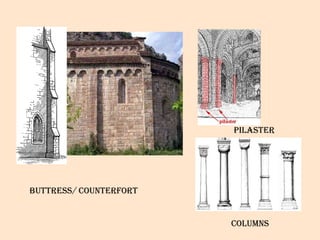
Thick walls supported by buttresses Small and narrow windows. Little light inside. In religious buildings:  dark interior to invite to prayer and meditation.  Decoration with an educational purpose: sculptures and paintings were used to teach the Gospel and the devil´s temptations to the mainly illiterate people. Decoration appeared everywhere: portals, altars, capitals of columns, walls, crypts…  One or two towers near the main entrance. ARCHITECTURE: Main features
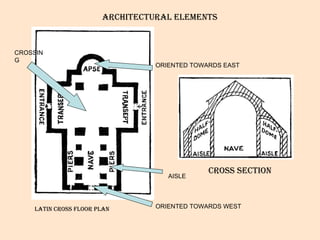
ARCHITECTURAL ELEMENTS LATIN CROSS FLOOR PLAN ORIENTED TOWARDS EAST ORIENTED TOWARDS WEST  CROSSING AISLE Cross section
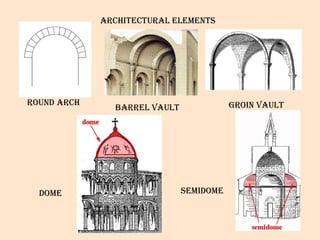
ARCHITECTURAL ELEMENTS BARREL VAULT Round arch  dome semidome Groin vault
Buttress/ counterfort pilaster columns
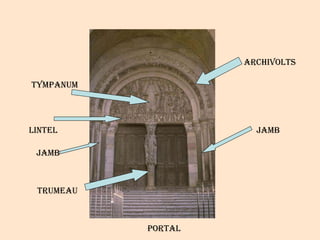
portal archivolts tympanum jamb jamb trumeau lintel
WHAT KIND OF BUILDINGS? Romanesque art was linked to feudal society. The buildings that survived are the ones built by the privileged:  -Castles - Churches and cathedrals - Monasteries or abbeys.  These buildings were  built with stone . The buildings built with wood don´t remain.  SAN MILLÁN CHURCH, SEGOVIA BODIAM CASTLE, U.K
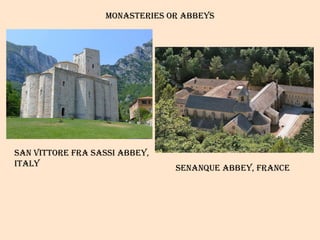
Monasteries or abbeys San vittore fra sassi abbey,  italy Senanque abbey, france
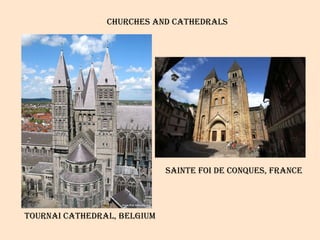
Tournai cathedral, belgium Churches and cathedrals Sainte foi de conques, france
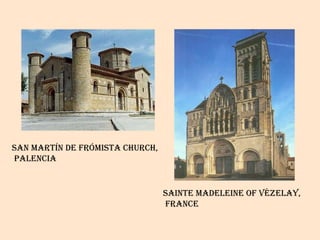
San martín de frómista church, palencia Sainte madeleine of vézelay, france
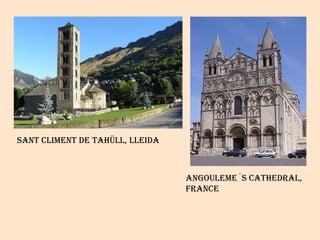
Sant climent de tahüll, lleida Angouleme´s cathedral,  france
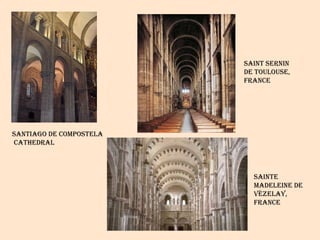
Santiago de compostela cathedral Sainte madeleine de vézelay,  france Saint sernin  de toulouse,  FRANCE
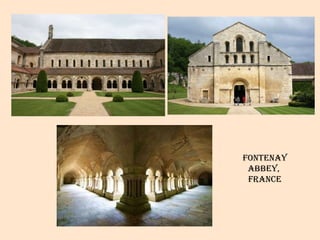
Fontenay abbey,  france
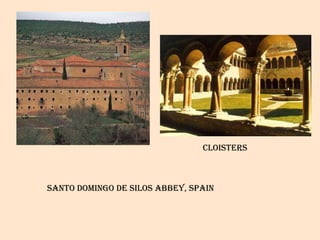
Santo domingo de silos abbey, spain CLOISTERS
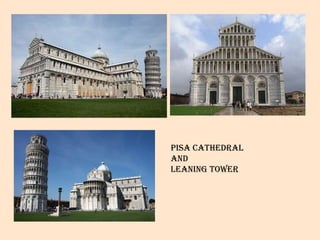
Pisa cathedral  And leaning tower
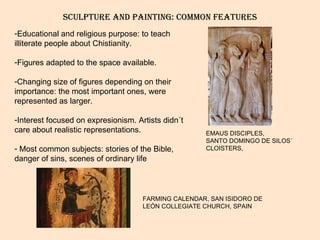
SCULPTURE AND PAINTING: common features Educational and religious purpose: to teach illiterate people about Chistianity. Figures adapted to the space available. Changing size of figures depending on their importance: the most important ones, were represented as larger.  Interest focused on expresionism. Artists didn´t care about realistic representations. Most common subjects: stories of the Bible, danger of sins, scenes of ordinary life EMAUS DISCIPLES,  SANTO DOMINGO DE SILOS´ CLOISTERS,  FARMING CALENDAR, SAN ISIDORO DE LEÓN COLLEGIATE CHURCH, SPAIN
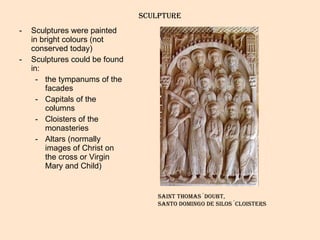
sculpture Sculptures were painted in bright colours (not conserved today) Sculptures could be found in:  the tympanums of the facades Capitals of the columns Cloisters of the monasteries Altars (normally images of Christ on the cross or Virgin Mary and Child) Saint thomas´doubt,  Santo domingo de silos´cloisters
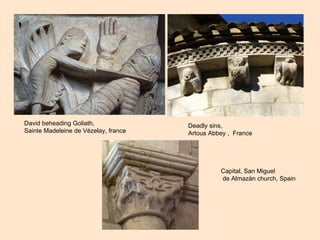
David beheading Goliath,  Sainte Madeleine de Vézelay, france Deadly sins,  Artous Abbey ,  France Capital, San Miguel de Almazán church, Spain
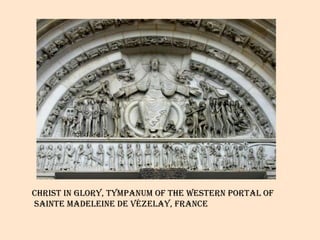
Christ in glory, tympanum of the western portal of  sainte madeleine de vézelay, france
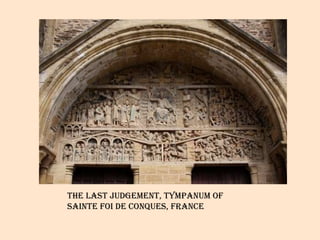
The last judgement, tympanum of  sainte foi de conques, france
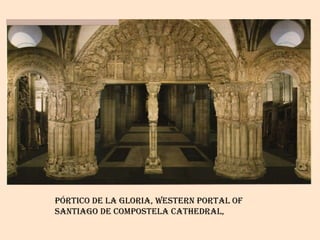
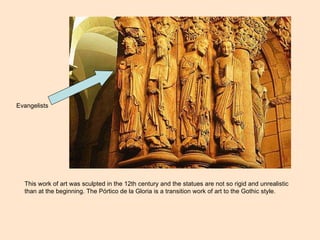
Pórtico de la gloria, western portal of  santiago de compostela cathedral,
 
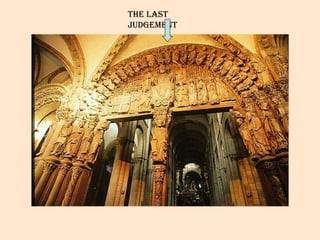
The last judgement
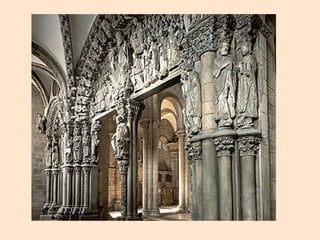
This work of art was sculpted in the 12th century and the statues are not so rigid and unrealistic than at the beginning. The Pórtico de la Gloria is a transition work of art to the Gothic style.  Evangelists
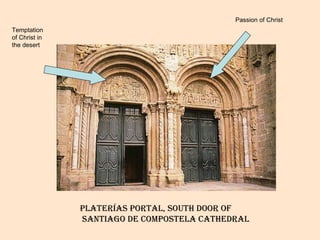
Platerías portal, south door of  santiago de compostela cathedral Temptation of Christ in the desert Passion of Christ
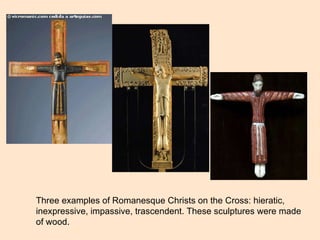
Three examples of Romanesque Christs on the Cross: hieratic,  inexpressive, impassive, trascendent. These sculptures were made  of wood.
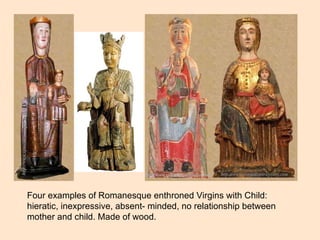
Four examples of Romanesque enthroned Virgins with Child:  hieratic, inexpressive, absent- minded, no relationship between  mother and child. Made of wood.
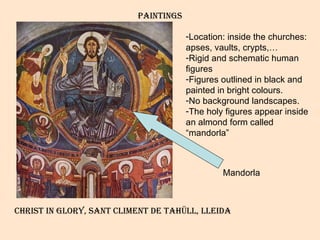
PAINTINGS Location: inside the churches: apses, vaults, crypts,… Rigid and schematic human figures Figures outlined in black and painted in bright colours. No background landscapes. The holy figures appear inside an almond form called “mandorla”  Christ in glory, sant climent de tahüll, lleida Mandorla
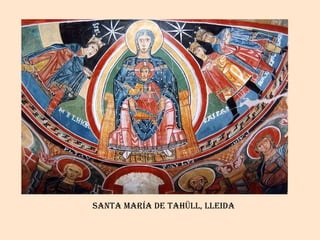
Santa maría de tahüll, lleida
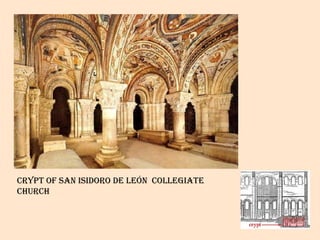
Crypt of san isidoro de león  collegiate church

Romanesque art

  • 1.
    Romanesque art 11th - 12 th century
  • 2.
    Why Romanesque? Theart of the 11th and 12th century is called Romanesque because of its similarities to Roman art. Builders copied the structure of Roman basilicas and many other elements used by the Romans. ROMAN BASILICA
  • 3.
    Main features Reflectionof society: Christian art, linked to Christianity Subordination of sculpture and painting to architecture Use of symbols. Didactic (educational) purpose Works of art made by craftsmen: anonymous artists
  • 4.
    Thick walls supportedby buttresses Small and narrow windows. Little light inside. In religious buildings: dark interior to invite to prayer and meditation. Decoration with an educational purpose: sculptures and paintings were used to teach the Gospel and the devil´s temptations to the mainly illiterate people. Decoration appeared everywhere: portals, altars, capitals of columns, walls, crypts… One or two towers near the main entrance. ARCHITECTURE: Main features
  • 5.
    ARCHITECTURAL ELEMENTS LATINCROSS FLOOR PLAN ORIENTED TOWARDS EAST ORIENTED TOWARDS WEST CROSSING AISLE Cross section
  • 6.
    ARCHITECTURAL ELEMENTS BARRELVAULT Round arch dome semidome Groin vault
  • 7.
  • 8.
    portal archivolts tympanumjamb jamb trumeau lintel
  • 9.
    WHAT KIND OFBUILDINGS? Romanesque art was linked to feudal society. The buildings that survived are the ones built by the privileged: -Castles - Churches and cathedrals - Monasteries or abbeys. These buildings were built with stone . The buildings built with wood don´t remain. SAN MILLÁN CHURCH, SEGOVIA BODIAM CASTLE, U.K
  • 10.
    Monasteries or abbeysSan vittore fra sassi abbey, italy Senanque abbey, france
  • 11.
    Tournai cathedral, belgiumChurches and cathedrals Sainte foi de conques, france
  • 12.
    San martín defrómista church, palencia Sainte madeleine of vézelay, france
  • 13.
    Sant climent detahüll, lleida Angouleme´s cathedral, france
  • 14.
    Santiago de compostelacathedral Sainte madeleine de vézelay, france Saint sernin de toulouse, FRANCE
  • 15.
  • 16.
    Santo domingo desilos abbey, spain CLOISTERS
  • 17.
    Pisa cathedral And leaning tower
  • 18.
    SCULPTURE AND PAINTING:common features Educational and religious purpose: to teach illiterate people about Chistianity. Figures adapted to the space available. Changing size of figures depending on their importance: the most important ones, were represented as larger. Interest focused on expresionism. Artists didn´t care about realistic representations. Most common subjects: stories of the Bible, danger of sins, scenes of ordinary life EMAUS DISCIPLES, SANTO DOMINGO DE SILOS´ CLOISTERS, FARMING CALENDAR, SAN ISIDORO DE LEÓN COLLEGIATE CHURCH, SPAIN
  • 19.
    sculpture Sculptures werepainted in bright colours (not conserved today) Sculptures could be found in: the tympanums of the facades Capitals of the columns Cloisters of the monasteries Altars (normally images of Christ on the cross or Virgin Mary and Child) Saint thomas´doubt, Santo domingo de silos´cloisters
  • 20.
    David beheading Goliath, Sainte Madeleine de Vézelay, france Deadly sins, Artous Abbey , France Capital, San Miguel de Almazán church, Spain
  • 21.
    Christ in glory,tympanum of the western portal of sainte madeleine de vézelay, france
  • 22.
    The last judgement,tympanum of sainte foi de conques, france
  • 23.
    Pórtico de lagloria, western portal of santiago de compostela cathedral,
  • 24.
  • 25.
  • 26.
    This work ofart was sculpted in the 12th century and the statues are not so rigid and unrealistic than at the beginning. The Pórtico de la Gloria is a transition work of art to the Gothic style. Evangelists
  • 27.
    Platerías portal, southdoor of santiago de compostela cathedral Temptation of Christ in the desert Passion of Christ
  • 28.
    Three examples ofRomanesque Christs on the Cross: hieratic, inexpressive, impassive, trascendent. These sculptures were made of wood.
  • 29.
    Four examples ofRomanesque enthroned Virgins with Child: hieratic, inexpressive, absent- minded, no relationship between mother and child. Made of wood.
  • 30.
    PAINTINGS Location: insidethe churches: apses, vaults, crypts,… Rigid and schematic human figures Figures outlined in black and painted in bright colours. No background landscapes. The holy figures appear inside an almond form called “mandorla” Christ in glory, sant climent de tahüll, lleida Mandorla
  • 31.
    Santa maría detahüll, lleida
  • 32.
    Crypt of sanisidoro de león collegiate church