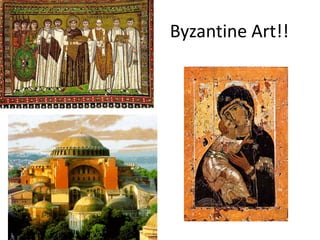
Byzantine Art!!
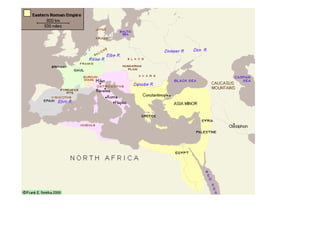
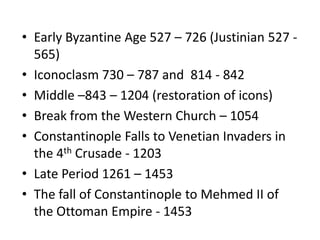
Early Byzantine Age 527 – 726 (Justinian 527 - 565)Iconoclasm 730 – 787 and  814 - 842Middle –843 – 1204 (restoration of icons)Break from the Western Church – 1054Constantinople Falls to Venetian Invaders in the 4th Crusade - 1203Late Period 1261 – 1453The fall of Constantinople to Mehmed II of the Ottoman Empire - 1453
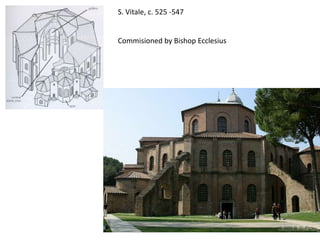
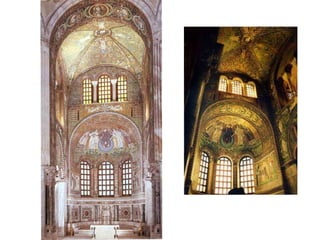
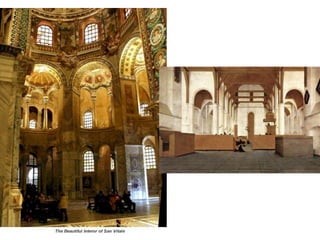
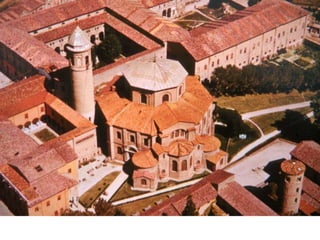
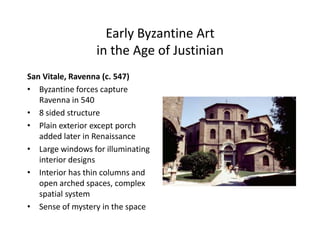
Justinian reigned 527 - 565In the late Fifth and early Sixth Centuries, the Western half of The Roman Empire fell into a shambles. Even Italy was under the control of feuding barbarians.TheEmporer Justinian rallied his forces and Recoverred Ravenna. For a short time Ravenna became the Byzantine capital in the West and a number of important early Byzantine monuments are preserved there today. The church of San Vitale in Ravenna is one of these monuments. SanVitale's humble exterior protects a glistening interior full of glass mosaics and sumptuous decorative marble.
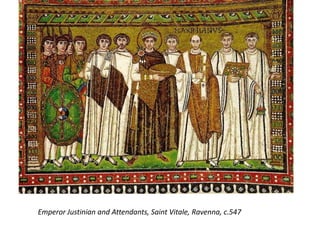
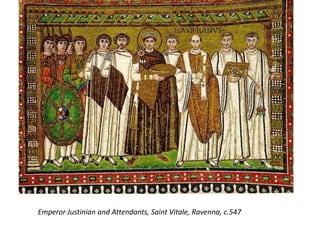
Emperor Justinian and Attendants, Saint Vitale, Ravenna, c.547
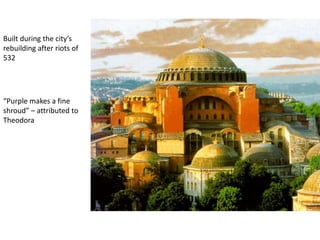
Built during the city’s rebuilding after riots of 532“Purple makes a fine shroud” – attributed to Theodora
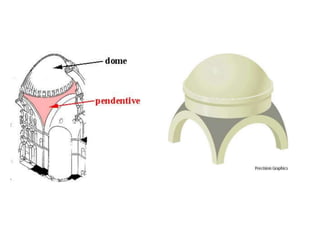
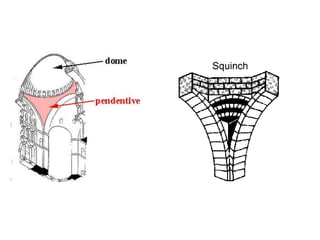
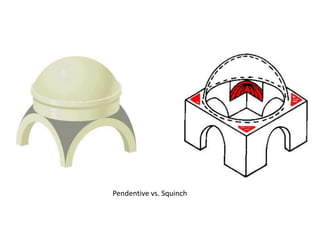
Pendentive vs. Squinch
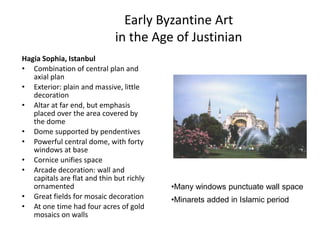
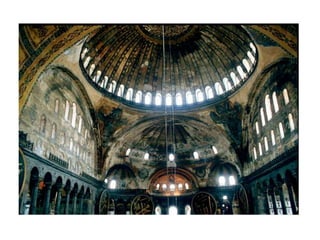
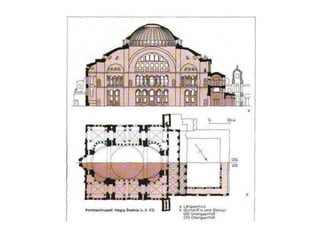
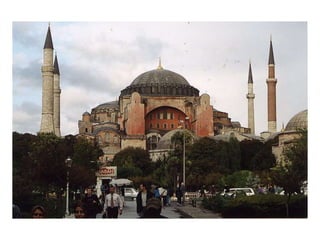
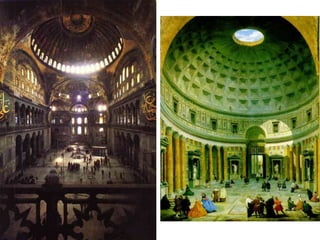
Hagia Sophia – Holy WisdomDesigned by 2 scholar-theoreticians:Anthemius of Tralles (geometry and optics) & Isisorus of Miletus (physics)Rumored to have been constructed by angels in 5 years (532 – 537)Massiveness of piers and walls disguised by mosaicsDome has a band of 40 windows around the top making it appear to float (first one fell in 558)
Early Byzantine Art in the Age of JustinianHagia Sophia, IstanbulCombination of central plan and axial planExterior: plain and massive, little decorationAltar at far end, but emphasis placed over the area covered by the domeDome supported by pendentivesPowerful central dome, with forty windows at baseCornice unifies spaceArcade decoration: wall and capitals are flat and thin but richly ornamentedGreat fields for mosaic decorationAt one time had four acres of gold mosaics on wallsMany windows punctuate wall space
Minarets added in Islamic period
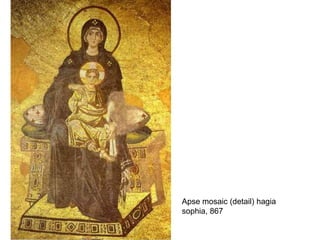
Apse mosaic (detail) hagia sophia, 867
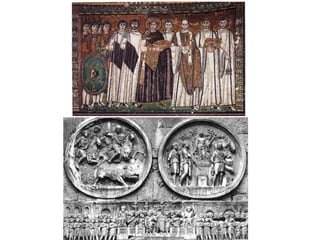
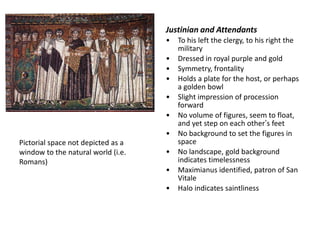
Emperor Justinian and Attendants, Saint Vitale, Ravenna, c.547
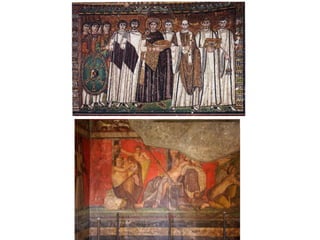
Justinian and AttendantsTo his left the clergy, to his right the military
Dressed in royal purple and gold
Symmetry, frontality
Holds a plate for the host, or perhaps a golden bowl
Slight impression of procession forward
No volume of figures, seem to float, and yet step on each other’s feet
No background to set the figures in space
No landscape, gold background indicates timelessness
Maximianus identified, patron of San Vitale
Halo indicates saintlinessPictorial space not depicted as a window to the natural world (i.e. Romans)
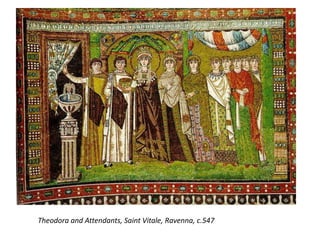
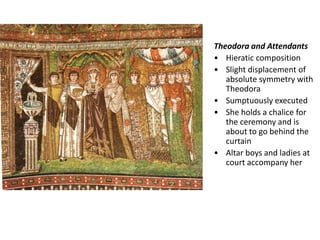
Theodora and Attendants, Saint Vitale, Ravenna, c.547
Theodora and AttendantsHieratic composition
Slight displacement of absolute symmetry with Theodora
Sumptuously executed
She holds a chalice for the ceremony and is about to go behind the curtain
Altar boys and ladies at court accompany herMosaicsMore abstract than Roman Paintings
Used as narrative illustrations to instruct the faithful
Bright colors, small bits of stone, glass tesseraeS. Vitale, c. 525 -547Commisioned by Bishop Ecclesius
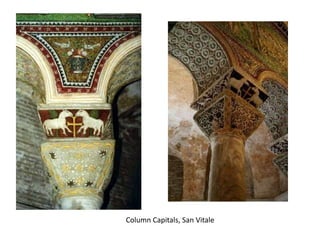
Column Capitals, San Vitale
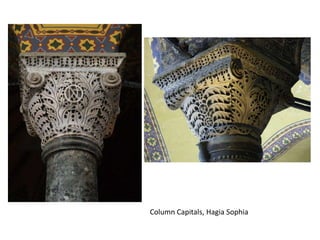
Column Capitals, Hagia Sophia

Byzantine Art

  • 1.
  • 3.
    Early Byzantine Age527 – 726 (Justinian 527 - 565)Iconoclasm 730 – 787 and 814 - 842Middle –843 – 1204 (restoration of icons)Break from the Western Church – 1054Constantinople Falls to Venetian Invaders in the 4th Crusade - 1203Late Period 1261 – 1453The fall of Constantinople to Mehmed II of the Ottoman Empire - 1453
  • 6.
    Justinian reigned 527- 565In the late Fifth and early Sixth Centuries, the Western half of The Roman Empire fell into a shambles. Even Italy was under the control of feuding barbarians.TheEmporer Justinian rallied his forces and Recoverred Ravenna. For a short time Ravenna became the Byzantine capital in the West and a number of important early Byzantine monuments are preserved there today. The church of San Vitale in Ravenna is one of these monuments. SanVitale's humble exterior protects a glistening interior full of glass mosaics and sumptuous decorative marble.
  • 7.
    Emperor Justinian andAttendants, Saint Vitale, Ravenna, c.547
  • 8.
    Built during thecity’s rebuilding after riots of 532“Purple makes a fine shroud” – attributed to Theodora
  • 11.
  • 12.
    Hagia Sophia –Holy WisdomDesigned by 2 scholar-theoreticians:Anthemius of Tralles (geometry and optics) & Isisorus of Miletus (physics)Rumored to have been constructed by angels in 5 years (532 – 537)Massiveness of piers and walls disguised by mosaicsDome has a band of 40 windows around the top making it appear to float (first one fell in 558)
  • 13.
    Early Byzantine Artin the Age of JustinianHagia Sophia, IstanbulCombination of central plan and axial planExterior: plain and massive, little decorationAltar at far end, but emphasis placed over the area covered by the domeDome supported by pendentivesPowerful central dome, with forty windows at baseCornice unifies spaceArcade decoration: wall and capitals are flat and thin but richly ornamentedGreat fields for mosaic decorationAt one time had four acres of gold mosaics on wallsMany windows punctuate wall space
  • 14.
    Minarets added inIslamic period
  • 16.
    Apse mosaic (detail)hagia sophia, 867
  • 19.
    Emperor Justinian andAttendants, Saint Vitale, Ravenna, c.547
  • 22.
    Justinian and AttendantsTohis left the clergy, to his right the military
  • 23.
    Dressed in royalpurple and gold
  • 24.
  • 25.
    Holds a platefor the host, or perhaps a golden bowl
  • 26.
    Slight impression ofprocession forward
  • 27.
    No volume offigures, seem to float, and yet step on each other’s feet
  • 28.
    No background toset the figures in space
  • 29.
    No landscape, goldbackground indicates timelessness
  • 30.
  • 31.
    Halo indicates saintlinessPictorialspace not depicted as a window to the natural world (i.e. Romans)
  • 32.
    Theodora and Attendants,Saint Vitale, Ravenna, c.547
  • 33.
  • 34.
    Slight displacement ofabsolute symmetry with Theodora
  • 35.
  • 36.
    She holds achalice for the ceremony and is about to go behind the curtain
  • 37.
    Altar boys andladies at court accompany herMosaicsMore abstract than Roman Paintings
  • 38.
    Used as narrativeillustrations to instruct the faithful
  • 39.
    Bright colors, smallbits of stone, glass tesseraeS. Vitale, c. 525 -547Commisioned by Bishop Ecclesius
  • 42.
  • 43.

Editor's Notes

  • #18 Imperial power and Christian glory