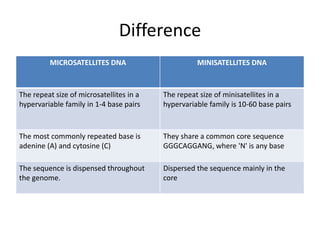
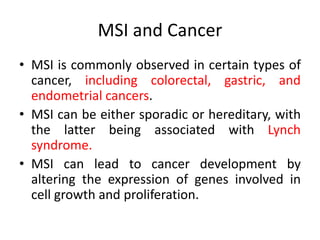
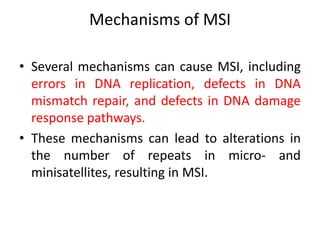
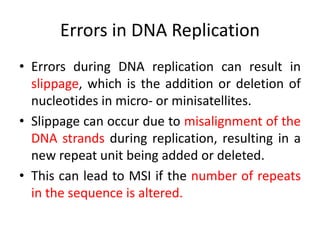
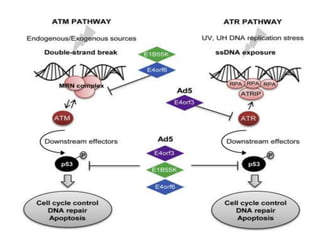
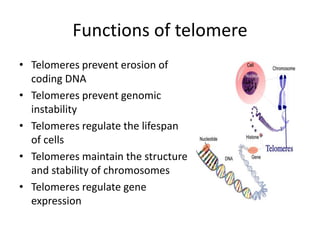
This document discusses genomic instability and its relationship to cancer development. It defines genomic instability as an increased rate of DNA alterations and describes some of the causes, including exposure to radiation, chemicals, and viruses. Genomic instability can lead to diseases like cancer through mechanisms like microsatellite instability (MSI). MSI occurs due to variations in short repetitive microsatellite DNA sequences and is commonly observed in certain cancer types. It can result from errors in DNA replication or defects in DNA damage repair pathways. Defects in these pathways are also associated with hereditary cancers like Lynch syndrome. The document outlines several methods for detecting MSI and discusses how telomerase dysfunction relates to cancer development through shortening of telomeres and genomic instability.