1
Coding and non coding DNA
Prepared by
o Maha Hassan
Supervisor /
Prof / Gamal Al-Ameri
Professor of Microbiology
Department of Microbiology & Molecular Biology
Faculty of Medicine & Health Sciences
Taiz University
❖Coding and non coding DNA
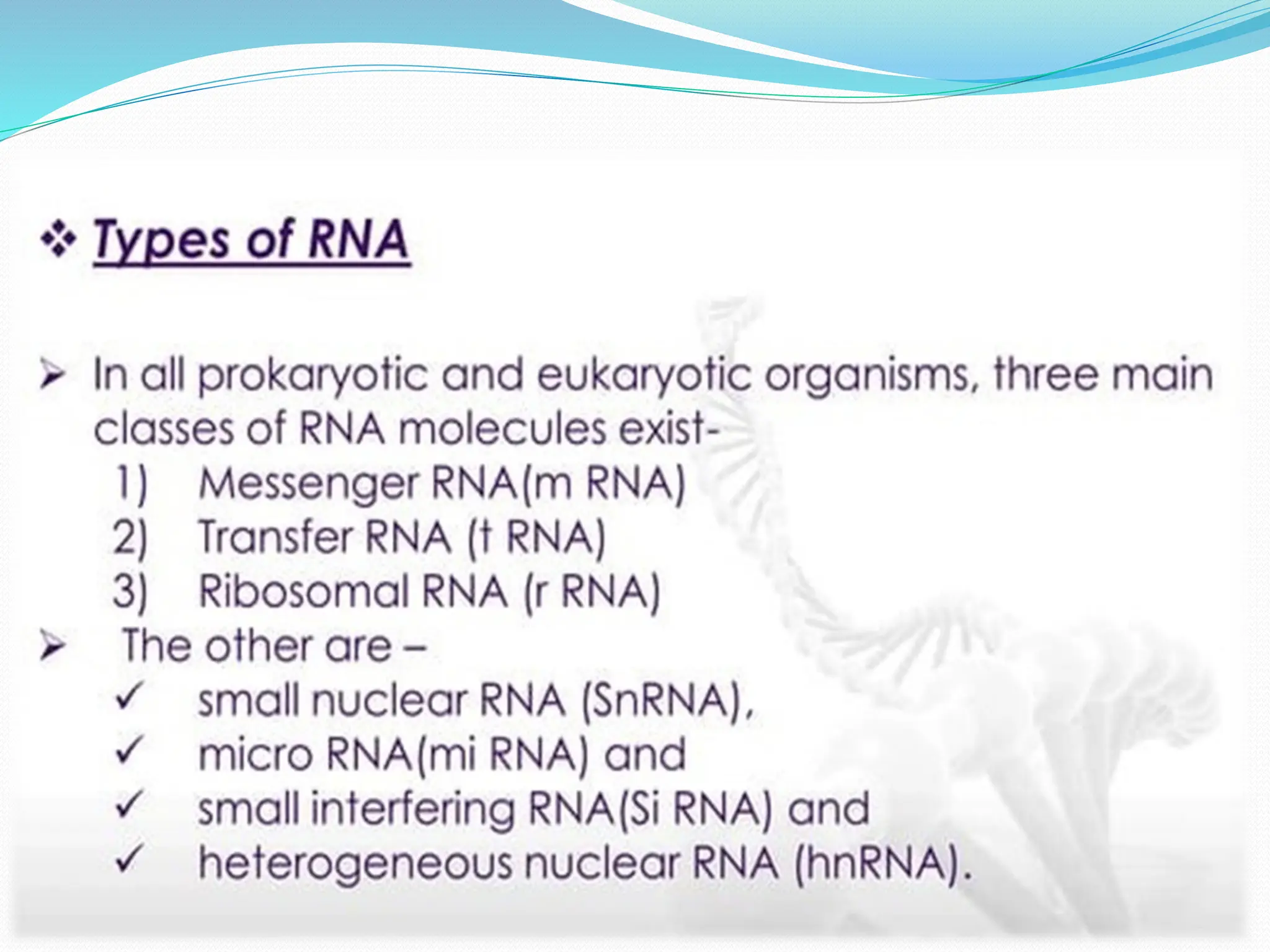
❖Types of RNA
Outlines :
2
3
❑Coding DNA
➢Coding DNA has genes that encode for
protein. The coding region has the
nucleotide sequence that codes for proteins.
They can transcribe, translate and produce
new proteins. These proteins have structural,
functional as well as regulatory importance
in the cell.
➢The percentage of coding DNA 2%.
Coding and non coding DNA
4
❑Noncoding DNA
➢Noncoding DNA does not encode for proteins.
Some noncoding DNA undergoes transcription to
form noncoding RNA. They include rRNA and
tRNA. Also, they regulate the protein coding
sequences.
➢The quantity of noncoding DNA greatly is 98%
and it varies among species.
5
❑human genome consists of non-coding
DNA including:
1.Noncoding genes
2. Promoters
3. Introns
4. Telomeres
5. Satellite DNA
6.Mobile genetic elements
7. Transposons
6
1.Noncoding genes
➢Noncoding genes are an important part of non-coding
DNA and they include genes for transfer
RNA and ribosomal RNA.
➢In humans, the noncoding genes take up at least 6%
of the genome, largely because there are hundreds
of copies of ribosomal RNA genes.
7
2. Promoters
➢Promoters are DNA segments near the 5' end
of the gene where transcription begins. They
are the sites where RNA polymerase binds to
initiate RNA synthesis. Every gene has a
noncoding promoter.
8
9
3. Introns
➢introns are the parts of a gene that are
transcribed into the precursor RNA sequence,
but ultimately removed by RNA splicing during
the processing to mature RNA.
➢ Introns are found in both types of genes:
protein-coding genes and noncoding genes.
➢They are present in prokaryotes but they are
much more common in eukaryotic genomes.
10
11
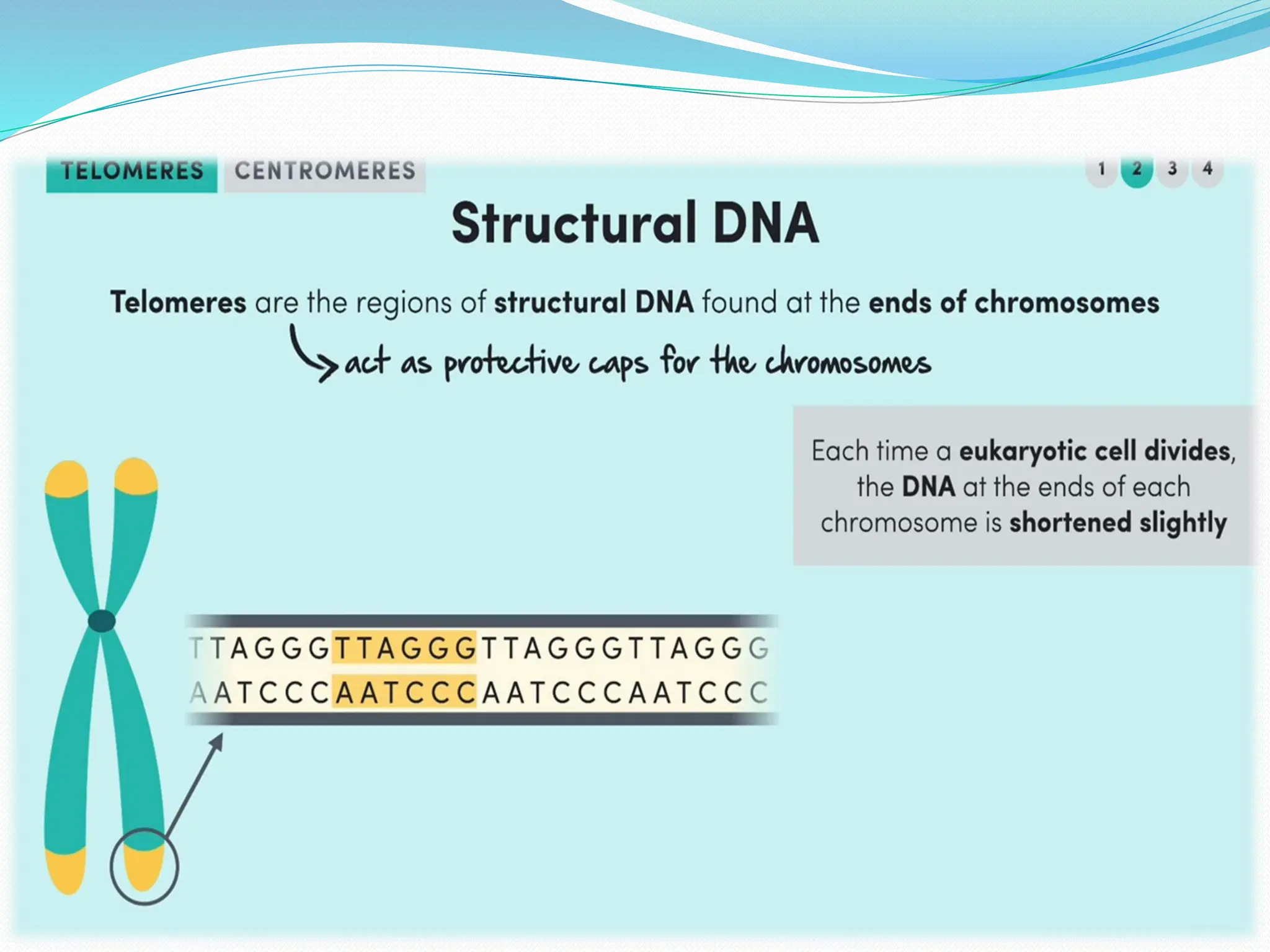
4. Telomeres
➢Segments of repeating nucleotides forming specialized
DNA segments found at the ends of all chromosomes.
➢These are important in preserving the chromosome’s
structural integrity during the process of DNA replication,
by keeping the ends from being degraded.
➢Teleomeres provide terminal stability to the chromosome
and ensure its survival
12
13
5. Satellite DNA
is a term used for tandemly repetitive DNA regions
clustered in an area. This type of non-coding DNA is
found in centromeres, the vital structures that link
the members of a chromosome pair during cell
division.
It is also present in the form of heterochromatin, a
densely packed form of DNA that regulates gene
activity as well as preserves chromosome
structure.
14
A. Micro-satellites (short tandem repeats; STRs)
These are moderately repetitive DNA
sequences composed of arrays of short repeats
(2–10 bp).
The human genome contains at least 30,000
micro-satellite loci located in euchromatin (10
to 100 repeats)
15
B. Mini-satellites (variable number
tandem repeat; VNTR)
10–100 bp spanning 0.5 kb to several
kilobases
They are found in euchromatic regions
of the genome and are predominantly
clustered towards chromosome ends
(100 and 1,000 repeats)
C. Satellites
1000 to several thousand base pairs.
These sequences are typically organized
as large clusters (up to 100 million bp) in
the heterochromatic regions of
chromosomes, centromeres, and
telomeres
16
17
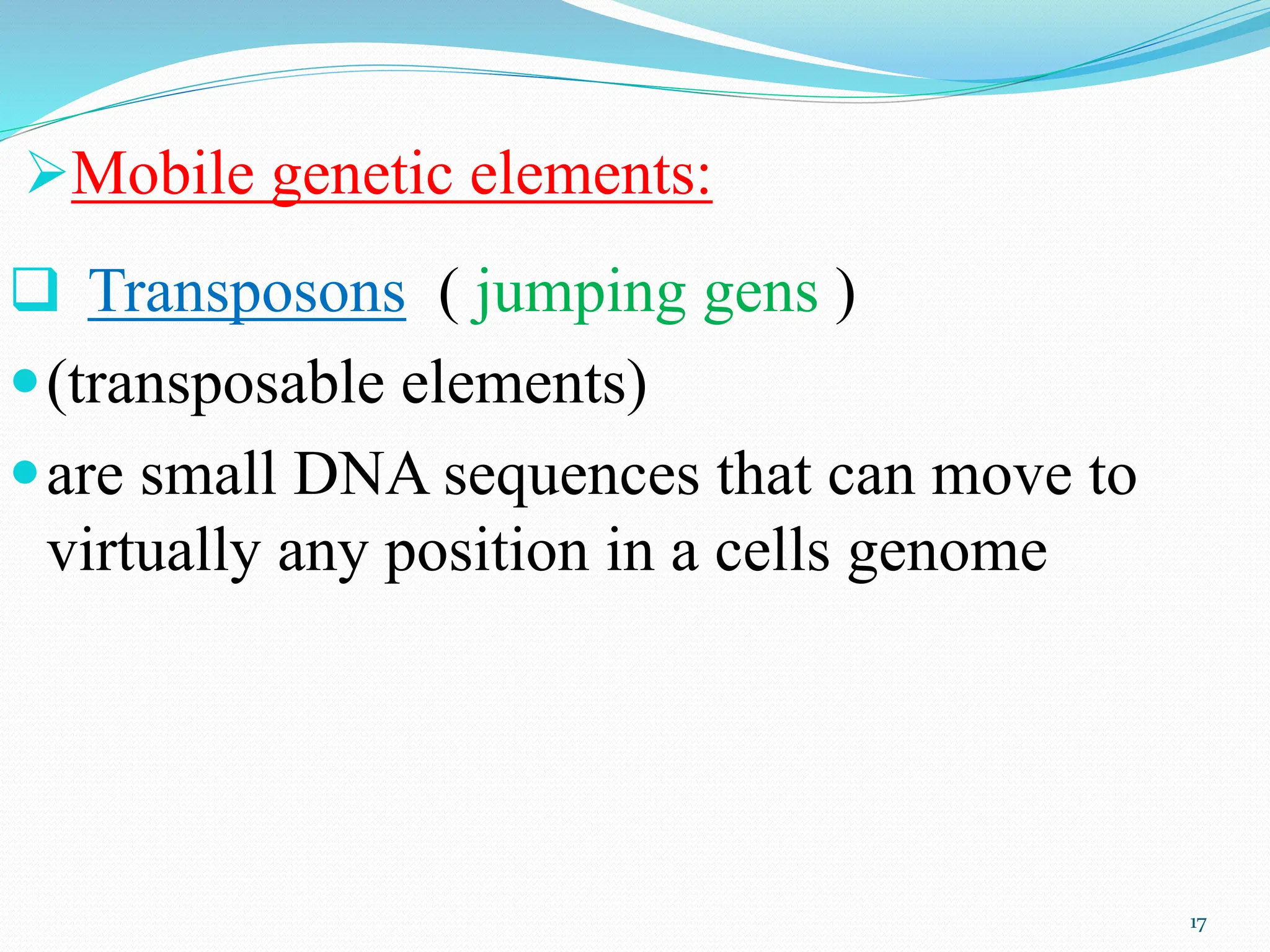
➢Mobile genetic elements:
❑ Transposons ( jumping gens )
(transposable elements)
are small DNA sequences that can move to
virtually any position in a cells genome
18
19
20
21
22
23
24
25
26
27
28
29
30
31

coding &non coding DNA molecular biology.pdf

  • 1.
    1 Coding and noncoding DNA Prepared by o Maha Hassan Supervisor / Prof / Gamal Al-Ameri Professor of Microbiology Department of Microbiology & Molecular Biology Faculty of Medicine & Health Sciences Taiz University
  • 2.
    ❖Coding and noncoding DNA ❖Types of RNA Outlines : 2
  • 3.
    3 ❑Coding DNA ➢Coding DNAhas genes that encode for protein. The coding region has the nucleotide sequence that codes for proteins. They can transcribe, translate and produce new proteins. These proteins have structural, functional as well as regulatory importance in the cell. ➢The percentage of coding DNA 2%. Coding and non coding DNA
  • 4.
    4 ❑Noncoding DNA ➢Noncoding DNAdoes not encode for proteins. Some noncoding DNA undergoes transcription to form noncoding RNA. They include rRNA and tRNA. Also, they regulate the protein coding sequences. ➢The quantity of noncoding DNA greatly is 98% and it varies among species.
  • 5.
    5 ❑human genome consistsof non-coding DNA including: 1.Noncoding genes 2. Promoters 3. Introns 4. Telomeres 5. Satellite DNA 6.Mobile genetic elements 7. Transposons
  • 6.
    6 1.Noncoding genes ➢Noncoding genesare an important part of non-coding DNA and they include genes for transfer RNA and ribosomal RNA. ➢In humans, the noncoding genes take up at least 6% of the genome, largely because there are hundreds of copies of ribosomal RNA genes.
  • 7.
    7 2. Promoters ➢Promoters areDNA segments near the 5' end of the gene where transcription begins. They are the sites where RNA polymerase binds to initiate RNA synthesis. Every gene has a noncoding promoter.
  • 8.
  • 9.
    9 3. Introns ➢introns arethe parts of a gene that are transcribed into the precursor RNA sequence, but ultimately removed by RNA splicing during the processing to mature RNA. ➢ Introns are found in both types of genes: protein-coding genes and noncoding genes. ➢They are present in prokaryotes but they are much more common in eukaryotic genomes.
  • 10.
  • 11.
    11 4. Telomeres ➢Segments ofrepeating nucleotides forming specialized DNA segments found at the ends of all chromosomes. ➢These are important in preserving the chromosome’s structural integrity during the process of DNA replication, by keeping the ends from being degraded. ➢Teleomeres provide terminal stability to the chromosome and ensure its survival
  • 12.
  • 13.
    13 5. Satellite DNA isa term used for tandemly repetitive DNA regions clustered in an area. This type of non-coding DNA is found in centromeres, the vital structures that link the members of a chromosome pair during cell division. It is also present in the form of heterochromatin, a densely packed form of DNA that regulates gene activity as well as preserves chromosome structure.
  • 14.
    14 A. Micro-satellites (shorttandem repeats; STRs) These are moderately repetitive DNA sequences composed of arrays of short repeats (2–10 bp). The human genome contains at least 30,000 micro-satellite loci located in euchromatin (10 to 100 repeats)
  • 15.
    15 B. Mini-satellites (variablenumber tandem repeat; VNTR) 10–100 bp spanning 0.5 kb to several kilobases They are found in euchromatic regions of the genome and are predominantly clustered towards chromosome ends (100 and 1,000 repeats)
  • 16.
    C. Satellites 1000 toseveral thousand base pairs. These sequences are typically organized as large clusters (up to 100 million bp) in the heterochromatic regions of chromosomes, centromeres, and telomeres 16
  • 17.
    17 ➢Mobile genetic elements: ❑Transposons ( jumping gens ) (transposable elements) are small DNA sequences that can move to virtually any position in a cells genome
  • 18.
  • 19.
  • 20.
  • 21.
  • 22.
  • 23.
  • 24.
  • 25.
  • 26.
  • 27.
  • 28.
  • 29.
  • 30.
  • 31.