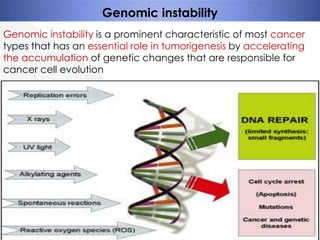
Genomic instability
Genomic instability is a prominent characteristic of most cancer
types that has an essential role in tumorigenesis by accelerating
the accumulation of genetic changes that are responsible for
cancer cell evolution
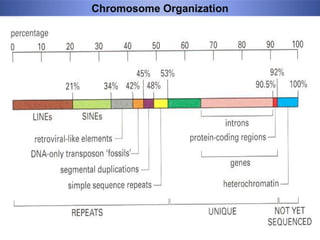
Chromosome Organization
 LINEs (Long Interspersed Nuclear Elements)

LINE-1

 SINEs (Short Interspersed Nuclear Elements)

Alu

 Segmental duplications are large blocks of the genome (1000 200,000 nucleotide pairs) that are present at 2 or more locations in
the genome

 Simple sequence repeats : short Tandem Repeats (STR) that are
repeating sequences of 2-6 bp of DNA . microsatellite DNA for
long stretches (arises by unequal crossovers during recombination )
Microsatellite

 Transposons are all mobile genetic elements that have
multiplied in our genome by replicating themselves and inserting
new copies in different positions
Main pathways implicated in genomic instability
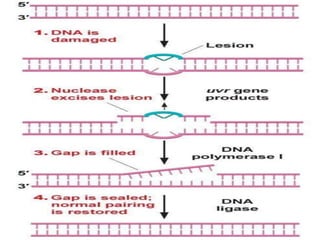
 Base and nucleotide excision repair

Excise & Repair abnormal bases or
nucleotides, such as UV radiation

induced pyrimidine dimers

* mutations in components of these pathways :
predispose people to skin cancers
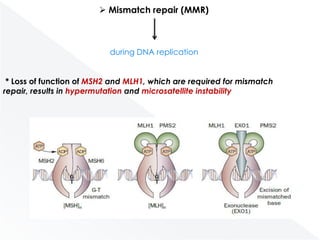
 Mismatch repair (MMR)

during DNA replication

* Loss of function of MSH2 and MLH1, which are required for mismatch
repair, results in hypermutation and microsatellite instability
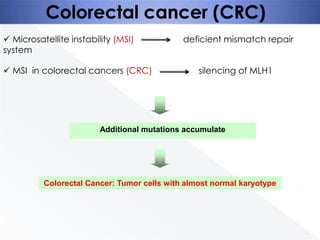
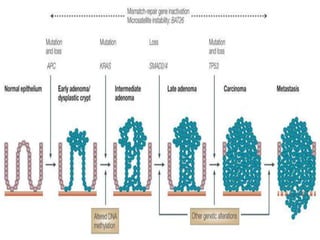
Colorectal cancer (CRC)
 Microsatellite instability (MSI)
system
 MSI in colorectal cancers (CRC)

deficient mismatch repair
silencing of MLH1

Additional mutations accumulate

Colorectal Cancer: Tumor cells with almost normal karyotype
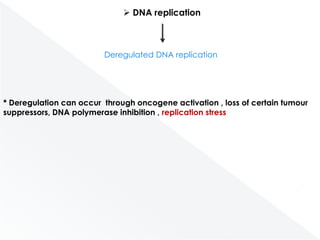
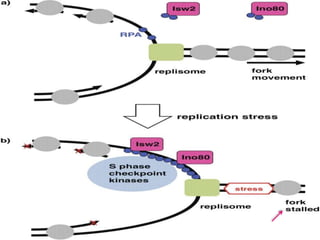
 DNA replication

Deregulated DNA replication

* Deregulation can occur through oncogene activation , loss of certain tumour
suppressors, DNA polymerase inhibition , replication stress
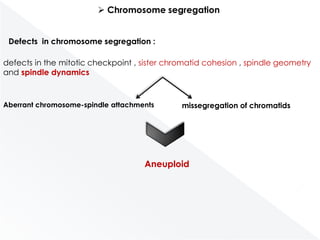
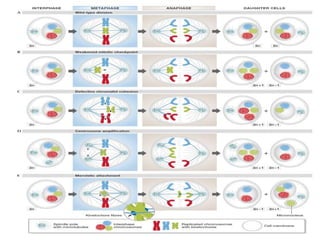
 Chromosome segregation
Defects in chromosome segregation :
defects in the mitotic checkpoint , sister chromatid cohesion , spindle geometry
and spindle dynamics

Aberrant chromosome-spindle attachments

missegregation of chromatids

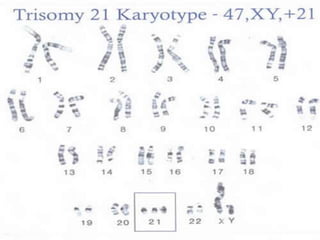
Aneuploid
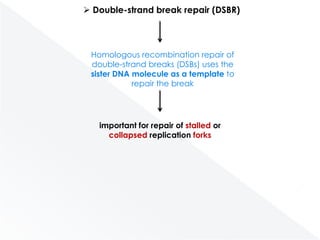
 Double-strand break repair (DSBR)

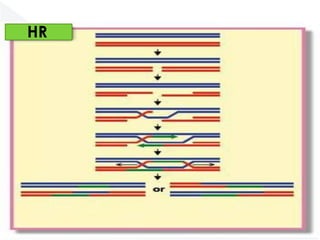
Homologous recombination repair of
double-strand breaks (DSBs) uses the
sister DNA molecule as a template to
repair the break

important for repair of stalled or
collapsed replication forks
HR
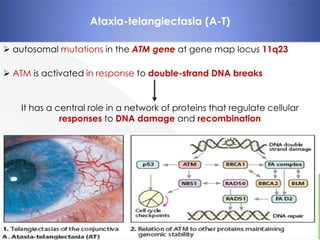
Ataxia-telangiectasia (A-T)
 autosomal mutations in the ATM gene at gene map locus 11q23
 ATM is activated in response to double-strand DNA breaks

It has a central role in a network of proteins that regulate cellular
responses to DNA damage and recombination
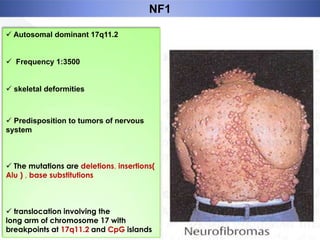
NF1
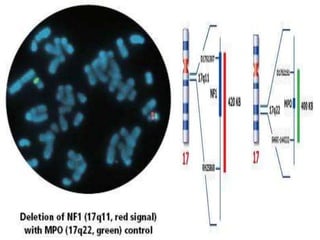
 Autosomal dominant 17q11.2
 Frequency 1:3500
 skeletal deformities

 Predisposition to tumors of nervous
system

 The mutations are deletions, insertions(
Alu ) , base substitutions

 translocation involving the
long arm of chromosome 17 with
breakpoints at 17q11.2 and CpG islands
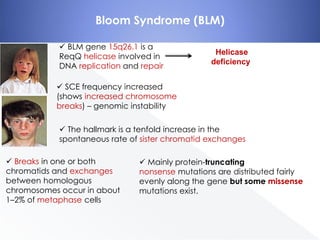
Bloom Syndrome (BLM)
 BLM gene 15q26.1 is a
ReqQ helicase involved in
DNA replication and repair

Helicase
deficiency

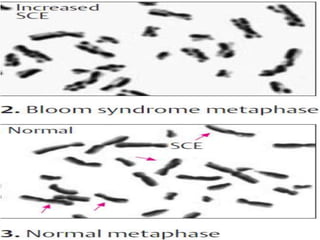
 SCE frequency increased
(shows increased chromosome
breaks) – genomic instability
 The hallmark is a tenfold increase in the
spontaneous rate of sister chromatid exchanges
 Breaks in one or both
chromatids and exchanges
between homologous
chromosomes occur in about
1–2% of metaphase cells

 Mainly protein-truncating
nonsense mutations are distributed fairly
evenly along the gene but some missense
mutations exist.
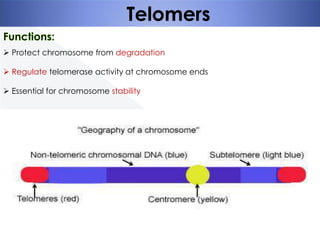
Telomers
 Protect chromosome from degradation
 Regulate telomerase activity at chromosome ends
 Essential for chromosome stability
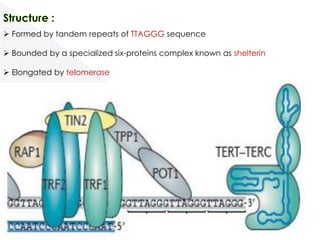
 Formed by tandem repeats of TTAGGG sequence
 Bounded by a specialized six-proteins complex known as shelterin
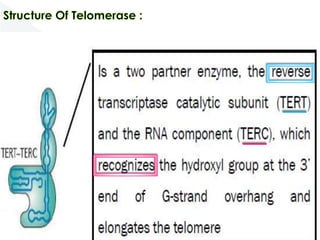
 Elongated by telomerase
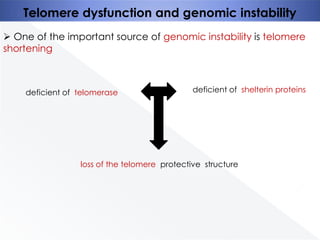
Telomere dysfunction and genomic instability
 One of the important source of genomic instability is telomere
shortening

deficient of telomerase

deficient of shelterin proteins

loss of the telomere protective structure
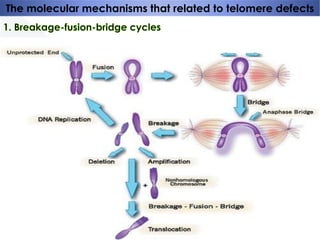
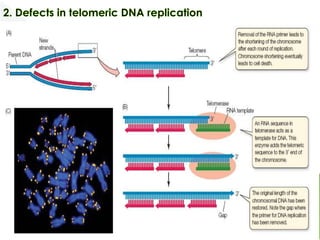
The molecular mechanisms that related to telomere defects
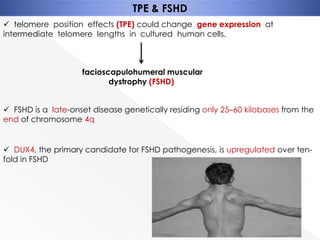
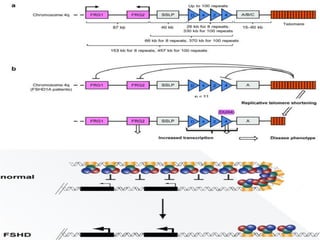
TPE & FSHD
 telomere position effects (TPE) could change gene expression at
intermediate telomere lengths in cultured human cells.

facioscapulohumeral muscular
dystrophy (FSHD)
 FSHD is a late-onset disease genetically residing only 25–60 kilobases from the
end of chromosome 4q

 DUX4, the primary candidate for FSHD pathogenesis, is upregulated over tenfold in FSHD
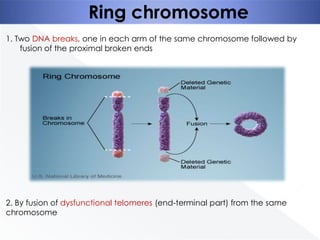
Ring chromosome
1. Two DNA breaks, one in each arm of the same chromosome followed by
fusion of the proximal broken ends

2. By fusion of dysfunctional telomeres (end-terminal part) from the same
chromosome
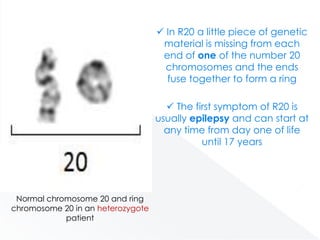
 In R20 a little piece of genetic
material is missing from each
end of one of the number 20
chromosomes and the ends
fuse together to form a ring
 The first symptom of R20 is
usually epilepsy and can start at
any time from day one of life
until 17 years

Normal chromosome 20 and ring
chromosome 20 in an heterozygote
patient
Thanks For Your Attention

E-mail : reza_sahebi2001@yahoo.com

Genomic instability

  • 2.
    Genomic instability Genomic instabilityis a prominent characteristic of most cancer types that has an essential role in tumorigenesis by accelerating the accumulation of genetic changes that are responsible for cancer cell evolution
  • 3.
  • 4.
     LINEs (LongInterspersed Nuclear Elements) LINE-1  SINEs (Short Interspersed Nuclear Elements) Alu  Segmental duplications are large blocks of the genome (1000 200,000 nucleotide pairs) that are present at 2 or more locations in the genome  Simple sequence repeats : short Tandem Repeats (STR) that are repeating sequences of 2-6 bp of DNA . microsatellite DNA for long stretches (arises by unequal crossovers during recombination ) Microsatellite  Transposons are all mobile genetic elements that have multiplied in our genome by replicating themselves and inserting new copies in different positions
  • 5.
    Main pathways implicatedin genomic instability  Base and nucleotide excision repair Excise & Repair abnormal bases or nucleotides, such as UV radiation induced pyrimidine dimers * mutations in components of these pathways : predispose people to skin cancers
  • 7.
     Mismatch repair(MMR) during DNA replication * Loss of function of MSH2 and MLH1, which are required for mismatch repair, results in hypermutation and microsatellite instability
  • 8.
    Colorectal cancer (CRC) Microsatellite instability (MSI) system  MSI in colorectal cancers (CRC) deficient mismatch repair silencing of MLH1 Additional mutations accumulate Colorectal Cancer: Tumor cells with almost normal karyotype
  • 10.
     DNA replication DeregulatedDNA replication * Deregulation can occur through oncogene activation , loss of certain tumour suppressors, DNA polymerase inhibition , replication stress
  • 12.
     Chromosome segregation Defectsin chromosome segregation : defects in the mitotic checkpoint , sister chromatid cohesion , spindle geometry and spindle dynamics Aberrant chromosome-spindle attachments missegregation of chromatids Aneuploid
  • 15.
     Double-strand breakrepair (DSBR) Homologous recombination repair of double-strand breaks (DSBs) uses the sister DNA molecule as a template to repair the break important for repair of stalled or collapsed replication forks
  • 16.
  • 17.
    Ataxia-telangiectasia (A-T)  autosomalmutations in the ATM gene at gene map locus 11q23  ATM is activated in response to double-strand DNA breaks It has a central role in a network of proteins that regulate cellular responses to DNA damage and recombination
  • 18.
    NF1  Autosomal dominant17q11.2  Frequency 1:3500  skeletal deformities  Predisposition to tumors of nervous system  The mutations are deletions, insertions( Alu ) , base substitutions  translocation involving the long arm of chromosome 17 with breakpoints at 17q11.2 and CpG islands
  • 20.
    Bloom Syndrome (BLM) BLM gene 15q26.1 is a ReqQ helicase involved in DNA replication and repair Helicase deficiency  SCE frequency increased (shows increased chromosome breaks) – genomic instability  The hallmark is a tenfold increase in the spontaneous rate of sister chromatid exchanges  Breaks in one or both chromatids and exchanges between homologous chromosomes occur in about 1–2% of metaphase cells  Mainly protein-truncating nonsense mutations are distributed fairly evenly along the gene but some missense mutations exist.
  • 22.
    Telomers  Protect chromosomefrom degradation  Regulate telomerase activity at chromosome ends  Essential for chromosome stability
  • 23.
     Formed bytandem repeats of TTAGGG sequence  Bounded by a specialized six-proteins complex known as shelterin  Elongated by telomerase
  • 25.
    Telomere dysfunction andgenomic instability  One of the important source of genomic instability is telomere shortening deficient of telomerase deficient of shelterin proteins loss of the telomere protective structure
  • 26.
    The molecular mechanismsthat related to telomere defects
  • 28.
    TPE & FSHD telomere position effects (TPE) could change gene expression at intermediate telomere lengths in cultured human cells. facioscapulohumeral muscular dystrophy (FSHD)  FSHD is a late-onset disease genetically residing only 25–60 kilobases from the end of chromosome 4q  DUX4, the primary candidate for FSHD pathogenesis, is upregulated over tenfold in FSHD
  • 30.
    Ring chromosome 1. TwoDNA breaks, one in each arm of the same chromosome followed by fusion of the proximal broken ends 2. By fusion of dysfunctional telomeres (end-terminal part) from the same chromosome
  • 31.
     In R20a little piece of genetic material is missing from each end of one of the number 20 chromosomes and the ends fuse together to form a ring  The first symptom of R20 is usually epilepsy and can start at any time from day one of life until 17 years Normal chromosome 20 and ring chromosome 20 in an heterozygote patient
  • 32.
    Thanks For YourAttention E-mail : reza_sahebi2001@yahoo.com