GENETIC CONTROL OF
PROTEIN SYNTHESIS, CELL
FUNCTION AND CELL
REPRODUCTION
PREPARED BY FATIMA SUNDUS
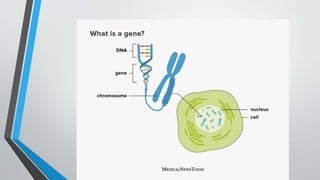
GENE
• A gene is the basic physical and functional unit of heredity
• The genes, which are located in the nuclei of all cells of the body, control heredity from parents
to children.
• Each gene, which is composed of deoxyribonucleic acid (DNA
Gene expression:
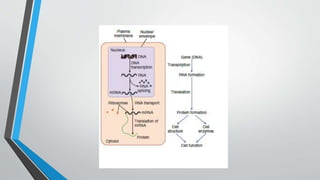
the entire process, from transcription of the genetic code in the nucleus to translation of the RNA
code and the formation of proteins in the cell cytoplasm.
• there are approximately 30,000 different genes in each cell
• The total no. of different proteins produced by the various cell types in humans is
estimated to be at least 100,000.
Gene regions:
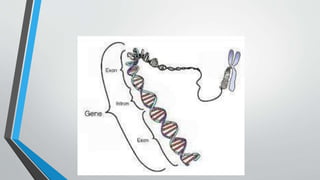
Exons: it is the coding region (expression sequence) of the gene (3% of human genome).
Introns: it is a non- coding region of the gene ( 97% of human genome).
Mnemonic → EXon are EXpressed, INtrons are Inactive
https://youtu.be/YtKoTOCJGt4
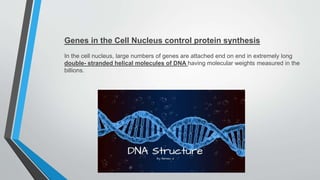
Genes in the Cell Nucleus control protein synthesis
In the cell nucleus, large numbers of genes are attached end on end in extremely long
double- stranded helical molecules of DNA having molecular weights measured in the
billions.
Basic Building Blocks of DNA
The basic chemical compounds involved in the formation of DNA. These compound
include
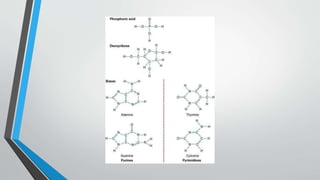
(1) phosphoric acid
(2) a sugar called deoxyribose
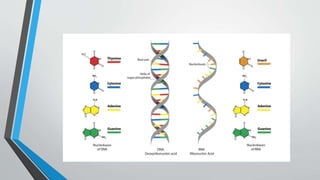
(3) four nitrogenous bases
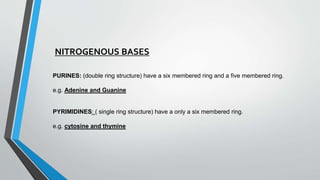
PURINES: (double ring structure) have a six membered ring and a five membered ring.
e.g. Adenine and Guanine
PYRIMIDINES: ( single ring structure) have a only a six membered ring.
e.g. cytosine and thymine
NITROGENOUS BASES
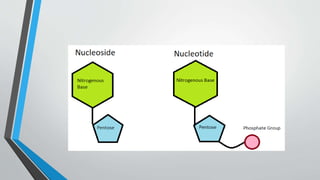
Nucleoside:
combination of nitrogenous base with pentose sugar( deoxyribose or Ribose) is called
nucleoside.
Nucleotide:
combination of nucleoside with phosphoric acid, is called nucleotide.
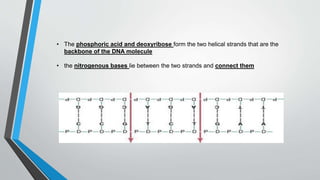
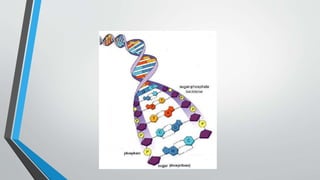
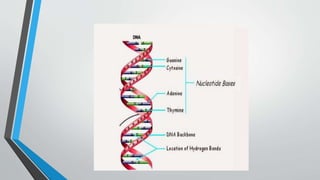
• The phosphoric acid and deoxyribose form the two helical strands that are the
backbone of the DNA molecule
• the nitrogenous bases lie between the two strands and connect them
Nucleotides of DNA
1. deoxy-adenylic acid
2. Deoxy-guanylic acid
3. Deoxy-cytidylic acid
4. Deoxy-thymidylic acid
Nucleotides of RNA
1. Adenylic acid
2. Guanylic acid
3. Cytidylic acid
4. Uridylic acid
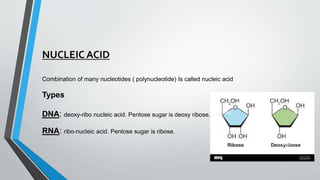
NUCLEIC ACID
Combination of many nucleotides ( polynucleotide) Is called nucleic acid
Types
DNA: deoxy-ribo nucleic acid. Pentose sugar is deoxy ribose.
RNA: ribo-nucleic acid. Pentose sugar is ribose.
DNA
DNA is a polynucleotide formed by combination of four types of nucleotides.
Structure:
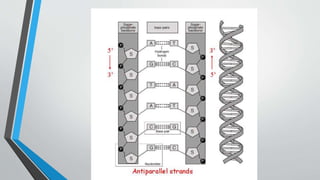
 nucleotides are joined together to form a strand of DNA molecule.
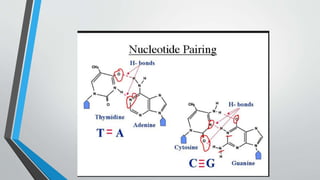
 In DNA molecule, two such strands are held by loose bands b/w nitrogenous bases
While paralleling two strands, adenine binds with thymine(AT) and guanine binds with cytosine
(GC)
 Two strands are coiled into a helix.
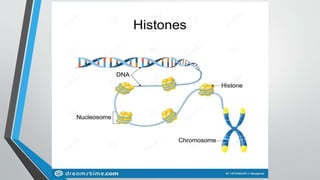
 DNA is wrapped around a core of histone protein to form nucleosome. A series of
nucleosomes is sometimes called “beads on a string”
OR
 Nucleosome= DNA + histones.
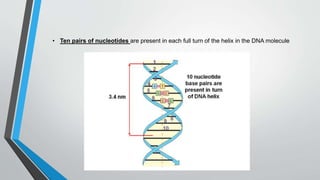
• Ten pairs of nucleotides are present in each full turn of the helix in the DNA molecule
GENETIC CODE:
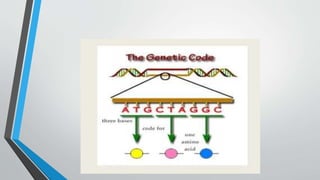
Is the successive “triplets” of bases called code word.
OR
Three successive bases in DNA molecule are called a genetic code.
Function:
Controls sequence of amino acids in protein molecule
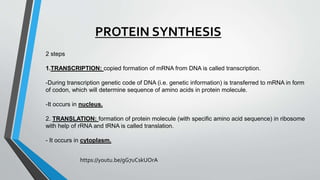
2 steps
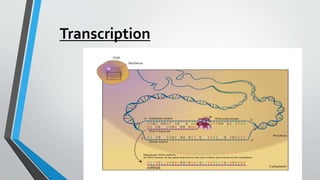
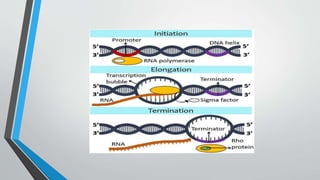
1.TRANSCRIPTION: copied formation of mRNA from DNA is called transcription.
-During transcription genetic code of DNA (i.e. genetic information) is transferred to mRNA in form
of codon, which will determine sequence of amino acids in protein molecule.
-It occurs in nucleus.
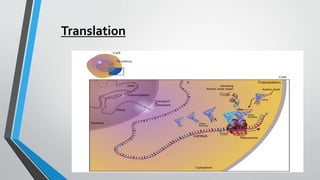
2. TRANSLATION: formation of protein molecule (with specific amino acid sequence) in ribosome
with help of rRNA and tRNA is called translation.
- It occurs in cytoplasm.
PROTEIN SYNTHESIS
https://youtu.be/gG7uCskUOrA
Transcription
Translation
Different Types of RNA:
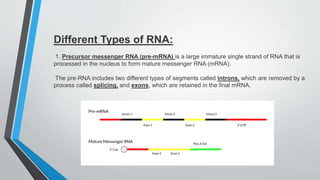
1. Precursor messenger RNA (pre-mRNA) is a large immature single strand of RNA that is
processed in the nucleus to form mature messenger RNA (mRNA).
The pre-RNA includes two different types of segments called introns, which are removed by a
process called splicing, and exons, which are retained in the final mRNA.
2. Small nuclear RNA (snRNA) directs the splicing of pre-mRNA to form mRNA.
3. Messenger RNA (mRNA) carries the genetic code to the cytoplasm for controlling the type of
protein formed.
4. Transfer RNA (tRNA) transports activated amino acids to the ribosomes to be used in
assembling the protein molecule.
5. Ribosomal RNA, along with about 75 different proteins, forms ribosomes, the physical and
chemical structures on which protein molecules are actually assembled.
6. MicroRNA (miRNA) are single-stranded RNA molecules of 21 to 23 nucleotides that can
regulate gene transcription and translation.
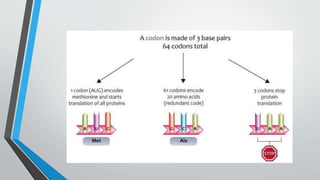
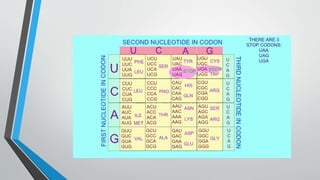
CODON
• Sequence of three successive nucleotides (triplets)in mRNA corresponding to genetic code
of DNA is called a codon.
• There are 64 codons:
• 61 codons code for amino acids.
• The remaining 3 codons are stop codons (UAA, UGA, UAG)
• There is one start codon (initiation codon), AUG, coding for methionine.
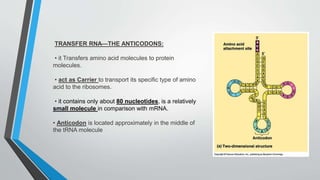
TRANSFER RNA—THE ANTICODONS:
• it Transfers amino acid molecules to protein
molecules.
• act as Carrier to transport its specific type of amino
acid to the ribosomes.
• it contains only about 80 nucleotides, is a relatively
small molecule in comparison with mRNA.
• Anticodon is located approximately in the middle of
the tRNA molecule
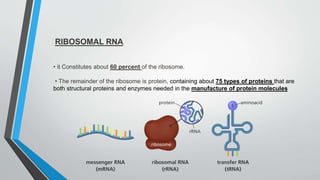
RIBOSOMAL RNA
• it Constitutes about 60 percent of the ribosome.
• The remainder of the ribosome is protein, containing about 75 types of proteins that are
both structural proteins and enzymes needed in the manufacture of protein molecules
MicroRNA
• These are short (21 to 23 nucleotides) single-stranded RNA fragments that regulate
gene expression
• The miRNAs are encoded from the transcribed DNA of genes, but they are not translated
into proteins and are therefore often called noncoding RNA.
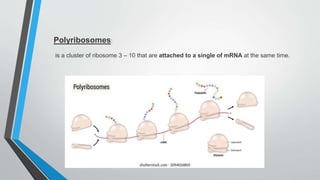
Polyribosomes:
is a cluster of ribosome 3 – 10 that are attached to a single of mRNA at the same time.
CELL MITOSIS:
The actual process by which the cell splits into two new cells is called mitosis.
mitosis follows automatically within 1 or 2 hours
https://youtu.be/DwAFZb8juMQ
Apoptosis
apoptosis is the process of programmed cell death
. Apoptosis is initiated by activation of a family of proteases called caspases.

GENETIC CONTROL OF PROTEIN SYNTHESIS, CELL FUNCTION.pptx

  • 1.
    GENETIC CONTROL OF PROTEINSYNTHESIS, CELL FUNCTION AND CELL REPRODUCTION PREPARED BY FATIMA SUNDUS
  • 2.
    GENE • A geneis the basic physical and functional unit of heredity • The genes, which are located in the nuclei of all cells of the body, control heredity from parents to children. • Each gene, which is composed of deoxyribonucleic acid (DNA Gene expression: the entire process, from transcription of the genetic code in the nucleus to translation of the RNA code and the formation of proteins in the cell cytoplasm.
  • 4.
    • there areapproximately 30,000 different genes in each cell • The total no. of different proteins produced by the various cell types in humans is estimated to be at least 100,000.
  • 6.
    Gene regions: Exons: itis the coding region (expression sequence) of the gene (3% of human genome). Introns: it is a non- coding region of the gene ( 97% of human genome). Mnemonic → EXon are EXpressed, INtrons are Inactive https://youtu.be/YtKoTOCJGt4
  • 8.
    Genes in theCell Nucleus control protein synthesis In the cell nucleus, large numbers of genes are attached end on end in extremely long double- stranded helical molecules of DNA having molecular weights measured in the billions.
  • 9.
    Basic Building Blocksof DNA The basic chemical compounds involved in the formation of DNA. These compound include (1) phosphoric acid (2) a sugar called deoxyribose (3) four nitrogenous bases
  • 10.
    PURINES: (double ringstructure) have a six membered ring and a five membered ring. e.g. Adenine and Guanine PYRIMIDINES: ( single ring structure) have a only a six membered ring. e.g. cytosine and thymine NITROGENOUS BASES
  • 12.
    Nucleoside: combination of nitrogenousbase with pentose sugar( deoxyribose or Ribose) is called nucleoside. Nucleotide: combination of nucleoside with phosphoric acid, is called nucleotide.
  • 14.
    • The phosphoricacid and deoxyribose form the two helical strands that are the backbone of the DNA molecule • the nitrogenous bases lie between the two strands and connect them
  • 17.
    Nucleotides of DNA 1.deoxy-adenylic acid 2. Deoxy-guanylic acid 3. Deoxy-cytidylic acid 4. Deoxy-thymidylic acid Nucleotides of RNA 1. Adenylic acid 2. Guanylic acid 3. Cytidylic acid 4. Uridylic acid
  • 18.
    NUCLEIC ACID Combination ofmany nucleotides ( polynucleotide) Is called nucleic acid Types DNA: deoxy-ribo nucleic acid. Pentose sugar is deoxy ribose. RNA: ribo-nucleic acid. Pentose sugar is ribose.
  • 19.
    DNA DNA is apolynucleotide formed by combination of four types of nucleotides. Structure:  nucleotides are joined together to form a strand of DNA molecule.  In DNA molecule, two such strands are held by loose bands b/w nitrogenous bases While paralleling two strands, adenine binds with thymine(AT) and guanine binds with cytosine (GC)  Two strands are coiled into a helix.  DNA is wrapped around a core of histone protein to form nucleosome. A series of nucleosomes is sometimes called “beads on a string” OR  Nucleosome= DNA + histones.
  • 23.
    • Ten pairsof nucleotides are present in each full turn of the helix in the DNA molecule
  • 24.
    GENETIC CODE: Is thesuccessive “triplets” of bases called code word. OR Three successive bases in DNA molecule are called a genetic code. Function: Controls sequence of amino acids in protein molecule
  • 27.
    2 steps 1.TRANSCRIPTION: copiedformation of mRNA from DNA is called transcription. -During transcription genetic code of DNA (i.e. genetic information) is transferred to mRNA in form of codon, which will determine sequence of amino acids in protein molecule. -It occurs in nucleus. 2. TRANSLATION: formation of protein molecule (with specific amino acid sequence) in ribosome with help of rRNA and tRNA is called translation. - It occurs in cytoplasm. PROTEIN SYNTHESIS https://youtu.be/gG7uCskUOrA
  • 28.
  • 29.
  • 31.
    Different Types ofRNA: 1. Precursor messenger RNA (pre-mRNA) is a large immature single strand of RNA that is processed in the nucleus to form mature messenger RNA (mRNA). The pre-RNA includes two different types of segments called introns, which are removed by a process called splicing, and exons, which are retained in the final mRNA.
  • 32.
    2. Small nuclearRNA (snRNA) directs the splicing of pre-mRNA to form mRNA. 3. Messenger RNA (mRNA) carries the genetic code to the cytoplasm for controlling the type of protein formed. 4. Transfer RNA (tRNA) transports activated amino acids to the ribosomes to be used in assembling the protein molecule. 5. Ribosomal RNA, along with about 75 different proteins, forms ribosomes, the physical and chemical structures on which protein molecules are actually assembled. 6. MicroRNA (miRNA) are single-stranded RNA molecules of 21 to 23 nucleotides that can regulate gene transcription and translation.
  • 33.
    CODON • Sequence ofthree successive nucleotides (triplets)in mRNA corresponding to genetic code of DNA is called a codon. • There are 64 codons: • 61 codons code for amino acids. • The remaining 3 codons are stop codons (UAA, UGA, UAG) • There is one start codon (initiation codon), AUG, coding for methionine.
  • 36.
    TRANSFER RNA—THE ANTICODONS: •it Transfers amino acid molecules to protein molecules. • act as Carrier to transport its specific type of amino acid to the ribosomes. • it contains only about 80 nucleotides, is a relatively small molecule in comparison with mRNA. • Anticodon is located approximately in the middle of the tRNA molecule
  • 37.
    RIBOSOMAL RNA • itConstitutes about 60 percent of the ribosome. • The remainder of the ribosome is protein, containing about 75 types of proteins that are both structural proteins and enzymes needed in the manufacture of protein molecules
  • 38.
    MicroRNA • These areshort (21 to 23 nucleotides) single-stranded RNA fragments that regulate gene expression • The miRNAs are encoded from the transcribed DNA of genes, but they are not translated into proteins and are therefore often called noncoding RNA.
  • 39.
    Polyribosomes: is a clusterof ribosome 3 – 10 that are attached to a single of mRNA at the same time.
  • 40.
    CELL MITOSIS: The actualprocess by which the cell splits into two new cells is called mitosis. mitosis follows automatically within 1 or 2 hours https://youtu.be/DwAFZb8juMQ
  • 41.
    Apoptosis apoptosis is theprocess of programmed cell death . Apoptosis is initiated by activation of a family of proteases called caspases.