PRESENTATION ON
THIRD & FOURTH
GENERATION OF COMPUTER
Hello!
I am Mahmudul Hasan
ID:181006060
Department: GBS
2
Topic Overview
Introduction
 Third Generation
Fourth Generation
Conclusion
INTRODUCTION OF COMPUTER
GENERATION
The evolution of computer started from 16th century
and resulted in the form that we see today. The
present day computer, however, has also
undergone rapid change during the last fifty years.
This period, during which the evolution of computer
took place, can be divided into five distinct phases,
basis of the type of switching circuits known as
Generations of Computers.
4
5
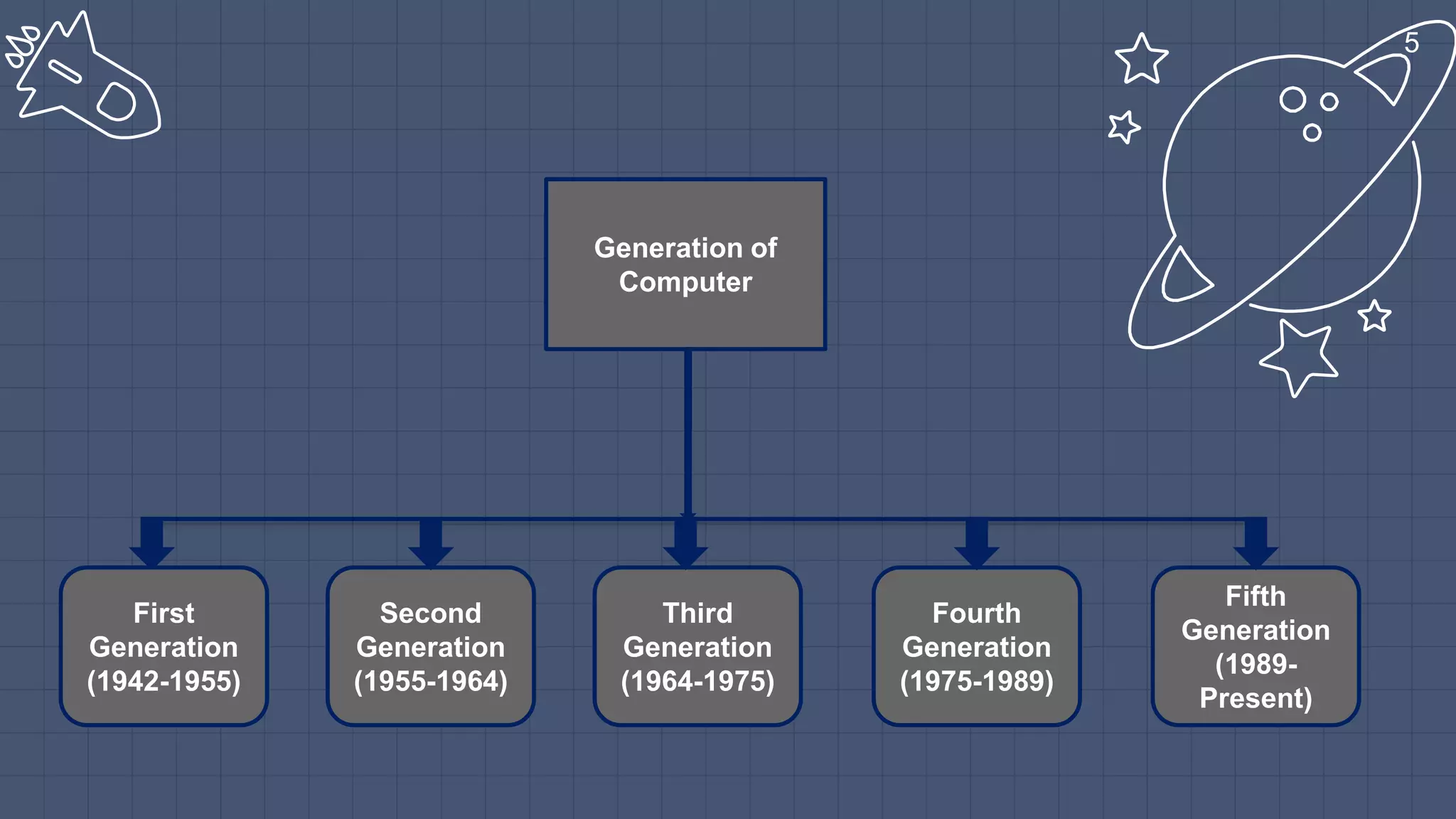
Generation of
Computer
First
Generation
(1942-1955)
Second
Generation
(1955-1964)
Fourth
Generation
(1975-1989)
Third
Generation
(1964-1975)
Fifth
Generation
(1989-
Present)
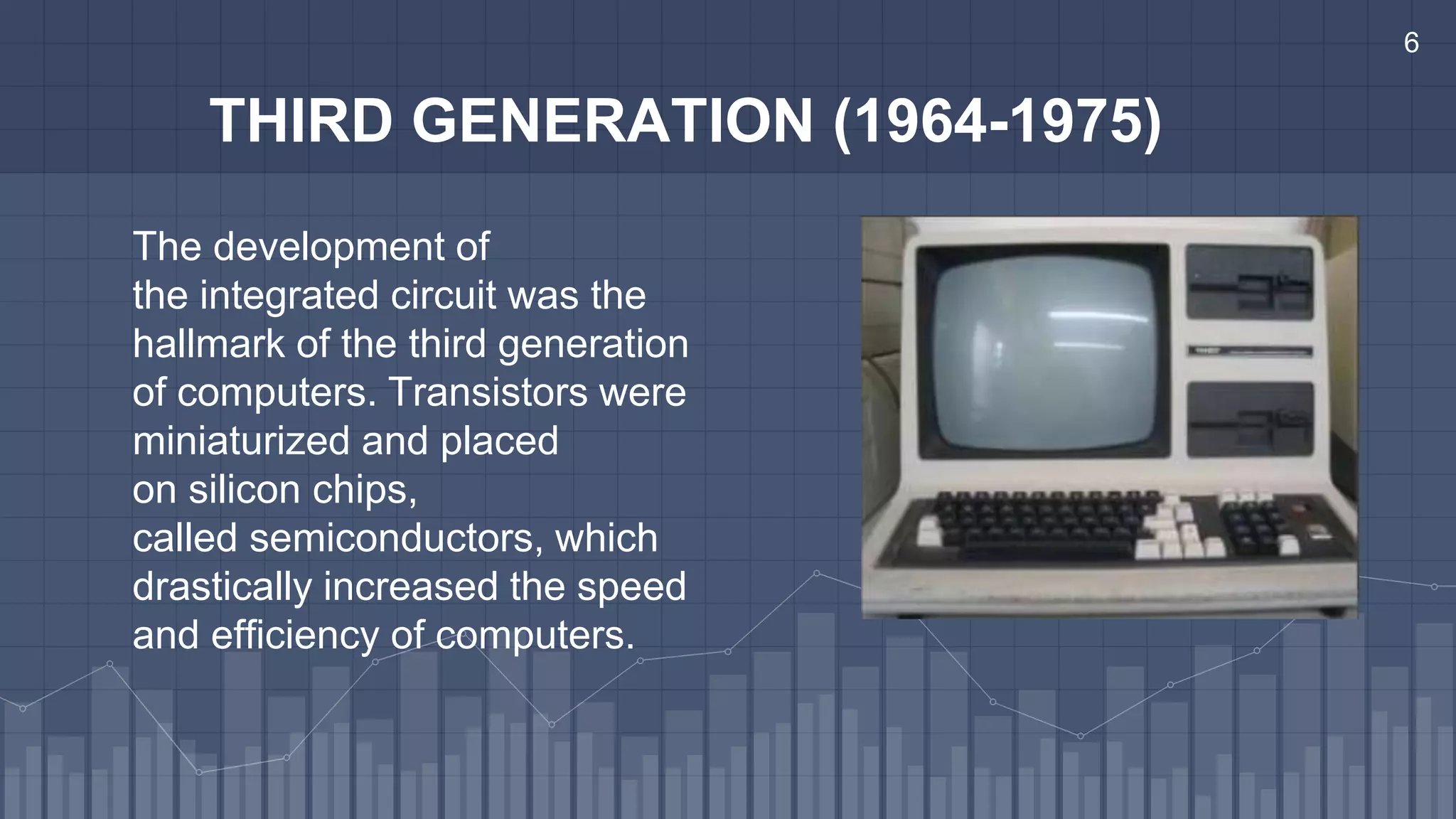
The development of
the integrated circuit was the
hallmark of the third generation
of computers. Transistors were
miniaturized and placed
on silicon chips,
called semiconductors, which
drastically increased the speed
and efficiency of computers.
THIRD GENERATION (1964-1975)
6
THIRD GENERATION
7
 Transistors Placed on Silicon Chips
 Keyboard and Monitor became Input Devices
 Operating System was Invented
 Became Smaller, Cheaper and Faster
 The Example of Third Generation Computer are IBM 360/370,
PDP-8, PDP-11, CDC 6600
Characterisic of Third Generation Computer
They were more powerful than second generation computers.
They were smaller than second generation computers requiring
smaller space.
They were general-purpose machines suitable for both scientific an
commercial applications.
Minicomputer of third generation made computers affordable even by
smaller companies.
8
9
FOURTH GENERATION (1975-1989)
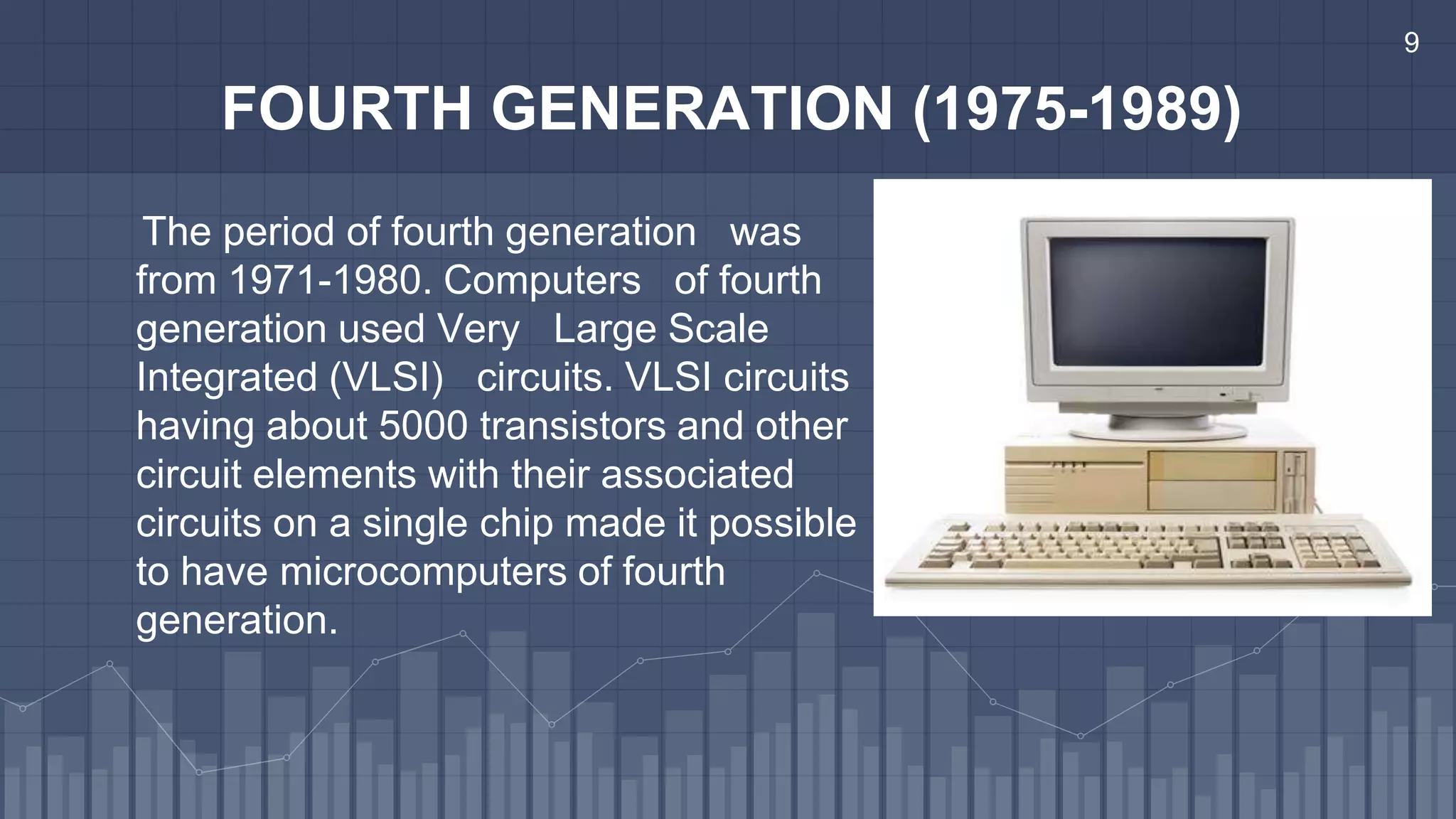
The period of fourth generation was
from 1971-1980. Computers of fourth
generation used Very Large Scale
Integrated (VLSI) circuits. VLSI circuits
having about 5000 transistors and other
circuit elements with their associated
circuits on a single chip made it possible
to have microcomputers of fourth
generation.
10
FOURTH GENERATION
 Microprocessor
 Become More Powerful
 Linked Together to from Networks
 GUI, Mouse and Handheld Devices were invented
 The Example of Fourth Generation Computer are IBM PC,
Apple II, TRS-80
11
Characterisic of Fourth Generation Computer
 PCs were Smaller and Cheaper than Mainframes or
Minicomputers of third generation.
 They consumed less power than Third Generation Computers.
 They were General purpose machine.
 Graphical user interface enabled new user to quickly learn how to
use computer.
12
Conclusion
So on this Presentation we can see that the third generation are
vacuum tube based large computers like the UNIVAC, capable of
complex business tasks and database operations, the fourth
generation are the common PCs and laptops we use today.
13
14

Generation of computer

  • 1.
    PRESENTATION ON THIRD &FOURTH GENERATION OF COMPUTER
  • 2.
    Hello! I am MahmudulHasan ID:181006060 Department: GBS 2
  • 3.
    Topic Overview Introduction  ThirdGeneration Fourth Generation Conclusion
  • 4.
    INTRODUCTION OF COMPUTER GENERATION Theevolution of computer started from 16th century and resulted in the form that we see today. The present day computer, however, has also undergone rapid change during the last fifty years. This period, during which the evolution of computer took place, can be divided into five distinct phases, basis of the type of switching circuits known as Generations of Computers. 4
  • 5.
  • 6.
    The development of theintegrated circuit was the hallmark of the third generation of computers. Transistors were miniaturized and placed on silicon chips, called semiconductors, which drastically increased the speed and efficiency of computers. THIRD GENERATION (1964-1975) 6
  • 7.
    THIRD GENERATION 7  TransistorsPlaced on Silicon Chips  Keyboard and Monitor became Input Devices  Operating System was Invented  Became Smaller, Cheaper and Faster  The Example of Third Generation Computer are IBM 360/370, PDP-8, PDP-11, CDC 6600
  • 8.
    Characterisic of ThirdGeneration Computer They were more powerful than second generation computers. They were smaller than second generation computers requiring smaller space. They were general-purpose machines suitable for both scientific an commercial applications. Minicomputer of third generation made computers affordable even by smaller companies. 8
  • 9.
    9 FOURTH GENERATION (1975-1989) Theperiod of fourth generation was from 1971-1980. Computers of fourth generation used Very Large Scale Integrated (VLSI) circuits. VLSI circuits having about 5000 transistors and other circuit elements with their associated circuits on a single chip made it possible to have microcomputers of fourth generation.
  • 10.
    10 FOURTH GENERATION  Microprocessor Become More Powerful  Linked Together to from Networks  GUI, Mouse and Handheld Devices were invented  The Example of Fourth Generation Computer are IBM PC, Apple II, TRS-80
  • 11.
    11 Characterisic of FourthGeneration Computer  PCs were Smaller and Cheaper than Mainframes or Minicomputers of third generation.  They consumed less power than Third Generation Computers.  They were General purpose machine.  Graphical user interface enabled new user to quickly learn how to use computer.
  • 12.
    12 Conclusion So on thisPresentation we can see that the third generation are vacuum tube based large computers like the UNIVAC, capable of complex business tasks and database operations, the fourth generation are the common PCs and laptops we use today.
  • 13.
  • 14.