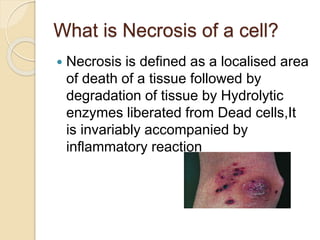
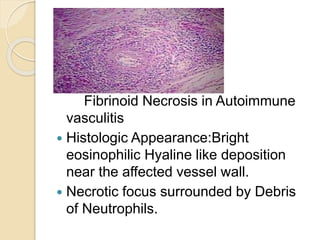
Necrosis is the death of cells and living tissue. There are several types of necrosis that are characterized by the microscopic appearance of dead cells. Coagulative necrosis occurs due to ischemia and results in pale, swollen tissue on gross examination and swollen eosinophilic cells on microscopy. Liquefactive necrosis occurs due to infection and results in soft, cystic lesions containing debris. Caseous necrosis is seen in tuberculosis and resembles dry cheese with granular debris. Fat necrosis affects pancreatic and breast tissue, appearing as yellowish deposits containing calcium salts. Fibrinoid necrosis involves fibrin deposition in tissues damaged by immune processes.