The word ‘Pathology’ is derived from two Greek words—pathos
meaning suffering, and logos meaning study. Pathology is, thus,
scientific study of structure and function of the body in disease.
Another commonly used term with reference to study of
diseases is ‘pathophysiology’ comprised by two words: pathos
= suffering; physiology = study of normal function.
Pathophysiology, thus, includes study of disordered function or
breakdown of homeostasis in diseases.
SOME CONFUSING TERMINOLOGIES
Health may be defined as a condition when the individual is in complete
accord with the surroundings, While disease is loss of ease (or comfort) to
the body (i.e. dis-ease).
A term commonly confused with disease is illness. While disease suggests
an entity with a cause, illness is the reaction of the individual to disease in
the form of symptoms (complaints of the patient) and physical signs
(elicited by the clinician).
In addition to disease and illness, there are syndromes (meaning running
together) characterized by combination of symptoms caused by altered
physiologic processes.
IMPORTANT TERMINOLOGIES
• Patient is the person affected by disease.
• Lesions are the characteristic changes in tissues and cells
produced by disease in an individual or experimental animal.
• Pathologic changes or morphology consist of examination of
diseased tissues.
• Pathologic changes can be recognized with the naked eye
(gross or macroscopic changes) or studied by microscopic
examination of tissues.
• Causal factors responsible for the lesions are included in
etiology of disease (i.e. ‘why’ of disease).
IMPORTANT TERMINOLOGIES
• Mechanism by which the lesions are produced is termed pathogenesis
of disease (i.e. ‘how’ of disease).
• Functional implications of the lesion felt by the patient are symptoms
and those discovered by the clinician are the physical signs.
• Clinical significance of the morphologic and functional changes
together with results of other investigations help to arrive at an answer
to what is wrong (diagnosis), what is going to happen (prognosis),
what can be done about it (treatment), and finally what should be
done to avoid complications and spread (prevention) (i.e. ‘what’ of
disease).
CELL INJURY
&
CELL ADAPTATIONS
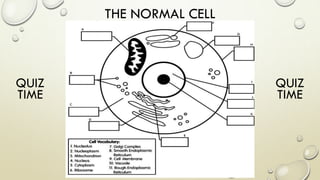
THE NORMAL CELL
QUIZ
TIME
QUIZ
TIME
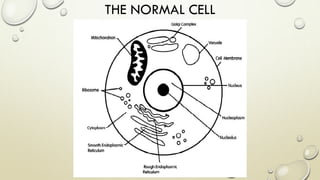
THE NORMAL CELL
THE NORMAL CELL
• Nucleus: The Centre of cell with genetic information
• Nucleosome: Condensed chromosomes and DNA
• Rough Endoplasmic Reticulum & Smooth Endoplasmic Reticulum
• Ribosomes: Protein Factory
• Golgi body & Lysosomes: The packaging unit
• Mitochondria: The powerhouse of the cell
• Centrioles: Transporters of cell organelles during cell division
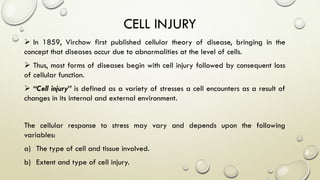
 In 1859, Virchow first published cellular theory of disease, bringing in the
concept that diseases occur due to abnormalities at the level of cells.
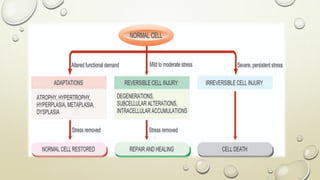
 Thus, most forms of diseases begin with cell injury followed by consequent loss
of cellular function.
 “Cell injury” is defined as a variety of stresses a cell encounters as a result of
changes in its internal and external environment.
The cellular response to stress may vary and depends upon the following
variables:
a) The type of cell and tissue involved.
b) Extent and type of cell injury.
CELL INJURY
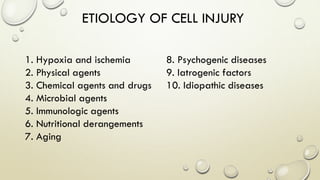
ETIOLOGY OF CELL INJURY
1. Hypoxia and ischemia
2. Physical agents
3. Chemical agents and drugs
4. Microbial agents
5. Immunologic agents
6. Nutritional derangements
7. Aging
8. Psychogenic diseases
9. Iatrogenic factors
10. Idiopathic diseases
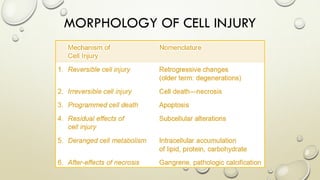
MORPHOLOGY OF CELL INJURY
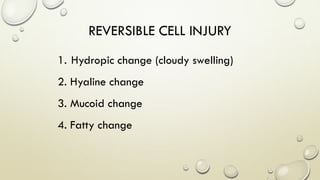
REVERSIBLE CELL INJURY
1. Hydropic change (cloudy swelling)
2. Hyaline change
3. Mucoid change
4. Fatty change
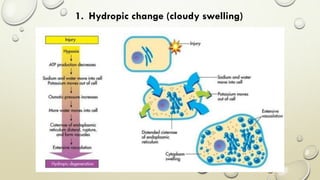
1. Hydropic change (cloudy swelling)
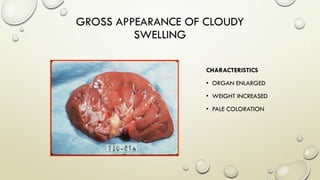
GROSS APPEARANCE OF CLOUDY
SWELLING
CHARACTERISTICS
• ORGAN ENLARGED
• WEIGHT INCREASED
• PALE COLORATION
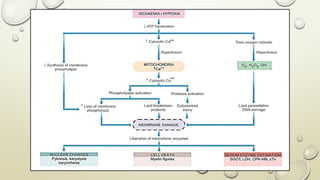
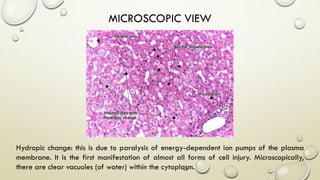
Hydropic change: this is due to paralysis of energy-dependent ion pumps of the plasma
membrane. It is the first manifestation of almost all forms of cell injury. Microscopically,
there are clear vacuoles (of water) within the cytoplasm.
MICROSCOPIC VIEW
2. Hyaline change
The word ‘hyaline’ means glassy (hyalos = glass).
extracellular.intracellular
Types
• Various histological or cytological alterations characterized by
homogeneous, glasslike appearance in hematoxylin and eosin
stained sections.
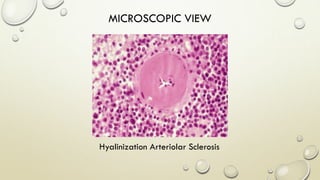
Hyalinization Arteriolar Sclerosis
MICROSCOPIC VIEW
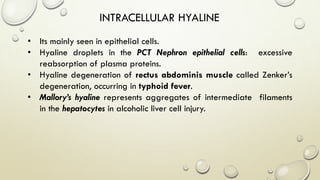
INTRACELLULAR HYALINE
• Its mainly seen in epithelial cells.
• Hyaline droplets in the PCT Nephron epithelial cells: excessive
reabsorption of plasma proteins.
• Hyaline degeneration of rectus abdominis muscle called Zenker’s
degeneration, occurring in typhoid fever.
• Mallory’s hyaline represents aggregates of intermediate filaments
in the hepatocytes in alcoholic liver cell injury.
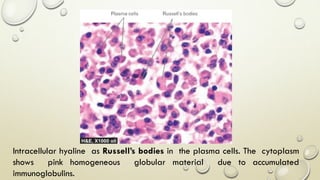
Intracellular hyaline as Russell’s bodies in the plasma cells. The cytoplasm
shows pink homogeneous globular material due to accumulated
immunoglobulins.
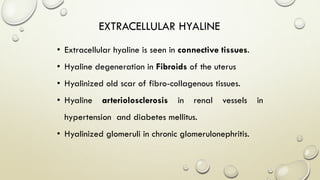
• Extracellular hyaline is seen in connective tissues.
• Hyaline degeneration in Fibroids of the uterus
• Hyalinized old scar of fibro-collagenous tissues.
• Hyaline arteriolosclerosis in renal vessels in
hypertension and diabetes mellitus.
• Hyalinized glomeruli in chronic glomerulonephritis.
EXTRACELLULAR HYALINE
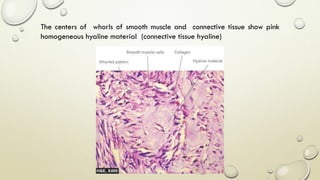
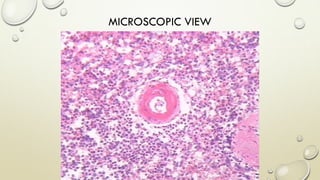
The centers of whorls of smooth muscle and connective tissue show pink
homogeneous hyaline material (connective tissue hyaline)
MICROSCOPIC VIEW
3. Mucoid degeneration
• Mucus containing mucin(glycoprotein) secreted by mucous
glands.
• In certain cellular injury, there is change characterized by
accumulation of mucin in intracellular or extracellular loci.
Epithelial:
• Composed of sialomucin and neutral mucopolysaccharide
• may accumulate in intracellular or extracellular (if secreted)
locations.
Connective tissue:
• predominantly acid mucopolysaccharide, sulfated or
carboxylated
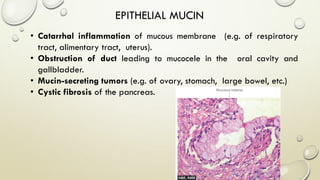
EPITHELIAL MUCIN
• Catarrhal inflammation of mucous membrane (e.g. of respiratory
tract, alimentary tract, uterus).
• Obstruction of duct leading to mucocele in the oral cavity and
gallbladder.
• Mucin-secreting tumors (e.g. of ovary, stomach, large bowel, etc.)
• Cystic fibrosis of the pancreas.
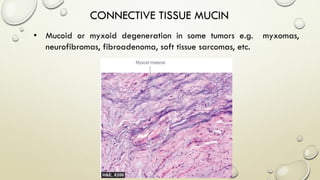
CONNECTIVE TISSUE MUCIN
• Mucoid or myxoid degeneration in some tumors e.g. myxomas,
neurofibromas, fibroadenoma, soft tissue sarcomas, etc.
4. Fatty change
• There is the accumulation of fat in non-fatty cells.
• Also known as STEATOSIS
Morphologic change:
• Gross features: The organ enlarges and becomes yellow, soft, and
greasy.
• Microscopy: An Fatty change appears as clear vacuoles within
parenchymal cells.
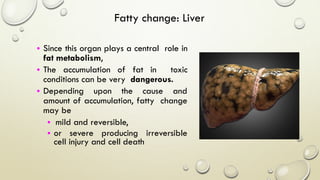
Fatty change: Liver
• Since this organ plays a central role in
fat metabolism,
• The accumulation of fat in toxic
conditions can be very dangerous.
• Depending upon the cause and
amount of accumulation, fatty change
may be
• mild and reversible,
• or severe producing irreversible
cell injury and cell death
• Conditions with excess fat: STRESS ON ORGAN
– Obesity
– Diabetes mellitus
– Congenital hyperlipidaemia
• Liver cell damage: LOOSE ITS CAPABILITY
– Alcoholic liver disease (most common)
– Starvation
– Protein calorie malnutrition
– Chronic illnesses (e.g. tuberculosis)
– Acute fatty liver in late pregnancy
– Hypoxia (e.g. anaemia, cardiac failure)
– Hepatotoxins (e.g. carbon tetrachloride, chloroform, ether, aflatoxins and other
poisons)
– Drug-induced liver cell injury (e.g. administration of methotrexate, steroids,
CCl4, halothane anaesthetic, tetracycline etc)
– Reye’s syndrome
Etiology
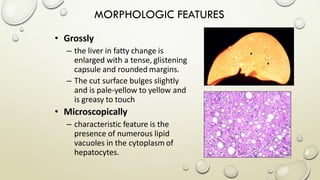
• Grossly
– the liver in fatty change is
enlarged with a tense, glistening
capsule and rounded margins.
– The cut surface bulges slightly
and is pale-yellow to yellow and
is greasy to touch
• Microscopically
– characteristic feature is the
presence of numerous lipid
vacuoles in the cytoplasm of
hepatocytes.
MORPHOLOGIC FEATURES
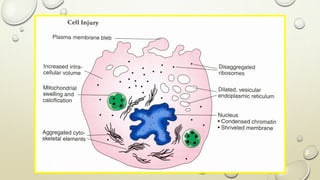
SUBCELLULAR ALTERATIONS
IN
CELL INJURY
1. CYTOSKELETAL CHANGES: Components of cytoskeleton may show the
following morphologic abnormalities:
i) Defective microtubules:
a. Poor sperm motility causing sterility.
b. Immotile cilia syndrome: Immotile cilia of respiratory tract and
consequent chronic infection due to defective clearance of inhaled
bacteria.
ii) Defective microfilaments:
a. In myopathies
b. Muscular dystrophies
iii) Accumulation of intermediate filaments:
Various classes of intermediate filaments may accumulate in the cytosol.
For example: Neurofibrillary tangles in Alzheimer’s disease are composed of
neurofilaments and paired helical filaments.
2. LYSOSOMAL CHANGES: Lysosomes contain powerful hydrolytic enzymes.
Heterophagy and autophagy are the two ways by which lysosomes show morphologic
changes of phagocytic function.
i) Heterophagy: Phagocytosis (cell eating) and pinocytosis (cell drinking) are the two
forms by which material from outside is taken up by the lysosomes of cells such as
polymorphs and macrophages to form phagolysosomes. This is termed heterophagy.
Microbial agents and foreign particulate material are eliminated by this mechanism.
ii) Autophagy: This is the process by which worn out intracellular organelles and
other cytoplasmic material form autophagic vacuole that fuses with lysosome to form
autophago-lysosome.
iii) Indigestible material: Some indigestible exogenous particles such as carbon or
endogenous substances such as lipofuscin may persist in the lysosomes of the cells
for a long time as residual bodies.
iv) Storage diseases: A group of lysosomal storage diseases due to hereditary
deficiency of enzymes may result in abnormal collection of metabolites in the
lysosomes of cells.
3. SER CHANGES: Hypertrophy of smooth endoplasmic reticulum of liver cells as an
adaptive change may occur in response to prolonged use of barbiturates.
4. MITOCHONDRIAL CHANGES: Mitochondrial injury plays an important role in cell
injury. Morphologic changes of cell injury in mitochondria may be seen in the
following conditions:
i) Megamitochondria: Megamitochondria consisting of unusually big mitochondria
are seen in alcoholic liver disease and nutritional deficiency conditions.
ii) Alterations in the number of mitochondria may occur. Their number increases in
hypertrophy and decreases in atrophy.
iii) Oncocytoma in the salivary glands, thyroid and kidneys consists of tumor cells
having very large mitochondria.
iv) Myopathies having defect in mitochondria have abnormal cristae.
Accumulation of Various components inside the cell:
• Cholesterol Deposits: As in Atherosclerosis, the foam cell deposits
• Protein Deposits: As in proteinuria, antitrypsin deficiency, etc.
• Glycogen Deposits: As in diabetes melitus and GCD (glycogen
storage disease)
• Pigment Deposits: Endogenous Pigments (Melanin, Hemoprotein,
Lipofuscin) causing disease like alkaptonuria, albinism, etc. and
Exogenous pigments (Pollutants, Metals (lead, silver), Ink of
Tattoo) causing several toxicities in cell.
Cellular Adaptation
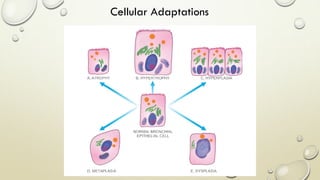
• Cell can adapt themselves by undergoing 5
different conditions
1. Hyperplasia
2. Hypertrophy
3. Atrophy
4. Metaplasia
5. Dysplasia
Cellular Adaptations
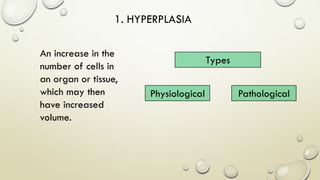
1. HYPERPLASIA
An increase in the
number of cells in
an organ or tissue,
which may then
have increased
volume.
Types
Physiological Pathological
A. Hormonal: Influence of hormonal stimulation
• Hyperplasia of the female breast epithelium at puberty
or in pregnancy
• pregnant uterus
• normal endometrium after a normal menstrual cycle.
B. Compensatory: hyperplasia occurring following removal
of part of an organ
• Regeneration of the liver following partial hepatectomy
• Regeneration of epidermis after skin abrasion
• Following nephrectomy on one side, there is hyperplasia
of nephrons of the other kidney.
Physiological Hyperplasia
Excessive stimulation of hormones or growth factors
– Endometrial hyperplasia
– wound healing - of granulation tissue due to
proliferation of fibroblasts and endothelial cells.
– skin warts from hyperplasia of epidermis due to human
papilloma virus.
– Pseudocarcinomatous hyperplasia of the skin
Pathological Hyperplasia
HYPERTROPHY
Definition: An increase in the size of cells, and with such
change, an increase in the size of the organ.
Types
• Physiologic: physiologic growth of the uterus during
pregnancy involves both hypertrophy and hyperplasia.
• Pathologic causes: increased workload, hormonal
stimulation and growth factors stimulation like in Cardiac
muscle in Heart diseases.
THE RELATIONSHIP BETWEEN
HYPERPLASIA AND HYPERTROPHY
ALTHOUGH HYPERTROPHY AND HYPERPLASIA ARE TWO
DISTINCT PROCESSES, FREQUENTLY BOTH OCCUR
TOGETHER, AND THEY WELL BE TRIGGERED BY THE SAME
MECHANISM.
ATROPHY
Types: Physiologic or Pathological
Acquired loss of the size of cells, due to reduction in cell
size or number of parenchymal cells in an organ.
PHYSIOLOGIC ATROPHY
A normal process of aging in some tissues, which could be due to loss
of endocrine stimulation or arteriosclerosis.
• Atrophy of lymphoid tissue in lymph nodes, appendix and thymus.
• Atrophy of gonads after menopause.
• Atrophy of brain with aging.
PATHOLOGIC ATROPHY.
• Starvation atrophy.
• Ischaemic atrophy
• Disuse atrophy.
• Neuropathic atrophy.
• Endocrine atrophy
• Pressure atrophy.
• Idiopathic atrophy
METAPLASIA
Definition: Metaplasia is a reversible change in which one adult cell
type is replaced by another adult cell type.
• It is Loss of Differentiation property of cell
Causes:
• Changes in environment
• Irritation or inflammation
• Nutritional
Squamous cells turn into Columnar cells: Intestinal metaplasia in
healed chronic gastric ulcer and Barrett’s esophagus
DYSPLASIA
• Disordered or Abnormal cellular development.
• Also referred to as ‘Atypical Hyperplasia'
• Epithelial dysplasia is characterised by cellular proliferation and cytologic changes
– Increased number of layers of epithelial cells
– Disorderly arrangement of cells from basal layer to the surface layer
– Loss of basal polarity i.e. nuclei lying away from basement membrane
– Cellular and nuclear pleomorphism
– Increased nucleocytoplasmic ratio
– Nuclear hyperchromatism
– Increased mitotic activity.
• The two most common examples of dysplastic changes are the uterine cervix
and respiratory tract
CELL DEATH
NECROSIS
• Defined as a localised area of death of tissue followed by degradation of
tissue by hydrolytic enzymes liberated from dead cells.
• It is invariably accompanied by inflammatory reaction.
• Various agents such as hypoxia, chemical and physical agents, microbial agents,
immunological injury, etc
• Two essential changes characterize irreversible cell injury in necrosis of all
types
– Denaturation of proteins (Structural & Functional)
– Cell digestion by lytic enzymes (Autolysis & Heterolysis)
TYPES OF NECROSIS
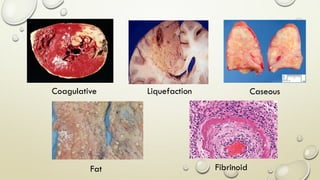
Morphologically, there are five types of necrosis
 Cogulative
 Liquefaction
 Caseous
 Fat
 Fibrinoid
Coagulative Liquefaction Caseous
Fat Fibrinoid
APOPTOSIS
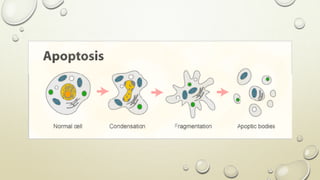
APOPTOSIS
• A form of ‘coordinated and internally programmed cell
death’
• Pathway of cell death that is induced by a tightly regulated
suicide program in which cells destined to die activate
enzymes capable of degrading the cells' own nuclear DNA
and nuclear and cytoplasmic proteins
• Apoptosis is responsible for mediating cell death in a wide
variety of physiologic and pathologic processes
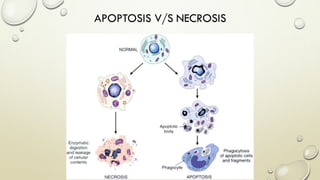
• The plasma membrane of the apoptotic cell remains intact, but
the membrane is altered in such a way that the cell and its
fragments become avid targets for phagocytes.
• The dead cell is rapidly cleared before its contents have
leaked out, and therefore cell death by this pathway does not
elicit an inflammatory reaction in the host
• Thus, apoptosis differs from necrosis
• However, apoptosis and necrosis sometimes coexist, and
apoptosis induced by some pathologic stimuli may progress to
necrosis
APOPTOSIS V/S NECROSIS
THANK
YOU

Cell injury pathophysiology

  • 2.
    The word ‘Pathology’is derived from two Greek words—pathos meaning suffering, and logos meaning study. Pathology is, thus, scientific study of structure and function of the body in disease. Another commonly used term with reference to study of diseases is ‘pathophysiology’ comprised by two words: pathos = suffering; physiology = study of normal function. Pathophysiology, thus, includes study of disordered function or breakdown of homeostasis in diseases.
  • 3.
    SOME CONFUSING TERMINOLOGIES Healthmay be defined as a condition when the individual is in complete accord with the surroundings, While disease is loss of ease (or comfort) to the body (i.e. dis-ease). A term commonly confused with disease is illness. While disease suggests an entity with a cause, illness is the reaction of the individual to disease in the form of symptoms (complaints of the patient) and physical signs (elicited by the clinician). In addition to disease and illness, there are syndromes (meaning running together) characterized by combination of symptoms caused by altered physiologic processes.
  • 4.
    IMPORTANT TERMINOLOGIES • Patientis the person affected by disease. • Lesions are the characteristic changes in tissues and cells produced by disease in an individual or experimental animal. • Pathologic changes or morphology consist of examination of diseased tissues. • Pathologic changes can be recognized with the naked eye (gross or macroscopic changes) or studied by microscopic examination of tissues. • Causal factors responsible for the lesions are included in etiology of disease (i.e. ‘why’ of disease).
  • 5.
    IMPORTANT TERMINOLOGIES • Mechanismby which the lesions are produced is termed pathogenesis of disease (i.e. ‘how’ of disease). • Functional implications of the lesion felt by the patient are symptoms and those discovered by the clinician are the physical signs. • Clinical significance of the morphologic and functional changes together with results of other investigations help to arrive at an answer to what is wrong (diagnosis), what is going to happen (prognosis), what can be done about it (treatment), and finally what should be done to avoid complications and spread (prevention) (i.e. ‘what’ of disease).
  • 6.
  • 7.
  • 8.
  • 9.
    THE NORMAL CELL •Nucleus: The Centre of cell with genetic information • Nucleosome: Condensed chromosomes and DNA • Rough Endoplasmic Reticulum & Smooth Endoplasmic Reticulum • Ribosomes: Protein Factory • Golgi body & Lysosomes: The packaging unit • Mitochondria: The powerhouse of the cell • Centrioles: Transporters of cell organelles during cell division
  • 10.
     In 1859,Virchow first published cellular theory of disease, bringing in the concept that diseases occur due to abnormalities at the level of cells.  Thus, most forms of diseases begin with cell injury followed by consequent loss of cellular function.  “Cell injury” is defined as a variety of stresses a cell encounters as a result of changes in its internal and external environment. The cellular response to stress may vary and depends upon the following variables: a) The type of cell and tissue involved. b) Extent and type of cell injury. CELL INJURY
  • 12.
    ETIOLOGY OF CELLINJURY 1. Hypoxia and ischemia 2. Physical agents 3. Chemical agents and drugs 4. Microbial agents 5. Immunologic agents 6. Nutritional derangements 7. Aging 8. Psychogenic diseases 9. Iatrogenic factors 10. Idiopathic diseases
  • 14.
  • 15.
    REVERSIBLE CELL INJURY 1.Hydropic change (cloudy swelling) 2. Hyaline change 3. Mucoid change 4. Fatty change
  • 16.
    1. Hydropic change(cloudy swelling)
  • 18.
    GROSS APPEARANCE OFCLOUDY SWELLING CHARACTERISTICS • ORGAN ENLARGED • WEIGHT INCREASED • PALE COLORATION
  • 19.
    Hydropic change: thisis due to paralysis of energy-dependent ion pumps of the plasma membrane. It is the first manifestation of almost all forms of cell injury. Microscopically, there are clear vacuoles (of water) within the cytoplasm. MICROSCOPIC VIEW
  • 20.
    2. Hyaline change Theword ‘hyaline’ means glassy (hyalos = glass). extracellular.intracellular Types • Various histological or cytological alterations characterized by homogeneous, glasslike appearance in hematoxylin and eosin stained sections.
  • 21.
  • 22.
    INTRACELLULAR HYALINE • Itsmainly seen in epithelial cells. • Hyaline droplets in the PCT Nephron epithelial cells: excessive reabsorption of plasma proteins. • Hyaline degeneration of rectus abdominis muscle called Zenker’s degeneration, occurring in typhoid fever. • Mallory’s hyaline represents aggregates of intermediate filaments in the hepatocytes in alcoholic liver cell injury.
  • 23.
    Intracellular hyaline asRussell’s bodies in the plasma cells. The cytoplasm shows pink homogeneous globular material due to accumulated immunoglobulins.
  • 24.
    • Extracellular hyalineis seen in connective tissues. • Hyaline degeneration in Fibroids of the uterus • Hyalinized old scar of fibro-collagenous tissues. • Hyaline arteriolosclerosis in renal vessels in hypertension and diabetes mellitus. • Hyalinized glomeruli in chronic glomerulonephritis. EXTRACELLULAR HYALINE
  • 25.
    The centers ofwhorls of smooth muscle and connective tissue show pink homogeneous hyaline material (connective tissue hyaline)
  • 26.
  • 27.
    3. Mucoid degeneration •Mucus containing mucin(glycoprotein) secreted by mucous glands. • In certain cellular injury, there is change characterized by accumulation of mucin in intracellular or extracellular loci. Epithelial: • Composed of sialomucin and neutral mucopolysaccharide • may accumulate in intracellular or extracellular (if secreted) locations. Connective tissue: • predominantly acid mucopolysaccharide, sulfated or carboxylated
  • 28.
    EPITHELIAL MUCIN • Catarrhalinflammation of mucous membrane (e.g. of respiratory tract, alimentary tract, uterus). • Obstruction of duct leading to mucocele in the oral cavity and gallbladder. • Mucin-secreting tumors (e.g. of ovary, stomach, large bowel, etc.) • Cystic fibrosis of the pancreas.
  • 29.
    CONNECTIVE TISSUE MUCIN •Mucoid or myxoid degeneration in some tumors e.g. myxomas, neurofibromas, fibroadenoma, soft tissue sarcomas, etc.
  • 30.
    4. Fatty change •There is the accumulation of fat in non-fatty cells. • Also known as STEATOSIS Morphologic change: • Gross features: The organ enlarges and becomes yellow, soft, and greasy. • Microscopy: An Fatty change appears as clear vacuoles within parenchymal cells.
  • 31.
    Fatty change: Liver •Since this organ plays a central role in fat metabolism, • The accumulation of fat in toxic conditions can be very dangerous. • Depending upon the cause and amount of accumulation, fatty change may be • mild and reversible, • or severe producing irreversible cell injury and cell death
  • 32.
    • Conditions withexcess fat: STRESS ON ORGAN – Obesity – Diabetes mellitus – Congenital hyperlipidaemia • Liver cell damage: LOOSE ITS CAPABILITY – Alcoholic liver disease (most common) – Starvation – Protein calorie malnutrition – Chronic illnesses (e.g. tuberculosis) – Acute fatty liver in late pregnancy – Hypoxia (e.g. anaemia, cardiac failure) – Hepatotoxins (e.g. carbon tetrachloride, chloroform, ether, aflatoxins and other poisons) – Drug-induced liver cell injury (e.g. administration of methotrexate, steroids, CCl4, halothane anaesthetic, tetracycline etc) – Reye’s syndrome Etiology
  • 33.
    • Grossly – theliver in fatty change is enlarged with a tense, glistening capsule and rounded margins. – The cut surface bulges slightly and is pale-yellow to yellow and is greasy to touch • Microscopically – characteristic feature is the presence of numerous lipid vacuoles in the cytoplasm of hepatocytes. MORPHOLOGIC FEATURES
  • 34.
  • 35.
    1. CYTOSKELETAL CHANGES:Components of cytoskeleton may show the following morphologic abnormalities: i) Defective microtubules: a. Poor sperm motility causing sterility. b. Immotile cilia syndrome: Immotile cilia of respiratory tract and consequent chronic infection due to defective clearance of inhaled bacteria. ii) Defective microfilaments: a. In myopathies b. Muscular dystrophies iii) Accumulation of intermediate filaments: Various classes of intermediate filaments may accumulate in the cytosol. For example: Neurofibrillary tangles in Alzheimer’s disease are composed of neurofilaments and paired helical filaments.
  • 36.
    2. LYSOSOMAL CHANGES:Lysosomes contain powerful hydrolytic enzymes. Heterophagy and autophagy are the two ways by which lysosomes show morphologic changes of phagocytic function. i) Heterophagy: Phagocytosis (cell eating) and pinocytosis (cell drinking) are the two forms by which material from outside is taken up by the lysosomes of cells such as polymorphs and macrophages to form phagolysosomes. This is termed heterophagy. Microbial agents and foreign particulate material are eliminated by this mechanism. ii) Autophagy: This is the process by which worn out intracellular organelles and other cytoplasmic material form autophagic vacuole that fuses with lysosome to form autophago-lysosome. iii) Indigestible material: Some indigestible exogenous particles such as carbon or endogenous substances such as lipofuscin may persist in the lysosomes of the cells for a long time as residual bodies. iv) Storage diseases: A group of lysosomal storage diseases due to hereditary deficiency of enzymes may result in abnormal collection of metabolites in the lysosomes of cells.
  • 37.
    3. SER CHANGES:Hypertrophy of smooth endoplasmic reticulum of liver cells as an adaptive change may occur in response to prolonged use of barbiturates. 4. MITOCHONDRIAL CHANGES: Mitochondrial injury plays an important role in cell injury. Morphologic changes of cell injury in mitochondria may be seen in the following conditions: i) Megamitochondria: Megamitochondria consisting of unusually big mitochondria are seen in alcoholic liver disease and nutritional deficiency conditions. ii) Alterations in the number of mitochondria may occur. Their number increases in hypertrophy and decreases in atrophy. iii) Oncocytoma in the salivary glands, thyroid and kidneys consists of tumor cells having very large mitochondria. iv) Myopathies having defect in mitochondria have abnormal cristae.
  • 38.
    Accumulation of Variouscomponents inside the cell: • Cholesterol Deposits: As in Atherosclerosis, the foam cell deposits • Protein Deposits: As in proteinuria, antitrypsin deficiency, etc. • Glycogen Deposits: As in diabetes melitus and GCD (glycogen storage disease) • Pigment Deposits: Endogenous Pigments (Melanin, Hemoprotein, Lipofuscin) causing disease like alkaptonuria, albinism, etc. and Exogenous pigments (Pollutants, Metals (lead, silver), Ink of Tattoo) causing several toxicities in cell.
  • 39.
    Cellular Adaptation • Cellcan adapt themselves by undergoing 5 different conditions 1. Hyperplasia 2. Hypertrophy 3. Atrophy 4. Metaplasia 5. Dysplasia
  • 40.
  • 41.
    1. HYPERPLASIA An increasein the number of cells in an organ or tissue, which may then have increased volume. Types Physiological Pathological
  • 42.
    A. Hormonal: Influenceof hormonal stimulation • Hyperplasia of the female breast epithelium at puberty or in pregnancy • pregnant uterus • normal endometrium after a normal menstrual cycle. B. Compensatory: hyperplasia occurring following removal of part of an organ • Regeneration of the liver following partial hepatectomy • Regeneration of epidermis after skin abrasion • Following nephrectomy on one side, there is hyperplasia of nephrons of the other kidney. Physiological Hyperplasia
  • 43.
    Excessive stimulation ofhormones or growth factors – Endometrial hyperplasia – wound healing - of granulation tissue due to proliferation of fibroblasts and endothelial cells. – skin warts from hyperplasia of epidermis due to human papilloma virus. – Pseudocarcinomatous hyperplasia of the skin Pathological Hyperplasia
  • 44.
    HYPERTROPHY Definition: An increasein the size of cells, and with such change, an increase in the size of the organ. Types • Physiologic: physiologic growth of the uterus during pregnancy involves both hypertrophy and hyperplasia. • Pathologic causes: increased workload, hormonal stimulation and growth factors stimulation like in Cardiac muscle in Heart diseases.
  • 45.
    THE RELATIONSHIP BETWEEN HYPERPLASIAAND HYPERTROPHY ALTHOUGH HYPERTROPHY AND HYPERPLASIA ARE TWO DISTINCT PROCESSES, FREQUENTLY BOTH OCCUR TOGETHER, AND THEY WELL BE TRIGGERED BY THE SAME MECHANISM.
  • 46.
    ATROPHY Types: Physiologic orPathological Acquired loss of the size of cells, due to reduction in cell size or number of parenchymal cells in an organ.
  • 47.
    PHYSIOLOGIC ATROPHY A normalprocess of aging in some tissues, which could be due to loss of endocrine stimulation or arteriosclerosis. • Atrophy of lymphoid tissue in lymph nodes, appendix and thymus. • Atrophy of gonads after menopause. • Atrophy of brain with aging.
  • 48.
    PATHOLOGIC ATROPHY. • Starvationatrophy. • Ischaemic atrophy • Disuse atrophy. • Neuropathic atrophy. • Endocrine atrophy • Pressure atrophy. • Idiopathic atrophy
  • 49.
    METAPLASIA Definition: Metaplasia isa reversible change in which one adult cell type is replaced by another adult cell type. • It is Loss of Differentiation property of cell Causes: • Changes in environment • Irritation or inflammation • Nutritional Squamous cells turn into Columnar cells: Intestinal metaplasia in healed chronic gastric ulcer and Barrett’s esophagus
  • 50.
    DYSPLASIA • Disordered orAbnormal cellular development. • Also referred to as ‘Atypical Hyperplasia' • Epithelial dysplasia is characterised by cellular proliferation and cytologic changes – Increased number of layers of epithelial cells – Disorderly arrangement of cells from basal layer to the surface layer – Loss of basal polarity i.e. nuclei lying away from basement membrane – Cellular and nuclear pleomorphism – Increased nucleocytoplasmic ratio – Nuclear hyperchromatism – Increased mitotic activity. • The two most common examples of dysplastic changes are the uterine cervix and respiratory tract
  • 51.
  • 52.
    NECROSIS • Defined asa localised area of death of tissue followed by degradation of tissue by hydrolytic enzymes liberated from dead cells. • It is invariably accompanied by inflammatory reaction. • Various agents such as hypoxia, chemical and physical agents, microbial agents, immunological injury, etc • Two essential changes characterize irreversible cell injury in necrosis of all types – Denaturation of proteins (Structural & Functional) – Cell digestion by lytic enzymes (Autolysis & Heterolysis)
  • 53.
    TYPES OF NECROSIS Morphologically,there are five types of necrosis  Cogulative  Liquefaction  Caseous  Fat  Fibrinoid
  • 54.
  • 55.
  • 56.
    APOPTOSIS • A formof ‘coordinated and internally programmed cell death’ • Pathway of cell death that is induced by a tightly regulated suicide program in which cells destined to die activate enzymes capable of degrading the cells' own nuclear DNA and nuclear and cytoplasmic proteins • Apoptosis is responsible for mediating cell death in a wide variety of physiologic and pathologic processes
  • 58.
    • The plasmamembrane of the apoptotic cell remains intact, but the membrane is altered in such a way that the cell and its fragments become avid targets for phagocytes. • The dead cell is rapidly cleared before its contents have leaked out, and therefore cell death by this pathway does not elicit an inflammatory reaction in the host • Thus, apoptosis differs from necrosis • However, apoptosis and necrosis sometimes coexist, and apoptosis induced by some pathologic stimuli may progress to necrosis
  • 59.
  • 60.