GASTROENTIRITIS
Mr. Pradeep Abothu, M.Sc (N), PhD Scholar,
Associate Professor, Dept. of Child Health(N)
ASRAM College Of Nursing
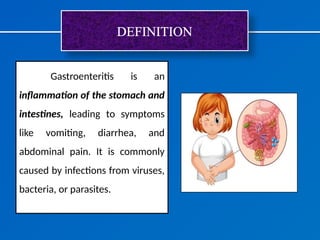
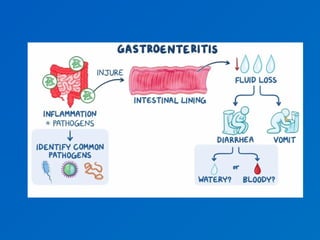
Gastroenteritis is an
inflammation of the stomach and
intestines, leading to symptoms
like vomiting, diarrhea, and
abdominal pain. It is commonly
caused by infections from viruses,
bacteria, or parasites.
DEFINITION
INCIDENCE
• Gastroenteritis is a leading cause of morbidity and mortality
among children under five years of age, particularly in low-
and middle-income countries.
• It is estimated that each child experiences about 2-3 episodes
of gastroenteritis per year.
• Diarrheal diseases, including gastroenteritis, are the second
leading cause of death in children under five.
ETIOLOGY
• Viral Infections: The most common cause, particularly
rotavirus and norovirus.
• Bacterial Infections: Salmonella, Escherichia coli, Shigella, and
Campylobacter.
• Parasitic Infections: Giardia lamblia, Cryptosporidium.
• Other Causes: Food allergies, medication reactions, and
exposure to toxins.
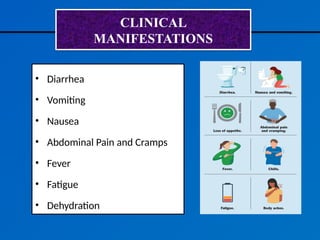
CLINICAL
MANIFESTATIONS
• Diarrhea
• Vomiting
• Nausea
• Abdominal Pain and Cramps
• Fever
• Fatigue
• Dehydration
DIAGNOSTIC EVALUATION TOOLS
• Clinical History and Physical Examination: Initial assessment
based on symptoms and signs.
• Blood Tests: Complete blood count (CBC) and electrolytes to
assess dehydration and infection severity.
• Stool Analysis: Identifying pathogens through cultures, antigen
detection, or microscopy.
• Urinalysis: To check for dehydration and renal function.
• Imaging Studies: Rarely needed, but may be used if
complications or other diagnoses are suspected.
MEDICAL
MANAGEMENT
• Administer oral rehydration solution (ORS) for mild to moderate
dehydration
• Administer intravenous fluids for severe dehydration or if oral intake
is not possible
• Continue feeding regular diet to the extent tolerated
• Continue breastfeeding for infants
• Offer BRAT diet (bananas, rice, applesauce, toast) for its bland nature
• Adminester Antibiotics if a bacterial cause is confirmed
• Administer Antiemetics for severe vomiting
• Avoid antidiarrheal agents in children
• Administer probiotics to help restore gut flora and reduce the
duration of diarrhea
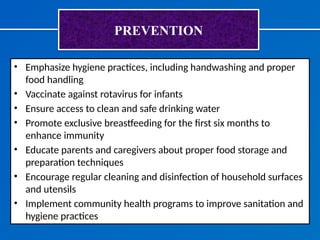
PREVENTION
• Emphasize hygiene practices, including handwashing and proper
food handling
• Vaccinate against rotavirus for infants
• Ensure access to clean and safe drinking water
• Promote exclusive breastfeeding for the first six months to
enhance immunity
• Educate parents and caregivers about proper food storage and
preparation techniques
• Encourage regular cleaning and disinfection of household surfaces
and utensils
• Implement community health programs to improve sanitation and
hygiene practices
GASTROENTIRITIS: NURSING MANAGEMENT.pptx

GASTROENTIRITIS: NURSING MANAGEMENT.pptx

  • 1.
    GASTROENTIRITIS Mr. Pradeep Abothu,M.Sc (N), PhD Scholar, Associate Professor, Dept. of Child Health(N) ASRAM College Of Nursing
  • 2.
    Gastroenteritis is an inflammationof the stomach and intestines, leading to symptoms like vomiting, diarrhea, and abdominal pain. It is commonly caused by infections from viruses, bacteria, or parasites. DEFINITION
  • 3.
    INCIDENCE • Gastroenteritis isa leading cause of morbidity and mortality among children under five years of age, particularly in low- and middle-income countries. • It is estimated that each child experiences about 2-3 episodes of gastroenteritis per year. • Diarrheal diseases, including gastroenteritis, are the second leading cause of death in children under five.
  • 4.
    ETIOLOGY • Viral Infections:The most common cause, particularly rotavirus and norovirus. • Bacterial Infections: Salmonella, Escherichia coli, Shigella, and Campylobacter. • Parasitic Infections: Giardia lamblia, Cryptosporidium. • Other Causes: Food allergies, medication reactions, and exposure to toxins.
  • 5.
    CLINICAL MANIFESTATIONS • Diarrhea • Vomiting •Nausea • Abdominal Pain and Cramps • Fever • Fatigue • Dehydration
  • 7.
    DIAGNOSTIC EVALUATION TOOLS •Clinical History and Physical Examination: Initial assessment based on symptoms and signs. • Blood Tests: Complete blood count (CBC) and electrolytes to assess dehydration and infection severity. • Stool Analysis: Identifying pathogens through cultures, antigen detection, or microscopy. • Urinalysis: To check for dehydration and renal function. • Imaging Studies: Rarely needed, but may be used if complications or other diagnoses are suspected.
  • 8.
    MEDICAL MANAGEMENT • Administer oralrehydration solution (ORS) for mild to moderate dehydration • Administer intravenous fluids for severe dehydration or if oral intake is not possible • Continue feeding regular diet to the extent tolerated • Continue breastfeeding for infants • Offer BRAT diet (bananas, rice, applesauce, toast) for its bland nature • Adminester Antibiotics if a bacterial cause is confirmed • Administer Antiemetics for severe vomiting • Avoid antidiarrheal agents in children • Administer probiotics to help restore gut flora and reduce the duration of diarrhea
  • 9.
    PREVENTION • Emphasize hygienepractices, including handwashing and proper food handling • Vaccinate against rotavirus for infants • Ensure access to clean and safe drinking water • Promote exclusive breastfeeding for the first six months to enhance immunity • Educate parents and caregivers about proper food storage and preparation techniques • Encourage regular cleaning and disinfection of household surfaces and utensils • Implement community health programs to improve sanitation and hygiene practices