VOMITING
Mr. Pradeep Abothu, M.Sc (N), PhD Scholar,
Associate Professor, Dept. of Child Health(N)
ASRAM College Of Nursing
DEFINITION
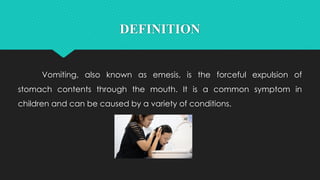
Vomiting, also known as emesis, is the forceful expulsion of
stomach contents through the mouth. It is a common symptom in
children and can be caused by a variety of conditions.
ETIOLOGY
Causes of vomiting in children can broadly be divided into organic and non-organic
causes.
1. Non-Organic Causes:
 Dietary Factors: Food poisoning, food allergies or intolerances, overeating or eating
too quickly.
 Psychological Factors: Anxiety or stress, eating disorders.
 Motion Sickness: Travel-related nausea and vomiting.
Organic Causes:
 Gastrointestinal Infections: Viral gastroenteritis, bacterial infections, parasitic infections.
 Gastrointestinal Conditions: Gastroesophageal reflux, pyloric stenosis, intestinal
malrotation, necrotizing enterocolitis, peptic ulcer disease, Crohn's disease, celiac
disease.
 Congenital Anomalies: Tracheoesophageal fistula, intestinal atresia, Hirschsprung's
disease.
 Systemic Infections: Sepsis, meningitis, urinary tract infections, otitis media, pneumonia.
 Metabolic Disorders: Inborn errors of metabolism, diabetic ketoacidosis, electrolyte
imbalances.
 Central Nervous System Causes: Intracranial hemorrhage,
hydrocephalus, brain tumors, migraine headaches.
 Cardiac Conditions: Congenital heart disease, heart failure.
 Endocrine Disorders: Addison's disease, hyperthyroidism.
 Renal Disorders: Acute kidney injury, chronic kidney disease.
 Toxic Ingestions: Ingestion of toxic substances, medication overdose.
 Other Causes: Appendicitis, volvulus, intussusception, hepatitis,
pancreatitis, gallbladder disease.
DIAGNOSTIC EVALUATION TOOLS
 Clinical History: A detailed history of vomiting episodes includes onset, duration, frequency,
and characteristics (e.g., bilious, projectile), associated symptoms like fever, diarrhea,
abdominal pain, headache, lethargy, recent dietary changes or ingestion of potentially
harmful substances, and family history of similar symptoms or chronic conditions.
 Physical examination: Physical examination includes assessment of hydration status (skin
turgor, mucous membranes, capillary refill), abdominal examination (tenderness, distention,
masses), neurological examination (signs of increased intracranial pressure or neurological
deficits), and general physical examination (growth parameters, signs of systemic illness).
 Laboratory and imaging studies should be conducted based on the
suspected cause of vomiting to confirm the diagnosis.
 Specialized tests like stool cultures for infectious gastroenteritis, blood
cultures for suspected sepsis, metabolic tests for inborn errors, and
endoscopy for persistent vomiting.
MEDICAL MANAGEMENT
 Management of non-organic causes involves addressing dietary issues,
providing reassurance, and employing behavioral strategies to reduce
anxiety or stress.
 Nutritional education may help in managing food intolerances or
allergies. For organic causes, treatment focuses on the underlying
condition.
NURSING
MANAGEMENT
 Monitor vital signs: temperature, heart rate, respiratory rate, and blood pressure.
 Assess hydration status: evaluate skin turgor, mucous membranes, urine output, and
capillary refill time.
 Record frequency, volume, and characteristics of vomiting (e.g., color, presence of bile).
 Encourage the intake of oral rehydration solutions (ORS) for mild to moderate
dehydration.
 Administer intravenous fluids for severe dehydration or if oral intake is not tolerated.
 Provide small, bland meals as tolerated (e.g., BRAT diet) and continue breastfeeding for
infants.
 Administer antiemetic medications as ordered for severe nausea and vomiting.
 Regularly assess electrolyte levels and administer supplements if necessary.
 Position the child comfortably, preferably on their side, to prevent aspiration and reduce
discomfort.
 Clean the baby after vomiting, paying special attention to the face, neck, and any
soiled clothing to maintain hygiene and comfort.
 Provide education to parents on signs of dehydration and when to seek medical
attention.
 Offer reassurance and emotional support to the child and family, addressing any fears or
anxieties.
NURSING DIAGNOSIS
•Fluid volume deficit related to excessive fluid loss through vomiting.
•Imbalanced nutrition less than body requirements related to inability to retain
food.
•Risk for aspiration related to improper positioning during vomiting.
•Acute pain related to gastric irritation or abdominal cramping.
•Risk for electrolyte imbalance related to loss of body fluids through vomiting.
VOMITINGS  -     NURSING MANAGEMENT.pptx

VOMITINGS - NURSING MANAGEMENT.pptx

  • 1.
    VOMITING Mr. Pradeep Abothu,M.Sc (N), PhD Scholar, Associate Professor, Dept. of Child Health(N) ASRAM College Of Nursing
  • 2.
    DEFINITION Vomiting, also knownas emesis, is the forceful expulsion of stomach contents through the mouth. It is a common symptom in children and can be caused by a variety of conditions.
  • 3.
    ETIOLOGY Causes of vomitingin children can broadly be divided into organic and non-organic causes. 1. Non-Organic Causes:  Dietary Factors: Food poisoning, food allergies or intolerances, overeating or eating too quickly.  Psychological Factors: Anxiety or stress, eating disorders.  Motion Sickness: Travel-related nausea and vomiting.
  • 4.
    Organic Causes:  GastrointestinalInfections: Viral gastroenteritis, bacterial infections, parasitic infections.  Gastrointestinal Conditions: Gastroesophageal reflux, pyloric stenosis, intestinal malrotation, necrotizing enterocolitis, peptic ulcer disease, Crohn's disease, celiac disease.  Congenital Anomalies: Tracheoesophageal fistula, intestinal atresia, Hirschsprung's disease.  Systemic Infections: Sepsis, meningitis, urinary tract infections, otitis media, pneumonia.  Metabolic Disorders: Inborn errors of metabolism, diabetic ketoacidosis, electrolyte imbalances.
  • 5.
     Central NervousSystem Causes: Intracranial hemorrhage, hydrocephalus, brain tumors, migraine headaches.  Cardiac Conditions: Congenital heart disease, heart failure.  Endocrine Disorders: Addison's disease, hyperthyroidism.  Renal Disorders: Acute kidney injury, chronic kidney disease.  Toxic Ingestions: Ingestion of toxic substances, medication overdose.  Other Causes: Appendicitis, volvulus, intussusception, hepatitis, pancreatitis, gallbladder disease.
  • 6.
    DIAGNOSTIC EVALUATION TOOLS Clinical History: A detailed history of vomiting episodes includes onset, duration, frequency, and characteristics (e.g., bilious, projectile), associated symptoms like fever, diarrhea, abdominal pain, headache, lethargy, recent dietary changes or ingestion of potentially harmful substances, and family history of similar symptoms or chronic conditions.  Physical examination: Physical examination includes assessment of hydration status (skin turgor, mucous membranes, capillary refill), abdominal examination (tenderness, distention, masses), neurological examination (signs of increased intracranial pressure or neurological deficits), and general physical examination (growth parameters, signs of systemic illness).
  • 7.
     Laboratory andimaging studies should be conducted based on the suspected cause of vomiting to confirm the diagnosis.  Specialized tests like stool cultures for infectious gastroenteritis, blood cultures for suspected sepsis, metabolic tests for inborn errors, and endoscopy for persistent vomiting.
  • 8.
    MEDICAL MANAGEMENT  Managementof non-organic causes involves addressing dietary issues, providing reassurance, and employing behavioral strategies to reduce anxiety or stress.  Nutritional education may help in managing food intolerances or allergies. For organic causes, treatment focuses on the underlying condition.
  • 9.
  • 10.
     Monitor vitalsigns: temperature, heart rate, respiratory rate, and blood pressure.  Assess hydration status: evaluate skin turgor, mucous membranes, urine output, and capillary refill time.  Record frequency, volume, and characteristics of vomiting (e.g., color, presence of bile).  Encourage the intake of oral rehydration solutions (ORS) for mild to moderate dehydration.  Administer intravenous fluids for severe dehydration or if oral intake is not tolerated.  Provide small, bland meals as tolerated (e.g., BRAT diet) and continue breastfeeding for infants.
  • 11.
     Administer antiemeticmedications as ordered for severe nausea and vomiting.  Regularly assess electrolyte levels and administer supplements if necessary.  Position the child comfortably, preferably on their side, to prevent aspiration and reduce discomfort.  Clean the baby after vomiting, paying special attention to the face, neck, and any soiled clothing to maintain hygiene and comfort.  Provide education to parents on signs of dehydration and when to seek medical attention.  Offer reassurance and emotional support to the child and family, addressing any fears or anxieties.
  • 12.
    NURSING DIAGNOSIS •Fluid volumedeficit related to excessive fluid loss through vomiting. •Imbalanced nutrition less than body requirements related to inability to retain food. •Risk for aspiration related to improper positioning during vomiting. •Acute pain related to gastric irritation or abdominal cramping. •Risk for electrolyte imbalance related to loss of body fluids through vomiting.