MALABSORPTION
SYNDROME
Mr. Pradeep Abothu, M.Sc (N), PhD Scholar,
Associate Professor, Dept. of Child Health(N)
ASRAM College Of Nursing
DEFINITION
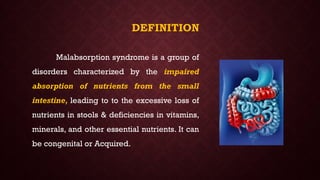
Malabsorption syndrome is a group of
disorders characterized by the impaired
absorption of nutrients from the small
intestine, leading to to the excessive loss of
nutrients in stools & deficiencies in vitamins,
minerals, and other essential nutrients. It can
be congenital or Acquired.
ETIOLOGY
Malabsorption can result from a variety of causes, broadly categorized
as follows:
• Bile Salt Insufficiency: Obstructive jaundice, Bacterial overgrowth in the
small intestine
• Infectious Causes: Acute infectious enteritis
• Parasitic infestations (e.g., Giardia lamblia, helminths)
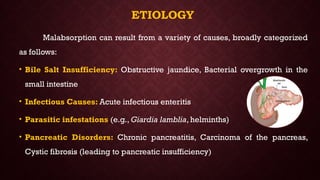
• Pancreatic Disorders: Chronic pancreatitis, Carcinoma of the pancreas,
Cystic fibrosis (leading to pancreatic insufficiency)
• Structural Abnormalities: Inflammatory bowel diseases (e.g., Crohn’s
disease), Post-surgical alterations such as gastrectomy or gastro-
jejunostomy, Short bowel syndrome.
• Lymphatic Obstruction: Intestinal lymphoma, Intestinal tuberculosis,
Intestinal lymphangiectasis (dilatation of intestinal lymphatic vessels)
• Nutritional and Metabolic Conditions: Protein-energy malnutrition
(PEM), Iron deficiency anemia, Severe fat malabsorption in conditions like
celiac disease and cystic fibrosis
TYPES
Malabsorption may be classified based on the primary mechanism involved:
i. Impaired Digestion: Occurs due to pancreatic enzyme deficiencies, as seen in cystic
fibrosis or chronic pancreatitis. This leads to frequent, pasty, greasy stools with an
offensive odor due to undigested fat.
ii. Intestinal Malabsorption: Caused by diseases affecting the intestinal mucosa such as
celiac disease, giardiasis, immunodeficiency, and food protein intolerance. These
children present with steatorrhea and chronic diarrhea.
iii. Carbohydrate Malabsorption: Results in chronic diarrhea due to bacterial
fermentation of unabsorbed carbohydrates. Common in conditions like lactose
intolerance.
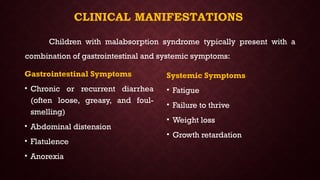
CLINICAL MANIFESTATIONS
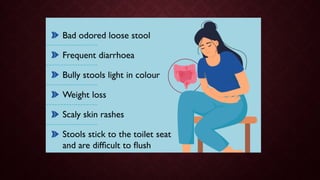
Gastrointestinal Symptoms
• Chronic or recurrent diarrhea
(often loose, greasy, and foul-
smelling)
• Abdominal distension
• Flatulence
• Anorexia
Systemic Symptoms
• Fatigue
• Failure to thrive
• Weight loss
• Growth retardation
Children with malabsorption syndrome typically present with a
combination of gastrointestinal and systemic symptoms:
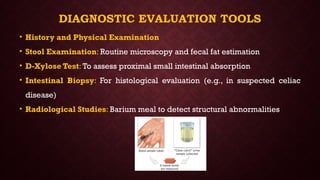
DIAGNOSTIC EVALUATION TOOLS
• History and Physical Examination
• Stool Examination: Routine microscopy and fecal fat estimation
• D-Xylose Test: To assess proximal small intestinal absorption
• Intestinal Biopsy: For histological evaluation (e.g., in suspected celiac
disease)
• Radiological Studies: Barium meal to detect structural abnormalities
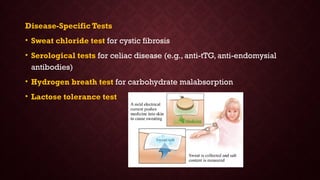
Disease-Specific Tests
• Sweat chloride test for cystic fibrosis
• Serological tests for celiac disease (e.g., anti-tTG, anti-endomysial
antibodies)
• Hydrogen breath test for carbohydrate malabsorption
• Lactose tolerance test
MANAGEMENT
Management depends on the underlying cause and the severity of the malabsorption:
Nutritional Support
• Oral or parenteral replacement of fluids, electrolytes, and deficient nutrients
• High-calorie, nutrient-rich diet tailored to the child's needs
Dietary Modifications
• Gluten-free diet for celiac disease
• Lactose-free diet for lactose intolerance
• Glucose and galactose-free diet for specific carbohydrate malabsorption
• High-protein, high-energy diet for children with cystic fibrosis
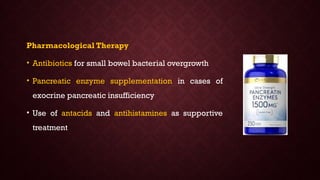
Pharmacological Therapy
• Antibiotics for small bowel bacterial overgrowth
• Pancreatic enzyme supplementation in cases of
exocrine pancreatic insufficiency
• Use of antacids and antihistamines as supportive
treatment
NURSING MANAGEMENT
Nursing Assessment:
• Monitor daily intake and output
• Record daily weight and observe growth parameters
• Check vital signs and serum electrolyte levels
• Assess gastrointestinal function and stool characteristics
Nursing Interventions
• Ensure appropriate dietary intake and supplementation
• Maintain hydration and electrolyte balance through oral/parenteral therapy
• Provide skin care, especially in the perineal region to prevent breakdown
• Administer medications as prescribed
• Offer emotional support and reassurance to both child and parents
• Provide guidance to parents on nutrition, avoidance of foods that worsen
symptoms, hydration, signs of complications, home care and follow-up.
NURSING DIAGNOSIS
• Diarrhea related to impaired digestion and absorption
• Imbalanced nutrition less than body requirements
• Fluid and electrolyte imbalance
• Knowledge deficit regarding disease condition and treatment
• Fear and anxiety in child and parents related to prolonged illness
THANKYOU!

MALABSORPTION SYNDROME: NURSING MANAGEMENT.pptx

  • 1.
    MALABSORPTION SYNDROME Mr. Pradeep Abothu,M.Sc (N), PhD Scholar, Associate Professor, Dept. of Child Health(N) ASRAM College Of Nursing
  • 2.
    DEFINITION Malabsorption syndrome isa group of disorders characterized by the impaired absorption of nutrients from the small intestine, leading to to the excessive loss of nutrients in stools & deficiencies in vitamins, minerals, and other essential nutrients. It can be congenital or Acquired.
  • 3.
    ETIOLOGY Malabsorption can resultfrom a variety of causes, broadly categorized as follows: • Bile Salt Insufficiency: Obstructive jaundice, Bacterial overgrowth in the small intestine • Infectious Causes: Acute infectious enteritis • Parasitic infestations (e.g., Giardia lamblia, helminths) • Pancreatic Disorders: Chronic pancreatitis, Carcinoma of the pancreas, Cystic fibrosis (leading to pancreatic insufficiency)
  • 4.
    • Structural Abnormalities:Inflammatory bowel diseases (e.g., Crohn’s disease), Post-surgical alterations such as gastrectomy or gastro- jejunostomy, Short bowel syndrome. • Lymphatic Obstruction: Intestinal lymphoma, Intestinal tuberculosis, Intestinal lymphangiectasis (dilatation of intestinal lymphatic vessels) • Nutritional and Metabolic Conditions: Protein-energy malnutrition (PEM), Iron deficiency anemia, Severe fat malabsorption in conditions like celiac disease and cystic fibrosis
  • 5.
    TYPES Malabsorption may beclassified based on the primary mechanism involved: i. Impaired Digestion: Occurs due to pancreatic enzyme deficiencies, as seen in cystic fibrosis or chronic pancreatitis. This leads to frequent, pasty, greasy stools with an offensive odor due to undigested fat. ii. Intestinal Malabsorption: Caused by diseases affecting the intestinal mucosa such as celiac disease, giardiasis, immunodeficiency, and food protein intolerance. These children present with steatorrhea and chronic diarrhea. iii. Carbohydrate Malabsorption: Results in chronic diarrhea due to bacterial fermentation of unabsorbed carbohydrates. Common in conditions like lactose intolerance.
  • 6.
    CLINICAL MANIFESTATIONS Gastrointestinal Symptoms •Chronic or recurrent diarrhea (often loose, greasy, and foul- smelling) • Abdominal distension • Flatulence • Anorexia Systemic Symptoms • Fatigue • Failure to thrive • Weight loss • Growth retardation Children with malabsorption syndrome typically present with a combination of gastrointestinal and systemic symptoms:
  • 8.
    DIAGNOSTIC EVALUATION TOOLS •History and Physical Examination • Stool Examination: Routine microscopy and fecal fat estimation • D-Xylose Test: To assess proximal small intestinal absorption • Intestinal Biopsy: For histological evaluation (e.g., in suspected celiac disease) • Radiological Studies: Barium meal to detect structural abnormalities
  • 9.
    Disease-Specific Tests • Sweatchloride test for cystic fibrosis • Serological tests for celiac disease (e.g., anti-tTG, anti-endomysial antibodies) • Hydrogen breath test for carbohydrate malabsorption • Lactose tolerance test
  • 10.
    MANAGEMENT Management depends onthe underlying cause and the severity of the malabsorption: Nutritional Support • Oral or parenteral replacement of fluids, electrolytes, and deficient nutrients • High-calorie, nutrient-rich diet tailored to the child's needs Dietary Modifications • Gluten-free diet for celiac disease • Lactose-free diet for lactose intolerance • Glucose and galactose-free diet for specific carbohydrate malabsorption • High-protein, high-energy diet for children with cystic fibrosis
  • 11.
    Pharmacological Therapy • Antibioticsfor small bowel bacterial overgrowth • Pancreatic enzyme supplementation in cases of exocrine pancreatic insufficiency • Use of antacids and antihistamines as supportive treatment
  • 12.
    NURSING MANAGEMENT Nursing Assessment: •Monitor daily intake and output • Record daily weight and observe growth parameters • Check vital signs and serum electrolyte levels • Assess gastrointestinal function and stool characteristics
  • 13.
    Nursing Interventions • Ensureappropriate dietary intake and supplementation • Maintain hydration and electrolyte balance through oral/parenteral therapy • Provide skin care, especially in the perineal region to prevent breakdown • Administer medications as prescribed • Offer emotional support and reassurance to both child and parents • Provide guidance to parents on nutrition, avoidance of foods that worsen symptoms, hydration, signs of complications, home care and follow-up.
  • 14.
    NURSING DIAGNOSIS • Diarrhearelated to impaired digestion and absorption • Imbalanced nutrition less than body requirements • Fluid and electrolyte imbalance • Knowledge deficit regarding disease condition and treatment • Fear and anxiety in child and parents related to prolonged illness
  • 15.