
Engagement Design Part 2Progress Mechanics & Engagement Loops
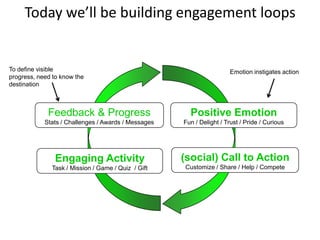
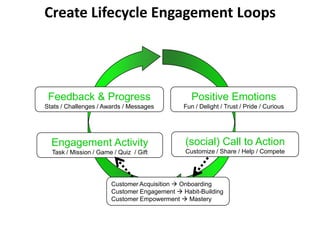
Today we’ll be building engagement loopsTo define visible progress, need to know the destinationEmotion instigates actionPositive EmotionFun / Delight / Trust / Pride / CuriousFeedback & Progress Stats / Challenges / Awards / Messages(social) Call to ActionCustomize / Share / Help / Compete Engaging ActivityTask / Mission / Game / Quiz  / Gift
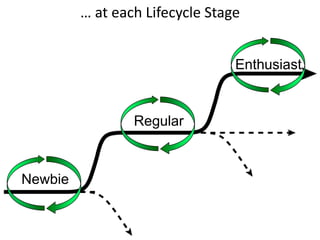
… at each Lifecycle StageEnthusiastRegularNewbie
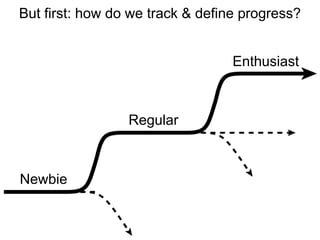
But first: how do we track & define progress?EnthusiastRegularNewbie
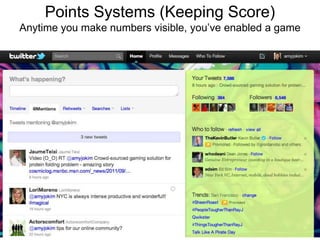
Points Systems (Keeping Score)Anytime you make numbers visible, you’ve enabled a game
Points Systems (Keeping Score)1. Skill Points (AKA Score, Rank)earned via interacting with the system – reflects mastery of the activity or gamePersonalSkill: skill rating/ranking of an individualGroup Skill: skill rating/ranking of a group
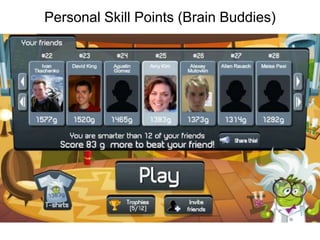
Personal Skill Points (Brain Buddies)Redeemable Points
Points Systems (Keeping Score)1. Skill Points (Score, Rank)earned via interacting with the system – reflects mastery of the activity or gamePersonalSkill: skill rating/ranking of an individualGroup Skill: skill rating/ranking of a group2. Experience Points (XP) uni-directional metric – only goes UP (reflects persistence + skill)earned directly via customers’ actions - used to track & reward certain activitiesPersonal XP: reflects a customer’s actions & accomplishmentsGroup XP: reflects the actions & accomplishments of a group
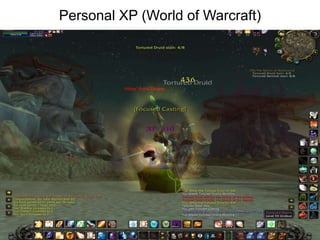
Personal XP (World of Warcraft)
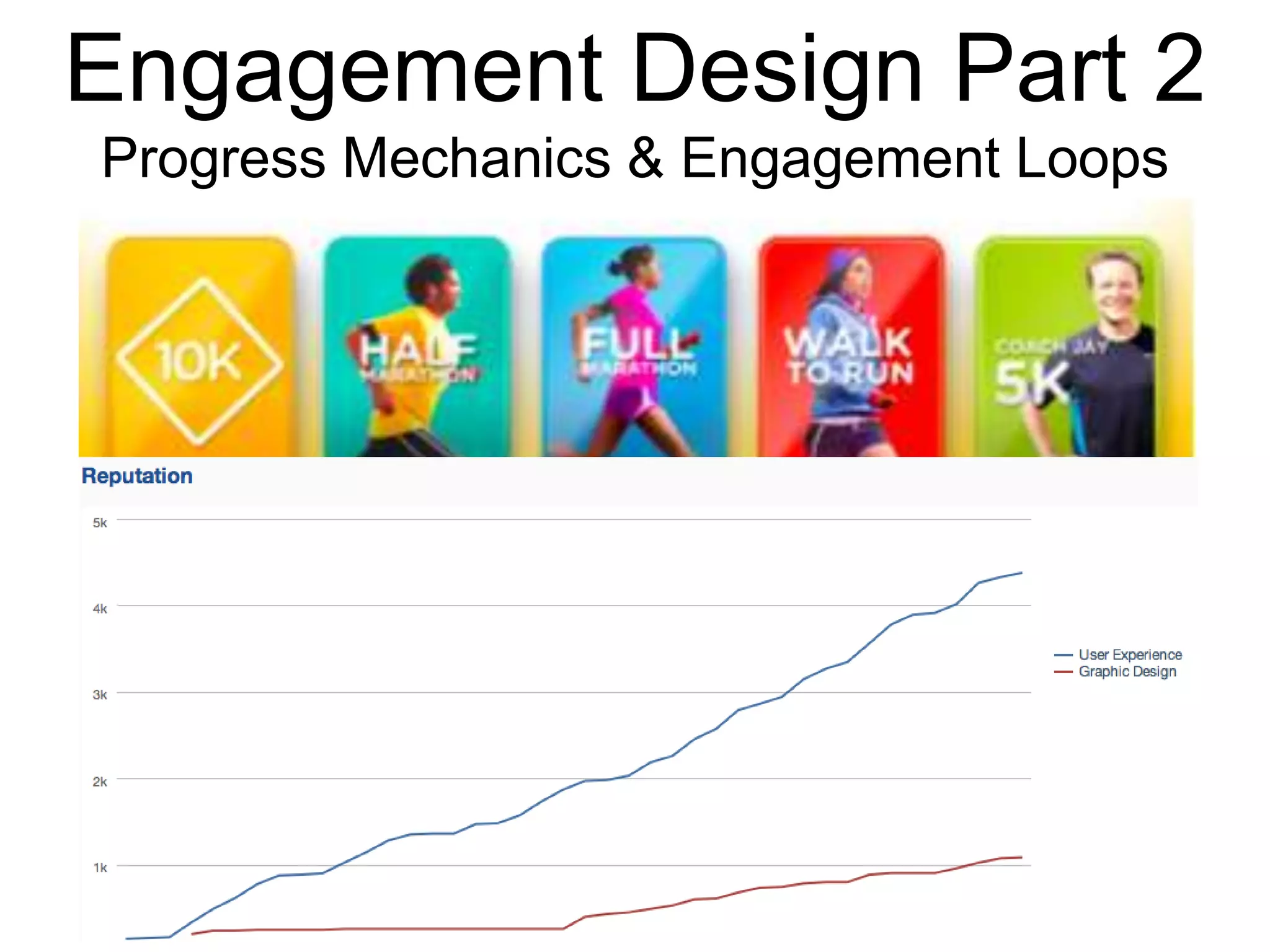
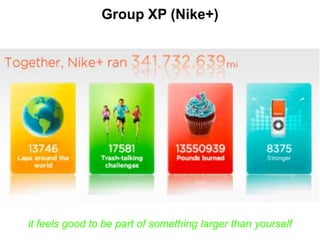
Group XP (Nike+) it feels good to be part of something larger than yourself
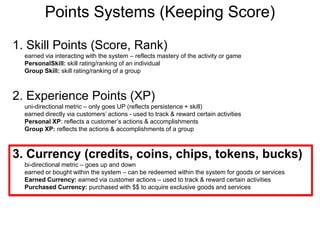
Points Systems (Keeping Score)1. Skill Points (Score, Rank)earned via interacting with the system – reflects mastery of the activity or gamePersonalSkill: skill rating/ranking of an individualGroup Skill: skill rating/ranking of a group2. Experience Points (XP) uni-directional metric – only goes UP (reflects persistence + skill)earned directly via customers’ actions - used to track & reward certain activitiesPersonal XP: reflects a customer’s actions & accomplishmentsGroup XP: reflects the actions & accomplishments of a group3. Currency (credits, coins, chips, tokens, bucks)bi-directional metric – goes up and downearned or bought within the system – can be redeemed within the system for goods or servicesEarned Currency: earned via customer actions – used to track & reward certain activitiesPurchased Currency: purchased with $$ to acquire exclusive goods and services
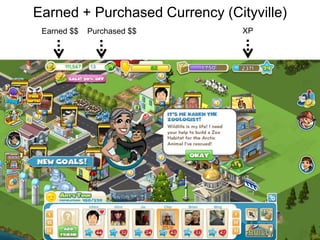
Earned + Purchased Currency (Cityville)XPEarned $$Purchased $$
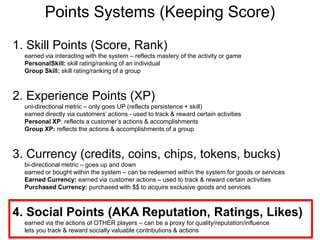
Points Systems (Keeping Score)1. Skill Points (Score, Rank)earned via interacting with the system – reflects mastery of the activity or gamePersonalSkill: skill rating/ranking of an individualGroup Skill: skill rating/ranking of a group2. Experience Points (XP) uni-directional metric – only goes UP (reflects persistence + skill)earned directly via customers’ actions - used to track & reward certain activitiesPersonal XP: reflects a customer’s actions & accomplishmentsGroup XP: reflects the actions & accomplishments of a group3. Currency (credits, coins, chips, tokens, bucks)bi-directional metric – goes up and downearned or bought within the system – can be redeemed within the system for goods or servicesEarned Currency: earned via customer actions – used to track & reward certain activitiesPurchased Currency: purchased with $$ to acquire exclusive goods and services4. Social Points (AKA Reputation, Ratings, Likes)earned via the actions of OTHER players – can be a proxy for quality/reputation/influence lets you track & reward socially valuable contributions & actions
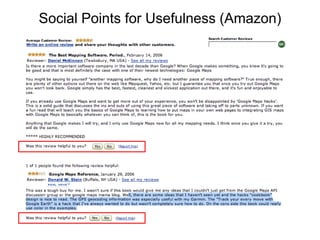
Social Points for Usefulness (Amazon)Social Points (Amazon reviews)
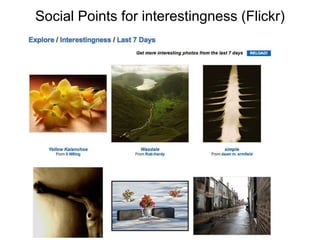
Social Points for interestingness (Flickr)Social Points (Flickr “interestingness”)
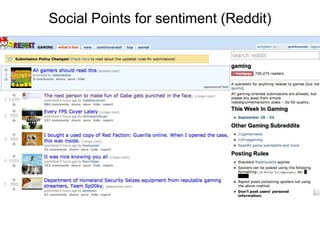
Social Points for sentiment (Reddit)Social Points (Flickr “interestingness”)
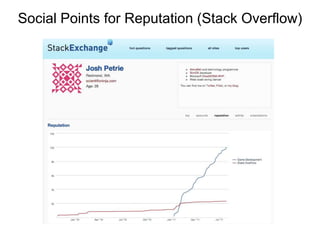
Social Points for Reputation (Stack Overflow)Social Points (Flickr “interestingness”)
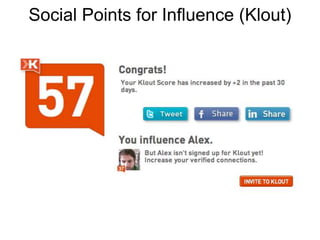
Social Points for Influence (Klout)
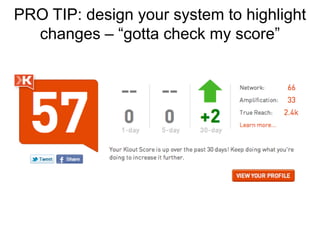
PRO TIP: design your system to highlight changes – “gotta check my score”
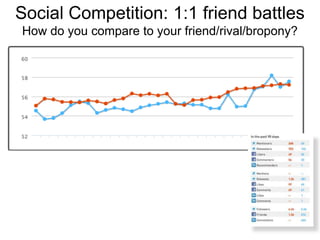
Social Competition: 1:1 friend battlesHow do you compare to your friend/rival/bropony?
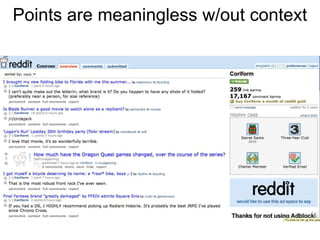
Points are meaningless w/out context
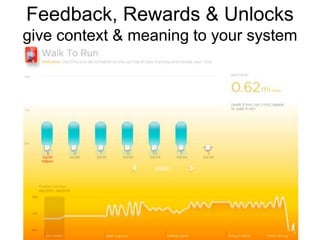
Feedback, Rewards & Unlocksgive context & meaning to your system
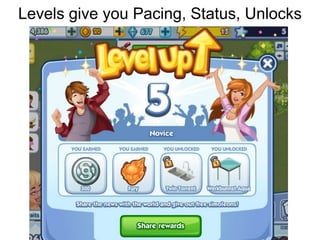
Levels give you Pacing, Status, Unlocks
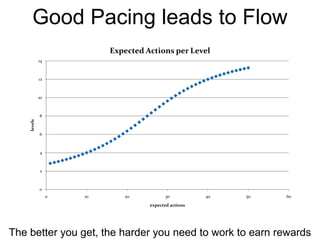
Good Pacing leads to FlowThe better you get, the harder you need to work to earn rewards
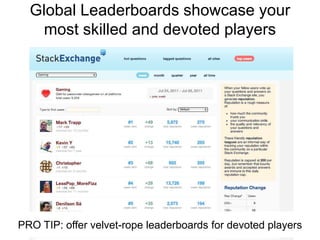
Global Leaderboards showcase your most skilled and devoted playersPRO TIP: offer velvet-rope leaderboards for devoted players
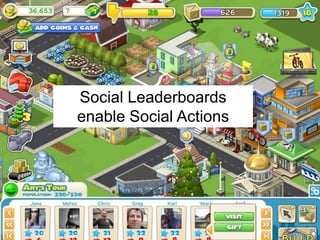
Social Leaderboards enable Social Actions
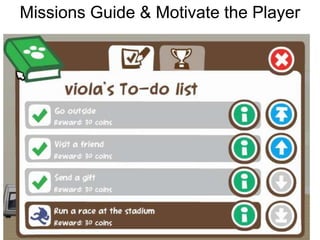
Missions Guide & Motivate the Player
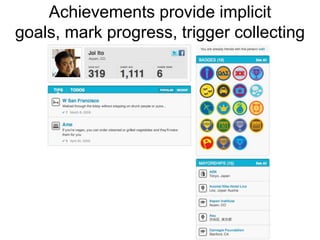
Achievements provide implicit goals, mark progress, trigger collecting
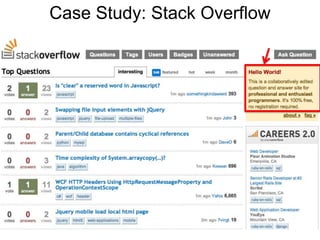
Case Study: Stack Overflow
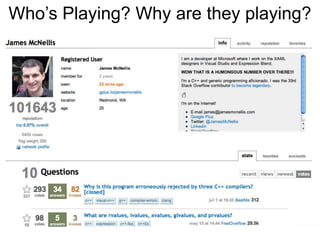
Who’s Playing? Why are they playing?
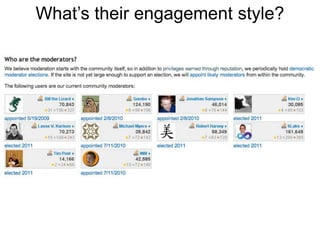
What’s their engagement style?
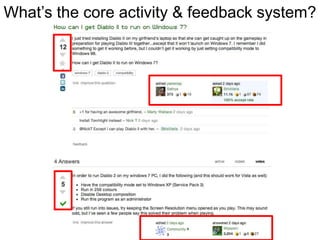
What’s the core activity & feedback system?
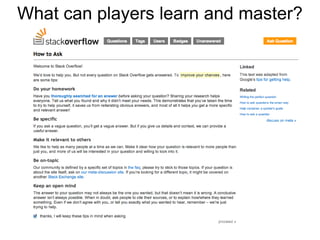
What can players learn and master?
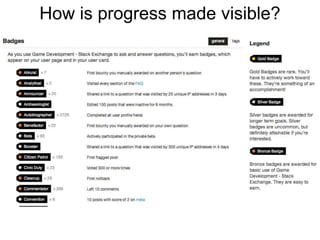
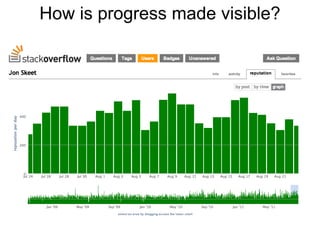
How is progress made visible?
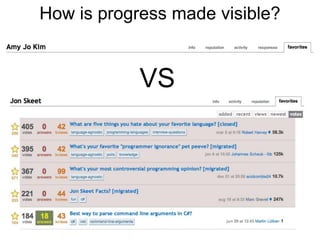
How is progress made visible?VS
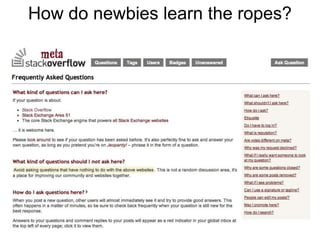
How do newbies learn the ropes?
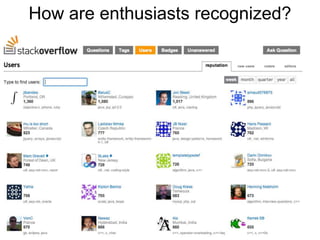
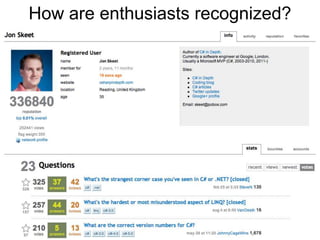
How are enthusiasts recognized?
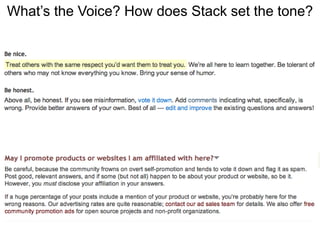
What’s the Voice? How does Stack set the tone?
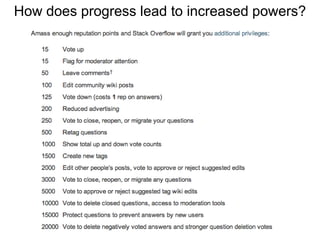
How does progress lead to increased powers?
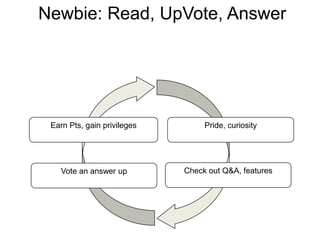
Newbie: Read, UpVote, AnswerPride, curiosityEarn Pts, gain privilegesCheck out Q&A, featuresVote an answer up
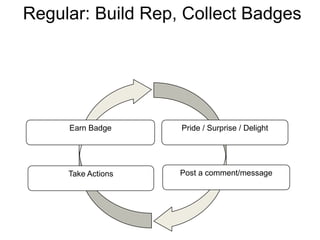
Regular: Build Rep, Collect BadgesPride / Surprise / DelightEarn BadgePost a comment/messageTake Actions
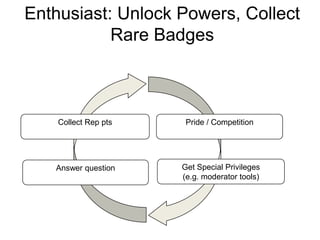
Enthusiast: Unlock Powers, Collect Rare Badges Pride / CompetitionCollect Rep ptsGet Special Privileges(e.g. moderator tools)Answer question
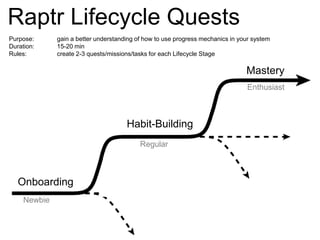
Raptr Lifecycle QuestsPurpose:		gain a better understanding of how to use progress mechanics in your systemDuration:		15-20 minRules:		create 2-3 quests/missions/tasks for each Lifecycle StageMasteryEnthusiastHabit-BuildingRegularOnboardingNewbie
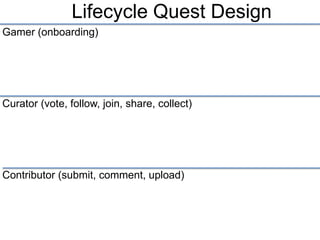
Lifecycle Quest DesignGamer (onboarding) Curator (vote, follow, join, share, collect)Contributor (submit, comment, upload)
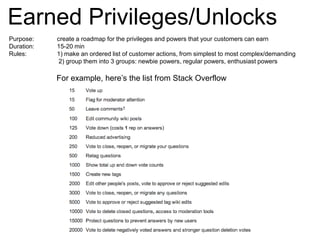
Earned Privileges/UnlocksPurpose:		create a roadmap for the privileges and powers that your customers can earnDuration:		15-20 minRules:		1) make an ordered list of customer actions, from simplest to most complex/demanding			 2) group them into 3 groups: newbie powers, regular powers, enthusiast powersFor example, here’s the list from Stack Overflow
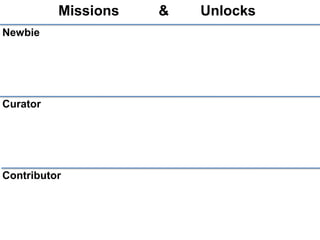
              Missions          &        Unlocks NewbieCuratorContributor
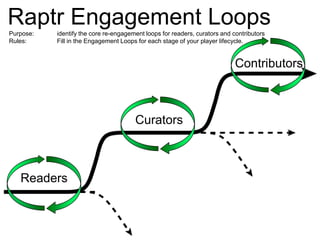
Raptr Engagement LoopsPurpose:		identify the core re-engagement loops for readers, curators and contributors Rules:		Fill in the Engagement Loops for each stage of your player lifecycle. ContributorsCuratorsReaders
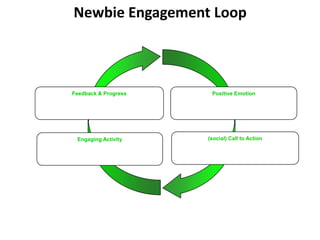
Newbie Engagement LoopPositive EmotionFeedback & Progress (social) Call to ActionEngaging Activity
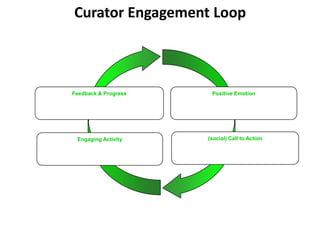
Curator Engagement LoopPositive EmotionFeedback & Progress (social) Call to ActionEngaging Activity
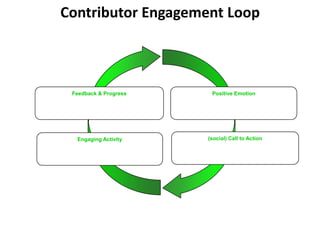
Contributor Engagement LoopPositive EmotionFeedback & Progress (social) Call to ActionEngaging Activity
RECAPEngagement Design Framework
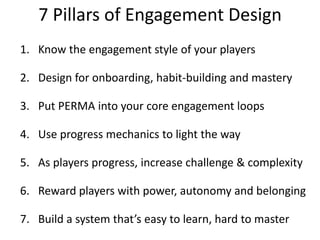
7 Pillars of Engagement Design Know the engagement style of your playersDesign for onboarding, habit-building and masteryPut PERMA into your core engagement loopsUse progress mechanics to light the wayAs players progress, increase challenge & complexityReward players with power, autonomy and belongingBuild a system that’s easy to learn, hard to master
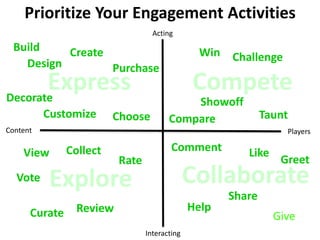
Prioritize Your Engagement ActivitiesActingBuildWinCreateChallengeDesignPurchaseExpressCompeteDecorateShowoffCustomizeTauntChooseCompareContent PlayersCommentCollectLikeViewGreetRateCollaborateExploreVoteShareHelpReviewCurateGiveInteracting
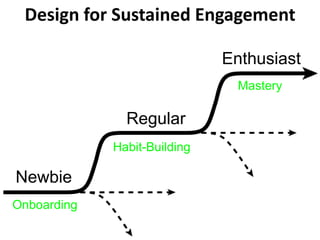
Design for Sustained EngagementEnthusiastMasteryRegularHabit-BuildingNewbieOnboarding
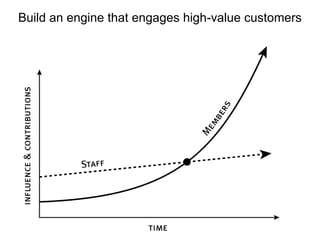
Build an engine that engages high-value customers
Create Lifecycle Engagement LoopsPositive EmotionsFun / Delight / Trust / Pride / CuriousFeedback & Progress Stats / Challenges / Awards / Messages(social) Call to ActionCustomize / Share / Help / Compete Engagement ActivityTask / Mission / Game / Quiz  / GiftCustomer Acquisition  OnboardingCustomer Engagement  Habit-BuildingCustomer Empowerment  Mastery
@amyjokim  on Twitteramyjokim@gmail.comhttp://about.me/amyjokimhttp://shufflebrain.com
ADDITIONAL RESOURCESIntroductory LevelAppendix 1: Design for CustomizationDrive ~ Daniel PinkGamification: Too much of a Good Thing? ~ Richard BartleThe Science of Gamification ~ Michael WuFun Inc ~ Tom ChatfieldMeaningful Play ~ Sebastian DetardingArt of Game Design ~ Jesse SchellDesigning Effective Achievements (parts 1,2,3) ~
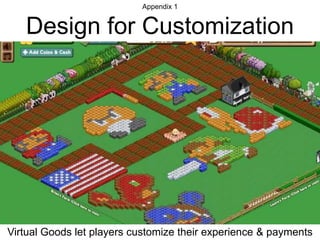
Appendix 1Design for CustomizationVirtual Goods let players customize their experience & payments
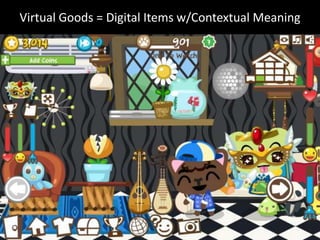
Virtual Goods = Digital Items w/Contextual Meaning
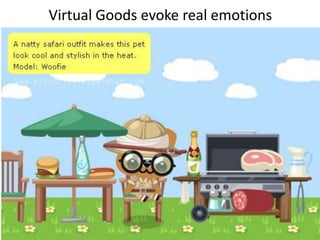
Virtual Goods evoke real emotions
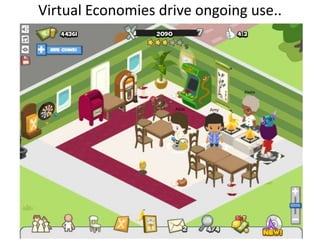
Virtual Economies drive ongoing use..
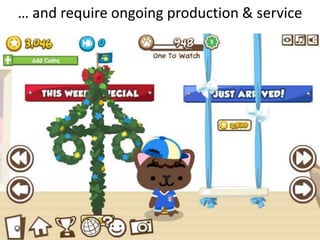
… and require ongoing production & service
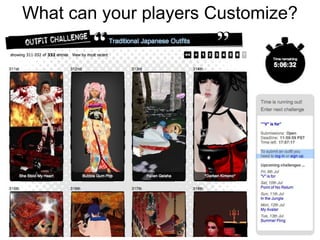
What can your players Customize?
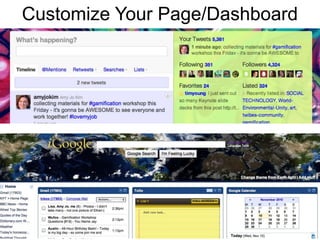
Customize Your Page/Dashboard
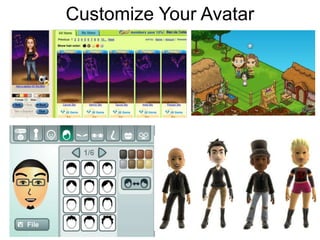
Customize Your Avatar
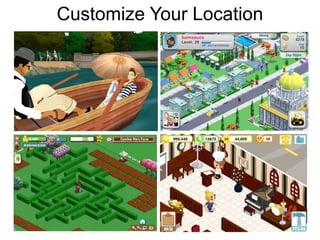
Customize Your Location
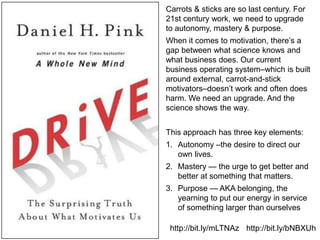
Carrots & sticks are so last century. For 21st century work, we need to upgrade to autonomy, mastery & purpose.When it comes to motivation, there’s a gap between what science knows and what business does. Our current business operating system–which is built around external, carrot-and-stick motivators–doesn’t work and often does harm. We need an upgrade. And the science shows the way. This approach has three key elements:Autonomy –the desire to direct our own lives. Mastery — the urge to get better and better at something that matters.Purpose — AKA belonging, the yearning to put our energy in service of something larger than ourselveshttp://bit.ly/mLTNAzhttp://bit.ly/bNBXUh
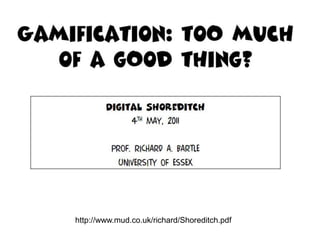
http://www.mud.co.uk/richard/Shoreditch.pdf
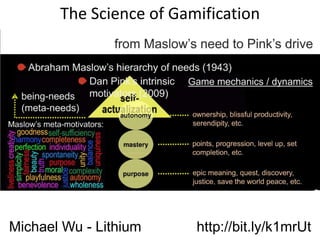
The Science of GamificationMichael Wu - Lithium              http://bit.ly/k1mrUt
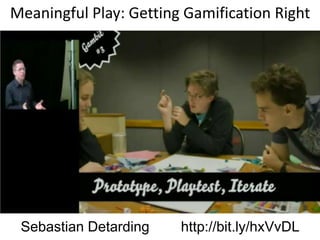
Meaningful Play: Getting Gamification RightSebastian Detarding        http://bit.ly/hxVvDL
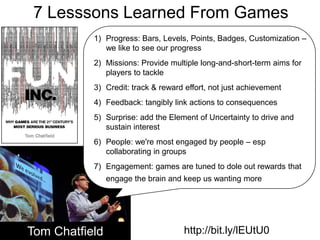
7 Lesssons Learned From GamesProgress: Bars, Levels, Points, Badges, Customization – we like to see our progressMissions: Provide multiple long-and-short-term aims for players to tackleCredit: track & reward effort, not just achievement Feedback: tangibly link actions to consequencesSurprise: add the Element of Uncertainty to drive and sustain interestPeople: we're most engaged by people – esp collaborating in groupsEngagement: games are tuned to dole out rewards that engage the brain and keep us wanting moreTom Chatfieldhttp://bit.ly/lEUtU0
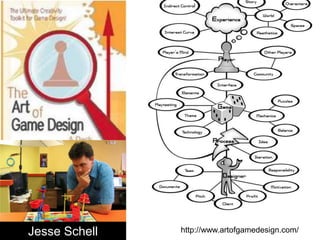
Jesse SchellJesse Schellhttp://www.artofgamedesign.com/

Raptr engagement-engine

  • 1.
    Engagement Design Part2Progress Mechanics & Engagement Loops
  • 2.
    Today we’ll bebuilding engagement loopsTo define visible progress, need to know the destinationEmotion instigates actionPositive EmotionFun / Delight / Trust / Pride / CuriousFeedback & Progress Stats / Challenges / Awards / Messages(social) Call to ActionCustomize / Share / Help / Compete Engaging ActivityTask / Mission / Game / Quiz / Gift
  • 3.
    … at eachLifecycle StageEnthusiastRegularNewbie
  • 4.
    But first: howdo we track & define progress?EnthusiastRegularNewbie
  • 5.
    Points Systems (KeepingScore)Anytime you make numbers visible, you’ve enabled a game
  • 6.
    Points Systems (KeepingScore)1. Skill Points (AKA Score, Rank)earned via interacting with the system – reflects mastery of the activity or gamePersonalSkill: skill rating/ranking of an individualGroup Skill: skill rating/ranking of a group
  • 7.
    Personal Skill Points(Brain Buddies)Redeemable Points
  • 8.
    Points Systems (KeepingScore)1. Skill Points (Score, Rank)earned via interacting with the system – reflects mastery of the activity or gamePersonalSkill: skill rating/ranking of an individualGroup Skill: skill rating/ranking of a group2. Experience Points (XP) uni-directional metric – only goes UP (reflects persistence + skill)earned directly via customers’ actions - used to track & reward certain activitiesPersonal XP: reflects a customer’s actions & accomplishmentsGroup XP: reflects the actions & accomplishments of a group
  • 9.
    Personal XP (Worldof Warcraft)
  • 10.
    Group XP (Nike+)it feels good to be part of something larger than yourself
  • 11.
    Points Systems (KeepingScore)1. Skill Points (Score, Rank)earned via interacting with the system – reflects mastery of the activity or gamePersonalSkill: skill rating/ranking of an individualGroup Skill: skill rating/ranking of a group2. Experience Points (XP) uni-directional metric – only goes UP (reflects persistence + skill)earned directly via customers’ actions - used to track & reward certain activitiesPersonal XP: reflects a customer’s actions & accomplishmentsGroup XP: reflects the actions & accomplishments of a group3. Currency (credits, coins, chips, tokens, bucks)bi-directional metric – goes up and downearned or bought within the system – can be redeemed within the system for goods or servicesEarned Currency: earned via customer actions – used to track & reward certain activitiesPurchased Currency: purchased with $$ to acquire exclusive goods and services
  • 12.
    Earned + PurchasedCurrency (Cityville)XPEarned $$Purchased $$
  • 13.
    Points Systems (KeepingScore)1. Skill Points (Score, Rank)earned via interacting with the system – reflects mastery of the activity or gamePersonalSkill: skill rating/ranking of an individualGroup Skill: skill rating/ranking of a group2. Experience Points (XP) uni-directional metric – only goes UP (reflects persistence + skill)earned directly via customers’ actions - used to track & reward certain activitiesPersonal XP: reflects a customer’s actions & accomplishmentsGroup XP: reflects the actions & accomplishments of a group3. Currency (credits, coins, chips, tokens, bucks)bi-directional metric – goes up and downearned or bought within the system – can be redeemed within the system for goods or servicesEarned Currency: earned via customer actions – used to track & reward certain activitiesPurchased Currency: purchased with $$ to acquire exclusive goods and services4. Social Points (AKA Reputation, Ratings, Likes)earned via the actions of OTHER players – can be a proxy for quality/reputation/influence lets you track & reward socially valuable contributions & actions
  • 14.
    Social Points forUsefulness (Amazon)Social Points (Amazon reviews)
  • 15.
    Social Points forinterestingness (Flickr)Social Points (Flickr “interestingness”)
  • 16.
    Social Points forsentiment (Reddit)Social Points (Flickr “interestingness”)
  • 17.
    Social Points forReputation (Stack Overflow)Social Points (Flickr “interestingness”)
  • 18.
    Social Points forInfluence (Klout)
  • 19.
    PRO TIP: designyour system to highlight changes – “gotta check my score”
  • 20.
    Social Competition: 1:1friend battlesHow do you compare to your friend/rival/bropony?
  • 21.
  • 22.
    Feedback, Rewards &Unlocksgive context & meaning to your system
  • 23.
    Levels give youPacing, Status, Unlocks
  • 24.
    Good Pacing leadsto FlowThe better you get, the harder you need to work to earn rewards
  • 25.
    Global Leaderboards showcaseyour most skilled and devoted playersPRO TIP: offer velvet-rope leaderboards for devoted players
  • 26.
  • 27.
    Missions Guide &Motivate the Player
  • 28.
    Achievements provide implicitgoals, mark progress, trigger collecting
  • 29.
  • 30.
    Who’s Playing? Whyare they playing?
  • 31.
  • 32.
    What’s the coreactivity & feedback system?
  • 33.
    What can playerslearn and master?
  • 34.
    How is progressmade visible?
  • 35.
    How is progressmade visible?
  • 36.
    How is progressmade visible?VS
  • 37.
    How do newbieslearn the ropes?
  • 38.
  • 39.
  • 40.
    What’s the Voice?How does Stack set the tone?
  • 41.
    How does progresslead to increased powers?
  • 42.
    Newbie: Read, UpVote,AnswerPride, curiosityEarn Pts, gain privilegesCheck out Q&A, featuresVote an answer up
  • 43.
    Regular: Build Rep,Collect BadgesPride / Surprise / DelightEarn BadgePost a comment/messageTake Actions
  • 44.
    Enthusiast: Unlock Powers,Collect Rare Badges Pride / CompetitionCollect Rep ptsGet Special Privileges(e.g. moderator tools)Answer question
  • 45.
    Raptr Lifecycle QuestsPurpose: gaina better understanding of how to use progress mechanics in your systemDuration: 15-20 minRules: create 2-3 quests/missions/tasks for each Lifecycle StageMasteryEnthusiastHabit-BuildingRegularOnboardingNewbie
  • 46.
    Lifecycle Quest DesignGamer(onboarding) Curator (vote, follow, join, share, collect)Contributor (submit, comment, upload)
  • 47.
    Earned Privileges/UnlocksPurpose: create aroadmap for the privileges and powers that your customers can earnDuration: 15-20 minRules: 1) make an ordered list of customer actions, from simplest to most complex/demanding 2) group them into 3 groups: newbie powers, regular powers, enthusiast powersFor example, here’s the list from Stack Overflow
  • 48.
    Missions & Unlocks NewbieCuratorContributor
  • 49.
    Raptr Engagement LoopsPurpose: identifythe core re-engagement loops for readers, curators and contributors Rules: Fill in the Engagement Loops for each stage of your player lifecycle. ContributorsCuratorsReaders
  • 50.
    Newbie Engagement LoopPositiveEmotionFeedback & Progress (social) Call to ActionEngaging Activity
  • 51.
    Curator Engagement LoopPositiveEmotionFeedback & Progress (social) Call to ActionEngaging Activity
  • 52.
    Contributor Engagement LoopPositiveEmotionFeedback & Progress (social) Call to ActionEngaging Activity
  • 53.
  • 54.
    7 Pillars ofEngagement Design Know the engagement style of your playersDesign for onboarding, habit-building and masteryPut PERMA into your core engagement loopsUse progress mechanics to light the wayAs players progress, increase challenge & complexityReward players with power, autonomy and belongingBuild a system that’s easy to learn, hard to master
  • 55.
    Prioritize Your EngagementActivitiesActingBuildWinCreateChallengeDesignPurchaseExpressCompeteDecorateShowoffCustomizeTauntChooseCompareContent PlayersCommentCollectLikeViewGreetRateCollaborateExploreVoteShareHelpReviewCurateGiveInteracting
  • 56.
    Design for SustainedEngagementEnthusiastMasteryRegularHabit-BuildingNewbieOnboarding
  • 57.
    Build an enginethat engages high-value customers
  • 58.
    Create Lifecycle EngagementLoopsPositive EmotionsFun / Delight / Trust / Pride / CuriousFeedback & Progress Stats / Challenges / Awards / Messages(social) Call to ActionCustomize / Share / Help / Compete Engagement ActivityTask / Mission / Game / Quiz / GiftCustomer Acquisition  OnboardingCustomer Engagement  Habit-BuildingCustomer Empowerment  Mastery
  • 59.
    @amyjokim onTwitteramyjokim@gmail.comhttp://about.me/amyjokimhttp://shufflebrain.com
  • 60.
    ADDITIONAL RESOURCESIntroductory LevelAppendix1: Design for CustomizationDrive ~ Daniel PinkGamification: Too much of a Good Thing? ~ Richard BartleThe Science of Gamification ~ Michael WuFun Inc ~ Tom ChatfieldMeaningful Play ~ Sebastian DetardingArt of Game Design ~ Jesse SchellDesigning Effective Achievements (parts 1,2,3) ~
  • 61.
    Appendix 1Design forCustomizationVirtual Goods let players customize their experience & payments
  • 62.
    Virtual Goods =Digital Items w/Contextual Meaning
  • 63.
    Virtual Goods evokereal emotions
  • 64.
  • 65.
    … and requireongoing production & service
  • 66.
    What can yourplayers Customize?
  • 67.
  • 68.
  • 69.
  • 70.
    Carrots & sticksare so last century. For 21st century work, we need to upgrade to autonomy, mastery & purpose.When it comes to motivation, there’s a gap between what science knows and what business does. Our current business operating system–which is built around external, carrot-and-stick motivators–doesn’t work and often does harm. We need an upgrade. And the science shows the way. This approach has three key elements:Autonomy –the desire to direct our own lives. Mastery — the urge to get better and better at something that matters.Purpose — AKA belonging, the yearning to put our energy in service of something larger than ourselveshttp://bit.ly/mLTNAzhttp://bit.ly/bNBXUh
  • 71.
  • 72.
    The Science ofGamificationMichael Wu - Lithium http://bit.ly/k1mrUt
  • 73.
    Meaningful Play: GettingGamification RightSebastian Detarding http://bit.ly/hxVvDL
  • 74.
    7 Lesssons LearnedFrom GamesProgress: Bars, Levels, Points, Badges, Customization – we like to see our progressMissions: Provide multiple long-and-short-term aims for players to tackleCredit: track & reward effort, not just achievement Feedback: tangibly link actions to consequencesSurprise: add the Element of Uncertainty to drive and sustain interestPeople: we're most engaged by people – esp collaborating in groupsEngagement: games are tuned to dole out rewards that engage the brain and keep us wanting moreTom Chatfieldhttp://bit.ly/lEUtU0
  • 75.