MOUNT TABOR TRAINING COLLEGE PATHANAPURAM
ONLINEASSIGNMENT
TOPIC
STRUCTURE OF PLANT CELL
Submitted to
Dr.Asha K Thomas mam
MTTC Pathanapuram
Submitted on : 05 – 10 - 2023
Submitted by
Athulya Krishna L
1st Semester
Natural science
MTTC Pathanapuram
INTRODUCTION
Plants cells are the fundamental units of life in the green
kingdom.
They are eukaryotic cells, which means they have a true
nucleus and other specialized organelles, allowing for complex
functions and interactions.
This go through the structure, function, and significance of
plant cells.
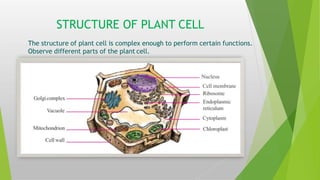
STRUCTURE OF PLANT CELL
The structure of plant cell is complex enough to perform certain functions.
Observe different parts of the plant cell.
Parts of plant cell
 Cell wall
 Cell membrane
 Cytoplasm
 Nucleus
 Mitochondrion
 Endoplasmic reticulum
 Ribosome
 Golgi complex
 Chloroplast
 Vacuole
Cell Wall
Outer layer of the plant cell
Cell wall is made up of cellulose
It provides protection to the cell
Cell Membrane
Also known as plasma membrane
A thin semi permeable membrane
Regulate the movement of substance in and out of the cell
Nucleus
Control center of the cell
It contains cell’s genetic material,
DNA
Outer layer is the nuclear membrane
Small pores seen on the nuclear
membrane is called nuclear pores
Also contains nucleolus and chromatin
reticulum
Nucleolus, which is responsible for
the production of ribosome
Chromatin reticulum consist of genes
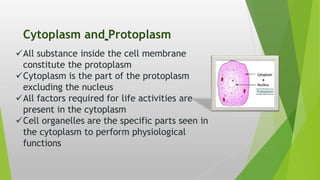
Cytoplasm and Protoplasm
All substance inside the cell membrane
constitute the protoplasm
Cytoplasm is the part of the protoplasm
excluding the nucleus
All factors required for life activities are
present in the cytoplasm
Cell organelles are the specific parts seen in
the cytoplasm to perform physiological
functions
Mitochondria
Power house of the cell.
Helps in the production and
storage of energy
Energy is in the form of ATP
Abundantly seen in the cells of
liver, brain, and muscles where
energy requirement is high
Also known as the chemical
factory of the cell
Endoplasmic reticulum
The passage of the cell
Conduction of the materials inside the cell takes place
through this organelle
Also known as the cytoskeleton ,as it provides strength and
shape to the cell
Endoplasmic reticulum is in two types
1. Rough endoplasmic reticulum
[in which ribosome is attached]
2. Smooth endoplasmic reticulum
[in which ribosome is not attached]
Ribosome
Centre of protein synthesis
Seen either attached to the
endoplasmic reticulum or free in the
cytoplasm
Golgi complex
Known as ‘Traffic police’ of the
cell
Collects cell secretions like
enzymes, hormones, mucous etc.,
in the vesicles
Seen plenty in granular cells
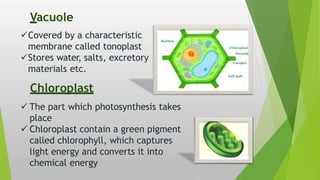
Covered by a characteristic
membrane called tonoplast
Stores water, salts, excretory
materials etc.
Chloroplast
 The part which photosynthesis takes
place
 Chloroplast contain a green pigment
called chlorophyll, which captures
light energy and converts it into
chemical energy
Vacuole
CONCLUSION
In closure, the cells are very important in plant growth and
their sustainability.
The structure of the plant cell is complex and is well built with
different cell organelles.
Each cell organelles have well defined form and peculiar
functions.
The chloroplast is a vital organelle found in plant cell, which is
responsible for photosynthesis.
Overall, chloroplast are essential for the survival of plants and
other photosynthetic organisms as they provide the energy
needed for growth and development.
Study of plant cell is not just an academic pursuit but a
necessity for sustainable development and survival.

ASSIGNMENT - Cell biology

  • 1.
    MOUNT TABOR TRAININGCOLLEGE PATHANAPURAM ONLINEASSIGNMENT TOPIC STRUCTURE OF PLANT CELL Submitted to Dr.Asha K Thomas mam MTTC Pathanapuram Submitted on : 05 – 10 - 2023 Submitted by Athulya Krishna L 1st Semester Natural science MTTC Pathanapuram
  • 2.
    INTRODUCTION Plants cells arethe fundamental units of life in the green kingdom. They are eukaryotic cells, which means they have a true nucleus and other specialized organelles, allowing for complex functions and interactions. This go through the structure, function, and significance of plant cells.
  • 3.
    STRUCTURE OF PLANTCELL The structure of plant cell is complex enough to perform certain functions. Observe different parts of the plant cell.
  • 4.
    Parts of plantcell  Cell wall  Cell membrane  Cytoplasm  Nucleus  Mitochondrion  Endoplasmic reticulum  Ribosome  Golgi complex  Chloroplast  Vacuole
  • 5.
    Cell Wall Outer layerof the plant cell Cell wall is made up of cellulose It provides protection to the cell Cell Membrane Also known as plasma membrane A thin semi permeable membrane Regulate the movement of substance in and out of the cell
  • 6.
    Nucleus Control center ofthe cell It contains cell’s genetic material, DNA Outer layer is the nuclear membrane Small pores seen on the nuclear membrane is called nuclear pores Also contains nucleolus and chromatin reticulum Nucleolus, which is responsible for the production of ribosome Chromatin reticulum consist of genes
  • 7.
    Cytoplasm and Protoplasm Allsubstance inside the cell membrane constitute the protoplasm Cytoplasm is the part of the protoplasm excluding the nucleus All factors required for life activities are present in the cytoplasm Cell organelles are the specific parts seen in the cytoplasm to perform physiological functions
  • 8.
    Mitochondria Power house ofthe cell. Helps in the production and storage of energy Energy is in the form of ATP Abundantly seen in the cells of liver, brain, and muscles where energy requirement is high Also known as the chemical factory of the cell
  • 9.
    Endoplasmic reticulum The passageof the cell Conduction of the materials inside the cell takes place through this organelle Also known as the cytoskeleton ,as it provides strength and shape to the cell Endoplasmic reticulum is in two types 1. Rough endoplasmic reticulum [in which ribosome is attached] 2. Smooth endoplasmic reticulum [in which ribosome is not attached]
  • 10.
    Ribosome Centre of proteinsynthesis Seen either attached to the endoplasmic reticulum or free in the cytoplasm Golgi complex Known as ‘Traffic police’ of the cell Collects cell secretions like enzymes, hormones, mucous etc., in the vesicles Seen plenty in granular cells
  • 11.
    Covered by acharacteristic membrane called tonoplast Stores water, salts, excretory materials etc. Chloroplast  The part which photosynthesis takes place  Chloroplast contain a green pigment called chlorophyll, which captures light energy and converts it into chemical energy Vacuole
  • 12.
    CONCLUSION In closure, thecells are very important in plant growth and their sustainability. The structure of the plant cell is complex and is well built with different cell organelles. Each cell organelles have well defined form and peculiar functions. The chloroplast is a vital organelle found in plant cell, which is responsible for photosynthesis. Overall, chloroplast are essential for the survival of plants and other photosynthetic organisms as they provide the energy needed for growth and development. Study of plant cell is not just an academic pursuit but a necessity for sustainable development and survival.