DYSPEPSIA
Greek word means “difficult digestion.”
Symptoms located in upper abdomen
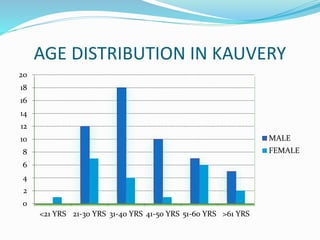
AGE DISTRIBUTION IN KAUVERY
0
2
4
6
8
10
12
14
16
18
20
<21 YRS 21-30 YRS 31-40 YRS 41-50 YRS 51-60 YRS >61 YRS
MALE
FEMALE
0
20
40
60
80
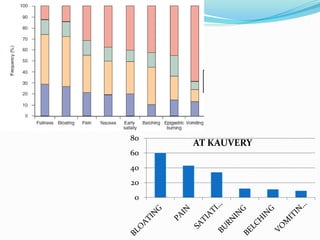
AT KAUVERY
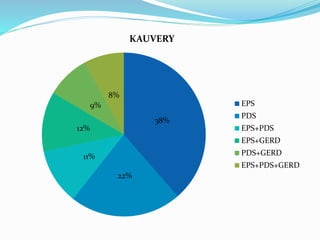
38%
22%
11%
12%
9%
8%
KAUVERY
EPS
PDS
EPS+PDS
EPS+GERD
PDS+GERD
EPS+PDS+GERD
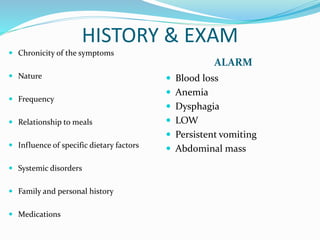
HISTORY & EXAM
ALARM
 Chronicity of the symptoms
 Nature
 Frequency
 Relationship to meals
 Influence of specific dietary factors
 Systemic disorders
 Family and personal history
 Medications
 Blood loss
 Anemia
 Dysphagia
 LOW
 Persistent vomiting
 Abdominal mass
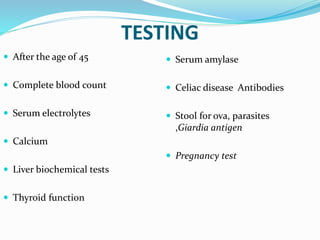
TESTING
 After the age of 45
 Complete blood count
 Serum electrolytes
 Calcium
 Liver biochemical tests
 Thyroid function
 Serum amylase
 Celiac disease Antibodies
 Stool for ova, parasites
,Giardia antigen
 Pregnancy test
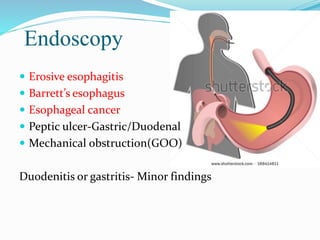
Endoscopy
 Erosive esophagitis
 Barrett’s esophagus
 Esophageal cancer
 Peptic ulcer-Gastric/Duodenal
 Mechanical obstruction(GOO)
Duodenitis or gastritis- Minor findings
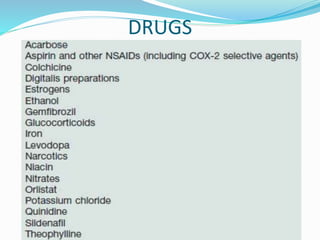
DRUGS
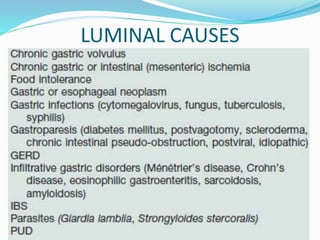
LUMINAL CAUSES
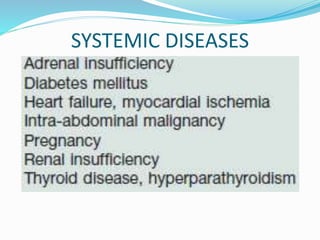
SYSTEMIC DISEASES
 No evidence of structural disease on endoscopy or
imaging or basic evaluation.
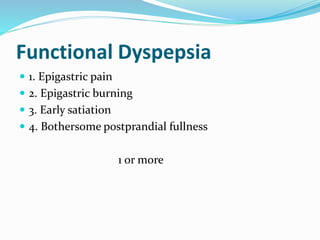
Functional Dyspepsia
 1. Epigastric pain
 2. Epigastric burning
 3. Early satiation
 4. Bothersome postprandial fullness
1 or more
Epigastric Pain Syndrome
 1. Pain or burning - epigastrium -moderate severity, 1/week
 2. Intermittent
 3. Not generalized or localized to other abdominal or chest
regions
 4. Not relieved by defecation or passage of flatus
 5. Not fulfilling criteria for gallbladder or sphincter of Oddi
disorders
all the above.
 Supportive Criteria
1. Pain may be of a burning quality but without a retrosternal
component
2. Pain is commonly induced or relieved by ingestion of a
meal but may occur while fasting
3. Postprandial distress syndrome may coexist
Postprandial Distress Syndrome
 1. Bothersome postprandial fullness, after ordinary sized
meals, at least several times/week
 2. Early satiation that prevents finishing regular meal, at least
several times/week
Supportive Criteria:
1. Upper abdominal bloating or nausea or belching
2. Epigastric pain syndrome may coexist
PATHOPHYSIOLOGY
 Hypersensitivity to gastric distention
 Delayed gastric emptying
 Impaired gastric accommodation to a meal
 Altered duodenal sensitivity to lipids or acid
 Abnormal intestinal motility
 Central nervous system dysfunction
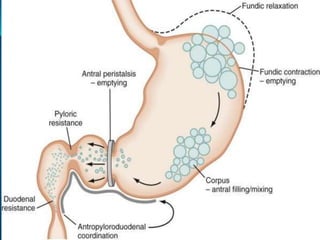
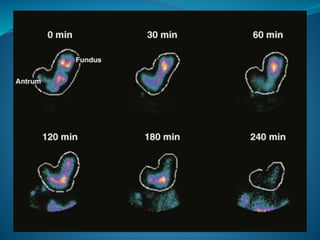
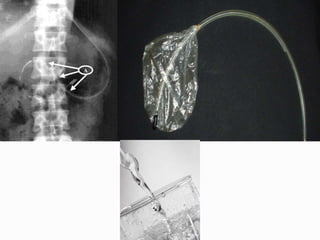
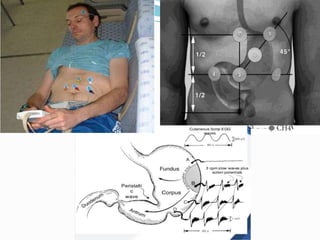
GASTRIC EMPTYING
 Distal stomach-grinding and sieving until particles are small
enough to pass through pylorus
 Delayed gastric emptying ranges from 20% to 50%
 Solid gastric emptying- 30-40%
 Postprandial fullness, nausea and vomiting
IMPAIRED GASTRIC ACCOMMODATION
 Impaired in 40%
 Proximal stomach-reservoir during and after ingestion
of a meal.
 Relaxation- vagally mediated
 Rise in intragastric pressure
 Meal-induced satiation
 Activation of tension-sensitive mechanoreceptors
Hypersensitivity to Gastric Distension
 To isobaric gastric distention
 Tension-sensitive mechanoreceptors
 Altered visceral afferent nerves and the central
nervous system
Altered Duodenal Sensitivity to Lipids or Acid
 Gastric distention- cholecystokinin
 Duodenal hypersensitivity to acid
 Increased postprandial duodenal acid exposure-
impaired clearancE of acid
OTHERS
 Rapid gastric emptying
 Phasic fundic contractions
 Lack of suppression of phasic contractility of the proximal
stomach
 Duodenal retrograde contractions
 Genetic predisposition-G-protein beta polypeptide 3
 Hp Infection
 Postinfection Functional Dyspepsia-acute Salmonella
gastroenteritis
 Anxiety, depressive,somatoform disorders, physical or sexual
abuse
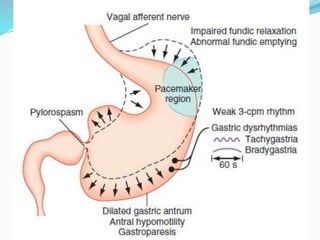
DIABETIC GASTROPARESIS
 Loss of ICCs
 Reduced receptive relaxation and accommodation
 Antral hypomotility.
 Isolated pyloric contractions-Pylorospasm.
 Gastric dysrhythmias-abnormal intragastric distribution of
food.
 Antral dilation
 Impaired action of prokinetic drugs.
 Modifies upper GI sensations
 Gastric smooth muscle dysfunction
General measures
 Lifestyle and dietary measures
 Eat smaller, more frequent meals
 Avoiding meals with a high fat
 Avoid spicy foods- capsaicin
 Avoid- coffee
 Cessation of smoking and consumption of alcohol
 Avoidance of aspirin and other NSAIDs
 Treat- coexisting anxiety disorder or depression
APPROACHES
 (1) Prompt diagnostic endoscopy followed by targeted
medical therapy
 (2) Noninvasive testing for Hp infection, followed by
treatment based on the result (“test-and-treat”
strategy)
 (3) Empirical anti-secretory drug therapy
Not Recommended= empirical therapy with a
prokinetic agent
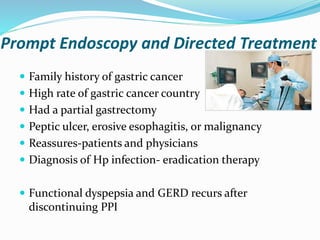
Prompt Endoscopy and Directed Treatment
 Family history of gastric cancer
 High rate of gastric cancer country
 Had a partial gastrectomy
 Peptic ulcer, erosive esophagitis, or malignancy
 Reassures-patients and physicians
 Diagnosis of Hp infection- eradication therapy
 Functional dyspepsia and GERD recurs after
discontinuing PPI
Test and Treat for Hp Infection
 Hp- associated with peptic ulcers & gastric cancer
 Young patients- noninvasive testing
 Eliminates chronic gastritis
 The test and- treat strategy= Hp infection rate is high
Empirical Antisecretory Drug Therapy
 Beneficial in 1/3rd of functional dyspepsia
 Response usually within 2 weeks of therapy
 Economically- equally or more cost-effective than test
& treat strategy
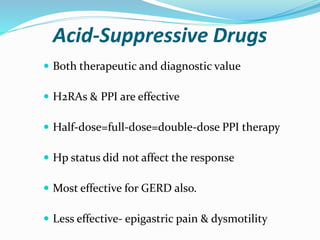
Acid-Suppressive Drugs
 Both therapeutic and diagnostic value
 H2RAs & PPI are effective
 Half-dose=full-dose=double-dose PPI therapy
 Hp status did not affect the response
 Most effective for GERD also.
 Less effective- epigastric pain & dysmotility
Eradication of Hp Infection
 Induce sustained remission of dyspepsia
 Low number of responder
 Delayed symptomatic benefit
 Protects against- peptic ulcer, gastric cancer
 Short duration and low cost of treatment.
Prokinetic Agents
 Dopamine receptor agonists-upper GI motility
 5-hydroxytryptamine 4 (5-HT4) receptor agonism
 Motilin receptor agonist ABT-229
 Mixed 5-HT4 receptor agonist and 5-HT3 receptor
antagonist mosapride
 5-HT4 receptor agonist tegaserod
 Dopamine D2 antagonist/acetylcholinesterase inhibitor
itopride
Antidepressants
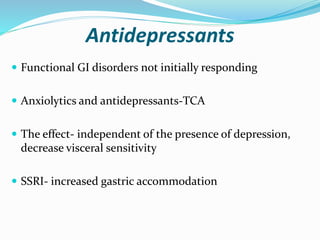
 Functional GI disorders not initially responding
 Anxiolytics and antidepressants-TCA
 The effect- independent of the presence of depression,
decrease visceral sensitivity
 SSRI- increased gastric accommodation
OTHERS
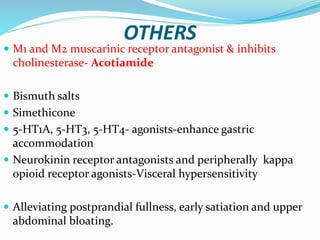
 M1 and M2 muscarinic receptor antagonist & inhibits
cholinesterase- Acotiamide
 Bismuth salts
 Simethicone
 5-HT1A, 5-HT3, 5-HT4- agonists-enhance gastric
accommodation
 Neurokinin receptor antagonists and peripherally kappa
opioid receptor agonists-Visceral hypersensitivity
 Alleviating postprandial fullness, early satiation and upper
abdominal bloating.
Psychological Interventions
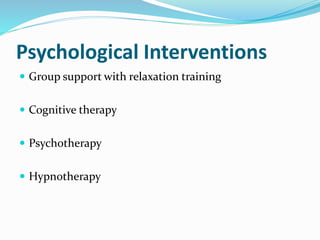
 Group support with relaxation training
 Cognitive therapy
 Psychotherapy
 Hypnotherapy
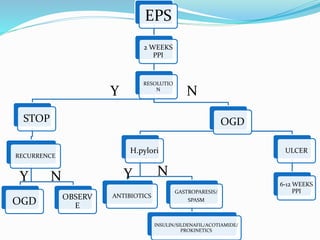
EPS
2 WEEKS
PPI
RESOLUTIO
N
STOP
RECURRENCE
OGD OBSERV
E
OGD
H.pylori
ANTIBIOTICS
GASTROPARESIS/
SPASM
INSULIN/SILDENAFIL/ACOTIAMIDE/
PROKINETICS
ULCER
6-12 WEEKS
PPI
Y N
Y N Y N
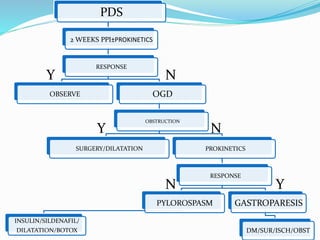
PDS
2 WEEKS PPI±PROKINETICS
RESPONSE
OBSERVE OGD
OBSTRUCTION
SURGERY/DILATATION PROKINETICS
RESPONSE
PYLOROSPASM
INSULIN/SILDENAFIL/
DILATATION/BOTOX
GASTROPARESIS
DM/SUR/ISCH/OBST
Y N
Y N
YN

Functional dyspepsia-Approach

  • 2.
    DYSPEPSIA Greek word means“difficult digestion.” Symptoms located in upper abdomen
  • 7.
    AGE DISTRIBUTION INKAUVERY 0 2 4 6 8 10 12 14 16 18 20 <21 YRS 21-30 YRS 31-40 YRS 41-50 YRS 51-60 YRS >61 YRS MALE FEMALE
  • 8.
  • 9.
  • 10.
    HISTORY & EXAM ALARM Chronicity of the symptoms  Nature  Frequency  Relationship to meals  Influence of specific dietary factors  Systemic disorders  Family and personal history  Medications  Blood loss  Anemia  Dysphagia  LOW  Persistent vomiting  Abdominal mass
  • 11.
    TESTING  After theage of 45  Complete blood count  Serum electrolytes  Calcium  Liver biochemical tests  Thyroid function  Serum amylase  Celiac disease Antibodies  Stool for ova, parasites ,Giardia antigen  Pregnancy test
  • 12.
    Endoscopy  Erosive esophagitis Barrett’s esophagus  Esophageal cancer  Peptic ulcer-Gastric/Duodenal  Mechanical obstruction(GOO) Duodenitis or gastritis- Minor findings
  • 13.
  • 14.
  • 15.
  • 16.
     No evidenceof structural disease on endoscopy or imaging or basic evaluation.
  • 17.
    Functional Dyspepsia  1.Epigastric pain  2. Epigastric burning  3. Early satiation  4. Bothersome postprandial fullness 1 or more
  • 18.
    Epigastric Pain Syndrome 1. Pain or burning - epigastrium -moderate severity, 1/week  2. Intermittent  3. Not generalized or localized to other abdominal or chest regions  4. Not relieved by defecation or passage of flatus  5. Not fulfilling criteria for gallbladder or sphincter of Oddi disorders all the above.  Supportive Criteria 1. Pain may be of a burning quality but without a retrosternal component 2. Pain is commonly induced or relieved by ingestion of a meal but may occur while fasting 3. Postprandial distress syndrome may coexist
  • 19.
    Postprandial Distress Syndrome 1. Bothersome postprandial fullness, after ordinary sized meals, at least several times/week  2. Early satiation that prevents finishing regular meal, at least several times/week Supportive Criteria: 1. Upper abdominal bloating or nausea or belching 2. Epigastric pain syndrome may coexist
  • 21.
    PATHOPHYSIOLOGY  Hypersensitivity togastric distention  Delayed gastric emptying  Impaired gastric accommodation to a meal  Altered duodenal sensitivity to lipids or acid  Abnormal intestinal motility  Central nervous system dysfunction
  • 23.
    GASTRIC EMPTYING  Distalstomach-grinding and sieving until particles are small enough to pass through pylorus  Delayed gastric emptying ranges from 20% to 50%  Solid gastric emptying- 30-40%  Postprandial fullness, nausea and vomiting
  • 26.
    IMPAIRED GASTRIC ACCOMMODATION Impaired in 40%  Proximal stomach-reservoir during and after ingestion of a meal.  Relaxation- vagally mediated  Rise in intragastric pressure  Meal-induced satiation  Activation of tension-sensitive mechanoreceptors
  • 29.
    Hypersensitivity to GastricDistension  To isobaric gastric distention  Tension-sensitive mechanoreceptors  Altered visceral afferent nerves and the central nervous system
  • 30.
    Altered Duodenal Sensitivityto Lipids or Acid  Gastric distention- cholecystokinin  Duodenal hypersensitivity to acid  Increased postprandial duodenal acid exposure- impaired clearancE of acid
  • 31.
    OTHERS  Rapid gastricemptying  Phasic fundic contractions  Lack of suppression of phasic contractility of the proximal stomach  Duodenal retrograde contractions  Genetic predisposition-G-protein beta polypeptide 3  Hp Infection  Postinfection Functional Dyspepsia-acute Salmonella gastroenteritis  Anxiety, depressive,somatoform disorders, physical or sexual abuse
  • 32.
    DIABETIC GASTROPARESIS  Lossof ICCs  Reduced receptive relaxation and accommodation  Antral hypomotility.  Isolated pyloric contractions-Pylorospasm.  Gastric dysrhythmias-abnormal intragastric distribution of food.  Antral dilation  Impaired action of prokinetic drugs.  Modifies upper GI sensations  Gastric smooth muscle dysfunction
  • 33.
    General measures  Lifestyleand dietary measures  Eat smaller, more frequent meals  Avoiding meals with a high fat  Avoid spicy foods- capsaicin  Avoid- coffee  Cessation of smoking and consumption of alcohol  Avoidance of aspirin and other NSAIDs  Treat- coexisting anxiety disorder or depression
  • 34.
    APPROACHES  (1) Promptdiagnostic endoscopy followed by targeted medical therapy  (2) Noninvasive testing for Hp infection, followed by treatment based on the result (“test-and-treat” strategy)  (3) Empirical anti-secretory drug therapy Not Recommended= empirical therapy with a prokinetic agent
  • 35.
    Prompt Endoscopy andDirected Treatment  Family history of gastric cancer  High rate of gastric cancer country  Had a partial gastrectomy  Peptic ulcer, erosive esophagitis, or malignancy  Reassures-patients and physicians  Diagnosis of Hp infection- eradication therapy  Functional dyspepsia and GERD recurs after discontinuing PPI
  • 36.
    Test and Treatfor Hp Infection  Hp- associated with peptic ulcers & gastric cancer  Young patients- noninvasive testing  Eliminates chronic gastritis  The test and- treat strategy= Hp infection rate is high
  • 37.
    Empirical Antisecretory DrugTherapy  Beneficial in 1/3rd of functional dyspepsia  Response usually within 2 weeks of therapy  Economically- equally or more cost-effective than test & treat strategy
  • 38.
    Acid-Suppressive Drugs  Boththerapeutic and diagnostic value  H2RAs & PPI are effective  Half-dose=full-dose=double-dose PPI therapy  Hp status did not affect the response  Most effective for GERD also.  Less effective- epigastric pain & dysmotility
  • 39.
    Eradication of HpInfection  Induce sustained remission of dyspepsia  Low number of responder  Delayed symptomatic benefit  Protects against- peptic ulcer, gastric cancer  Short duration and low cost of treatment.
  • 40.
    Prokinetic Agents  Dopaminereceptor agonists-upper GI motility  5-hydroxytryptamine 4 (5-HT4) receptor agonism  Motilin receptor agonist ABT-229  Mixed 5-HT4 receptor agonist and 5-HT3 receptor antagonist mosapride  5-HT4 receptor agonist tegaserod  Dopamine D2 antagonist/acetylcholinesterase inhibitor itopride
  • 41.
    Antidepressants  Functional GIdisorders not initially responding  Anxiolytics and antidepressants-TCA  The effect- independent of the presence of depression, decrease visceral sensitivity  SSRI- increased gastric accommodation
  • 42.
    OTHERS  M1 andM2 muscarinic receptor antagonist & inhibits cholinesterase- Acotiamide  Bismuth salts  Simethicone  5-HT1A, 5-HT3, 5-HT4- agonists-enhance gastric accommodation  Neurokinin receptor antagonists and peripherally kappa opioid receptor agonists-Visceral hypersensitivity  Alleviating postprandial fullness, early satiation and upper abdominal bloating.
  • 43.
    Psychological Interventions  Groupsupport with relaxation training  Cognitive therapy  Psychotherapy  Hypnotherapy
  • 44.
  • 45.
    PDS 2 WEEKS PPI±PROKINETICS RESPONSE OBSERVEOGD OBSTRUCTION SURGERY/DILATATION PROKINETICS RESPONSE PYLOROSPASM INSULIN/SILDENAFIL/ DILATATION/BOTOX GASTROPARESIS DM/SUR/ISCH/OBST Y N Y N YN