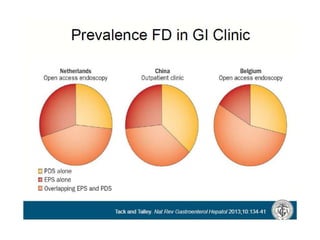
FUNCTIONAL DYSPEPSIA
NWE NI
GASTROENTEROLOGY DEPARTMENT
MGH
MANDALAY
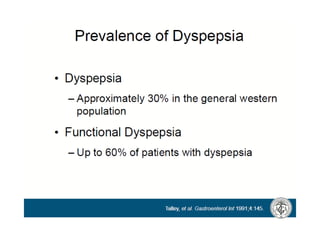
Dyspepsia
• Constellations of chronic UGI symptoms
- Indigestion
- discomfort or pain
- Early satiation / fullness
- Bloating and burping
- Nausea and vomiting
Dyspepsia
• Common complaint
• Up to 30% prevalence
• Normal life expectancy
• Substantial impact on QOL
Underlying Causes
• GERD
• PUD
• Infections
• Lactose intolerance
• Medication related
• Biliary diseases
• Malignancy
• Functional (non-ulcer dyspepsia)
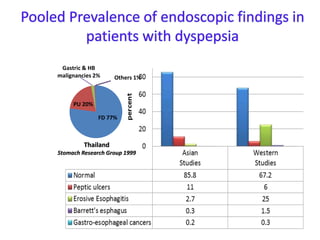
PU 20%
FD 77%
Gastric & HB
malignancies 2%
Thailand
Stomach Research Group 1999
Others 1%
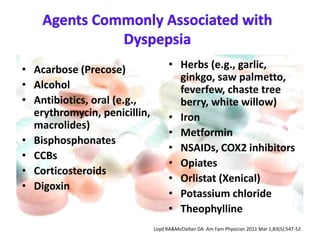
• Acarbose (Precose)
• Alcohol
• Antibiotics, oral (e.g.,
erythromycin, penicillin,
macrolides)
• Bisphosphonates
• CCBs
• Corticosteroids
• Digoxin
• Herbs (e.g., garlic,
ginkgo, saw palmetto,
feverfew, chaste tree
berry, white willow)
• Iron
• Metformin
• NSAIDs, COX2 inhibitors
• Opiates
• Orlistat (Xenical)
• Potassium chloride
• Theophylline
Loyd RA&McClellan DA .Am Fam Physician 2011 Mar 1;83(5):547-52
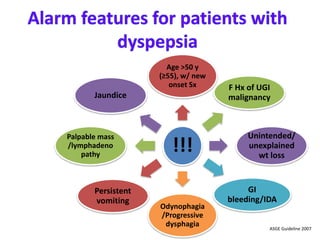
!!!
Age >50 y
(≥55), w/ new
onset Sx F Hx of UGI
malignancy
Unintended/
unexplained
wt loss
GI
bleeding/IDA
Odynophagia
/Progressive
dysphagia
Persistent
vomiting
Palpable mass
/lymphadeno
pathy
Jaundice
ASGE Guideline 2007
• A random sample survey of
704 members of AGA
– “…no known structural
abnormalities, or infectious
or metabolic causes”
– A stress disorder
– Motility disorder
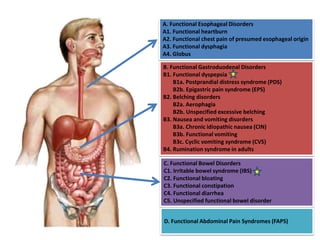
B. Functional Gastroduodenal Disorders
B1. Functional dyspepsia
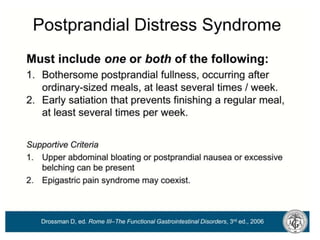
B1a. Postprandial distress syndrome (PDS)
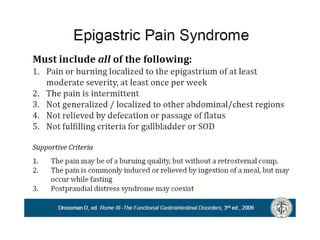
B2b. Epigastric pain syndrome (EPS)
B2. Belching disorders
B2a. Aerophagia
B2b. Unspecified excessive belching
B3. Nausea and vomiting disorders
B3a. Chronic idiopathic nausea (CIN)
B3b. Functional vomiting
B3c. Cyclic vomiting syndrome (CVS)
B4. Rumination syndrome in adults
A. Functional Esophageal Disorders
A1. Functional heartburn
A2. Functional chest pain of presumed esophageal origin
A3. Functional dysphagia
A4. Globus
C. Functional Bowel Disorders
C1. Irritable bowel syndrome (IBS)
C2. Functional bloating
C3. Functional constipation
C4. Functional diarrhea
C5. Unspecified functional bowel disorder
D. Functional Abdominal Pain Syndromes (FAPS)
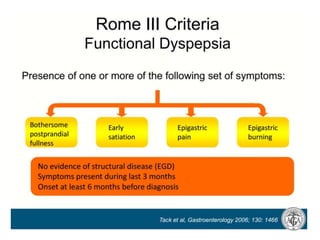
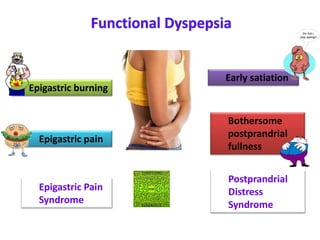
Bothersome
postprandrial
fullness
Early satiation
Epigastric pain
Epigastric burning
Epigastric Pain
Syndrome
Postprandrial
Distress
Syndrome
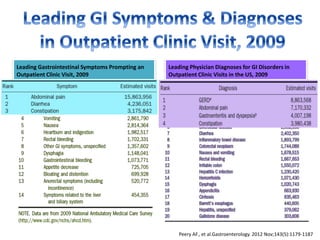
Leading Gastrointestinal Symptoms Prompting an
Outpatient Clinic Visit, 2009
Leading Physician Diagnoses for GI Disorders in
Outpatient Clinic Visits in the US, 2009
Peery AF., et al.Gastroenterology. 2012 Nov;143(5):1179-1187
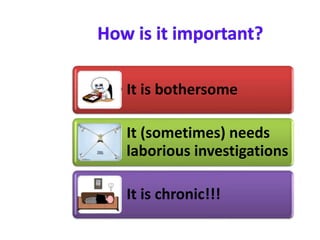
It is bothersome
It (sometimes) needs
laborious investigations
It is chronic!!!
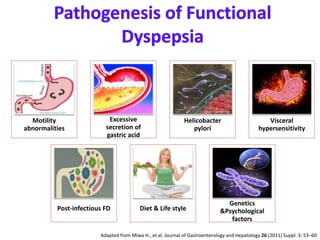
Motility
abnormalities
Excessive
secretion of
gastric acid
Helicobacter
pylori
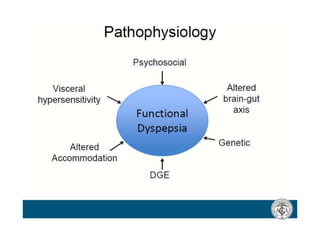
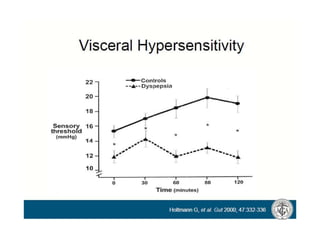
Visceral
hypersensitivity
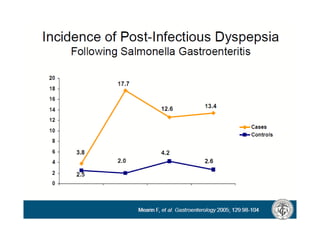
Post-infectious FD Diet & Life style
Genetics
&Psychological
factors
Adapted from Miwa H., et al. Journal of Gastroenterology and Hepatology 26 (2011) Suppl. 3; 53–60
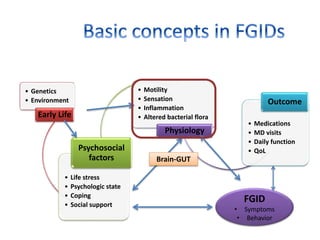
• Genetics
• Environment
Early Life
• Life stress
• Psychologic state
• Coping
• Social support
Psychosocial
factors
• Motility
• Sensation
• Inflammation
• Altered bacterial flora
Physiology
• Medications
• MD visits
• Daily function
• QoL
Outcome
FGID
• Symptoms
• Behavior
Brain-GUT
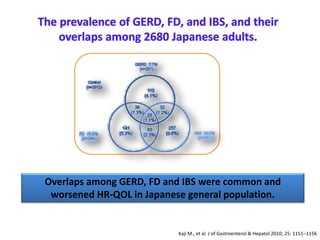
Kaji M., et al. J of Gastroenterol & Hepatol 2010; 25: 1151–1156
Overlaps among GERD, FD and IBS were common and
worsened HR-QOL in Japanese general population.
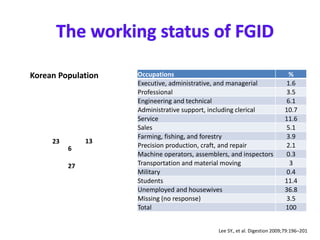
13
6
23
27
Occupations %
Executive, administrative, and managerial 1.6
Professional 3.5
Engineering and technical 6.1
Administrative support, including clerical 10.7
Service 11.6
Sales 5.1
Farming, fishing, and forestry 3.9
Precision production, craft, and repair 2.1
Machine operators, assemblers, and inspectors 0.3
Transportation and material moving 3
Military 0.4
Students 11.4
Unemployed and housewives 36.8
Missing (no response) 3.5
Total 100
Lee SY., et al. Digestion 2009;79:196–201
Korean Population
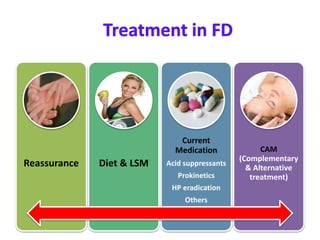
Reassurance Diet & LSM
Current
Medication
Acid suppressants
Prokinetics
HP eradication
Others
CAM
(Complementary
& Alternative
treatment)
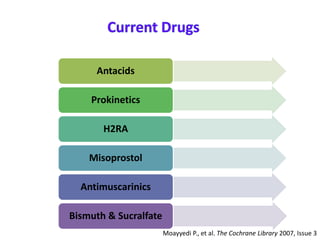
Antacids
Prokinetics
H2RA
Misoprostol
Antimuscarinics
Bismuth & Sucralfate
Moayyedi P., et al. The Cochrane Library 2007, Issue 3
• 1 Trial, 109 patients
• 1.02 [0.76, 1.36]
Antacids
• 13 Trials, 3179 patients
• 0.67 [0.55, 0.82]
Prokinetics
• 12 Trials, 2183 patients
• 0.77 [0.65, 0.92]
H2RA
• 1 Trial, 40 patients
• 0.32 [0.13, 0.79]
Misoprostol
• 2 Trials, 163 patients
• 0.50 [0.31, 0.81]
Antimuscarinics
• Non significant different
Bismuth & Sucralfate
Outcome: Global Symptoms Assessment at end of treatment
Moayyedi P., et al. The Cochrane Library 2007, Issue 3
Outcome title # of studies # of participants Effect size [95%CI]
GSA (D) 10 3347 0.87 [0.80, 0.96]
QoL score 3 1630 0.21 [-1.66, 2.09]
GSA (C) 5 1894 -0.12 [-0.22, -0.02]
Comparisons Outcome # of studies # participants Effect size [95%CI]
PPI vs H2RA GSA 2 739 0.93 [0.84, 1.02]
Half vs full dose
PPI
GSA 6 2032 0.98 [0.92, 1.04]
Moayyedi P., et al. The Cochrane Library 2007, Issue 3
GSA=Global Symptom Assessment, QoL=Quality of Life
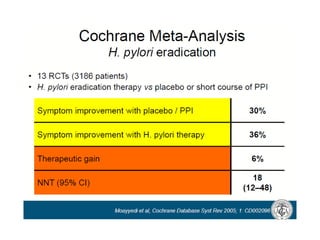
Moayyedi P,et al. The Cochrane Library 2006, Issue 3
• Global symptom scores between 3-12 months F/U
• 17 studies, 3566 subjects
• HP eradication has small but significant better outcome than placebo
• Relative Risk (Fixed) 0.90 95% CI [0.86, 0.94] – favor HP eradication
• The NNT to cure one case of dyspepsia = 14 (95% CI = 10 to 25)
Studies:
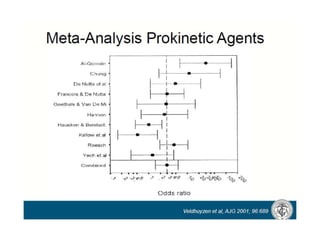
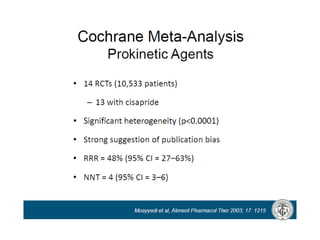
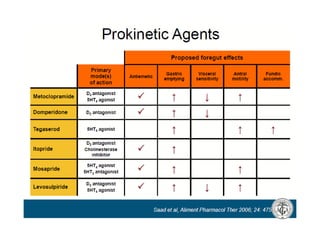
• Prokinetics: metoclopramide, domperidone, trimebutine, cisapride, itopride and mosapride,
used for Rx of FD between 1951 and 2005.
• 27 studies were selected. 1844 in an experimental arm, 1591 in placebo arm
Outcomes
•Difference in the probability of response of the interventional drug VS placebo.
•Heterogeneity: Meta-regression analysis.
•Publication bias: funnel plot and statistical testing (P = 0.975).
•The summary statistic was 0.295[0.208-0.382, P < 0.001]
•the interventional drug has 30% excess probability of producing a response compared with placebo.
•The most significant source of heterogeneity was the year of publication (P < 0.001)
Conclusion:
•prokinetics are significantly more effective than placebo in the Rx of FD.
•efficacy was assessed over short periods.
•Long-term randomized controlled trials are needed to confirm the effect.
Hiyama T., et al. J Gastroenterol Hepatol 2007 Mar;22(3):304-10
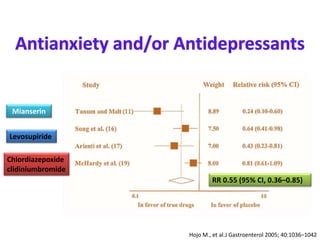
RR 0.55 (95% CI, 0.36–0.85)
Hojo M., et al.J Gastroenterol 2005; 40:1036–1042
Mianserin
Levosupiride
Chlordiazepoxide
clidiniumbromide
• FD is a complex and heterogeneous in both
pathophysiology and clinical manifestation.
• In typical cases without alarm symptoms,
empirical treatment is justified.
• Details in history taking is essential and the most
bothersome symptom should be identified.
• The overlap of these syndrome can cause both
patients and physicians frustrated, re-assurance
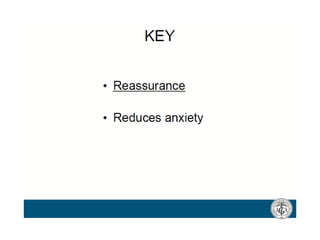
is important.
Funtional Dyspepsia GIT and Liver power point

Funtional Dyspepsia GIT and Liver power point

  • 1.
  • 2.
    Dyspepsia • Constellations ofchronic UGI symptoms - Indigestion - discomfort or pain - Early satiation / fullness - Bloating and burping - Nausea and vomiting
  • 3.
    Dyspepsia • Common complaint •Up to 30% prevalence • Normal life expectancy • Substantial impact on QOL
  • 4.
    Underlying Causes • GERD •PUD • Infections • Lactose intolerance • Medication related • Biliary diseases • Malignancy • Functional (non-ulcer dyspepsia)
  • 5.
    PU 20% FD 77% Gastric& HB malignancies 2% Thailand Stomach Research Group 1999 Others 1%
  • 6.
    • Acarbose (Precose) •Alcohol • Antibiotics, oral (e.g., erythromycin, penicillin, macrolides) • Bisphosphonates • CCBs • Corticosteroids • Digoxin • Herbs (e.g., garlic, ginkgo, saw palmetto, feverfew, chaste tree berry, white willow) • Iron • Metformin • NSAIDs, COX2 inhibitors • Opiates • Orlistat (Xenical) • Potassium chloride • Theophylline Loyd RA&McClellan DA .Am Fam Physician 2011 Mar 1;83(5):547-52
  • 7.
    !!! Age >50 y (≥55),w/ new onset Sx F Hx of UGI malignancy Unintended/ unexplained wt loss GI bleeding/IDA Odynophagia /Progressive dysphagia Persistent vomiting Palpable mass /lymphadeno pathy Jaundice ASGE Guideline 2007
  • 9.
    • A randomsample survey of 704 members of AGA – “…no known structural abnormalities, or infectious or metabolic causes” – A stress disorder – Motility disorder
  • 10.
    B. Functional GastroduodenalDisorders B1. Functional dyspepsia B1a. Postprandial distress syndrome (PDS) B2b. Epigastric pain syndrome (EPS) B2. Belching disorders B2a. Aerophagia B2b. Unspecified excessive belching B3. Nausea and vomiting disorders B3a. Chronic idiopathic nausea (CIN) B3b. Functional vomiting B3c. Cyclic vomiting syndrome (CVS) B4. Rumination syndrome in adults A. Functional Esophageal Disorders A1. Functional heartburn A2. Functional chest pain of presumed esophageal origin A3. Functional dysphagia A4. Globus C. Functional Bowel Disorders C1. Irritable bowel syndrome (IBS) C2. Functional bloating C3. Functional constipation C4. Functional diarrhea C5. Unspecified functional bowel disorder D. Functional Abdominal Pain Syndromes (FAPS)
  • 12.
    Bothersome postprandrial fullness Early satiation Epigastric pain Epigastricburning Epigastric Pain Syndrome Postprandrial Distress Syndrome
  • 18.
    Leading Gastrointestinal SymptomsPrompting an Outpatient Clinic Visit, 2009 Leading Physician Diagnoses for GI Disorders in Outpatient Clinic Visits in the US, 2009 Peery AF., et al.Gastroenterology. 2012 Nov;143(5):1179-1187
  • 21.
    It is bothersome It(sometimes) needs laborious investigations It is chronic!!!
  • 23.
    Motility abnormalities Excessive secretion of gastric acid Helicobacter pylori Visceral hypersensitivity Post-infectiousFD Diet & Life style Genetics &Psychological factors Adapted from Miwa H., et al. Journal of Gastroenterology and Hepatology 26 (2011) Suppl. 3; 53–60
  • 24.
    • Genetics • Environment EarlyLife • Life stress • Psychologic state • Coping • Social support Psychosocial factors • Motility • Sensation • Inflammation • Altered bacterial flora Physiology • Medications • MD visits • Daily function • QoL Outcome FGID • Symptoms • Behavior Brain-GUT
  • 36.
    Kaji M., etal. J of Gastroenterol & Hepatol 2010; 25: 1151–1156 Overlaps among GERD, FD and IBS were common and worsened HR-QOL in Japanese general population.
  • 37.
    13 6 23 27 Occupations % Executive, administrative,and managerial 1.6 Professional 3.5 Engineering and technical 6.1 Administrative support, including clerical 10.7 Service 11.6 Sales 5.1 Farming, fishing, and forestry 3.9 Precision production, craft, and repair 2.1 Machine operators, assemblers, and inspectors 0.3 Transportation and material moving 3 Military 0.4 Students 11.4 Unemployed and housewives 36.8 Missing (no response) 3.5 Total 100 Lee SY., et al. Digestion 2009;79:196–201 Korean Population
  • 38.
    Reassurance Diet &LSM Current Medication Acid suppressants Prokinetics HP eradication Others CAM (Complementary & Alternative treatment)
  • 40.
  • 41.
    • 1 Trial,109 patients • 1.02 [0.76, 1.36] Antacids • 13 Trials, 3179 patients • 0.67 [0.55, 0.82] Prokinetics • 12 Trials, 2183 patients • 0.77 [0.65, 0.92] H2RA • 1 Trial, 40 patients • 0.32 [0.13, 0.79] Misoprostol • 2 Trials, 163 patients • 0.50 [0.31, 0.81] Antimuscarinics • Non significant different Bismuth & Sucralfate Outcome: Global Symptoms Assessment at end of treatment Moayyedi P., et al. The Cochrane Library 2007, Issue 3
  • 43.
    Outcome title #of studies # of participants Effect size [95%CI] GSA (D) 10 3347 0.87 [0.80, 0.96] QoL score 3 1630 0.21 [-1.66, 2.09] GSA (C) 5 1894 -0.12 [-0.22, -0.02] Comparisons Outcome # of studies # participants Effect size [95%CI] PPI vs H2RA GSA 2 739 0.93 [0.84, 1.02] Half vs full dose PPI GSA 6 2032 0.98 [0.92, 1.04] Moayyedi P., et al. The Cochrane Library 2007, Issue 3 GSA=Global Symptom Assessment, QoL=Quality of Life
  • 46.
    Moayyedi P,et al.The Cochrane Library 2006, Issue 3 • Global symptom scores between 3-12 months F/U • 17 studies, 3566 subjects • HP eradication has small but significant better outcome than placebo • Relative Risk (Fixed) 0.90 95% CI [0.86, 0.94] – favor HP eradication • The NNT to cure one case of dyspepsia = 14 (95% CI = 10 to 25)
  • 47.
    Studies: • Prokinetics: metoclopramide,domperidone, trimebutine, cisapride, itopride and mosapride, used for Rx of FD between 1951 and 2005. • 27 studies were selected. 1844 in an experimental arm, 1591 in placebo arm Outcomes •Difference in the probability of response of the interventional drug VS placebo. •Heterogeneity: Meta-regression analysis. •Publication bias: funnel plot and statistical testing (P = 0.975). •The summary statistic was 0.295[0.208-0.382, P < 0.001] •the interventional drug has 30% excess probability of producing a response compared with placebo. •The most significant source of heterogeneity was the year of publication (P < 0.001) Conclusion: •prokinetics are significantly more effective than placebo in the Rx of FD. •efficacy was assessed over short periods. •Long-term randomized controlled trials are needed to confirm the effect. Hiyama T., et al. J Gastroenterol Hepatol 2007 Mar;22(3):304-10
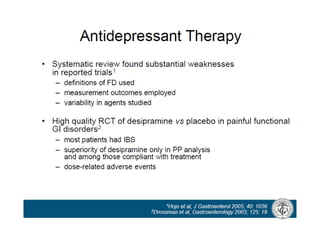
  • 51.
    RR 0.55 (95%CI, 0.36–0.85) Hojo M., et al.J Gastroenterol 2005; 40:1036–1042 Mianserin Levosupiride Chlordiazepoxide clidiniumbromide
  • 56.
    • FD isa complex and heterogeneous in both pathophysiology and clinical manifestation. • In typical cases without alarm symptoms, empirical treatment is justified. • Details in history taking is essential and the most bothersome symptom should be identified. • The overlap of these syndrome can cause both patients and physicians frustrated, re-assurance is important.

Editor's Notes

  • #37 J Gastroenterol Hepatol. 2010 Jun;25(6):1151-6. doi: 10.1111/j.1440-1746.2010.06249.x. Prevalence of overlaps between GERD, FD and IBS and impact on health-related quality of life. Kaji M, Fujiwara Y, Shiba M, Kohata Y, Yamagami H, Tanigawa T, Watanabe K, Watanabe T, Tominaga K, Arakawa T. Source Department of Gastroenterology, Osaka City University Graduate School of Medicine, Osaka, Japan. Abstract OBJECTIVE: Gastroesophageal reflux disease (GERD), functional dyspepsia (FD), and irritable bowel syndrome (IBS) are common, and have negative impacts on health-related quality of life (HR-QOL). Several studies demonstrated a significant overlap between two of these three diseases. The purpose of this study was to examine the prevalence of GERD, FD, and IBS, their overlap rates, and HR-QOL for each disease and each overlap compared with healthy controls in the Japanese general population. METHODS: We performed a cross-sectional study of Japanese workers who visited a clinic for a routine health check-up, and asked them to fill out a self-report questionnaire. Prevalence and overlap rate of GERD defined as heartburn and/or acid regurgitation at least weekly, FD and IBS based on Rome III criteria, and HR-QOL by SF-8 were examined. RESULTS: Of the 2680 eligible subjects, 207 (7.7%) were diagnosed as having GERD, 269 (10.0%) as FD, and 381 (14.2%) as IBS. Overlaps were found in 46.9% in GERD, 47.6% in FD, and 34.4% in IBS. Prevalence of overlaps in subjects with IBS was significantly lower compared with those among GERD or FD. Sufferers from GERD, FD, or IBS reported significantly poorer HR-QOL across all domains compared with controls. Overlaps significantly worsened HR-QOL in most domains except in the 'role emotional' domain. HR-QOL was particularly poor in the physical component summary for overlapping GERD and in the mental component summary for overlapping IBS. CONCLUSION: Overlaps among GERD, FD and IBS were common and worsened HR-QOL in Japanese general population. PMID: 20594232
  • #38 Background/Aims: People may have symptoms of multiple disorders at the same time. We aimed to determine prevalence and risk factors for overlaps between gastroesophageal reflux disease (GERD), dyspepsia and irritable bowel syndrome (IBS) in a Korean population. Methods: A crosssectional survey was performed on 1,688 randomly selected Korean subjects. Data on 1,443 subjects could be analyzed. Dyspepsia and IBS were diagnosed using modified Rome II criteria. Results: The prevalences of GERD, dyspepsia and IBS were 8.5, 9.5 and 9.6%. Overlaps between GERD and dyspepsia, GERD and IBS, and dyspepsia and IBS were observed in 2.3 (95% CI 1.4–3.0), 2.0 (95% CI 1.2–2.6%) and 1.3% (95% CI 0.6–1.8%) of the population. 27 and 24% of GERD subjects suffered from dyspepsia and IBS. 24 and 14% of dyspeptic subjects had GERD and IBS. 21 and 14% of IBS subjects had GERD and dyspepsia. Anxiety was significantly associated with GERD overlap (OR 2.73, 95% CI 1.13–6.57), dyspepsia overlap (OR 3.19, 95% CI 1.33–7.63) and IBS overlap (OR 4.92, 95% CI 2.04–11.84), compared with GERD alone, dyspepsia alone and IBS alone. Conclusions: Overlaps between GERD, dyspepsia, and IBS are common in the general population. These overlaps occur predominantly in individuals with anxiety
  • #52 Scand J Gastroenterol. 1996 Apr;31(4):318-25. A new pharmacologic treatment of functional gastrointestinal disorder. A double-blind placebo-controlled study with mianserin. Tanum L, Malt UF. Source Dept. of Psychosomatic and Behavioural Medicine, National Hospital, University of Oslo, Norway. Abstract BACKGROUND: The efficacy of unselected monoamine reuptake inhibitors (tricyclic antidepressants) in the treatment of patients with functional gastrointestinal disorders (FGD) has not been convincingly demonstrated. We investigated the efficacy of an antidepressant (mianserin) with a different receptor profile (combined 5-hydroxytryptamine-2 + 3 and alpha-2 antagonist) in FGD. METHODS: After excluding patients with psychopathology and initial placebo responders from the study, eligible patients (n = 49) were randomized to 7 weeks of double-blind treatment with either mianserin, 120 mg/day, or placebo. Efficacy was assessed by using observer-completed ratings, the Global Improvement Scale, and patient self-ratings, Visual Analog Scale, and Disability Scales. RESULTS: Patients taking mianserin reported less abdominal pain, symptoms of abdominal distress, and functional disability than those given placebo (p < 0.001). The efficacy was significant across different lengths of illness periods and types of functional disorder. There was no major change 4 weeks after tapering. CONCLUSION: Mianserin may be an effective and well-tolerated pharmacologic short-term treatment for functional gastrointestinal disorders in patients with no clinical evidence of psychopathology Korean J Intern Med. 1998 Feb;13(1):15-21. Effects of levosulpiride in patients with functional dyspepsia accompanied by delayed gastric emptying. Song CW, Chun HJ, Kim CD, Ryu HS, Choe JG, Hyun JH. Source Department of Internal Medicine and Nuclear Medicine, Institute of Digestive Disease and Nutrition, Korea University, College of Medicine, Seoul, Korea. Abstract OBJECTIVES: Levosulpiride is the levo-enantiomer of sulpiride, a well-known antiemetic, antidyspeptic and antipsychotic drug. This study was undertaken to investigate the effects of levosulpiride on dyspeptic symptoms and gastric motor function in a group of patients with functional dyspepsia showing delayed gastric emptying. METHOD: Forty two eligible patients were entered into a 3 week, double-blind randomized comparison of 25mg of levosulpiride or placebo t.i.d.. Symptom assessment and gastric scintigraphy following the intake of scrambled egg sandwich, were performed in each patient before and after treatment. RESULTS: The improvement of symptom score in levosulpiride group was higher than the placebo group (p < 0.05). We assessed global efficacy, which was excellent in 1 (6%), good 11 (65%), fair 4 (24%), nil 1 (6%) of those receiving levosulpiride, and fair 9 (60%), nil 5 (33%), poor 1 (6%) of those receiving placebo. Levosulpiride tended to be more effective than placebo in relieving the dyspeptic symptoms especially in the subgroups of dysmotility-like (p < 0.05) and nonspecific (p < 0.05) as compared to other subgroups (p = 0.16). The reduction of gastric emptying time after levosulpiride treatment was more marked than Placebo group (p < 0.05). We found a significant correlation between changes of symptom score and gastric emptying time (r = 0.47, p = 0.01). No serious adverse effects were reported after administration of either levosulpiride or placebo. Only two patients reported mild somnolence during levosulpiride administration. CONCLUSIONS: Levosulpiride is effective and well tolerated in patients with functional dyspepsia accompanied by delayed gastric emptying. Its efficacy may be related to its action on the gastric motor function by improving the delayed gastric emptying. PMID: 9538626 [PubMed - indexed for MEDLINE Aliment Pharmacol Ther. 1994 Dec;8(6):631-8. The effects of levosulpiride on gastric and gall-bladder emptying in functional dyspepsia. Arienti V, Corazza GR, Sorge M, Boriani L, Ugenti F, Biagi F, Maconi G, Sottili S, Van Thiel DH, Gasbarrini G. Source I Patologia Medica dell'Università di Bologna, Italy. Abstract BACKGROUND: 50% of patients with functional dyspepsia have delayed gastric emptying. Levosulpiride is an orthopramide drug that stimulates gastrointestinal motility. Aim of our study was to evaluate the effect of levosulpiride on symptoms and gastric and gall-bladder emptying, in dyspeptic patients. METHODS: Thirty adult patients, treated for 20 days with levosulpiride (75 mg/day) or placebo, were evaluated in a randomized double-blind study. Symptoms were assessed by a cumulative index and overall intensity (visual analogue line). Gastric and gall-bladder emptying were evaluated by epigastric impedance (liquid meal) and real-time ultrasonography (mixed meal). RESULTS: Levosulpiride, with respect to placebo, accelerated the mean gastric half-emptying time of liquids (P < 0.05), gastric emptying (P < 0.001 at 180 min; P < 0.05 at 240 min), and gall-bladder emptying (P < 0.05 at 60 and 120 min) emptying after a solid-liquid mixed meal. Both the mean cumulative index (P < 0.05) and the overall intensity (P < 0.025) of dyspeptic symptoms were reduced significantly by levosulpiride. CONCLUSIONS: Our results showed that levosulpiride can be usefully employed in patients affected by functional dyspepsia. PMID: 7734028 [PubMed - indexed for MEDLINE