
Made by: mohammed alrjoub
To: Dr. Adham Abu taha
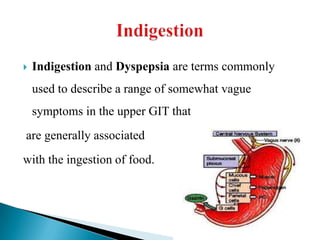
 Indigestion and Dyspepsia are terms commonly
used to describe a range of somewhat vague
symptoms in the upper GIT that
are generally associated
with the ingestion of food.
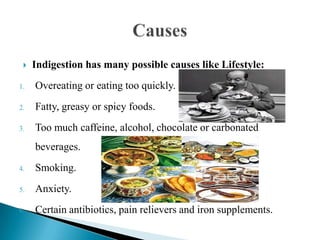
 Indigestion has many possible causes like Lifestyle:
1. Overeating or eating too quickly.
2. Fatty, greasy or spicy foods.
3. Too much caffeine, alcohol, chocolate or carbonated
beverages.
4. Smoking.
5. Anxiety.
6. Certain antibiotics, pain relievers and iron supplements.
 Gastritis, Peptic ulcers.
 Gallstones, Constipation.
 Pancreas inflammation (pancreatitis).
 Stomach cancer, Intestinal blockage.
 intestinal ischemia .
 Indigestion with no obvious cause is known as
functional dyspepsia or nonulcer stomach pain.
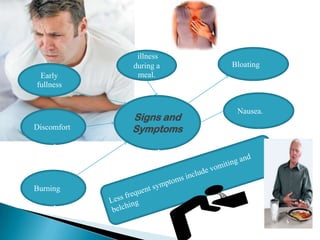
Early
fullness
illness
during a
meal.
Discomfort
Burning
Bloating
Nausea.
Signs and
Symptoms
 weight loss or loss of appetite.
 Repeated vomiting or vomiting with blood.
 Black, tarry stools.
 Trouble swallowing that gets progressively
worse.
 Fatigue or weakness, which may be symptoms
of anemia.
 Seek immediate medical attention if you have:
1. Shortness of breath, sweating or chest pain
radiating to the jaw, neck or arm.
2. Chest pain on exertion or with stress.
 Lifestyle control.
 Antacids.
 Aalginates.
 H2-antagonistis.
 PPI.
 Domperidone.
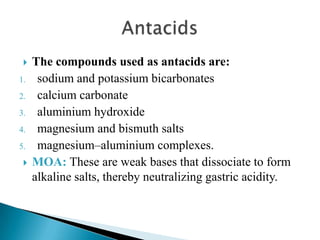
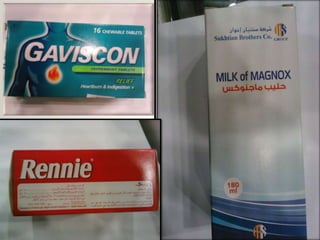
 The compounds used as antacids are:
1. sodium and potassium bicarbonates
2. calcium carbonate
3. aluminium hydroxide
4. magnesium and bismuth salts
5. magnesium–aluminium complexes.
 MOA: These are weak bases that dissociate to form
alkaline salts, thereby neutralizing gastric acidity.
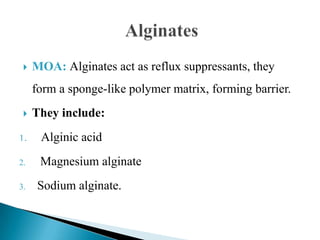
 MOA: Alginates act as reflux suppressants, they
form a sponge-like polymer matrix, forming barrier.
 They include:
1. Alginic acid
2. Magnesium alginate
3. Sodium alginate.
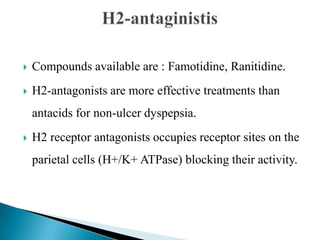
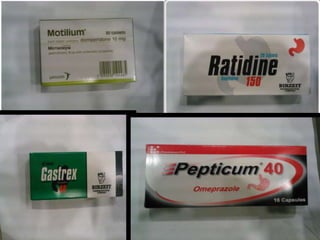
 Compounds available are : Famotidine, Ranitidine.
 H2-antagonists are more effective treatments than
antacids for non-ulcer dyspepsia.
 H2 receptor antagonists occupies receptor sites on the
parietal cells (H+/K+ ATPase) blocking their activity.
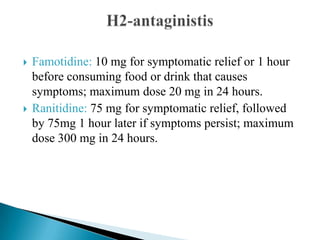
 Famotidine: 10 mg for symptomatic relief or 1 hour
before consuming food or drink that causes
symptoms; maximum dose 20 mg in 24 hours.
 Ranitidine: 75 mg for symptomatic relief, followed
by 75mg 1 hour later if symptoms persist; maximum
dose 300 mg in 24 hours.
 H2 antagonists are well tolerated and the incidence of
side-effects is low.
 They should not be sold to patients taking NSAIDs
drugs, these may mask the symptoms of developing
peptic ulcer.
 H2 antagonists are not licensed for sale to pregnant or
breastfeeding women.
 Omeprazole is a selective proton pump inhibitor.
 It directly inhibits the H+/K+ ATPase of the parietal
cells of the stomach responsible for gastric acid
secretion.
 It is indicated primarily for pt’s with chronic,
intermittent, relapsing disorder of varying frequency
and severity.
 Who experience recurrent attacks, including at night,
which can be distressing and negatively affect quality
of life.
 The initial dose is tow 10 mg tablets once daily,
swallowed whole before a meal, with plenty of liquid.
 Omeprazole is licensed as OTC in adults aged 18
years and over. It should not be used by pregnant or
breastfeeding women.
 Caution should be taken when using anticoagulants
and antiepileptics with them (due to CYP450).
 Domperidone is a D2 receptor antagonist.
 Domperidone is licensed for the treatment of dysmotility
symptoms of dyspepsia, including sensations of fullness,
bloating, ‘heavy stomach’, belching and nausea.
 The recommended dose is one 10 mg tablet three times
daily and at night, when required. The drug is licensed for
use in adults aged 16 years and over.
 Not recommended during pregnancy or
breastfeeding.
 Gastric pathology.
 Impaired hepatic or renal function.
 With prolactinoma.
 Antispasmodics.
 antiflatulents and carminatives.
Indigesion
Indigesion
Indigesion

Indigesion

  • 1.
    Made by: mohammedalrjoub To: Dr. Adham Abu taha
  • 2.
     Indigestion andDyspepsia are terms commonly used to describe a range of somewhat vague symptoms in the upper GIT that are generally associated with the ingestion of food.
  • 3.
     Indigestion hasmany possible causes like Lifestyle: 1. Overeating or eating too quickly. 2. Fatty, greasy or spicy foods. 3. Too much caffeine, alcohol, chocolate or carbonated beverages. 4. Smoking. 5. Anxiety. 6. Certain antibiotics, pain relievers and iron supplements.
  • 4.
     Gastritis, Pepticulcers.  Gallstones, Constipation.  Pancreas inflammation (pancreatitis).  Stomach cancer, Intestinal blockage.  intestinal ischemia .  Indigestion with no obvious cause is known as functional dyspepsia or nonulcer stomach pain.
  • 5.
  • 6.
     weight lossor loss of appetite.  Repeated vomiting or vomiting with blood.  Black, tarry stools.  Trouble swallowing that gets progressively worse.  Fatigue or weakness, which may be symptoms of anemia.  Seek immediate medical attention if you have: 1. Shortness of breath, sweating or chest pain radiating to the jaw, neck or arm. 2. Chest pain on exertion or with stress.
  • 7.
     Lifestyle control. Antacids.  Aalginates.  H2-antagonistis.  PPI.  Domperidone.
  • 8.
     The compoundsused as antacids are: 1. sodium and potassium bicarbonates 2. calcium carbonate 3. aluminium hydroxide 4. magnesium and bismuth salts 5. magnesium–aluminium complexes.  MOA: These are weak bases that dissociate to form alkaline salts, thereby neutralizing gastric acidity.
  • 9.
     MOA: Alginatesact as reflux suppressants, they form a sponge-like polymer matrix, forming barrier.  They include: 1. Alginic acid 2. Magnesium alginate 3. Sodium alginate.
  • 10.
     Compounds availableare : Famotidine, Ranitidine.  H2-antagonists are more effective treatments than antacids for non-ulcer dyspepsia.  H2 receptor antagonists occupies receptor sites on the parietal cells (H+/K+ ATPase) blocking their activity.
  • 11.
     Famotidine: 10mg for symptomatic relief or 1 hour before consuming food or drink that causes symptoms; maximum dose 20 mg in 24 hours.  Ranitidine: 75 mg for symptomatic relief, followed by 75mg 1 hour later if symptoms persist; maximum dose 300 mg in 24 hours.
  • 12.
     H2 antagonistsare well tolerated and the incidence of side-effects is low.  They should not be sold to patients taking NSAIDs drugs, these may mask the symptoms of developing peptic ulcer.  H2 antagonists are not licensed for sale to pregnant or breastfeeding women.
  • 13.
     Omeprazole isa selective proton pump inhibitor.  It directly inhibits the H+/K+ ATPase of the parietal cells of the stomach responsible for gastric acid secretion.  It is indicated primarily for pt’s with chronic, intermittent, relapsing disorder of varying frequency and severity.  Who experience recurrent attacks, including at night, which can be distressing and negatively affect quality of life.
  • 14.
     The initialdose is tow 10 mg tablets once daily, swallowed whole before a meal, with plenty of liquid.  Omeprazole is licensed as OTC in adults aged 18 years and over. It should not be used by pregnant or breastfeeding women.  Caution should be taken when using anticoagulants and antiepileptics with them (due to CYP450).
  • 15.
     Domperidone isa D2 receptor antagonist.  Domperidone is licensed for the treatment of dysmotility symptoms of dyspepsia, including sensations of fullness, bloating, ‘heavy stomach’, belching and nausea.  The recommended dose is one 10 mg tablet three times daily and at night, when required. The drug is licensed for use in adults aged 16 years and over.
  • 16.
     Not recommendedduring pregnancy or breastfeeding.  Gastric pathology.  Impaired hepatic or renal function.  With prolactinoma.
  • 17.