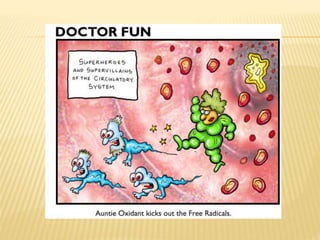
FREE REDICAL AND ANTIOXIDANTS
WHAT ARE FREE RADICAL?
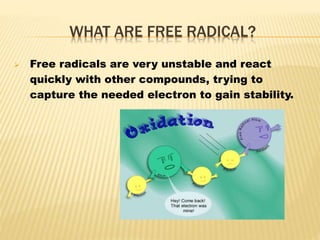
 Free radicals are very unstable and react
quickly with other compounds, trying to
capture the needed electron to gain stability.
TYPES OF FREE RADICAL
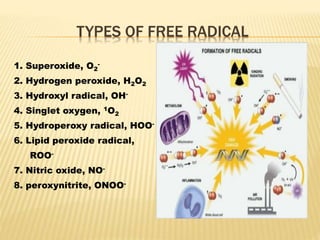
1. Superoxide, O2
-
2. Hydrogen peroxide, H2O2
3. Hydroxyl radical, OH-
4. Singlet oxygen, 1O2
5. Hydroperoxy radical, HOO-
6. Lipid peroxide radical,
ROO-
7. Nitric oxide, NO-
8. peroxynitrite, ONOO-
PROPERTIES OF FREE RADICAL
1. Highly reactive
2. Very short half-life
3. Generate new radicals by chain reaction
4. Cause damage to biomolecules, cells and tissues
Most free radicals in biological systems are derivatives
of oxygen (Reactive Oxygen Species, ROS), but there are
also derivatives of nitrogen (Reactive Nitrogen Species,
RNS), Reactive Metabolites or Intermediates.
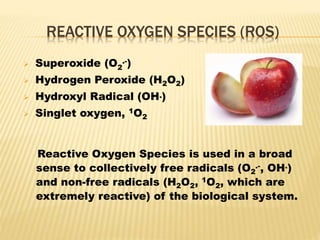
REACTIVE OXYGEN SPECIES (ROS)
 Superoxide (O2
.-)
 Hydrogen Peroxide (H2O2)
 Hydroxyl Radical (OH.)
 Singlet oxygen, 1O2
Reactive Oxygen Species is used in a broad
sense to collectively free radicals (O2
.-, OH.)
and non-free radicals (H2O2, 1O2, which are
extremely reactive) of the biological system.
GENERATION OF FREE RADICAL
1. Cellular metabolism:-
About 1- 4% of oxygen taken up in the body is
converted to free radicals. They are constantly
produced during the normal oxidation of foodstuffs.
a) Due to leaks in the electron transport chain in
mitochondria.
b) Some enzymes such as xanthine oxidase and
aldehyde oxidase form superoxide anion radical or
hydrogen peroxide.
c) Macrophage also produces NO from arginine by the
enzyme nitric oxide synthase. This is also an
important anti-bacterial mechanism.
SOURCES OF OXYGEN FREE RADICAL
In mitochondria:
- generation of energy - ATP
- glucose, fatty acids, amino acids
- O2 2H2O
4e-+4H+
- leakage of O2
-. (superoxide)
H2O2 (hydrogen peroxide)
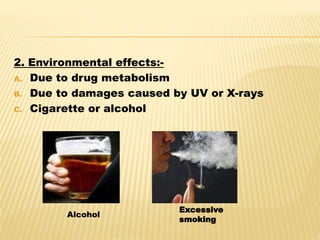
2. Environmental effects:-
A. Due to drug metabolism
B. Due to damages caused by UV or X-rays
C. Cigarette or alcohol
Excessive
smoking
Alcohol
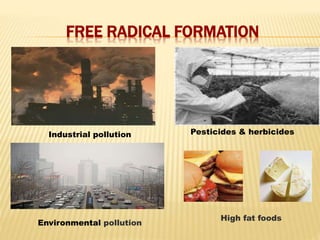
High fat foods
FREE RADICAL FORMATION
Industrial pollution Pesticides & herbicides
Environmental pollution
HARMFUL EFFECTS OF FREE RADICAL
A. Free Radical and biomolecules
1. Proteins:-
Cause oxidation of sulfhydryl groups, and
modification of AA. ROS may damage protein by
fragmentation, aggregation results in the loss of
biological activity of proteins.
2. Lipids:-
The polyunsaturated lipid molecules of cell
membranes are particularly susceptible to
damaging free radicals process and contribute to
the uncontrolled chain reaction (lipid peroxidation).
3. Carbohydrates:-
Glycation increases the susceptibility of
proteins to the attack by free radicals.
4. Nucleic acid:-
Cause DNA strand breaks, fragmentation of
bases and deoxyribose results in cytotoxicity
and mutations.
B. Diseases
1. Cardiovascular diseases (CHD):- ox-LDL, formed by the
action of free radicals, promote CHD and atherosclerosis
(AS).
2. Cancers:- damage DNA and cause mutation and
cytotoxicity, play a key role in carcinogenesis.
3. Inflammatory diseases:- damage on the extracellular
components such as collagen and hyaluronic acid,
promote glomerulonephritis and ulcerative colitis.
4. Respiratory diseases:- destroy endothelium and cause
lung edema. Cigarette smoke contains free radicals and
promotes the production of more free radicals.
5. Diabetes mellitus:- Destruction of islets results
in pathogenesis.
6. Male infertility:- reduce sperm motility and
viability.
7. Aging process
8. Others:- such as Parkinson's disease,
Alzheimer’s disease, multiple sclerosis, liver
cirrhosis, muscular dystrophy.
ANTIOXIDANTS
 The substance present in low concentrations
relative to the oxidizable substrate that
significantly delays or reduces oxidation of the
substrate.
 They reduce the effect of dangerous oxidants
by binding together with these harmful
molecules, decreasing their destructive power.
 They can also help repair damage already
sustained by cells.
 They may be considered as the scavengers of
free radicals.
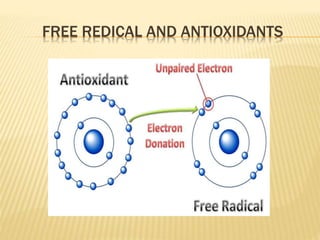
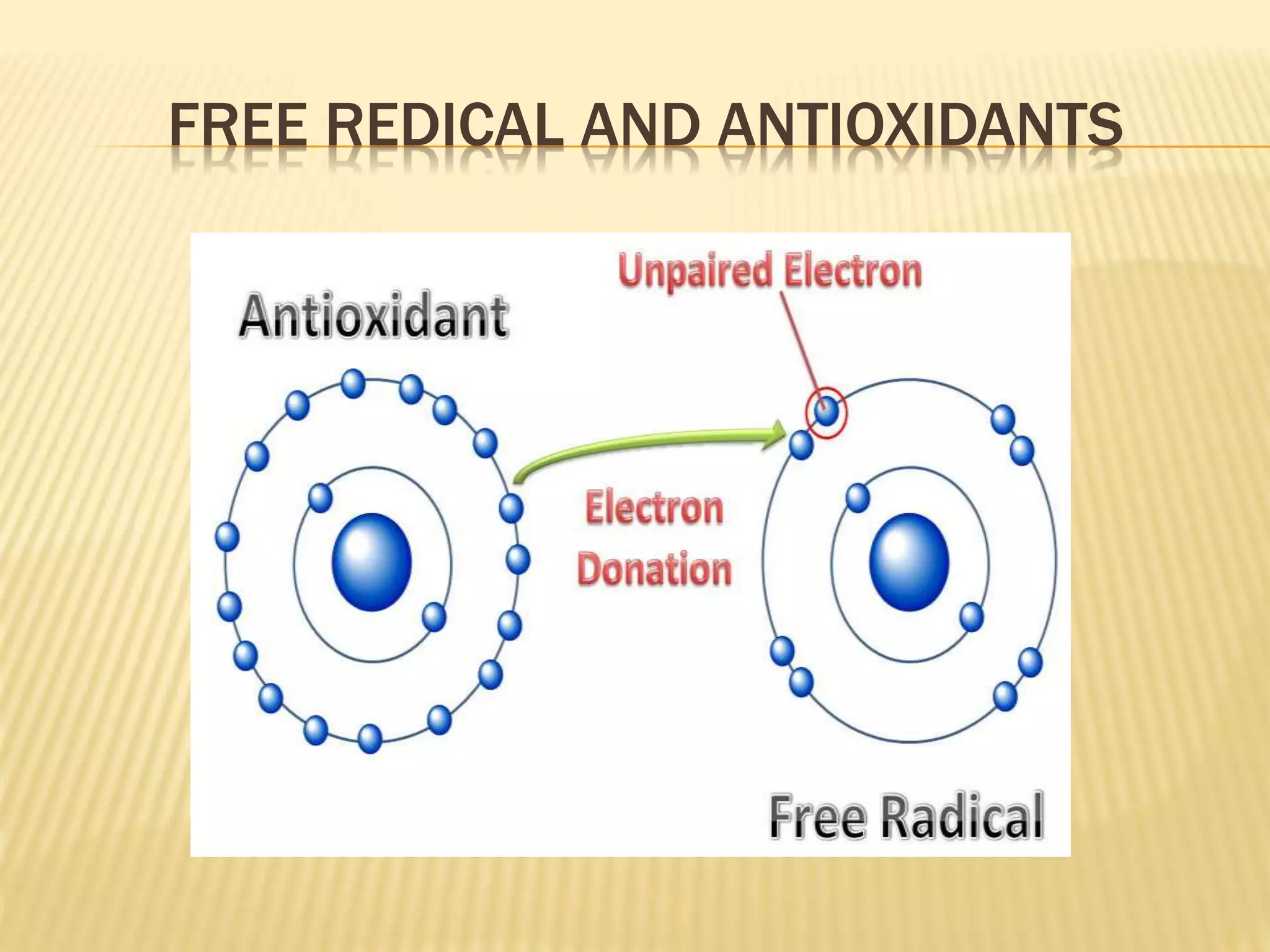
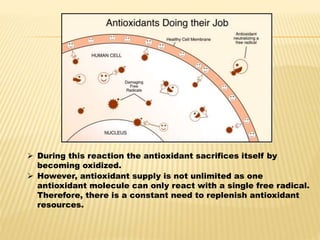
 During this reaction the antioxidant sacrifices itself by
becoming oxidized.
 However, antioxidant supply is not unlimited as one
antioxidant molecule can only react with a single free radical.
Therefore, there is a constant need to replenish antioxidant
resources.
Free redical vs antioxident

Free redical vs antioxident

  • 1.
    FREE REDICAL ANDANTIOXIDANTS
  • 2.
    WHAT ARE FREERADICAL?  Free radicals are very unstable and react quickly with other compounds, trying to capture the needed electron to gain stability.
  • 3.
    TYPES OF FREERADICAL 1. Superoxide, O2 - 2. Hydrogen peroxide, H2O2 3. Hydroxyl radical, OH- 4. Singlet oxygen, 1O2 5. Hydroperoxy radical, HOO- 6. Lipid peroxide radical, ROO- 7. Nitric oxide, NO- 8. peroxynitrite, ONOO-
  • 4.
    PROPERTIES OF FREERADICAL 1. Highly reactive 2. Very short half-life 3. Generate new radicals by chain reaction 4. Cause damage to biomolecules, cells and tissues Most free radicals in biological systems are derivatives of oxygen (Reactive Oxygen Species, ROS), but there are also derivatives of nitrogen (Reactive Nitrogen Species, RNS), Reactive Metabolites or Intermediates.
  • 5.
    REACTIVE OXYGEN SPECIES(ROS)  Superoxide (O2 .-)  Hydrogen Peroxide (H2O2)  Hydroxyl Radical (OH.)  Singlet oxygen, 1O2 Reactive Oxygen Species is used in a broad sense to collectively free radicals (O2 .-, OH.) and non-free radicals (H2O2, 1O2, which are extremely reactive) of the biological system.
  • 6.
    GENERATION OF FREERADICAL 1. Cellular metabolism:- About 1- 4% of oxygen taken up in the body is converted to free radicals. They are constantly produced during the normal oxidation of foodstuffs. a) Due to leaks in the electron transport chain in mitochondria. b) Some enzymes such as xanthine oxidase and aldehyde oxidase form superoxide anion radical or hydrogen peroxide. c) Macrophage also produces NO from arginine by the enzyme nitric oxide synthase. This is also an important anti-bacterial mechanism.
  • 7.
    SOURCES OF OXYGENFREE RADICAL In mitochondria: - generation of energy - ATP - glucose, fatty acids, amino acids - O2 2H2O 4e-+4H+ - leakage of O2 -. (superoxide) H2O2 (hydrogen peroxide)
  • 8.
    2. Environmental effects:- A.Due to drug metabolism B. Due to damages caused by UV or X-rays C. Cigarette or alcohol Excessive smoking Alcohol
  • 9.
    High fat foods FREERADICAL FORMATION Industrial pollution Pesticides & herbicides Environmental pollution
  • 10.
    HARMFUL EFFECTS OFFREE RADICAL A. Free Radical and biomolecules 1. Proteins:- Cause oxidation of sulfhydryl groups, and modification of AA. ROS may damage protein by fragmentation, aggregation results in the loss of biological activity of proteins. 2. Lipids:- The polyunsaturated lipid molecules of cell membranes are particularly susceptible to damaging free radicals process and contribute to the uncontrolled chain reaction (lipid peroxidation).
  • 11.
    3. Carbohydrates:- Glycation increasesthe susceptibility of proteins to the attack by free radicals. 4. Nucleic acid:- Cause DNA strand breaks, fragmentation of bases and deoxyribose results in cytotoxicity and mutations.
  • 12.
    B. Diseases 1. Cardiovasculardiseases (CHD):- ox-LDL, formed by the action of free radicals, promote CHD and atherosclerosis (AS). 2. Cancers:- damage DNA and cause mutation and cytotoxicity, play a key role in carcinogenesis. 3. Inflammatory diseases:- damage on the extracellular components such as collagen and hyaluronic acid, promote glomerulonephritis and ulcerative colitis. 4. Respiratory diseases:- destroy endothelium and cause lung edema. Cigarette smoke contains free radicals and promotes the production of more free radicals.
  • 13.
    5. Diabetes mellitus:-Destruction of islets results in pathogenesis. 6. Male infertility:- reduce sperm motility and viability. 7. Aging process 8. Others:- such as Parkinson's disease, Alzheimer’s disease, multiple sclerosis, liver cirrhosis, muscular dystrophy.
  • 14.
    ANTIOXIDANTS  The substancepresent in low concentrations relative to the oxidizable substrate that significantly delays or reduces oxidation of the substrate.  They reduce the effect of dangerous oxidants by binding together with these harmful molecules, decreasing their destructive power.  They can also help repair damage already sustained by cells.  They may be considered as the scavengers of free radicals.
  • 15.
     During thisreaction the antioxidant sacrifices itself by becoming oxidized.  However, antioxidant supply is not unlimited as one antioxidant molecule can only react with a single free radical. Therefore, there is a constant need to replenish antioxidant resources.