A REVIEW ON FREE PISTON LINEAR
ENGINE AND ITS CONTROL SYSTEM
BY:
SHAFEEQUR RAHMAN S.I
SURYA KANDHASWAMYT
Dr P. GOPAL
Department of Automobile Engineering
ANNA UNIVERSITY
BHARADHIDASAN INSTITUTE OF TECHNOLOGY(BIT) CAMPUS
TIRUCHIRAPPALLI-620024
CONTENTS
• Introduction
• Free-piston engine basics
• Operating principle
• Piston configuration
• Single piston
• Dual piston
• Opposed piston
• Experimental setups
• Piston dynamics and control
• Starting
• Misfiring
• Applications of FPLE
• Conclusion
• References
Introduction
• FPLE is nothing but an engine works without crankshaft
• Instead of crankshaft , here an turbine and linear alternator is used to
convert the rotary motion into reciprocatory motion
• This crank less engine reduce the losses due the crankshaft
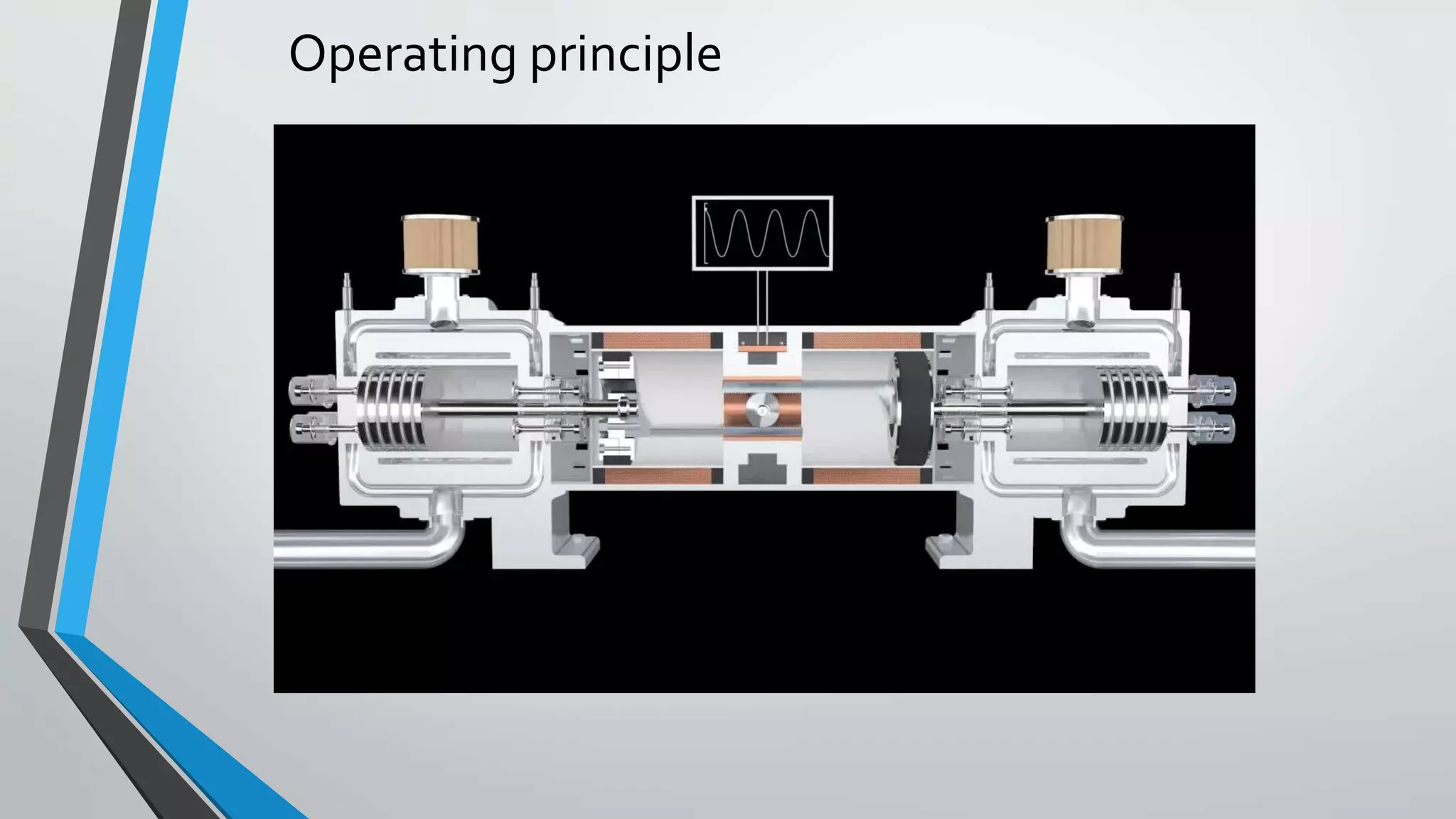
Operating principle
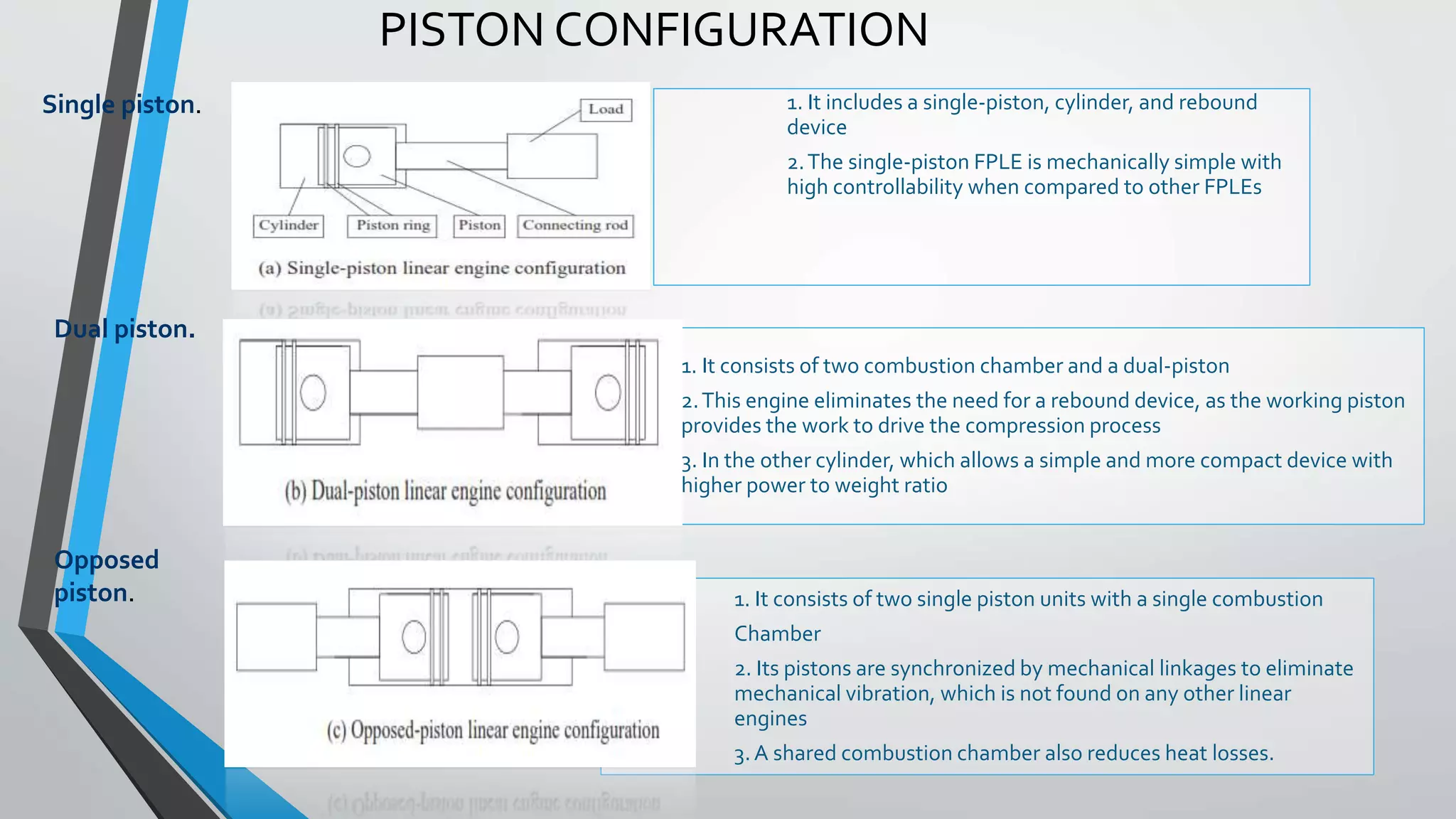
1. It includes a single-piston, cylinder, and rebound
device
2.The single-piston FPLE is mechanically simple with
high controllability when compared to other FPLEs
1. It consists of two combustion chamber and a dual-piston
2.This engine eliminates the need for a rebound device, as the working piston
provides the work to drive the compression process
3. In the other cylinder, which allows a simple and more compact device with
higher power to weight ratio
1. It consists of two single piston units with a single combustion
Chamber
2. Its pistons are synchronized by mechanical linkages to eliminate
mechanical vibration, which is not found on any other linear
engines
3. A shared combustion chamber also reduces heat losses.
PISTON CONFIGURATION
Single piston.
Dual piston.
Opposed
piston.
Experimental systems
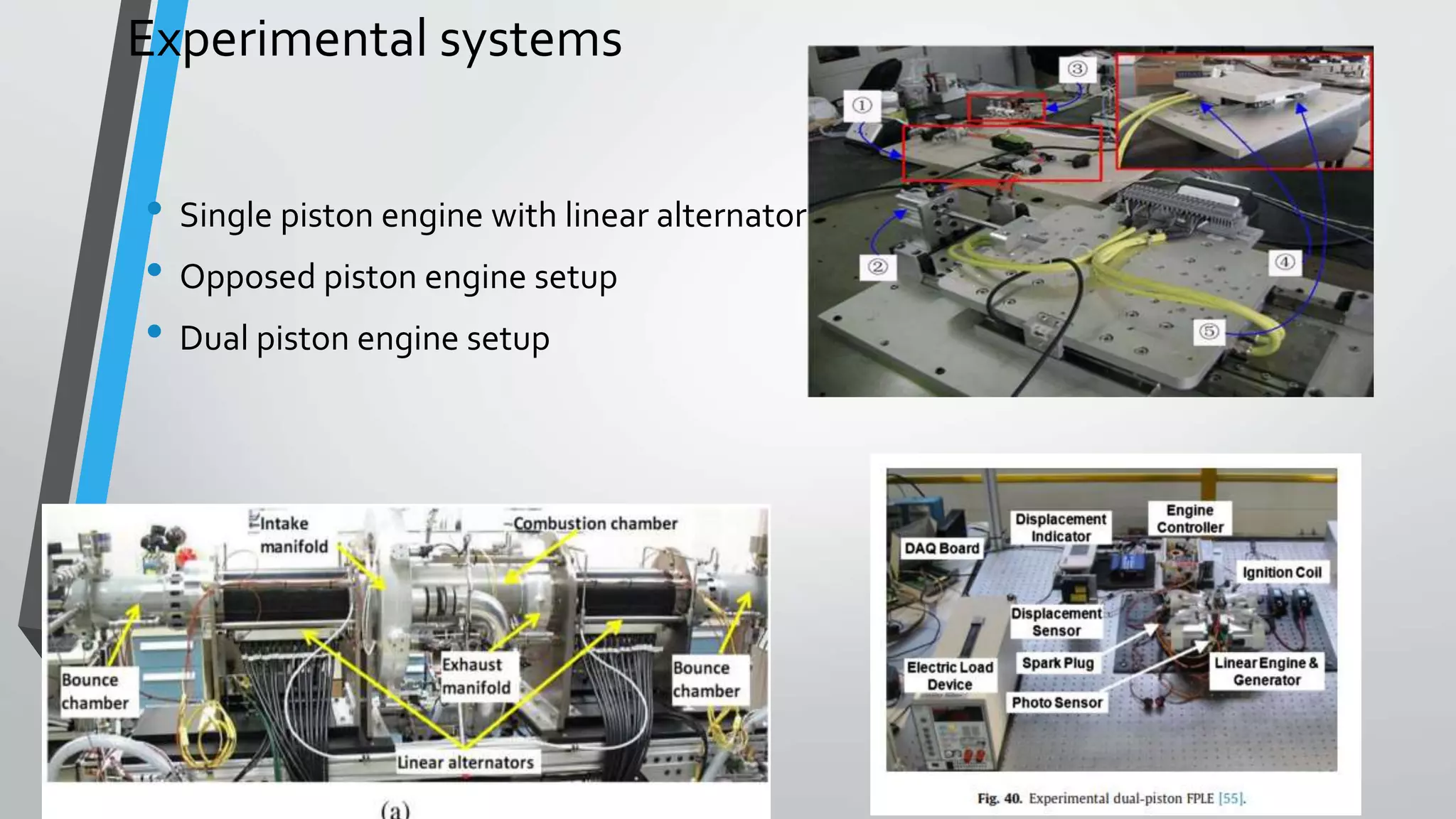
• Single piston engine with linear alternator
• Opposed piston engine setup
• Dual piston engine setup
PISTON DYNAMICS AND
CONTROL
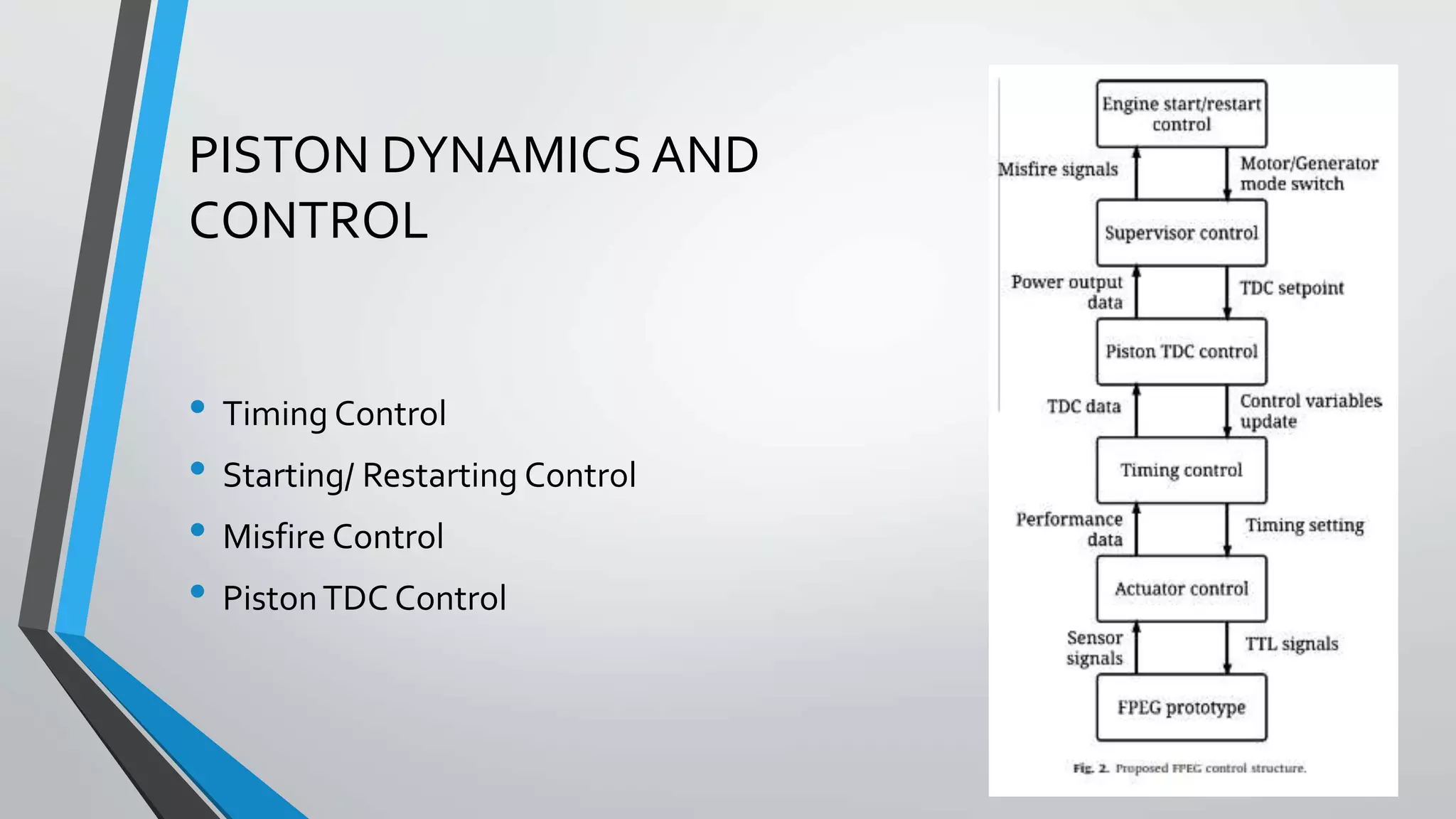
• Timing Control
• Starting/ Restarting Control
• Misfire Control
• PistonTDC Control
Applications of FPLE
• FPLEs decrease heat transfer loss in the cylinder by increasing piston
acceleration, compared with conventional engines
• The implementation of springs in FPLEs shows benefits for increasing piston
velocity and engine performance.
• In addition to benefit of piston dynamics, published results show that the
thermal efficiency of FPLEs is higher than that of conventional engines.
Applications of FPLE (cont…)
• the simulation results of FPLEs show benefits for reducing temperature-dependent emissions (NO)
because the in cylinder gas temperature of FPLEs is generally lower than that of conventional engines.
• The variable compression ratio in FPLEs is a great benefit for combustion.
• By changing the compression ratio, FPLEs can optimize the combustion process and operate with
various kinds of fuels and HCCI combustion.
• A free-piston engine can not only be operated as a conventional internal combustion engine. It can also be
integrated with a linear alternator to generate electric power
• The electric power can be optimized by adjusting parameters such as piston assembly mass, ignition
timing, equivalence ratio, electrical resistance, and air gap.
Conclusion
• In this paper, we have reviewed on FPLEs with varied designs and operating features.
• For piston stroke type, two-stroke FPLEs are most-commonly investigated and developed
because of their advantages in structure and control.
• Much research has shown that a linear alternator with a high efficiency
• power source is an excellent power-unit candidate for HEVs.With the potential offered by high-
efficiency linear alternators in FPLEs, we expect integrated systems to be further developed and
applied in the near future.
References
• Mikalsen R, Roskilly AP. A review of free-piston engine history and application. ApplTherm Eng 2007; 27:2339–52.
• Mikalsen R, Roskilly AP.The control of a free-piston engine generator. Part 1: fundamental analysis. Appl Energy
2010; 87:1273–80.
• Goertz M, Peng L. Free piston engine its application and optimization. SAE paper 2000-01-0996; 2000.
• Kosaka H, AkitaT, Moriya K, Goto S, HottaY, UmenoT, et al. Development of free piston engine linear generator
system part 1 – investigation of fundamental characteristics. SAE paper 2014-01-1203; 2014.
• Blarigan PV. Free-piston engine. US patent no. 6199519 B1; March 13, 2001.
• Mikalsen R, Roskilly AP.The fuel efficiency and exhaust gas emissions of a low heat rejection free-piston diesel
engine. Proc IMech Part A: J Power Energy 2009; 223:379–84.
• Blarigan PV. Advanced internal combustion electrical generator. In: Proceedings of the 2001 DOE hydrogen
program review. p. 1–16.
• Wakabayashi R,Takiguchi M, Shimada T, MizunoY,Yamauchi T.The effects of crank ratio and crankshaft offset on
piston friction losses. SAE paper 2003-010983;2003.
• Farmer HO. Free piston compressor engines. Proc Inst Mech Eng 1947; 156:253–71.
• Ostenberg P. Electric generator. US patent 2362151 A; 1944.
ThankYou

Free piston linear engine and its control systems

  • 1.
    A REVIEW ONFREE PISTON LINEAR ENGINE AND ITS CONTROL SYSTEM BY: SHAFEEQUR RAHMAN S.I SURYA KANDHASWAMYT Dr P. GOPAL Department of Automobile Engineering ANNA UNIVERSITY BHARADHIDASAN INSTITUTE OF TECHNOLOGY(BIT) CAMPUS TIRUCHIRAPPALLI-620024
  • 2.
    CONTENTS • Introduction • Free-pistonengine basics • Operating principle • Piston configuration • Single piston • Dual piston • Opposed piston • Experimental setups • Piston dynamics and control • Starting • Misfiring • Applications of FPLE • Conclusion • References
  • 3.
    Introduction • FPLE isnothing but an engine works without crankshaft • Instead of crankshaft , here an turbine and linear alternator is used to convert the rotary motion into reciprocatory motion • This crank less engine reduce the losses due the crankshaft
  • 4.
  • 5.
    1. It includesa single-piston, cylinder, and rebound device 2.The single-piston FPLE is mechanically simple with high controllability when compared to other FPLEs 1. It consists of two combustion chamber and a dual-piston 2.This engine eliminates the need for a rebound device, as the working piston provides the work to drive the compression process 3. In the other cylinder, which allows a simple and more compact device with higher power to weight ratio 1. It consists of two single piston units with a single combustion Chamber 2. Its pistons are synchronized by mechanical linkages to eliminate mechanical vibration, which is not found on any other linear engines 3. A shared combustion chamber also reduces heat losses. PISTON CONFIGURATION Single piston. Dual piston. Opposed piston.
  • 6.
    Experimental systems • Singlepiston engine with linear alternator • Opposed piston engine setup • Dual piston engine setup
  • 7.
    PISTON DYNAMICS AND CONTROL •Timing Control • Starting/ Restarting Control • Misfire Control • PistonTDC Control
  • 8.
    Applications of FPLE •FPLEs decrease heat transfer loss in the cylinder by increasing piston acceleration, compared with conventional engines • The implementation of springs in FPLEs shows benefits for increasing piston velocity and engine performance. • In addition to benefit of piston dynamics, published results show that the thermal efficiency of FPLEs is higher than that of conventional engines.
  • 9.
    Applications of FPLE(cont…) • the simulation results of FPLEs show benefits for reducing temperature-dependent emissions (NO) because the in cylinder gas temperature of FPLEs is generally lower than that of conventional engines. • The variable compression ratio in FPLEs is a great benefit for combustion. • By changing the compression ratio, FPLEs can optimize the combustion process and operate with various kinds of fuels and HCCI combustion. • A free-piston engine can not only be operated as a conventional internal combustion engine. It can also be integrated with a linear alternator to generate electric power • The electric power can be optimized by adjusting parameters such as piston assembly mass, ignition timing, equivalence ratio, electrical resistance, and air gap.
  • 10.
    Conclusion • In thispaper, we have reviewed on FPLEs with varied designs and operating features. • For piston stroke type, two-stroke FPLEs are most-commonly investigated and developed because of their advantages in structure and control. • Much research has shown that a linear alternator with a high efficiency • power source is an excellent power-unit candidate for HEVs.With the potential offered by high- efficiency linear alternators in FPLEs, we expect integrated systems to be further developed and applied in the near future.
  • 11.
    References • Mikalsen R,Roskilly AP. A review of free-piston engine history and application. ApplTherm Eng 2007; 27:2339–52. • Mikalsen R, Roskilly AP.The control of a free-piston engine generator. Part 1: fundamental analysis. Appl Energy 2010; 87:1273–80. • Goertz M, Peng L. Free piston engine its application and optimization. SAE paper 2000-01-0996; 2000. • Kosaka H, AkitaT, Moriya K, Goto S, HottaY, UmenoT, et al. Development of free piston engine linear generator system part 1 – investigation of fundamental characteristics. SAE paper 2014-01-1203; 2014. • Blarigan PV. Free-piston engine. US patent no. 6199519 B1; March 13, 2001. • Mikalsen R, Roskilly AP.The fuel efficiency and exhaust gas emissions of a low heat rejection free-piston diesel engine. Proc IMech Part A: J Power Energy 2009; 223:379–84. • Blarigan PV. Advanced internal combustion electrical generator. In: Proceedings of the 2001 DOE hydrogen program review. p. 1–16. • Wakabayashi R,Takiguchi M, Shimada T, MizunoY,Yamauchi T.The effects of crank ratio and crankshaft offset on piston friction losses. SAE paper 2003-010983;2003. • Farmer HO. Free piston compressor engines. Proc Inst Mech Eng 1947; 156:253–71. • Ostenberg P. Electric generator. US patent 2362151 A; 1944.
  • 12.