PRESENTED BY
SHAMBU S
ROLL NO. 55
MECH
SNIT
INTRODUCTION
TURBOFAN
TURBOFAN HISTORY
PARTS OF TURBOFAN
TURBOFAN ENGINE WORKING
ADVANTAGES
DISADVANTAGES
CONCLUSION
REFERENCE
 The turbofan or fanjet is a type of air breathing
jet engine that is widely used for aircraft
propulsion.
 The ‘turbo’ portion refers to a gas turbine
engine which takes mechanical energy from
combustion
 The ‘fan’ uses the mechanical energy from the
gas turbine to accelerate air rearwards
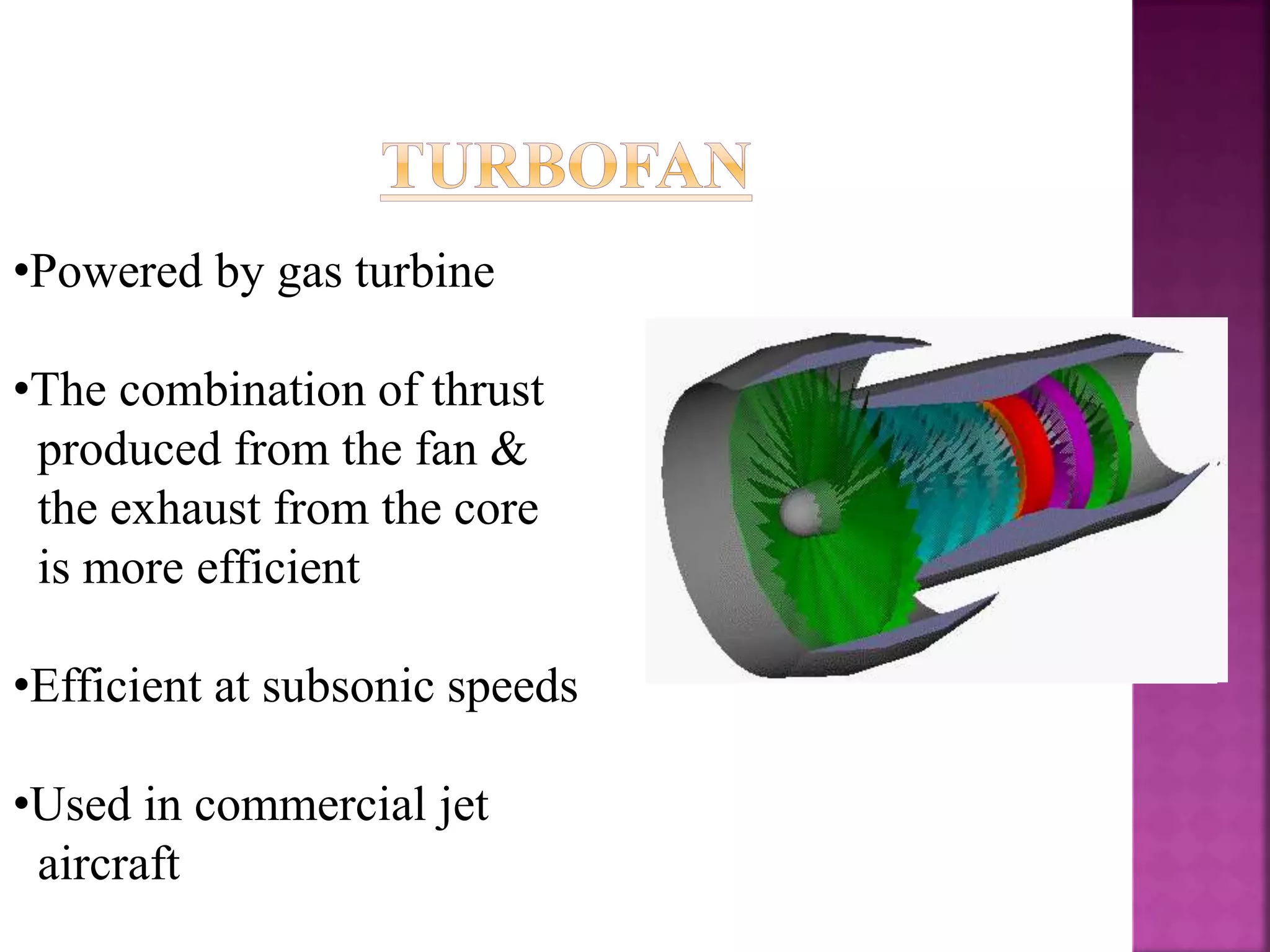
•Powered by gas turbine
•The combination of thrust
produced from the fan &
the exhaust from the core
is more efficient
•Efficient at subsonic speeds
•Used in commercial jet
aircraft
 In early jet engines, high velocity jet exhaust
mixing with surrounding air is major source of
noise
 In 1960’s, low-bypass-ratio turbofans
introduced
 In 1967, NASA initiates acoustically treated
nacelle program
 Engine ducts and inlets are lined with acoustic
treatments
 Flight tested on Boeing 707 and DC-8
 Acoustic treatment proven effective and feasible
 Even greater jet noise reduction is achieved
 With further reduction of jet noise, fan noise
becomes major noise source
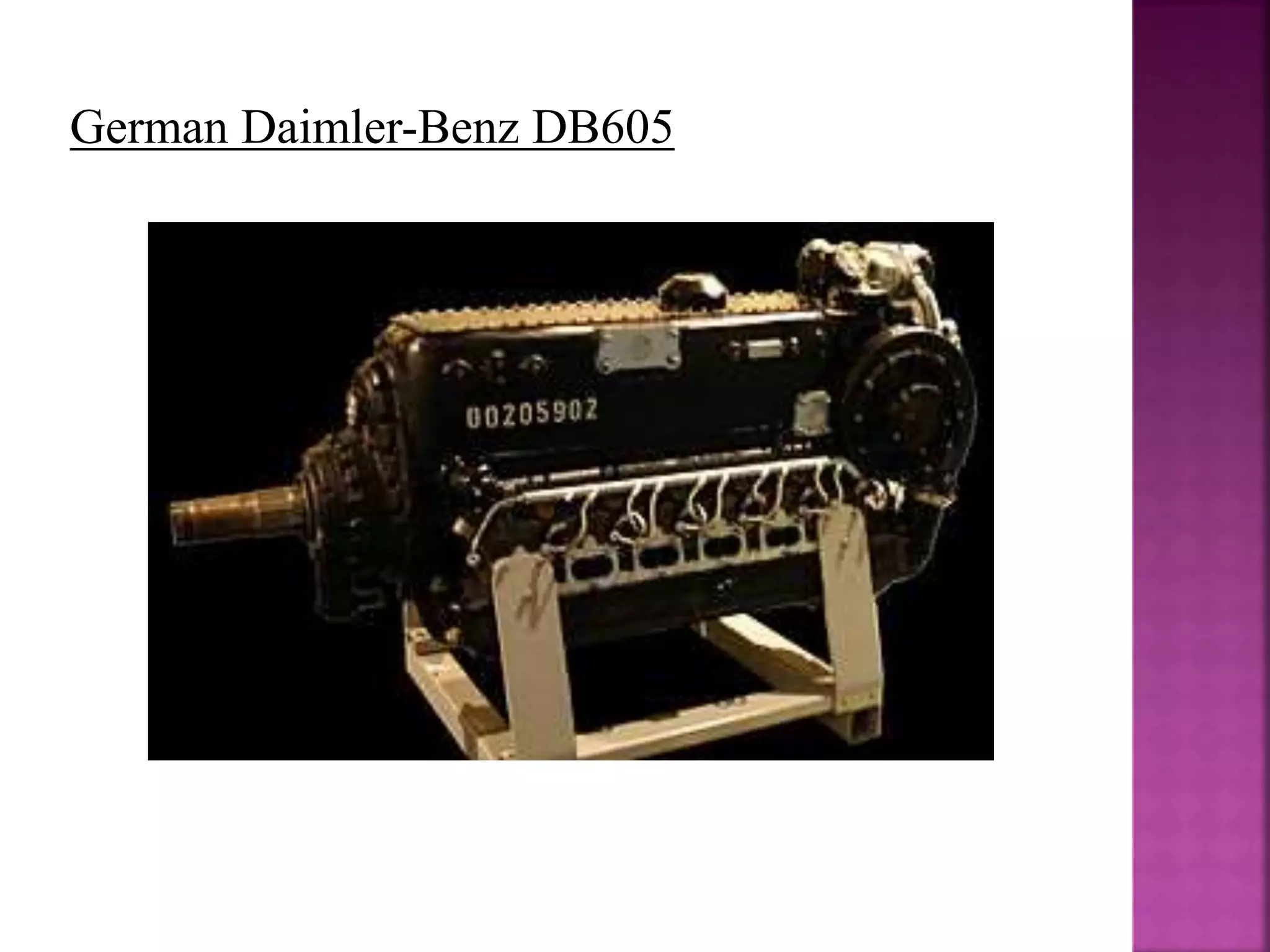
 German Daimler-Benz, the very first turbofan
tested on April 1,1943
 Improved materials and twin compressors in the
Pratt & Whitney JT3C engine
German Daimler-Benz DB605
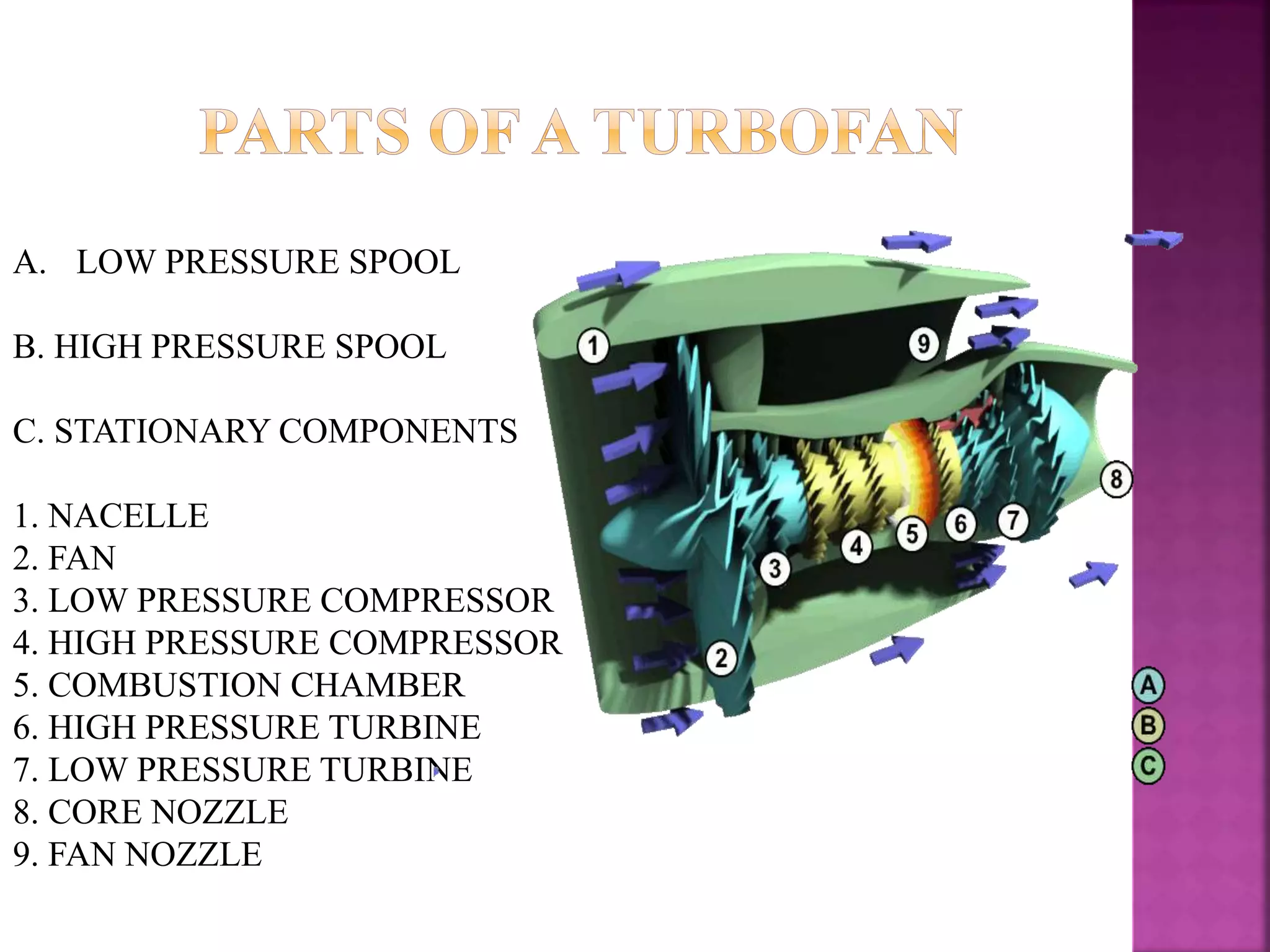
A. LOW PRESSURE SPOOL
B. HIGH PRESSURE SPOOL
C. STATIONARY COMPONENTS
1. NACELLE
2. FAN
3. LOW PRESSURE COMPRESSOR
4. HIGH PRESSURE COMPRESSOR
5. COMBUSTION CHAMBER
6. HIGH PRESSURE TURBINE
7. LOW PRESSURE TURBINE
8. CORE NOZZLE
9. FAN NOZZLE
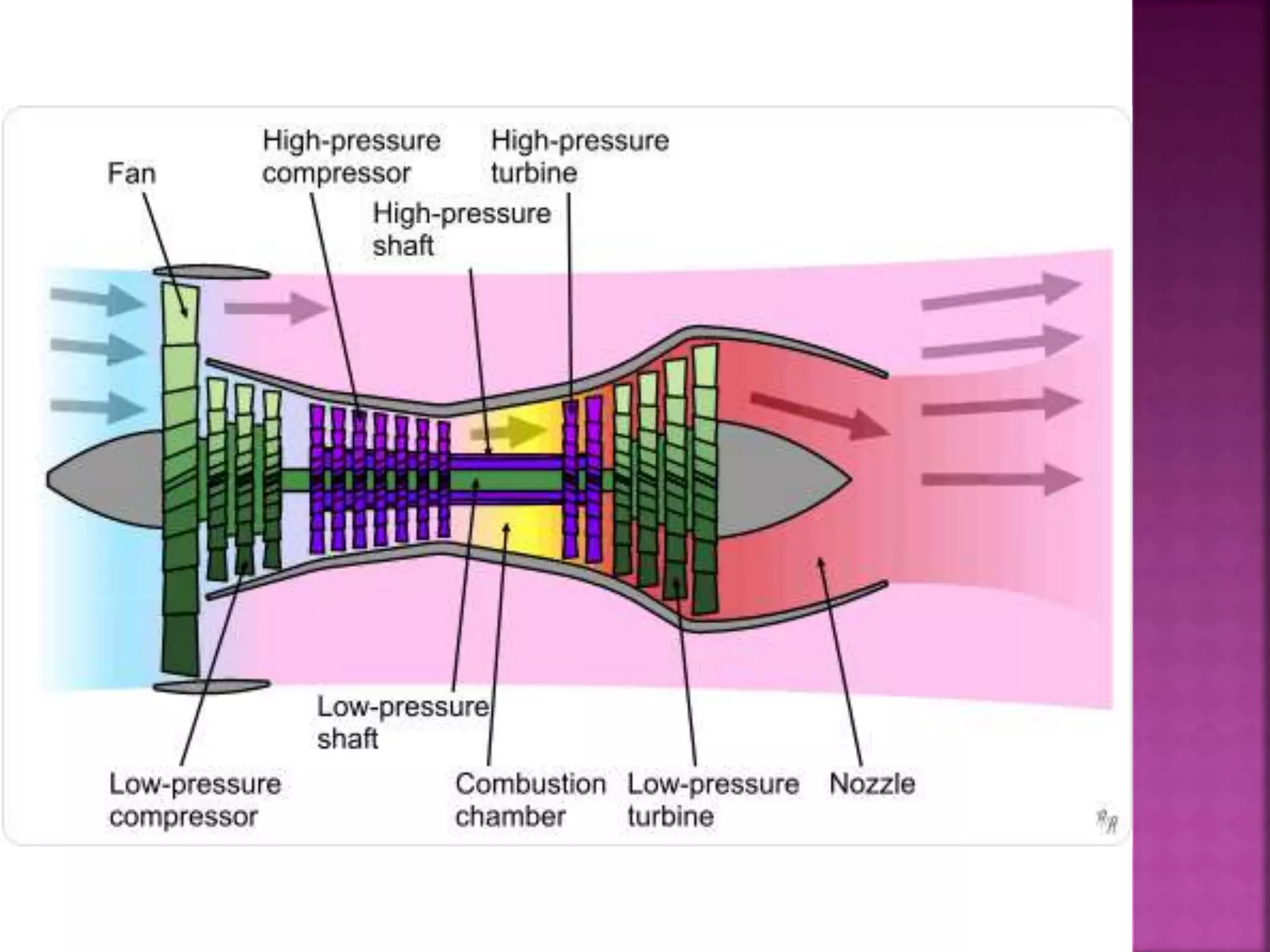
The incoming air is captured by the inlet
 The incoming air is compressed by the
compressor
 In the combustion chamber, the
Compressed air is mixed with fuel and
then ignited
 The hot exhaust gases passes through the Core,
fan turbines & then out of the
nozzle
 A turbofan gets thrust from both fan & the core
 The ratio of air that goes around the engine & To
the air that goes through the core is called
BYPASS RATIO
 Since a fan is used, more amount of air is
sucked into the engine providing more thrust.
 The fan is enclosed by the cowling and is thus
protected and its aerodynamics can be easily
controlled.
 Due to presence of fan, the fuel consumption
is increased only a little , the turbofan produces
more thrust for same amount of fuel and is thus
fuel efficient.
 It is the most efficient at subsonic speeds only.
 It has a greater complexity due to addition of
ducts and multiple shafts.
 The engine diameter is increased.
 Considering the future applications of turbofan
engine,the most outstanding one is ‘The Geared
Turbofan Concept’
 In a geared turbofan, a (planetary) reduction
gearbox between the fan and the LP shaft allows
the latter to run at a higher rotational speed thus
enabling fewer stages to be used in both the LP
turbine increasing efficiency and reducing weight.
 A higher bypass ratio gives a low (actual) exhaust
speed. As a result, the thrust specific fuel
consumption is reduced. A lower bypass ratio
gives high exhaust speed, which is used to sustain
supersonic speeds. Thus, one can conclude that a
high bypass turbofan engine gives lower thrust
specific fuel consumption.
 A high bypass turbofan engine is used at subsonic
speeds because of low exhaust speed it produces.
 Turbofan engines gain better performance
capabilities and better fuel efficiency
 Aderson Jr., John D., 1995. McGraw Hill,
nInc.,“Computational Fluid Dynamics: The Basics
with Applications” , New York, USA.
 Ganesan, V., 2010. Ajay Shukla, Tata McGraw
Hill Education Private
 Advanced Control of Turbofan Engines - Hanz
Richter
 Gas Turbines: A Handbook of Air, Land and Sea
Application - Claire Soares
Turbofan engine

Turbofan engine

  • 1.
  • 2.
    INTRODUCTION TURBOFAN TURBOFAN HISTORY PARTS OFTURBOFAN TURBOFAN ENGINE WORKING ADVANTAGES DISADVANTAGES CONCLUSION REFERENCE
  • 3.
     The turbofanor fanjet is a type of air breathing jet engine that is widely used for aircraft propulsion.  The ‘turbo’ portion refers to a gas turbine engine which takes mechanical energy from combustion  The ‘fan’ uses the mechanical energy from the gas turbine to accelerate air rearwards
  • 4.
    •Powered by gasturbine •The combination of thrust produced from the fan & the exhaust from the core is more efficient •Efficient at subsonic speeds •Used in commercial jet aircraft
  • 5.
     In earlyjet engines, high velocity jet exhaust mixing with surrounding air is major source of noise  In 1960’s, low-bypass-ratio turbofans introduced  In 1967, NASA initiates acoustically treated nacelle program  Engine ducts and inlets are lined with acoustic treatments
  • 6.
     Flight testedon Boeing 707 and DC-8  Acoustic treatment proven effective and feasible  Even greater jet noise reduction is achieved  With further reduction of jet noise, fan noise becomes major noise source  German Daimler-Benz, the very first turbofan tested on April 1,1943  Improved materials and twin compressors in the Pratt & Whitney JT3C engine
  • 7.
  • 8.
    A. LOW PRESSURESPOOL B. HIGH PRESSURE SPOOL C. STATIONARY COMPONENTS 1. NACELLE 2. FAN 3. LOW PRESSURE COMPRESSOR 4. HIGH PRESSURE COMPRESSOR 5. COMBUSTION CHAMBER 6. HIGH PRESSURE TURBINE 7. LOW PRESSURE TURBINE 8. CORE NOZZLE 9. FAN NOZZLE
  • 9.
    The incoming airis captured by the inlet  The incoming air is compressed by the compressor  In the combustion chamber, the Compressed air is mixed with fuel and then ignited
  • 11.
     The hotexhaust gases passes through the Core, fan turbines & then out of the nozzle  A turbofan gets thrust from both fan & the core  The ratio of air that goes around the engine & To the air that goes through the core is called BYPASS RATIO
  • 13.
     Since afan is used, more amount of air is sucked into the engine providing more thrust.  The fan is enclosed by the cowling and is thus protected and its aerodynamics can be easily controlled.  Due to presence of fan, the fuel consumption is increased only a little , the turbofan produces more thrust for same amount of fuel and is thus fuel efficient.
  • 14.
     It isthe most efficient at subsonic speeds only.  It has a greater complexity due to addition of ducts and multiple shafts.  The engine diameter is increased.
  • 15.
     Considering thefuture applications of turbofan engine,the most outstanding one is ‘The Geared Turbofan Concept’  In a geared turbofan, a (planetary) reduction gearbox between the fan and the LP shaft allows the latter to run at a higher rotational speed thus enabling fewer stages to be used in both the LP turbine increasing efficiency and reducing weight.
  • 16.
     A higherbypass ratio gives a low (actual) exhaust speed. As a result, the thrust specific fuel consumption is reduced. A lower bypass ratio gives high exhaust speed, which is used to sustain supersonic speeds. Thus, one can conclude that a high bypass turbofan engine gives lower thrust specific fuel consumption.  A high bypass turbofan engine is used at subsonic speeds because of low exhaust speed it produces.  Turbofan engines gain better performance capabilities and better fuel efficiency
  • 17.
     Aderson Jr.,John D., 1995. McGraw Hill, nInc.,“Computational Fluid Dynamics: The Basics with Applications” , New York, USA.  Ganesan, V., 2010. Ajay Shukla, Tata McGraw Hill Education Private  Advanced Control of Turbofan Engines - Hanz Richter  Gas Turbines: A Handbook of Air, Land and Sea Application - Claire Soares